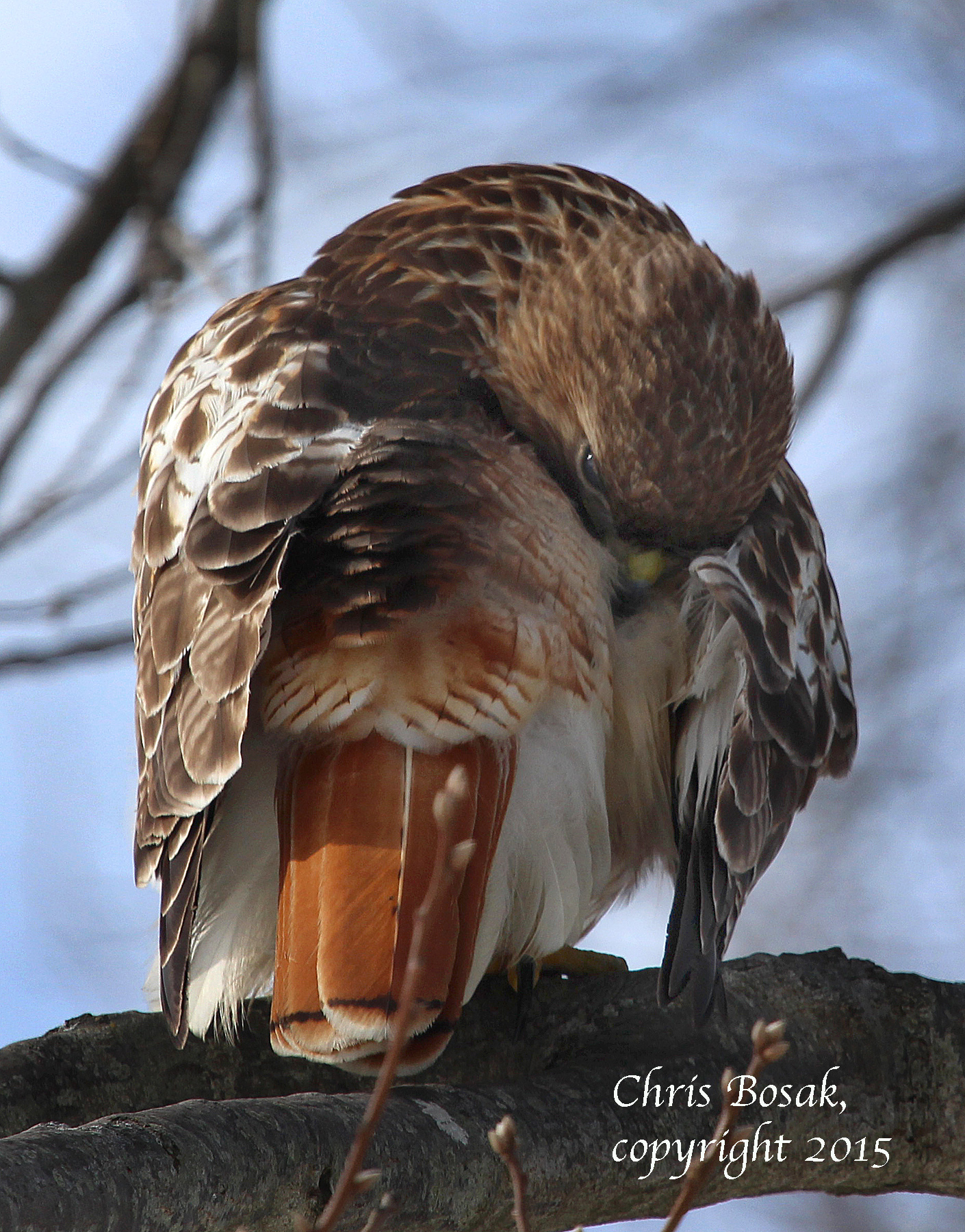
The Red-tailed Hawk under calmer conditions


Photo by Chris Bosak A Red-tailed hawk preens at Weed Beach in Darien, Conn., January 2015.

Photo by Chris Bosak
A Red-tailed hawk preens at Weed Beach in Darien, Conn., January 2015.

Here’s the second post about the Red-tailed Hawk I found at Weed Beach in Darien, Conn. the other day. The previous post explains the story, so here’s the photos of the impressive bird without the wind blowing its plumage.It is, however, preening and then looking back at me menacingly.

Photo by Chris Bosak A Red-tailed hawk at Weed Beach in Darien, Conn., January 2015.

Photo by Chris Bosak
A Red-tailed hawk at Weed Beach in Darien, Conn., January 2015.

Photo by Chris Bosak A Red-tailed hawk at Weed Beach in Darien, Conn., January 2015.

Photo by Chris Bosak
A Red-tailed hawk at Weed Beach in Darien, Conn., January 2015.

Something to do on a snowy day: Learn the difference between hairy and downy woodpeckers

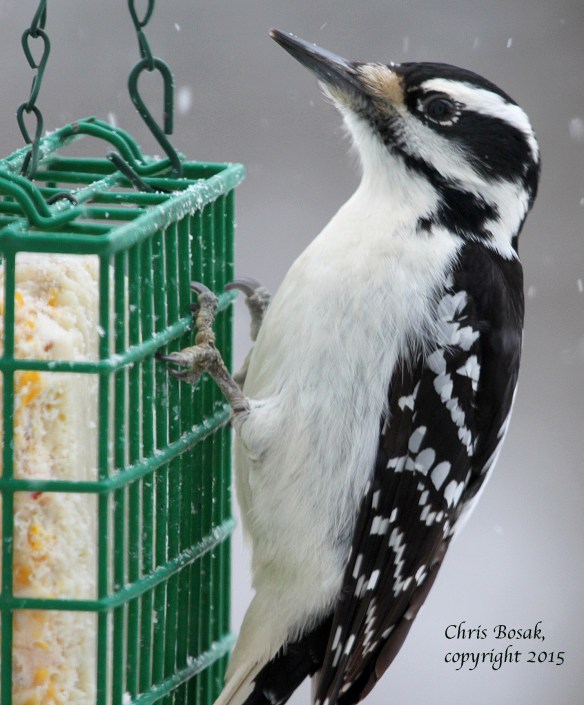
Photo by Chris Bosak A female Hairy Woodpecker clings to a suet feeder as snow falls in Jan. 2015.

Photo by Chris Bosak
A female Hairy Woodpecker clings to a suet feeder as snow falls in Jan. 2015.

If you live in New England you’re about to buried in snow so why not studies these photos and learn the differences between the hairy and downy woodpeckers. Beginning birders often confuse the two species. I know it took me a long time to be able to tell the two woodpecker species apart with confidence. Hopefully this posting will help some of you distinguish between the two.

The two species are hard to tell apart because they basically look exactly the same, hence the confusion. The major difference is the size. The downy is a dainty six inches, while the hairy is a beefy nine inches. That’s enough of a difference that you’d think it would be easy to tell one from the other. But if you’re new to this birding thing and don’t have a point of reference to judge size, it’s tough. I know, I’ve been there. Plus, like any birds, there can be size variations within a particular species. There can be smallish Hairy Woodpeckers and largish Downy Woodpeckers. So size can or can’t be a good way to tell them apart.

For me, the biggest difference is the size of the bill. In the most simple terms, downys have small bills and hairys have big bills. Beyond that, the bill of the downy just looks small and rather fragile. It isn’t fragile, of course, it’s quite strong. It just looks small and fragile. The bill of the Hairy Woodpecker, on the other hand, looks more sturdy and substantial. If one or the other lands on your feeder, check out the bill — dainty downy or hardy hairy.

Below is a side-by-side comparison. (Males of both species have a red patch on their heads. Females do not have have the red patch. Both birds below are females.)

Photos by Chris Bosak Side-by-side comparison of Hairy and Downy Woodpeckers' bills. Female Hairy on the left, female downy on the right.

Photos by Chris Bosak
Side-by-side comparison of Hairy and Downy Woodpeckers’ bills. Female Hairy on the left, female downy on the right.
Clearing out my 2014 photos: Meadowhawk dragonflies mating

Photo by Chris Bosak Meadowhawk dragonflies mate in Selleck's/Dunlap Wood in summer 2014.

Photo by Chris Bosak
Meadowhawk dragonflies mate in Selleck’s/Dunlap Wood in summer 2014.

Here’s my next photo in the series of 2014 photos that I never got around to looking at and posting. This will be the final one. It’s time to move forward and let go.

I got this shot in the summer 2014 when trying to add to my meadow close-up collection. I liked the shots based on the quick look I took on the camera’s tiny screen at day’s end, but never took them further than that. In fact, I had forgotten about them until I found the photo folder buried inside another folder the other day.

This shot shows a pair of meadowhawk dragonflies mating in a “wheel” position. The male is the red one.

For a fascinating article on how dragonflies mate, click here.

I like photographing dragonflies in the summer. The birding gets slow in July/August and bird photography even slower. So my attention often turns to the smaller creatures of the meadows, which are around and active on even the hottest days. For many more of my meadow close up photos, click here.


Clearing out my 2014 photos, take 8: Least Tern

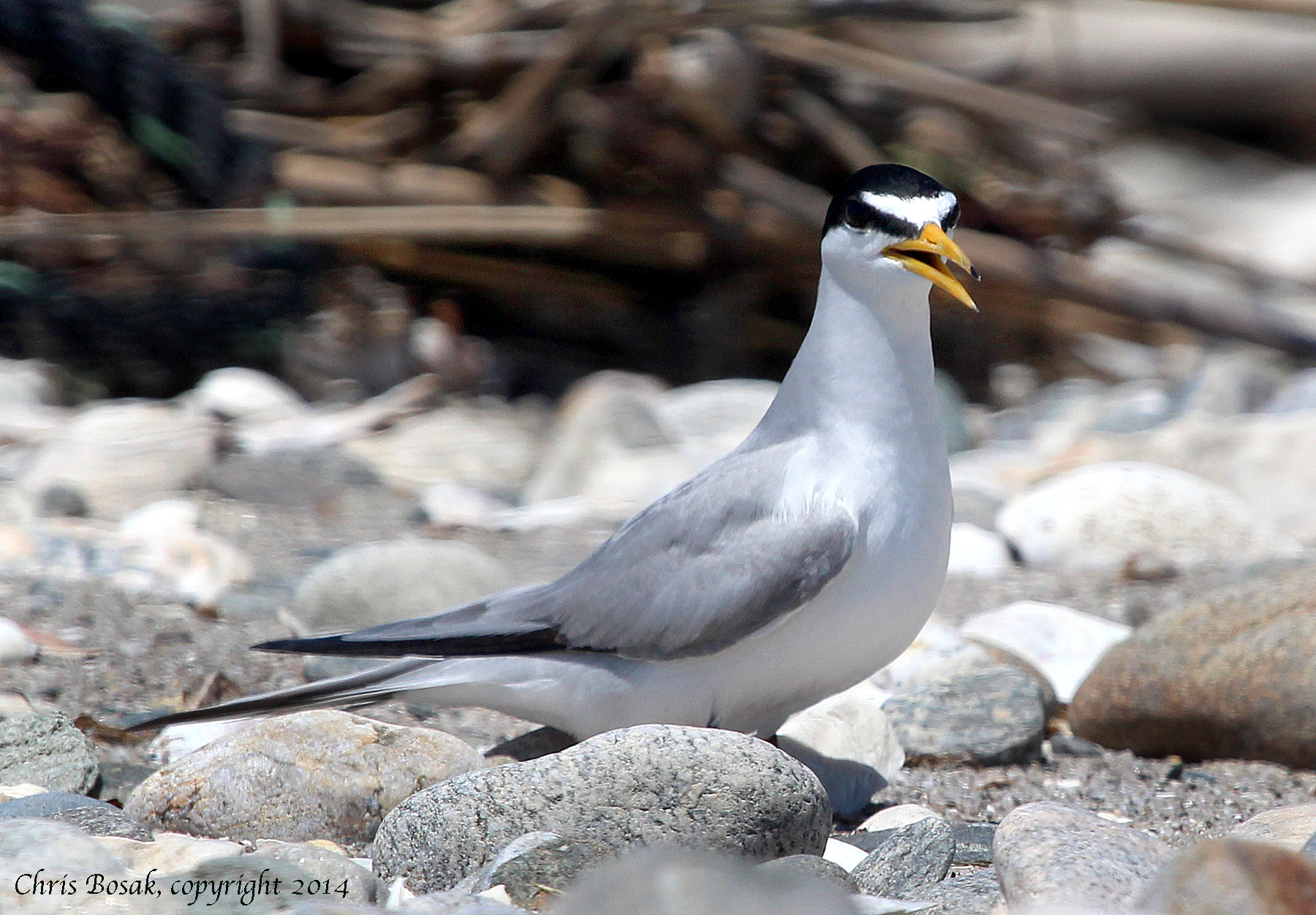
Photo by Chris Bosak A Least Tern sits among the rocks at the beach at Connecticut Audubon's Coastal Center at Milford Point in spring 2014.

Photo by Chris Bosak
A Least Tern sits among the rocks at the beach at Connecticut Audubon’s Coastal Center at Milford Point in spring 2014.

Here’s my next photo in the series of 2014 photos that I never got around to looking at and posting.

As we are now stuck in this deep freeze here in New England, here’s a warm-weather shot for you. It’s a Least Tern on the beach at Connecticut Audubon Coastal Center at Milford Point. Last week I posted a Piping Plover that I saw during my volunteering to monitor plovers and terns on the Connecticut shoreline. Well, here’s the other half: the terns. The plovers come in much earlier in the spring than the terns. Least Terns are handsome birds with yellow bills, compared the red or orange bills of most terns. Least Terns, as their name suggests, are also smaller than most terns. They can also be quite aggressive on their nesting areas (who can blame them?) and they will continually dive-bomb intruders. Yes, that includes innocent shorebird monitors just trying to help them out.

Piping Plovers and Least Terns are threatened species in Connecticut.

Clearing out my 2014 photos, Take 4: Icy Branches

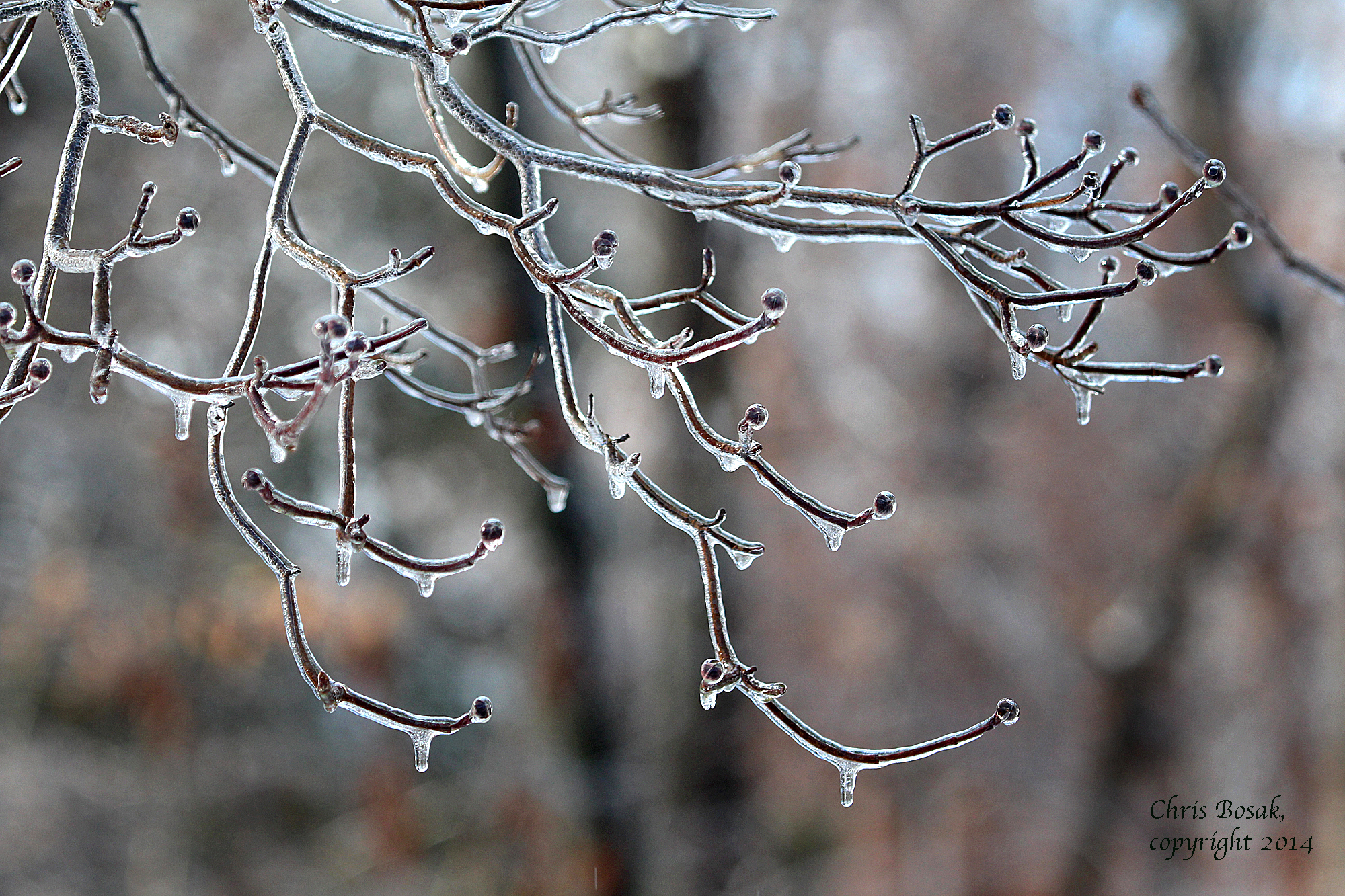
Photo by Chris Bosak Ice covers branches in New England during a storm in Jan. 2014.

Photo by Chris Bosak
Ice covers branches in New England during a storm in Jan. 2014.

Here’s my next photo in the series of 2014 photos that I never got around to looking at and posting.

Sometimes the most interesting things you see on a bird walk are not the birds at all. Here’s an example. A cold rain turned to ice while I was in the woods one day last January. It was fairly unpleasant out there, but the way the ice sheathed everything in the woods made it worth it. The drive home wasn’t fun either, but I made it.

Merry Christmas from www.BirdsofNewEngland.com: Gray Jay with berries

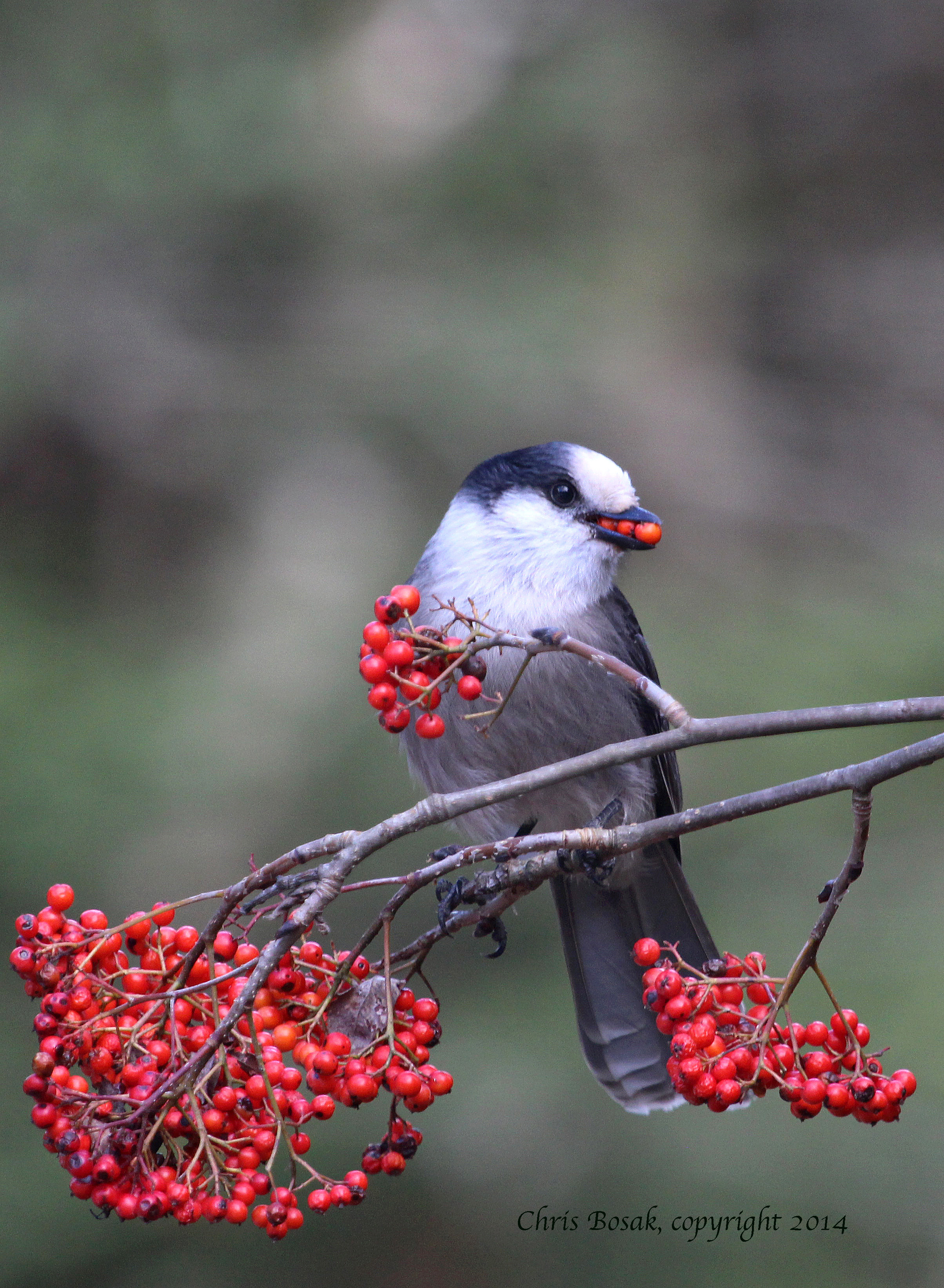
Photo by Chris Bosak Gray Jay with berries, northern New Hampshire, fall 2013.

Photo by Chris Bosak
Gray Jay with berries, northern New Hampshire, fall 2013.

I took this photo of a Gray Jay in the fall of 2013 in northern New Hampshire. Until now I’ve never used the photo in any manner. Not for my bird column, not a blog posting, not in a slideshow, not as part of a gallery or exhibit. I could think of no better way to use it for the first time than to wish visitors of http://www.BirdsofNewEngland.com a Merry Christmas and Happy New Year. Thanks for your support and help spread the word about this site. There are exciting things in store for 2014.

Wood Duck in mixed company with Mallards

Photo by Chris Bosak A Wood Duck hangs out with a flock of Mallards at Wood's Pond in Norwalk, Dec. 2014.

Photo by Chris Bosak
A Wood Duck hangs out with a flock of Mallards at Wood’s Pond in Norwalk, Dec. 2014.

Several years ago (10 maybe), during a visit to Central Park in New York City, I noticed a very tame male Wood Duck hanging out with a flock of Mallards. I’ve spent hours upon hours on remote New England ponds trying to get decent photographs of Wood Ducks and here was one acting like it was a tame Mallards. The behavior struck me as odd because Wood Ducks, in all my previous observations, are usually extremely wary.

I had pretty much forgotten about this sighting until the other day when I visited Wood’s Pond in Norwalk, Conn., a frequent haunt of mine. A lingering Great Blue Heron

(click “continue reading” for another photo of the female Wood Duck)

Continue reading →

Today at the feeder

Photo by Chris Bosak

Photo by Chris Bosak
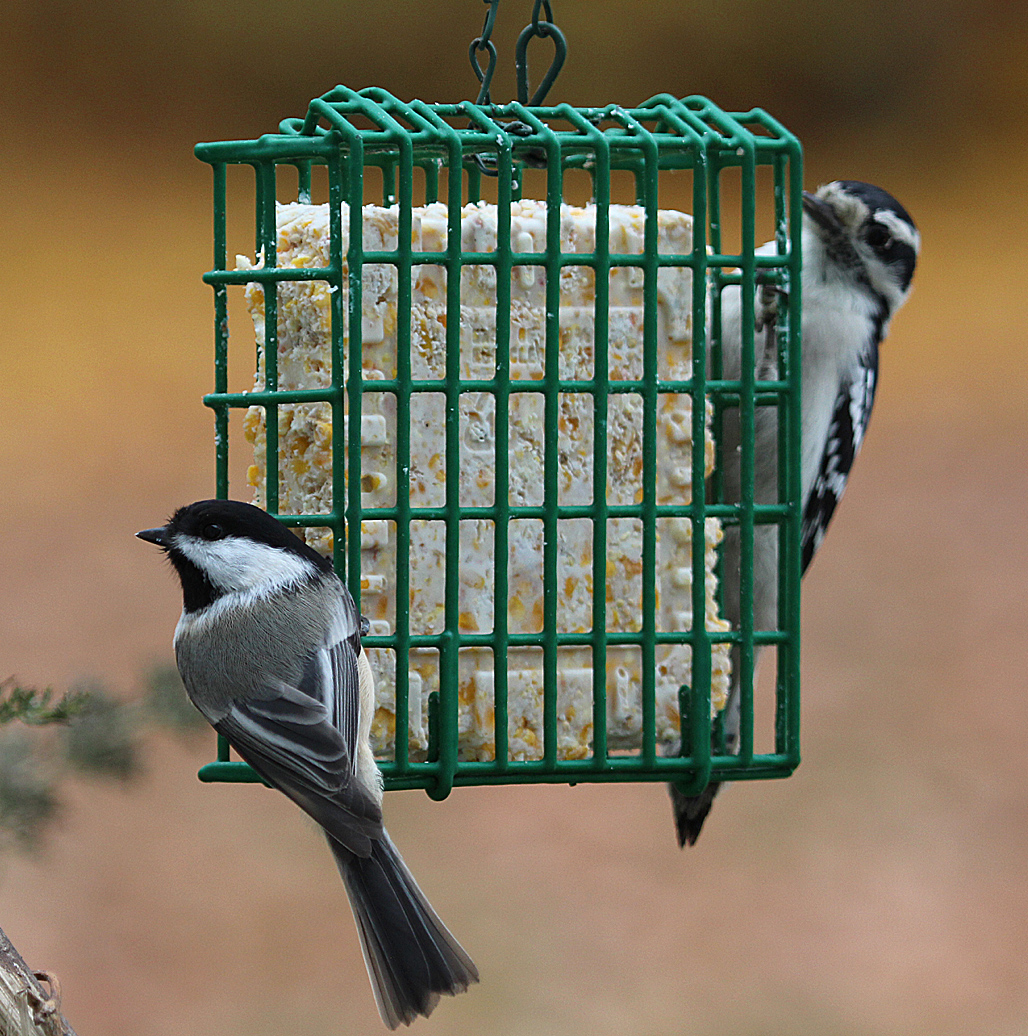
A Black-capped Chickadee and Downy Woodpecker share the suet feeder, Nov. 16, 2014.

It’s been a particularly busy day at the feeder today. There haven’t been any out of the ordinary species, just lots of backyard favorites. Here are a few photos from the action. Not pictured, but seen visiting today are: American Goldfinch; Northern Cardinal; Hairy Woodpecker, Red-bellied Woodpecker; Dark-eyed Junco; White-throated Sparrow; Blue Jay and American Crow. No nuthatches today yet … odd.

(Author’s note: OK, got my nuthatch. All is good.)

More photos are below. Click on “continue reading.”

Thanks for visiting http://www.birdsofnewengland.com

Continue reading →

We need more Titmice

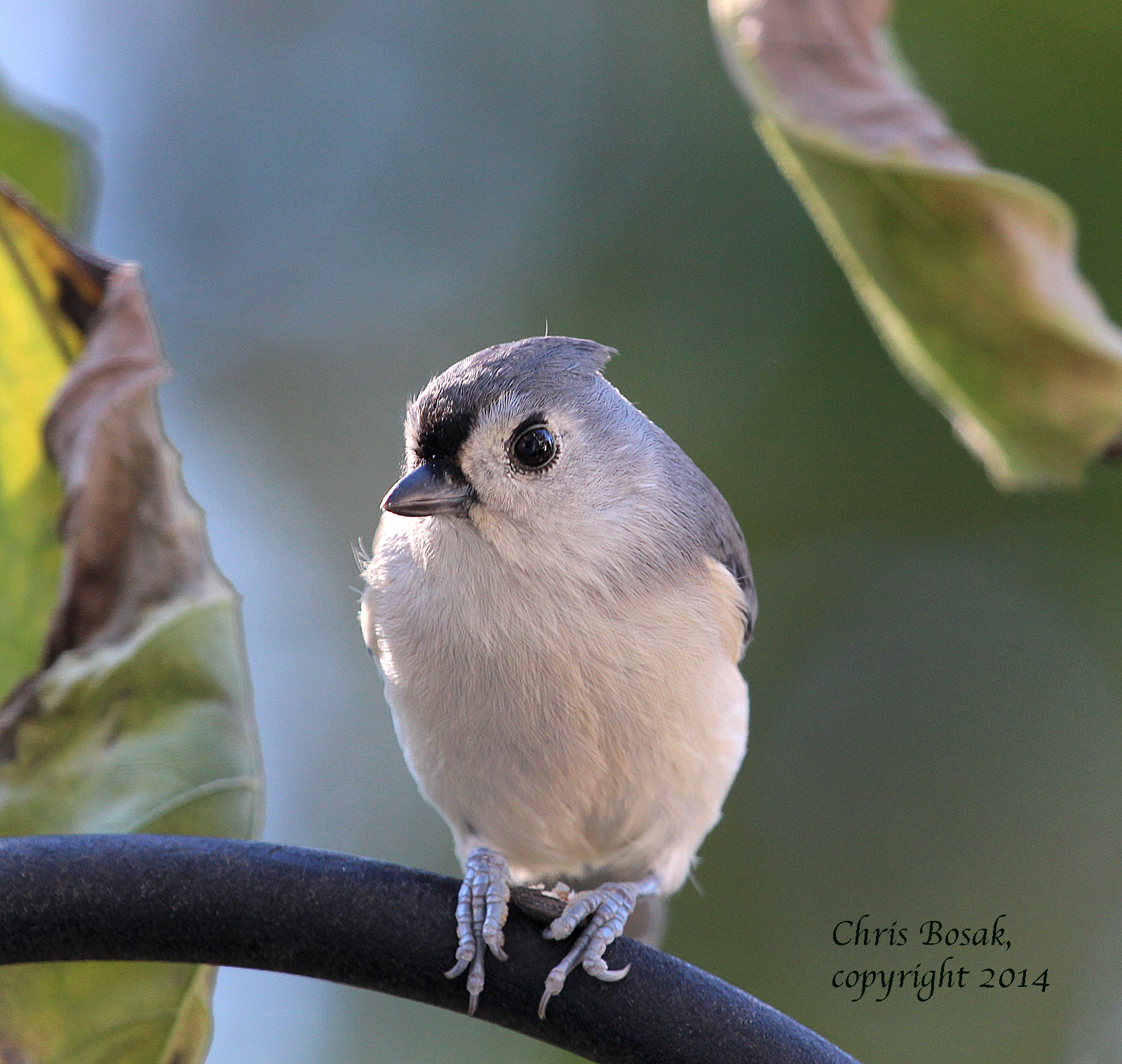
Photo by Chris Bosak A Tufted Titmouse perches on a pole near a birdfeeding station, Oct. 2014.

Photo by Chris Bosak
A Tufted Titmouse perches on a pole near a birdfeeding station, Oct. 2014.

Last week I posted a photo of Tufted Titmouse that I saw outside my window at my birdfeeding station. It kicked off a short series of photos I posted of common backyard feeder birds.

But, of course, I had more than just one photo of Tufted Titmice. So here are a few more photos of this small and lovable blue-gray bird. So far this fall Tufted Titmice have been the most numerous and reliable birds at my feeder. I can’t complain about that.

More photos below:

Continue reading →

Nice young buck

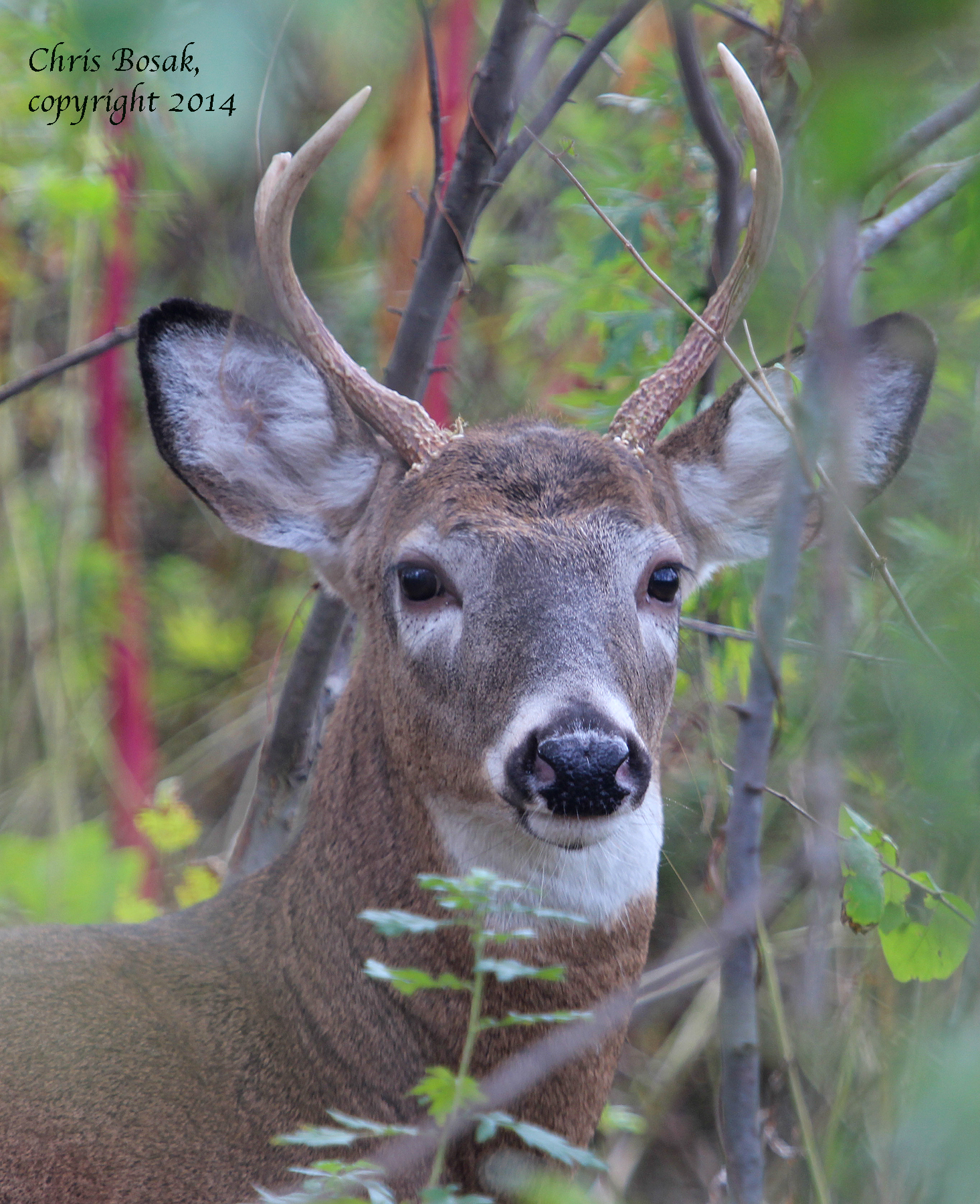
Photo by Chris Bosak A young White-tailed Deer in Stamford, Oct. 2014.

Photo by Chris Bosak
A young White-tailed Deer in Stamford, Oct. 2014.

I was looking for birds, of course, but this young buck (literally) was just off the trail and seemingly unfazed by my presence, so I grabbed a few shots of him. You never know what you’ll see out there. I found this guy at Cove Island Wildlife Sanctuary.

Feel free to share your bird and other wildlife sightings and/or photos. Send them to bozclark@earthlink.net