Here is a quick Hummingbird video I threw together with my iPhone. Since it was done with the phone, the quality isn’t great, but not bad for a quick little video.
It is also the launch of my “Merganser Lake” series. More on that coming soon.
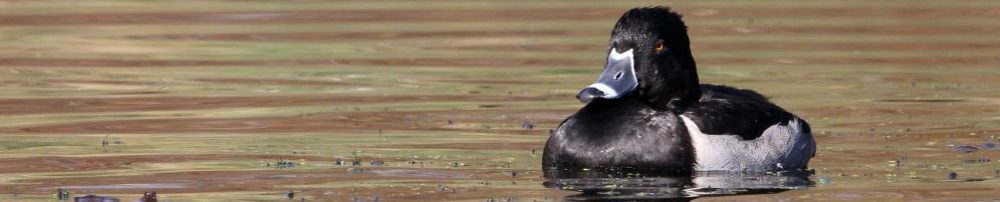
Here is a quick Hummingbird video I threw together with my iPhone. Since it was done with the phone, the quality isn’t great, but not bad for a quick little video.
It is also the launch of my “Merganser Lake” series. More on that coming soon.
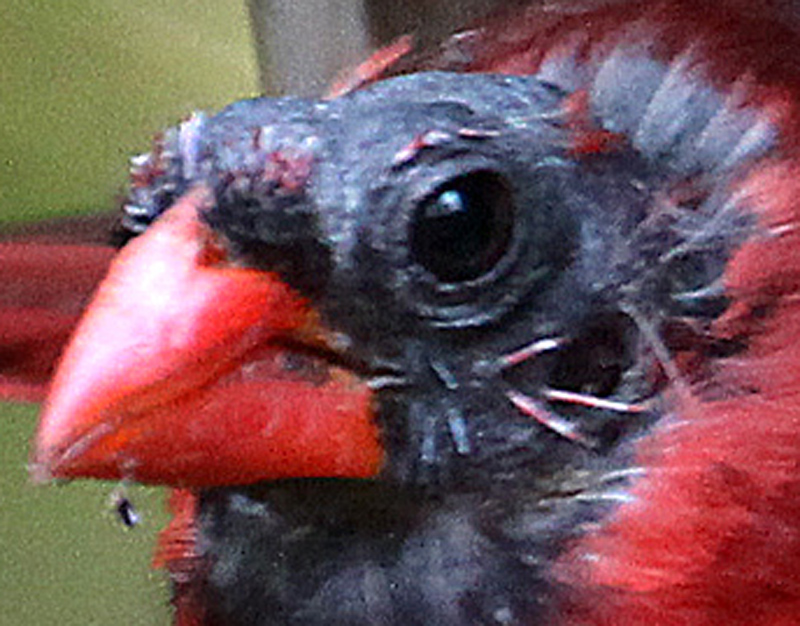
Photo by Chris Bosak
Here’s the answer to the latest Birding Quiz. Many of you nailed it, despite the somewhat tricky nature of the photo.
Click below for the answer.
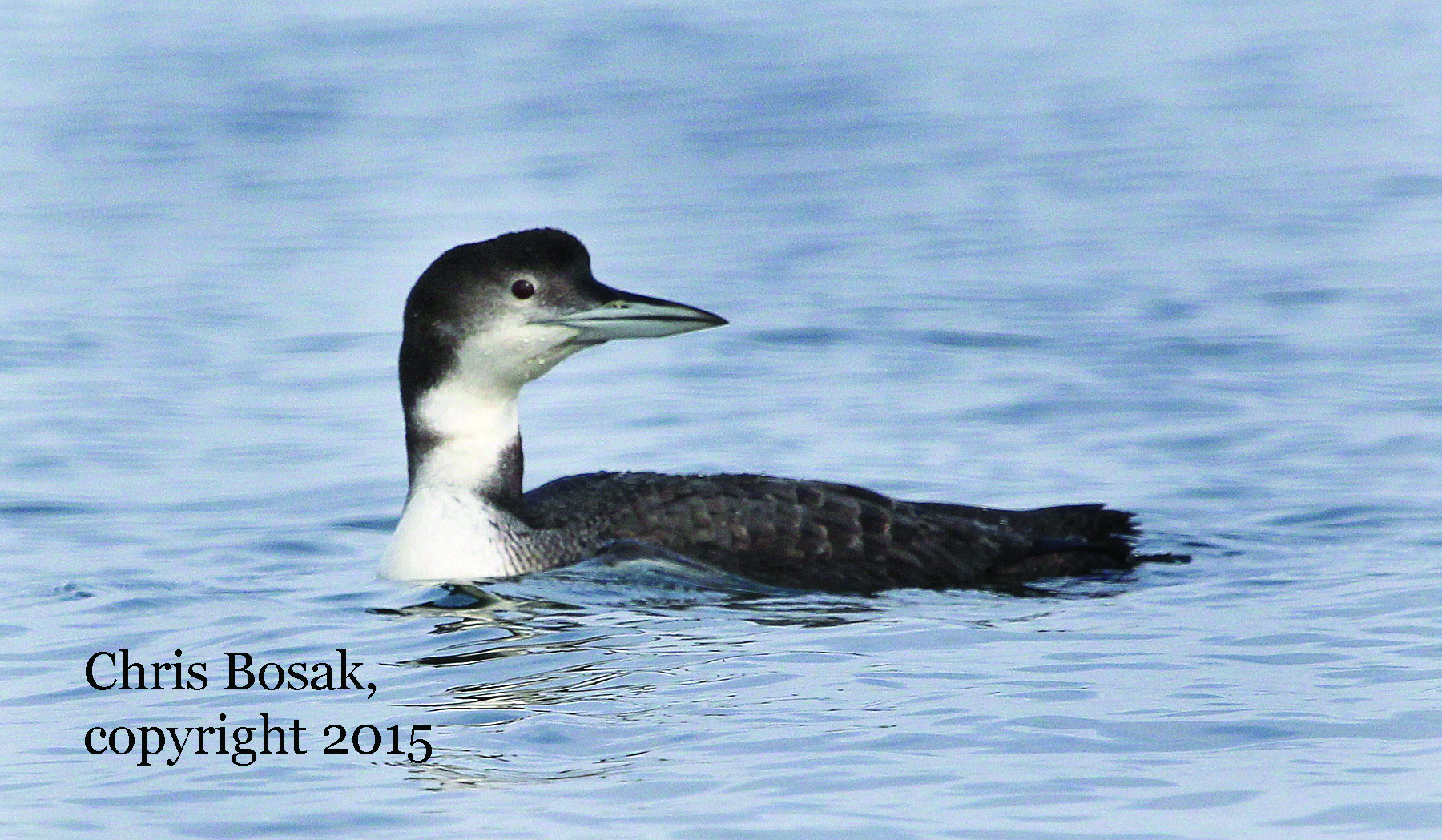
Photo by Chris Bosak
A Common Loon seen during a recent winter in Long Island Sound off the coast of Norwalk, Conn. Loons feature a more drab plumage in the winter.
Here’s my latest For the Birds column regarding Common Loons being a year-round New England bird. It was inspired by the release of a study that determined that loons are loyal to both summer and winter sites. Enjoy and thanks for checking out http://www.BirdsofNewEngland.com
…
Common Loons are a year-round New England bird. You won’t see them at the same place in the summer and winter, but they are true to our region. In the summer, head to the northern New England lakes and ponds and you’ll see loons. Those waters will be void of loons in the winter. In fact, there’s a very strong possibility that those waters will be frozen in the winter. But head to southern coastal New England in the winter, and you’ll see loons. Some loons head farther south for the winter months, but many spend their winters on Long Island Sound or off the Atlantic coast. As a bonus, these wintering grounds also play host to a fair amount of Red-throated Loons, too. But these waters are void of loons in the summer. So, unlike say, for instance, a Black-capped Chickadee, which can be seen

Photo by Chris Bosak
An immature Cooper’s Hawk rests in a tree after eating a songbird in Norwalk, CT, summer 2015.
I love when these types of calls come in.
“Hey Chris. It’s Alex. There’s a hawk in the parking lot. Come down.”
I jumped in the elevator, went down and met Alex (one of the photographers here at The Hour) in the parking lot. Sure enough, there was an immature Cooper’s Hawk sitting in a tree right above some cars. I grabbed a few shots, shot the breeze a bit with Alex and went back to work. Not all good bird photographs happen that easily, trust me.
Before I arrived, the young hawk had been eating a smaller bird, perhaps a catbird or titmouse, it was tough to tell from the scraps I could see on the ground. Alex captured a few shots of the hawk eating. He tweeted one, which may be seen here:
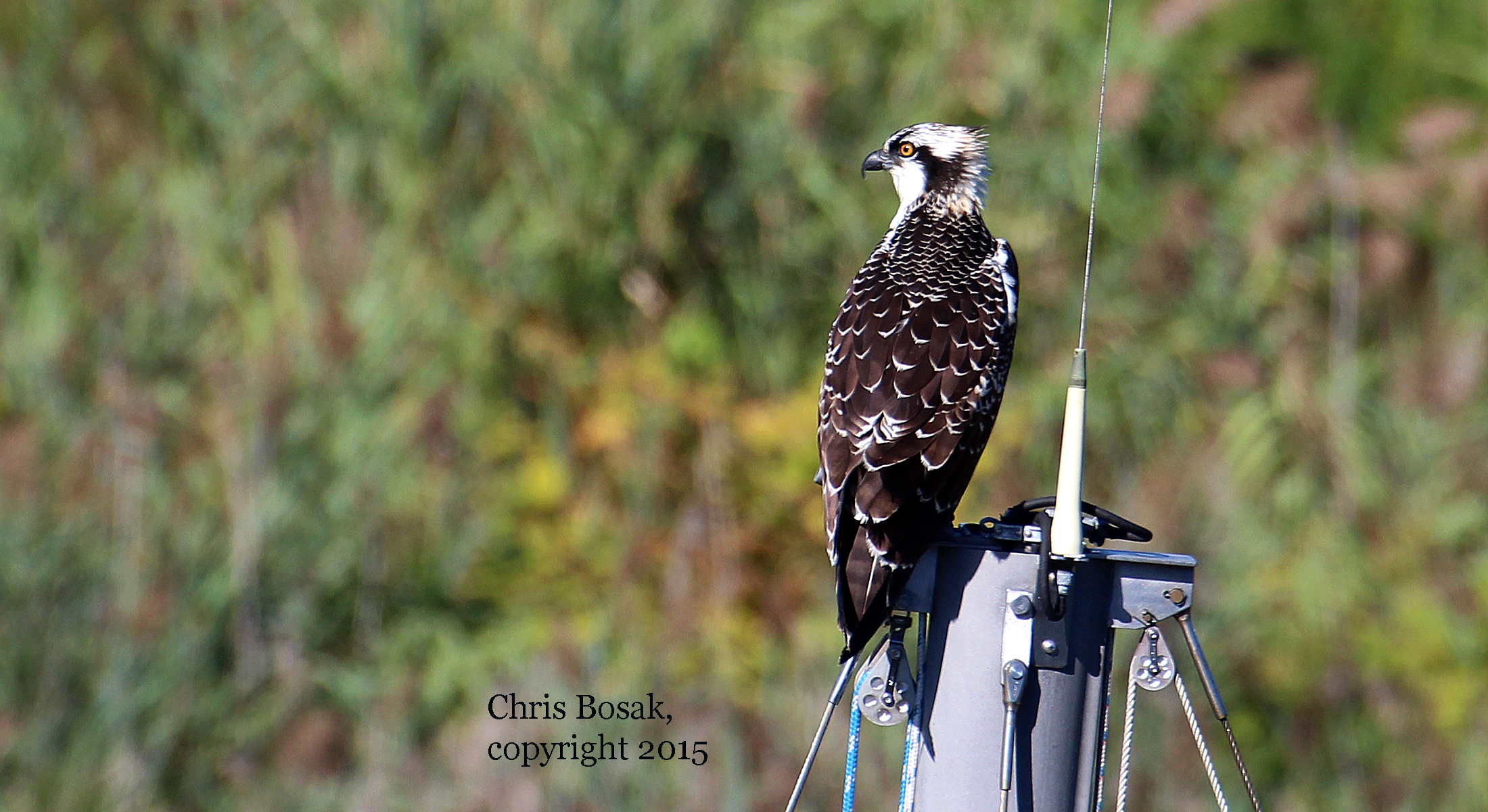
Photo by Chris Bosak
A first-year Osprey sits on the top of a sailboat mast along the Norwalk River in Norwalk, Conn., summer 2015.
I had mentioned in the previous post that I was photographing a young Osprey on the top of a sailboat mast when I spotted another Osprey overhead carrying a fish in its talons. Naturally I was more excited about the Osprey carrying a fish so I posted that photo first.
So with that photo out of the way, here are some more Osprey photos that I have taken in the last week — yes, including a few of that young Osprey on the sailboat mast.

Photo by Chris Bosak
An Osprey flies with a fish in its talons over the Norwalk River in Norwalk, Conn., summer 2015.

Photo by Chris Bosak
An Osprey sits near its nest on Fish’s Island off the coast of Darien, Conn., in summer 2015.
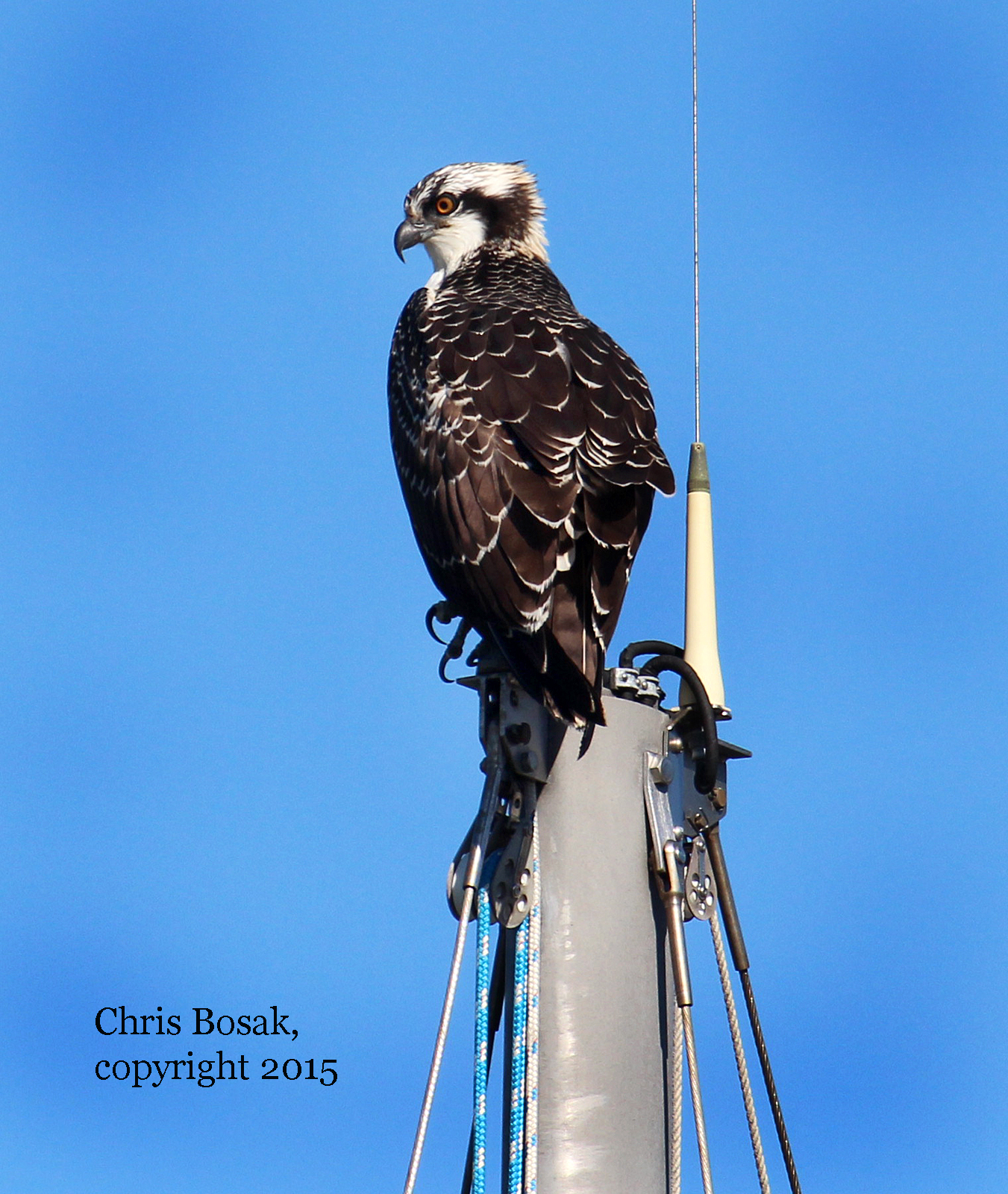
Photo by Chris Bosak
A first-year Osprey sits on the top of a sailboat mast along the Norwalk River in Norwalk, Conn., summer 2015.
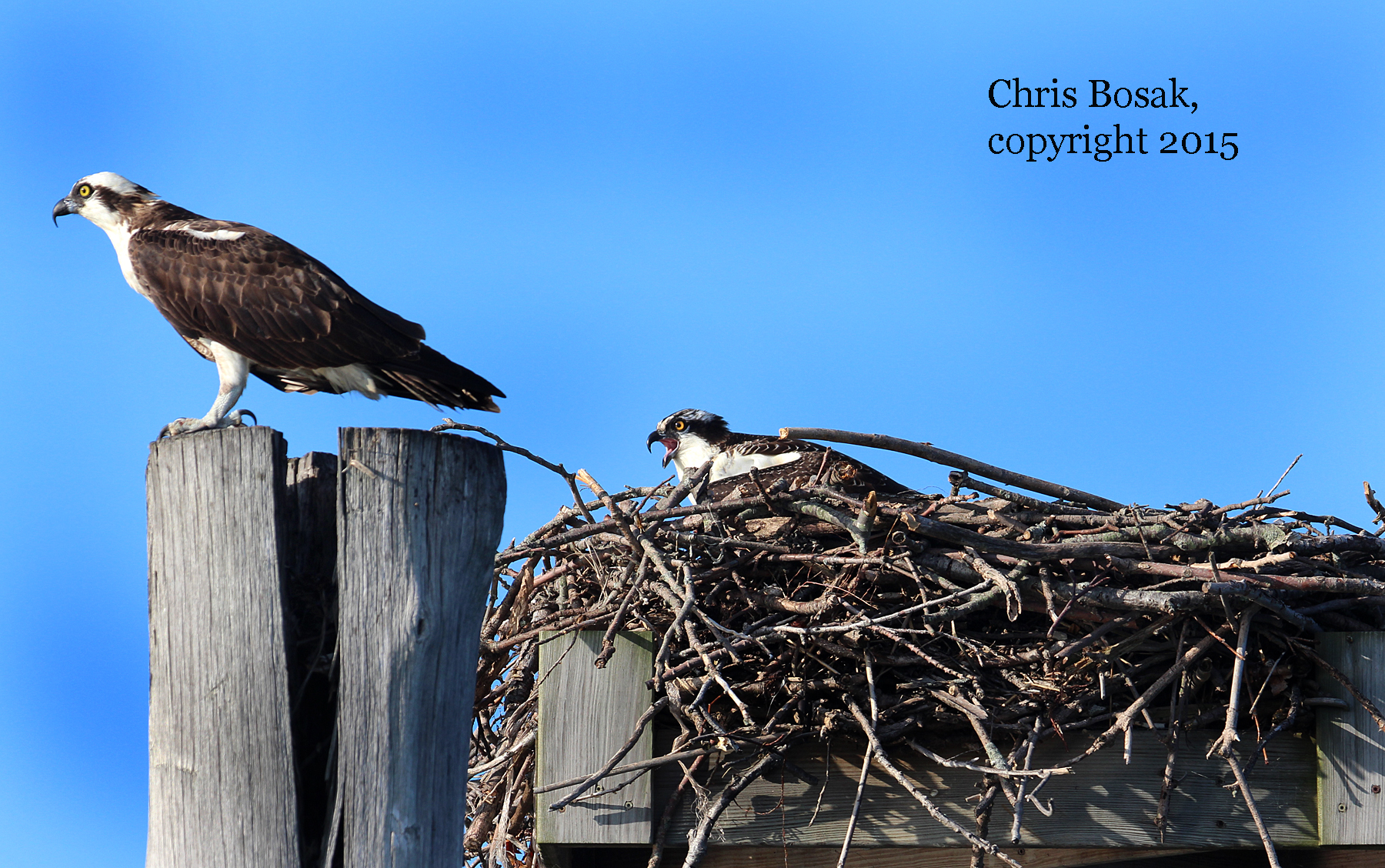
Photo by Chris Bosak
An adult Osprey sits on a piling (left) as a first-year Osprey sits in a nest off the coast of Norwalk, Conn., summer 2015.
 Birds of New England.com