Unknown's avatar

About Chris Bosak

Bird columnist and nature photographer based in New England.

Merry Christmas from BirdsofNewEngland.com

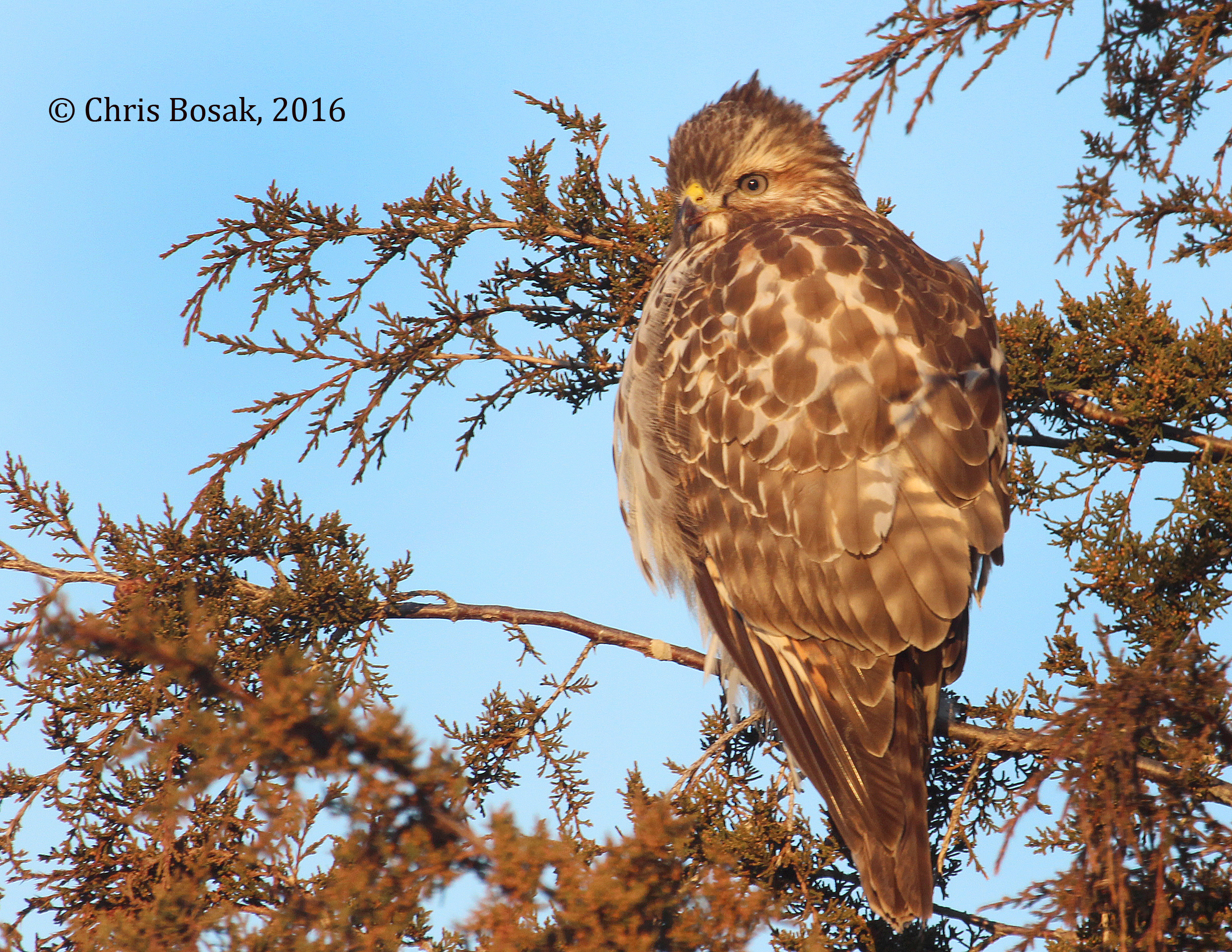
Photo by Chris Bosak A Red-tailed Hawk perches in an evergreen in Brookfield, Conn., winter 2016.

Photo by Chris Bosak
A Red-tailed Hawk perches in an evergreen in Brookfield, Conn., winter 2016.

I know it’s not your traditional Christmas greeting photo with a Northern Cardinal sitting on an evergreen bough as snow covers the background. But whoever said I follow the rules all the time?

I got these photos the other day while driving through Brookfield, Conn., as the sun was rising for the day. The scene was awash in the golden light of the dawn and the Red-tailed Hawk stood out clear as day on the dark green evergreen.

Merry Christmas and happy holiday to those who view and enjoy http://www.BirdsofNewEngland.com. Thanks for your support!

Photo by Chris Bosak A Red-tailed Hawk perches in an evergreen in Brookfield, Conn., winter 2016.

Photo by Chris Bosak
A Red-tailed Hawk perches in an evergreen in Brookfield, Conn., winter 2016.

The fox and the mouse (guess who wins)

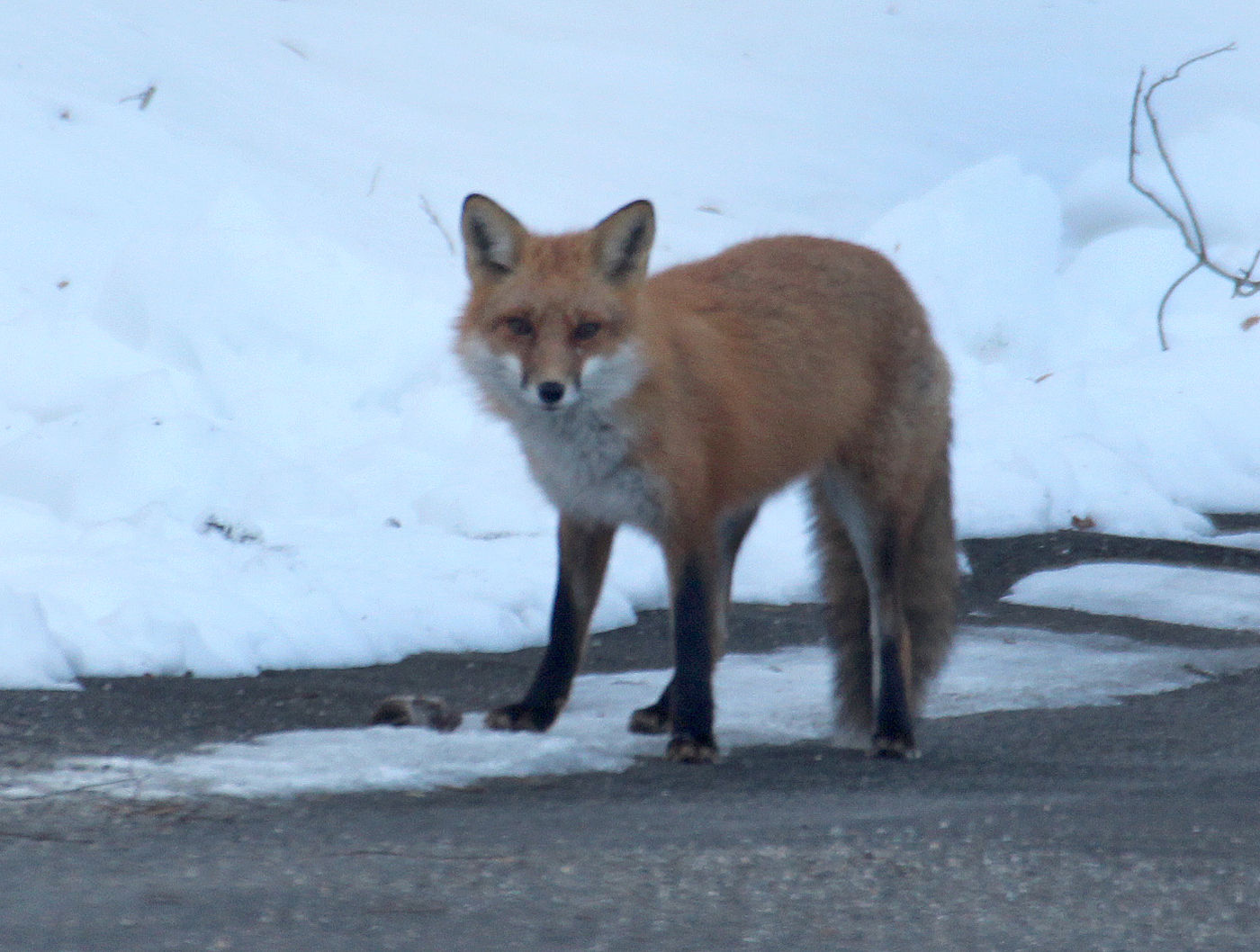
Photo by Chris Bosak A Red Fox finds a mouse on a driveway in Brookfield, Conn., winter 2016.

Photo by Chris Bosak
A Red Fox finds a mouse on a driveway in Brookfield, Conn., winter 2016.

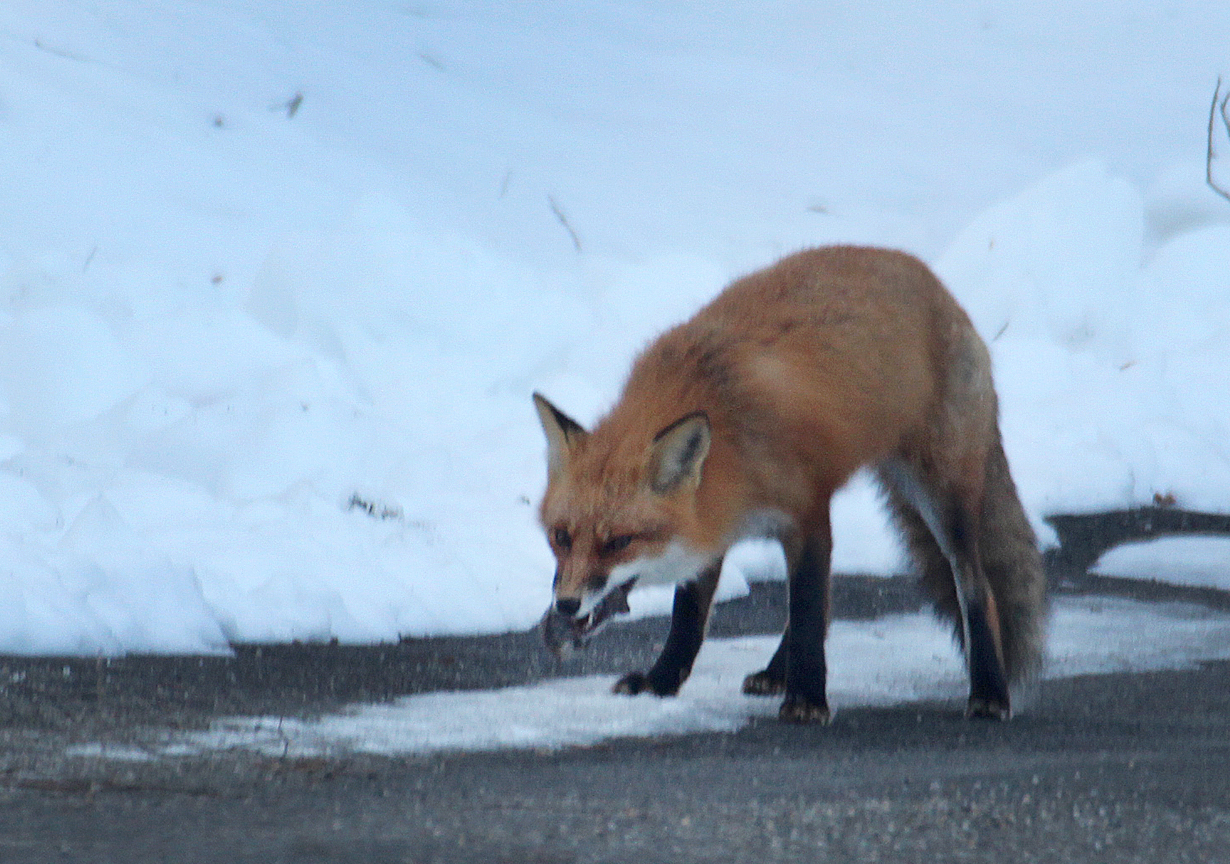
Photo by Chris Bosak A Red Fox eats a mouse on a driveway in Brookfield, Conn., winter 2016.

Photo by Chris Bosak
A Red Fox eats a mouse on a driveway in Brookfield, Conn., winter 2016.

I was driving around this morning looking for a photo to take for work. When I found the perfect subject – just a sign in a yard to illustrate a story I’m working on – a Red Fox scampered through the scene and crossed right in front of the sign I was photographing anyway.

As the fox continued across the property it paused on the driveway to eat a mouse. I’m not sure if the fox caught the mouse right then and there, or if the mouse was already dead on the driveway and therefore an easy meal. My guess is that the mouse was already dead, perhaps getting run over by the property owner earlier that morning.

At any rate, the fox paused just long enough to pick up the mouse with its jaws, take three or four bites to position the mouse just right and gulped it down.

That is usually the type of thing I see when I don’t have my camera handy. I was lucky this time.

Don’t worry, I’ll have a more pleasant post for Christmas!

Red-breasted Nuthatch poses for close-up

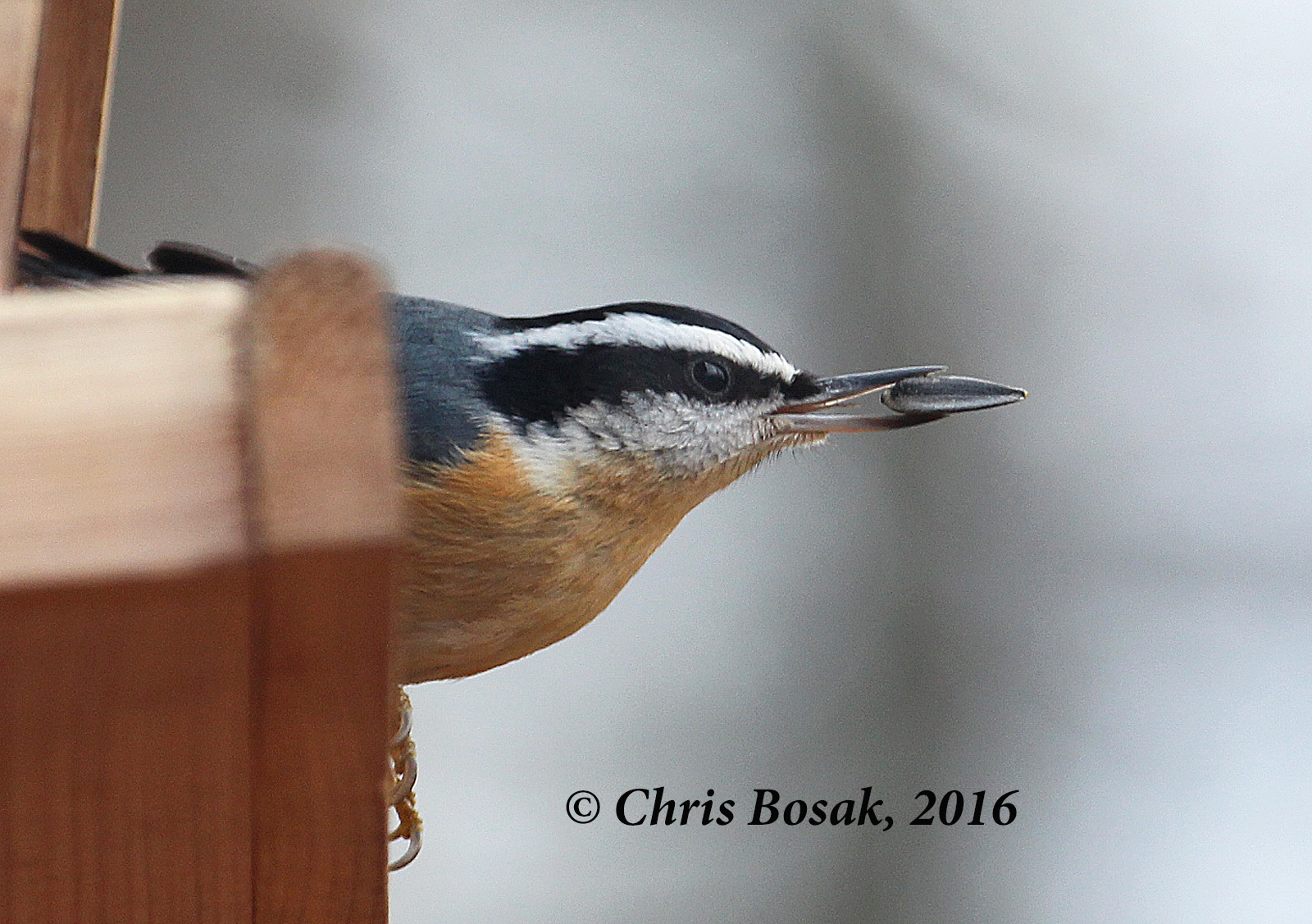
Photo by Chris Bosak A Red-breasted Nuthatch grabs a sunflower seed from a feeder in Danbury, Conn., in Dec. 2016.

Photo by Chris Bosak
A Red-breasted Nuthatch grabs a sunflower seed from a feeder in Danbury, Conn., in Dec. 2016.

It’s been a good year for Red-breasted Nuthatches in southern New England. Here’s another one that visited my feeder this winter (even though winter hasn’t officially started yet.)

Living in the woods


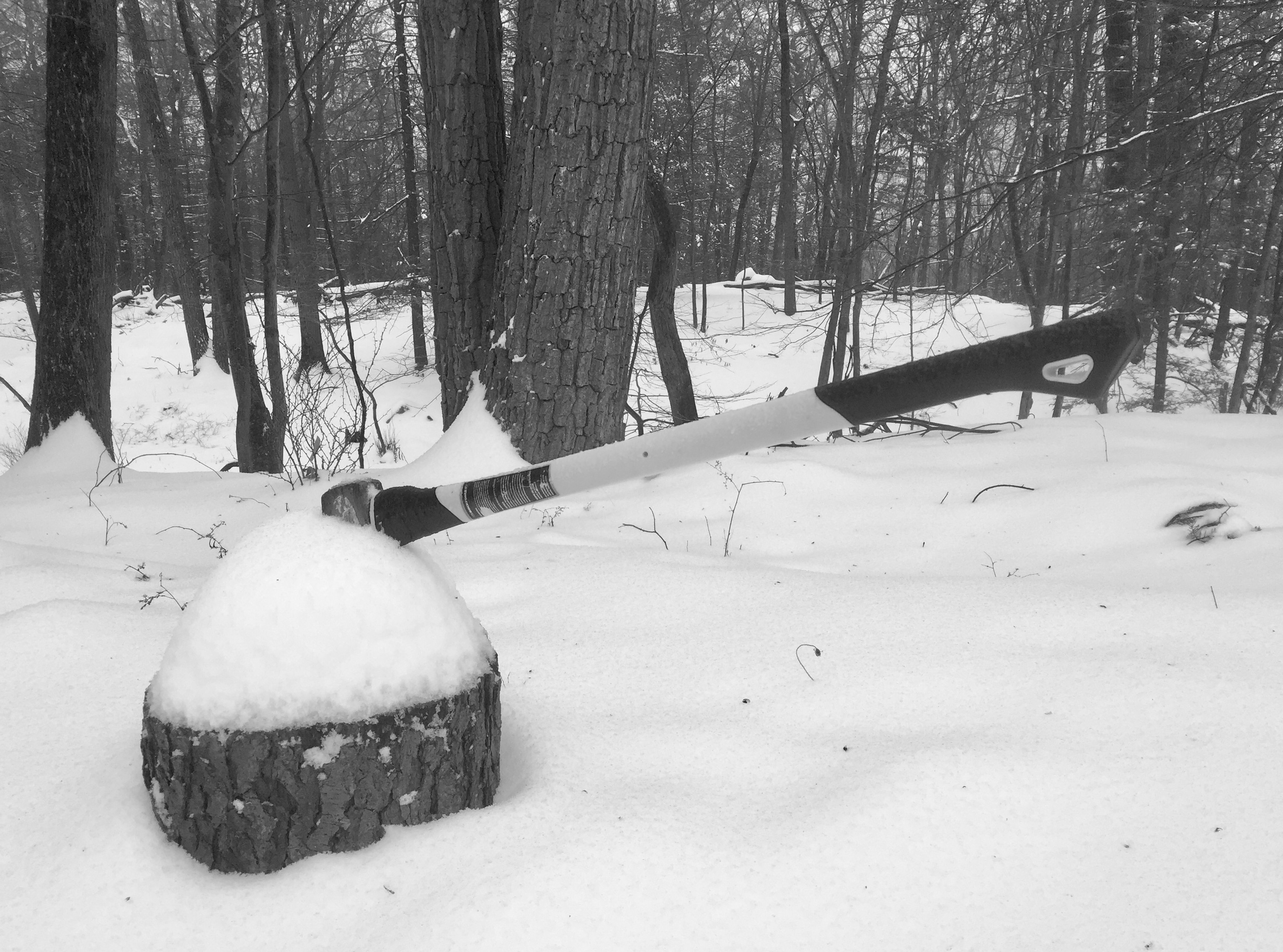
It’s been about a year and a half since I bought a house in the woods. It’s not exactly isolated like Thoreau’s cabin on Walden Pond, but it is in the woods nonetheless. Every once in a while a scene catches my eye and I need to grab a photo of it, even with my iPhone.

If it doesn’t include a bird in the photo, I typically do not post it to this site. With this photo I will start posting them more often. Otherwise the photos never see the light of day. The woods are just too cool not to share.

Below is the color version. Which one do you like better?

ax-snow


This one’s for Lorna: Blue Jay at feeder

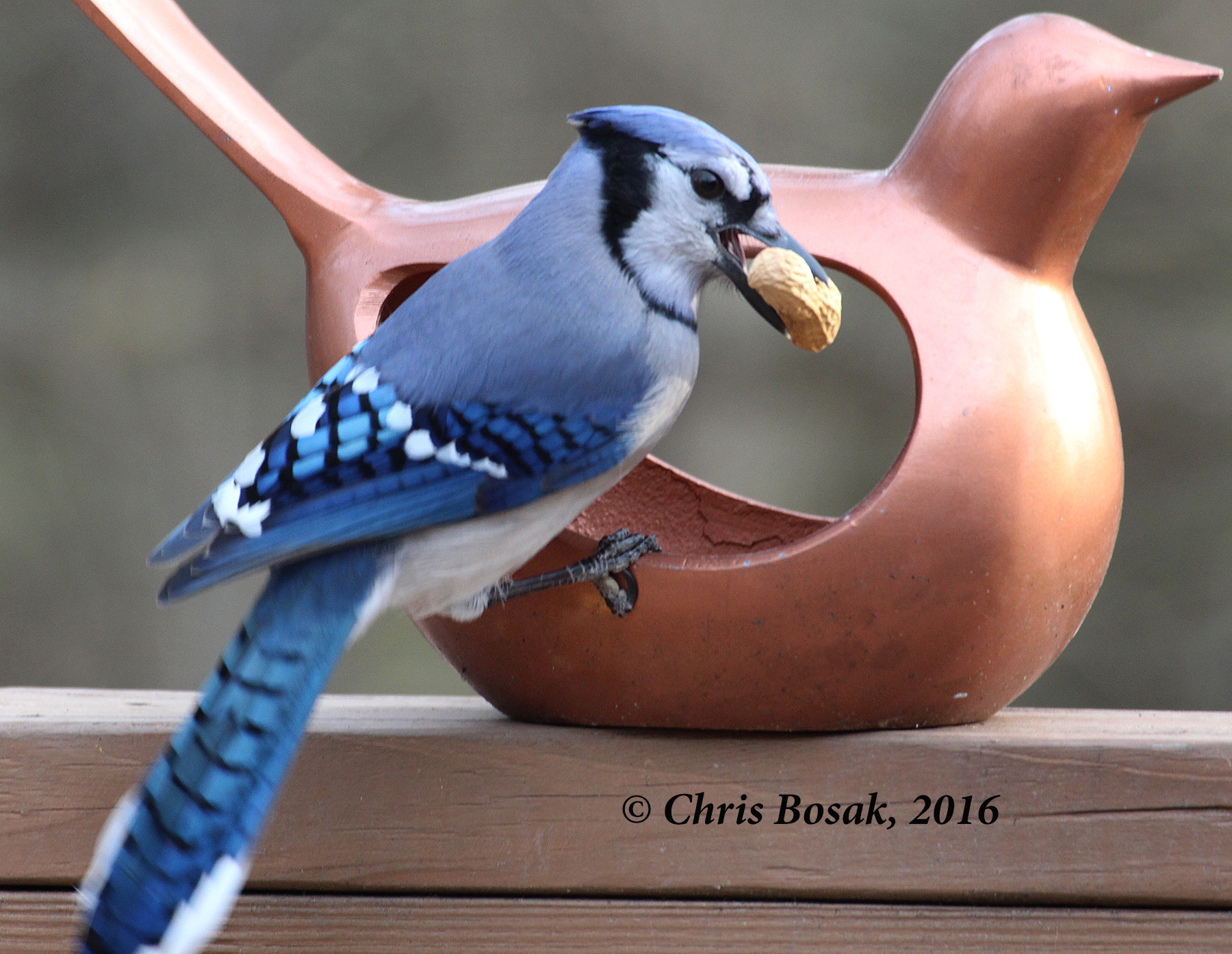
Photo by Chris Bosak A Blue Jay grabs a peanut from a feeder in Danbury, Conn., Dec. 2016.

Photo by Chris Bosak
A Blue Jay grabs a peanut from a feeder in Danbury, Conn., Dec. 2016.

This post is for my friend Lorna, a tough young bird. The Hour family is thinking of you.

The feeder is an Enchanted Bird Venetian Bronze feeder by Good Directions. More importantly for this post, though, it was a gift from Lorna when I bought my house in Danbury last year. Well, it works Lorna, as you can see from these photos. More photos to come in the following days, too.

Thanks again, Lorna, and be well!

Photo by Chris Bosak A Blue Jay grabs a peanut from a feeder in Danbury, Conn., Dec. 2016.

Photo by Chris Bosak
A Blue Jay grabs a peanut from a feeder in Danbury, Conn., Dec. 2016.

Latest For the Birds column: Evening Grosbeak kind of winter

Evening Grosbeaks visit a feeder near Jaffrey in this photo taken by For the Birds reader Pam Hoyt.

Evening Grosbeaks visit a feeder near Jaffrey in this photo taken by For the Birds reader Pam Hoyt.

Here’s the latest For the Birds column, which runs weekly in The Hour (Norwalk, Conn.), The Keene (NH) Sentinel and several Connecticut weekly newspapers.

………

The sightings of Evening Grosbeaks keep pouring in.
I mentioned these handsome finches in my last column, but now that I keep hearing from readers who see them, their story bears elaboration.
First, let me mention a few of the sightings that came in this week. Pam, who lives near Jaffrey, had a flock of Evening Grosbeaks visiting her feeder for three days in a row.
“We almost never see them here so I was surprised,” she wrote.
Pam also attached a great photo of her visitors.
I particularly appreciated getting the photo as I could use it to accompany this column. I don’t have any photos of Evening Grosbeaks because I rarely see them as well. I take that back, I do have one photo that I took in Pittsburgh, N.H., about 20 years ago. It was a one-legged male Evening Grosbeak and it was finding seeds along one of the many logging roads in the northern tip of the state. It appeared otherwise healthy so the loss of a leg didn’t seem to be holding this bird back.
I was brand new to photography so the photos I did take Continue reading

Latest For the Birds column: Notes from New England readers

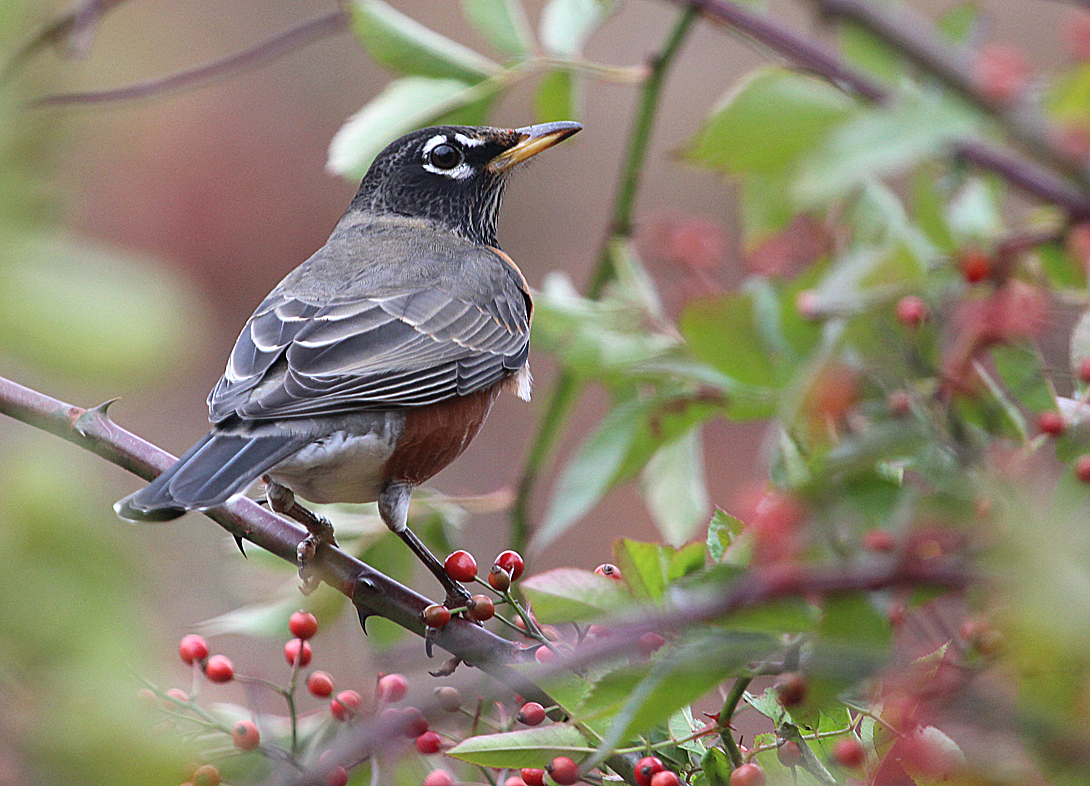
Photo by Chris Bosak American Robin in Selleck's Woods in fall 2013.

Photo by Chris Bosak
American Robin in Selleck’s Woods in fall 2013.


Here’s the latest For the Birds column, which runs weekly in The Hour (Norwalk, Conn.), The Keene (NH) Sentinel and several Connecticut weekly newspapers.

………………

Catching up on some news from For the Birds readers.

Carol wrote in to share a story about a backyard spectacle she witnessed at her new home.

Her new place overlooks a pond surrounded by trees and from her living room window she peers down on two dogwood trees and an adjacent white pine. In early fall, the dogwoods were “both laden with berries,” she wrote.

One day she noticed movement between the pine and dogwoods and inspected the situation. She saw close to a dozen American Robins moving from tree to Continue reading

Titmouse grabs a peanut

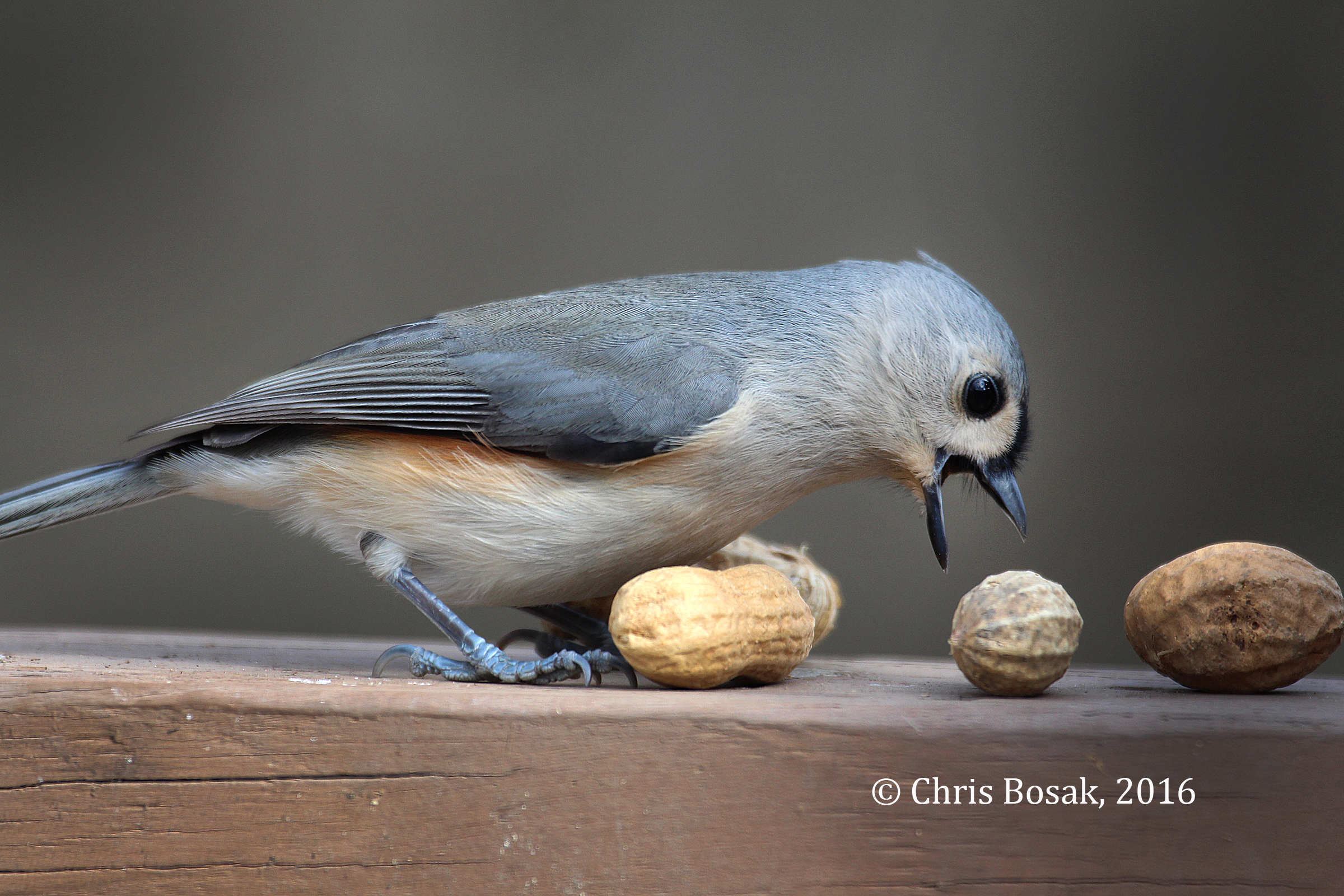
Photo by Chris Bosak A Tufted Titmouse tries to figure out how to pick up a peanut off a deck railing in Danbury, Conn., in the fall of 2016.

Photo by Chris Bosak
A Tufted Titmouse tries to figure out how to pick up a peanut off a deck railing in Danbury, Conn., in the fall of 2016.

I am entertained by birds doing just about anything, but one of my favorite sights in the backyard is watching birds grab peanuts and fly off to store or eat them. I put a handful or two of peanuts on a platform feeder or on the deck railing itself and wait for the birds to discover them.

If the Blue Jays arrive first, forget it, the peanuts will be gone in a matter of minutes. Same goes for the Red-bellied Woodpecker. One or two of them empty the feeder in minutes, too.

I like when smaller birds, such as the Tufted Titmouse above, go after the peanuts. Their bills aren’t large enough to simply fly in, grab the nut and take off. They need to pick the right peanut and position it just right to grab it.

If you’ve never tried offering peanuts in the shell to birds, give it a shot. It has great entertainment value.

Bird Book Look: Birding at the Bridge

Here is another bird book that came out this year for your consideration during this holiday season.This one came out in early summer, and is titled “Birding at the Bridge: In Search of Every Bird on the Brooklyn Waterfront,” by Heather Wolf, published by The Experiment. 

It is largely a picture book, but does include interesting text on each of the species featured in the book. Cities, especially a borough of New York City, may not be regarded as birding hotspots, but the author and photographer prove that that is not necessarily the case.

Below is more information on the book, taken from a press release from the publisher.

Be sure to visit the Bird Book Look page on this site for other book gift ideas.


Bright lights, big city, and . . . birds? The Brooklyn Bridge once overshadowed a decaying industrial waterfront, but today it points the way to a new green oasis: Brooklyn Bridge Park. When avid birder Heather Wolf moved from tropical Florida to a nearby apartment, she wondered how many species she might see there, and soon came to a surprising realization: Not only is the park filled with an astonishing variety of birds, but the challenges that come with urban birding make them even more fun—and rewarding—to find.

 Camera in hand, Heather has captured scores of memorable scenes—a European starling pokes its head out of a hole in a snack shop, a marsh wren straddles two branches, common grackle nestlings clamor for food above the basketball courts—in more than 150 stunning photographs that will entrance birders and bird lovers, wherever their local patch may be. From the familiar-but-striking bufflehead duck to the elusive mourning warbler, every species comes to life on the page, foraging, nesting, and soaring in the slice of the city where they’ve made themselves at home. Discover the thrilling adventure of birding in the great outdoors—in the heart of Brooklyn. 

Latest For the Birds column: Is another extinction coming?

Photo by Chris Bosak Piping Plover at Coastal Center at Milford Point, April, 2014.

Photo by Chris Bosak
Piping Plover at Coastal Center at Milford Point, April, 2014.

Here’s the latest For the Birds column, which runs weekly in The Hour (Norwalk, Conn.), The Keene (NH) Sentinel and several Connecticut weekly newspapers.

….

The 2016 version of the Connecticut State of the Birds report is perhaps the most disconcerting yet, especially with the mention of the “E” word

That word, of course, is extinction and it’s not a word bandied about lightly in the bird world. But there it is in black and white in “State of the Birds 2016: Gains, Losses and The Prospect of Extinction.” See? There it is right in the title of the report.

The word is used to describe the Saltmarsh Sparrow, which unless serious conservation efforts are taken (and are successful), “faces likely extinction within 50 years,” according to the report. Saving the Saltmarsh Sparrow is tricky because, as its name suggests, it is a bird of the salt marshes, one of the habitats most in peril.

The reports takes a look at bird population trends over the last 10 years. The Saltmarsh Sparrow may be the species most in danger, but unfortunately, the news is grim for other birds as well. Another denizen of salt marshes, the Clapper Rail, as well as shrubland birds Blue-winged Warbler and Brown Thrashers are also seeing steep declines in number. The Piping Plover, a coastal favorite among birders, is also continuing to lose ground, even though great efforts have been made to protect them.

The greatest threat to all these birds is the destruction of their habitat. They require a very specific habitat on which to nest and those habitats are becoming scarce throughout Connecticut and New England. It’s not like a Saltmarsh Sparrow can suddenly pack its bags and move to the woods to raise a family.

Milan G. Bull, Connecticut Audubon’s senior director of science and conservation, has been involved with all 11 State of the Birds reports. He said the dire warnings about the Saltmarsh Sparrow should be heeded.

“(The) most disturbing (trend), though, is the likely extinction of the Saltmarsh Sparrow because of sea level rise,” Bull said. “It would be the first avian extinction in the continental U.S. since the Heath Hen in 1931. There’s no way to characterize that as anything but a disaster.”

Chris Elphick of the University of Connecticut researched and wrote about tidal marsh birds. He made the eye-opening prediction about the Saltmarsh Sparrow.

“We now know these birds are in more trouble than was suspected, and that we need to act soon if we wish to protect them,” he wrote in the report.

So what can be done? The authors of the report don’t merely throw bad news out there. They offered several recommendations on what can be done to help these birds at risk.

Among the recommendations are: institute national policies to slow sea level rise and reduce global warming; land owners should look for ways to create, maintain or expand shrub-scrub habitat; meet state’s goal of protecting 21 percent of the state’s land by 2023; start planning and funding for a breeding bird atlas; and find “new and novel funding mechanisms for non-game conservation efforts.”

The news wasn’t all bad, however. Some bird species are faring better than expected. The Indigo Bunting and Prairie Warbler have seen gains in recent years.

It’s always nice to look at the bright side, but we shouldn’t be blinded by it. The dark side of bird population trends is much more illuminating and in need of consideration.


The PDF of the full version of the report may be found here.