Unknown's avatar

About Chris Bosak

Bird columnist and nature photographer based in New England.

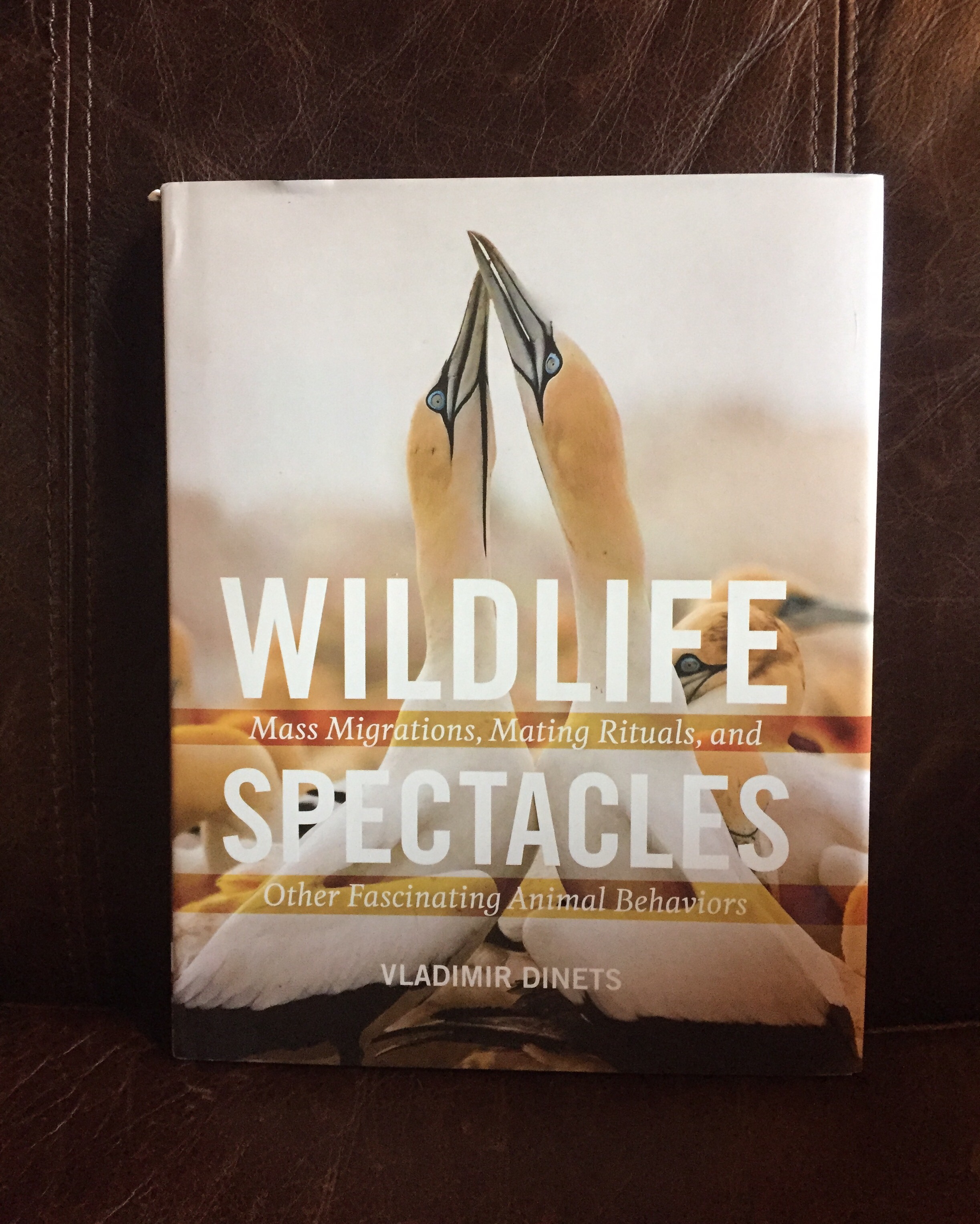
Bird Book Look: “Wildlife Spectacles”


With the holiday season uponus, I figured I would rekindle the Bird Book Look feature of this blog. Remember, the posts are not necessarily reviews and recommendations, but merely me letting you all know about some of the new bird and wildlife books that are out there. Visit the Bird Book Look page, which you can see in the menu above, to see the previous posts. Most are available in bookstores, and I’m sure all of them can be found on Amazon.

This post’s featured book is: “Wildlife Spectacles: Mass Migrations, Mating Rituals, and Other Fascinating Animal Behaviors” by Vladimir Dinets. It is published Continue reading

What do Pied-billed Grebes eat?

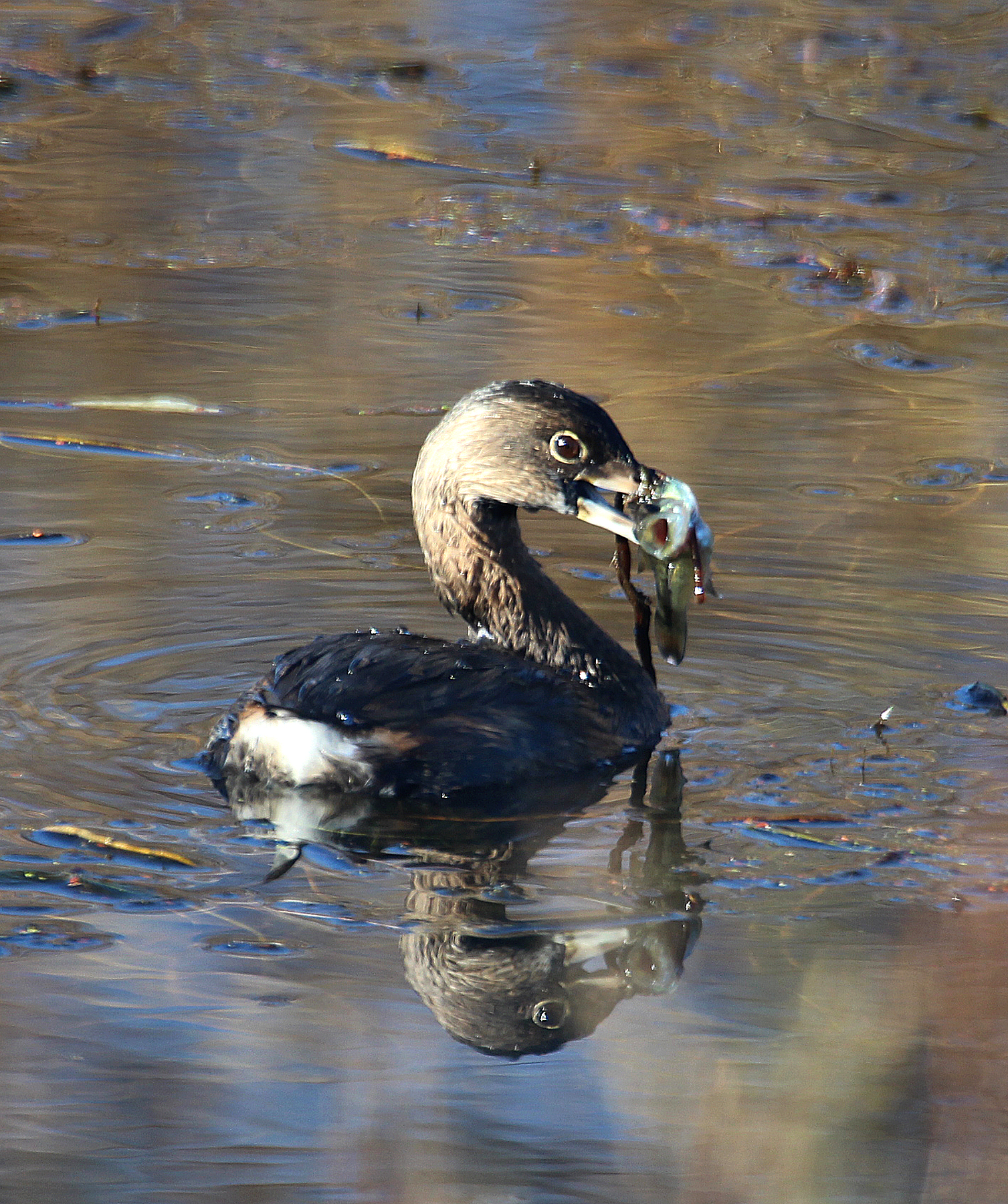
Photo by Chris Bosak A Pied-billed Grebe catches a fish in a pond in Danbury, Conn., November 2016.

Photo by Chris Bosak
A Pied-billed Grebe catches a fish in a pond in Danbury, Conn., November 2016.

Pied-billed Grebes eat a variety of aquatic foods, such as crustaceans, insects and amphibians. Oh, they also eat fish, as you can see from this photo I got last week at a small pond in Danbury, Conn.

Now the next question … why is it called a Pied-billed Grebe?

The word “pied” means having two more colors. This grebe’s bill is silver/gray and black in the summer.


More photos from Audubon Park My Bird Week media challenge

Photo by Chris Bosak A Tufted Titmouse visits a feeder in Danbury, Conn., in Nov. 2016, during the Audubon Park My Bird Week media challenge. Both the feeder and seeds are from Audubon Park.

Photo by Chris Bosak
A Tufted Titmouse visits a feeder in Danbury, Conn., in Nov. 2016, during the Audubon Park My Bird Week media challenge. Both the feeder and seeds are from Audubon Park.

Here are a few more photos from my Audubon Park My Bird Week media challenge.

Here’s the original post, which explains the challenge.

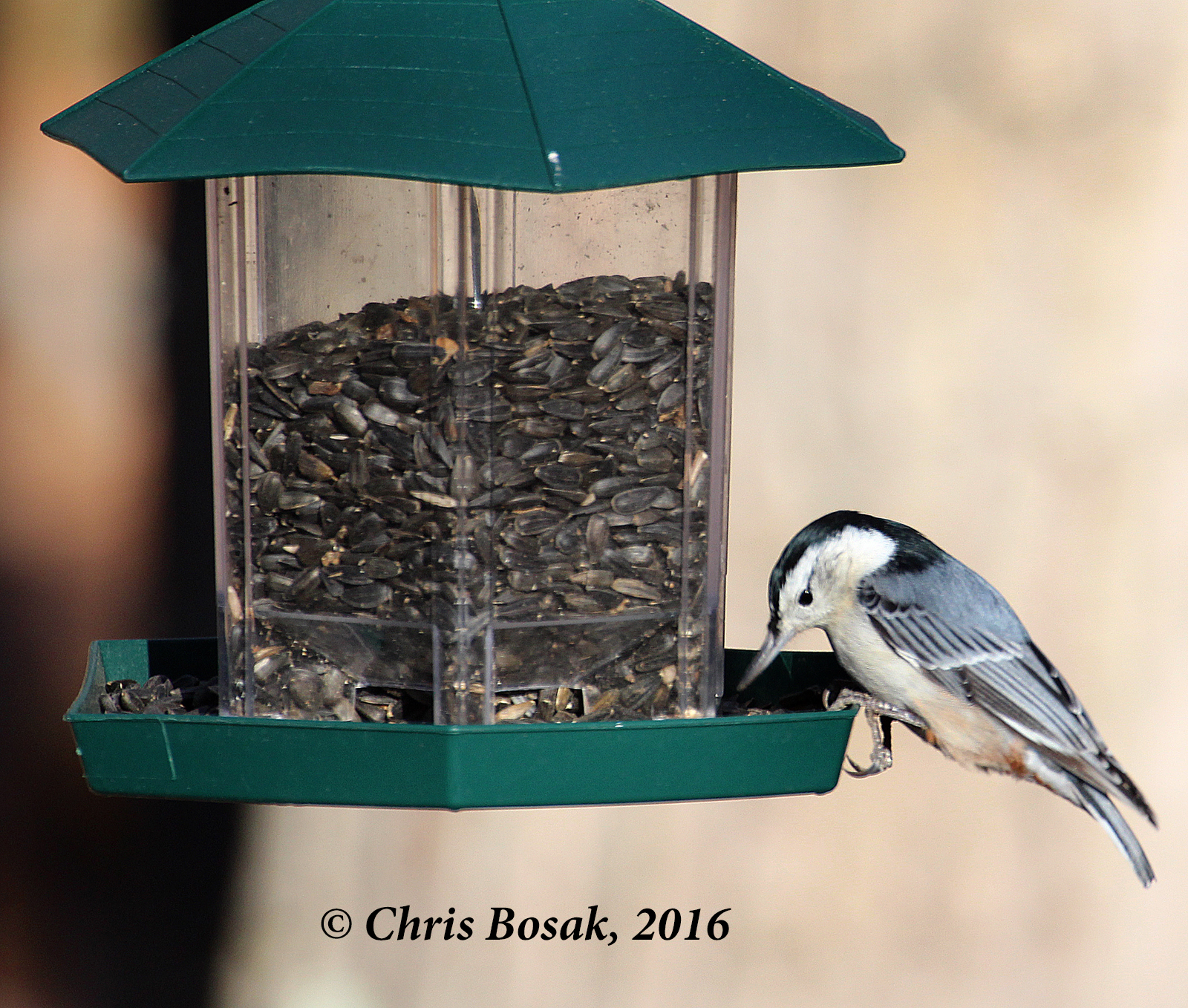
Photo by Chris Bosak A White-breasted Nuthatch visits a feeder in Danbury, Conn., in Nov. 2016, during the Audubon Park My Bird Week media challenge. Both the feeder and seeds are from Audubon Park.

Photo by Chris Bosak
A White-breasted Nuthatch visits a feeder in Danbury, Conn., in Nov. 2016, during the Audubon Park My Bird Week media challenge. Both the feeder and seeds are from Audubon Park.

Audubon Park’s media challenge accepted

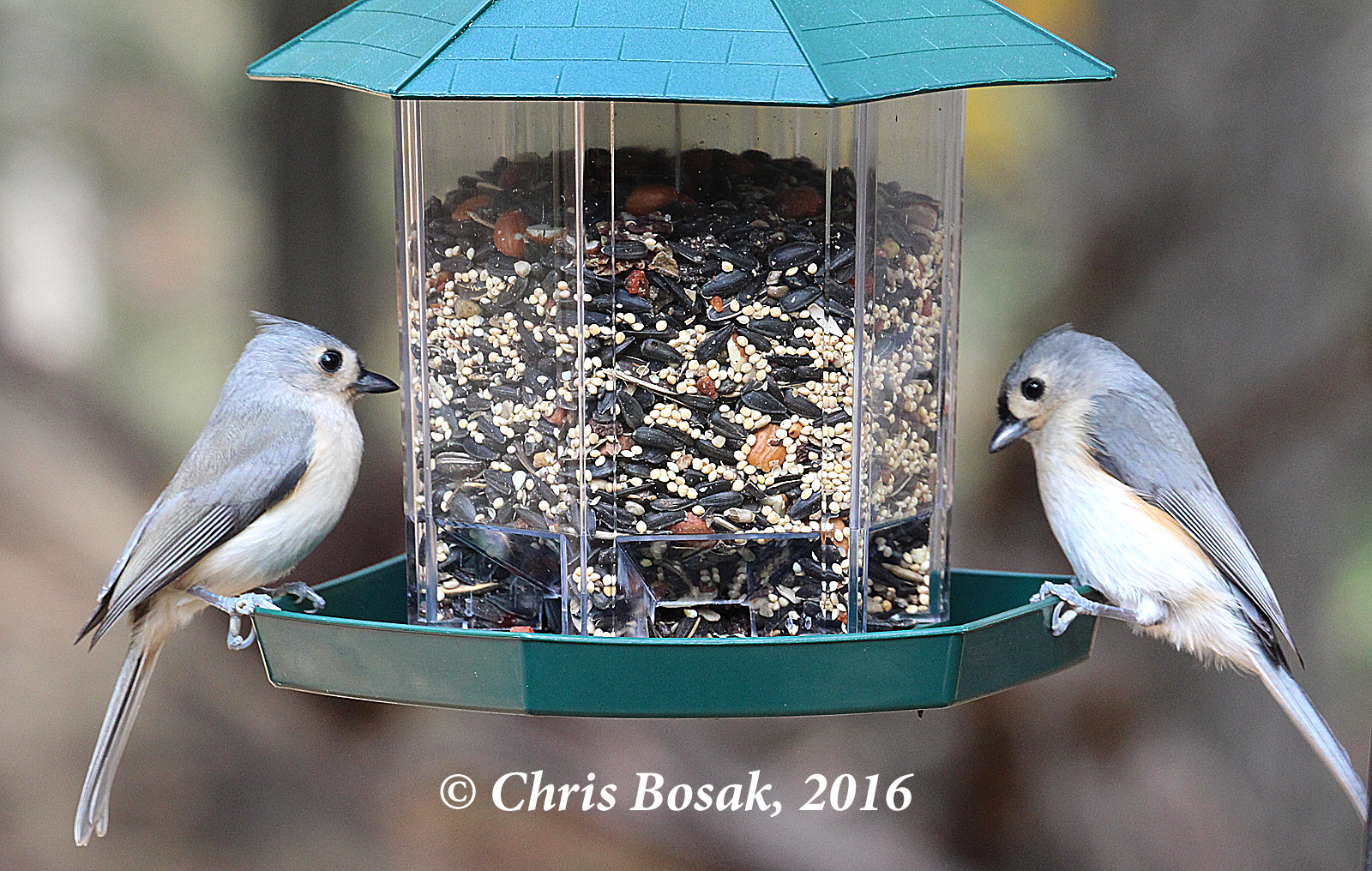
Photo by Chris Bosak A pair of Tufted Titmice visit a feeder during the Audobon Park My Bird Week media challenge in Danbury, Conn., in Nov. 2016. Both the feeder and seeds are from Audubon Park.

Photo by Chris Bosak
A pair of Tufted Titmice visit a feeder during the Audobon Park My Bird Week media challenge in Danbury, Conn., in Nov. 2016. Both the feeder and seeds are from Audubon Park.

I recently accepted a challenge from Audubon Park to participate in a media challenge whereby members of the media, using an Audubon Park feeder and bird seed blend, feed birds for a week and tracke the birds they see.

I already had a feeding station set up, so I knew the birds would quickly discover the new feeder in the area. I planted a new pole set up to hang the feeder on. Well, it took a matter of minutes for the Audubon Park feeder and seeds to get broken in by “my” birds.

At first it was my favorite regulars — Black-caped Chickadee, Tufted Titmouse, and White-breasted Nuthatch — that visited the feeder. Continue reading

Latest For the Birds column: The flurry will come

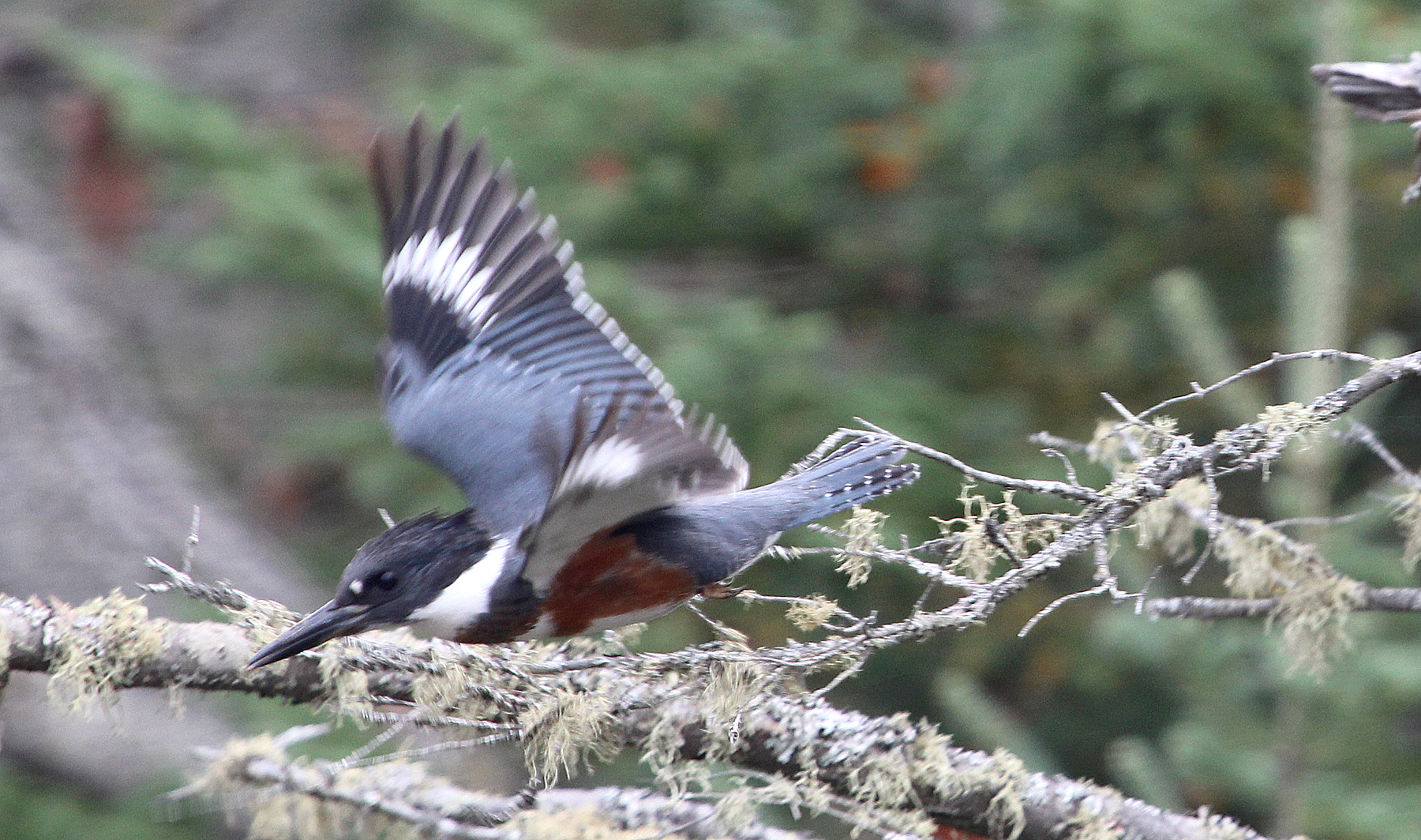
Photo by Chris Bosak A female Belted Kingfisher leaves its perch near a small pond along the Golden Road in Maine.

Photo by Chris Bosak
A female Belted Kingfisher leaves its perch near a small pond along the Golden Road in Maine.

Here’s the latest For the Birds column, which runs weekly in The Hour (Norwalk, Conn.), The Keene (NH) Sentinel and several Connecticut weekly newspapers.

…..

A lot of birdwatching is standing around looking at nothing. It’s also a lot of walking around looking at nothing.

Let me rephrase that. A lot of birdwatching is standing or walking around looking at things other than birds. No matter where you are, there is always something to look at — even if it is the trees, shrubs and flowers in the habitat in which you are seeking birds. I think it is an essential part of being a birdwatcher to appreciate the “less exciting” things in nature.

To be a birdwatcher you also need very heavy doses of patience and faith.

You could walk around your favorite woods Continue reading

Super Moon indeed

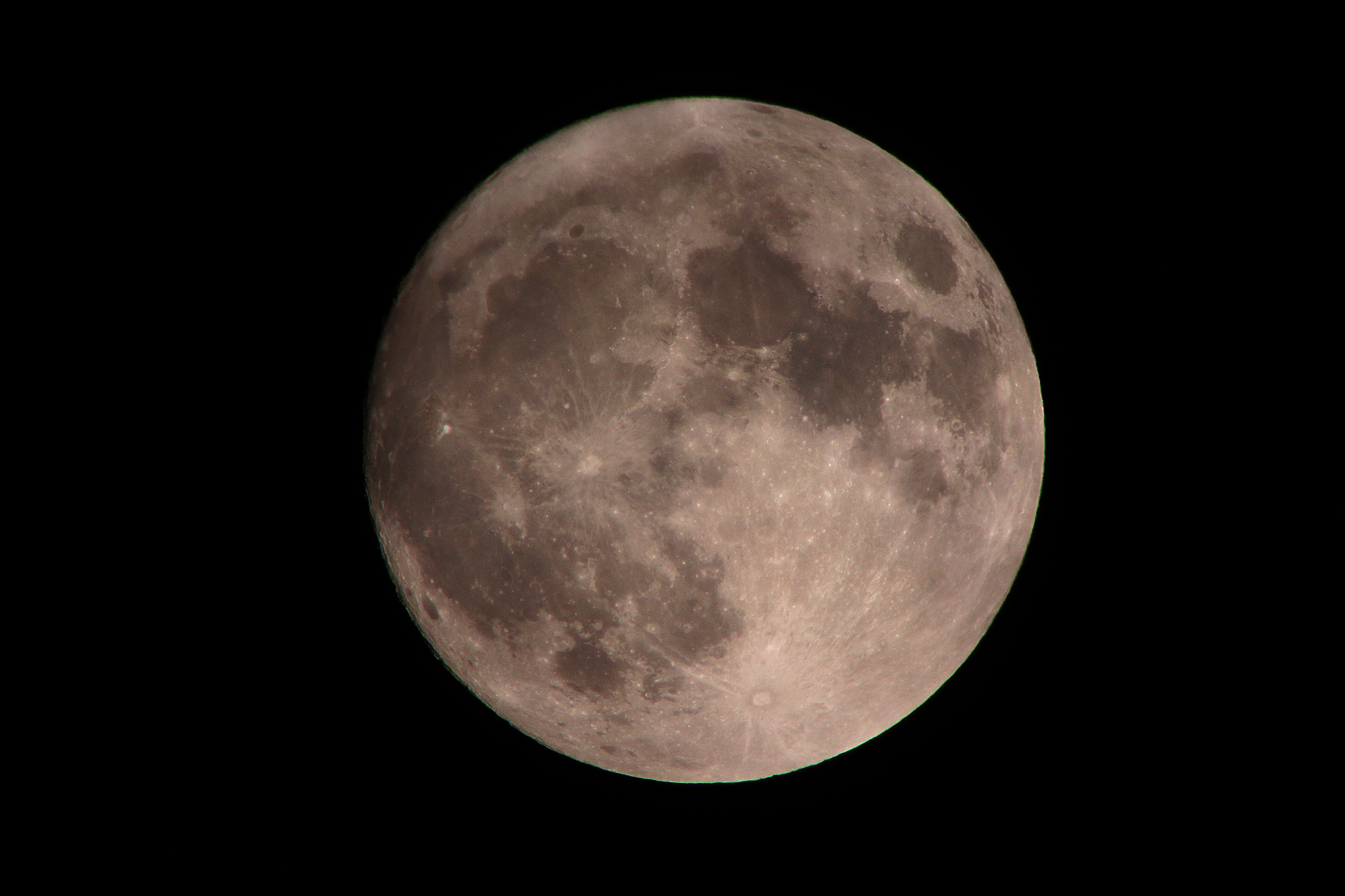
Super Moon as seen on Sunday, Nov. 13, 2016.

Super Moon as seen on Sunday, Nov. 13, 2016.

That is a cool moon. Super Moon on Sunday, Nov. 13, 2016.

Moon and night photography is new to me to so here’s the best I have to offer at this point. Cool stuff, though.


Latest For the Birds column: Return of the juncos

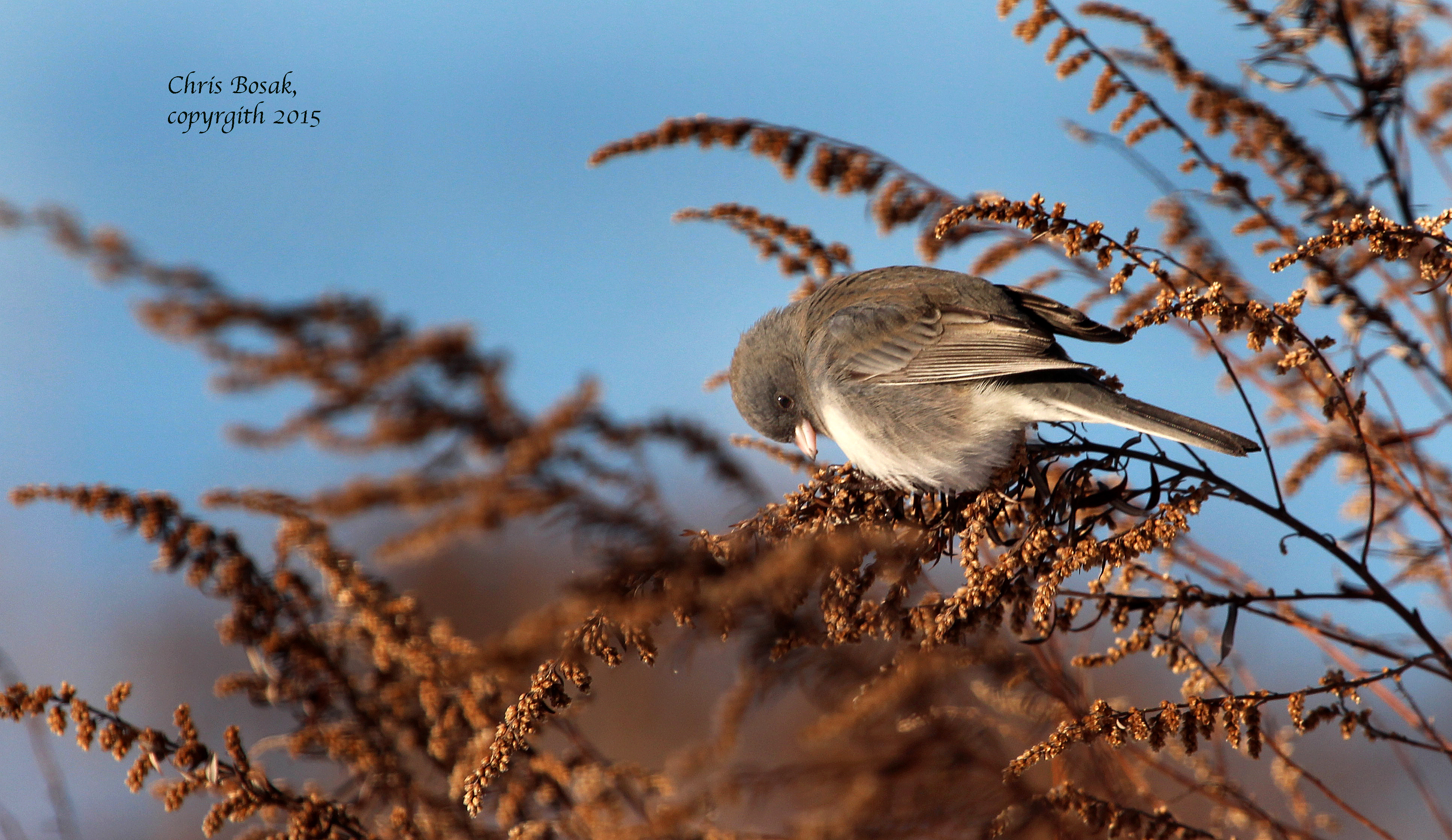
Photo by Chris Bosak A junco looks for seeds on a dried up plant at Weed Beach in Darien, Conn., in Jan. 2015.

Photo by Chris Bosak
A junco looks for seeds on a dried up plant at Weed Beach in Darien, Conn., in Jan. 2015.

Here’s the latest For the Birds column, which runs weekly in The Hour (Norwalk, Conn.), The Keene (NH) Sentinel and several Connecticut weekly newspapers.

I was wondering when the first one would show up. Mid to late October is typically when the Dark-eyed Juncos start showing up throughout the southern half of New England, but I hadn’t seen one yet and October was quickly fading away.

Eventually I noticed something that looked out of place on a low branch of a hemlock that juts into my backyard. Black-capped Chickadees, Tufted Titmice and White-breasted Nuthatches had launched an all-out assault on my feeders in the morning and never stopped as the sun continued to get higher in the sky.

Clearly this bird on the hemlock was not one of those three species. I had seen enough of those birds to be able to identify them in my sleep.

Obviously, the bird was a Dark-eyed Junco. It was an adult male Continue reading

Latest For the Birds column: Ducks are finally here

Photo by Chris Bosak Hooded Mergansers swim in a small unfrozen section of water at Selleck's/Dunlap in Darien, Conn., in Feb. 2014.

Photo by Chris Bosak
Hooded Mergansers swim in a small unfrozen section of water at Selleck’s/Dunlap in Darien, Conn., in Feb. 2014.

Here’s the latest For the Birds column, which runs weekly in The Hour (Norwalk, Conn.), The Keene (NH) Sentinel and several Connecticut weekly newspapers.

For me, “duck season” starts with the first sighting of something other than a mallard, wood duck or black duck.

This year it started in late August when I saw a lone hooded merganser in the small pond at the end of the trail that runs through my backyard. I’m not sure if it was an early migrating duck or if its territory is nearby, but it certainly marked an early start to duck watching season for me.

Of course, several weeks passed before my next duck sighting, but now it appears that duck season is finally here for real. The weather certainly is fitting for duck season. The other day, I stood on the shores of a lake watching a flock of common mergansers. The temperature was in the low 30s and a whipping, cold wind stung my ears. In other words, things could have been worse.

The “typical” start to duck-watching season goes something like this: The leaves change colors and a few hooded mergansers and ring-necked ducks show up on area lakes and ponds. Large flocks of common mergansers congregate on larger lakes and reservoirs.

As the season progresses, small ponds attract goodies such as green-winged teal, gadwall and American wigeon. Larger lakes attract more and more common mergansers as well as bufflehead and a goldeneye or two.

Long Island Sound and the Atlantic Ocean follow a somewhat predictable schedule as well, with brant showing up rather early, followed by beauties such as common and red-throated loons, grebes, goldeneye, long-tailed ducks, red-breasted mergansers and scaup. Eider are common on the ocean, but not so much on the Sound.

Continue reading

Latest For the Birds column: Red-breasted Nuthatch right on cue

A Red-breasted Nuthatch perches near a birdfeeding station in Danbury, Conn., Oct. 2016.

A Red-breasted Nuthatch perches near a bird feeding station in Danbury, Conn., Oct. 2016.

Here’s the latest For the Birds column, which runs weekly in The Hour (Norwalk, Conn.), The Keene (NH) Sentinel and several Connecticut weekly newspapers.

I wrote three weeks ago about my affinity for the nuthatches we see in New England.

In the middle and southern parts of the region we see white-breasted nuthatches much more frequently than its smaller cousin, the red-breasted nuthatch. The latter variety, however, is seen more often in the northern reaches of New England.

The red-breasted nuthatch does show up at feeders in the middle and southern parts, especially in fall and winter, but not too often and in varying degrees depending on the year. In fact, the little birds will venture all the way to Florida during winter migration.

With that said, I was happy to receive an email from Dean a few days after that column appeared.

“You mentioned red-breasted nuthatches, which reminded me that I have not seen one in years,” Dean wrote from his Marlborough, Conn., home. “They are such cute little birds. Then two days after your article what shows up but an RBN at the feeder.”

A few days after Dean wrote me that email, I was sitting on my deck watching my feeders. It was an unending flurry of black-capped chickadees, tufted titmice, white-breasted nuthatches and downy woodpeckers. I got so tuned into seeing those species that it didn’t immediately register in my brain that a new arrival had appeared.

Continue reading

Latest For the Birds column: Owls come a’hootin’

Photo by Chris Bosak A young Barred Owl clings to a branch in the woods in Danbury, Conn., spring 2016.

Photo by Chris Bosak
A young Barred Owl clings to a branch in the woods in Danbury, Conn., spring 2016.

Here’s the latest For the Birds column, which runs weekly in The Hour (Norwalk, Conn.), The Keene (NH) Sentinel and several Connecticut weekly newspapers edited by Jerrod Ferrari.

….

Throughout my birding “career,” I haven’t had great luck with owls.

I get the occasional look at a great horned owl and have only slightly better luck with finding barred owls. I’ve had modest success with snowy owls along the Long Island Sound coast in certain winters, especially during that banner year a few winters back. Short-eared owls, long-eared Owls, saw-whet owls, even screech owls? Hardly a glimpse.

But this fall has been pretty good so far in terms of owling. Not that I’ve actually seen owls — even a single one — but I have heard plenty of them. It started about two weeks ago when I heard a barred owl in the woods while I was sitting on my deck at dusk.

Then, a few nights ago, I heard a great horned owl. I knew it was fairly close, but I couldn’t pinpoint exactly where it was.

Two nights later, I had a great night of owling, and I didn’t even have to leave my yard. I heard two great horned owls calling to each other, one of which was in my side yard. I didn’t see it, as it was pitch dark, but the sound was definitely coming from close by.

The owls hooted to each other all night. I know it was all night because I was up most of it worrying about my house cat that happened to get out that night. He picked a great night to get out — the night two great horned owls are scanning the neighborhood.

At one point that night, I heard a pair of barred owls in the distance, too. I had never heard any owls from my yard before, and now I was hearing two species in one night.

Barred owls and great horned owls have very different calls. Barred owls belt out a “Who cooks for you? Who cooks for you aaallll?” It’s loud and, quite frankly, creepy. It’s a great Halloween sound. Great horned owls are more subtle when they say “Who’s awake? Me too.”

Now back to my cat. Cubby makes a great escape once a week or so and gets out. Like most pets, it’s best not to chase Cubby as he just runs farther away if he feels pursued. Plus, he’s much too agile and fast to catch anyway. Typically, he’s back in a half hour or an hour. At night, his escapes are usually even shorter. But on this night, he didn’t come home right away. I took frequent walks around the yard with a headlamp on to try to find him. No luck. I gave up on that at about 3 a.m.

I couldn’t sleep with my cat roaming the neighborhood and the constant sound of great horned owls calling to each other. I was torn between this being an awesome night or a terrible night. I certainly appreciated the owl calls, but in the back of my mind I worried about Cubby.

I put my mind at ease by knowing that, yes, owls on occasion will take a cat, but it’s highly unlikely. They are looking for mice, chipmunks, rabbits or similarly small prey. A house cat, while certainly within reason for a powerful great horned owl, is not a desirable prey. Cats are larger than an owl’s normal prey, so owls don’t typically go after cats because of the risks involved.

My mind was at ease, but not totally — certainly not enough to fall into a deep sleep. I left the sunroom door open and sliding door to the kitchen open a few inches in the hopes that Cubby would come in. I had to gauge the width of the door opening carefully as raccoons have gotten onto the enclosed sunporch before to get at the bird food. Boy, they are messy.

Finally at 4:30 a.m., I was half asleep when a loud “meow” came from the kitchen. It was Cubby, and he was fine. I had no idea where he had been or if he saw or heard the owls. I was just relieved that he was back.

I closed the doors and finally fell asleep fully with Cubby curled up at the foot of the bed.

The owls kept hooting, and I kept enjoying it, even in my sleep. When I woke up a few hours later, the sun was up and the owls had quieted. I didn’t know if they had left, but I knew they weren’t calling anymore.

I have heard them on occasion since, but not every night. I’m not sure if they are looking for nesting sites or just checking out a new neighborhood for untapped food sources, but I’m glad them came along. They are welcome in my yard anytime. I just have to be more careful with Cubby’s great escapes.