
Happy Thanksgiving from BirdsofNewEngland.com
Image
Reply


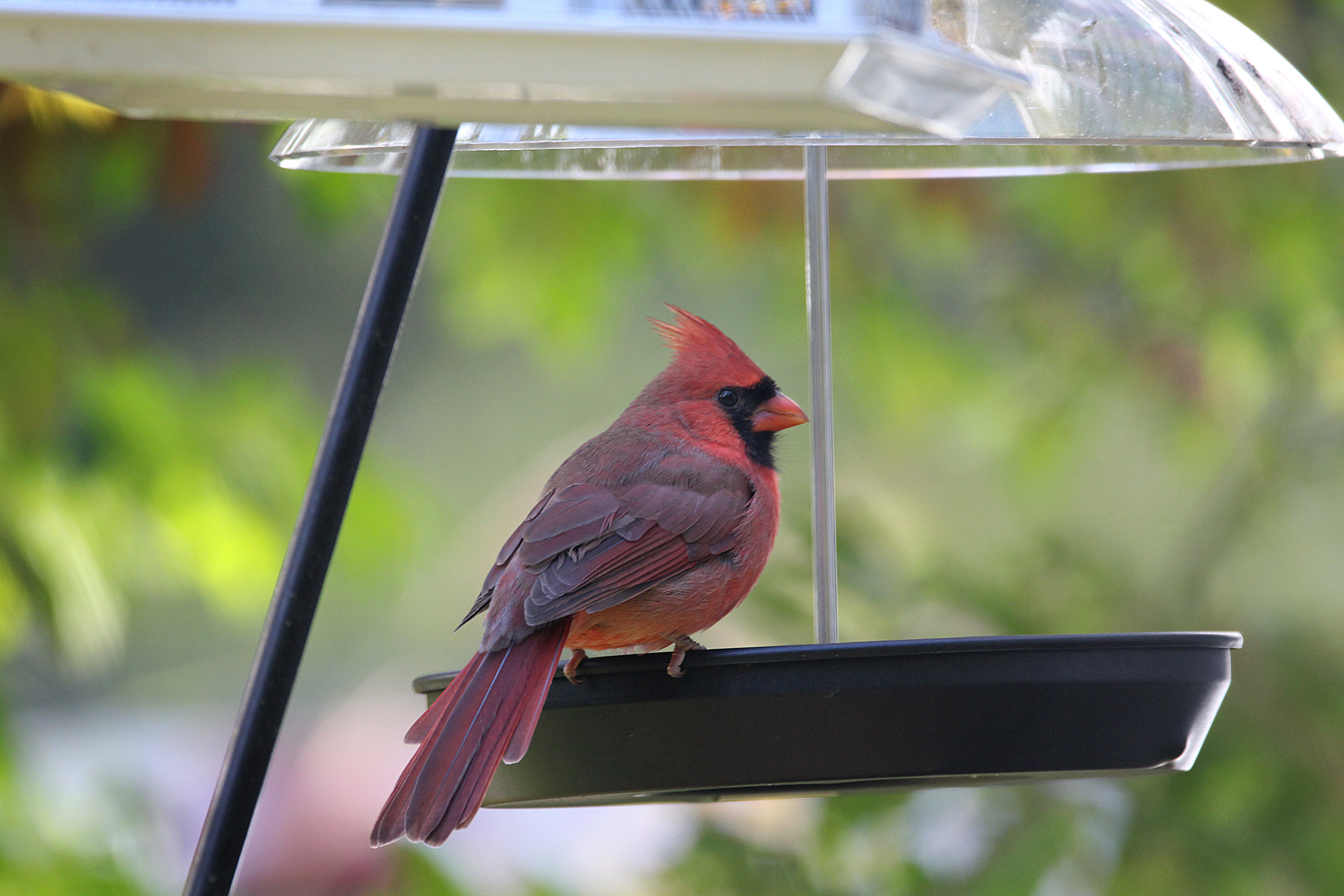
I recently received two Kingsyard brand feeders, and they are bringing in the birds at a pretty good clip. I like the platform feeder (seen above) for its partial dome cover. The cover keeps the rain out of the tray, which was a problem I had with my previous platform feeder. Birds don’t like wet, soggy seeds.
The other feeder is shaped like a house and looks nice hanging on the hook whether there are birds on it or not. Of course, it looks better when birds are on it. I also like that it has three separate chambers for the food so you can offer a mix of seeds and other foods, such as mealworms.
I’m looking forward to seeing what birds will show up over the course of the winter. #kingsyard

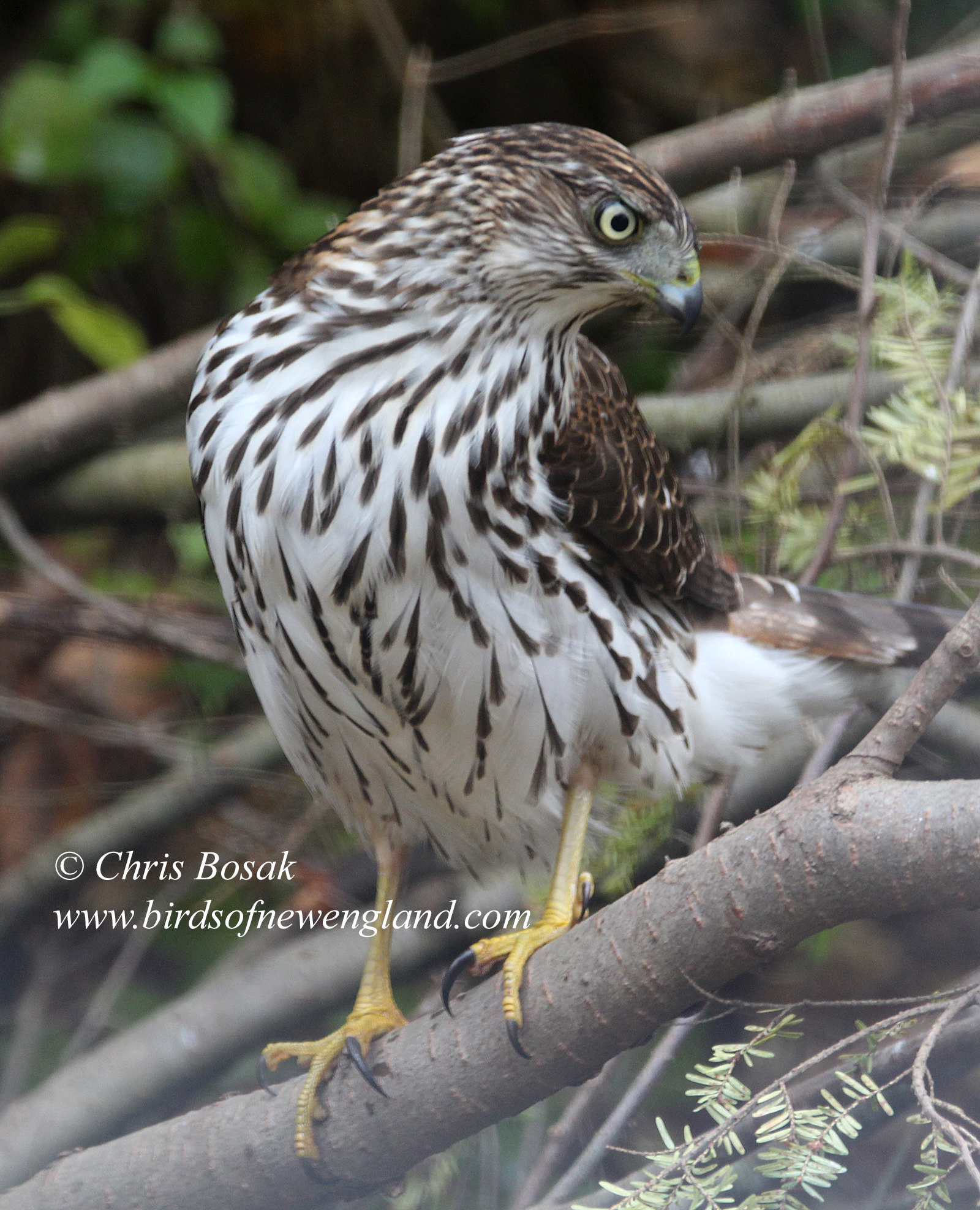
Here are a few more shots of the Cooper’s hawk that visited my backyard the other day. Click here for the full story.


I walked across the living room toward the large window that offers a view of the bird-feeding station and birdbath. I stopped dead in my tracks as a bird much larger than I expected to see was perched on the side of the birdbath.
Wisely, all of the other birds were nowhere to be seen.
It was a Copper’s hawk, one of the hawks in New England that commonly preys on small feeder birds. The large bird of prey had no interest in the birdbath’s water — either for drinking or cleaning. It was simply using the structure as a perch to get a better look at the feeders and nearby bushes. It hopped off the birdbath and onto a hemlock branch I had discarded to give the feeder birds a place to hide. After peering through the underbrush and finding nothing, the hawk flew off.
Continue reading
I settled on the back porch of my brother’s house in western Pennsylvania and watched the blue jays hunt for acorns in an oak tree.
Before I get into that, I wanted to acknowledge how exceptional the fall foliage has been this year. The conditions must have been just right. Oaks can sometimes go from green to burnt orange to brown quickly. This oak, and many others I’ve seen this fall, are a much brighter orange and the color is lingering longer before turning brown.
The blue jays would fly in from the surrounding areas and alight in this spectacular oak tree. The birds disappeared into the bright orange foliage and work at dislodging acorns. I couldn’t see the jays at work but the rustling of the leaves and branches let me know where they were.
Continue reading
As a follow-up to my recent post on cardinals, here is a look at a male cardinal, female cardinal and immature cardinal. Note the brighter bill of the adult female cardinal compared to the young bird. Here is the original post.

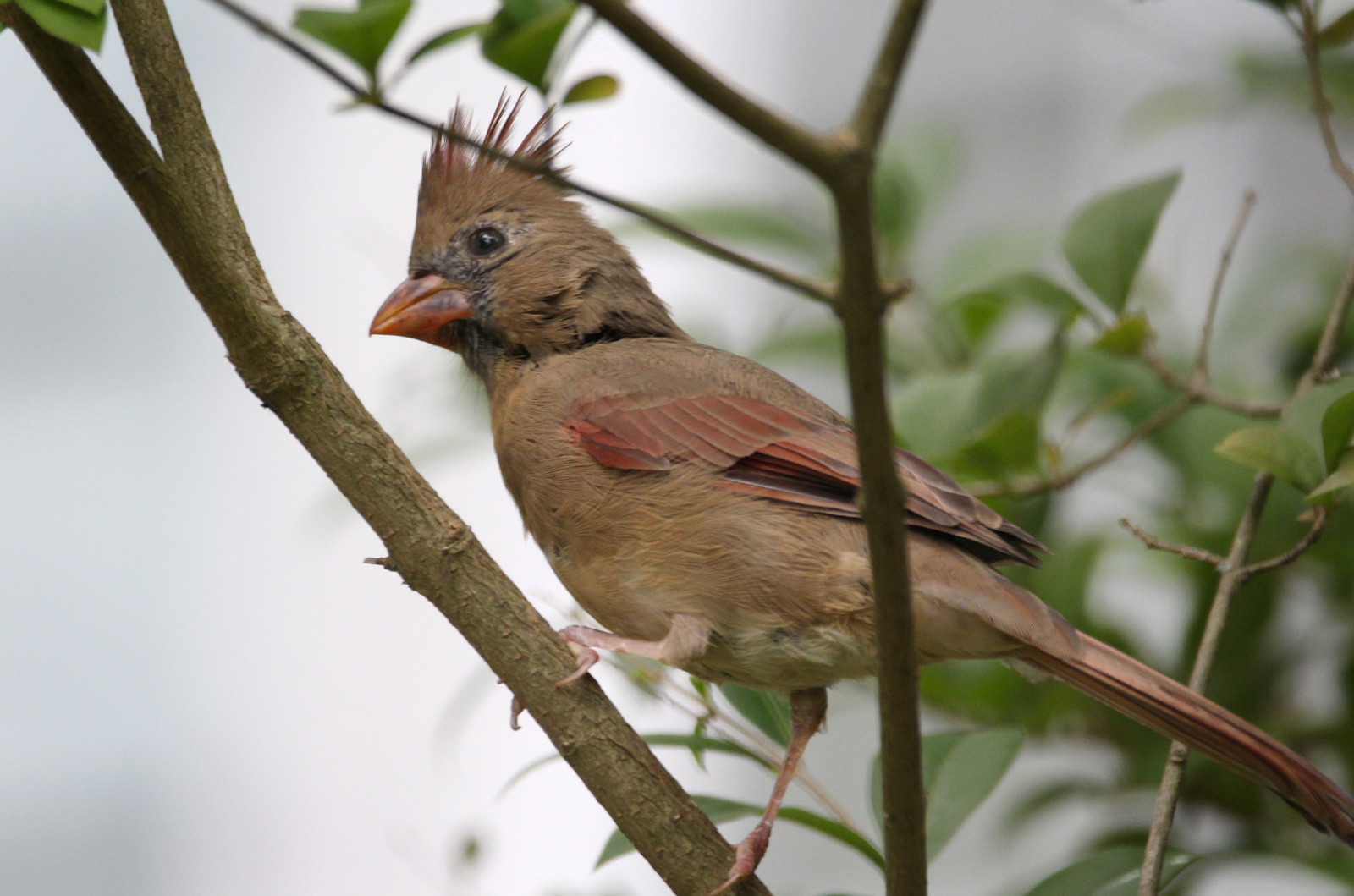
Photo by Chris Bosak – An immature cardinal perches in a bush next to a feeder.
…
My intermittent foot problems have kept me grounded for the most part over the last few weeks, so I have relied heavily on my backyard birds to keep me entertained.
Thankfully, it is a great time of year to watch birds in the backyard. Just as fall migration brings many birds to our parks and open spaces, they also bring plenty of birds to the backyard.
In addition to the common feeder birds, I have seen a few surprises either at the feeder or among the bushes near the feeder. One day I was sitting outside working when a ruby-crowned kinglet flew right past my face and landed in a bush about five feet away from me. Like most kinglets, it did not sit still for very long and hopped around the branches before disappearing in a matter of seconds. It was a nice little visit anyway.
Continue reading
People love fall for a variety of reasons.
Cooler temperatures, Halloween decorations, fall foliage, football, and, of course, pumpkin spice. Everybody claims to hate pumpkin spice, but they wouldn’t make it if people weren’t buying it.
For me, I love fall for the bird migration – obviously. I particularly like finding fall warblers. It is especially rewarding when I stumble across a small flock of fall warblers.
Palm warblers and yellow-rumped warblers are the prime candidates to find in small flocks. Such was the case the other day when I found a group of about a dozen palm warblers eating seeds from the dying weeds and flowers in a meadow.
Large flocks of yellow-rumped warblers are fairly common to come across as well. Just be on the lookout as you never played know where you will find them. I have usually found them eating small berries of some sort.
Continue reading
While on my unsuccessful moose search in northern Maine recently, I came across a bird found only in points north of middle New England.
I knew what it was and launched the field guide app on my phone to gather a little information on the species.
To my surprise, nothing showed up when I searched for the bird.
“How could that be?“ I asked myself. “I know what bird it is and I know what it’s called. Why would it not show up on a search in a field guide to North American birds?”
Then it hit me. I was searching the wrong name. The gray jay is no longer called the gray jay. It is back to being the Canada jay. It had formerly been known as the Canada jay, got switched to gray Jay, and in 2018, got changed back to Canada jay. I had known this before, and even mentioned it in a previous bird column, but had totally forgotten while I was in the field at that moment.
Continue reading
My destination was the northern part of Maine. I’m talking way north. Get to Baxter State Park and keep going for several more hours.
I drove pretty much through the night to get there. I took a few half-hour breaks to sleep and then continued on my way. I have been to northern New Hampshire dozens of times, and I have been to the middle of Maine many times. I’ve always wanted to see what Aroostook County was all about so I took the opportunity to head up there and finally see for myself.
I settled at the border town of Fort Kent where only the St. John River separates the U.S. from Canada.
Wildlife, of course, was the driving force behind the decision to drive up there. The boreal forest, to me anyway, is a magical place filled with so many interesting creatures. Moose are my favorite creatures, but things like lynx, loons, eagles, grouse, boreal chickadees, Canada jays, and other specialty species unique through the habitat are also a draw.
Continue reading Birds of New England.com