Photo by Chris Bosak A red-breasted nuthatch grabs a seed from a feeding station in New England last week. (October 2020)
Yesterday’s rain did not deter the birds from coming to my homemade feeder, which I worked so hard on. Actually, I found a log in the backyard and placed it on my deck railing. Anyway Continue reading →
Photo by Chris Bosak
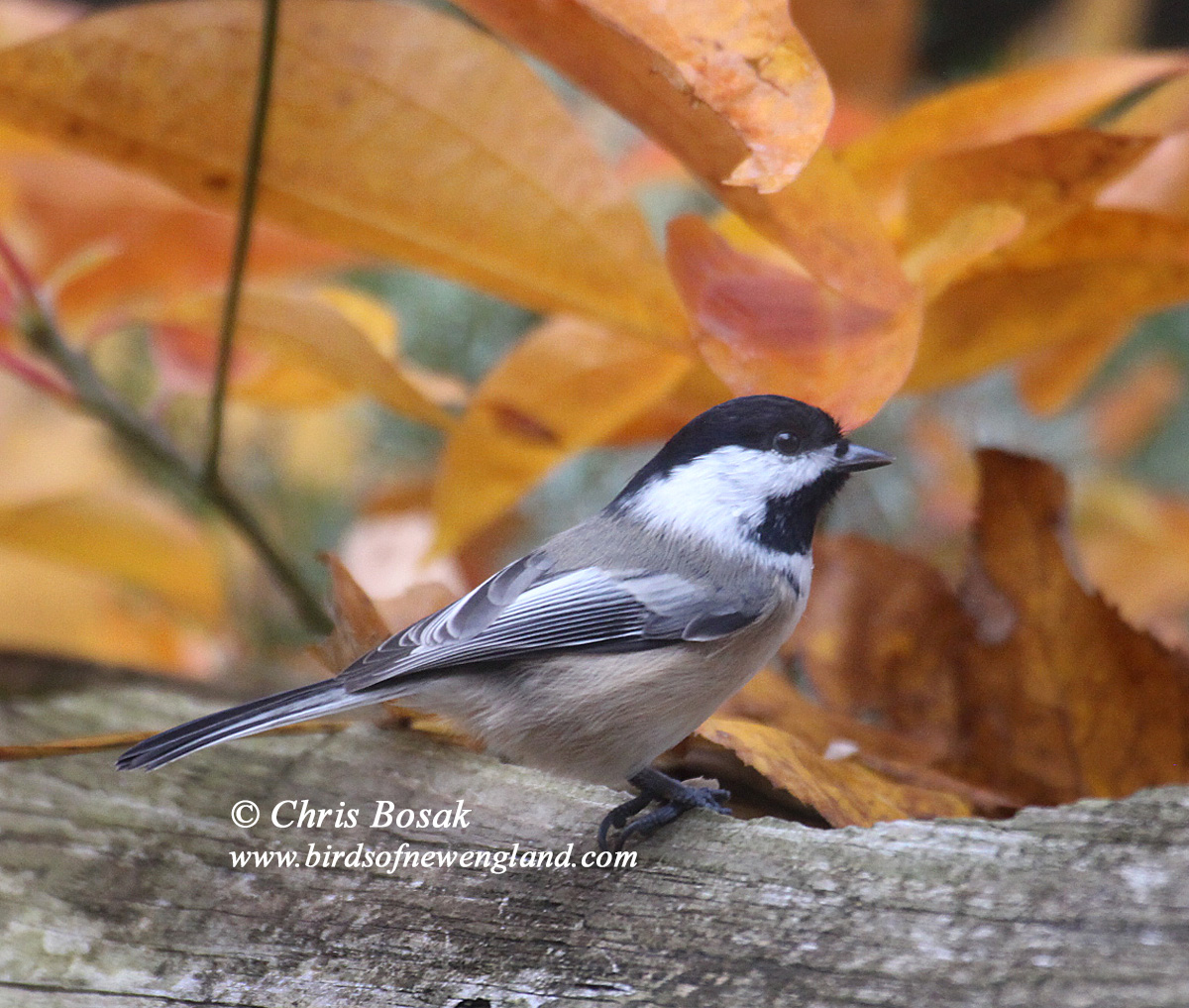
A black-capped chickadee perches on a log in New England, October 2020.Photo by Chris Bosak
A white-breasted nuthatch perches on a log in New England, October 2020.
Photo by Chris Bosak
A red-bellied woodpecker perches on a log and grabs a peanut in New England, October 2020.
There’s nothing like a New England fall, especially when it provides a colorful backdrop for bird photos. I found a rotted log in my backyard, positioned it on my deck railing in front of a small sassafras tree, sprinkled some sunflower seeds and peanuts on the log and enjoyed the show. It was nonstop action for hours. I hope to make a video soon as well.
Photo by Chris Bosak
A tufted titmouse perches on a log in New England, October 2020.Photo by Chris Bosak
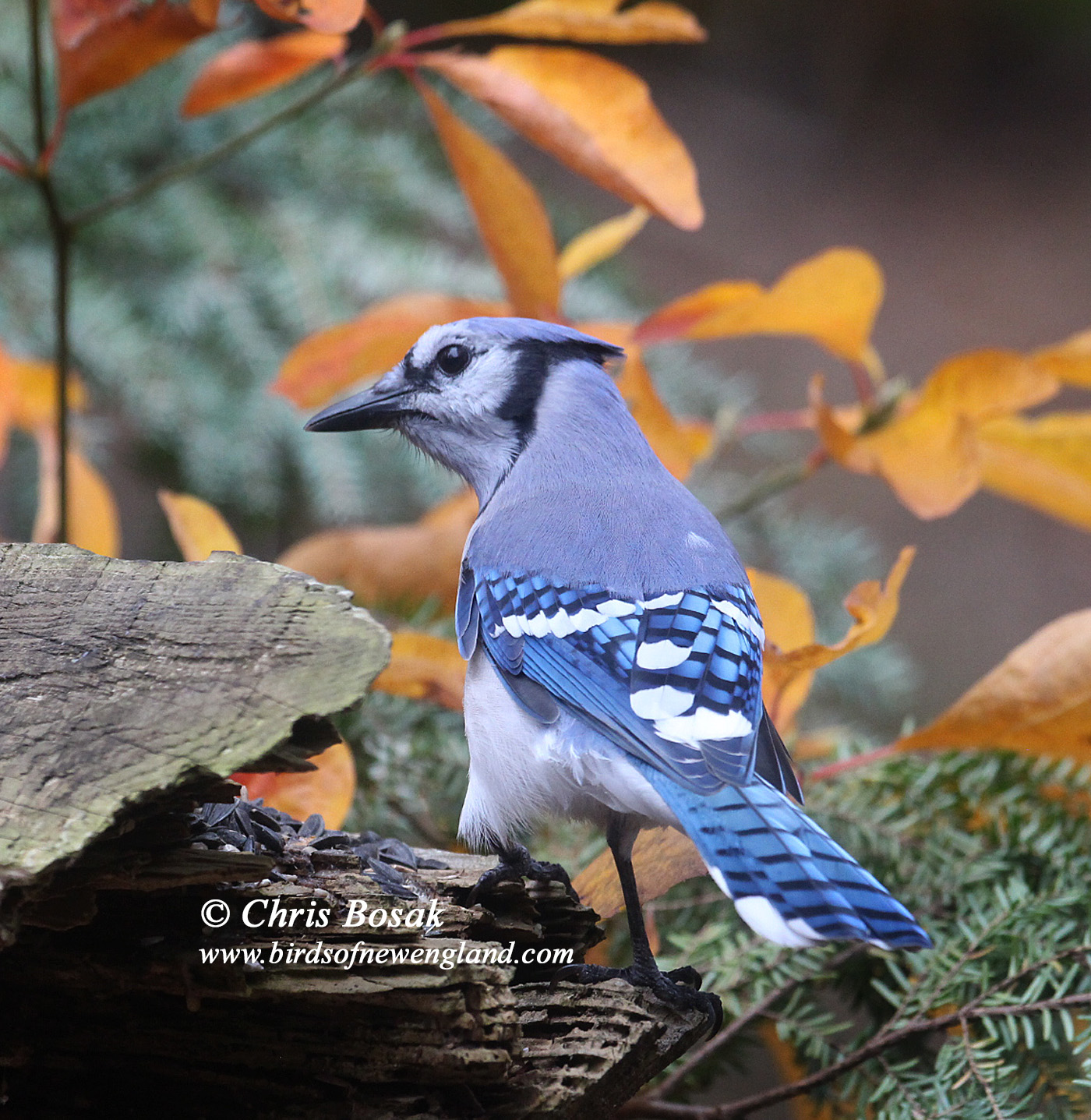
A blue jay perches on a log in New England, October 2020.Photo by Chris Bosak
A blue jay perches on a log and grabs a peanut in New England, October 2020.
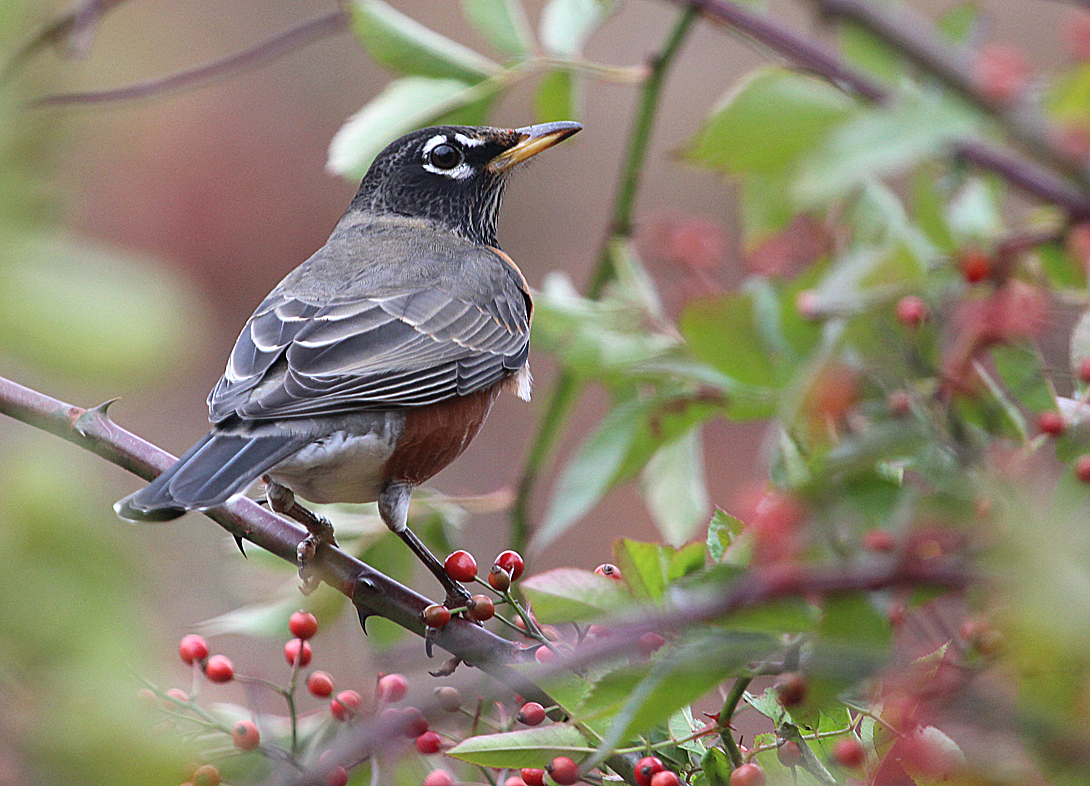
Photo by Chris Bosak American Robin in Selleck’s Woods in fall 2013.
Activity at the birdfeeders has been nonstop. I have not seen any of the winter finches or really anything out of the ordinary, but the regulars are showing up in droves. I did see a palm warbler in the birdbath and a few yellow-rumped warblers in the trees.
I’m not alone in being invaded by feeder birds. Bill from Keene wrote recently and made an interesting analogy regarding the many birds at his feeders when he likened the action to an airport terminal. His visitors have included tons of juncos, jays, robins and many more. “Almost clouds, all flying madly, like insects,” Bill wrote. “Looks like an airline terminal.”
I really do like the airport analogy and thought of it the next time I watched my feeders. My frequent fliers are titmice, chickadees, white-breasted nuthatches and downy Continue reading →
Photo by Chris Bosak
A white-breasted nuthatch looks to grab a seed from a coffee mug with a white-breasted nuthatch painted on it, New England, fall 2020.
Guess who was messing around with birdfeeder photo props again? I’m being overrun by white-breasted nuthatches this fall, so I figured: Why not?
Photo by Chris Bosak A common grackle visits a feeder in New England, October 2020.
I know some people get overrun by grackles, but I hardly ever see them at my feeders. When two showed up on a recent sunny day, I was able to capture the brilliant colors of their iridescent plumage. Grackles are blackbirds, but when the sun hits them just right, they are also green, blue and purple.
Photo by Chris Bosak
A pine siskin perches on the top of an evergreen in Danbury, CT, March 2019.
The 2020-21 Winter Finch Forecast is out and it looks like it could be an exciting next several months in New England.
This is the first forecast by Tyler Hoar. Ron Pittaway did the forecast for several decades before passing the torch to Hoar this year. The Winter Finch Forecast is a prediction of what finch (and other) species may irrupt into New England and parts south and west. An irruption is when northern birds move to or through an area in abnormally high numbers. For example, many years we get very few or even no pine siskins. Other years we get so many we can’t fill the feeders fast enough. Irruptions occur mainly due to food availability, or lack thereof. If it is a bad crop year up north for a certain type of food, such as pine cone seeds, irruptions may occur as birds move in search of food sources.
According to Hoar, this is shaping up to be a good year for purple finches and evening grosbeaks. It is also a year when red-breasted nuthatches are moving south in high numbers. Perhaps you’ve seen more of these small, charismatic birds than usual in your yard this fall already. I hadn’t seen or heard a red-breasted nuthatch in my yard for about four years. This fall, I’ve had three already. I’ve seen only one, and heard the other two. Red-breasted nuthatches have higher-pitched songs and calls than their cousins, the white-breasted nuthatch. It’s an unmistakable difference once you learn it. Red-breasted nuthatches are the more common nuthatch throughout much of New England, particularly up north. In southern New England, irruption years of red-breasted nuthatches are a special treat as they are not resident birds.
The Winter Finch Forecast covers finches such as redpolls, crossbills and siskins, as well as a few small birds that aren’t finches. Irruptions are not limited to these small birds, of course. Who can forget the winter of 2013-14 when snowy owls were all the rage and showed up in places they’d never been seen before?
To see the full forecast, enter “2020-21 Winter Finch Forecast” into a web search and have at it. Are we likely to see common redpolls this winter? I’ll leave that research up to you. I’m always looking forward with excitement regardless of the season, but the Winter Finch Forecast offers that much more incentive to cheer on winter and the colder months. Winter is not so bad after all.
Photo by Chris Bosak
A white-breasted nuthatch clings to a dead branch in New England, September 2020.
Here’s a new white-breasted nuthatch photo, just because.
Did you know nuthatches can walk down a tree? Most birds can only climb up a tree, but nuthatches can walk down as well, offering them a different angle of a tree’s bark to look for food.
Photo by Chris Bosak Praying mantis at Highstead in Redding, CT, summer 2019.
In my opinion, September ranks up there as one of the best months for wildlife watching in New England. Top two or three, I’d say. I like each of the months, of course, and you could make an argument for pretty much any of them being in the top five. May is hard to beat as it is the height of the songbird migration in New England and comes on the heels of several months of cold weather. Also, the flowers start blooming and trees fully leaf out, adding color to a landscape that had been mostly gray for far too long.
So May, I think, has to be number one.
April, September and October duke it out for second. To me, September gets the nod. Like May, September is a transition month. The fall migration begins in earnest during September, but summer still hangs on tightly. Not only do we get to see the fall migrants pass through, but all of the things that make summer special remain. Loons and hummingbirds are around for much of September, but they are mostly gone by October.
September is a great time to take a walk in a field. The goldenrod is in bloom and if you look closely, you can often find interesting critters such as a praying mantis or yellow garden spider. It is interesting to note that praying mantises are not native to North America. Also, male yellow garden spiders are small and brownish; only the female has the intimidating size and colorful pattern.
September also marks the beginning of the southward hawk migration, which is a highlight of the year for many birdwatchers. September features the massive broad-winged Continue reading →








 Birds of New England.com