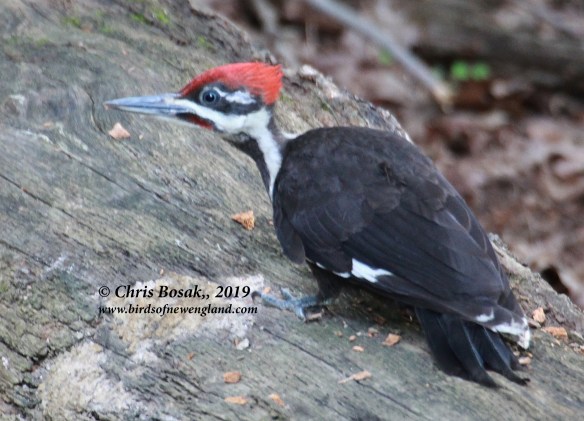
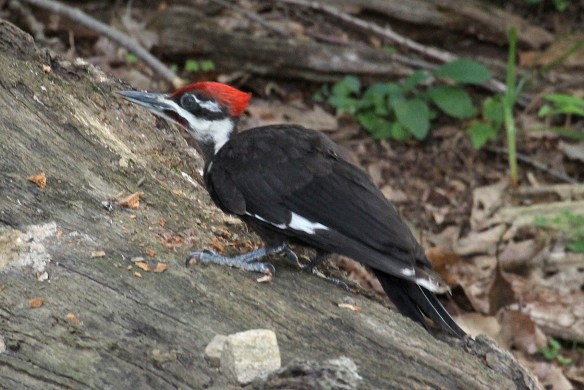
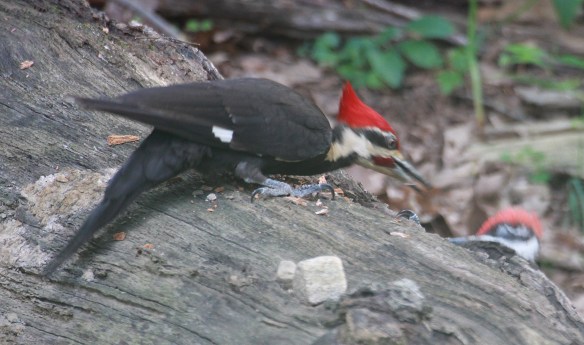
Photo by Chris Bosak A young pileated woodpecker knocks on a fallen tree trunk as it looks for insects, Danbury, Conn., summer 2019.Photo by Chris Bosak A young pileated woodpecker knocks on a fallen tree trunk as it looks for insects, Danbury, Conn., summer 2019.Photo by Chris Bosak A young pileated woodpecker knocks on a fallen tree trunk as it looks for insects, Danbury, Conn., summer 2019.
Photo by Chris Bosak A pileated woodpecker knocks on a fallen tree trunk as it looks for insects, Danbury, Conn., summer 2019.
I heard a loud banging from my side yard the other day. I assumed a neighbor was doing some work involving a hammer as noises echo and carry far in the small lake community in which I live.
Like any good, nosy neighbor, I stepped onto the deck to see what was going on. The noise was coming from the edge of the woods and it wasn’t a neighbor with a hammer at all, it was four pileated woodpeckers looking for a meal. The main noisemaker was the adult male who was banging away on a tree trunk that had fallen to the ground many, many years ago. He was perched on top of the trunk and a young male was a few feet away on the ground watching his dad go to work. An adult female and another youngster (I couldn’t tell the gender) were working on the trunks of nearby standing trees.
Twice, the adult male found an insect or worm and stretched its neck toward the youngster to offer the morsel. The youngster, of course, accepted. The daddy pileated woodpecker worked its way along the fallen trunk and eventually flew to the nearby trunk where the mother was busy looking for meals. The young male took his father’s place atop the fallen trunk and started pounding some holes of his own. I couldn’t tell if he was successful or not, but he certainly learned a thing or two by watching his parents at work.
Male and female pileated woodpeckers have red heads. Only males have the red “mustache” extending from the bill.
Here’s one of the adult feeding the youngster. I was a fair distance away and didn’t want to get closer and risk breaking up the family group, hence the poor quality of the photo.
Photo by Chris Bosak A pileated woodpecker feeds a youngster, Danbury, Conn., summer 2019.
Photo by Will Bosak A cicada emerges from its nymph exoskeleton on a tree in Danbury, Conn., summer 2017.
Here’s the second species for my new “stranger things” series. Cicadas are best known for the tremendous amount of noise they produce, but they are also quite strange-looking creatures. A few years ago, my son Will and I were lucky enough to stumble across a cicada emerging from the exoskeleton that had protected it during its nymph stage.
Finally, here are some more photos from Birds of New England.
Photo by Chris Bosak A cicada emerges from its nymph exoskeleton on a tree in Danbury, Conn., summer 2017.Photo by Chris Bosak A cicada climbs a blade of grass in a meadow property of the Darien Land Trust, summer 2013.
I would never turn down the opportunity to write a story about New England moose, even if the subject is a bit somber. So when The Keene Sentinel asked if I would do an update story on the moose’s decline, I happily obliged.
Moose are my favorite New England wildlife watching target. Unfortunately, winter ticks and brain worm are taking a heavy toll on moose throughout New England.
With an intense heat wave gripping much of the country, including New England, and many people confined to their air-conditioned homes, it seems like an opportune time to start a new series of photos called “stranger things.”
I’m stealing the title from a popular Netflix show, of course, but this series of photos will feature strange-looking creatures found in New England. I have plenty of fodder in my basement and yard, but I will venture into the field for some shots, as well.
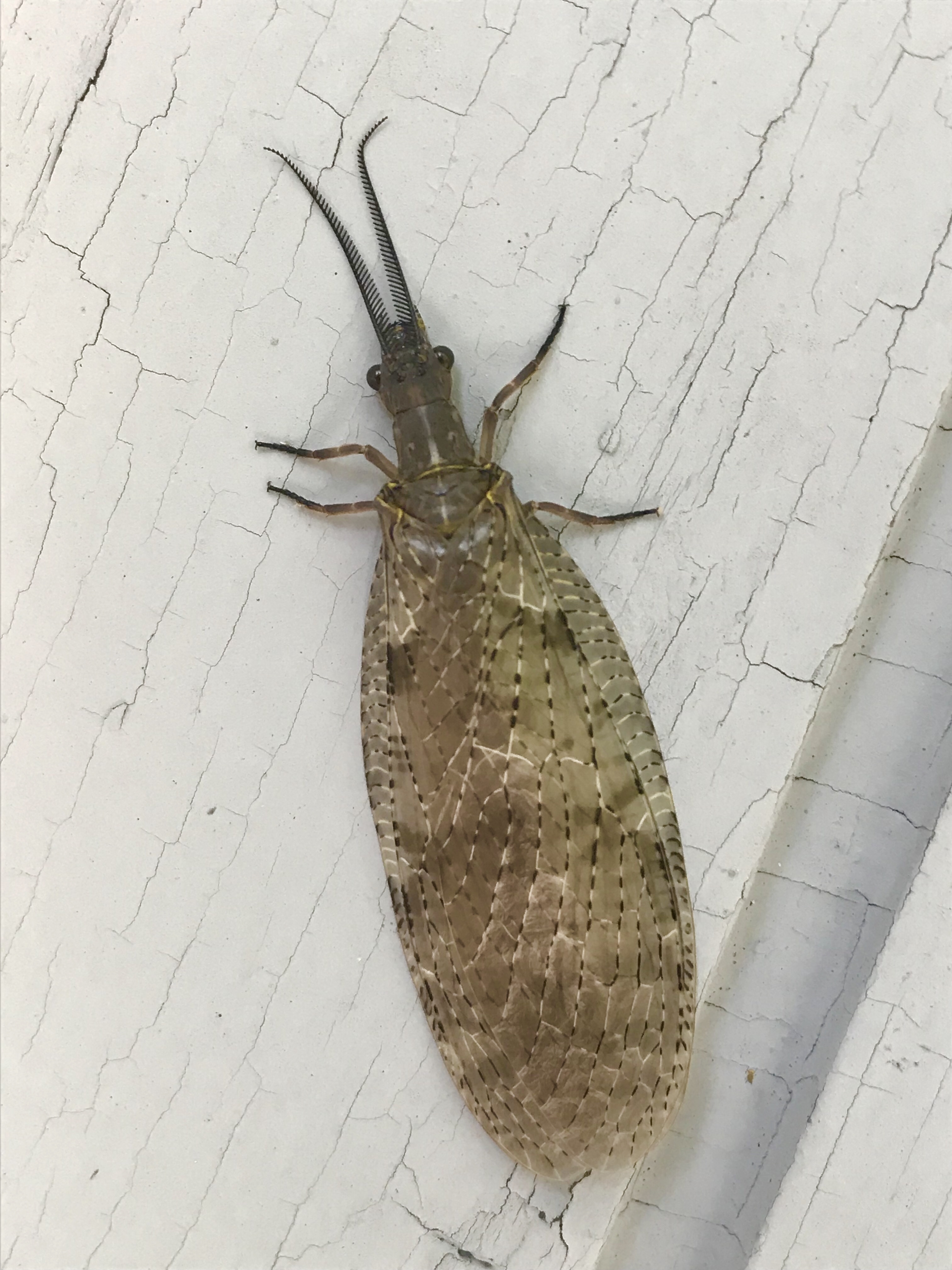
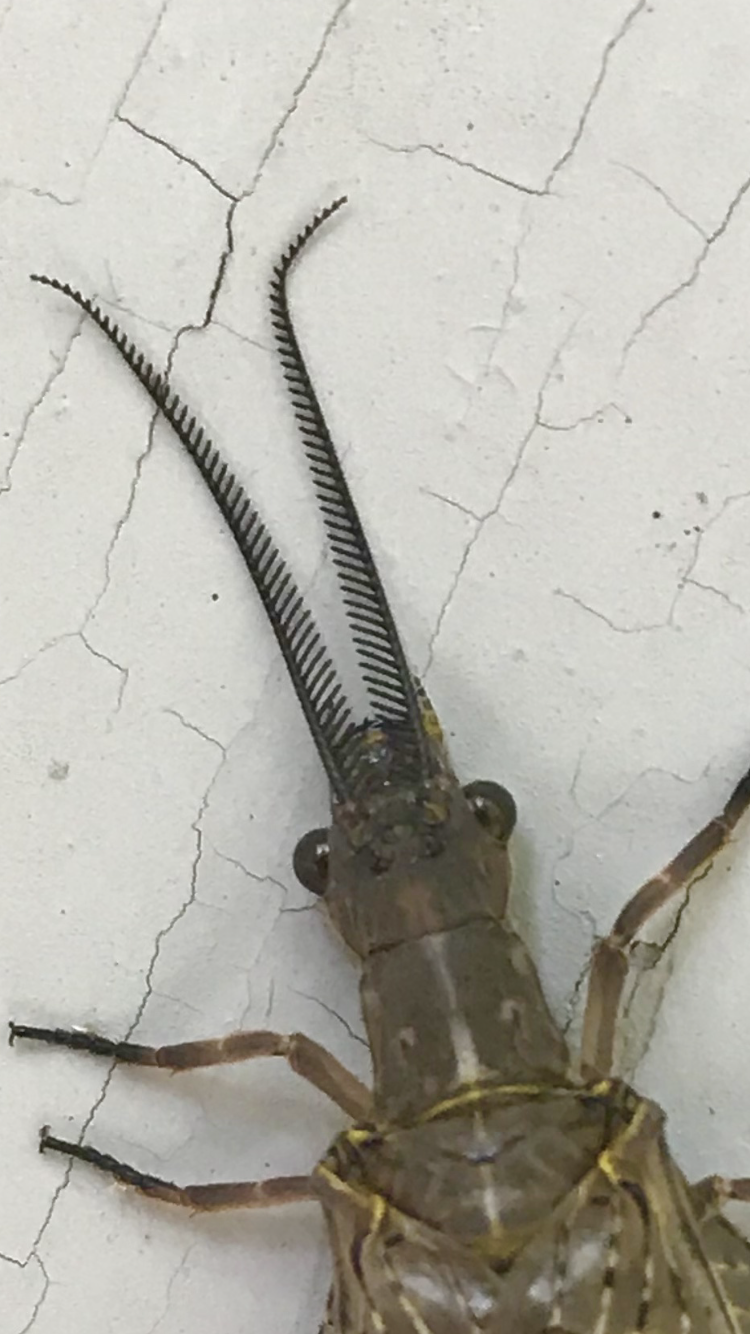
I’ll start with the dobsonfly, a large and intimidating-looking insect. I noticed this one the other day clinging to the side of my house near my deck. This is a female dobsonfly as it has a small mandible. Males have large mandibles and look even more fierce.
Like most intimidating-looking creatures in New England, dobsonflies are harmless to humans — although I’ve read that females can inflict a painful bite if provoked.
Here’s an old summer For the Birds column originally published in 2008, reprinted just because …
Photo by Chris Bosak A monarch caterpillar eats a milkweed leaf.
Keep at something long enough and eventually you will succeed.
I learned several years ago that monarch butterflies lay their eggs exclusively on milkweed. Since that time I’ve inspected every milkweed patch I’ve come across in my wanderings in search of monarch caterpillars. That’s a lot of inspecting considering the proliferation of milkweed. It grows in wild places, it grows in gardens, it grows through cracks in the cement.
In fact, a largely overgrown and overlooked stretch of pavement near The Hour’s parking lot is filled with milkweed. One day I noticed a maintenance worker about to weed-whack the entire patch to the ground. I asked the president of The Hour to intercede and he graciously allowed the patch to grow wild, despite its unsightliness (to an untrained eye, anyway.) For the rest of that summer the ugly, often ignored patch of weeds was dubbed “The Chris Bosak Monarch Refuge.” A makeshift sign made by co-workers marked it as so.
The sign is long gone, but the milkweed remains. Every day I drive by the weeds and never once have I seen a monarch caterpillar. In fact, never had I found a monarch caterpillar on any milkweed, no matter the location. I was zero-for-six million in terms of finding a monarch caterpillar. Not a very good average.
Before I go on, let me explain my desire to find a monarch caterpillar. Simply put, they’re cool looking. They’re large, colorful, exquisitely decorated.
Finally, as if you haven’t guessed already, I found one. I wasn’t necessarily looking for it, which is to say I wasn’t inspecting the plant, but I did look at the milkweed as it has become a habit over the years. These days I just look at milkweed without even thinking about it.
Turns out there was no careful inspection necessary to find this caterpillar. I just looked Continue reading →
Photo by Chris Bosak A gray catbird with food perches on a branch in New England, summer 2019.
I heard what I was pretty sure was a scarlet tanager high in one of my oak trees. The thick foliage makes it nearly impossible to find anything up there. Even a brilliantly bright red bird like a scarlet tanager could easily be hidden from view.
I looked with my naked eye for several minutes, hoping to spot some motion to give away the bird’s location and identity. To my frustration, I couldn’t find a thing, even though I knew right where the song was coming from.
So, I figured I’d try scanning the area with my binoculars with the hopes of catching a glimpse of some bright red among the dark green leaves. Picking out a bird among thickly leafed-out treetops is usually a lesson in futility and humility.
But not this time.
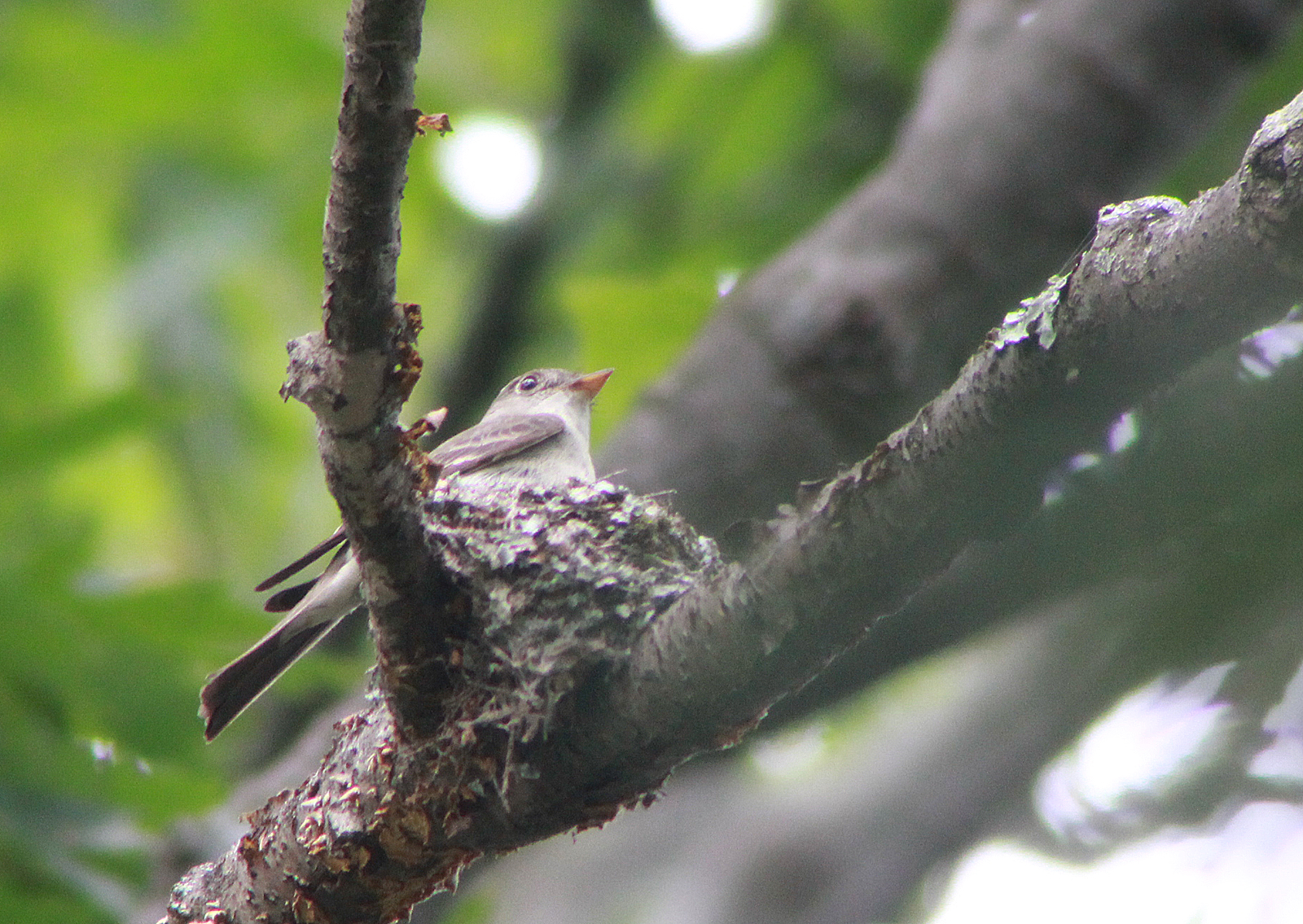
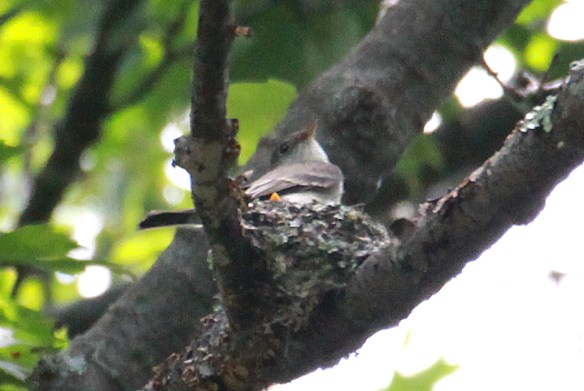
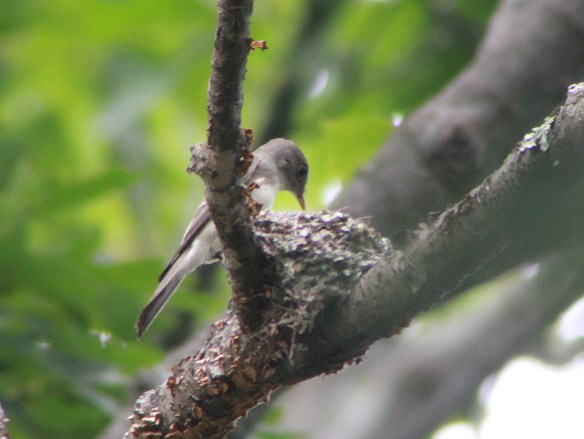
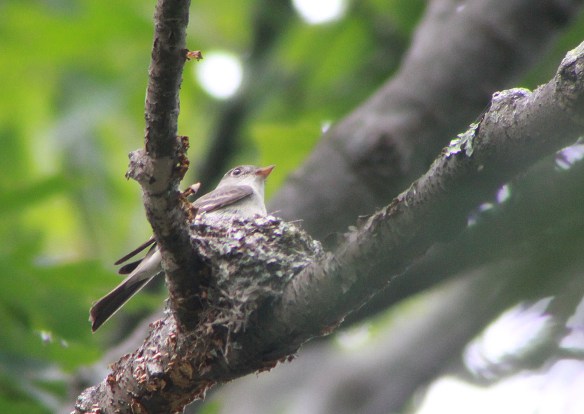
No, I didn’t find a scarlet tanager. I did, however, find the active nest of an eastern wood-pewee. Somehow, my binoculars trained themselves right on the spot. The small, cupped nest is built in the Y of a dead branch sticking out among the impenetrable foliage, about 40 feet high.
I watched the mother pewee for a few minutes before she flew off into the woods. I noticed a bright orange object in the nest. I assumed it was a mushroom of some sort because the dead branch is covered in a white fungus. With my binoculars, however, I discovered it was the mouth of a baby bird waiting to be fed.
Sure enough, about two minutes later the mother bird returned and a few other orange “mushrooms” appeared.
It was the first time I had ever found an active eastern wood-pewee nest Continue reading →
Toward the end of last summer, I purchased a few coneflower plants at a greatly reduced price from a hardware store. I planted them in a large flower box on my deck and the plants flourished into late fall.
While in bloom, the plants made for a photogenic setting as birds perched on them before heading to a nearby feeder. Once the flowers died and went to seed, the plants were visited frequently by goldfinches, chickadees, titmice and other small birds. I certainly got my money’s worth from the plants. Here are some photos I took of the plants in action.
Since coneflower is a perennial, I was looking forward to many years of similar success from these $2 plants. Unfortunately, the plants did not come back this spring. I never transported them out of the flower box and the winter’s hard freeze killed the roots.
But something else popped up this year — at an even better price. You can’t beat free. Remember I had mentioned the nearby feeders? Well, a few of the sunflower seeds that got knocked or carried into the box sprouted. I noticed them in the spring and recognized the tiny stems as sunflowers. Wouldn’t it be cool if they grew to become full plants, I thought at the time. Fast forward a few months and I have three healthy, flowering sunflowers in that flower box. They are not towering plants by any means, but that’s probably a good thing considering their location.
The birds are already using them as perches. I just saw a chipping sparrow on one a few hours ago. Now I can’t wait until later this summer and fall when birds start picking seeds out of the flowers. You know I’ll be posting plenty of photos when that starts to happen. Talk about getting your money’s worth out of a bag of sunflower seeds.
Has this or something similar happened in your garden? Drop me a line and let me know. You can comment on this site, Facebook (Birds of New England), or email me at chrisbosak26@gmail.com.
Photo by Chris Bosak An eastern wood-pewee sits on a nest in New England, summer 2019. The small orange thing at the edge of the nest is a newborn pewee.
I was happy to find an eastern wood-pewee nest the other day. I found it quite by accident (full story coming next week in For the Birds column.) It’s about 40 feet high and in the Y of a dead branch in an oak tree. Finding a nest is always a thrill and this is the first eastern wood-pewee nest I’ve ever found, making it even more special.
Again, the nest is high up in a shaded area, hence the poor quality of the photos.
What nests do you have in your yard? Drop me a line and let me know.
Photo by Chris Bosak
An eastern wood-pewee tends to a nest in New England, summer 2019.Photo by Chris Bosak
An eastern wood-pewee sits on a nest in New England, summer 2019.









 I looked with my naked eye for several minutes, hoping to spot some motion to give away the bird’s location and identity. To my frustration, I couldn’t find a thing, even though I knew right where the song was coming from.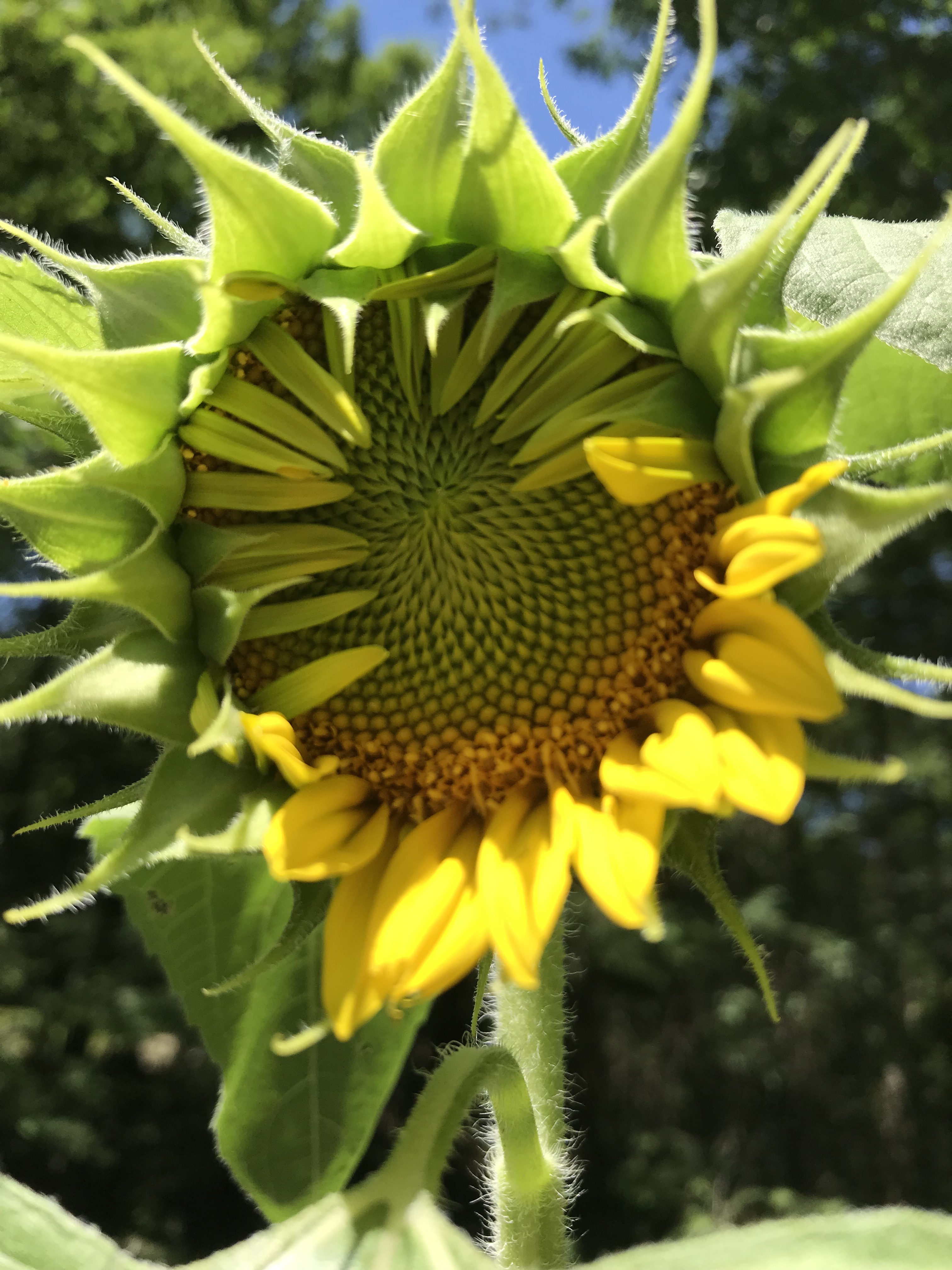
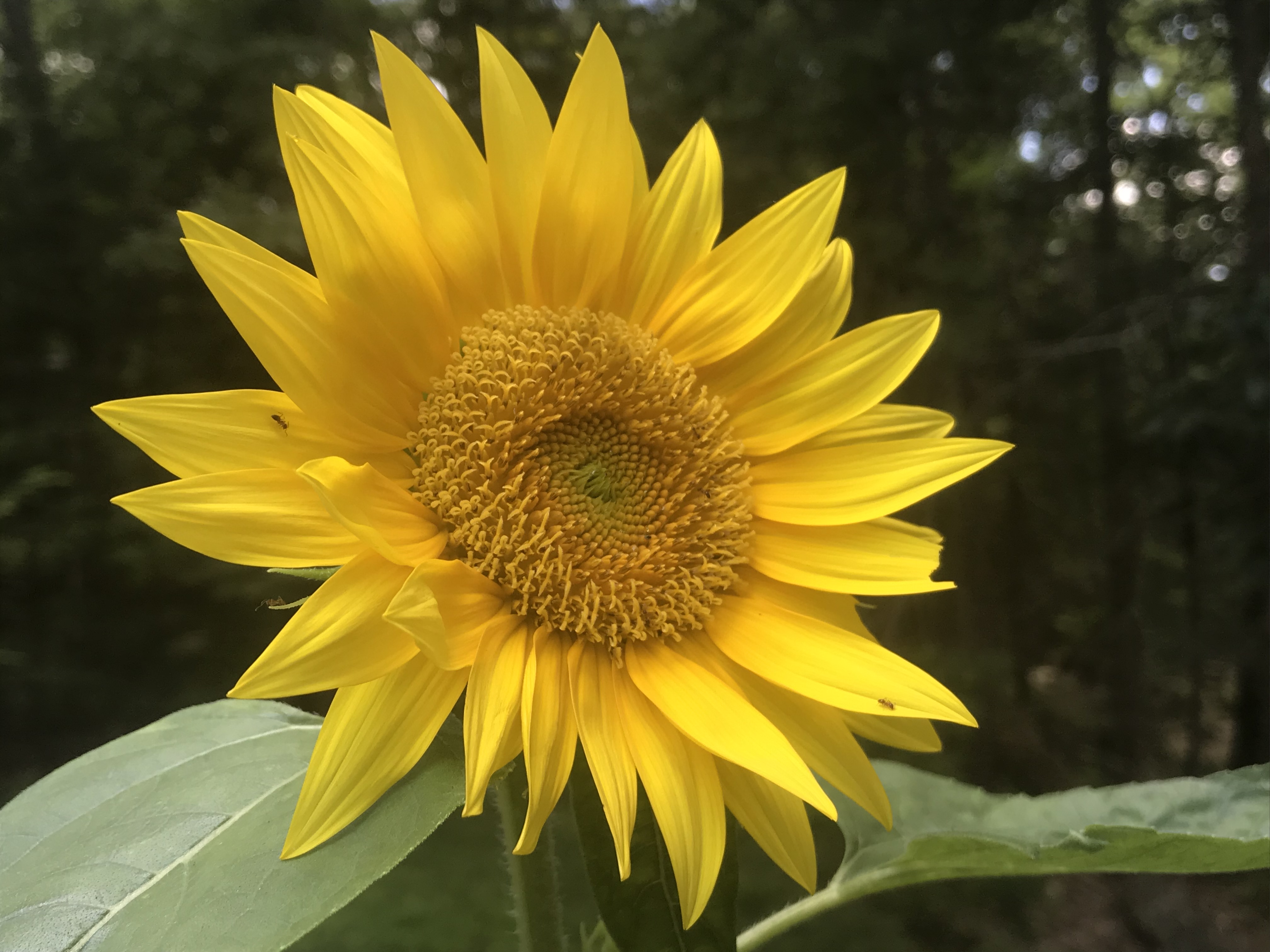 Toward the end of last summer, I purchased a few coneflower plants at a greatly reduced price from a hardware store. I planted them in a large flower box on my deck and the plants flourished into late fall.
 Birds of New England.com