A flurry of winter bird photos before spring begins

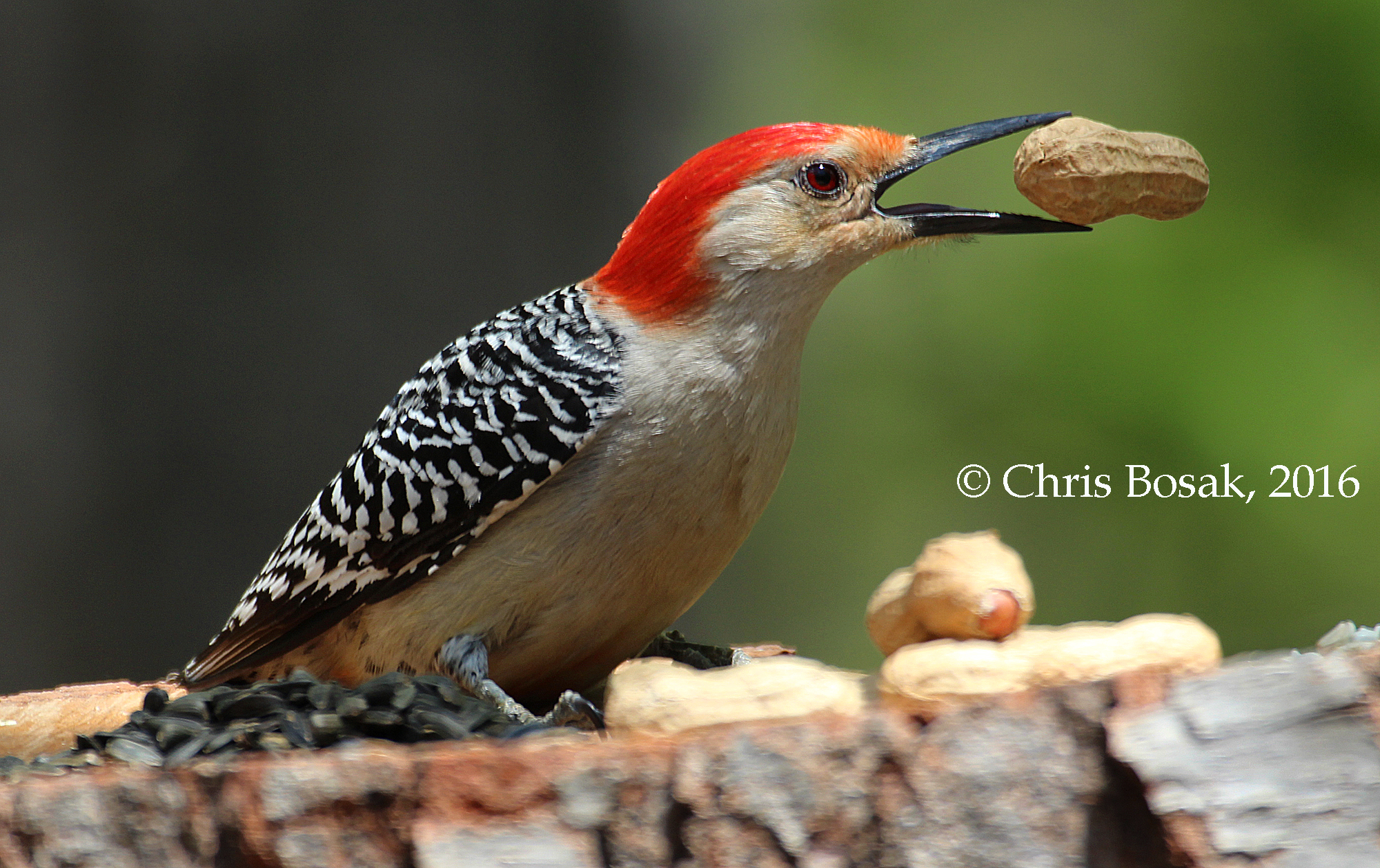
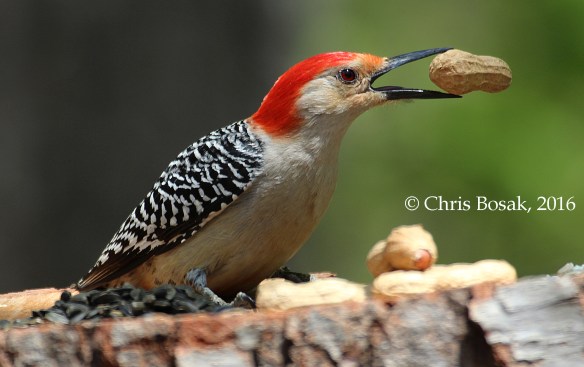
Photo by Chris Bosak A red-bellied woodpecker grabs a peanut from a feeder, March 2018.

Photo by Chris Bosak
A red-bellied woodpecker grabs a peanut from a feeder, March 2018.

Andrew, my 14-year-old going on 21, and I took a walk in the woods together this evening. These walks don’t happen as often as they used to or as much as I’d like, so I was more than happy when he said ‘yes,’ when I asked if he’d like to come along.

The trail behind my house is covered in snow, but it’s been walked on and packed down so it’s not much different than walking on dirt or on a sidewalk. But, as my walks with Andrew almost always go, we veered off the path to check out one thing or another. As we ventured away from the path, the snow at spots was still a foot or more deep. A foot or deeper on March 19, two days away from the official start of Continue reading

Latest For the Birds column: Chickadees, scarce or not?

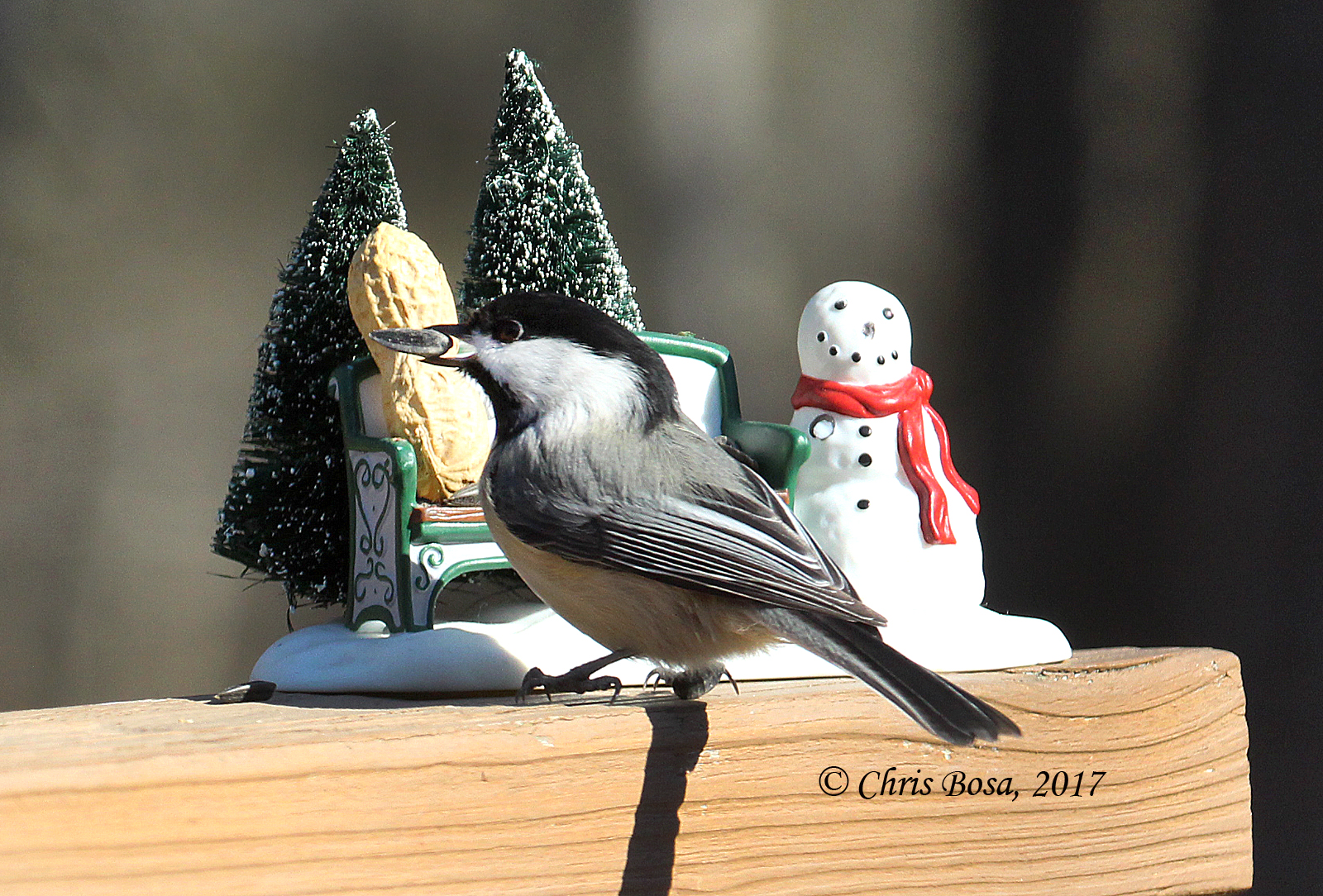
Photo by Chris Bosak Ablack-capped chickadee grabs a sunflower seed from a Christmas decoration during the winter of 2016-17 in Danbury, Conn.

Photo by Chris Bosak
A black-capped chickadee grabs a sunflower seed from a Christmas decoration during the winter of 2016-17 in Danbury, Conn.

Where are the chickadees?

That question has been on the minds of many concerned birders this winter. I’ve been lucky enough to see a few at my feeding stations, but not great numbers. Consistent numbers, but not big numbers.

Titmice? Those I’ve seen in consistently high numbers. Nuthatches and the downy woodpecker — also consistent and high. 

But chickadees have been harder to come by. As I said, I’m one of the lucky ones. I’ve at least seen a few. Many people have written to me to say they’ve not seen any.

“What has happened to these birds?” one reader asked.

Another reader noted a general drop in bird numbers, but: “The biggest absence seems to be chickadees. … In all previous winters I would be inundated with chickadees and nuthatches. This winter: zero nuthatches, and only one or two chickadees at the feeder. I used to have more of them than there was room to perch!”

Chickadees are a beloved bird in New England and Continue reading

Latest For the Birds column: Robins and spring

Photo by Chris Bosak An American Robin perches on a rock at Weed Beach in Darien, Conn., in Jan. 2015.

Photo by Chris Bosak
An American Robin perches on a rock at Weed Beach in Darien, Conn., in Jan. 2015.

Here is the latest For the Birds column, which runs in several New England newspapers.

Nor’easters and pending snowfalls aside, spring is knocking on the door.

The robins are back. That has to mean spring, right? Aren’t robins the traditional harbinger of spring?

Well, yes and no. Yes, they are the traditional harbinger of spring by manner of conventional wisdom, but, no, because some robins have remained in New England all winter.

A number of robins spend their winters in New England, Continue reading

A shot from the storm: Cardinal in snow

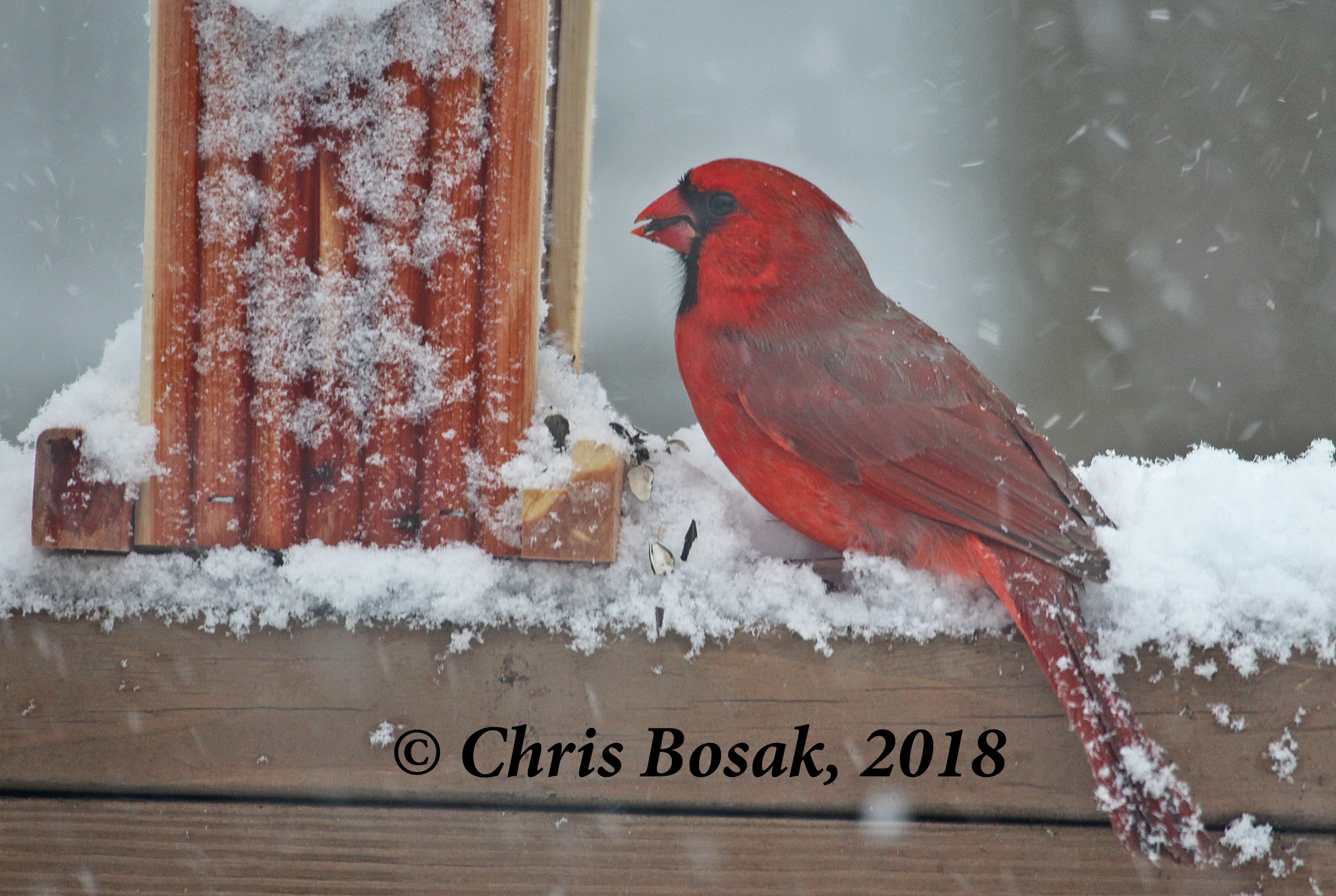
Photo by Chris Bosak A northern cardinal eats seeds from a feeder during a snow storm, March 2018.

Photo by Chris Bosak
A northern cardinal eats seeds from a feeder during a snow storm, March 2018.

Here’s one shot from today’s nor’easter that hit parts of New England hard. Here in Danbury, Connecticut, we got socked with over a foot of heavy snow. The day started out calmly enough, but around 3 or 4 p.m., the heavy stuff started falling and accumulating FAST. I got this cardinal before things got out of hand. Hopefully, there will be more shots to follow.


No wonder the birds suddenly stopped coming to the feeder

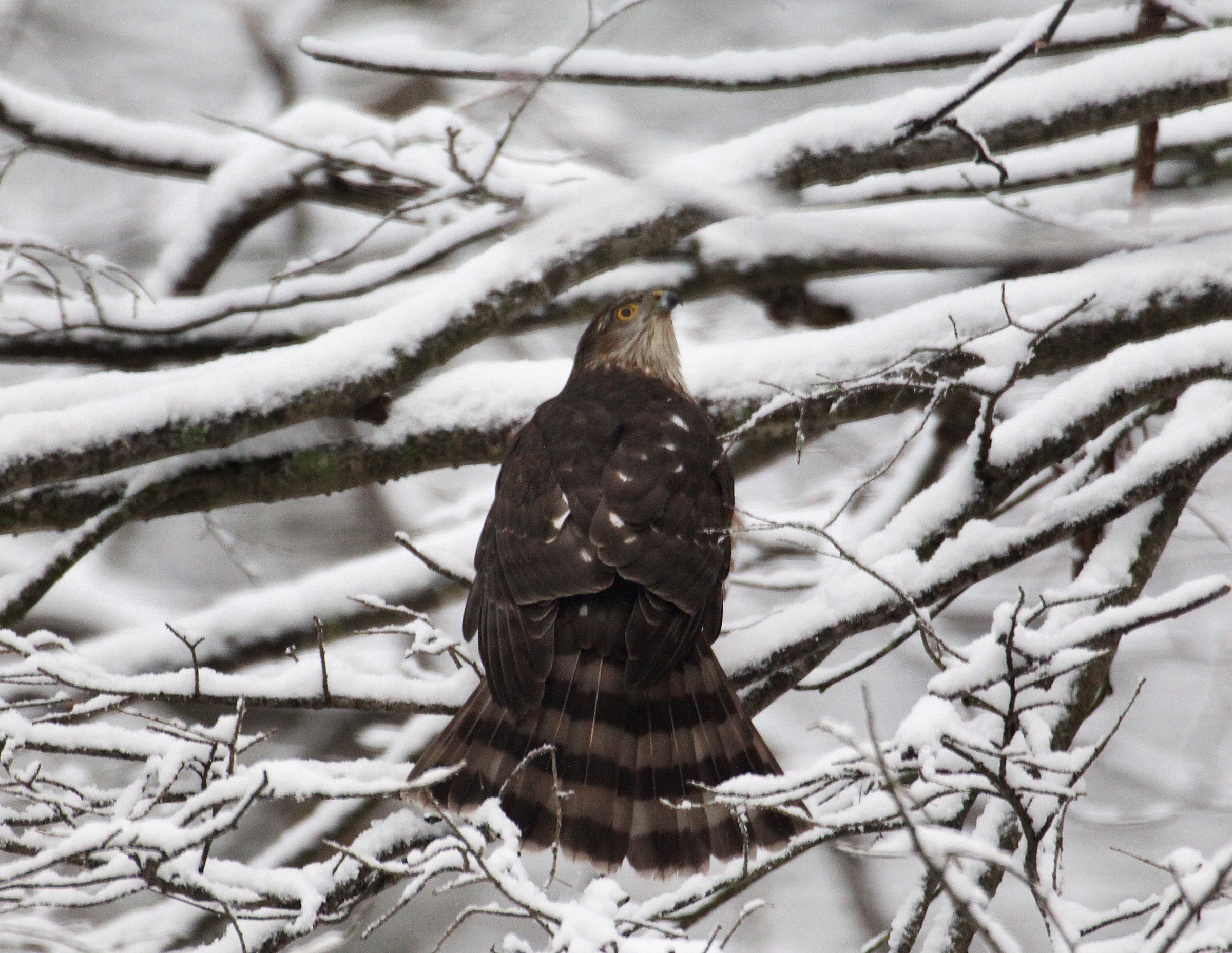
Photo by Chris Bosak  A Cooper's hawk looks up after landing on a snowy branch during a moderate snowfall in Jan. 2018.

Photo by Chris Bosak
A Cooper’s hawk looks up after landing on a snowy branch during a moderate snowfall in Jan. 2018.

Watching birds at my feeders during a snowfall is one of my favorite things to do. This year I’m getting nothing out of the ordinary. Not that I’m complaining because I love seeing the titmice, nuthatches, chickadees, woodpeckers (downy, hairy and red-bellied), blue jays and juncos, but I haven’t seen a single siskin, redpoll, Carolina wren or even goldfinch or white-throated sparrow. A male cardinal makes a very rare appearance.

During a recent snowfall I saw nothing for a long stretch. I had been seeing lots of birds earlier in the day and suddenly, nothing. I looked behind the feeding station and noticed why. You guessed it, Cooper’s hawk. Along with sharp-shinned hawks, Copper’s hawks like to check out feeding stations periodically for an easy meal. And why not. The “feeder birds” are there for an easy meal; why begrudge birds of prey one?

A nice first bird of the year

Photo by Chris Bosak A pileated woodpecker searches for food in a dead tree on New Year's Day 2018.

Photo by Chris Bosak
A pileated woodpecker searches for food in a dead tree on New Year’s Day 2018.

The weather app on the phone said the temperature was 0 degrees (yes, as in zero). It was New Year’s Day, though, so no excuses: I had to take that walk I promised myself I’d take.

Photo by Chris Bosak A pileated woodpecker searches for food in a dead tree on New Year's Day 2018.

Photo by Chris Bosak
A pileated woodpecker searches for food in a dead tree on New Year’s Day 2018.

As soon as I walked out the door I heard a loud knocking that I strongly suspected was a pileated woodpecker. A quick glance in the direction of the knocking and my suspicion was confirmed. A female pileated woodpecker banged away at a dead tree in the backyard (well, technically not my backyard, but open space that abuts my backyard.)

First bird of 2018 is a pileated woodpecker. Not bad at all.

I watched the crow-sized woodpecker for several minutes and snapped photos until my “shooting” hand froze. That didn’t take long.

I moved on to give the woodpecker some peace and quiet on this frigid day.

The rest of the walk was rather uneventful, but I did see three other types of Continue reading

Merry Christmas from www.BirdsofNewEngland.com

Photo by Chris Bosak A white-breasted nuthatch visits a backyard in New England, Dec. 2017.

Photo by Chris Bosak
A white-breasted nuthatch visits a backyard in New England, Dec. 2017.

Merry Christmas and happy holidays from BirdsofNewEngland.com. Wishing you and yours the very best.

For the Birds: When they all visit at once

Photo by Chris Bosak A Red-bellied Woodpecker takes a peanut from a homemade birdfeeder in Danbury, Conn., spring 2016.

Photo by Chris Bosak
A Red-bellied Woodpecker takes a peanut from a homemade birdfeeder in Danbury, Conn., spring 2016.

Here’s the latest For the Birds column, which runs in several New England newspapers.

Some days none of them come, some days some of them come, and some days they all come.

I guess we wake up expecting the middle ground and — somewhere in the back of our minds — we hope for the higher ground. Isn’t it great when we hope for the best and it happens?

That can hold true for just about anything in life, but I’m talking about birds. What else? 

One day last weekend was one of those days when all of the birds in the neighborhood were in my backyard. My bedroom window affords views of only the tops of trees and, before heading downstairs to make the morning coffee, I had already seen a downy woodpecker, black-capped chickadee and white-breasted nuthatch.

The birds just kept on coming. There’s a feeder hanging outside of the kitchen window and, before the coffee was done brewing, tufted titmice, house finches and hairy woodpeckers joined the list of bird species I’d seen in my yard that day.

I glanced out the kitchen window onto the backyard and noticed white-throated sparrows and dark-eyed juncos were hopping around the grass and mourning doves were hanging out beneath the feeder. Suddenly, I heard a blue jay and saw it perch on a branch just outside the window.

Not that I was counting, but I had seen 10 species of birds and hadn’t even stepped foot outside yet.

As I was thinking about how nice it was to have seen so many birds already, I looked out a kitchen window that faces a different direction and saw a red-tailed hawk practically right in front of my face. It sensed the movement from inside the house and flew off to a safer perch about three trees away, but still within easy watching distance from the kitchen.

I was surprised that so many of the songbirds were brazenly flitting about when a big, bad hawk was so close by. Had it been a sharp-shinned or Cooper’s hawk, it may have been a different story.

So that made 11 species, including a hawk, and the coffee was just getting poured into the mug. It could have ended there, but I had the whole weekend day ahead of me.

I never set out specifically to look for birds that weekend, but the sightings kept presenting themselves.

I went to get something out of the car and a pair of cardinals hurried into the brush. On my way to the mailbox, a house wren hopped along the stone wall. As I made lunch, minding my own business, I was serenaded to the kitchen window by a Carolina wren singing its heart out, even in winter.

Red-bellied woodpeckers climbed up tree limbs and uttered their strange calls several times throughout the day. It had been days since I’d seen a red-bellied woodpecker in the yard.

It was an odd day, indeed. Odd in a good way, of course. Nothing too out of the ordinary came to the yard, but I was more than happy to welcome the common species that did show.

Sure, it could have been even more spectacular. I didn’t see a brown creeper, goldfinch or kinglet. Come to think of it, a red-breasted nuthatch, fox sparrow or pine siskin wouldn’t have been out of the question during this time of year.

Sure it would have been nice if they would have stopped by, but trust me, I’m not complaining. I had plenty of company that day.

For the Birds: Where are the birds?

Here is the latest For the Birds column, which runs weekly in several New England newspapers.

Photo by Chris Bosak A tufted titmouse perches on a homemade birdfeeder in Danbury, Conn., March 2017.

Photo by Chris Bosak
A tufted titmouse perches on a homemade birdfeeder in Danbury, Conn., March 2017.

It started with one, like nearly all things do. Then another came in, and they kept coming.
“Where are the birds?” was the similar question in the emails and phone calls.
Here are few examples:
“Why am I not seeing as many birds at my feeders for the last two to three weeks?”
“I’ve probably seen a woodpecker or two since the beginning of September! What is going on? Why don’t the birds find us again?”
“The birds I feed here in Richmond have disappeared. Myself and my neighbors haven’t seen them for several weeks.”
Becky of New Hampshire offered some hope, however. She said crows were more numerous than in past years and that the smaller birds stopped coming.
“They are just lately slowly reappearing,” she wrote.
So they are coming back. My guess is that all of the writers asking where the birds have gone will soon get their birds back.
Why do yards with bird feeders go through slow Continue reading

For the Birds: Goldfinches brighten the landscape

Here is the latest For the Birds column, which runs in several New England newspapers.

Photo by Chris Bosak An American Goldfinch rests on a sunflower in New England.

Photo by Chris Bosak
An American Goldfinch rests on a sunflower in New England.

N othing cheers up a day like a goldfinch. Those little, bright bursts of yellow are always a welcome site at your feeder, bird bath or perched on a flower in your garden.

I especially appreciate goldfinches in the dead of summer. I remember taking a walk a few years ago on one of those classic hot, humid days in August. It was the middle of the afternoon and, not surprisingly, I was finding very little in terms of wildlife. Dragonflies were dancing all over the place, but even the butterflies seemed to be hiding from the heat.

Suddenly, I heard the cheerful song of a goldfinch in flight coming up from behind me. I turned just in time to see the bright yellow bird perch on the top of a thistle flower. The pink-and-purple flower rocked back and forth as it reacted to the weight of the tiny bird. When the flower settled, the goldfinch went about its business of picking at the flower.

I watched the scene briefly, and continued my walk. About five minutes later, I heard the bird again. I looked up to see it fly over my head and disappear into the distance. Despite its tiny size — about 5 inches — the goldfinch is an easy bird to identify in flight. It flies quickly in an undulating fashion — like a roller coaster with small rises and falls — usually uttering its potato-chip, potato-chip song as it bounces up and down.

I didn’t see any other birds on that walk, but the single goldfinch perched on the flower made it all worthwhile.

Goldfinches also score points with me as they are frequently seen in my garden. I’ve seen goldfinches perched atop coneflower and black-eyed Susan flowers, picking away at the seeds. I’ve also seen them on sunflowers.

Goldfinches, of course, are also reliable feeder birds, often occupying every perch of a tube feeder. I love to see all six perches of my blue tube feeder occupied by the bright yellow birds.

Goldfinches will eat sunflower seeds and will visit platform or tube feeders. A sure way to attract goldfinches is to offer Nyjer in a tube feeder specifically designed for the tiny seeds. Do not try to use thistle seeds in a regular feeder as the tiny seeds will spill through the holes.

“Sock” feeders stuffed with thistle seeds are a good alternative.

Goldfinches visit feeders at any time of the day. It’s interesting to note that goldfinches move on frequently so the birds you see at your feeder in the evening are not likely the same ones you saw in the morning.

Goldfinches are found throughout the country and many remain in New England through the winter months. They are not the flashy yellow birds we love so much in the summer, though. We still love them in the winter, of course, but they are much duller, often appearing olive or brownish.

It’s fun to see the splotchy male goldfinches in the early part of spring as they slowly regain their bright yellow plumage. Only the males are bright yellow. Females are a duller yellow.

They also have black caps and black wings with white stripes. My brother Ed and his wife, Debbie, are big Pittsburgh Steelers fans, so the goldfinch is a favorite in that household.

Of course, you don’t have to be a Steelers fan to appreciate the beauty of a goldfinch. The bright yellow speaks for itself. Throw in a purple or pink flower and you’ve got real proof that Mother Nature likes her colors.

Continue reading