A poem about this New England winter

I hope everyone enjoyed the warm weekend as much as I did. I know I got out and did a little birdwatching without my heavy winter jacket.

But, of course, the warm temperatures were short-lived. It’s colder today already and will only get colder as the week goes on. There’s even the possibility of some more snow later in the week.
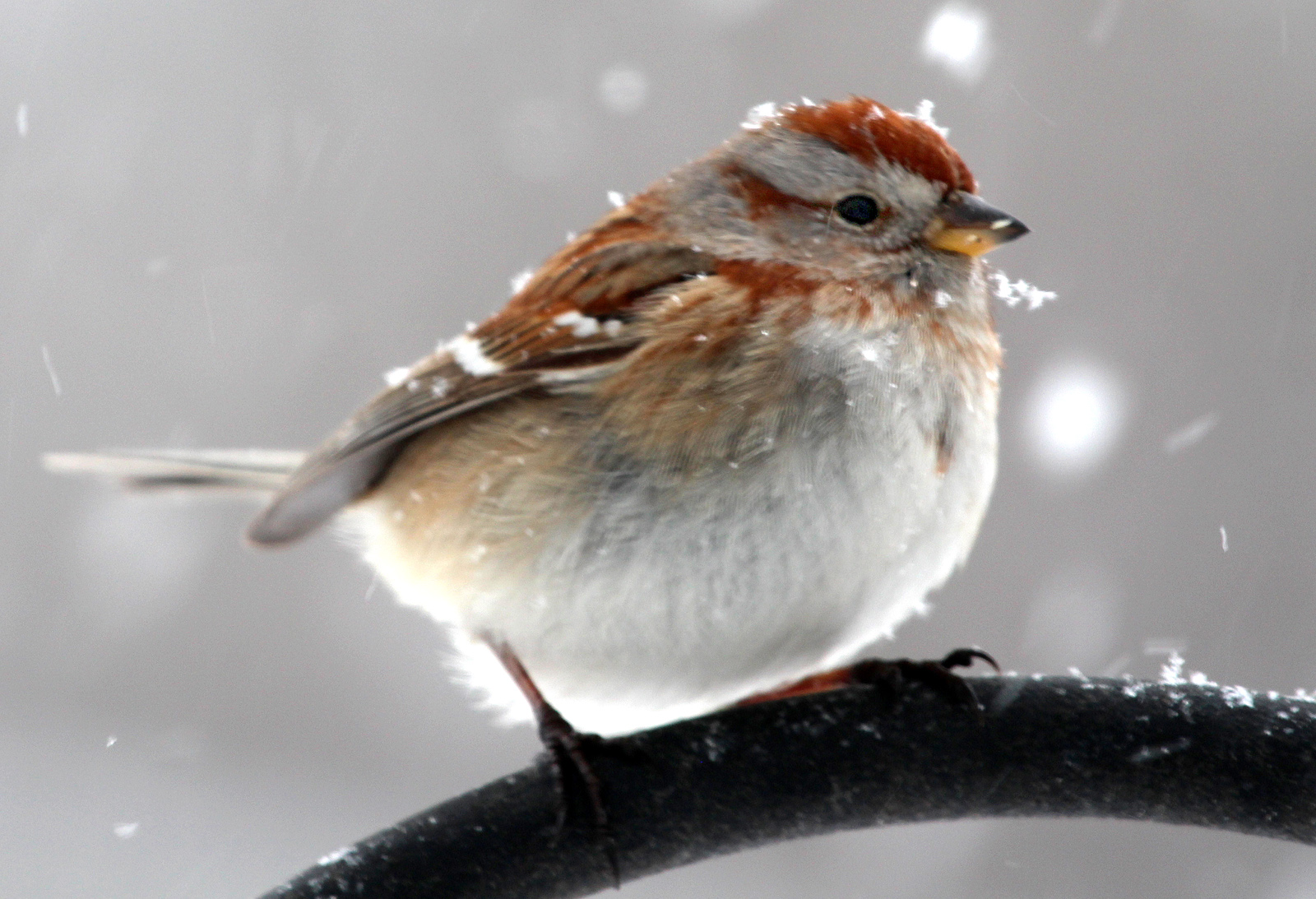
Photo by Chris Bosak An American Tree Sparrow perches near a feeding station during the snowstorm of Feb. 13, 2014.

Photo by Chris Bosak
An American Tree Sparrow perches near a feeding station during the snowstorm of Feb. 13, 2014.

So, with that mind, here’s a poem contributed by a reader of my “For the Birds” column.

I’m not from Montana or Alaska –
What’s all this snow – I must ask ya?
I’ve been shoveling snow for weeks –
It’s no surprise my knees feel weak.
Windshield scrapers, snow and ice –
Only a warm fire will suffice.
Bring in the kindling and the wood –
Let mother nature behave as she would.

Poem by Mary Ann Ancker of West Norwalk, Conn.
It’s a robin kind of winter

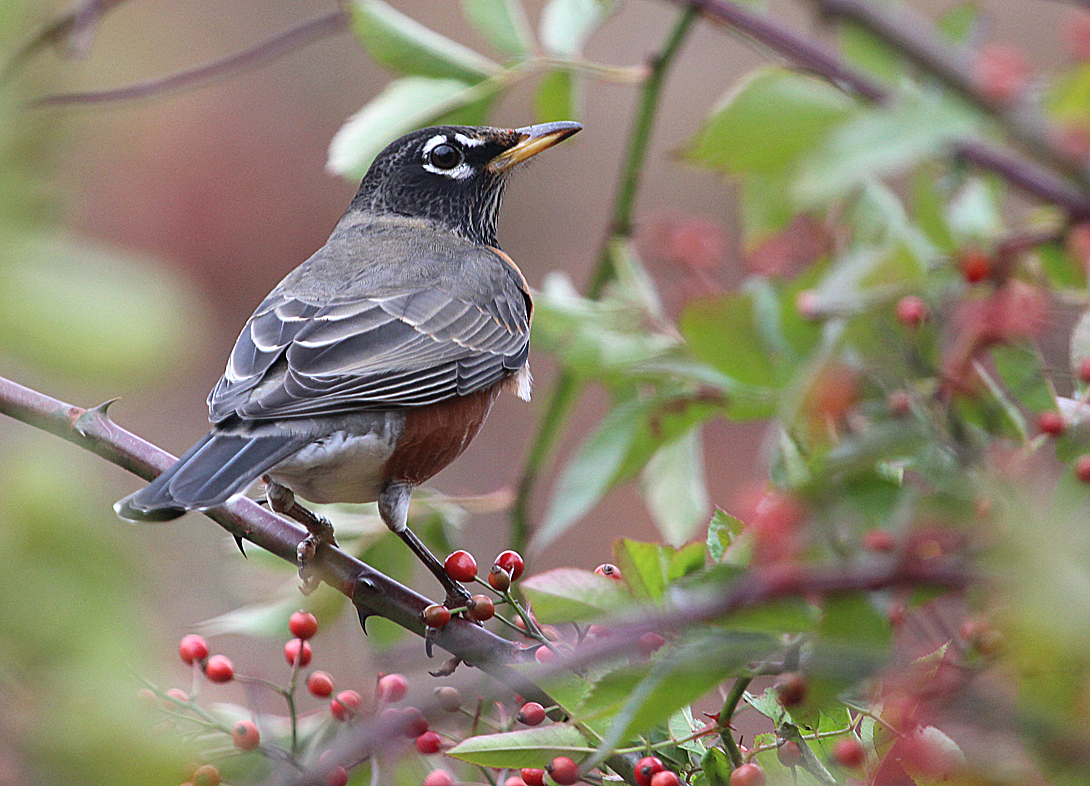
Photo by Chris Bosak American Robin in Selleck's Woods in fall 2013.

Photo by Chris Bosak
American Robin in Selleck’s Woods in fall 2013.

I’ve written a lot about American Robins this winter — and do so again in this week’s For the Birds column — but the demand for such information is great as everyone seems to be seeing tons of robins this winter.

Here’s an excerpt from the column: “True, they are known as a harbinger of spring, but American Robins are with us all year here in New England. Some robins migrate south to warmer places, but many robins stick with us throughout winter, too, surviving on berries, crab apples and other natural foods they can find in the woods and our backyards. Robins are usually found in flocks, some rather impressive, during the winter.”

Click here for the rest of the column.

It was really comments and questions from readers that prompted the column. Here are some comments I have received from readers.

Jack from Norwalk, Conn., wrote: “Saw around 10:30 this AM small flock of Robins just 30 yds West from junction of S Continue reading

A few of my snow birds

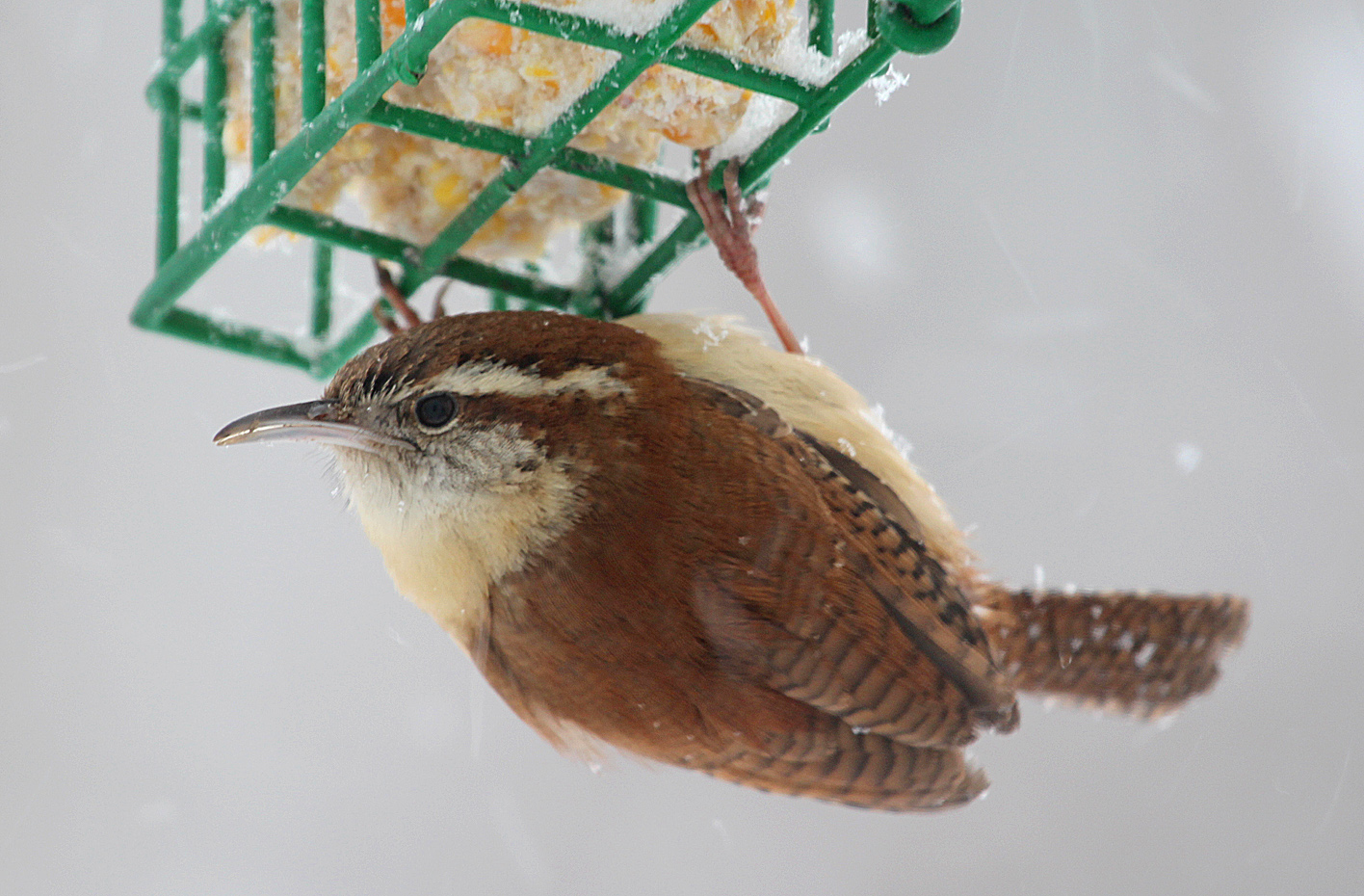
Photo by Chris Bosak A Carolina Wren holds onto the bottom of a suet cage during the February 13, 2014, snowstorm.

Photo by Chris Bosak
A Carolina Wren holds onto the bottom of a suet cage during the February 13, 2014, snowstorm.

Photo by Chris Bosak An American Tree Sparrow perches near a feeding station during the snowstorm of Feb. 13, 2014.

Photo by Chris Bosak
An American Tree Sparrow perches near a feeding station during the snowstorm of Feb. 13, 2014.

It was a busy day at the feeder on Thursday as snow fell hard and steady in the morning and afternoon in New England. It was a beautiful scene and I’m sure it played out at many feeding stations throughout the region.

I had the juncos, White-throated Sparrows, cardinals, and Mourning Doves I expected, but I didn’t see a single chickadee, titmouse or nuthatch. Very odd for winter snow day. Starlings and House Sparrows also paid a visit.

The biggest surprises were a Carolina Wren (actually, not too big of a surprise, but a welcomed sight for sure) and an American Tree Sparrow. Tree Sparrows come down to southern New England in the winter, but they are not often seen at feeders. This guy made a few brief visits, but never got real comfortable and was easily chased away by other feeder birds.


Many people are sick of the snow, I’m sure, but I love it when it comes to birding.

All in all, a good day at the feeders. How did you do with your feeders? Post a comment, or better yet, send me a photo to bozclark@earthlink.net and I’ll use it in the “Reader Submitted Photos” page on this site. 

What’s a snow day without a new junco photo?

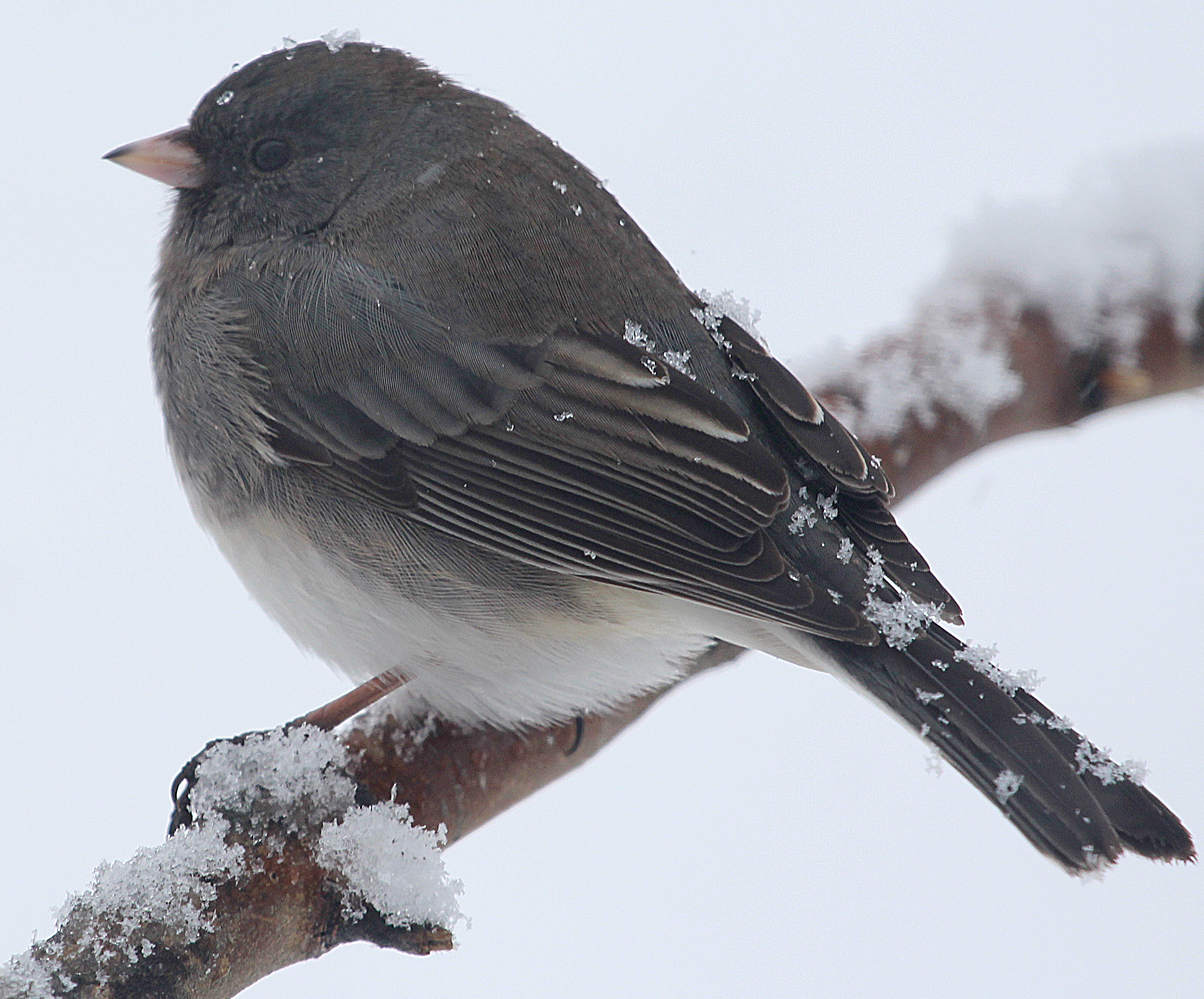
Photo by Chris Bosak Dark-eyed Junco during Jan. 2014 snowstorm.
Photo by Chris Bosak
Dark-eyed Junco during Jan. 2014 snowstorm.

When the snow flies — as it has done often this winter here in New England — you can be sure the Dark-eyed Juncos will come visit. Normally accompanied by at least a few White-throated Sparrows, juncos are typically found under bird feeders looking for fallen seeds. This snowstorm, however, I had juncos on the suet feeder, on the platform feeder and on the ground. So, of course, I had to break out the camera. What’s a snow day without a new junco photo?

Downy Woodpeckers in the snow

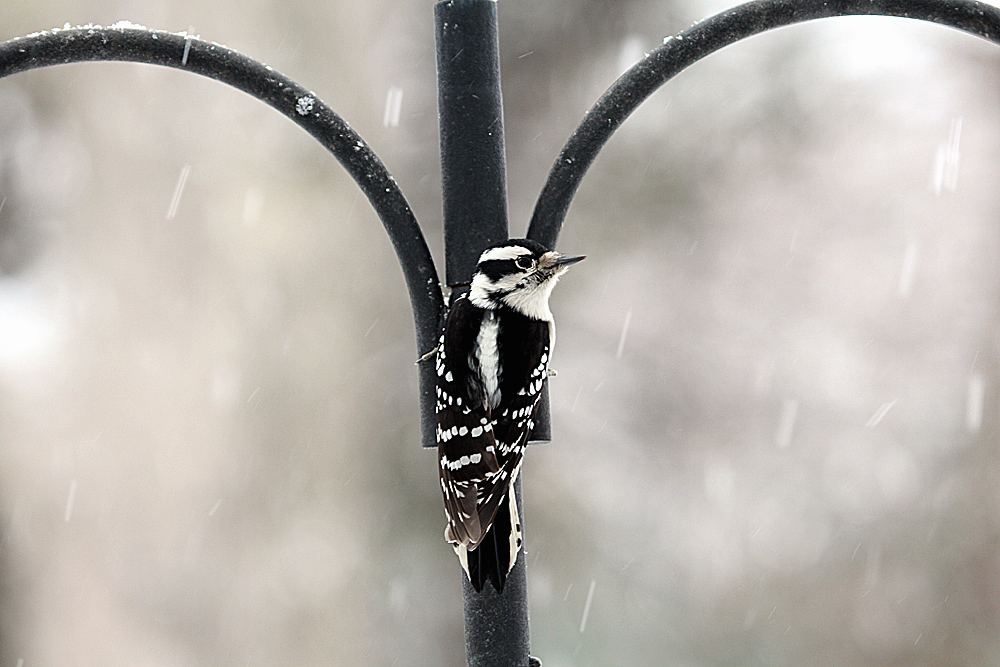
Photo by Chris Bosak A female downy woodpecker perches on a birdfeeder stand before heading to the suet feeder during the Dec. 14, 2013, snow fall.

Photo by Chris Bosak
A female downy woodpecker perches on a birdfeeder stand before heading to the suet feeder during the Dec. 14, 2013, snow fall.

The snow always brings a lot of birds to the feeders. The Dec. 14, 2013, snowfall was no exception. Here are a few shots of Downy Woodpeckers in the snow. Juncos, White-throated Sparrows, Mourning Doves and Northern Cardinals ate seeds on the ground below. The Downy Woodpeckers owned the suet cake, other than when a much larger female Hairy Woodpecker swooped in to take over.
Send me your snow bird photos at bozclark@earthlink.net and I’ll post them on my “reader submitted” photo page.

Photo by Chris Bosak A male downy woodpecker perches on a birdfeeder stand before heading to the suet feeder during the Dec. 14, 2013, snow fall.

Photo by Chris Bosak
A male downy woodpecker perches on a birdfeeder stand before heading to the suet feeder during the Dec. 14, 2013, snow fall.

Time to clean the bird houses

Darien Land Trust member Denis "Den" Frelinghuysen removes a Tree Swallow nest from a bird house at Mather Meadows as Darien Land Trust Executive Director Shirley Nichols looks on in this Nov. 23, 2013, photo.

Darien Land Trust member Denis “Den” Frelinghuysen removes a Tree Swallow nest from a bird house at Mather Meadows as Darien Land Trust Executive Director Shirley Nichols looks on in this Nov. 23, 2013, photo.

If you haven’t already, this is a good time to clean the bird houses. Birds will still use the houses for winter shelter without the nests. Old nests hold a variety of parasites and could be harmful to the birds in the spring. Cleaning the boxes will also give you the opportunity check if any unwanted visitors have used the house, such as wasps.

In the above photo, Darien Land Trust member Denis Frelinghuysen removes a Tree Swallow nest from a box at the Mather Meadows property in the northern part of Darien. Land Trust Executive Director Shirley Nichols looks on.