Photo by Chris Bosak
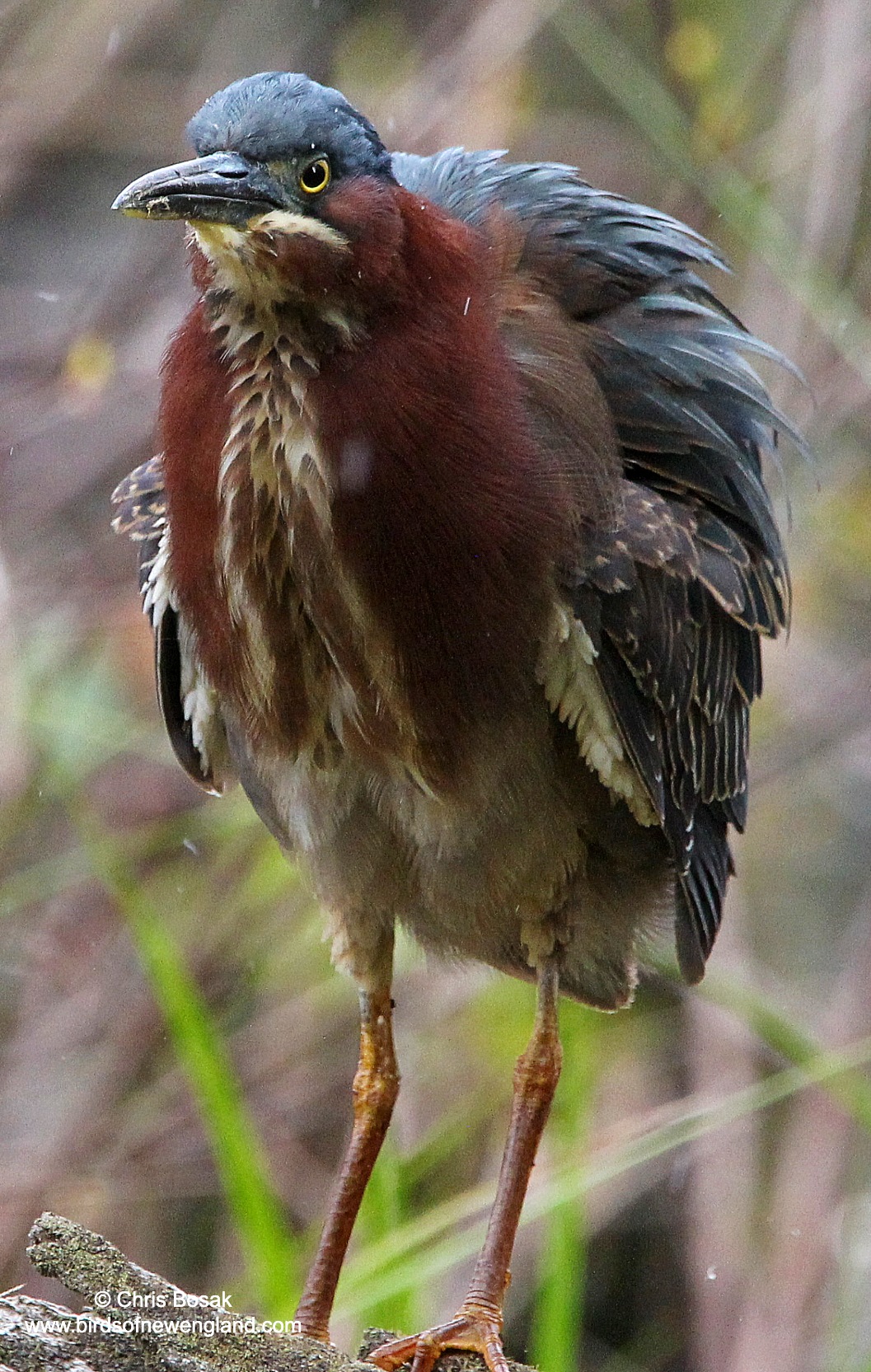
Green heron at Presque Isle State Park, Erie, Pa., May 2025.
I missed an opportunity to photograph a least bittern (it would have been my first photos of that species) when I noticed it too late, and it quickly and silently disappeared into the reeds never to be seen again.
A few hours later, I found this green heron as a consolation prize. Not that I consider the heron a lesser bird, but I already had plenty of photos of green herons. A light rain was falling and at one point the heron shook its body to get rid of the excess water.
One day I’ll get that least bittern.
Photo by Chris Bosak
Green heron at Presque Isle State Park, Erie, Pa., May 2025.Photo by Chris Bosak
Green heron at Presque Isle State Park, Erie, Pa., May 2025.
Photo by Chris Bosak
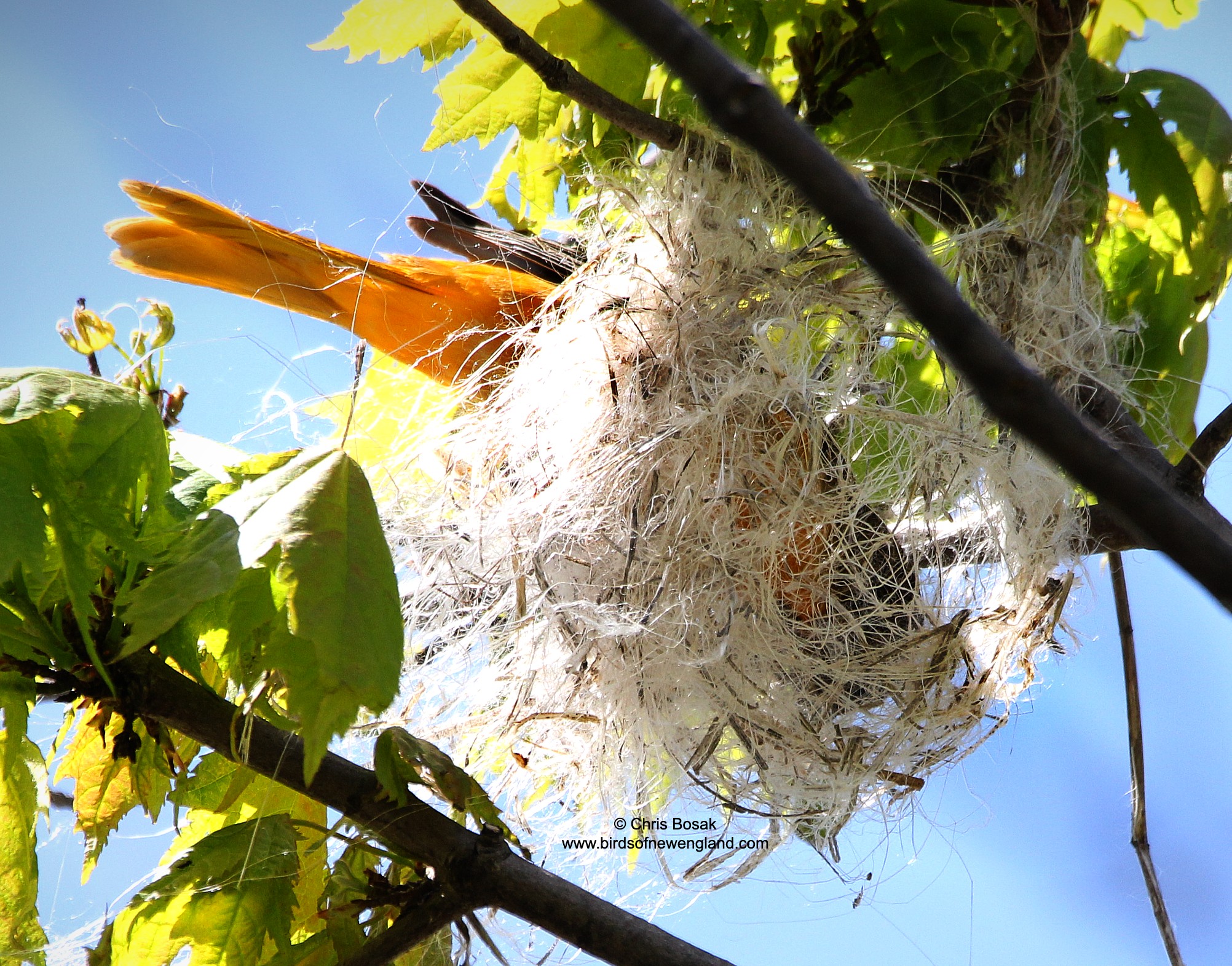
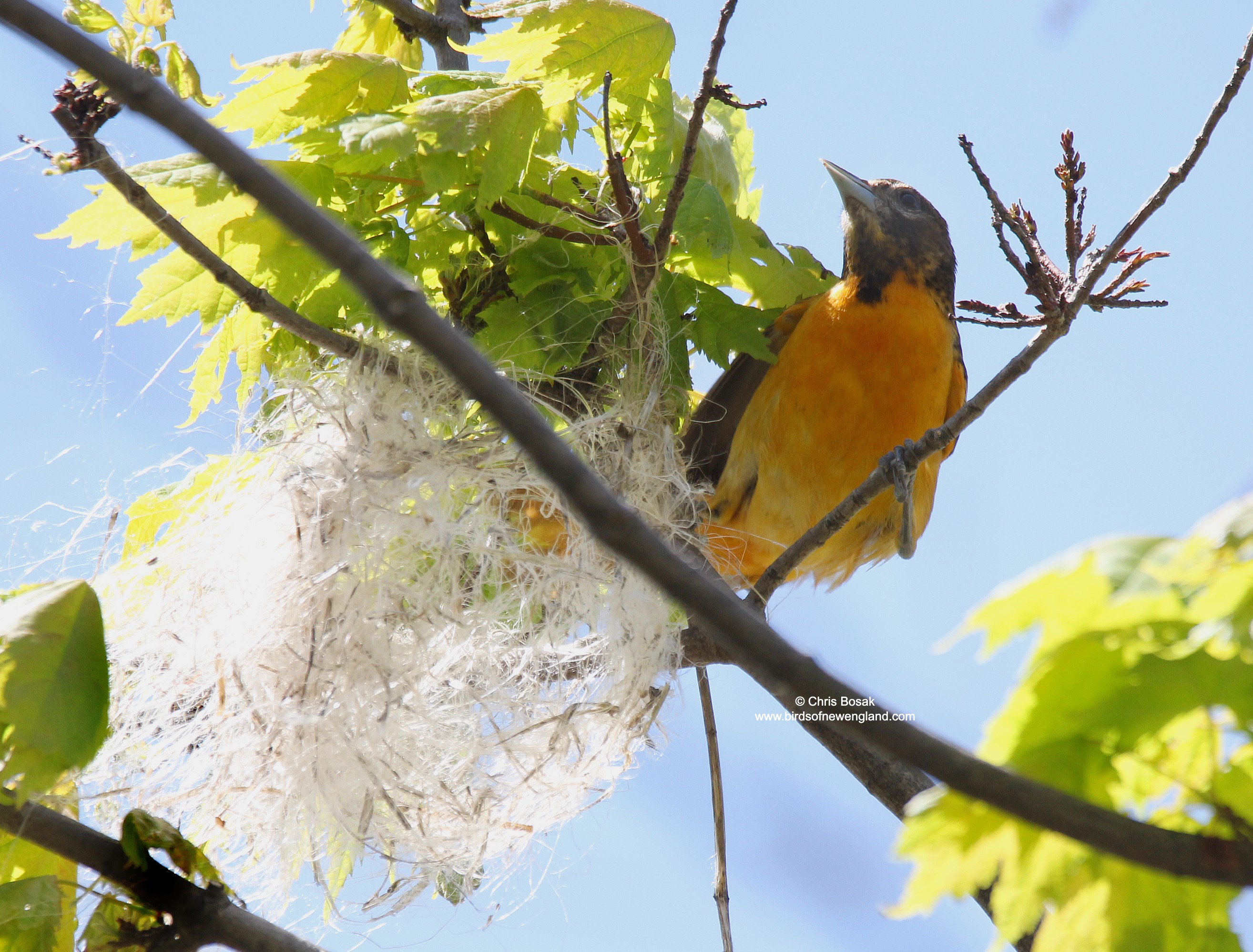
A Baltimore oriole builds a nest at Presque Isle State Park, Erie, Pa., May 2025.
Baltimore orioles have one of the most unique nests of all the songbirds in New England.
According to allaboutbirds.org, “Baltimore Orioles build remarkable, sock-like hanging nests, woven together from slender fibers. The female weaves the nest, usually 3 to 4 inches deep, with a small opening, 2 to 3 inches wide, on top and a bulging bottom chamber, 3 to 4 inches across, where her eggs will rest. She anchors her nest high in a tree, first hanging long fibers over a small branch, then poking and darting her bill in and out to tangle the hank. While no knots are deliberately tied, soon the random poking has made knots and tangles, and the female brings more fibers to extend, close, and finally line the nest. Construction materials can include grass, strips of grapevine bark, wool, and horsehair, as well as artificial fibers such as cellophane, twine, or fishing line. Females often recycle fibers from an old nest to build a new one. Males occasionally bring nesting material, but don’t help with the weaving. Building the nest takes about a week, but windy or rainy weather may push this as long as 15 days. The nest is built in three stages: first, the female weaves an outer bowl of flexible fibers to provide support. Next, springy fibers are woven into an inner bowl, which maintains the bag-like shape of the nest. Finally, she adds a soft lining of downy fibers and feathers to cushion the eggs and young.”
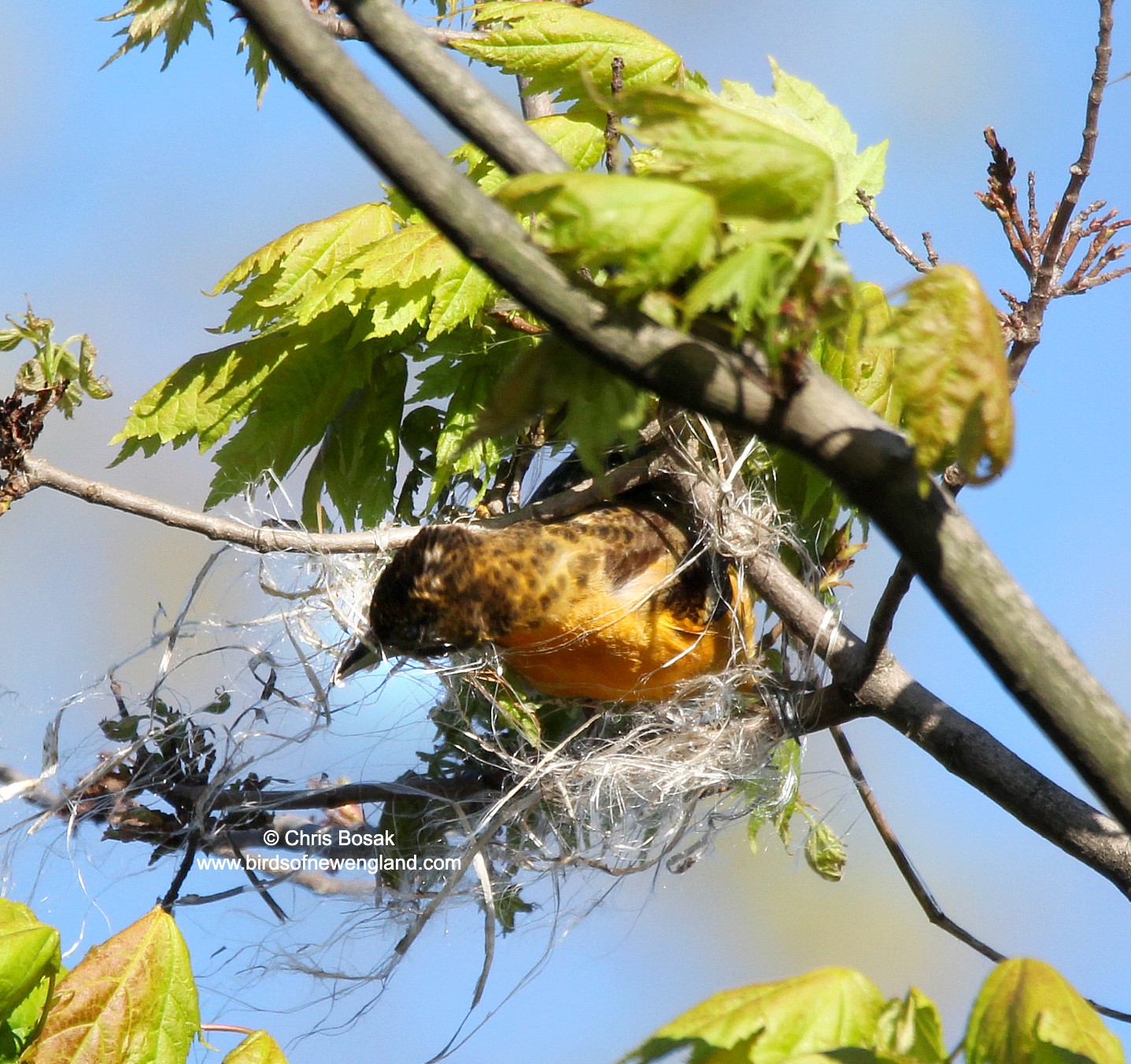
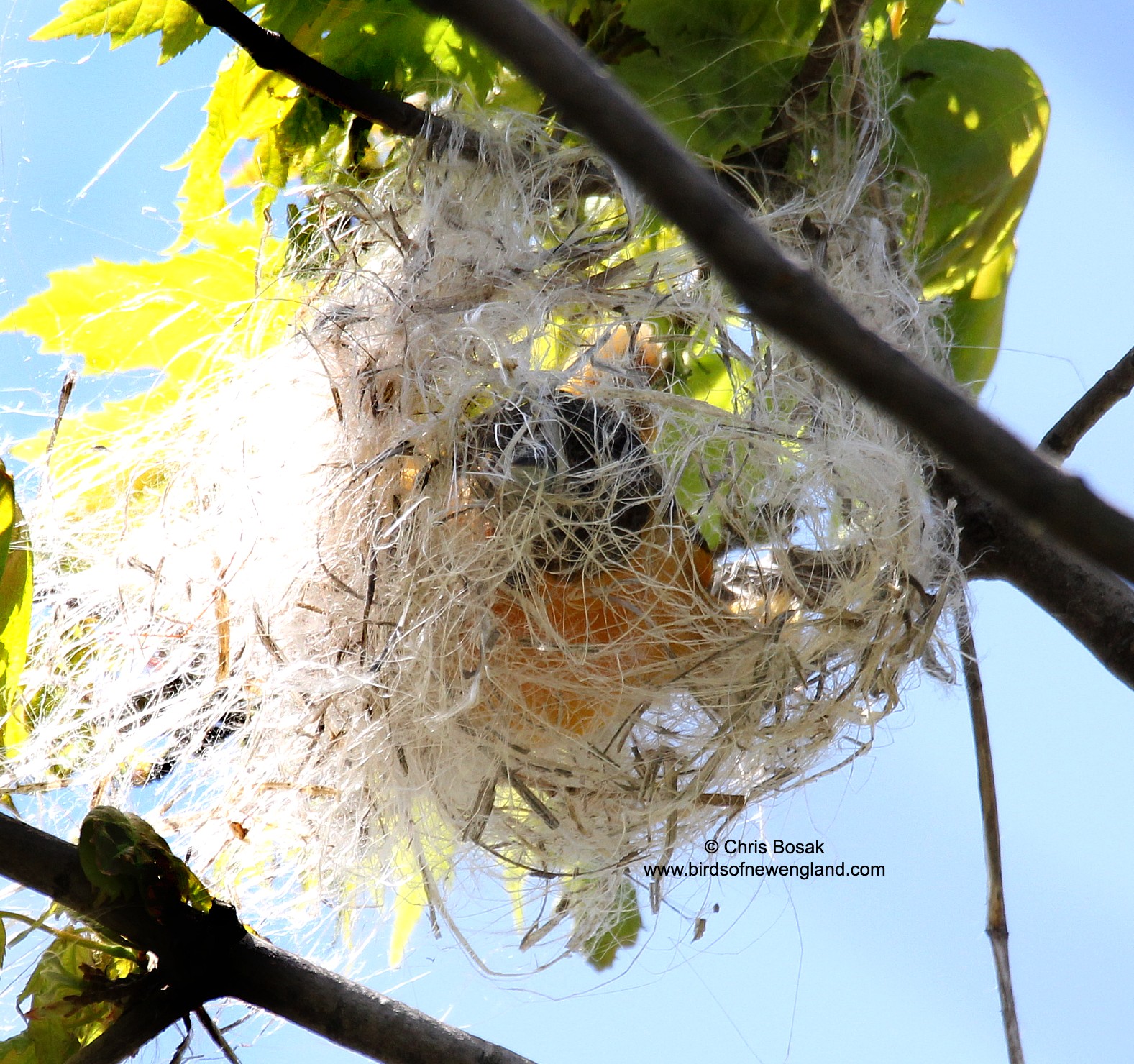
During my recent trip to Presque Isle State Park in Erie, Pa., I came across an oriole pair building a nest. We saw tons of orioles overall, but this was the only nest I found under construction. I was amazed at how much progress the orioles made in just one day. The first photo below was taken on a Sunday and next two photos (and the one above) were taken on a Monday. Nature is amazing.
Photo by Chris Bosak
A Baltimore oriole builds a nest at Presque Isle State Park, Erie, Pa., May 2025.Photo by Chris Bosak
A Baltimore oriole builds a nest at Presque Isle State Park, Erie, Pa., May 2025.Photo by Chris Bosak
A Baltimore oriole builds a nest at Presque Isle State Park, Erie, Pa., May 2025.
Photo by Chris Bosak
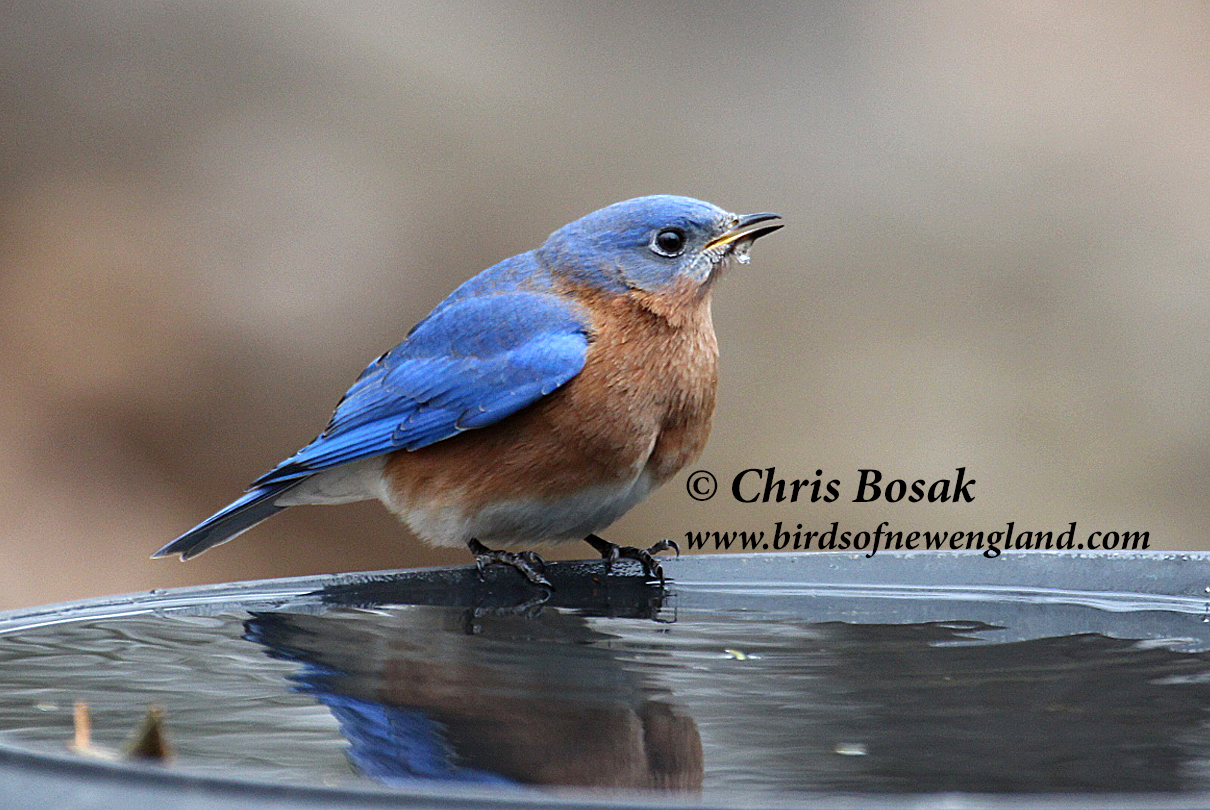
An eastern bluebird gets a drink from a birdbath in New England, February 2020.
I’ve been getting quite a few emails about bluebirds lately. I see that as a good sign about the rebounding eastern bluebird population.
Cornell Lab of Ornithology’s AllAboutBirds.com, my go-to website for information about North American birds, says the eastern bluebird is a species of “low concern.” The site reads, “Eastern Bluebird populations fell in the early twentieth century as aggressive introduced species such as European Starlings and House Sparrows made available nest holes increasingly difficult for bluebirds to hold on to. In the 1960s and 1970s, establishment of bluebird trails and other nest-box campaigns alleviated much of this competition, especially after people began using nest boxes designed to keep out the larger European Starling. Eastern Bluebird numbers have been recovering since.”
Here are the last two For the Birds columns, mostly focused on what readers have been seeing this spring.
Photo by Chris Bosak A male indigo bunting eats seeds from a platform feeder in Danbury, Conn., in May 2018.
If the past season was the Winter of the barred owl, this is the spring of the indigo bunting.
I’ve heard from numerous readers and friends throughout New England and even Canada about this bright blue bird visiting their backyards. The cause for excitement is obvious as it is one of our more colorful birds, flashing a brilliant blue plumage. The brilliance of the blue plumage is dependent upon the light.
It is also nice to hear that so many of these birds are around and delighting backyard birders in large numbers. Rose-breasted grosbeaks are another popular bird this spring. I’ve had limited luck with indigo buntings this spring, but for me, it’s been a banner year for rose-breasted grosbeaks. I’ve seen as many as three males in a tree overhanging my feeders. A female visits the feeders often as well.
It’s also been a good spring for warblers and nearly every walk last week yielded yellow warblers, common yellowthroats, black-and-white warblers, chestnut-sided warblers, American redstarts and yellow-rumped warblers.
I’m not the only birdwatcher enjoying a productive spring. Here’s what Continue reading →
I’m a little late with this posting but better late than never. A few Saturdays ago I led a bird walk at Oak Hills Park in Norwalk. I was honored to be invited by the park’s Nature Advisory Committee to be the bird guide. Of course, I accepted because I love spreading the good word about birds and I have a soft spot for any volunteer organization that promotes nature appreciation and saves land.
As a bit of background, Oak Hills Park is mainly a golf course and the nature trails are on land that was once targeted to be cleared for a driving range. The Nature Advisory Committee now stewards that part of the property, which is valuable for birds and other animals — and plants for that matter. Case in point, during the walk we came across a box turtle in the woods. The box turtle is one of many animal species in decline because of loss of habitat.
The walk drew a large crowd and we saw many exciting birds. The highlight for many, myself included, was a very cooperative scarlet tanager, one of the most colorful and brightest birds we see in New England during migration. The red-bodied and black-winged bird flitted around and rested at eye level not far from the gathered crowd. I also pointed out over and over the sound of the Continue reading →
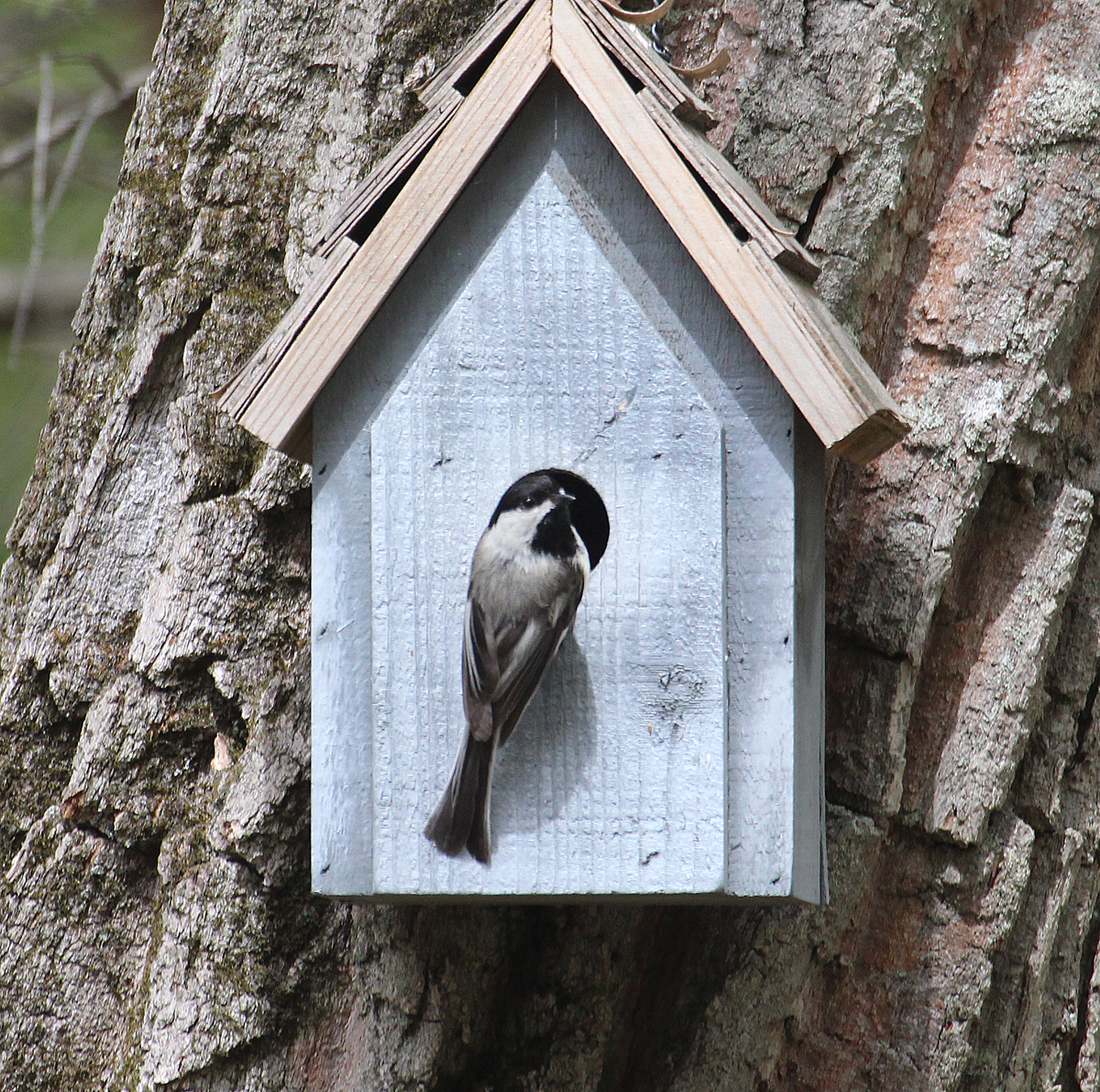
Photo by Chris Bosak A black-capped chickadee checks out a birdhouse in Danbury, Conn., during the spring of 2017.
One of the biggest thrills in spring is seeing what birds are choosing your yard to raise a family. I have mourning dove and robin nests this spring, and this chickadee is checking out one of my four birdhouses. Unfortunately, I haven’t seen it since, so it likely found another home.
I did notice great-crested flycatchers flying into a large oak tree with nesting material in its bill. Hopefully that’s a good sign. I’ll certainly keep an eye out to see how that develops. I also have male and female hummingbirds coming to the feeders, so if hummingbirds nested in the yard somewhere, that would be cool.
As spring progresses, I’ll keep an eye out for what else might be nesting nearby. Drop me a line and let me know what’s nesting in your yard.
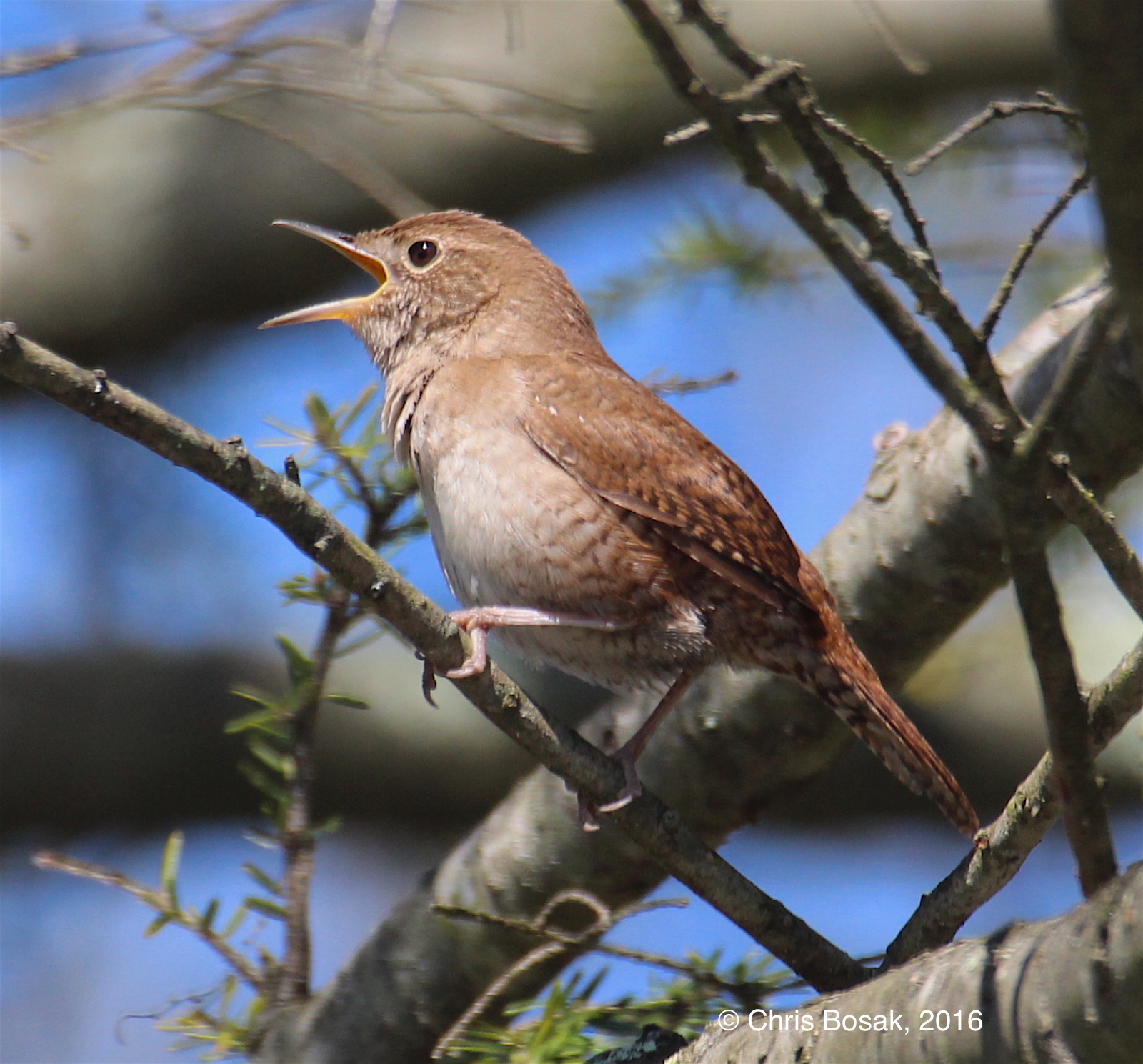
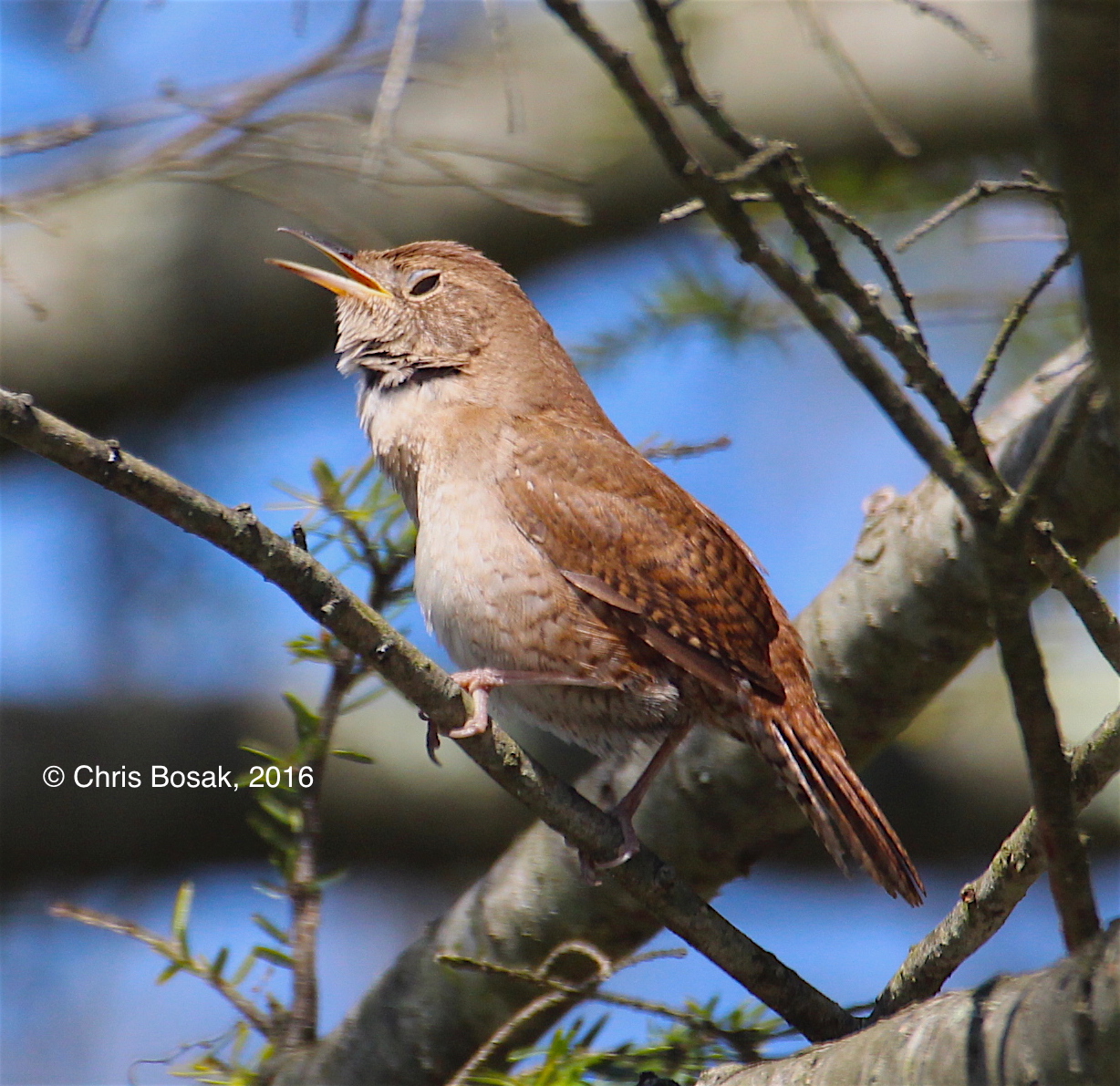
A House Wren sings in a tree during the nesting season 2016.
The other day I heard the familiar sound of a House Wren returning from the south and claiming his territory. He check out a few of the bird houses on my property and then perched in nearby trees to sings its song. They are loud and charismatic birds.
I watched one check out at least two houses on my property. To my knowledge, he didn’t pick either one. He didn’t even pick one to start a “dummy nest,” whereby to fool predators that may be watching the put a few sticks in house.
Oh well, there’s still time. Not every House Wren has picked its spot yet.
A House Wren sings in a tree during the nesting season 2016.
A House Wren sings in a tree during the nesting season 2016.
Photo by Chris Bosak An Eastern Bluebird perches near a lake in Danbury, Conn., Feb. 2016.
Eastern Bluebirds, similar to American Robins, are thought of as mostly a spring and summer bird in New England. I love finding an active bluebird box in April or May and watching the parents go back and forth feeding the youngsters hidden inside the box.
But Eastern Bluebirds are also commonly found in New England during the winter. I love seeing them after a snowfall; how their bright blue and orange seem even brighter against the white backdrop. Bluebird Continue reading →
Here’s an interesting story from the Associated Press. I hope the proposal goes through and comes to fruition.
CONCORD, N.H. (AP) — The U.S. Fish and Wildlife Service is proposing to establish the “Great Thicket National Wildlife Refuge,” areas of New England and New York to preserve more shrubland and young forests for numerous species, such as the New England cottontail.
The agency has identified areas in New Hampshire, Connecticut, Maine, Massachusetts, New York and Rhode Island. The goal is to gain up to 15,000 acres.
The agency says many areas across the Northeast have been cleared for development or have grown into mature forests. Private landowners and conservation groups have worked with state wildlife agencies to restore and protect land for 65 songbirds, mammals, reptiles and other wildlife, but more land is needed.
The Service is accepting comments on the proposal through March 4.
Here’s an email I received recently from The Cornell Lab or Ornithology. With my new home buzzing with bird activity, I’m going to join this important citizen science project this year. Here are the details should you be thinking about it, too, or learning of the project for the first time here:
Dear Friend of the Cornell Lab,
The FeederWatch season begins on Saturday, November 14, so now is the time to sign up! This is the last reminder that we will send to you before the season starts, and we hope you decide to join the fun this year.
What is Project FeederWatch?
Project FeederWatch is a winter-long survey of birds that visit feeders. Participants periodically identify and count the birds at their feeders from November-April. Using our easy online data entry, you can immediately see all of your own counts and view colorful tables, graphs, and summaries.
With Project FeederWatch, you become the biologist of your own backyard.
Anyone interested in birds can participate; you don’t have to be an expert. All you need is a bird feeder, a comfortable chair, a window, and an interest in the birds in your neighborhood.
New participants will receive:
FeederWatch Handbook & Instructions
Full-color poster of common feeder birds
Bird-Watching Days Calendar
Our annual report, Winter Bird Highlights
Subscription to the Cornell Lab newsletter
Why should I participate?
FeederWatch data help scientists track broad movements and long term trends in abundance of winter feeder-bird populations. Explore the millions of FeederWatch sightings on our website. You can help contribute to a nearly 30-year dataset that helps us understand bird biology while learning about the feathered friends in your own backyard. Join online today.
Sign up for $18 ($15 for Lab members) today so that we can get your research kit in the mail. Although it takes several weeks for kits to arrive, you can begin counting birds Saturday following our online instructions. Your participation fee helps keep the project running; without it, Project FeederWatch wouldn’t be possible.
We hope you will tell us about the birds at your feeders!







 Birds of New England.com