I’ve participated in the Christmas Bird Count in all types of weather.
I can recall bitter cold days, unusually warm days, pouring rain, sleet, light snow and blustery snow squalls. Once a date is set far in advance, it is usually held on that day regardless of the weather.
This year, the count I did with my friend Frank in southern New England took place in a wet snow that accumulated before our eyes. It made for beautiful scenery but also frozen fingers and toes, damp clothing, steamed optics and fewer birds than usual.
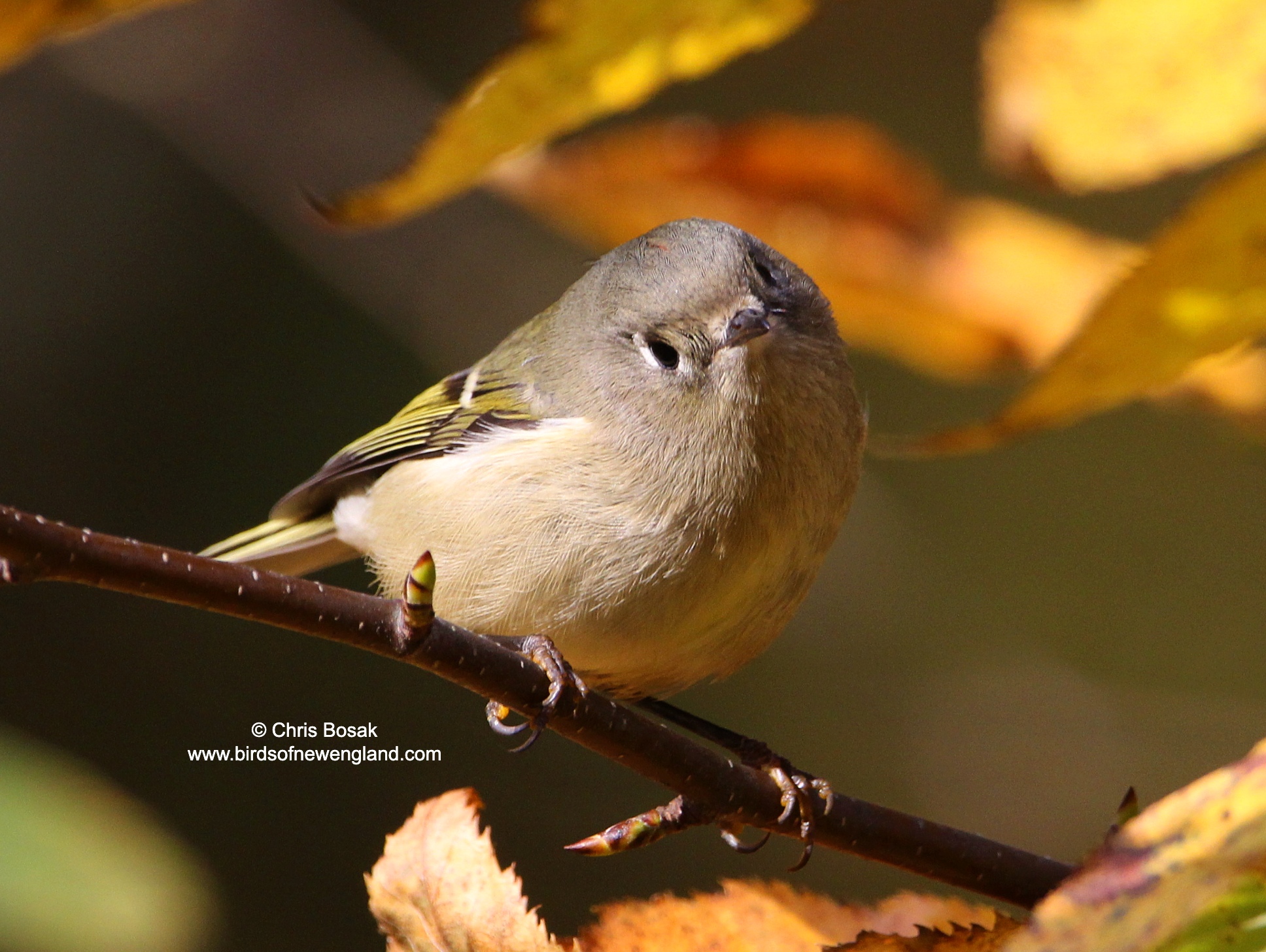
Ruby-crowned kinglet, fall 2025, Huntington State Park, CT.
Two species dominated my latest bird walk.
Perhaps not surprisingly, the white-throated sparrow was the most dominant species. I lost track of how many I had seen early in the walk as dozens of these beautiful native sparrows were around every bend.
The second-most dominant species may be a bit more surprising. While large groups of white-throated sparrows lingered around every corner, singular ruby-crowned kinglets kept me occupied on the straightaways.
They were constant companions during the walk. Little flashes of movement in the bushes or low branches of trees gave away their whereabouts. Not that they were trying to stay concealed, as they can be surprisingly tame for wild birds.
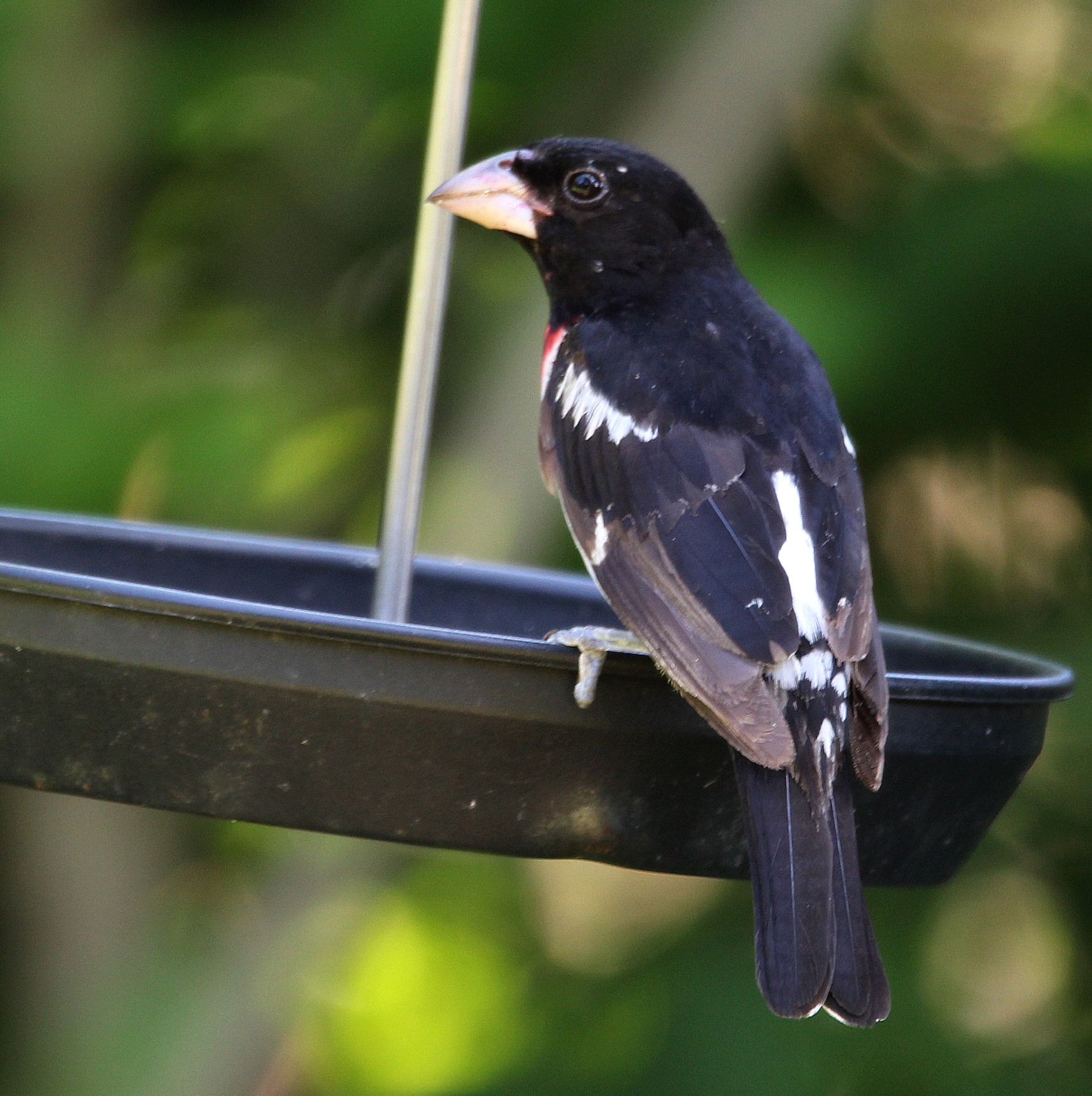
Photo by Chris Bosak – A young male rose-breasted grosbeak visits a feeder in New England, summer 2025. Note the brown feathers on the wings.
I was heading to my car at work when four or five relatively large birds emerged on the ground from around the corner of a building. I didn’t immediately recognize them, as their sudden appearance surprised me and my mind was elsewhere.
I took a few more steps and quickly realized what they were: baby turkeys. By that time, I had progressed enough that the mother turkey was now visible and only a few yards away. Will she attack like a mute swan or Canada goose might? Never get between a mother and her babies, the saying goes. I wasn’t actually between them, but I was certainly close enough to some of the babies that I could be considered a threat.
Photo by Chris Bosak
A Canada warbler in Pittsburg, NH, June 2025.
Here are a few warblers I saw on my trip up north. Previously, I had posted photos of loons and an eagle. Canada warblers and magnolia warblers are similar looking with their bright yellow chests and bellies streaked with black. There some obvious differences, such as the eyes. Canada warblers have an obvious eye ring, while magnolia warblers have a black mask with less obvious broken eye ring.
Photo by Chris Bosak
A magnolia warbler in Pittsburg, NH, June 2025.Photo by Chris Bosak
A Canada warbler in Pittsburg, NH, June 2025.
Photo by Chris Bosak – Common loons in Pittsburg, NH.
I took a trip to Pittsburg, NH, near the Canadian border over the weekend. I’ve been going up there for more than 30 years now, although the frequency of my visits has dwindled in the past few years. While the moose sightings have decreased dramatically in the last 10 years or so, the other wildlife never seems to disappoint. Here is a shot of a loon pair I got one extremely foggy morning from my canoe. More photos will follow in the coming days.
Photo by Chris Bosak
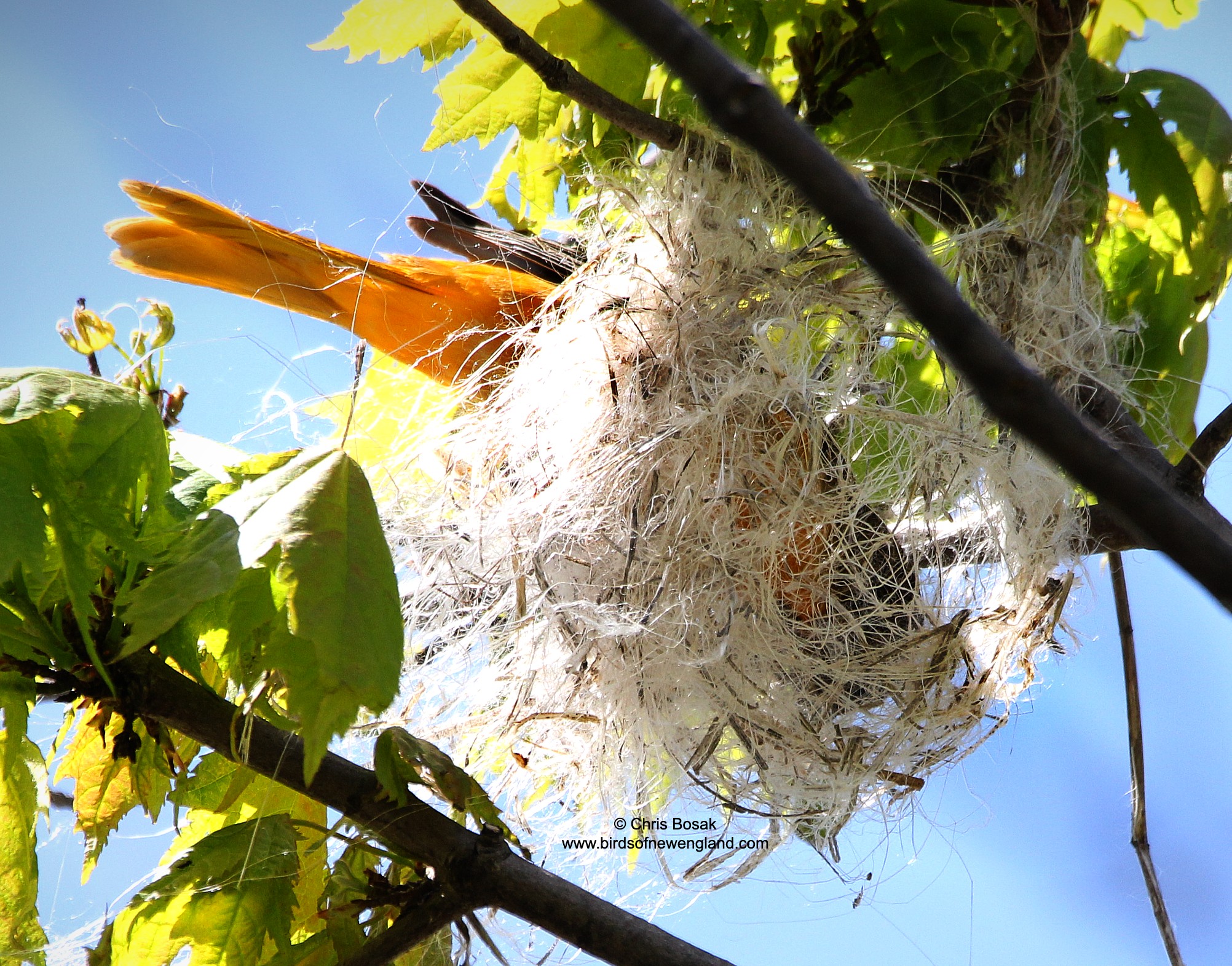
A Baltimore oriole builds a nest at Presque Isle State Park, Erie, Pa., May 2025.
Everything about a Baltimore oriole nest is ingenious. From the design and materials to the location selection, the nest is a perfect haven to raise young birds safely from predators (for the most part).
Fall is the best time to find oriole nests, after the leaves have fallen. Of course, by that time, the orioles are long gone, and the nest is a mere relic of the past breeding season, but it’s still interesting to see one of the pouch-like nests dangling from the end of a branch.
The other week, I was lucky enough to watch a female oriole build one of those remarkable nests. I was walking along a trail that was teeming with yellow warblers, catbirds, and Baltimore orioles when I glanced up and saw an oriole perched at the end of a branch overhead.
Photo by Chris Bosak
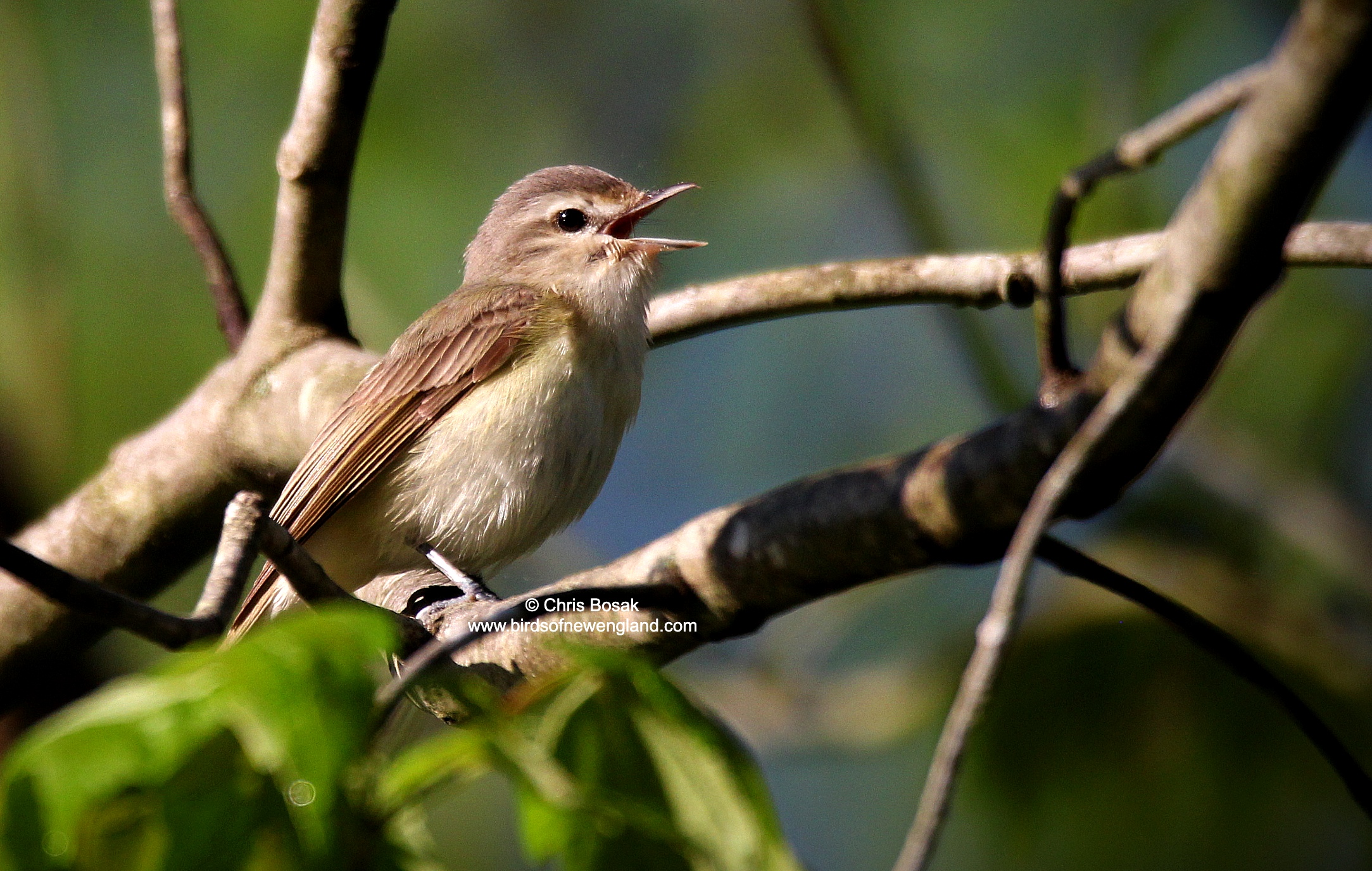
A warbling vireo sings from a branch in New England, spring 2025.
It’s funny how you can still discover new things after so many years.
I’m sure that applies to most hobbies, but it certainly applies to birdwatching. I have only recently “discovered” the warbling vireo. The small, loquacious bird, of course, has been around for far longer than I have been birdwatching, but I am only recently taking notice of it.
Part of the reason I may not have paid it much mind previously is that it is a small, fairly nondescript bird that typically hangs out in the middle to upper branches among the leaves. It is not like some birds that take an obvious perch somewhat low in the trees or brush and are easily found on a birdwalk.
Over the last couple of years, however, I have come to know warbling vireos not only because the males sing constantly, but I am finding them almost everywhere I go in the spring.
Photo by Chris Bosak
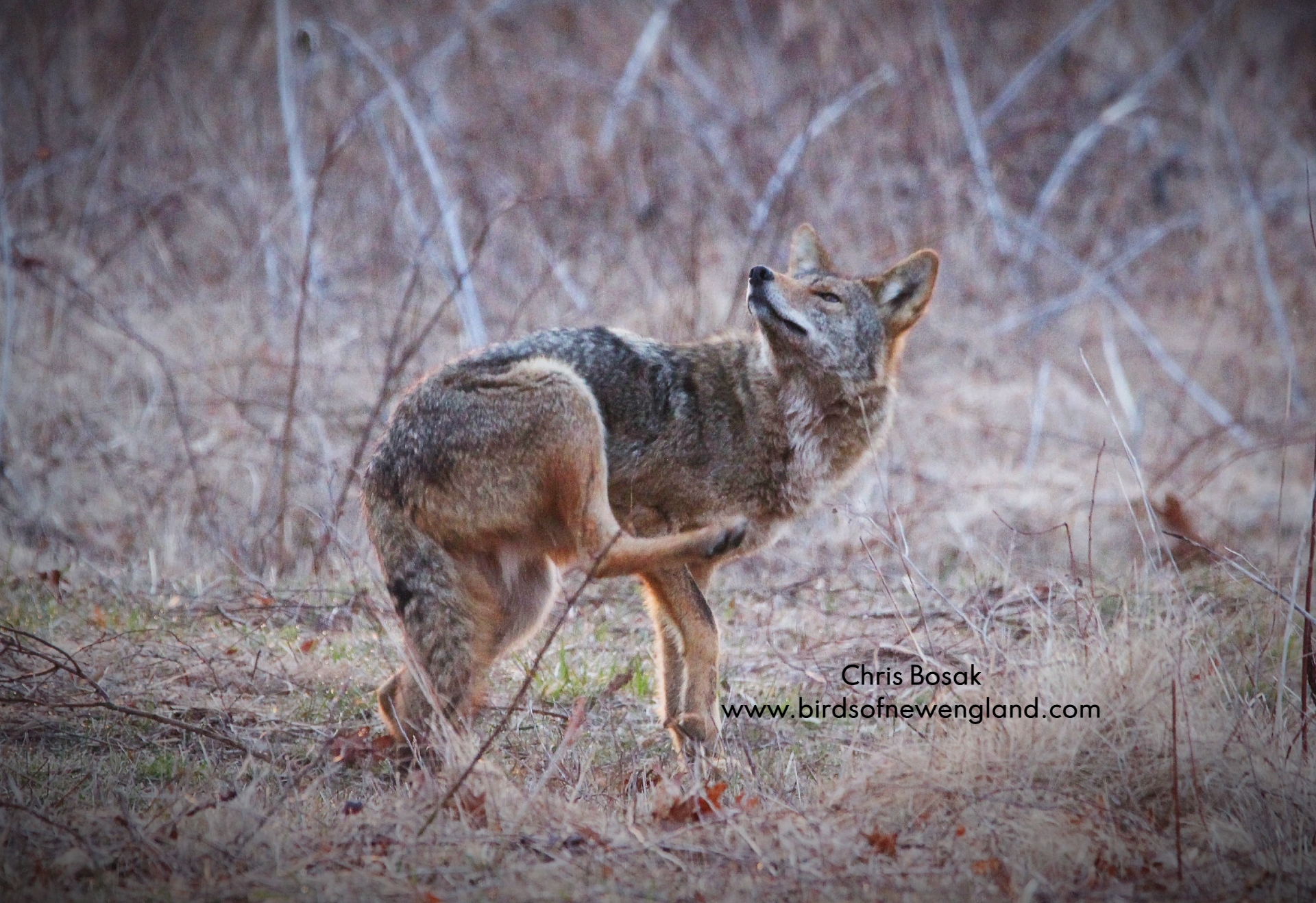
A coyote scratches itself in a field at Huntington State Park in Redding, Connecticut, March 2025.
This is the second column in the last few weeks where I end up writing about and using a photograph of an unintended subject because the primary target fell through.
A few weeks ago, you may recall, I wrote about a missed opportunity to photograph blue jays harassing a barred owl. The blue jays successfully drove off the owl before I could get into position for a photo. On the walk back to the car, I came across a flock of cedar waxwings eating berries and stopped to photograph them.
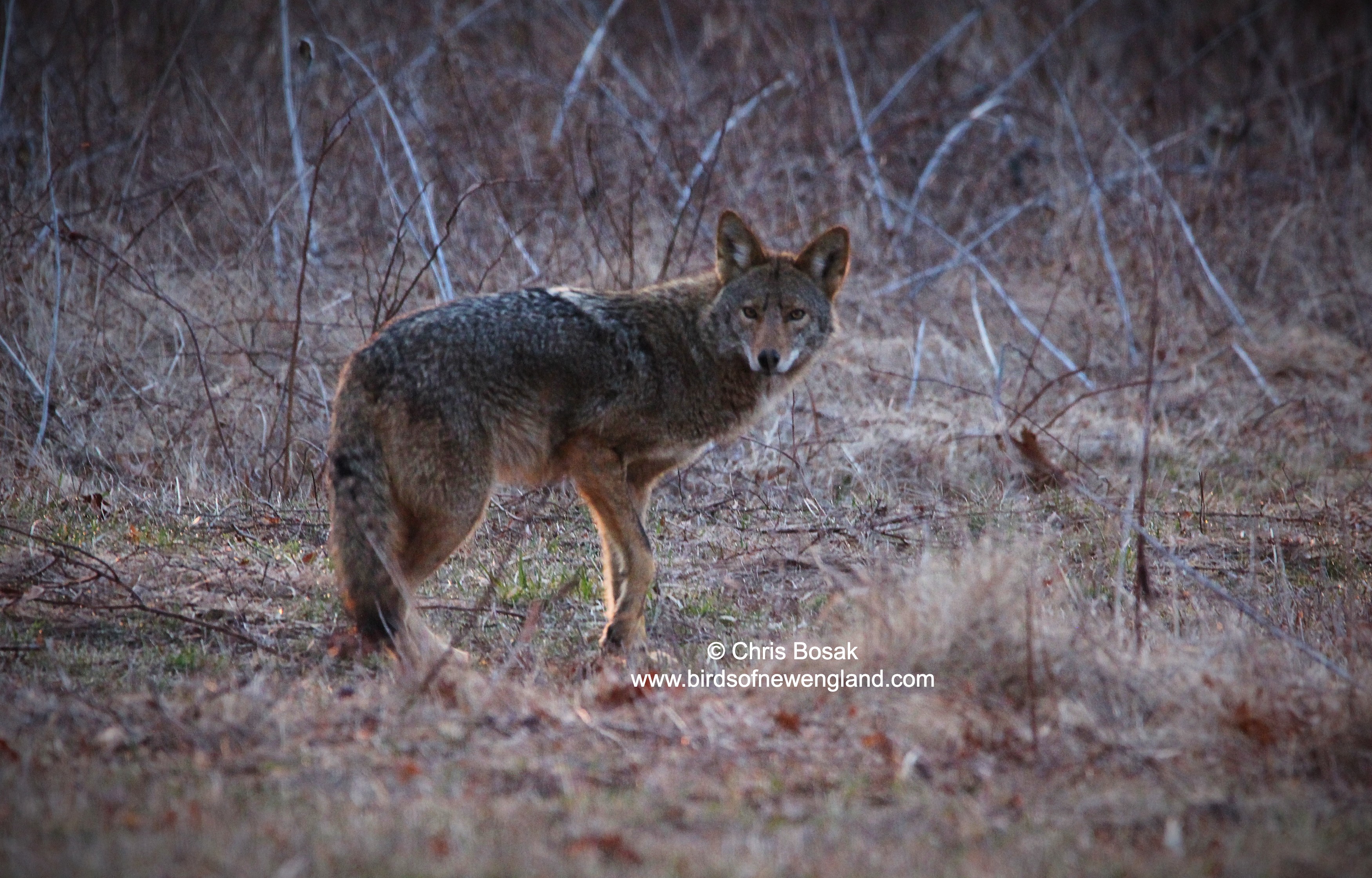
This time, the intended target was American woodcock, but I ended up coming home with more photos of my coyote friend. Late in 2024, I wrote about getting lucky and spotting a coyote in a field as I passed a small break in the thick, tangled, brushy border between the woods and field. I’m assuming this was the same coyote, as I spotted it in the same field very near where I had seen it before.
But first, my intended target. American woodcocks, or timberdoodles, have been a nemesis species of mine for many, many years. I’ve seen their evening aerial displays a few times, but I haven’t found one during the day when getting a photograph would be possible. The aerial displays come shortly after sunset when the evening light has faded.
Photo by Chris Bosak
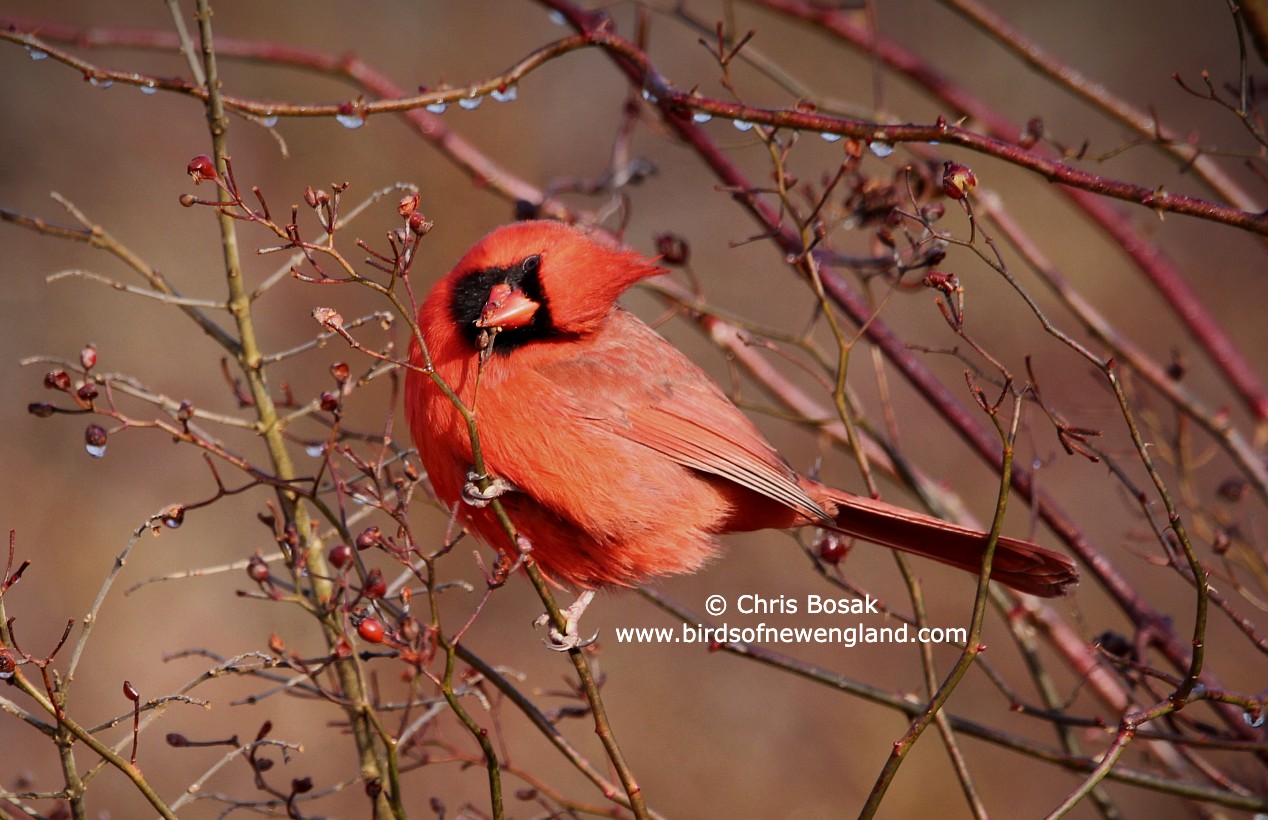
A cardinal eats berries in New England, January 2025.
I’ve seen a ton of robins this winter. On several occasions, I’ve seen them in big numbers attacking bushes and trees and stripping them of fruit.
I’ll always remember the first time I saw this spectacle. It was more than 20 years ago, and I was a relatively new birder. I walked into the woods and the trees were alive with bird life. Birds were darting from tree to tree all around me.
I was finally able to focus on a few and discovered that they were all robins. I was surprised because, at the time, I still thought of robins as spring and summer birds in New England. They are the harbinger of spring, aren’t they?


 Birds of New England.com