Photo by Chris Bosak
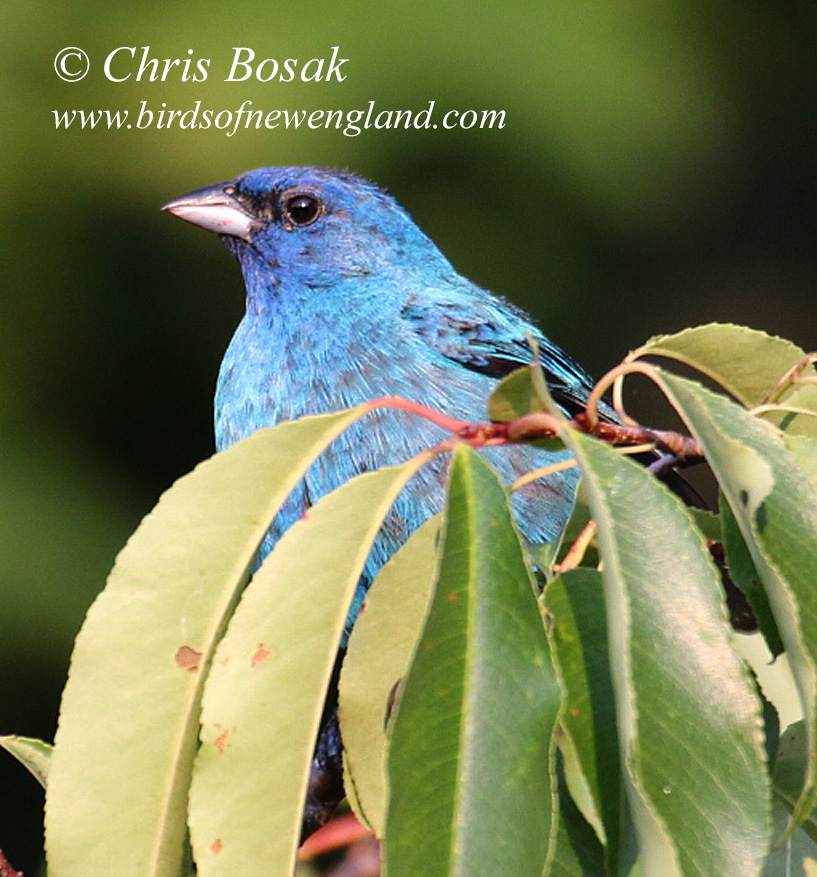
An indigo bunting perches in a tree in New England, July 2021.
I’m not going to try to emulate Dr. Seuss, but I think he would have drawn plenty of inspiration from a walk in the woods in New England in May.
His classic “Oh, the Thinks You Can Think!” comes to mind, but only altered to “Oh, the Colors You Can See.”
A recent walk made me think of this. The majority of the walk was along a wide dirt path with shrubby habitat on both sides. Beyond the thickets on one side was a large field and beyond the thickets on the other side were deep woods. It is perfect habitat for a bird walk.
The first bird I saw was a male eastern towhee. It was once called rufous-sided towhee because of the unique dark orange color of its sides that complement the otherwise white and black plumage of the bird. The bird’s red eyes are visible when it approaches among the shrubs closely enough. I did not see a female towhee on this particular day, but they are lighter brownish-orange where the male is black.
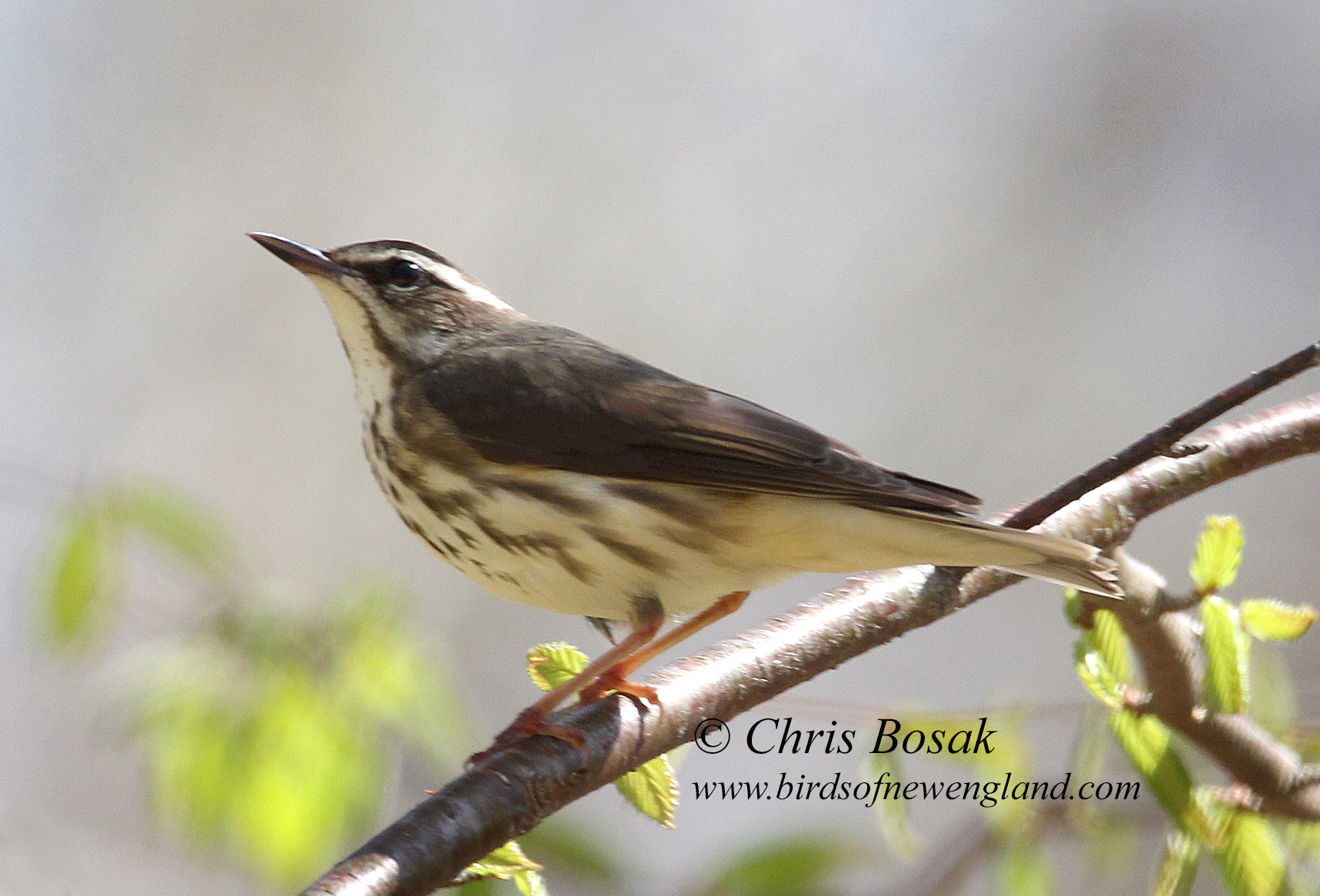
Photo by Chris Bosak — Louisana waterthrush in New England, May 2022.
If it looks like a duck, swims like a duck and quacks like a duck, then it probably is a duck.
That great old expression doesn’t work for thrushes because a lot of birds look like thrushes but aren’t thrushes at all. So you can’t say: If it looks like a thrush, then it probably is a thrush.
Members of the thrush family in New England include wood thrush, hermit thrush, veery, Swainson’s thrush and Bicknell’s thrush. They are medium-sized birds, brown overall and their buff-colored bellies and chests are decorated with brown spots. American robins and Eastern bluebirds are thrushes as well but have their own distinctive appearances.
Thrushes are perhaps best known for their songs. Wood and hermit thrushes have amazing flute-like songs that sound otherworldly and have inspired many a line in poetry and literature.
Where to begin? May is a firestorm of birding activity in New England.
I’ll recap a few of my recent highlights and then expand, where necessary or otherwise interesting, in subsequent columns.
A warbler by any other name: Many warblers actually have the name warbler in their name. Yellow warbler, chestnut-sided warbler, worm-eating warbler and so on. Many, however, don’t have warbler in their name. Common yellowthroat, American redstart to name a few.
A few warblers don’t have warbler in their name and look like they belong in the thrush family. The ovenbird and waterthrushes (northern and Louisiana) could easily pass for thrushes with their brown bodies and spotted chests. Heck, the waterthrushes even have thrush in their name. But they are all, indeed, warblers.
That warrants a column unto itself. I’ll dig into that in the coming weeks.
Dueling grosbeaks: I heard a rose-breasted grosbeak singing in a tree during the tail end of one of my recent walks. I paused enough to find its perch. As soon as I spotted the beautiful bird, another male rose-breasted grosbeak dive-bombed the original bird, and they started chasing each other through the woods. The action caught the eye of a third male grosbeak and that one joined in the chase as well. That was a first for me. Rose-breasted grosbeaks, with their white wing bars, are just as impressive-looking in flight as they are perched.
The warblers are back and delighting, confusing, and frustrating birdwatchers throughout New England.
Warblers are small, usually colorful, passerine (perching) birds that migrate into New England every spring. Many nest here while others continue north to nest in Canada. In the fall, they head to points south such as southern U.S., the Caribbean, Central America or South America. The odd warbler shows up on New England Christmas Bird Counts from time to time, but for the most part, they are gone before the snow starts to fly.
To me, the quintessential warbler is the yellow warbler. It is small, brightly colored, numerous throughout the region and sings its ubiquitous song (“sweet sweet I’m so sweet”) over and over from the brush. It is all yellow with some rusty streaking on its chest and belly.
Warblers come in all colors, however. Many are mostly yellow and many others have flashes of yellow in their plumage. Some are black and white, and some are mostly brownish. A few are mostly blue. It’s no wonder that the spring migration, highlighted by warblers, is the favorite time of year for most birdwatchers.
Photo by Chris Bosak
An American goldfinch perches on a wire in New England, March 2020.
I’ve been getting a lot of inquiries about goldfinches lately. Everything from how to attract them to why am I suddenly seeing more of them to why do some of them seem much duller than other ones.
To answer the question about how to attract them, you have to start with Nyjer seed. Nyjer seed, also sometimes called thistle, are the tiny seeds that are a fraction the size of a sunflower seed. Birds such as goldfinches, pine siskins, and indigo buntings love Nyjer seeds. It is hard to imagine there is a whole lot of meat inside the shells, but apparently, it is enough to satisfy the smaller birds.
Goldfinches also prefer tube feeders. If you get one with several ports there will be times when all of the perches will be occupied by goldfinches. So the best way to get goldfinches is to offer Nyjer seed in tube feeders.
But that is not the only way to attract goldfinches. Goldfinches will also eat sunflower seeds and visit hopper or platform feeders. They will also eat Nyjer seed from a mesh “sock.“
Goldfinches will also visit flowers such as sunflowers, coneflowers, and black-eyed Susans. But you have to wait until fall to see them eating those seeds. Goldfinches will also readily visit birdbaths. In fact, they are one of the most frequent visitors to my birdbath.
As to why some of them look different, that is a somewhat tricky question. The obvious answer is that females are duller and males are brighter. However, a goldfinch’s plumage is constantly changing and some males may be ahead of others in obtaining their breeding plumage.
Even males are drably colored in the winter and slowly gain their famous bright yellow feathers by the spring. This week, I have seen some goldfinches that are already fully decked out in their splendid yellow. Others are still splotchy with some bright and some dull plumage.
Well-known ornithologist David Sibley has a great article with photos, or more accurately drawings, of what a goldfinch’s plumage looks like each month throughout the year. The article can easily be found with an Internet search by entering “goldfinch monthly plumage” in the search field.
Females are duller in color year-round. Like other dimorphic birds (male and female have different appearances), females are more dully colored to offer protection from predators. The flashy males attract the attention of predators and cause a diversion away from the females on nests.
I have always had decent luck attracting and finding goldfinches. There are certain birds I just can’t seem to find, but goldfinches, thankfully, have never been one of those problematic species.
Goldfinches are also nomadic. If you have goldfinches throughout the day, it is likely that you are seeing more than one group of goldfinches. Perhaps that explains why some people are seeing more of them lately. The goldfinches have only recently discovered the feeding station.
Goldfinches are a favorite bird of many people, and with good reason. They are striking with their bright yellow plumage, they are common backyard inhabitants, and they are year-round New England residents, not fair-weathered friends. What’s not to like?
Photo by Chris Bosak – A yellow-rumped warbler perches on a branch in New England, spring 2022.
It was a classic early spring walk.
Expectations were high to see a lot of migrants, but those expectations did not match the calendar. Mid-April can be a tough time for birdwatchers. We know the migrants are coming any day, and we have waited so long that the anticipation gets the better of our waning patience. It’s like the feeling children get on December 22 and 23. The decorations and tree have been up for weeks already, but it’s still not time to celebrate.
This is not to say it wasn’t a fruitful walk. I saw a handful of migrants including my first warblers of the season. But instead of dozens of species and 100s of individual birds, as we will get in a few weeks, it was more like a few species and about a dozen individuals.
It was a good warm-up to the upcoming peak of spring migration. Let’s put it that way.
I’m not a big keeper of lists. I don’t have a bird life list, U.S. list or state list. I do, however, keep a yard list and work list.
My yard list was very robust at my former house in the woods. Now that I live close to downtown in a small suburban town, my yard list is not very impressive. My work list is growing, however. We recently got new offices and I now look out into a patch of woods instead of a parking lot. My daily sprinkling of seeds and nuts in the crevices of the downed trees at the wood’s edge enhances the view and draws in extra birds.
The other day, a hermit thrush hopped along the ground near where I place the seeds. It wasn’t eating the seeds, of course, but it was slowly walking among the leaves and looking curious as hermit thrushes often do.
I’ve missed countless photo opportunities while driving because I did not have my camera with me.
This time I was well-armed.
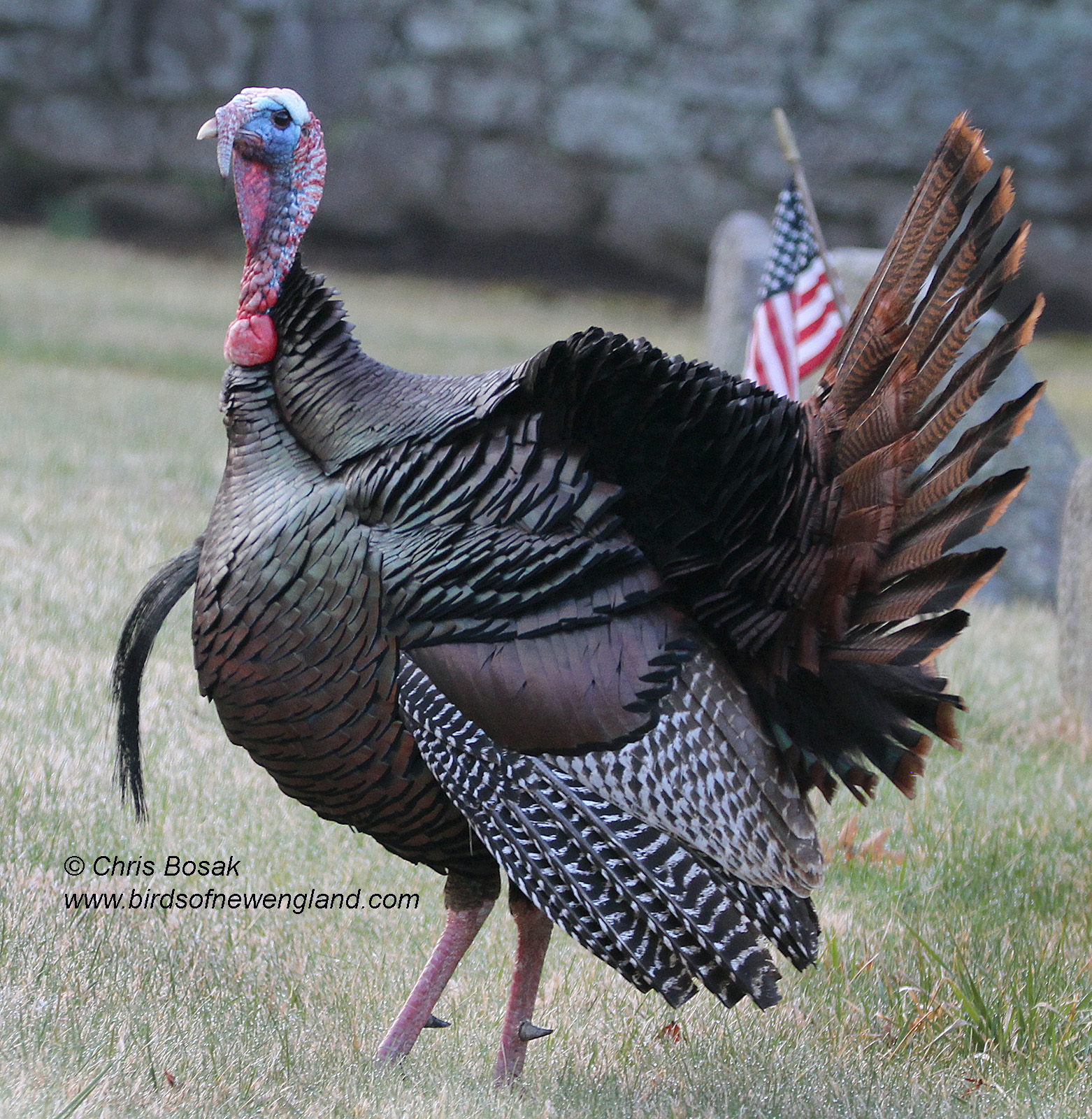
I was driving to work along my usual route when I passed a small, historic cemetery that I have passed hundreds of times before. On this day, I noticed a flock of turkeys among the grave markers as I sped past. I found the nearest safe place to turn around and headed back to the cemetery.
Here’s where my stories usually end with “but they were gone.”
Photo by Chris Bosak
An American robin perches in a tree in New England, June 2020. Merganser Lake.
I think we can officially call it spring now.
The myth that robins are the harbinger of spring has been debunked several times over. I have even mentioned that as being the case in this column several times. But, I’m going to backtrack a bit and say that I still consider the robin to be a harbinger of spring of sorts.
Many robins stay in New England throughout the winter, which is why it is not a true harbinger of spring as you can see them in January or February as well as March or April.
Photo by Chris Bosak
A red-winged blackbird sings from the top of a tree at Happy Landings in Brookfield, Conn., spring 2017.
Late March and early April can be a tough time for birdwatchers as we are in the slow build up to spring migration.
The spring migration actually starts sometime in February when the first male red-winged blackbirds arrive. It’s a nice sight (and sound) when they return to our swamps, but it’s pretty much just a tease as we know winter will continue, and it will be several weeks until other birds start to show up.
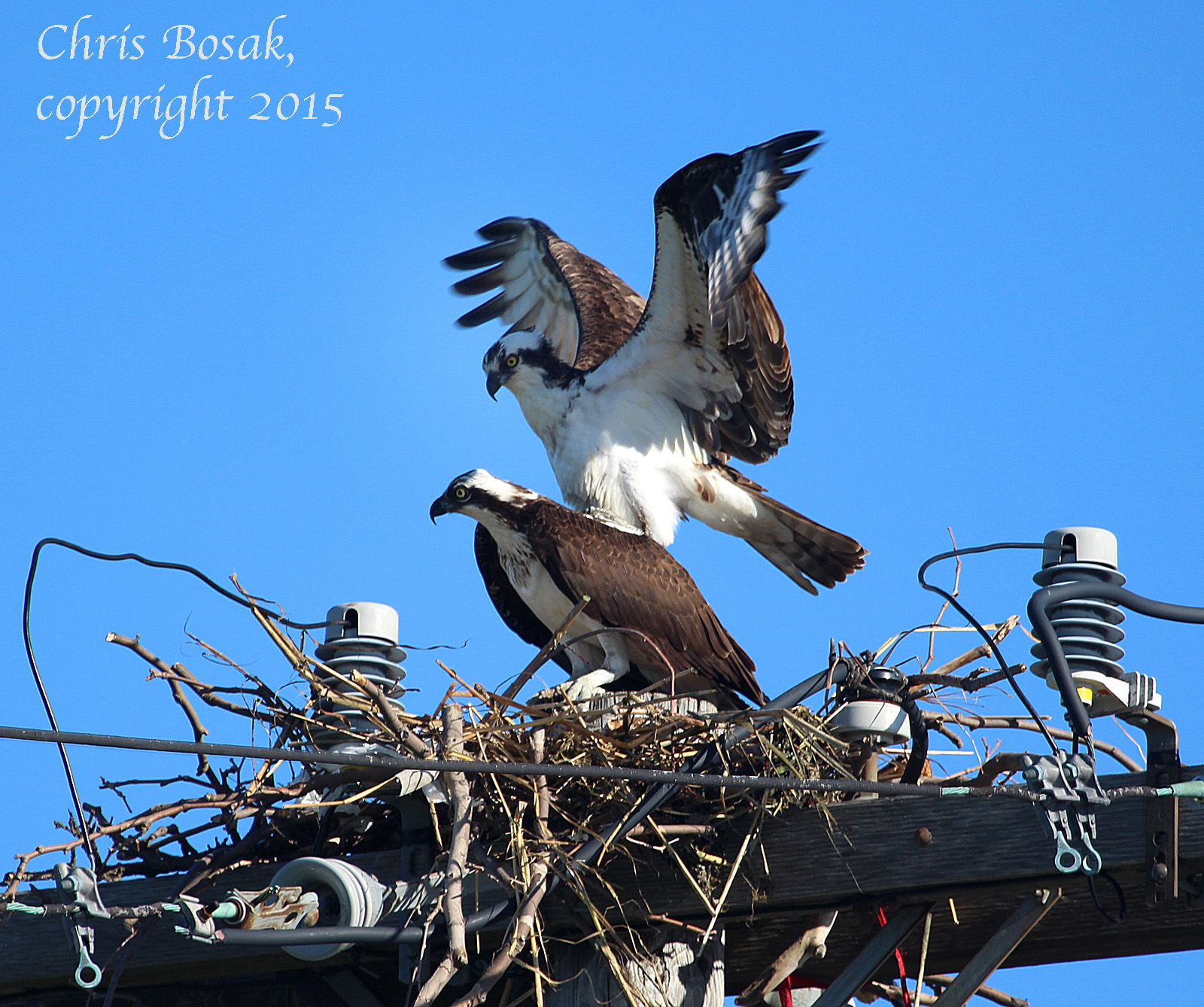
American woodcocks and eastern phoebes return to New England around the middle of March. A few weeks later, ospreys arrive. The build up can be excruciatingly