Did the Norwalk eagles have babies yet?

Hour photo/Chris Bosak Rick Potvin, manager of the Stewart B. McKinney NWR, holds a sign before it was posted on Chimon Island on Wednesday. The U.S. Fish & Wildlife officials were on the island to mark off areas to protect a bald eagle nest.

Hour photo/Chris Bosak
Rick Potvin, manager of the Stewart B. McKinney NWR, holds a sign before it was posted on Chimon Island on Wednesday. The U.S. Fish & Wildlife officials were on the island to mark off areas to protect a bald eagle nest.

The answer is a definite “probably.”

I wrote my latest For the Birds column in The Hour newspaper (Norwalk, Conn.) about the topic.

Here’s the start of the column:

Now for the answer to the burning question in the Norwalk birding world: Most likely.

The question, of course, is: Did the Bald Eagles have babies yet?

Again, the answer is “most likely.” Without climbing the tree or somehow hovering above the tree on Chimon Island where the nest is located, it’s hard to tell with all certainty. Since no one is going to climb the tree or otherwise hover above it, it’s basically a waiting game.

The eagles are still out there and one is sitting on the nest at all times. You could see that from Calf Pasture Beach with a spotting scope or good pair of binoculars. In talking with Norwalk’s Larry Flynn, the eagles have been sitting on the nest long enough that eggs would have been laid and hatched by now. Flynn is monitoring the birds for the state DEEP.

The vantage point from Calf Pasture and, indeed, even closer from Long Island Sound, is such that only the adult eagle’s head and maybe part of its body is visible. There is no way to tell what, if anything, it is sitting on.

If there are actually eaglets in the nest, it will be several weeks until they are large enough to be seen in the nest. So we play the waiting the game. Hopefully our patience will pay off and eventually we’ll all get to see fledgings flying about Long

Click here for the rest.

Project SNOWstorm seeks to unravel mysteries of the Snowy Owl

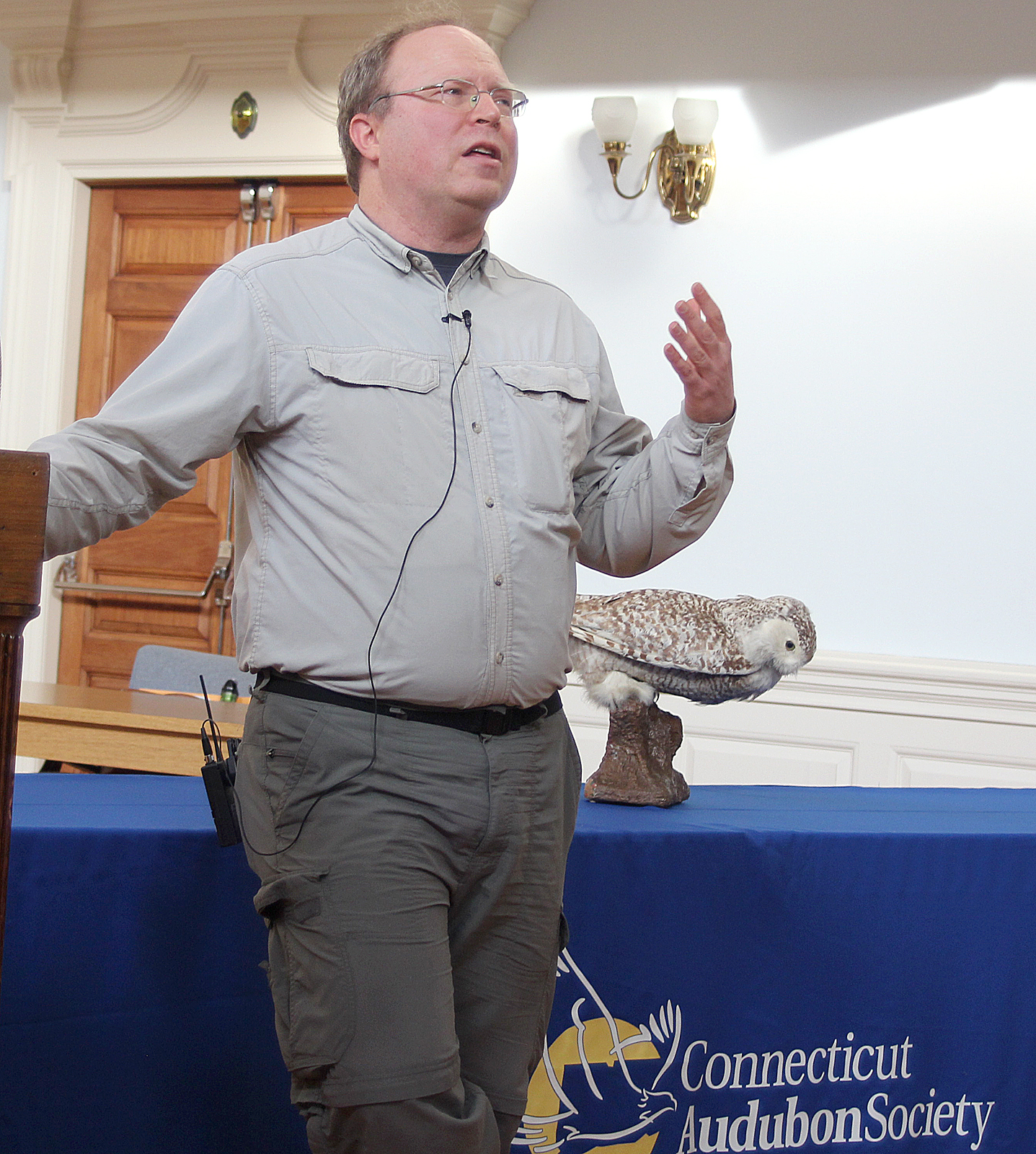
Photo by Chris Bosak Don Crockett of Project SNOWStorm talks about Snowy Owls at a presenation at Milford City Hall on Sunday, Jan. 25, 2015.

Photo by Chris Bosak
Don Crockett of Project SNOWStorm talks about Snowy Owls at a presentation at Milford City Hall on Sunday, Jan. 25, 2015.


(Here’s a little something I wrote up about a presentation on Snowy Owls I attended on Sunday. The event “The Hidden Lives of Snowy Owls” was presented by Don Crockett and sponsored by Connecticut Audubon.)

Last winter Snowy Owls enthralled the U.S. Even casual birdwatchers couldn’t help but be caught up in the historic irruption of the beautiful, yet powerful Arctic bird of prey.

The birds made their way down from their Arctic breeding grounds in record numbers during the winter of 2013-14. Birdwatchers flocked to beaches to try to find the owls. Unlike most winters, the birdwatchers were often successful in catching a glimpse of an owl.

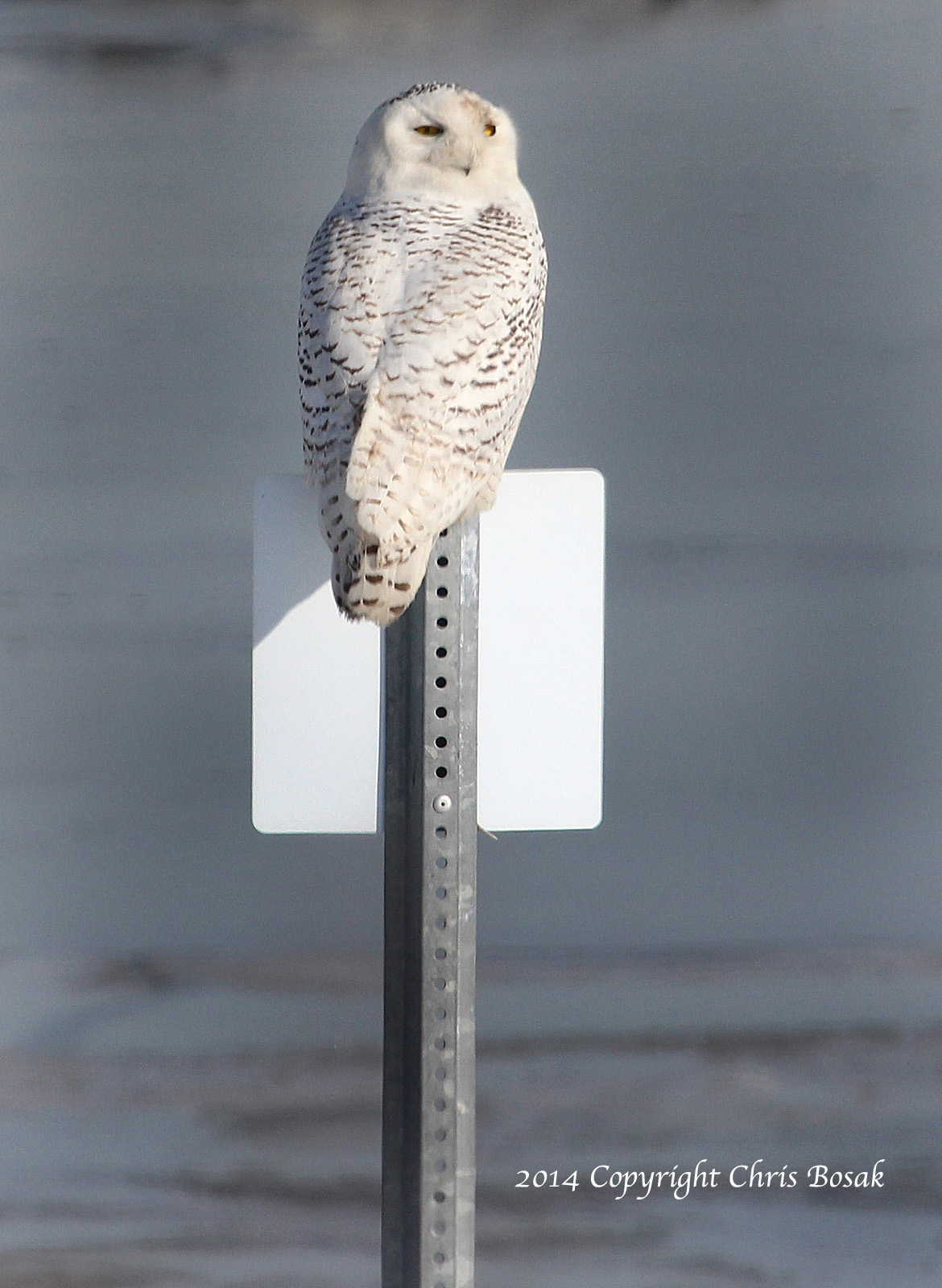
Photo by Chris Bosak A Snowy Owl sits on a sign at The Coastal Center at Milford Point in early March 2014.

Photo by Chris Bosak
A Snowy Owl sits on a sign at The Coastal Center at Milford Point in early March 2014.

While Snowy Owls can remain in one spot for hours on end, they do move around quite a bit, during the day and night. So where do the owls go when they aren’t under the watchful eye of birdwatchers? What do they do at night when even the best spotting scope can’t keep track of their whereabouts?

Information about what Snowy Owls do when they come down to the United States is valuable because it gives us a better understanding of these mysterious birds. As Arctic breeders, the more we know about them the better as we continue to grapple with the effects of climate change. They may offer clues as to the extent to which climate change is impacting our world.

To help gather more information on these owls, a group of volunteers started Project SNOWstorm last year. The project involves trapping Snowy Owls with a net and attaching a transmitter to each owl’s back using a harness. The transmitter is lightweight (about 40 grams) and the harness is designed to not effect an owl’s flight. The transmitters are solar-powered, which reduces the weight as no batteries are required, and use the cellular phone network as opposed to satellites. Using the Continue reading

Latest For the Birds column — Far parking pays off again

Photo by Chris Bosak A Brown Creeper climbs up the underside of a branch on a tree in Norwalk, Dec. 2014.

Photo by Chris Bosak
A Brown Creeper climbs up the underside of a branch on a tree in Norwalk, Dec. 2014.

Here’s my latest For the Birds column that appeared in The Hour and Keene Sentinel. A few months ago I wrote about the advantages of parking in a spot far away from my work’s building, so I could walk along the river to see what birds were around. Well, the practice paid off again.

Read about it here.

Northward expansion of the Red-bellied Woodpecker

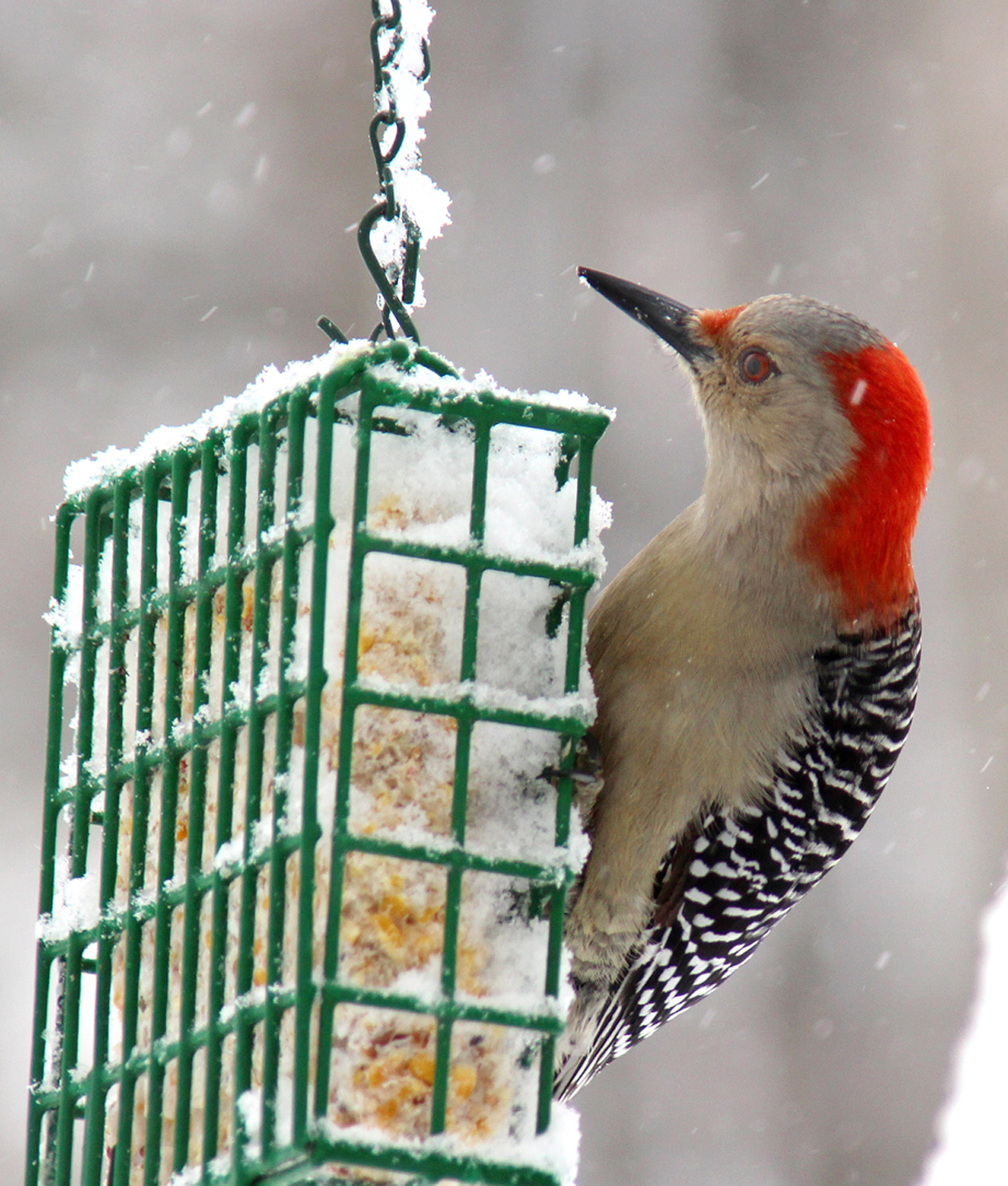
Photo by Chris Bosak A Red-bellied Woodpecker visits a suet feeder during a snow storm.

Photo by Chris Bosak
A Red-bellied Woodpecker visits a suet feeder during a snow storm.

Here’s my latest For the Birds column that appeared in last week’s The Hour (Norwalk, Ct) and this week’s The Keene (N.H.) Sentinel. It is about the northward movement of the territory of the Red-bellied Woodpecker, a large and handsome woodpecker that has been common in southern New England but scarce in middle New England. That seems to be changing.

Here’s the link to the story.

Thoughts from readers — what they are seeing out there

I often ask readers of my bird column, For the Birds, what they’ve been seeing out there in terms of interesting bird sightings. Every once in a while I compile the sightings and use them for my weekly birdwatching column. Here’s the latest, which ran last week in The Hour (Norwalk, CT) and this week in The Keene (NH) Sentinel.

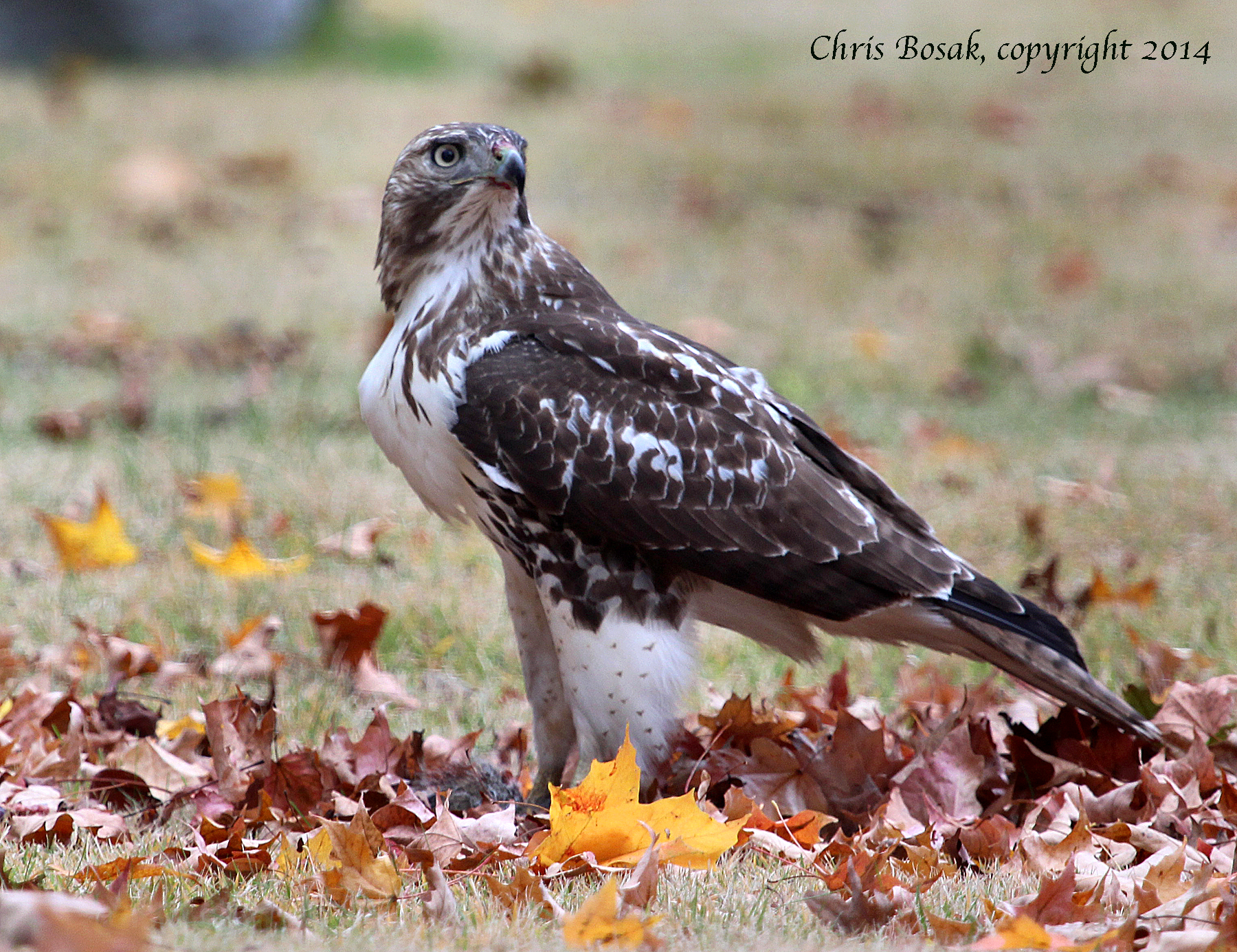
Photo by Chris Bosak A Red-tailed Hawk eats a Gray Squirrel in a cemetery in Darien, Conn., Oct. 2014.

Photo by Chris Bosak
A Red-tailed Hawk eats a Gray Squirrel in a cemetery in Darien, Conn., Oct. 2014.

I often ask readers: “What are you seeing out there?” Well, the answers I get are just as compelling and pertinent as what I see and write about each week, so here are some tidbits that readers have shared over the last few weeks. Why not start with Bald Eagles? Angela of Norwalk and Judy of Westport have written recently about Bald Eagle sightings. Angela saw her eagle in South Norwalk. The large bird of prey flew by her window and landed in an oak tree across the street where she often sees Osprey perch. “I hope it takes up residence here for the winter. I would be thrilled to see it again,” she wrote. Judy has seen her eagle perched high in a pine tree along the Saugatuck River. At one point, she witnessed the bird dive to the river and pull up a fish. Bald Eagles do visit more frequently in the winter, so perhaps this will be a good winter to see our national bird around here. A slightly smaller bird of prey has also been spotted several times by readers. I received a letter from Danny from Hampshire College who said an unidentified predator has been picking off chickens at the college’s farm. Based on the photo he sent, it looks a like a Red-tailed Hawk is the culprit. Gary from New Hampshire wrote to say he has seen Red-tailed Hawks on a few occasions catch pigeons near his home. Andy also shared a sighting of a Red-tailed Hawk in his backyard. He sent a photo, too, with the hawk peering down with a menacing look. He also sent a photo of an albino or leucistic Dark-eyed Junco. The photos, and other photos submitted by readers, may be found on my website http://www.birdsofnewengland.com on the “Reader Submitted Photos” page. I received an interesting phone call from Leona, another New Hampshire reader, who shared a story about crows in her backyard. “Bird brain” is often used as an insult, but we all know birds can be pretty smart, especially crows. Leona’s crows found a way to save trips while gathering and carrying away food. Leona put out crackers for the birds and instead of grabbing them and taking them away one at a time, the crows would stack the crackers and fly away with a bill full. Smart birds indeed. Finally, Joan shared a story about a lucky and determined chickadee. She saw the little bird hit her glass storm door. Expecting the worst, she approached the door to discover that the chickadee had actually gotten its foot stuck in a hinge of the door. Not wanting to let the bird fend for itself in that grave situation she grabbed a plastic flower pot and put it over the tiny bird. She then used a stick to free the bird’s leg. Joan set the flower pot on its side and took a few steps away to watch the bird. “He didn’t seem to be moving but was still breathing,” she wrote. “I then took a small container of water and dripped just a drop or two on his beak, which he quickly took in.” Here’s what happened next: “I was trying to decide what I would do with him overnight when all of a sudden, he moved his head, looked around at me and flew up onto a branch of a nearby tree about 15 feet up. He sat there for a minute, tipped his head to one side, gave a little “chhpp” and flew back toward the woods.” Joan concluded that “it’s nice to know there are still small wonders.” I totally agree. So, what have you been seeing out there in the natural world? Drop me a line and let me know. For the Birds runs Thursdays in The Hour. Chris Bosak can be reached at bozclark@earthlink.net. Visit his website at birdsofnewengland.com.

A few more Hermit Thrush photos; and a link to column

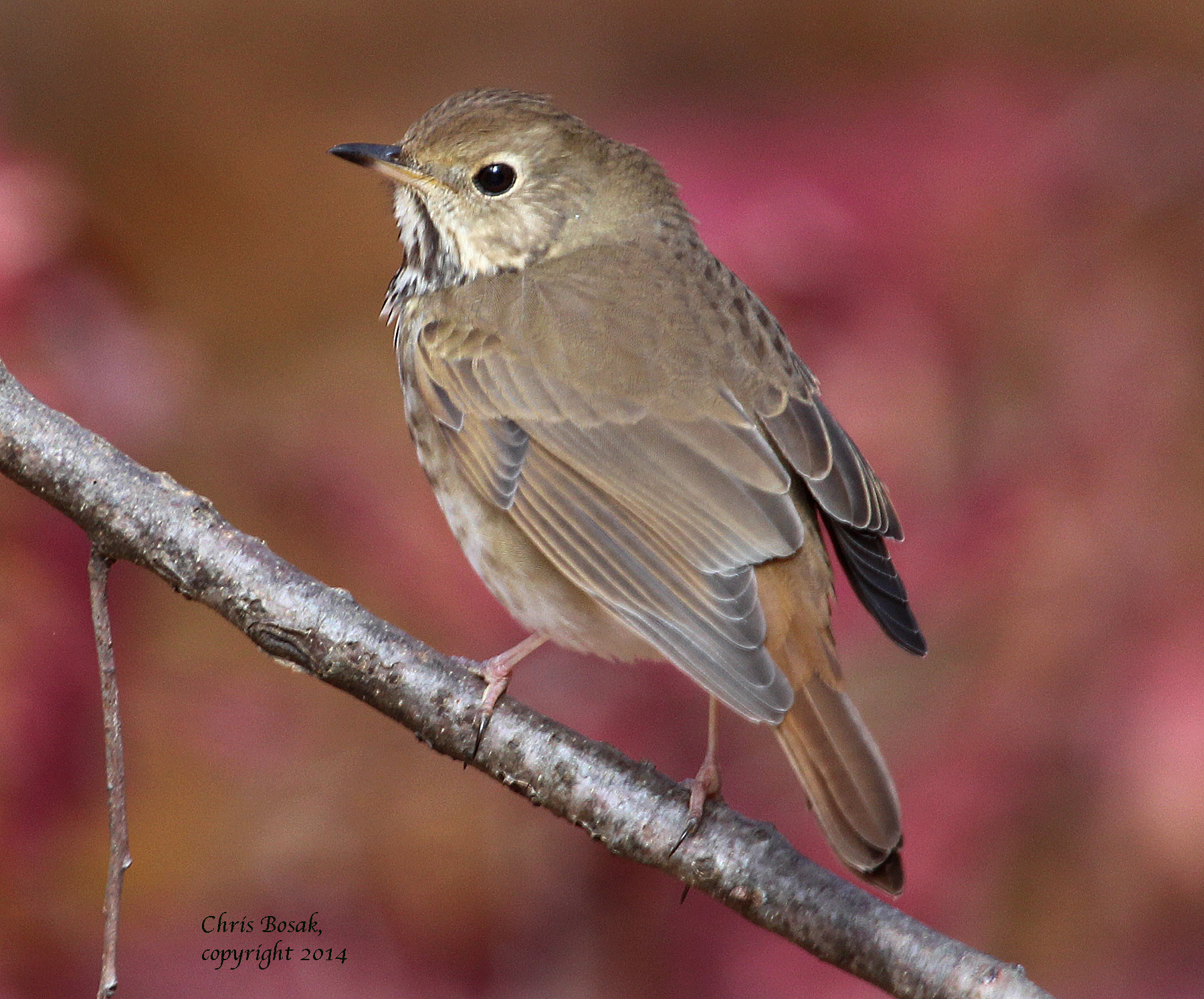
Photo by Chris Bosak A Hermit Thrush perches on a branch at Selleck's/Dunlap Woods this fall.

Photo by Chris Bosak
A Hermit Thrush perches on a branch at Selleck’s/Dunlap Woods this fall.

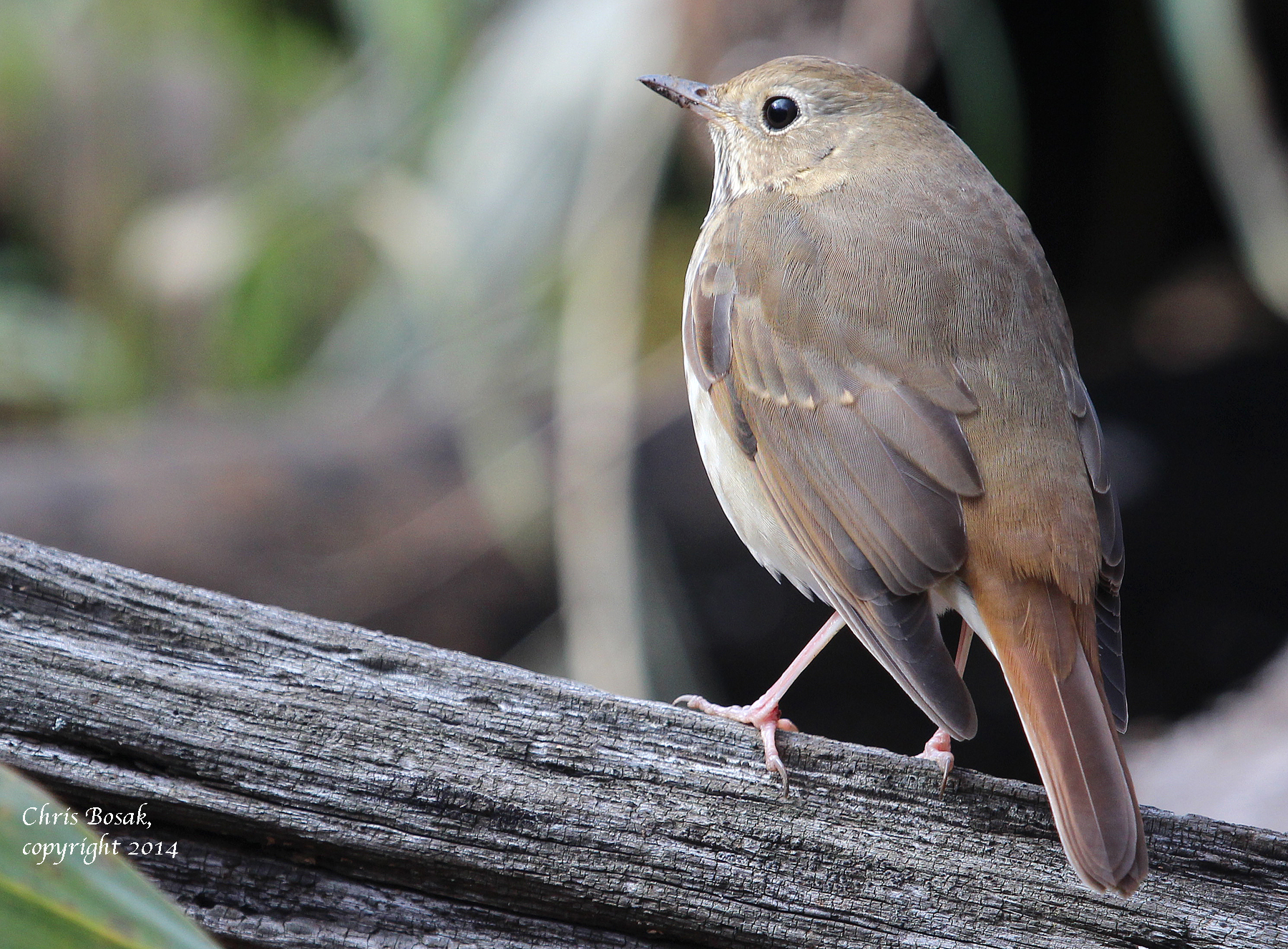
Here are a few more photos of Hermit Thrushes, a species profiled in my last post a few days ago. Also below is a link to my latest For the Birds column, which appears weekly in The Hour (Norwalk, CT) and The Keene Sentinel (Keene, N.H.)

Here’s the link.

Photo by Chris Bosak A Hermit Thrush rests on a log at Selleck's/Dunlap Woods this fall.

Photo by Chris Bosak
A Hermit Thrush rests on a log at Selleck’s/Dunlap Woods this fall.

Kicking off a celebration of our common backyard birds

Photo by Chris Bosak A Tufted Titmouse perches on a branch of a fading sunflower before heading to a nearby birdfeeder.

Photo by Chris Bosak
A Tufted Titmouse perches on a branch of a fading sunflower before heading to a nearby birdfeeder.

This photo of a Tufted Titmouse is pulling double duty. It accompanied my latest column in The Hour (Norwalk, Ct) and The Keene Sentinel (Keene, NH), which may be found here.

It is also being used on this post to kick off a celebration of our common backyard feeder birds. This is a great time of year for feeding birds as the feeders are active with titmice, chickadees, nuthatches, cardinals and other birds. Under the feeder, birds such as White-throated Sparrows and Dark-eyed Juncos have returned. So to celebrate that, I’ll post a series of photos highlighting some of our more common, but beloved, backyard birds.

Latest For the Birds column: Loons in the fall

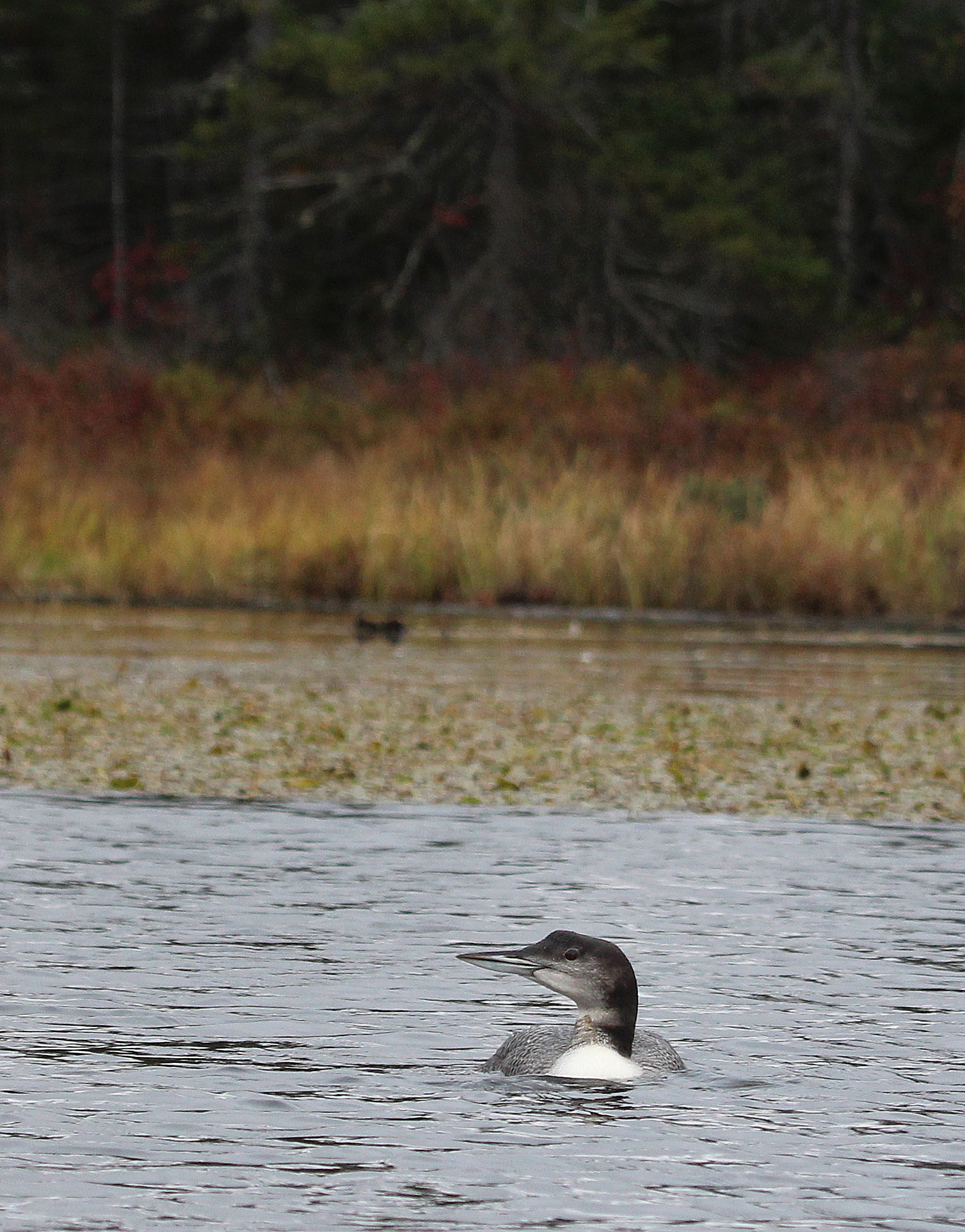
Photo by Chris Bosak A Common Loon in transitional plumage swims on a pond in northern New Hampshire in early October 2014.

Photo by Chris Bosak
A Common Loon in transitional plumage swims on a pond in northern New Hampshire in early October 2014.

I recently took my annual trip to northern New England in the hopes of seeing moose and few boreal bird species. The moose were scarce _ I saw a grand total of zero _ and Gray Jays were the only real boreal species of birds I saw. Nonetheless I did see plenty of Common Loons, which makes for a successful trip in my book. My latest For the Birds column addresses loons and their summer and winter plumage (and in-between plumage).
The full column may be seen here. 

Over the next several days I’ll post photos from the trip, which included stops in central Maine and northern New Hampshire.

No seagulls, just gulls

Here’s my latest For the Birds column, which runs weekly in The Hour newspaper (Norwalk, Ct.) and The Keene Sentinel (Keene, N.H.) This one deals with the various gulls (not “seagulls”) that we see in New England.

Want to see For the Birds in your local paper? Contact the editor and make the suggestion.

……
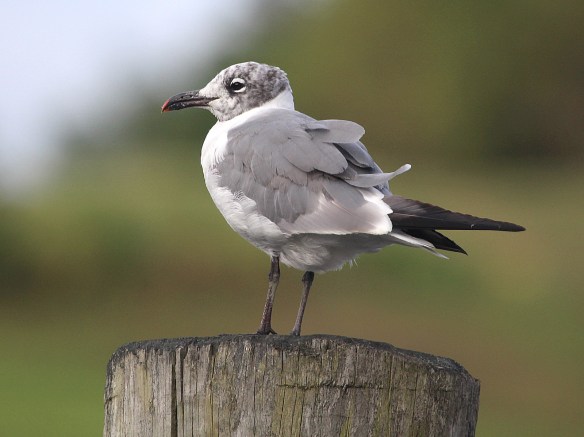
Photo by Chris Bosak A Laughing Gull stands on a piling at a boat dock along the Norwalk River, Sept. 2014.

Photo by Chris Bosak
A Laughing Gull stands on a piling at a boat dock along the Norwalk River, Sept. 2014.

Watching gulls is either one of the easiest things to do or most difficult things to do when it comes to birdwatching.

On one hand, you can go to the beach (or parking lot or dump) and see all the gulls you want. You are 100 percent guaranteed to see them any time of day and any time of year.

On the other hand, gulls can be endlessly challenging for birders, to the point that expert birdwatchers are the only ones who can be certain what they are looking at — and even then maybe not so much.

Like many aspects of birding, it’s as easy or as difficult as you want to make it. You can roll into a parking spot at the beach, pull out a stale loaf of bread and be surrounded by gulls in seconds. (Not that I’m condoning feeding birds bread.) That is certainly birdwatching, whether you care to identify the species of hungry gulls or not.

Or you can find a group of gulls and inspect them to see if any rare species are mixed in among the common species. That sounds easy, but can be extremely difficult, if not next to impossible. It’s not as if the common species are blue and the rare species are yellow. In many cases they look identical with only very subtle differences. It’s like trying to find Waldo but only every other person in the picture wears glasses, blue jeans, and has a red-and-white sweater and hat on.

So is that simply a flock of Herring Gulls and Ring-billed Gulls, or is there a first-year Iceland Gull mixed in there somewhere? Or perhaps is there a hybrid of some sort among the flock.

(Since I used the word “flock” in that previous paragraph twice, now seems to be a good time to address the obvious question. “Flock of Seagulls” is technically not correct since there are no birds that are actually called “seagulls.” They are simply gulls. With that said, good luck getting the song “I Ran” out of your head for the rest of the day. Sorry about that. Whatever you do, don’t go to YouTube and search for that song. The outfits and haircuts are too much. Some things should just stay in the 80s.)

Anyway, New England features several common gulls that may be easily found. The most common gull on a beach depends on exactly where you are in New England. Ring-billed Gulls and Herring Gulls are the predominant gulls in the Norwalk area. Herring Gulls are the large ones while Ring-billed Gulls are smaller and have a black ring around their bills. Greater Black-backed Gulls are also common around here. They are the very large gulls with dark backs. Laughing Gulls, which feature black heads, are also common throughout much of New England, but not seen as often in the Norwalk area as the others I mentioned. Laughing Gulls show up more around here in late summer and early fall.

The less common gulls that show up on occasion — and discernable only by experienced birders in many cases — include Lesser Black-backed Gull, Glaucous Gull, Iceland Gull, and Bonaparte’s Gull. Picking out these species is difficult because they look pretty much the same as the other gulls with white heads, chests and bellies, and darker backs.

Adding to the confusion is that gulls of the same species can look very much different depending on age and time of year. Young gulls are often brown and/or heavily speckled. So even if you’re looking at 100 Herring Gulls many of the birds may look very different.

Yes, digging deep into gull watching is not for the faint of heart or those short on patience. If all gets too much, keep trying and don’t run away from the challenge. After all, when it comes to breaking down a flock of gulls, do you really want to say “I Ran. (So Far Away.)”

There I go again — back to the 80s.
Are birds in our future? State of the Birds 2014 Report

Photo by Chris Bosak A Piping Plover preens at Milford Point in spring of 2014.

Photo by Chris Bosak
A Piping Plover preens at Milford Point in spring of 2014.

The State of the Birds 2014 report was released this week. It is a comprehensive look at how our bird populations are faring and how they might fare in the future. It’s fascinating stuff and a must read for anyone interested in birds and conservation.

Here’s my column on it, with input from Connecticut Audubon officials. 

Visit www.stateofthebirds.org for the full report.