It’s a beautiful, snowy day in southern New England. The feeders are active — as they typically are during snowy times — so why not go live?? I’ll go live from noon until about 12:30 p.m. It’s a gamble as all the birds may disappear by then and return at 12:31, but it’ll be fun nonetheless. There will be limited narration, but feel free to send in questions via this site or Facebook and I’ll try to answer as quickly as possible. Tell your bird-loving friends, too.
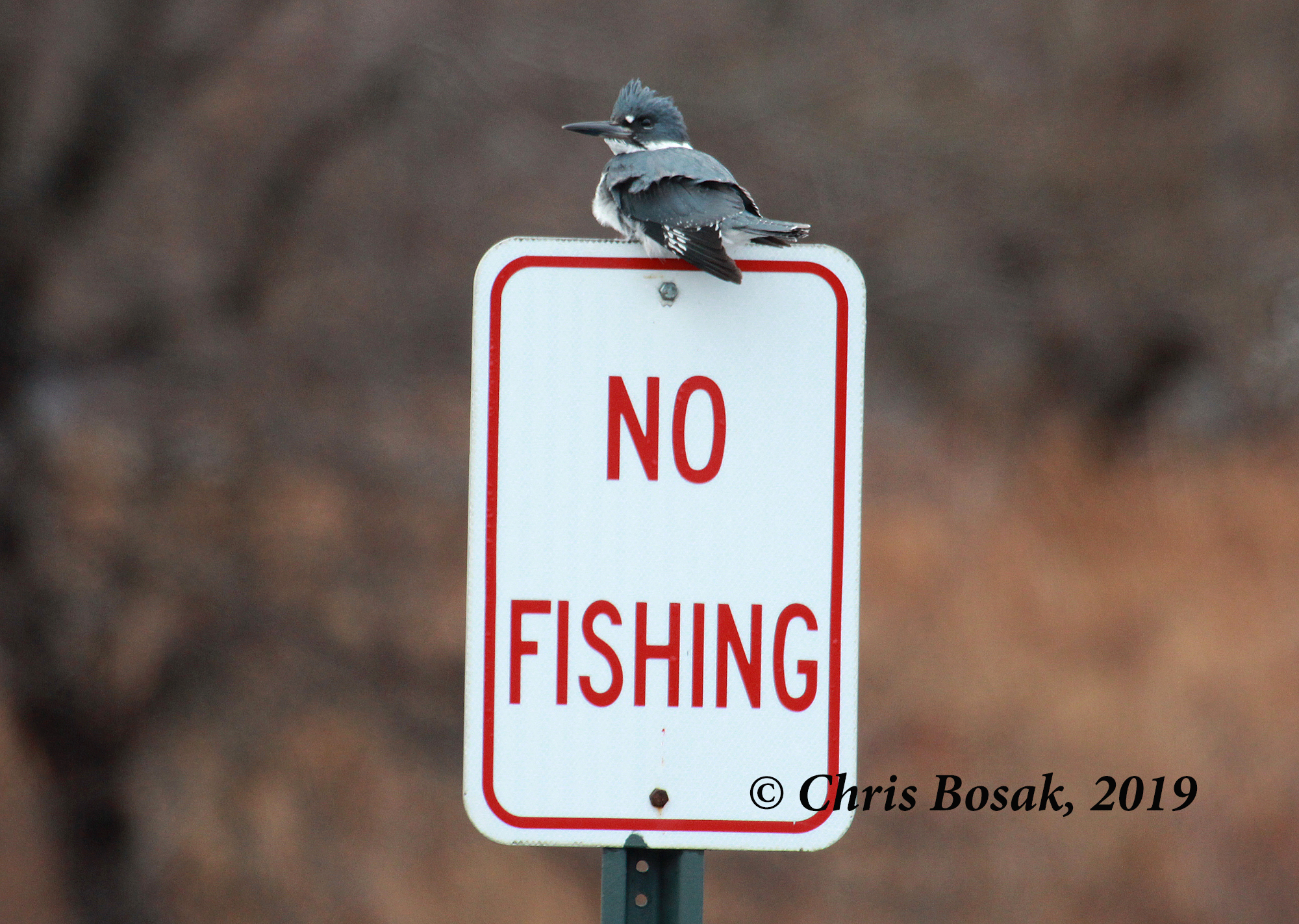
Photo by Chris Bosak A belted kingfisher perches on a “No Fishing” sign in Danbury, Connecticut, February 2019.
Here are a few more photos of the male belted kingfisher on the “No Fishing” sign I spotted the other day. Remember, in a somewhat rare occurrence in the bird world, belted kingfisher females are more colorful with the rusty band on the belly. An old photo of a female is included on the bottom of this post as a reference. Continue reading →
Photo by Chris Bosak
A belted kingfisher perches on a “No Fishing” sign in Danbury, Connecticut, February 2019.
Here’s a funny bird photo for your Friday.
Sometimes you spend hours in the woods looking for birds and find nothing. Sometimes you drive along the access road at the local shopping mall and a belted kingfisher is perched on a “No Fishing” sign. Now, if only the bird had a fish in his mouth … Happy Friday everyone!
Planning a birding trip to Connecticut and not exactly sure where to go? Now there’s help.
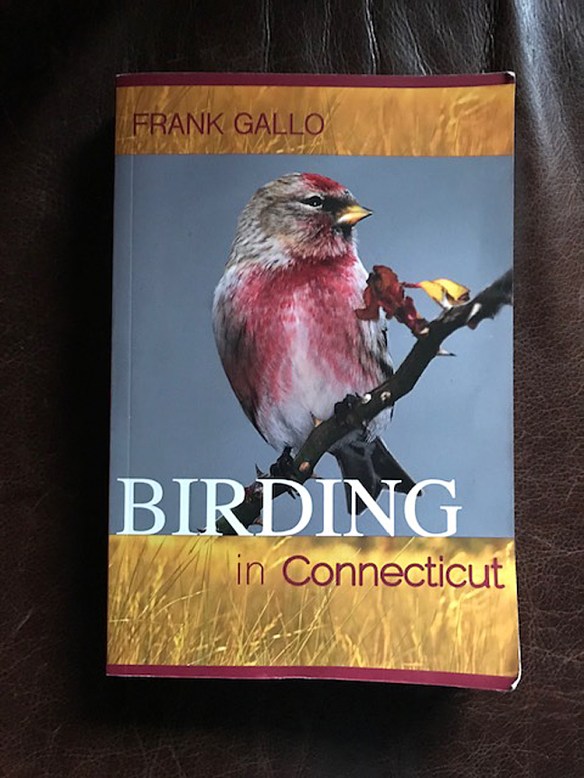
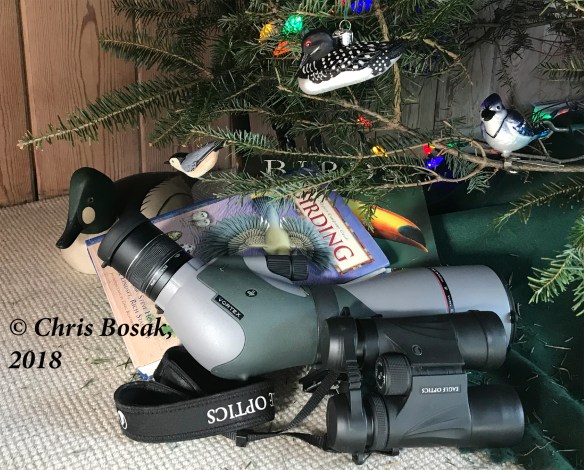
Frank Gallo, a well-known birder in Connecticut, has recently written “Birding in Connecticut,” published by Wesleyan University Press. The book breaks down the state by regions and offers insight, directions, and unusual species that may be seen there.
“Birding in Connecticut” is valuable to those who know Connecticut well and those who don’t know a thing about the Constitution State. I know Connecticut and its birding hot spots Continue reading →
Here’s a For the Birds column I wrote a few years ago. Seems appropriate with a cold, gusty wind blowing today.
Photo by Chris Bosak
An American Tree Sparrow perches near a feeding station during the snowstorm of Feb. 13, 2014.
One of my favorite times to watch birds is when the snow is falling. Not a driving snow with icy temperatures and high winds, but an otherwise rather pleasant day with frozen crystals falling from the sky and covering everything with a fresh coat of white.
I do not shy away from taking walks to look for birds when the snow is actively falling, in fact I thoroughly enjoy walks at such times. But I also enjoy very much watching the activity at the feeders during snowfalls.
As long as the snow is not falling at too fast a rate, the birds will continue coming to feeders. Indeed, during light and moderate snowfalls the birds may be seen at higher-than-usual numbers at backyard feeders.
I will often grab my camera, open a window, pull up a seat and capture images of the hungry birds as snow falls and collects around them. I could do that for hours. Heating bills be damned. The usual suspects such as Northern Cardinals, Downy Woodpeckers, Black-capped Chickadees, Tufted Titmice and White-breasted Nuthatches are typically seen in high numbers during snowfalls. It’s also a great time to see birds such as Carolina Wrens and Dark-eyed Juncos.
But what about when it’s a heavy snowfall? I mean, right in the middle of the worst of it? Birds are scarce then. Wouldn’t you be, too?
Where are the birds then? Most humans are holed up at home or work or some other place of shelter. Birds do pretty much the same thing. Whether their shelter is an evergreen bough, a patch of thick brush, a bird house, an old nest hole in a tree, or even under the snow, birds do their best to stay out of the harsh weather.
Birds don’t have the luxury of a thermostat to crank up during these times. They don’t need artificial sources of heat, however. They have several natural defenses against the cold. One such defense is to puff up their feathers to trap warm air within their down feathers. This keeps the cold air away from their bodies. It’s the same principle as us putting on a jacket (especially a down-filled one.)
Depending on the species, they may also huddle together for warmth, often holing up together in a birdhouse. That’s why it’s important to keep your birdhouses up all year and to clean them out after the nesting season. Some birds, such as grouse, will even use the snow to their advantage by burying themselves into the snow for shelter. Those birds are insulated by the snow and out of the elements. The danger with that strategy is sometimes snow will turn to ice and a hard surface may form on the top of the snow.
Birds also know beforehand when a storm is coming. Sensing a change in air pressure, the birds build up their fat reserves to use as energy during the storm. That, obviously, makes the time leading up to harsh weather a good time for us to watch feeders, as well. Food, eaten beforehand, is important to birds’ survival of storms.
So make sure your feeders are well stocked this winter and offer a variety of foods in different feeders. I’m sure more snow is coming before too long.
Photo by Chris Bosak
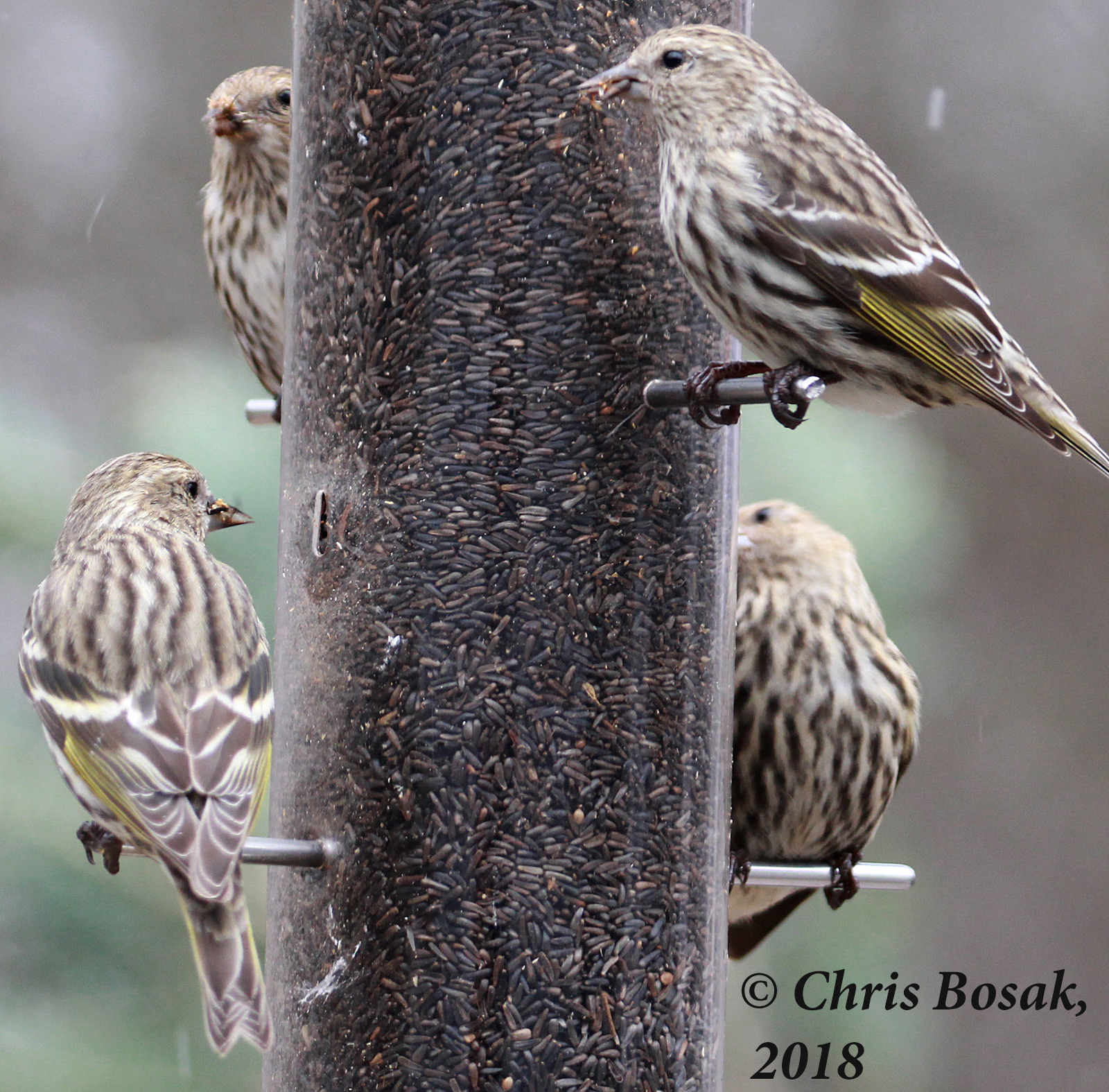
Pine siskins visit a feeder in Danbury, Connecticut, fall 2018.
The pine siskins showed up on the last day of November and haven’t left. They may not be the same siskins as the originals (in fact they probably aren’t), but today I looked out at the feeders and saw about a dozen of the small finches. For me personally, this has been the best year yet for siskins. For more information about siskins and their irruptive nature, click here.
Speaking of irruptive species, I still haven’t seen any evening grosbeaks at my feeders. Several New England residents have reported seeing flocks of the large, handsome bird, however. (Large relative to siskins anyway.) One such lucky birdwatcher is Stephanie from Marlow, N.H., who shared some great photos. They may be found on the “Reader submitted photos” page on the menu above, or by clicking here.
In the meantime, here’s another siskin photo …
Photo by Chris Bosak
A pine siskin eats Nyjer seeds at a feeder in Danbury, Conn., fall 2018.
Photo by Chris Bosak A male bobolink perches in a small tree and overlooks the fields at Happy Landings in Brookfield, CT.
My latest For the Birds column releases my personal top 10 birding moments for 2018. Recapping the previous year is my favorite column to write each late December or early January. This year, instead of blasting out the top 10 all at once I’m going to spread it out and reveal two each day, starting today (Jan. 1, 2019.) This post will include Nos. 10 and 9.
Feel free to comment or send me an email with some of your 2018 birding or nature highlights.
10. Bobolinks at preserve. Happy Landings is a huge, protected field in Brookfield, Connecticut, where bobolinks thrive. Fields and meadows are a critical and disappearing habitat so it’s nice to see some still exist and are maintained for the wildlife that depend on them.
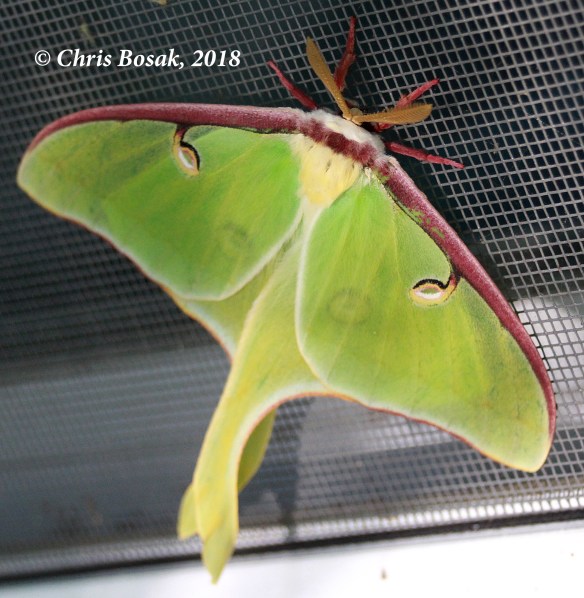
Photo by Chris Bosak A luna moth clings to a screen in Danbury, Conn., during spring 2018.
9. Visit from a luna moth. May brought several bird surprises to my yard, but also a visit from another interesting creature. I went to refill the bird feeders one day and noticed a luna moth clinging to a screen. I’ve seen the large green moth only a few times previously. It hung around all day and was gone the next morning.
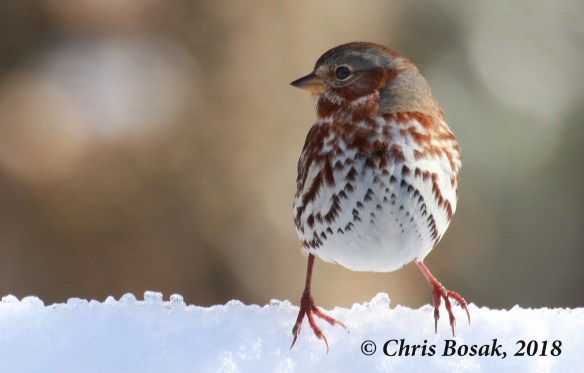
Photo by Chris Bosak
A fox sparrow perches on the snow in Danbury, Conn., Nov. 16, 2018.
Southern New England is green as of December 20th and the forecast calls for rain and above-freezing temperatures for the foreseeable future. That’s good news for travelers, but not-so-good news for those dreaming of a white Christmas. To make things a bit easier for those folks, I’ll post a few photos left over from our mid-November snow storm. I’ll post one photo a day until December 25. Merry Christmas everyone and thanks for your support of BirdsofNewEngland.com in 2018!