
I saw this guy on a cable wire road barrier on the way into work this morning. He, and other tree swallows present, made the drizzly morning commute that much better.

I saw this guy on a cable wire road barrier on the way into work this morning. He, and other tree swallows present, made the drizzly morning commute that much better.

It’s an early start to the warbler season for me.
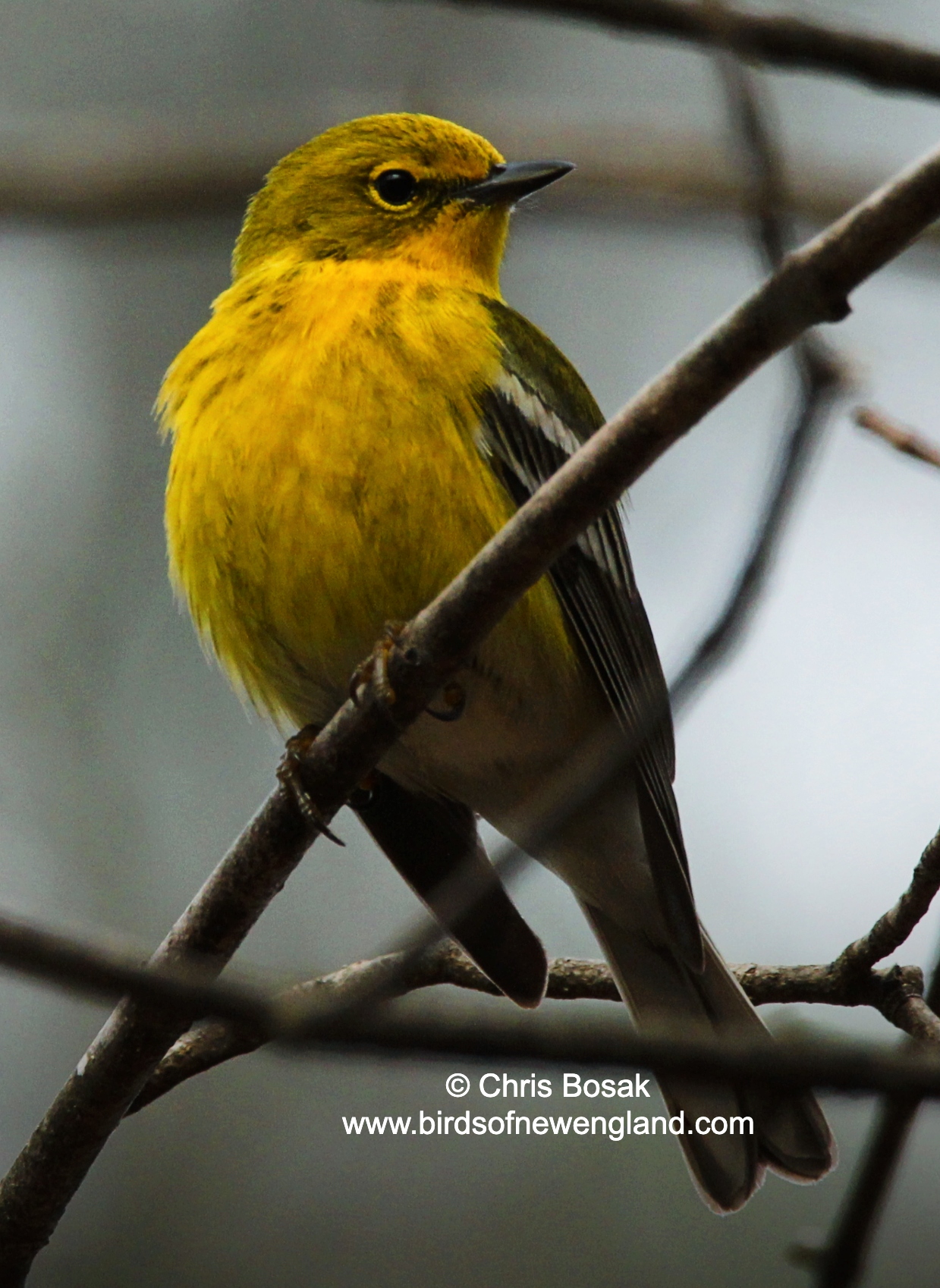
I was walking at my usual patch on March 31 when I heard a familiar trill-like song from the top of a tall white pine. A fast-paced trilling usually means it is a junco, chipping sparrow, or pine warbler. All three of these birds are in New England now, so unless you are an expert at identifying birds by song, it is best to find the bird and get visual confirmation.
Like most warblers, pine warblers do not sit still for very long, so it took only a few seconds of searching to find the tiny bird moving among the branches. It was indeed a pine warbler, a mostly yellow bird with white wing bars on gray wings.
Pine warblers are always the first, or at least one of the first, warblers to show up in New England each spring. I usually do not find them until a few days into April, but this year, my first warbler sighting came on the last day of March.
Coincidentally, I saw my first chipping sparrow of the spring last week as well. Yes, spring migration is underway.
Continue reading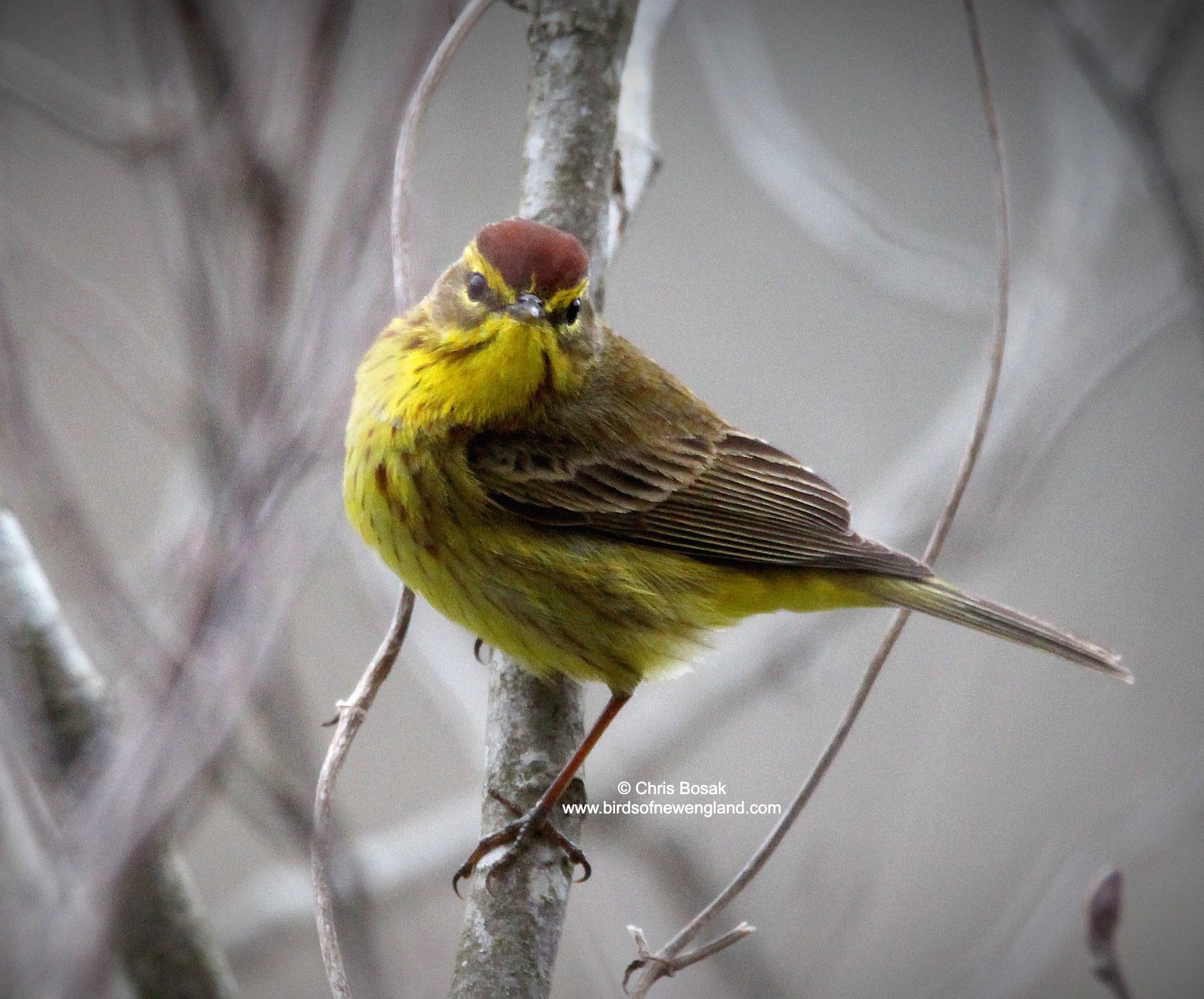
My first warbler (a pine warbler) showed up on March 31. Here are numbers two and three for the year: yellow-rumped warbler and palm warbler, both seen today (Friday, April 11, 2025). More to come in the weeks ahead!
Continue reading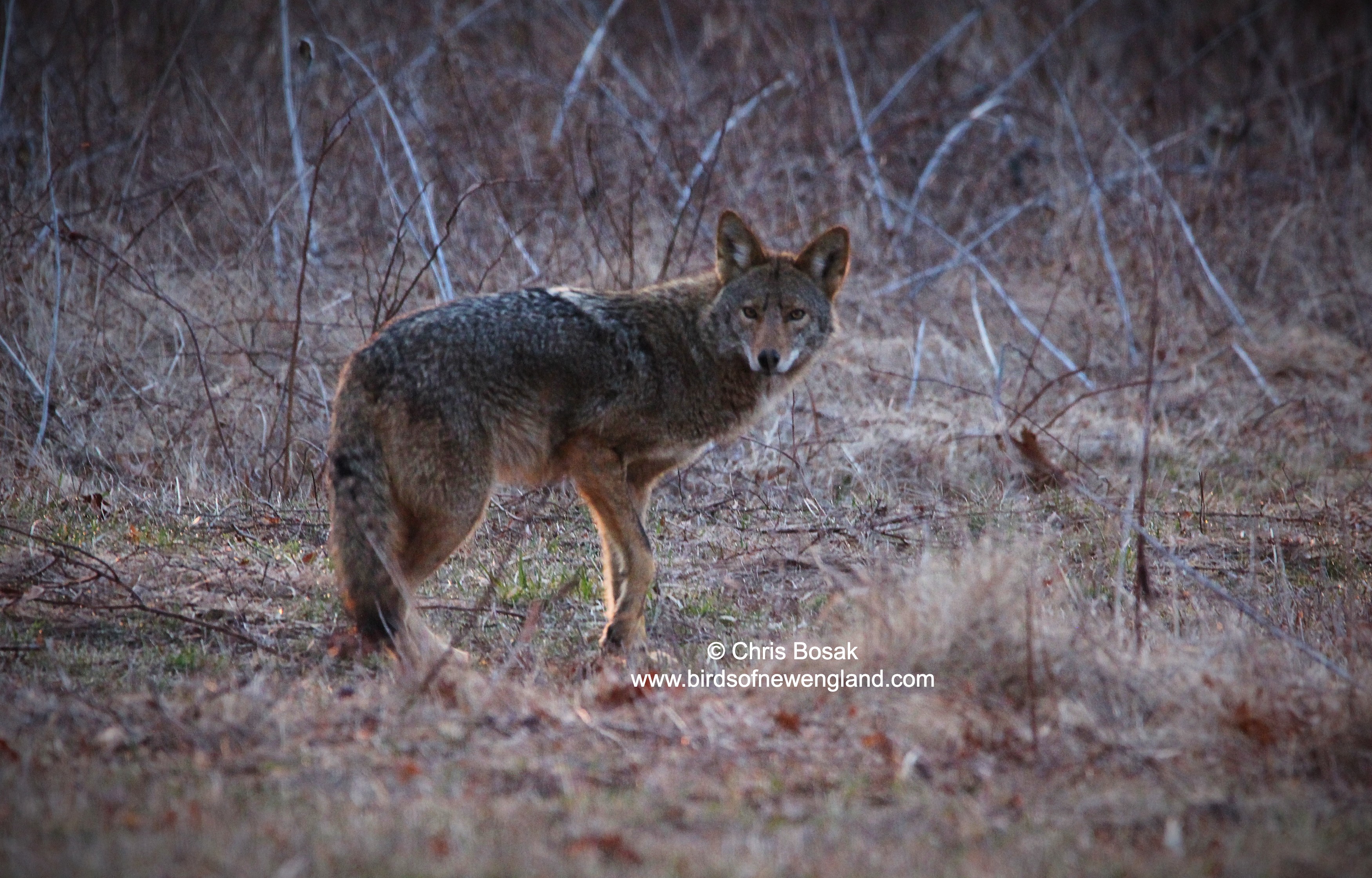
Here are more photos of the coyote I saw a few weeks ago at Huntington State Park in Redding, Connecticut. Here’s the full story.
Continue reading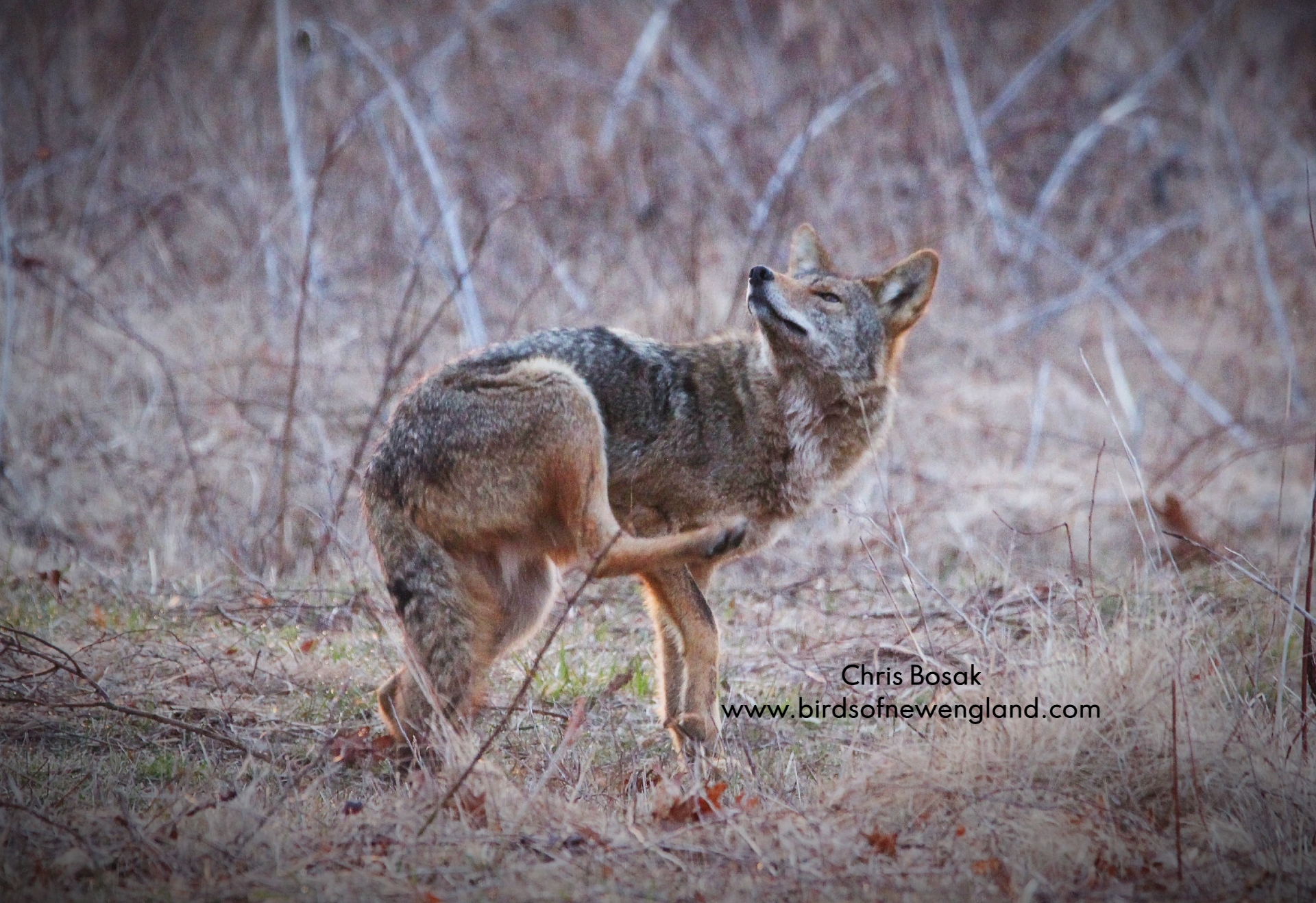
This is the second column in the last few weeks where I end up writing about and using a photograph of an unintended subject because the primary target fell through.
A few weeks ago, you may recall, I wrote about a missed opportunity to photograph blue jays harassing a barred owl. The blue jays successfully drove off the owl before I could get into position for a photo. On the walk back to the car, I came across a flock of cedar waxwings eating berries and stopped to photograph them.
This time, the intended target was American woodcock, but I ended up coming home with more photos of my coyote friend. Late in 2024, I wrote about getting lucky and spotting a coyote in a field as I passed a small break in the thick, tangled, brushy border between the woods and field. I’m assuming this was the same coyote, as I spotted it in the same field very near where I had seen it before.
But first, my intended target. American woodcocks, or timberdoodles, have been a nemesis species of mine for many, many years. I’ve seen their evening aerial displays a few times, but I haven’t found one during the day when getting a photograph would be possible. The aerial displays come shortly after sunset when the evening light has faded.
Continue reading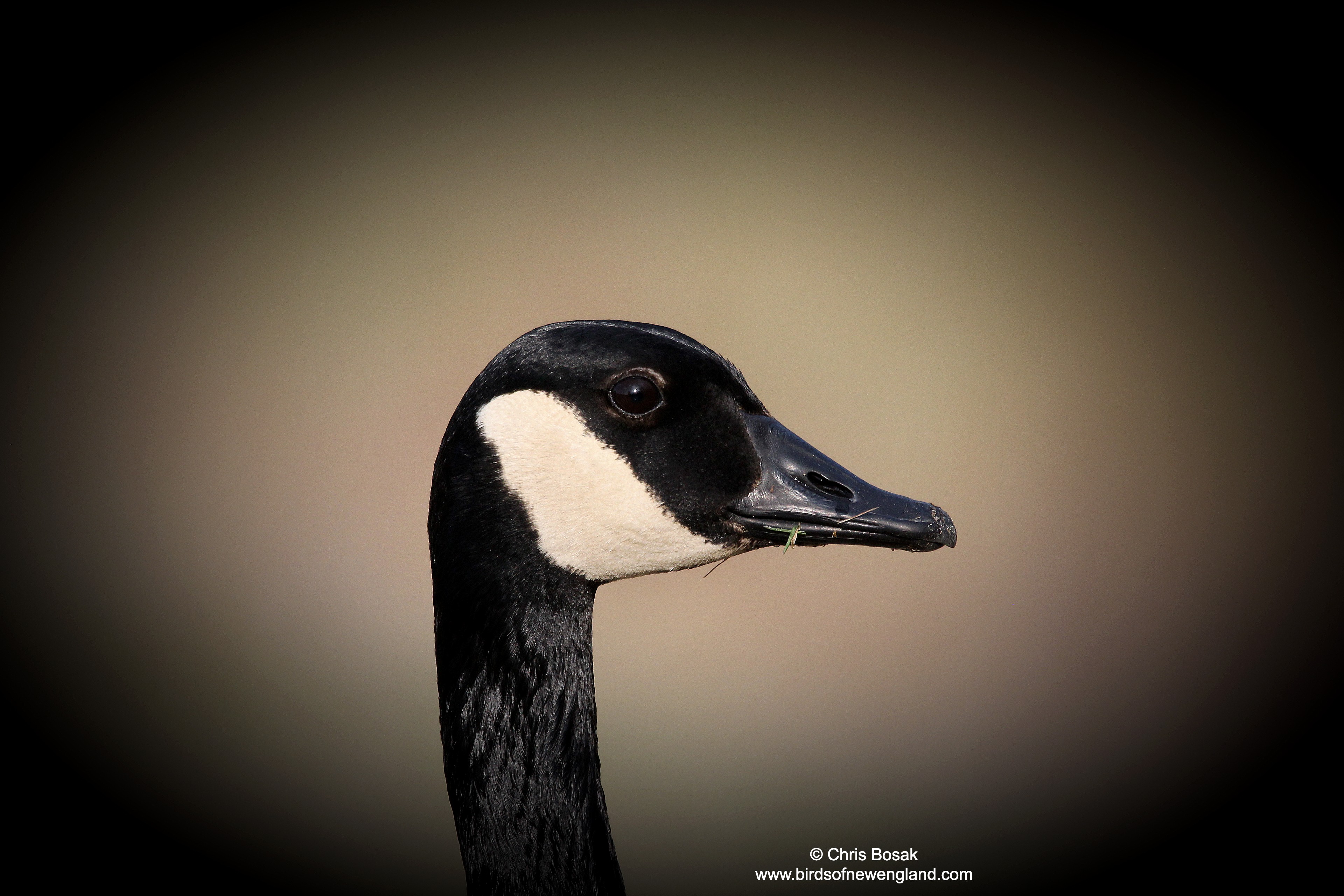
Here’s an interesting shot I took of a Canada goose the other day. I used the vignette feature to make the goose stand out more.
Pine warblers and palm warblers are typically the earliest warblers to arrive in New England in the spring. This year, the pines showed earlier than usual (at least in my estimation.) I found at least two pine warblers yesterday (March 31, 2025) at Huntington State Park in southern Connecticut. Here’s hoping the rest of the spring migration is as good.
Drop me a line and let me know what you’re seeing out there.


I pulled into the small dirt parking lot at the reservoir to see what ducks were hanging around the dam. The water by the dam does not freeze, and there is always a good variety of waterfowl there all winter.
As I stepped out of the car, I noticed two large birds perched in a tree along the shoreline. I knew immediately they were much too large to be hawks. They must be eagles. Sure enough, it was one adult and one immature bald eagle. It takes eagles four or five years to get their signature white heads and tails. Immature eagles are, however, just as large and impressive as adults.
Of course, I was thrilled to see the bald eagle. However, I was not surprised. Bald eagle sightings have become increasingly common over the last several years as the population continues to rise.
The bald eagle’s recovery is one of the best conservation stories of the last several decades. The osprey recovery is equally exciting.
Continue reading
I know, same as yesterday, geese are not ducks. They are close enough for this very unofficial birdsofnewengland.com Duck Week celebration. Snow geese gather in massive numbers in some parts of the Atlantic flyway. In many cases, they are uncountable because there are so many. In other parts, however, snow geese are a fairly rare sighting. I live in a part of New England where snow geese are not seen often. In fact, this one I saw at a beach was the first one I had seen in years. Usually, when they are seen where I live, it is a single snow goose within a flock of Canada geese. This one, however, was alone near the beach. I hope it finds more of its kind during migration.
Click here for more information about the snow goose.
Thanks for checking out Duck Week at http://www.birdsofnewengland.com

I know, geese aren’t ducks. But they’re close enough for Duck Week. Brant may be found in huge numbers along the coast of Long Island Sound during the winter. From a distance, or to the untrained eye, they may be mistaken for Canada geese. Closer inspection reveals that brant are much smaller and lack the pronounced chin strap of the Canada goose. Brant are a treat to observe each winter in New England.
For more information on brant, click here.

 Birds of New England.com