Latest For the Birds column: Is another extinction coming?

Photo by Chris Bosak Piping Plover at Coastal Center at Milford Point, April, 2014.

Photo by Chris Bosak
Piping Plover at Coastal Center at Milford Point, April, 2014.

Here’s the latest For the Birds column, which runs weekly in The Hour (Norwalk, Conn.), The Keene (NH) Sentinel and several Connecticut weekly newspapers.

….

The 2016 version of the Connecticut State of the Birds report is perhaps the most disconcerting yet, especially with the mention of the “E” word

That word, of course, is extinction and it’s not a word bandied about lightly in the bird world. But there it is in black and white in “State of the Birds 2016: Gains, Losses and The Prospect of Extinction.” See? There it is right in the title of the report.

The word is used to describe the Saltmarsh Sparrow, which unless serious conservation efforts are taken (and are successful), “faces likely extinction within 50 years,” according to the report. Saving the Saltmarsh Sparrow is tricky because, as its name suggests, it is a bird of the salt marshes, one of the habitats most in peril.

The reports takes a look at bird population trends over the last 10 years. The Saltmarsh Sparrow may be the species most in danger, but unfortunately, the news is grim for other birds as well. Another denizen of salt marshes, the Clapper Rail, as well as shrubland birds Blue-winged Warbler and Brown Thrashers are also seeing steep declines in number. The Piping Plover, a coastal favorite among birders, is also continuing to lose ground, even though great efforts have been made to protect them.

The greatest threat to all these birds is the destruction of their habitat. They require a very specific habitat on which to nest and those habitats are becoming scarce throughout Connecticut and New England. It’s not like a Saltmarsh Sparrow can suddenly pack its bags and move to the woods to raise a family.

Milan G. Bull, Connecticut Audubon’s senior director of science and conservation, has been involved with all 11 State of the Birds reports. He said the dire warnings about the Saltmarsh Sparrow should be heeded.

“(The) most disturbing (trend), though, is the likely extinction of the Saltmarsh Sparrow because of sea level rise,” Bull said. “It would be the first avian extinction in the continental U.S. since the Heath Hen in 1931. There’s no way to characterize that as anything but a disaster.”

Chris Elphick of the University of Connecticut researched and wrote about tidal marsh birds. He made the eye-opening prediction about the Saltmarsh Sparrow.

“We now know these birds are in more trouble than was suspected, and that we need to act soon if we wish to protect them,” he wrote in the report.

So what can be done? The authors of the report don’t merely throw bad news out there. They offered several recommendations on what can be done to help these birds at risk.

Among the recommendations are: institute national policies to slow sea level rise and reduce global warming; land owners should look for ways to create, maintain or expand shrub-scrub habitat; meet state’s goal of protecting 21 percent of the state’s land by 2023; start planning and funding for a breeding bird atlas; and find “new and novel funding mechanisms for non-game conservation efforts.”

The news wasn’t all bad, however. Some bird species are faring better than expected. The Indigo Bunting and Prairie Warbler have seen gains in recent years.

It’s always nice to look at the bright side, but we shouldn’t be blinded by it. The dark side of bird population trends is much more illuminating and in need of consideration.


The PDF of the full version of the report may be found here.
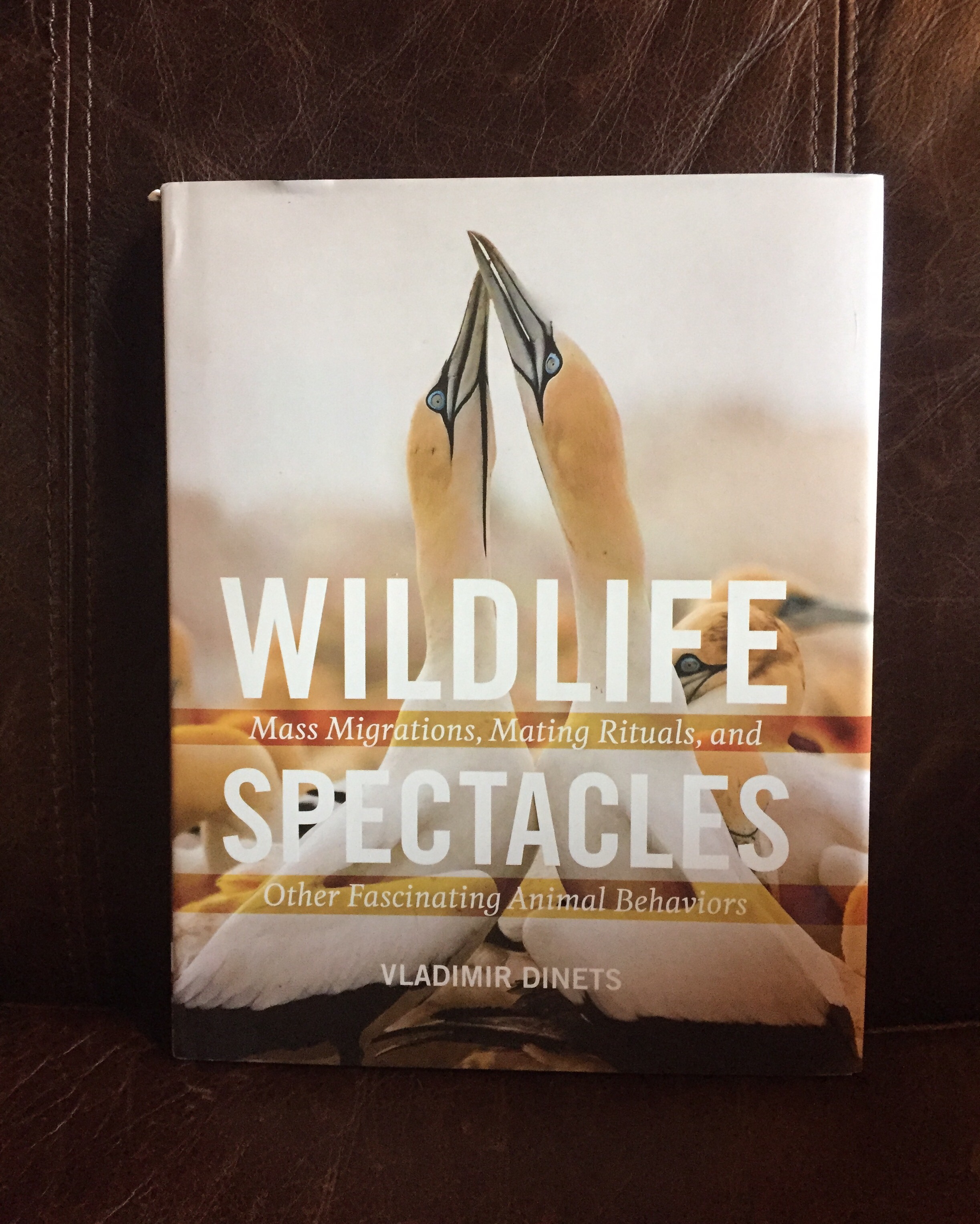
Bird Book Look: “Wildlife Spectacles”


With the holiday season uponus, I figured I would rekindle the Bird Book Look feature of this blog. Remember, the posts are not necessarily reviews and recommendations, but merely me letting you all know about some of the new bird and wildlife books that are out there. Visit the Bird Book Look page, which you can see in the menu above, to see the previous posts. Most are available in bookstores, and I’m sure all of them can be found on Amazon.

This post’s featured book is: “Wildlife Spectacles: Mass Migrations, Mating Rituals, and Other Fascinating Animal Behaviors” by Vladimir Dinets. It is published Continue reading

What do Pied-billed Grebes eat?

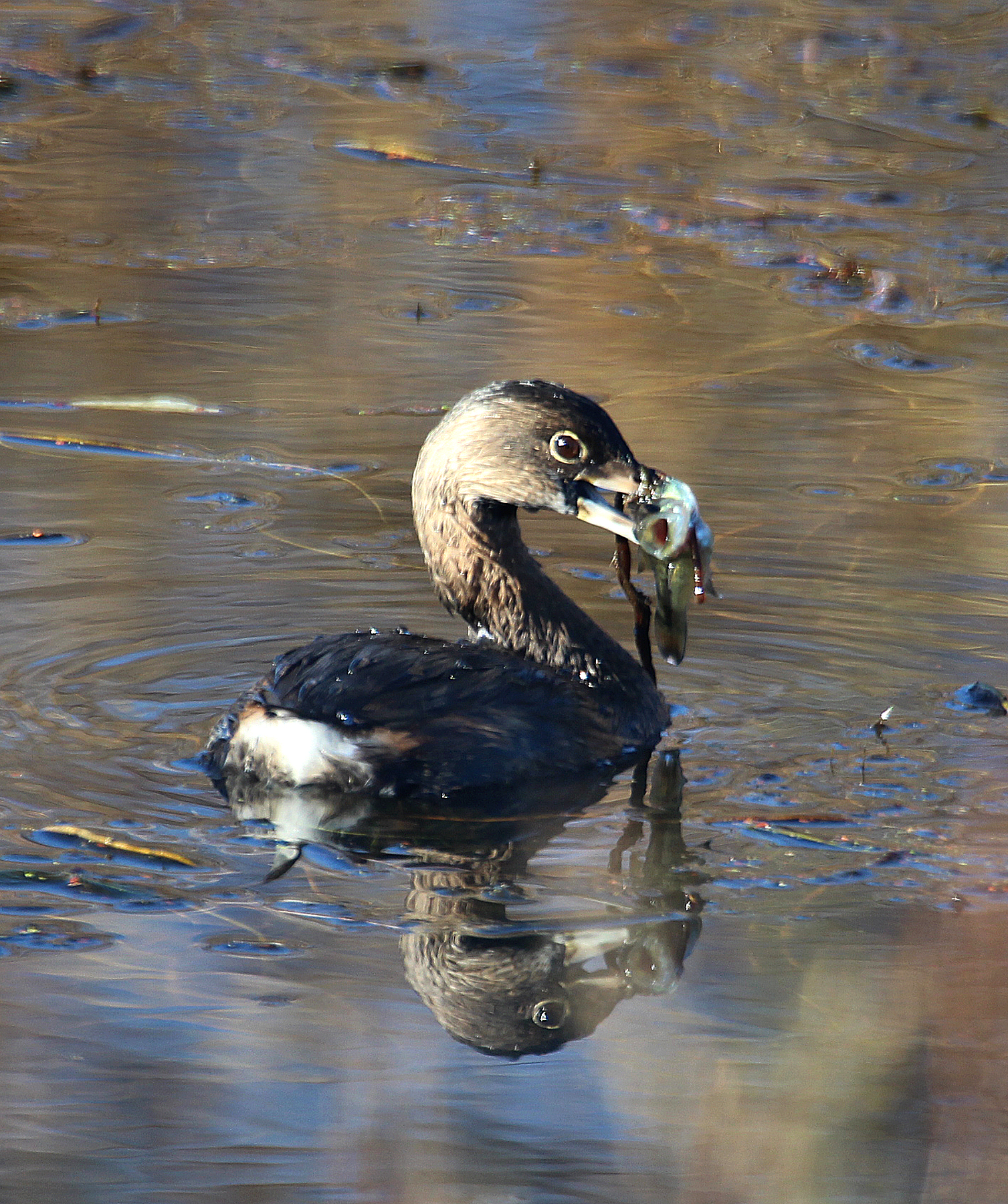
Photo by Chris Bosak A Pied-billed Grebe catches a fish in a pond in Danbury, Conn., November 2016.

Photo by Chris Bosak
A Pied-billed Grebe catches a fish in a pond in Danbury, Conn., November 2016.

Pied-billed Grebes eat a variety of aquatic foods, such as crustaceans, insects and amphibians. Oh, they also eat fish, as you can see from this photo I got last week at a small pond in Danbury, Conn.

Now the next question … why is it called a Pied-billed Grebe?

The word “pied” means having two more colors. This grebe’s bill is silver/gray and black in the summer.


More photos from Audubon Park My Bird Week media challenge

Photo by Chris Bosak A Tufted Titmouse visits a feeder in Danbury, Conn., in Nov. 2016, during the Audubon Park My Bird Week media challenge. Both the feeder and seeds are from Audubon Park.

Photo by Chris Bosak
A Tufted Titmouse visits a feeder in Danbury, Conn., in Nov. 2016, during the Audubon Park My Bird Week media challenge. Both the feeder and seeds are from Audubon Park.

Here are a few more photos from my Audubon Park My Bird Week media challenge.

Here’s the original post, which explains the challenge.

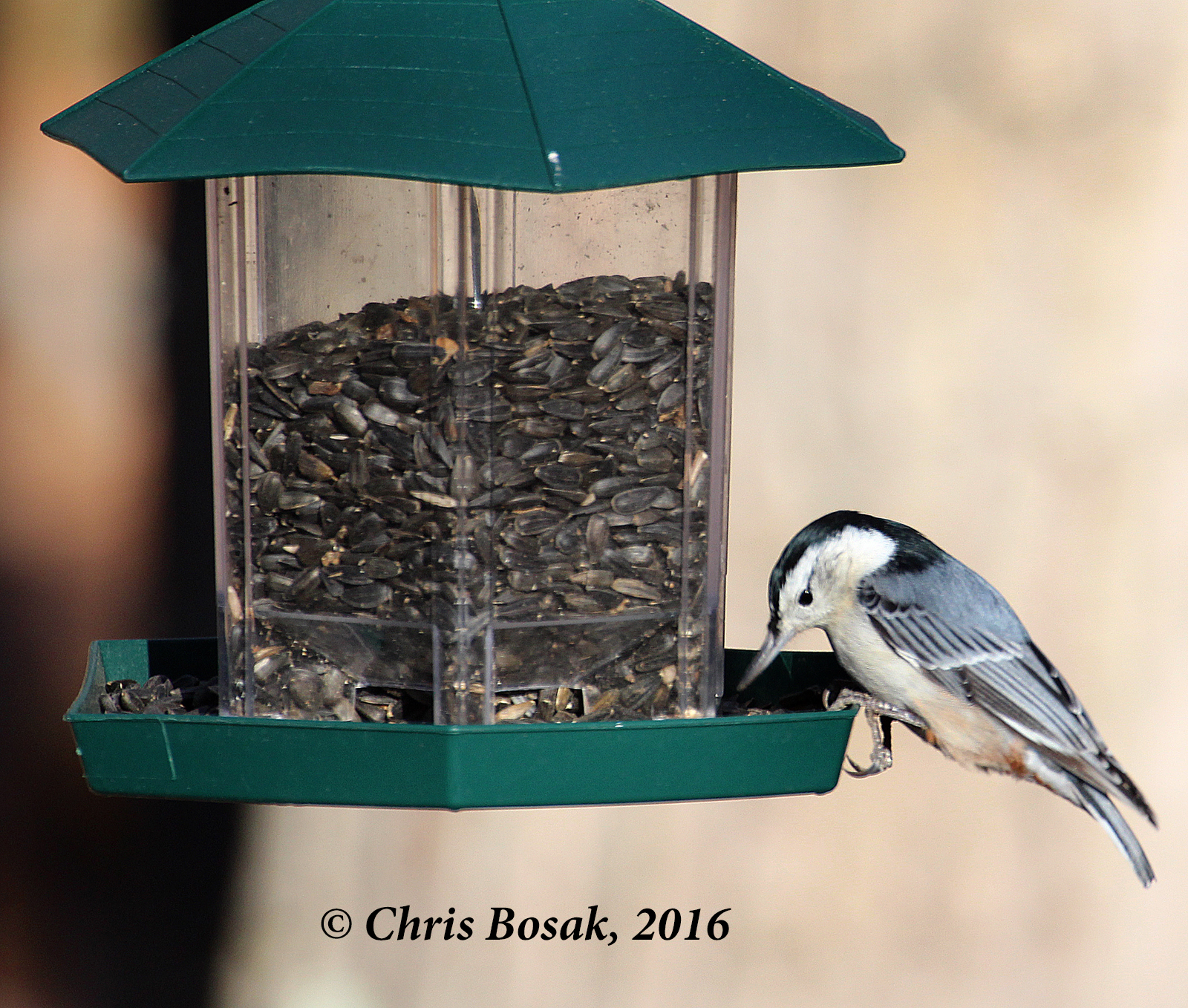
Photo by Chris Bosak A White-breasted Nuthatch visits a feeder in Danbury, Conn., in Nov. 2016, during the Audubon Park My Bird Week media challenge. Both the feeder and seeds are from Audubon Park.

Photo by Chris Bosak
A White-breasted Nuthatch visits a feeder in Danbury, Conn., in Nov. 2016, during the Audubon Park My Bird Week media challenge. Both the feeder and seeds are from Audubon Park.

Audubon Park’s media challenge accepted

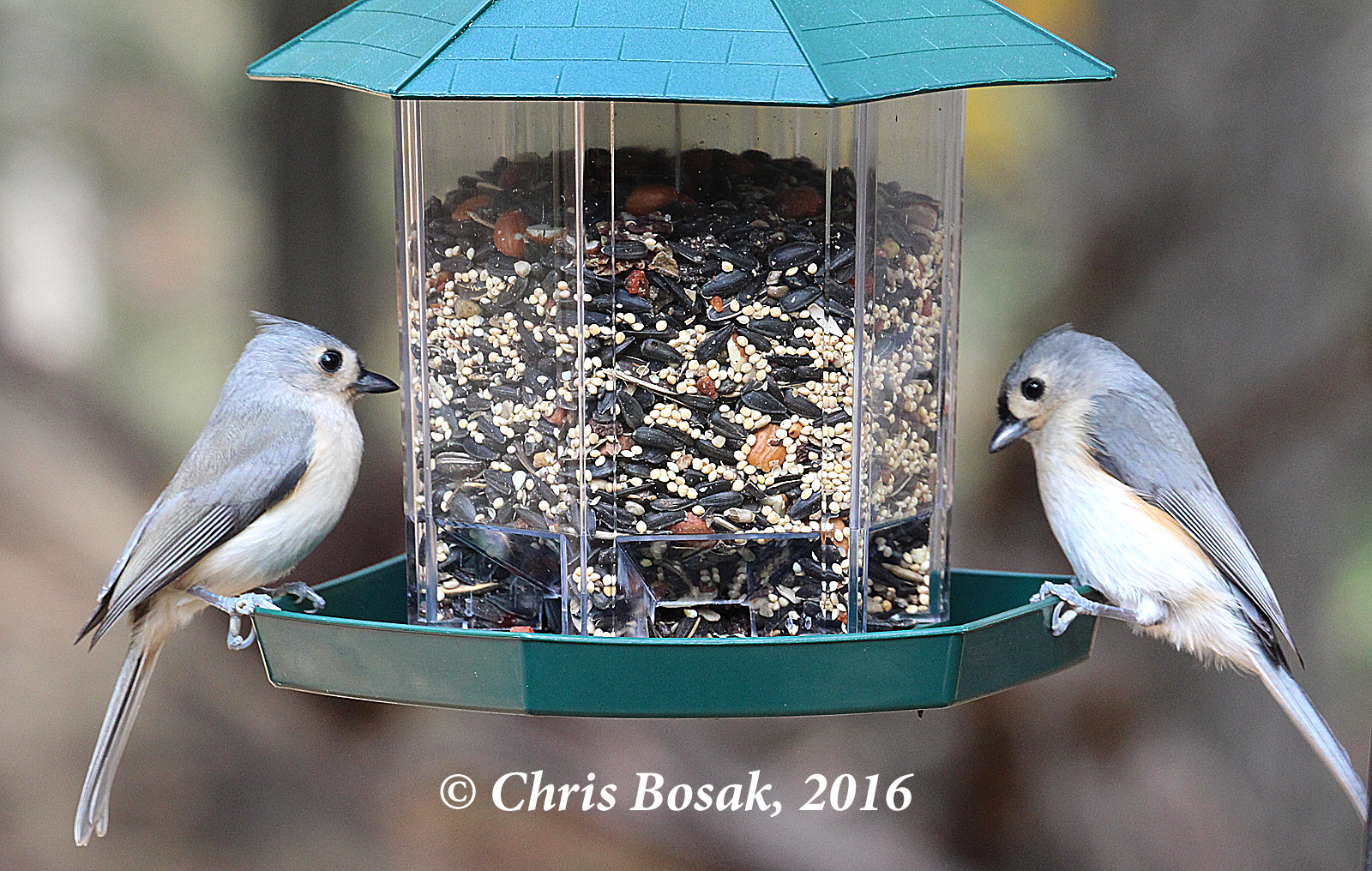
Photo by Chris Bosak A pair of Tufted Titmice visit a feeder during the Audobon Park My Bird Week media challenge in Danbury, Conn., in Nov. 2016. Both the feeder and seeds are from Audubon Park.

Photo by Chris Bosak
A pair of Tufted Titmice visit a feeder during the Audobon Park My Bird Week media challenge in Danbury, Conn., in Nov. 2016. Both the feeder and seeds are from Audubon Park.

I recently accepted a challenge from Audubon Park to participate in a media challenge whereby members of the media, using an Audubon Park feeder and bird seed blend, feed birds for a week and tracke the birds they see.

I already had a feeding station set up, so I knew the birds would quickly discover the new feeder in the area. I planted a new pole set up to hang the feeder on. Well, it took a matter of minutes for the Audubon Park feeder and seeds to get broken in by “my” birds.

At first it was my favorite regulars — Black-caped Chickadee, Tufted Titmouse, and White-breasted Nuthatch — that visited the feeder. Continue reading

Latest For the Birds column: The flurry will come

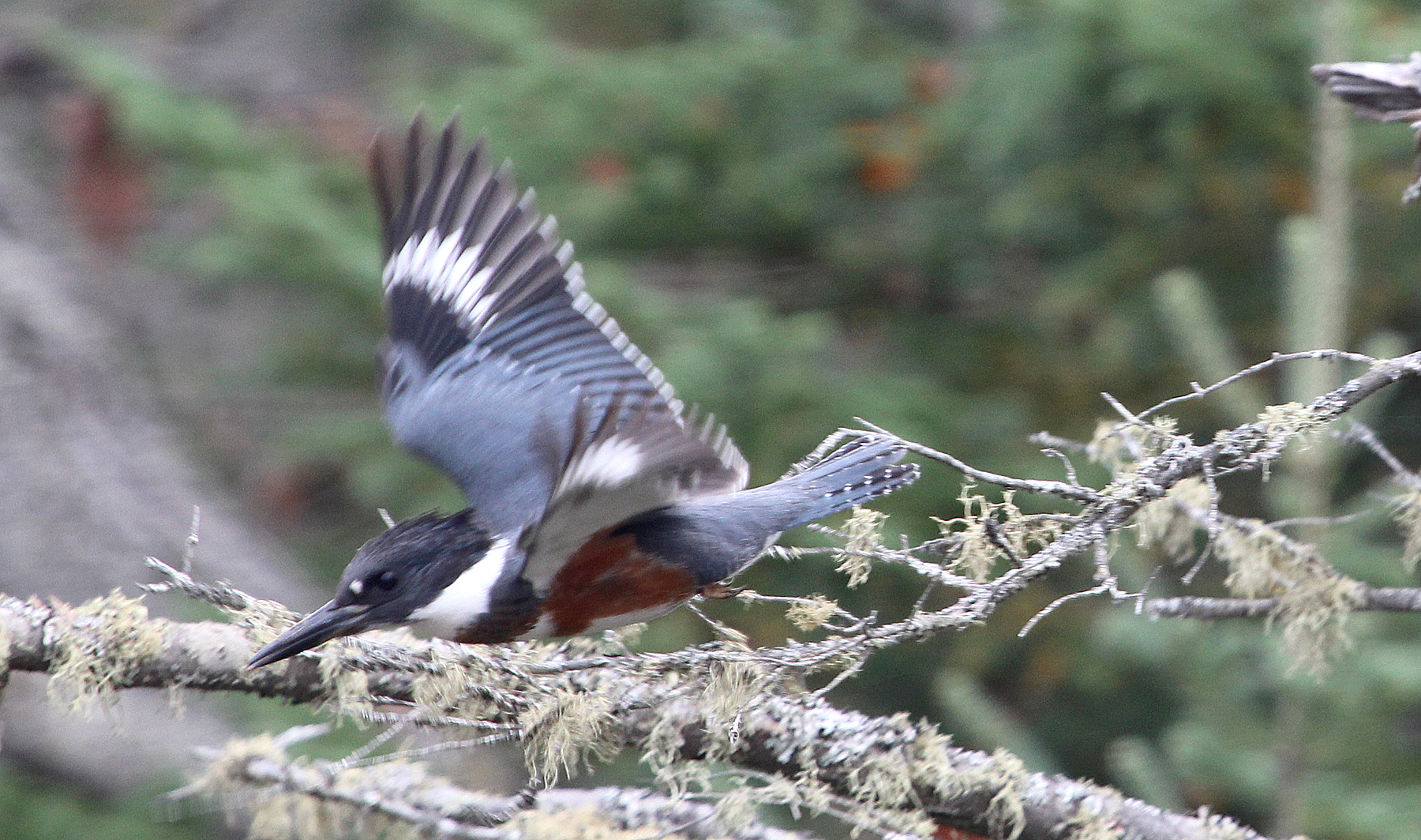
Photo by Chris Bosak A female Belted Kingfisher leaves its perch near a small pond along the Golden Road in Maine.

Photo by Chris Bosak
A female Belted Kingfisher leaves its perch near a small pond along the Golden Road in Maine.

Here’s the latest For the Birds column, which runs weekly in The Hour (Norwalk, Conn.), The Keene (NH) Sentinel and several Connecticut weekly newspapers.

…..

A lot of birdwatching is standing around looking at nothing. It’s also a lot of walking around looking at nothing.

Let me rephrase that. A lot of birdwatching is standing or walking around looking at things other than birds. No matter where you are, there is always something to look at — even if it is the trees, shrubs and flowers in the habitat in which you are seeking birds. I think it is an essential part of being a birdwatcher to appreciate the “less exciting” things in nature.

To be a birdwatcher you also need very heavy doses of patience and faith.

You could walk around your favorite woods Continue reading

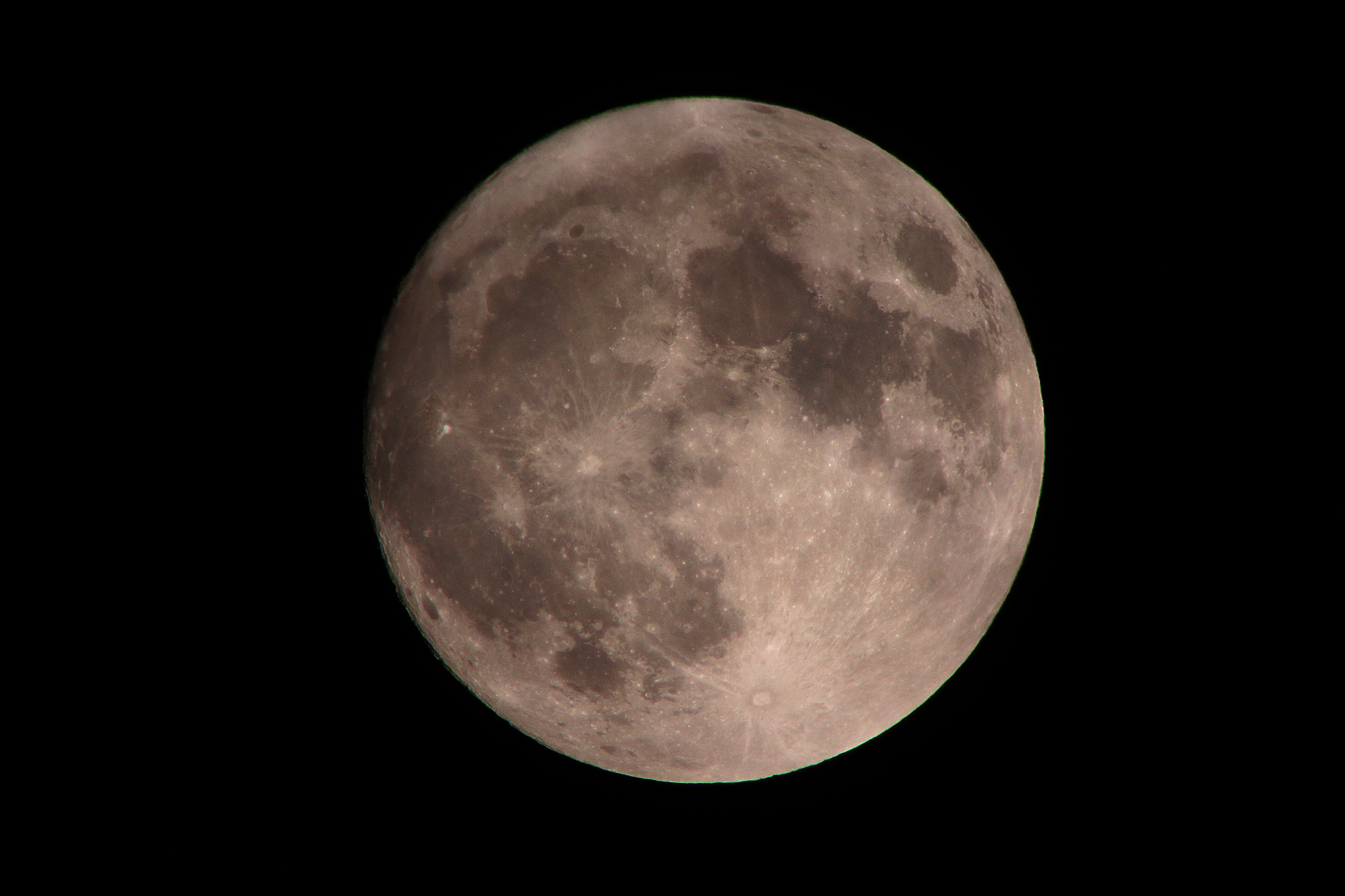
Super Moon indeed

Super Moon as seen on Sunday, Nov. 13, 2016.

Super Moon as seen on Sunday, Nov. 13, 2016.

That is a cool moon. Super Moon on Sunday, Nov. 13, 2016.

Moon and night photography is new to me to so here’s the best I have to offer at this point. Cool stuff, though.


Latest For the Birds column: Return of the juncos

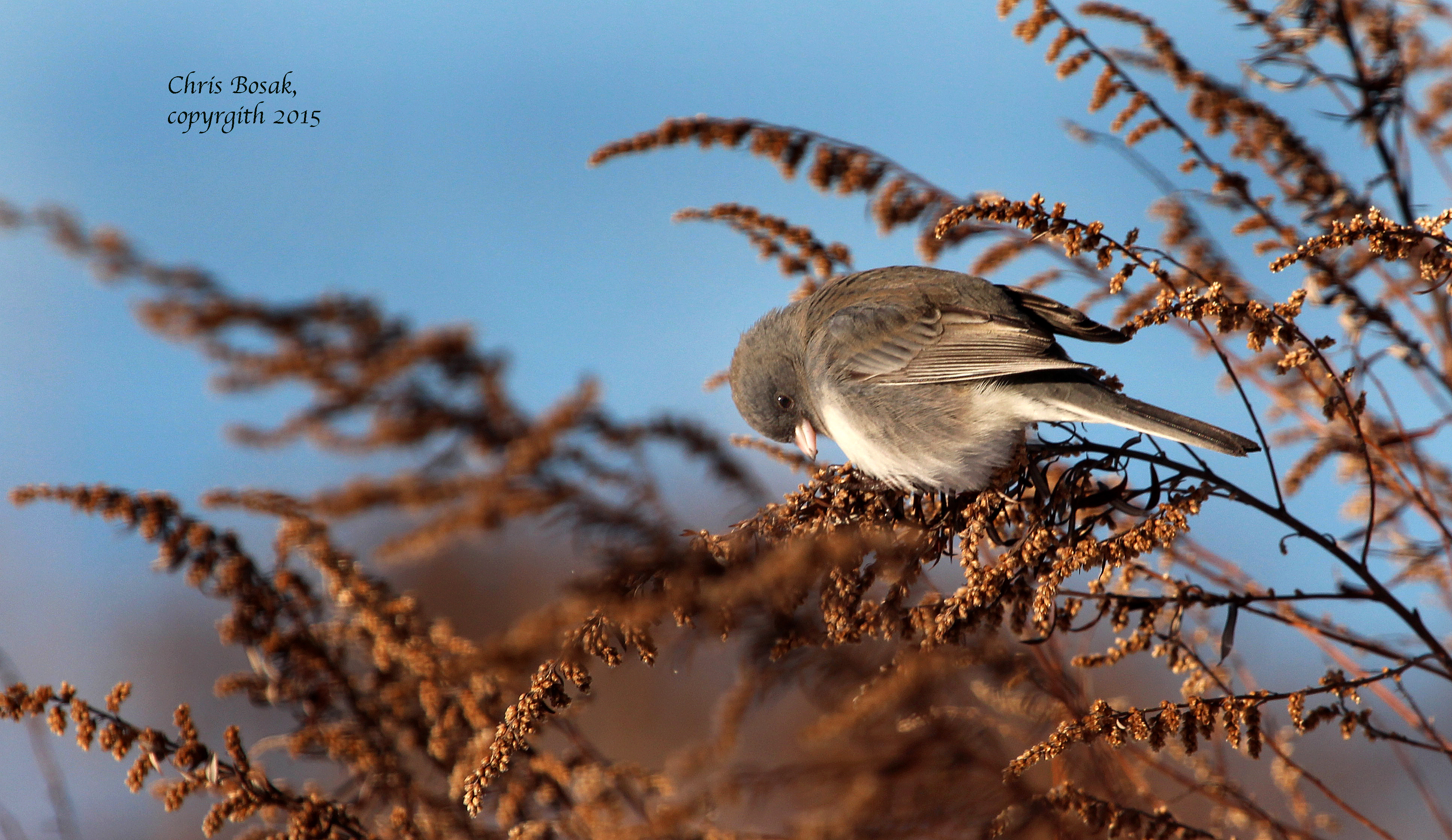
Photo by Chris Bosak A junco looks for seeds on a dried up plant at Weed Beach in Darien, Conn., in Jan. 2015.

Photo by Chris Bosak
A junco looks for seeds on a dried up plant at Weed Beach in Darien, Conn., in Jan. 2015.

Here’s the latest For the Birds column, which runs weekly in The Hour (Norwalk, Conn.), The Keene (NH) Sentinel and several Connecticut weekly newspapers.

I was wondering when the first one would show up. Mid to late October is typically when the Dark-eyed Juncos start showing up throughout the southern half of New England, but I hadn’t seen one yet and October was quickly fading away.

Eventually I noticed something that looked out of place on a low branch of a hemlock that juts into my backyard. Black-capped Chickadees, Tufted Titmice and White-breasted Nuthatches had launched an all-out assault on my feeders in the morning and never stopped as the sun continued to get higher in the sky.

Clearly this bird on the hemlock was not one of those three species. I had seen enough of those birds to be able to identify them in my sleep.

Obviously, the bird was a Dark-eyed Junco. It was an adult male Continue reading

Latest For the Birds column: Ducks are finally here

Photo by Chris Bosak Hooded Mergansers swim in a small unfrozen section of water at Selleck's/Dunlap in Darien, Conn., in Feb. 2014.

Photo by Chris Bosak
Hooded Mergansers swim in a small unfrozen section of water at Selleck’s/Dunlap in Darien, Conn., in Feb. 2014.

Here’s the latest For the Birds column, which runs weekly in The Hour (Norwalk, Conn.), The Keene (NH) Sentinel and several Connecticut weekly newspapers.

For me, “duck season” starts with the first sighting of something other than a mallard, wood duck or black duck.

This year it started in late August when I saw a lone hooded merganser in the small pond at the end of the trail that runs through my backyard. I’m not sure if it was an early migrating duck or if its territory is nearby, but it certainly marked an early start to duck watching season for me.

Of course, several weeks passed before my next duck sighting, but now it appears that duck season is finally here for real. The weather certainly is fitting for duck season. The other day, I stood on the shores of a lake watching a flock of common mergansers. The temperature was in the low 30s and a whipping, cold wind stung my ears. In other words, things could have been worse.

The “typical” start to duck-watching season goes something like this: The leaves change colors and a few hooded mergansers and ring-necked ducks show up on area lakes and ponds. Large flocks of common mergansers congregate on larger lakes and reservoirs.

As the season progresses, small ponds attract goodies such as green-winged teal, gadwall and American wigeon. Larger lakes attract more and more common mergansers as well as bufflehead and a goldeneye or two.

Long Island Sound and the Atlantic Ocean follow a somewhat predictable schedule as well, with brant showing up rather early, followed by beauties such as common and red-throated loons, grebes, goldeneye, long-tailed ducks, red-breasted mergansers and scaup. Eider are common on the ocean, but not so much on the Sound.

Continue reading

Latest For the Birds column: Red-breasted Nuthatch right on cue

A Red-breasted Nuthatch perches near a birdfeeding station in Danbury, Conn., Oct. 2016.

A Red-breasted Nuthatch perches near a bird feeding station in Danbury, Conn., Oct. 2016.

Here’s the latest For the Birds column, which runs weekly in The Hour (Norwalk, Conn.), The Keene (NH) Sentinel and several Connecticut weekly newspapers.

I wrote three weeks ago about my affinity for the nuthatches we see in New England.

In the middle and southern parts of the region we see white-breasted nuthatches much more frequently than its smaller cousin, the red-breasted nuthatch. The latter variety, however, is seen more often in the northern reaches of New England.

The red-breasted nuthatch does show up at feeders in the middle and southern parts, especially in fall and winter, but not too often and in varying degrees depending on the year. In fact, the little birds will venture all the way to Florida during winter migration.

With that said, I was happy to receive an email from Dean a few days after that column appeared.

“You mentioned red-breasted nuthatches, which reminded me that I have not seen one in years,” Dean wrote from his Marlborough, Conn., home. “They are such cute little birds. Then two days after your article what shows up but an RBN at the feeder.”

A few days after Dean wrote me that email, I was sitting on my deck watching my feeders. It was an unending flurry of black-capped chickadees, tufted titmice, white-breasted nuthatches and downy woodpeckers. I got so tuned into seeing those species that it didn’t immediately register in my brain that a new arrival had appeared.

Continue reading