Photo by Chris Bosak
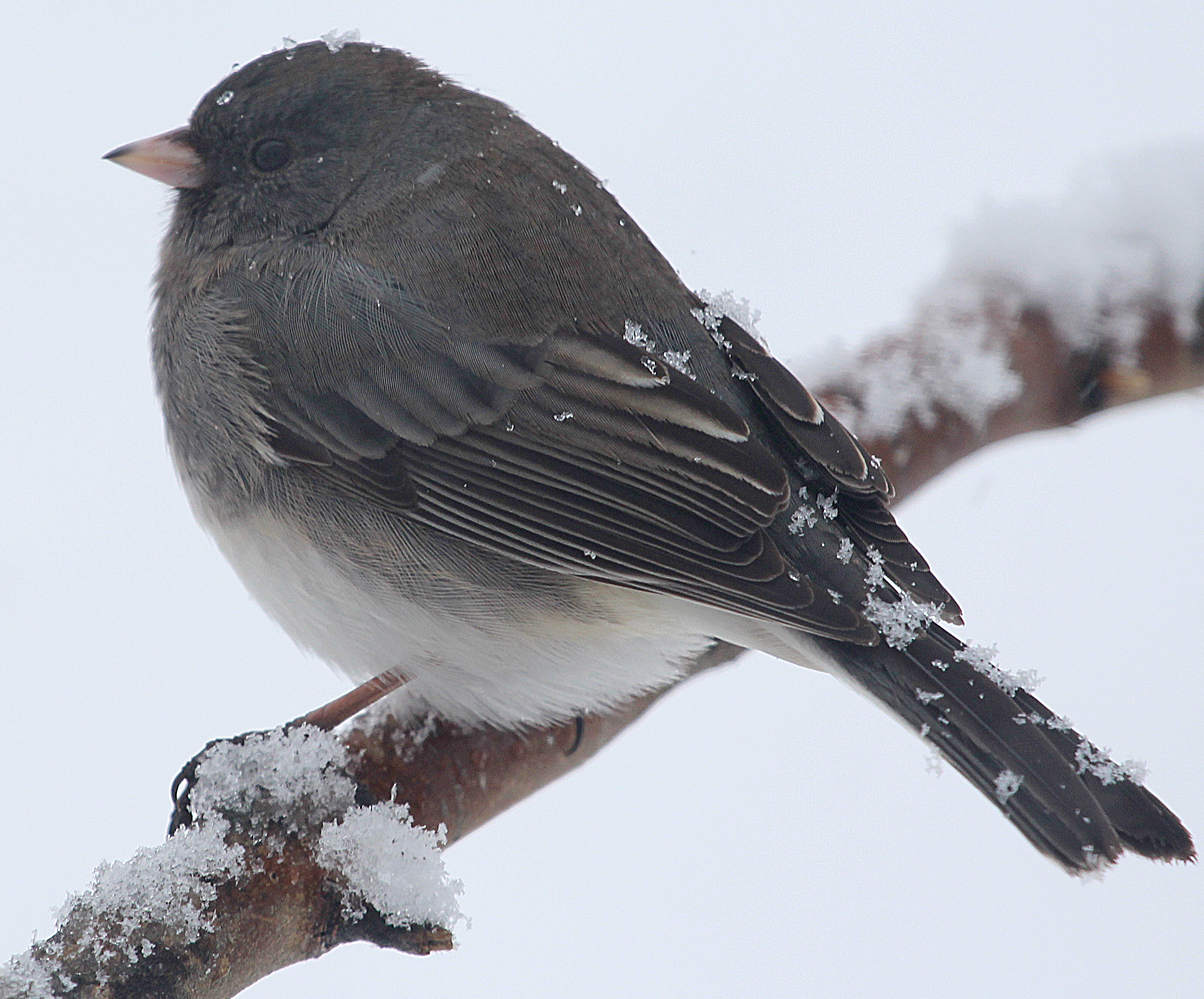
Dark-eyed Junco during Jan. 2014 snowstorm.
When the snow flies — as it has done often this winter here in New England — you can be sure the Dark-eyed Juncos will come visit. Normally accompanied by at least a few White-throated Sparrows, juncos are typically found under bird feeders looking for fallen seeds. This snowstorm, however, I had juncos on the suet feeder, on the platform feeder and on the ground. So, of course, I had to break out the camera. What’s a snow day without a new junco photo?
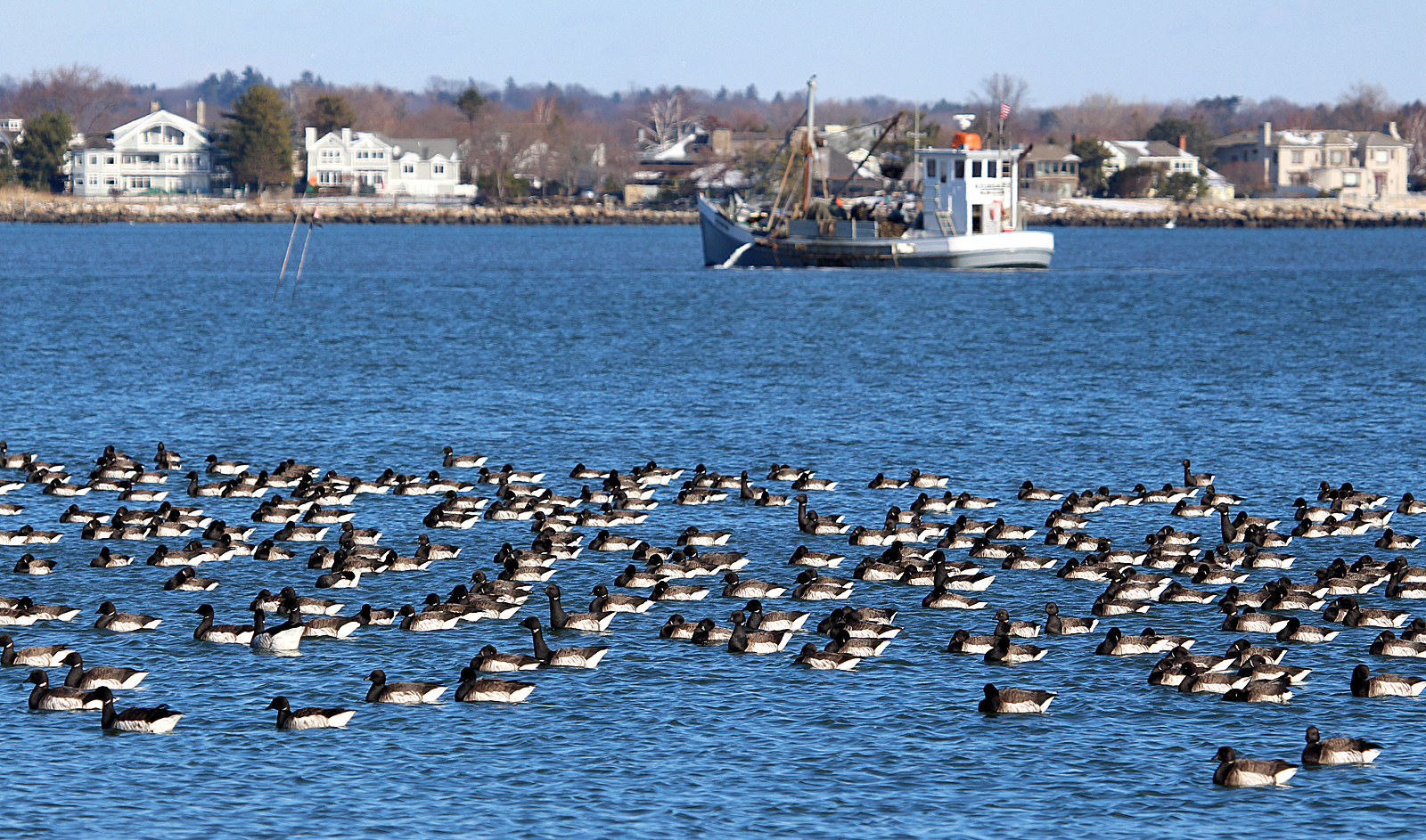
Photo by Chris Bosak A huge flock of Brant congregates as an oysterboat works the waters of Long Island Sound off Calf Pasture Beach in Norwalk this winter.
I was filling out my Christmas Bird Count Captain’s Statistic Sheet (finally) and I had to question for a second my own numbers. Did I really see more than 1,000 Brant that day?
Then I recalled the massive flocks we had seen at Calf Pasture Beach that brisk morning. Count compilers Townsend and Mardi Dickinson were with me during that part of the day. They saw them, too. There were so many Brant it was hard to get a good count. (Watch the accompanying video to the end to see what we were up against. Not the best video of all times, but you will see what I’m talking about.)
Photo by Chris Bosak A Brant swims off the coast of Norwalk this winter.
Brant are geese that breed in the Arctic and head to somewhat warmer waters during the winter. From a distance, or to the untrained eye, they can easily be mistaken for Canada Geese. Brant, however, are much smaller and lack the white “chin strap” that is so obvious on Canada Geese.
Norwalk has been a hot spot for Brant for many years. Huge flocks can be seen from Calf Pasture Beach throughout winter. Sometimes they are on the water. Sometimes they are near the water. Sometimes the flock is divided with some on the water and some near the water. The flocks often number hundreds and hundreds of birds.
It’s a treat to hear their low honking (maybe more of an of uttering), much different and more pleasing than the Canada Goose’s honk. When hundreds of them get going at once, it’s an even bigger treat. (Again, check out the video to listen for yourself.)
Most of the Brant will have migrated north by April, but some individuals or small flocks will remain into June or even later. They are likely young birds that aren’t going to breed anyway and therefore do not feel the sense of urgency to fly to the Arctic breeding grounds.
One of the many reasons I like Brant is because they are a reliable winter sighting here in New England. Birdwatching makes the winters here bearable — dare I say enjoyable — and it’s species like Brant that make winter birding fun.
iPhone photo by Chris Bosak Mallards rest on the ice as a small group of Hooded Mergansers swims in the background along the Norwalk River.
Not having my “real” camera with me this morning as I walked into work, I used my iPhone to capture this moment of Mallards resting on the ice near a small pool of unfrozen water on the Norwalk River. A small group of Hooded Mergansers swims in the open water. The rest of the Norwalk River is frozen, a somewhat rare occurrence.
Send me your bird and nature photos for my “reader submitted photos” page, which is updated often. Check it out here.
Photo by Chris Bosak A young Peregrine Falcon flies overhead in Norwalk, CT, Dec. 2013.
I spotted this young Peregrine Falcon flying around Veterans Park in East Norwalk a few weeks ago. It had a half-eaten prey (a crow, I think) in an open part of the park about 100 yards away, but kept circling around the parking lot where I was. It even has blood on its hooked bill. As many of you know, I’ve been photographing a few Peregrine Falcons along the Norwalk River where I work. (With limited success, admittedly.) This rare and close opportunity was certainly welcomed considering the distance from which I normally have to try to photograph them. Notice the brown plumage of this youngster, as opposed to the blue-gray of the adult.
I have some more photos of this beauty in flight that I will post later.
Here’s a copy/pasted release from Connecticut DEEP on the 2014 Midwinter Waterfowl Survey. I don’t particularly like using press releases on this site, but as many of you know, I have a soft spot for waterfowl, so any news on that front is worth getting out there. Plus, the results were particularly good this year. At least the photo is mine!
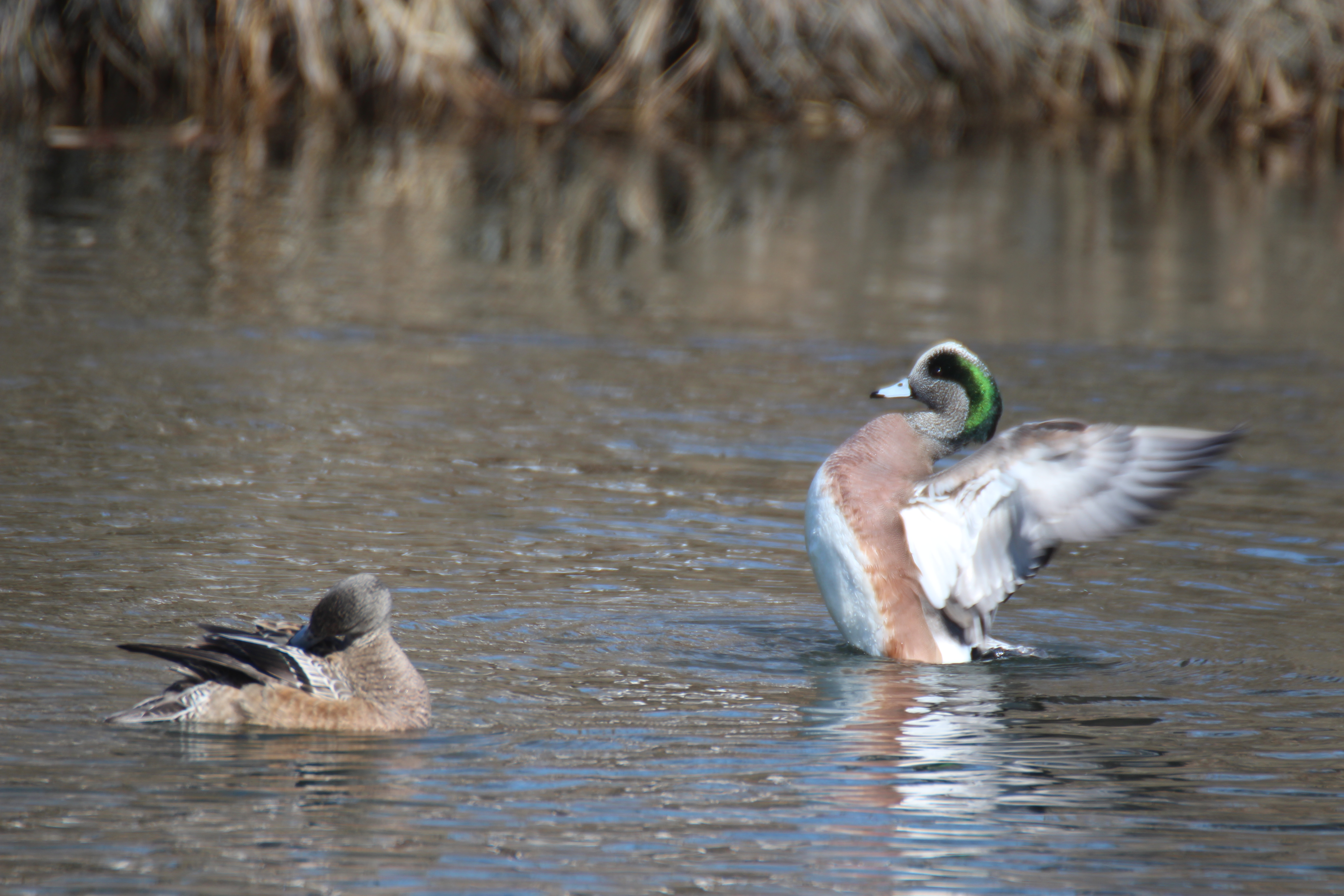
Photo by Chris Bosak American Wigeon in Norwalk, CT.
Staff from Connecticut’s Department of Energy and Environmental Protection (DEEP) conducted the annual Midwinter Waterfowl Survey on January 8 and 9, 2014. The survey is conducted throughout the Atlantic Flyway, and is used as an index of long-term wintering waterfowl trends. The Atlantic Flyway is a bird migration route that generally follows the Atlantic Coast of North America and the Appalachian Mountains. In Connecticut, the survey is conducted from a helicopter and a census is obtained from the coast, the three major river systems, and selected inland lakes and reservoirs.
Survey conditions for the 2014 Midwinter Waterfowl Survey were excellent, with Continue reading →
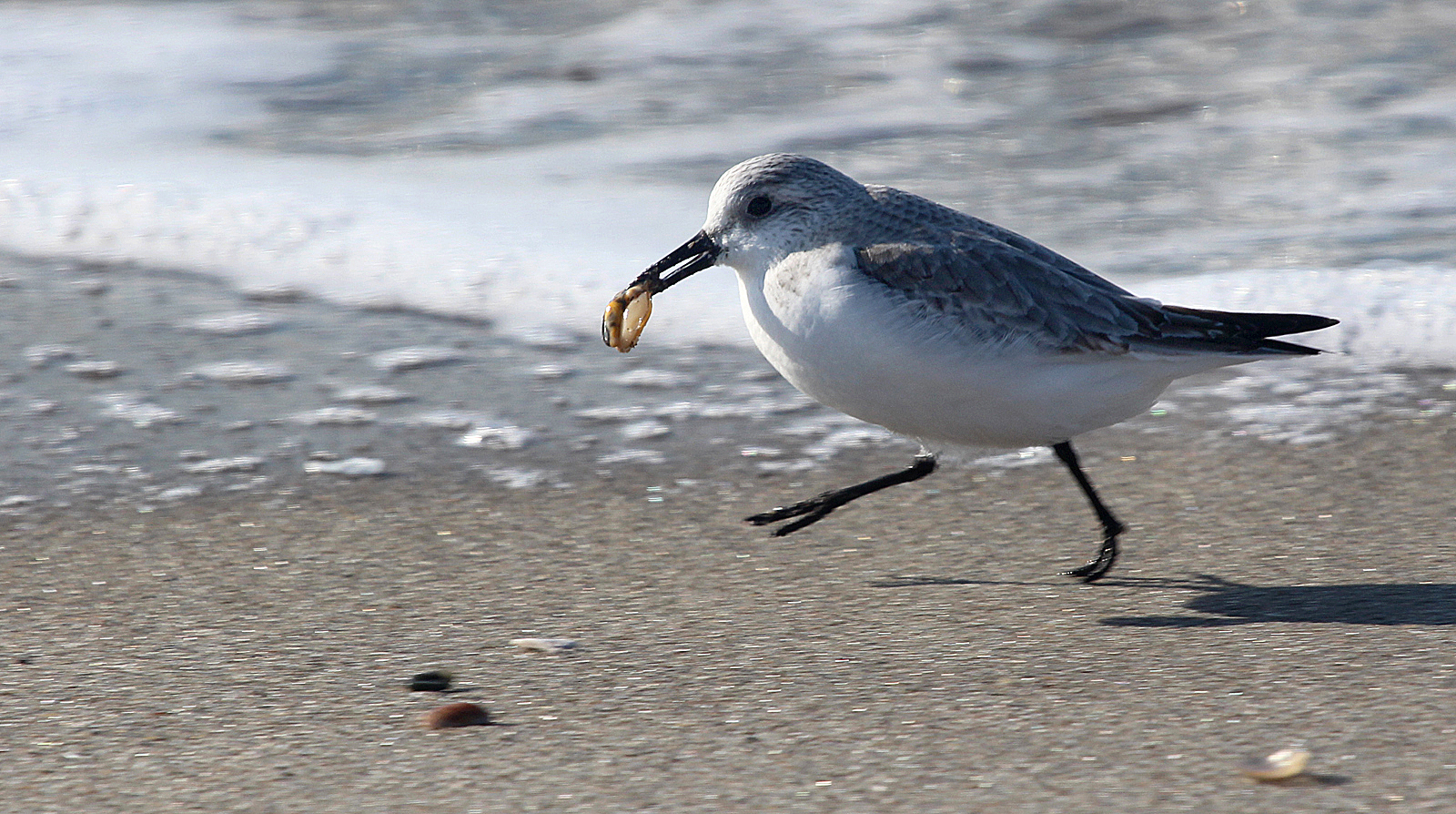
Photo by Chris Bosak A Sanderling runs along with food on the shore of Long Beach in Stratford, CT, Jan. 2014.
Photo by Chris Bosak Sanderlings and Dunlins on the shore of Long Beach in Stratford, CT, Jan. 2014.
A recent trip to Long Beach in Stratford, CT, yielded one Snowy Owl sighting _ it was far in the distance, but still nice to see, of course. It also yielded more close-up views of Sanderlings, another bird that breeds in the Arctic. Sanderlings are small and common shorebirds that are seen along New England coastal areas from fall through spring, and even in summer at times. Sanderlings are the shorebirds you see chasing the fading waves looking for food and running away from the incoming waves. So much fun to watch.
They also make for good photographic subjects. So with that said, here are several Sanderling photos I took earlier this week. Click on “continue reading” for lots more photos. Continue reading →
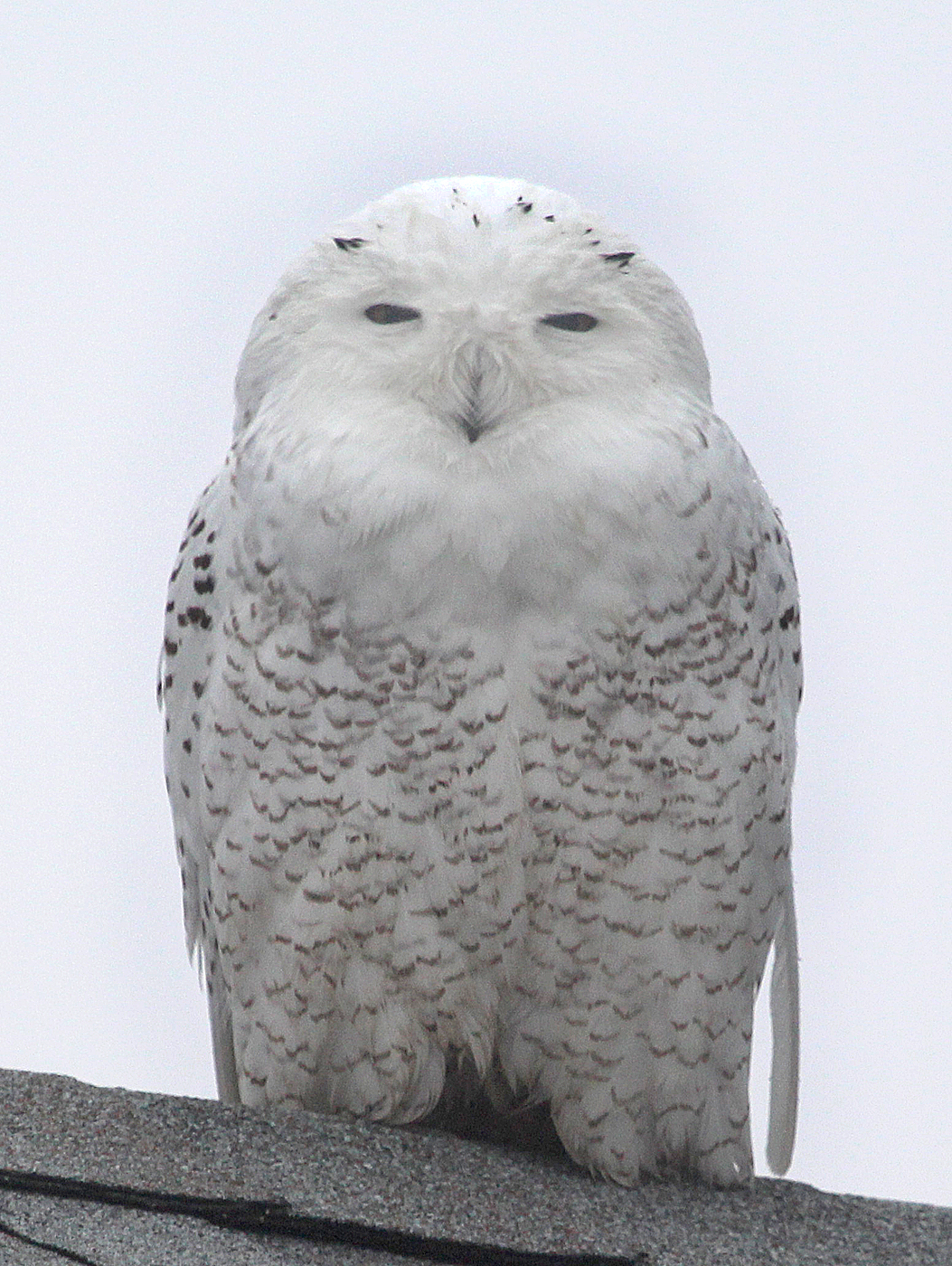
Photo by Chris Bosak A Snowy Owl perches on a roof top at Sherwood Island State Park in Westport on Monday, Dec. 23, 2013.
Here’s a copy/pasted press release about a fun contest from Connecticut Audubon.
Good luck!
…
This has been an incredible winter for Snowy Owl sightings in our area. Connecticut Audubon Society is looking to you to help us celebrate and raise awareness of these beautiful birds.
Now Connecticut Audubon Society is inviting birders to enter its Snowy Owl Observation Contest by sharing their experiences. First prize is Continue reading →
A little off topic, but not really considering the link between climate and birds — and all wildlife (including humans.) I
I covered the Norwalk Land Trust’s Annual Meeting on Monday (Jan. 13, 2014) and the guest speaker was Daniel C. Esty, the commissioner of the Connecticut Department of Energy and Environmental Protection. He had some very interesting things to say about climate change and how to combat it and adapt to it. Here’s an audio clip of Esty talking about the “game changer” when it comes to climate change.
The full story is available at http://www.thehour.com. (Search for “Esty” in the search field if it’s not still on the home page.)
Photo by Chris Bosak An Eastern Towhee eats a crab apple during a cold winter day at Weed Beach in Darien, CT., Jan. 2014.
It was bitterly cold, but bright and sunny. Perfect day for a quick bird walk. Perfect day for a long bird walk, too, but I had limited time before my son Will’s basketball game, so it had to be a quick one.
After seeing a few Fox Sparrows at Weed Beach in Darien, Conn., as soon as the walk started, the only species I could find was White-throated Sparrow. And there were lots of them. I love my White-throated Sparrows, of course, so I’m not complaining. My eyes, however, were darting around the brush for other birding goodies.
Trudging through the snow and doing my best to ignore the
Here’s a video I made of the courtship display of Hooded Mergansers. Remember, I’m not a professional videographer, but this one came out OK, I think. Anyway, how can you go wrong with video and photos of Hooded Mergansers? Such a cool bird.






 Birds of New England.com