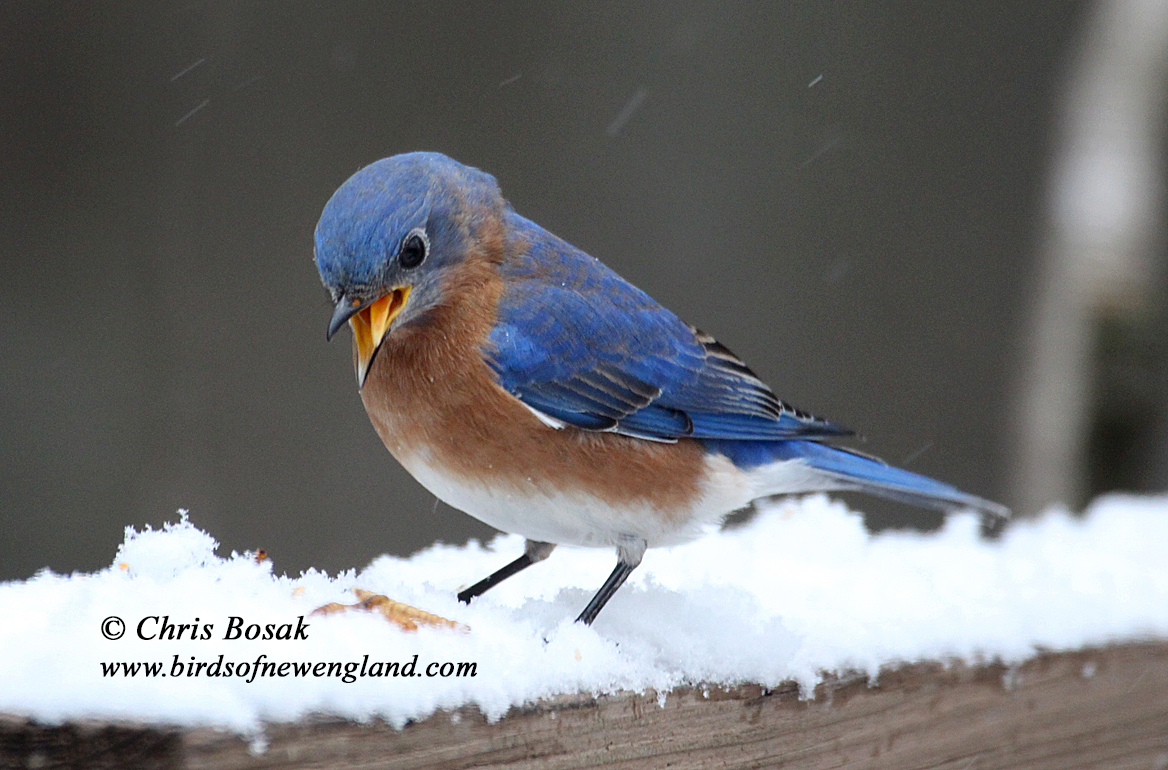
Photo by Chris Bosak An eastern bluebird braves a New England winter and visit a backyard for mealworms, winter 2020.
It’s been another great winter for bluebirds. I haven’t been lucky enough to attract them to my new house yet, but I have seen them several times out in the field and while driving along side roads.
I’ve heard from several readers who have seen these cheerful birds as well, and that’s always good to see.
I remember years ago when I was new to birding and I came across a small group of bluebirds at Surry Dam while snow fell all around. I was surprised and excited to see them. I thought bluebirds were long gone by the time winter came around in New England. I took a few photos (this was back in the days of film) and anxiously awaited the results from the lab. The photos were pretty terrible as I recall, but the day still sticks out in my head as a great birding day.
I, like most birdwatchers I would imagine, like to research new findings. I think curiosity about the natural world is a prerequisite for being a birder. I found out that the sighting wasn’t particularly rare and that many bluebirds, indeed, stay around for the winter. It didn’t Continue reading →
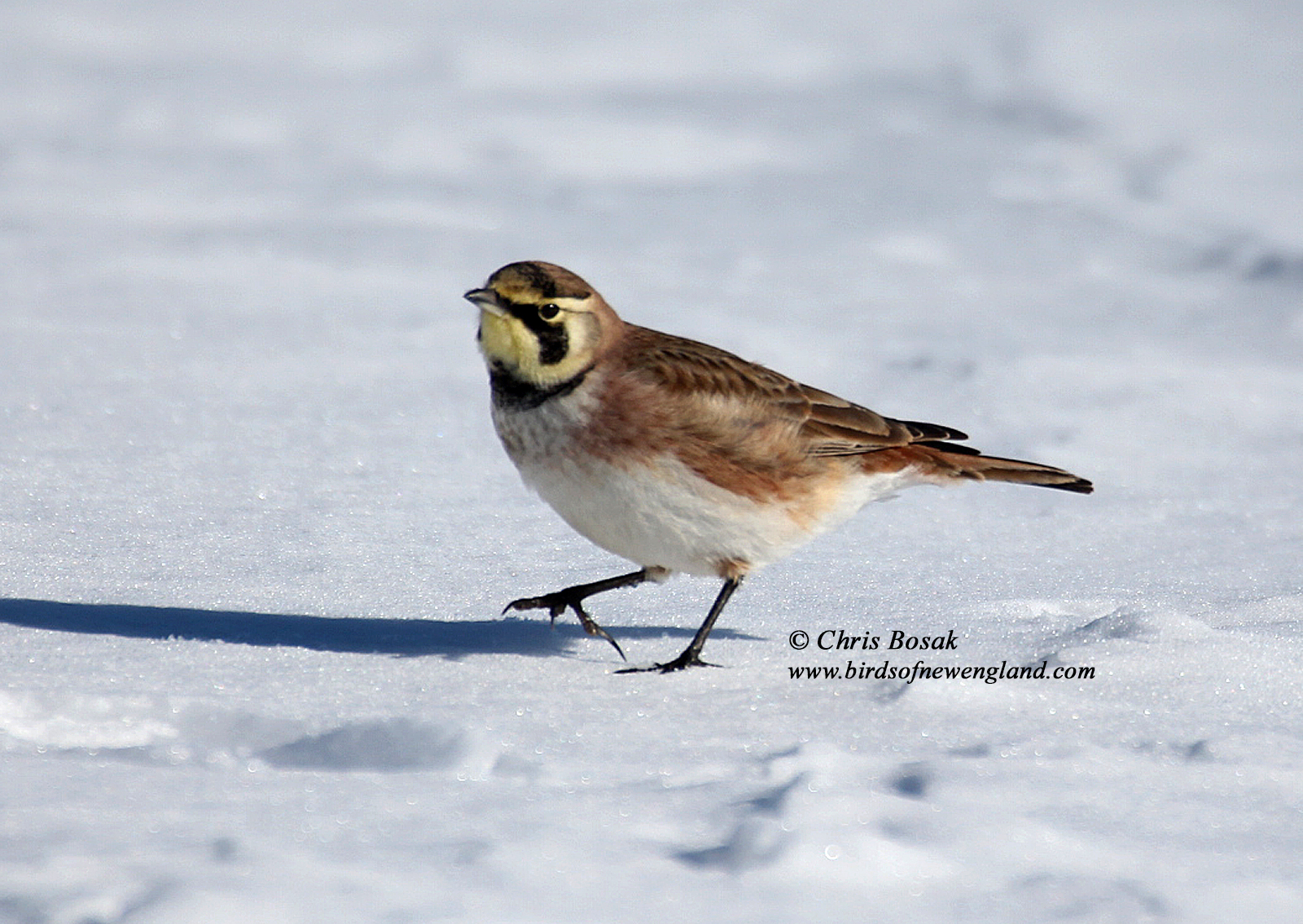
Photo by Chris Bosak A horned lark looks for food in New England, February 2021.
Not sure what this morsel of food is (or was) but the horned lark took care of it in one bite. (OK, so it’s not as exciting as a hawk eating a squirrel or an eagle eating a fish, but it’s still a bird eating Continue reading →
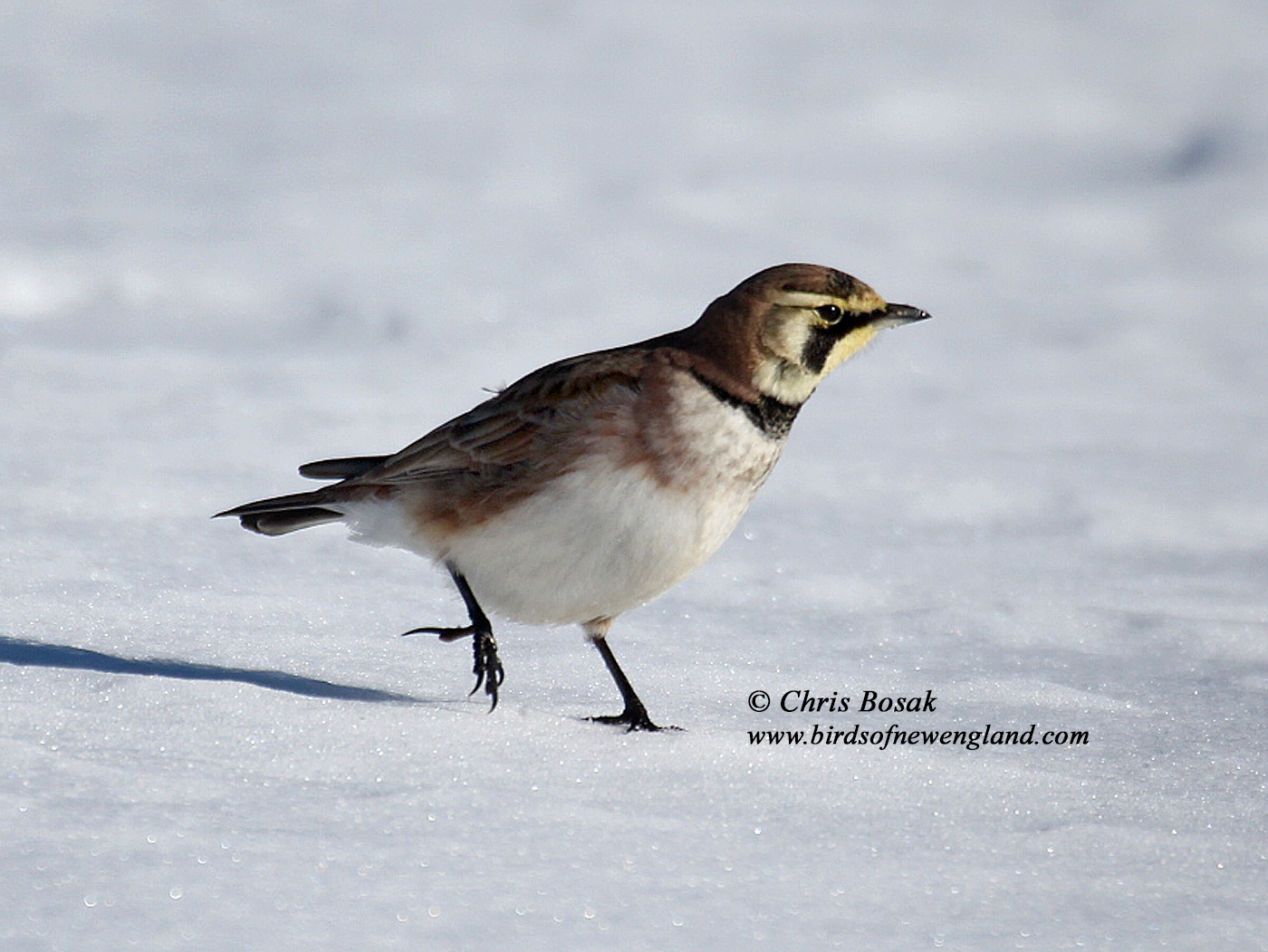
Photo by Chris Bosak A horned lark looks for food in New England, February 2021.
As promised, here is another post on the horned larks I saw the other day. This post will be more photo-heavy. One quick word on horned larks: They get their name from the horn-like feathers that sometimes stick up from their heads. They aren’t visible on the photos Continue reading →
Photo by Chris Bosak
A horned lark looks for food in New England, February 2021.
Horned larks are sparrow-sized birds that live year-round in parts of New England, but are mostly seen in the winter. They prefer open, barren areas, so you’re not likely to see them in the woods. Check open areas with short grass or no grass (a beach for instance) for your best chance at finding them. I found these birds in a snow-covered field at Hamonasset State Park in southern Connecticut last week during my trip to see the crossbills. More horned lark posts coming soon.
Photo by Chris Bosak
A horned lark looks for food in New England, February 2021.
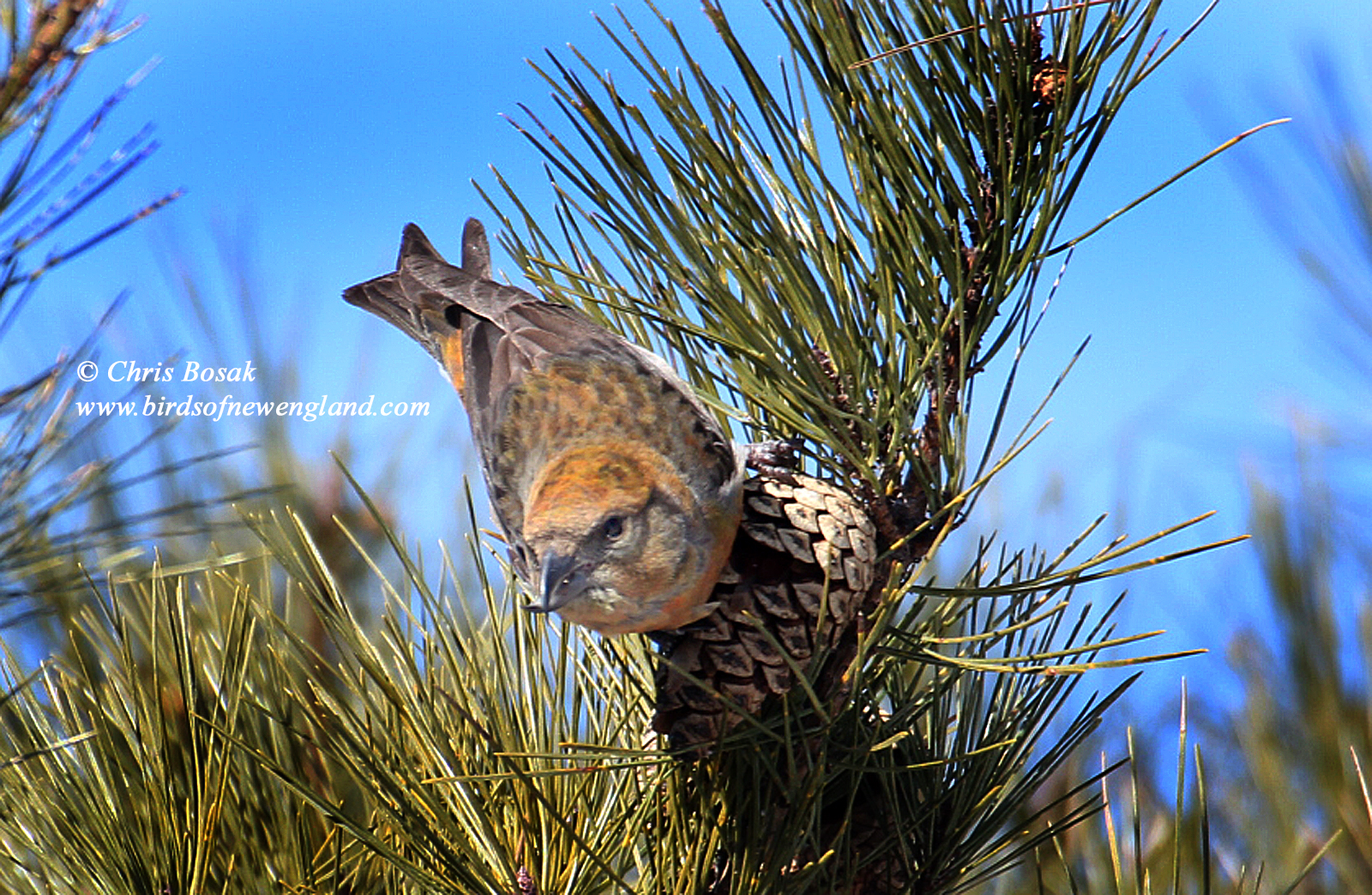
Photo by Chris Bosak A red crossbill eats seeds from a cone at Hammonasset State Park, February 2021.
I’m not much of a “chaser,” which is a birder who will travel great lengths to see a rare bird that has been spotted. But … I’ve always been fascinated by crossbills and a flock of them has been seen regularly about an hour away — at Hammonasset State Park. I was up early today and decided to make the trip. It was worth it as the birds put on a show for many birdwatchers and photographers. The red crossbills flitted from one evergreen to the next, pausing to find seeds among the cones. Crossbills get their name for their crossed bills (makes sense, right), an adaptation that allows them to dig out and crack seeds from pine and spruce cones.
More to come …
Photo by Chris Bosak A red crossbill eats seeds from a cone at Hammonasset State Park, February 2021.Photo by Chris Bosak A red crossbill eats seeds from a cone at Hammonasset State Park, February 2021.
Photo by Chris Bosak An eastern bluebird braves a New England winter and visit a backyard for mealworms, winter 2020.
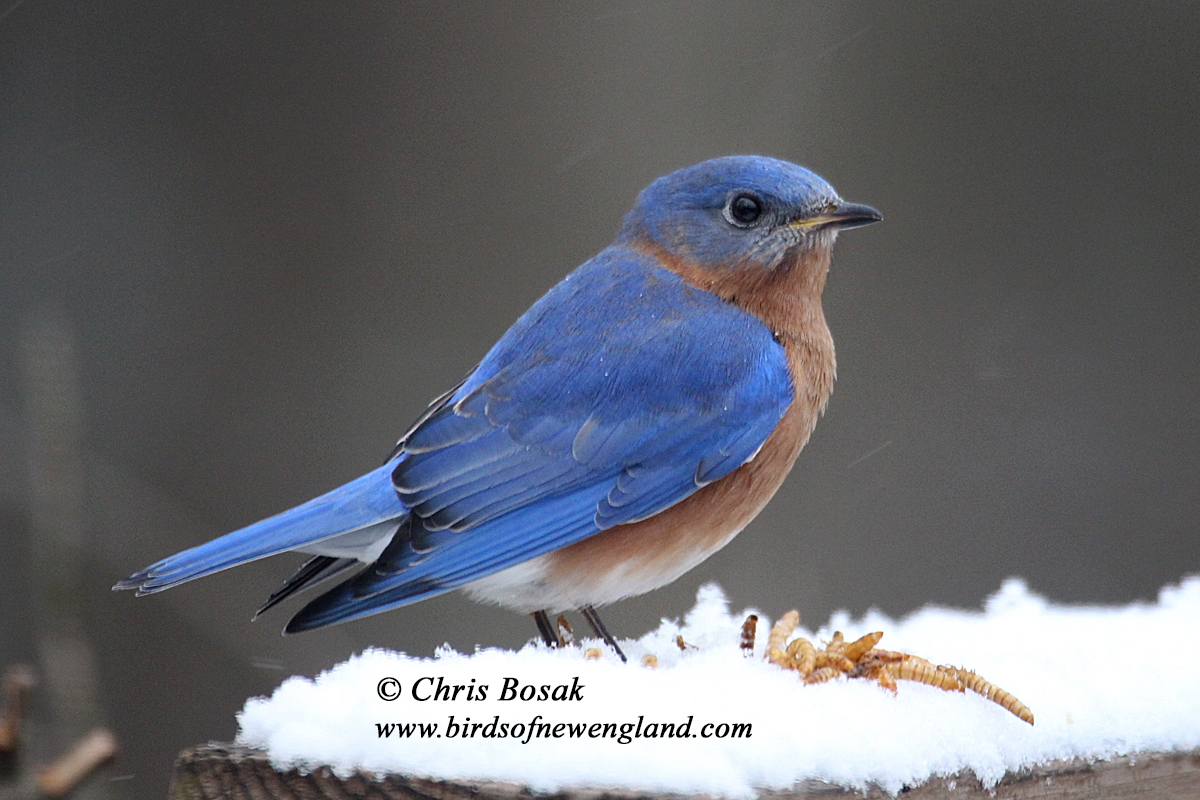
We don’t usually think of eastern bluebirds as a winter bird in New England, but many bluebirds tough out our cold months. Visits from or sightings of bluebirds brighten the short winter days, for sure. Here’s a collection of photos of bluebirds in the snow.
Photo by Chris Bosak Eastern bluebirds brave a New England winter and visit a backyard for mealworms, winter 2020.
Photo by Chris Bosak
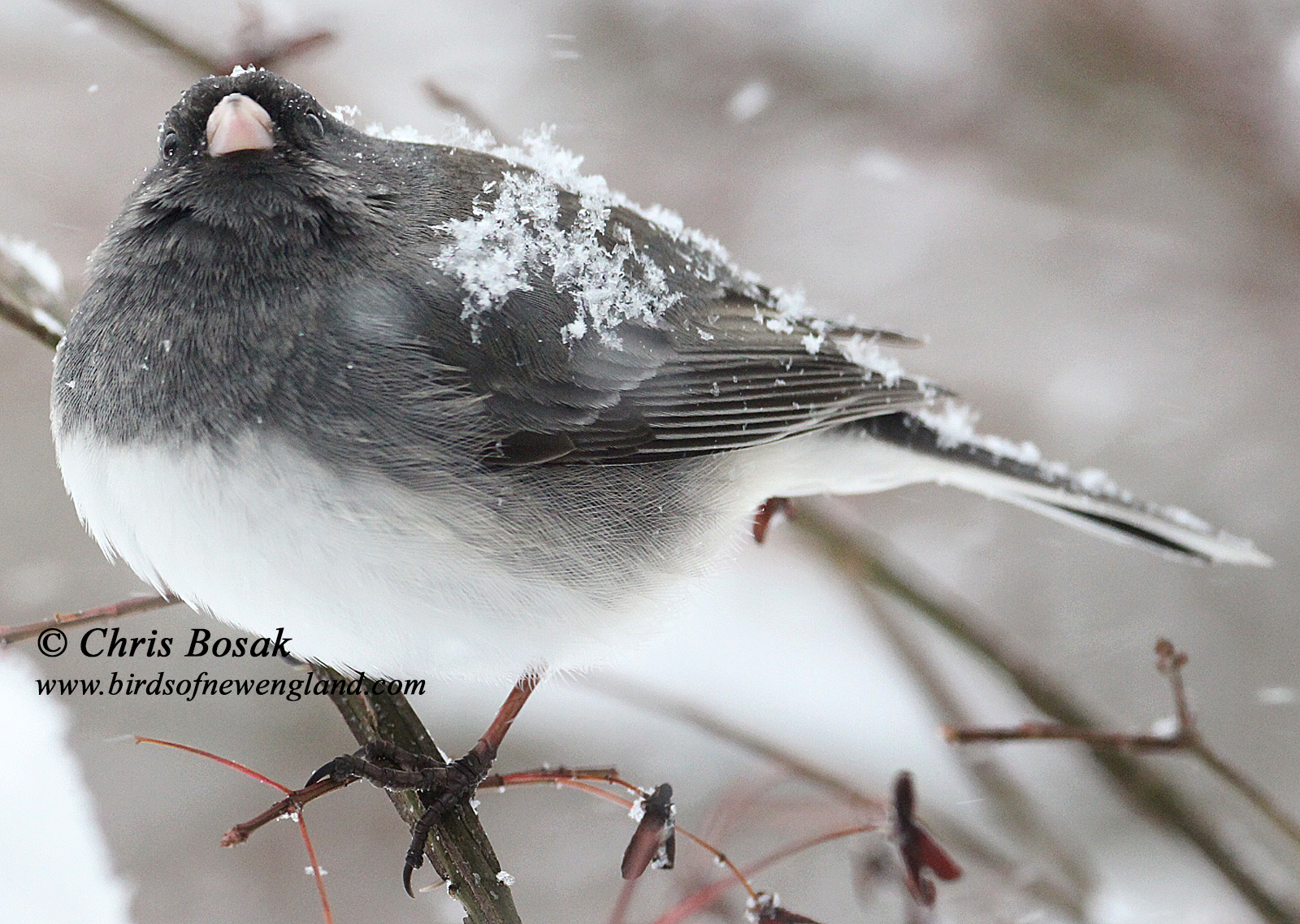
A dark-eyed junco visits a backyard in New England, January 2021.
The junco sat perfectly still in the bush as snow collected on his back. The snow came down hard and the wind whipped it around.
It was the wind that kept the junco motionless in the bush. When the wind offered a rare break, the junco darted to the nearby bird feeder to grab a few sunflower seeds.
He would fly back to his spot in the bush, having shaken off the snow that had collected on him. It didn’t take long for new snow to accumulate on his dark gray feathers.
Snowy days are among the best times to watch the feeders. It is interesting to see how little the elements affect the birds. Tiny birds such as chickadees can withstand extremely cold and windy conditions. They have a variety of mechanisms to protect them from the harsh elements. I have written about those in previous columns and may revisit that topic in the future.
But for now, I’m going to focus on this past storm that hit New England and recall the many birds that visited. The junco I mentioned before was one of more than a dozen juncos that were around that day. Other sparrows included white-throated, song and house. Many people don’t think of juncos as being a sparrow because of their different coloration, but they are indeed members of the sparrow family.
Both nuthatches came and went throughout the day. It is such a thrill to see the red-breasted nuthatches daily this winter. Not that I don’t appreciate the white-breasted nuthatches, but they are much more common and year-round birds where I am. The red-breasted nuthatch shows up only in random years.
Of course, chickadees and titmice were regular visitors. A pair of Carolina wrens entertained me as well. I always like watching their antics in the yard, especially when they make their unique chatter calls outside the window.
It was a heck of a snowstorm — the worst in several years where I am anyway. Will there be more opportunities this winter to watch the birds at the feeder in the snow? That remains to be seen, but I wouldn’t be surprised in the least. In fact, I would be very surprised if we didn’t have more snowfalls. This is New England, after all, and winter is a way of life here.
Photo by Chris Bosak
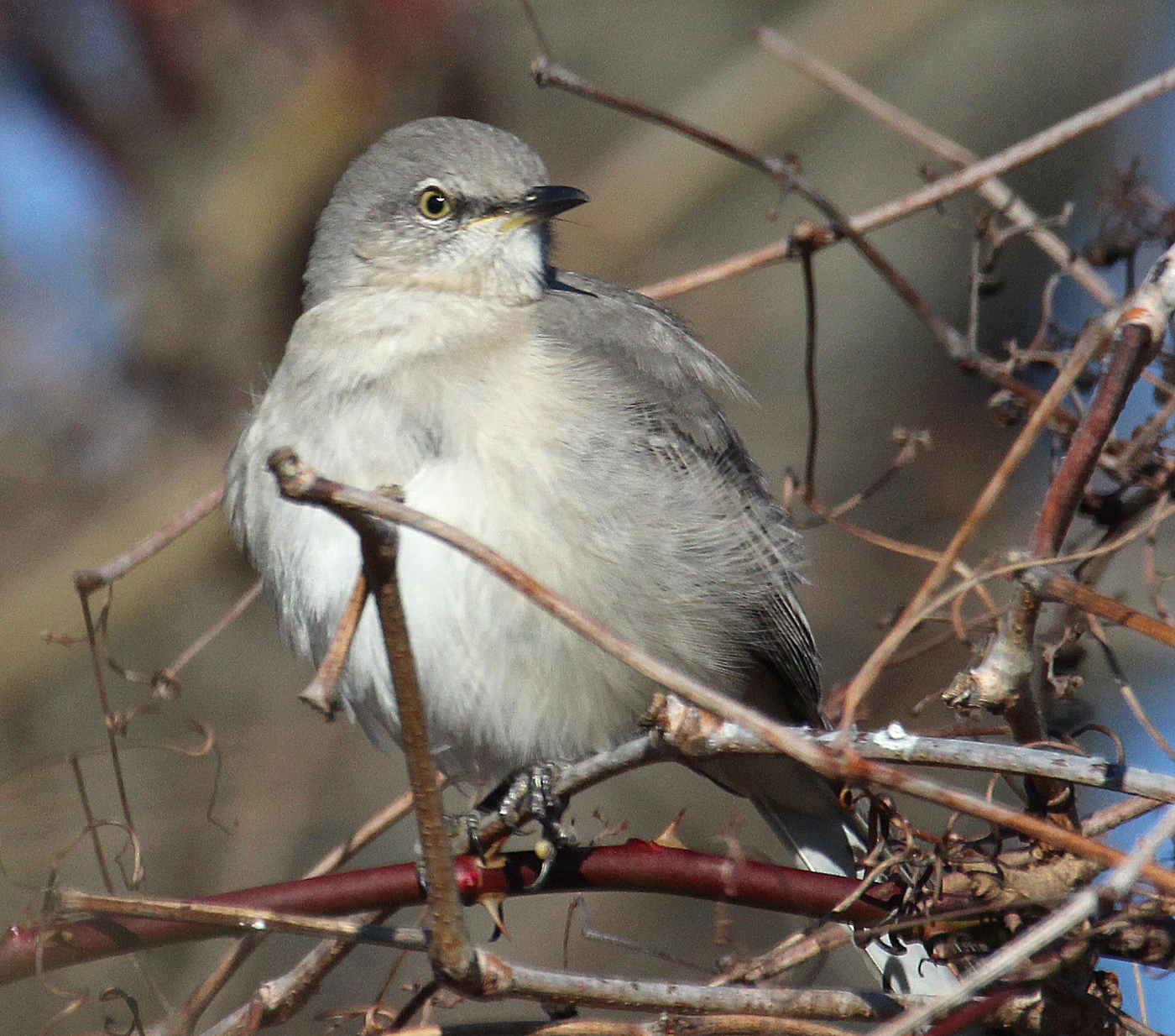
An eastern bluebird perches on a branch in New England, February 2020.Photo by Chris Bosak A Northern Mockingbird seen Sunday at Taylor Farm in Norwalk during the annual Christmas Bird Count.
Here’s a quiz for which there is no prize other than that good feeling you’ll get from knowing you got it right (if you can guess the answer.)
The question is: Why am I posting photos of these particular birds today? Leave a comment or send me an email with your guess. Have a Super day.







 Birds of New England.com