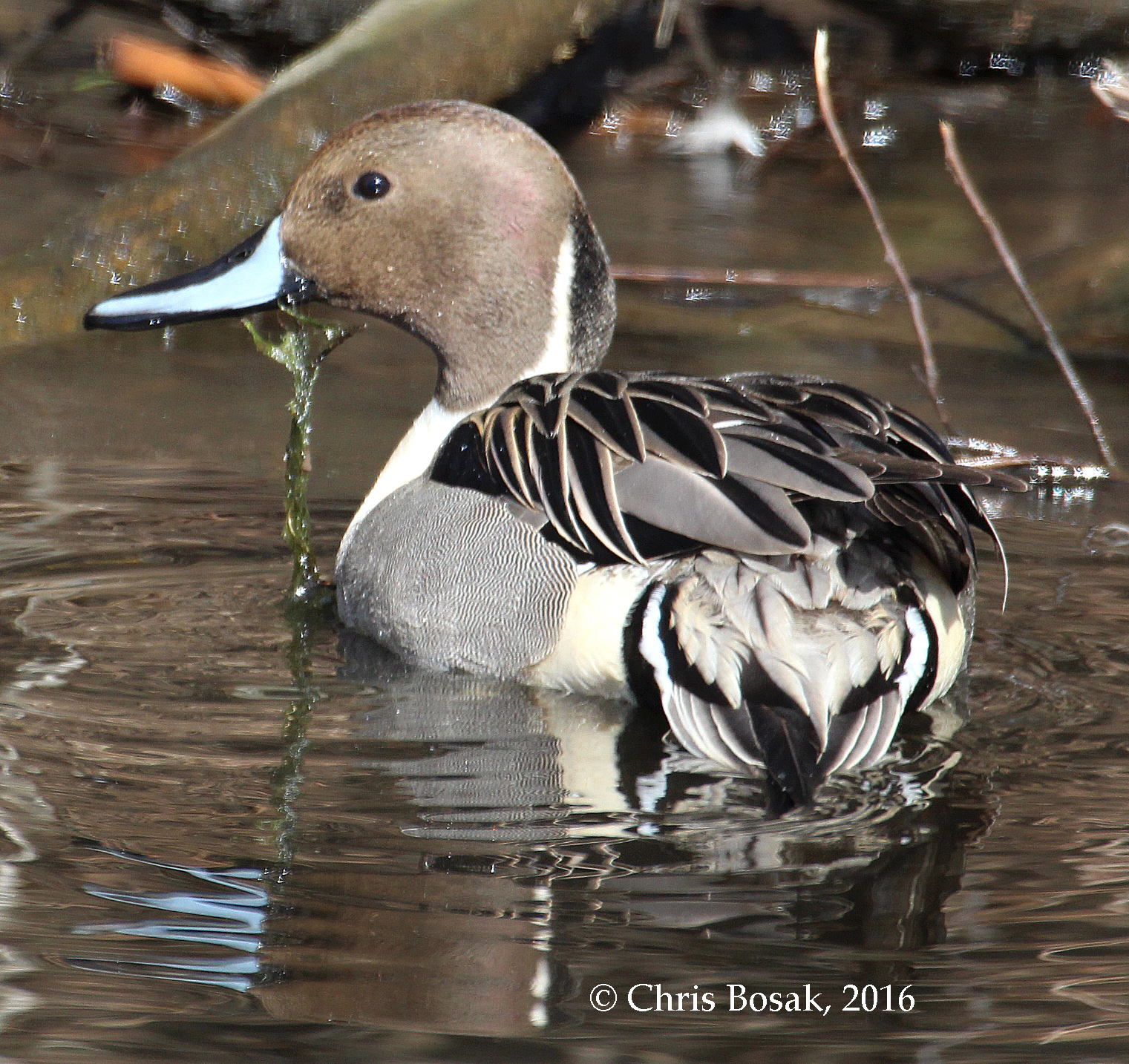
Photo by Chris Bosak A spotting scope will help birders pick out ducks, like this northern pintail drake.
Last week I offered some suggestions on donating to conservation organizations to help out these important groups during this season of giving. Many of these organizations are hurting this year due to the cancellation of so many revenue-producing programs.
This week, I’ll offer some tips on getting more traditional holiday gifts for your birder. A gift list for birdwatchers has to start with optics. Technically, no equipment is needed to go birdwatching. You can simply head to the woods or look out your window and scan for birds. Realistically, however, you need a few essentials, namely binoculars and a field guide. If you have a budding birdwatcher on your list, an inexpensive pair will likely suffice. More experienced birders will appreciate better-quality optics.
With optics, as with most things, you get what you pay for. A $15 pair of binoculars will serve you just fine, but a $150 pair will seem like a different world. A really great pair of binoculars will set you back hundreds of dollars, but they will last Continue reading →
Photo by Chris Bosak A red-breasted nuthatch visits to a New England bird-feeding station, December 2020.
Based on emails I have received and bird reports I have read, it has been a good fall/winter to see red-breasted nuthatches throughout the region. This one has been hanging around my house for the last several days. Have you had any luck seeing this small bird Continue reading →
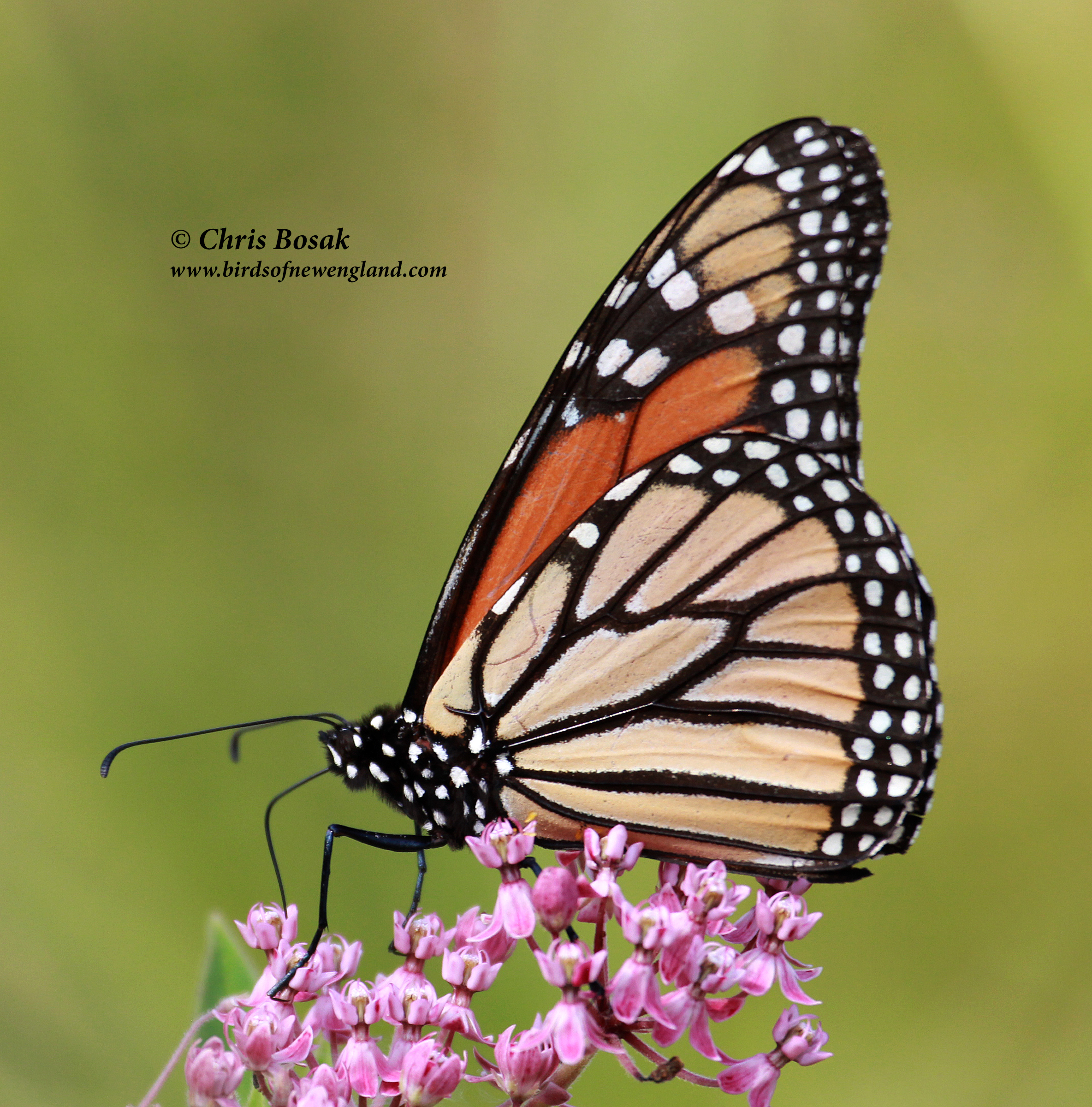
Photo by Chris Bosak Monarch, Brookfield, CT, summer 2019.
It’s the season of giving, and this year nonprofit organizations need your support more than ever.
COVID-19 changed everything. Aside from the horrendous physical toll it has taken on so many, businesses have closed and many people are struggling to make ends meet. Nonprofit organizations are not immune to this downturn. Those that specialize in land conservation or nature are just as impacted as the rest of them.
Many of these organizations rely on programming, events, summer camps or other activities that require people to be in close proximity to each other to help pay the bills. COVID put a hard stop on that. As a result, these organizations are out the revenue that these events would have brought in. Many have turned to virtual events, but they don’t have the Continue reading →
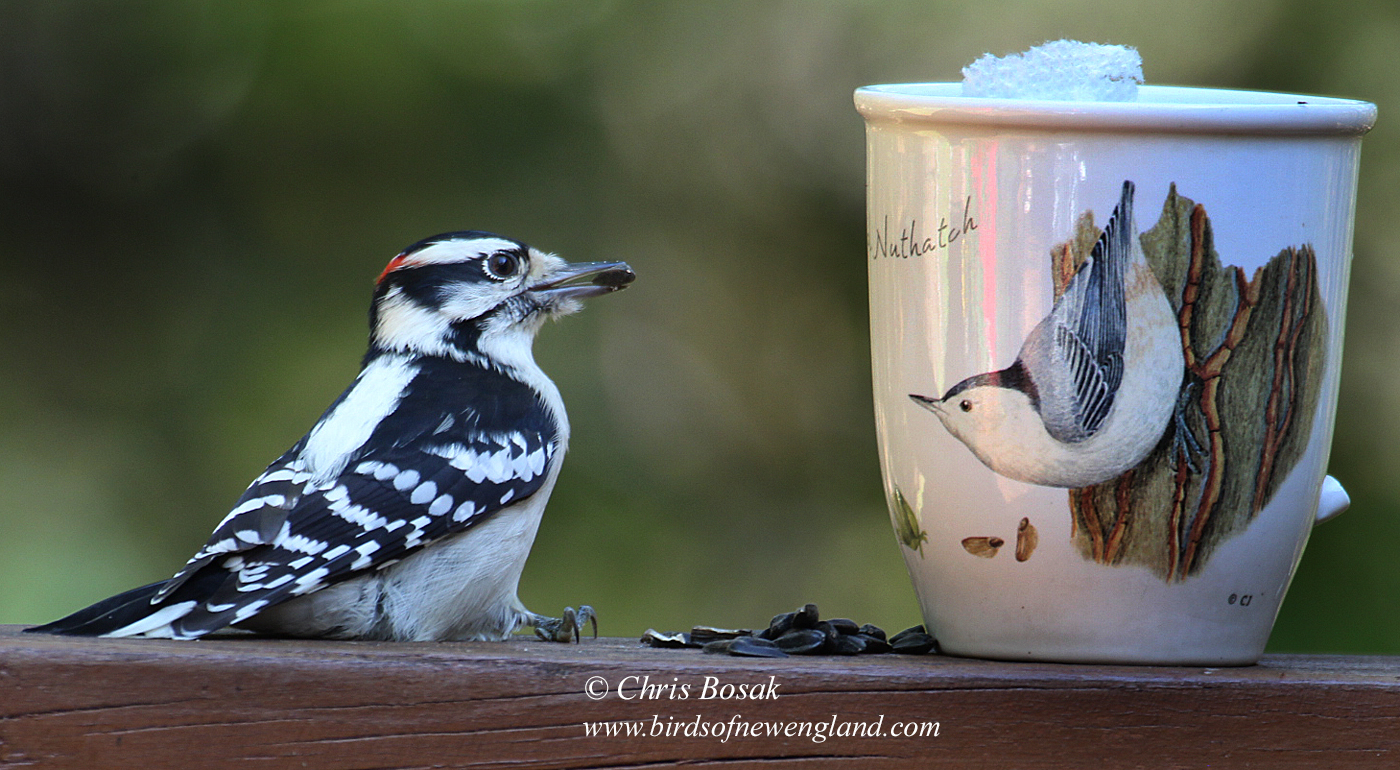
Photo by Chris Bosak
A downy woodpecker grabs a seed and looks at a coffee mug bearing a drawing of a white-breasted nuthatch in New England, fall 2020.
A fun bird photo to get you in the holiday spirit.
Photo by Chris Bosak A blue jay positions a second suet nugget from a platform feeder, Danbury, Conn., March 2018.
I received an interesting email the other day from a reader who witnessed a fascinating behavior at her bird feeder recently.
Margaret from East Alstead wrote about her blue jays stuffing several sunflower seeds in their mouths and bills before flying off. “A jay landed and proceeded to pick up seeds at a great rate. He left in a bit, but he really had my attention. When he returned I started counting. He took in 25 before departing. Subsequent counting came up with a similar number.”
Blue jays, like many other birds, will cache seeds and nuts for future use. Blue jays have an expandable pouch, or crop, in their esophagus that allows them to hold great Continue reading →
With Thanksgiving upon us, I am going to revisit my turkey fun facts column. I used to do this annually, but the content got staler than week-old stuffing. To add a little spice to this year’s column, I will start out by debunking a widely held belief about America’s favorite game bird.
If you do a web search for “turkey fun facts,” invariably the “fact” that Ben Franklin wanted the wild turkey to be our national bird instead of the bald eagle will come up. In full disclosure, an old column of mine may come up in that search as I’ve used it as fact before in my own writing. But is that really a fact? Evidently, no. I’m not a historian and I certainly wasn’t around in the 1700s to verify it myself, but I’ve come across several accounts that challenge the notion that Ben Franklin wanted the turkey to be our national symbol.
According to the articles, he actually wanted a Biblical scene to be our national symbol, not a bird at all. He did reference the bald eagle and wild turkey in some of his correspondences, but the references had nothing to do with our national symbol and some of the references were believed to be Continue reading →
Photo by Chris Bosak
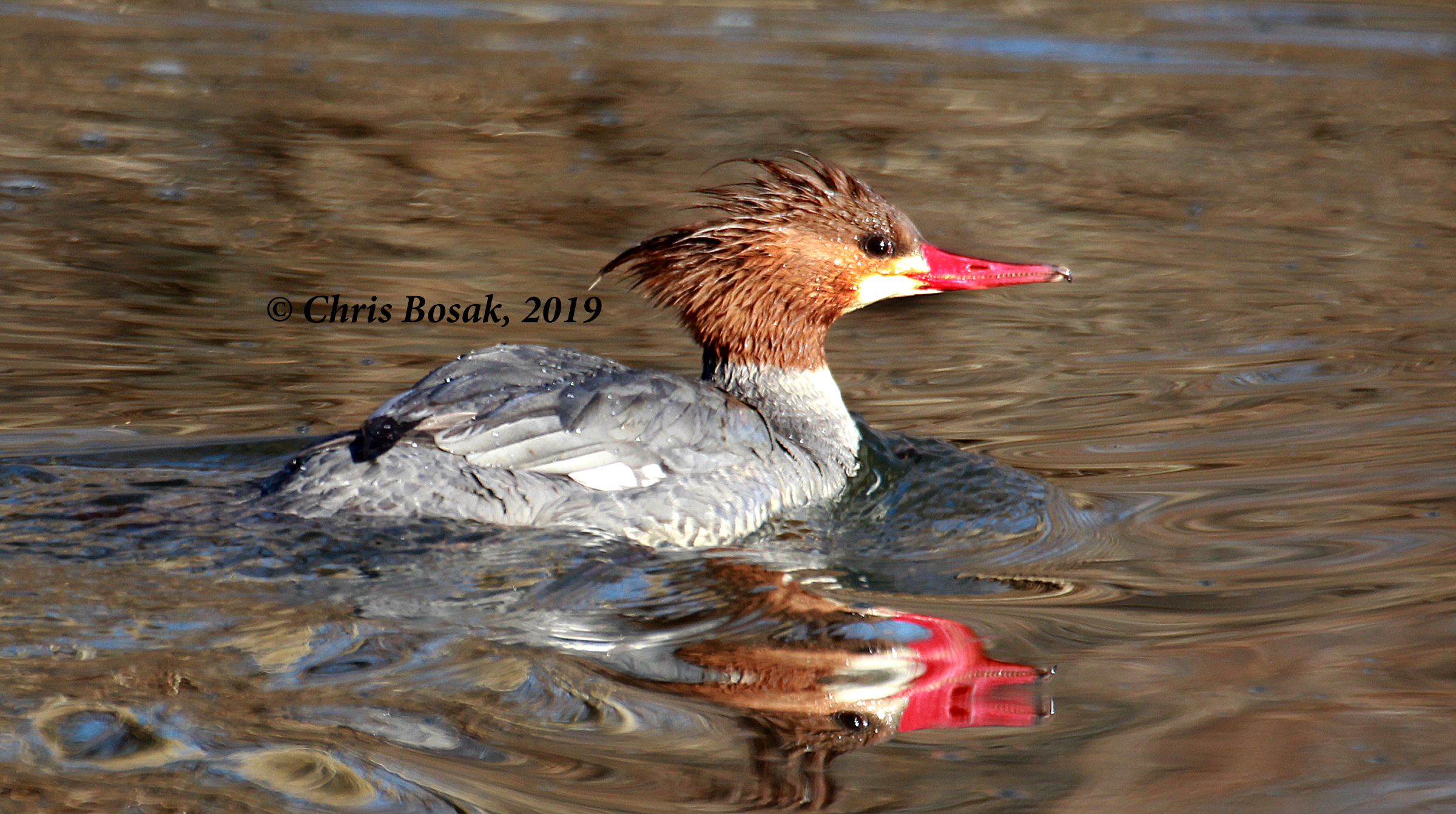
A female common merganser swims in a pond in Danbury, Conn., March 2019.
The recent stretch of beautiful weather aside, November can be a tough month for birdwatchers.
Frigid temperatures, cold rain and even some snow has many of us longing for the more pleasing fall weather of September and October. Most of the migrants, such as hawks and songbirds, are gone by November. The last of the leaves have fallen off the trees, except for a few hangers-on, erasing most of the color from the landscape. With most of the flowers long gone too, brownish-gray tree trunks and dark green foliage of evergreens dominate the landscape.
Birders, however, are eternal optimists and always find bright spots. For me, November means that the waterfowl migration has begun in earnest. It starts slowly in October and hits its stride in November. Ducks, as I have written for years, are my favorite type of bird to watch, so I never dread November.
My first duck migration sighting of the year came a few weeks ago when I spotted four male hooded mergansers swimming away from the shoreline as I approached a neighborhood pond. It was a beautiful thing to see and the first of many similar sightings that will occur for the next several months.
I received an email last week from Amy, who wrote that she had seen a flock of more than 70 common mergansers on Childs Bog in Harrisville.
Common mergansers often form huge flocks and may be seen throughout late fall and winter on our lakes and large ponds. Smaller flocks and individual mergansers are often seen as well, including on smaller ponds and rivers.
The merganser family, which also includes the red-breasted merganser, is an interesting family to study in New England. They are divers, meaning they dive underwater for their food as opposed to dabbling, and they have serrated bills to keep the food from slipping away as they surface.
Mergansers, especially common mergansers, are extremely wary, at least in my experience. Occasionally, I have come across a slightly less timid hooded merganser, but I have yet to find a common merganser that is not ultra-wary.
Of course, the merganser family just scratches the surface of all the ducks we will see passing through New England for the next several months. Bodies of fresh water will attract a different variety than salt water. There are some species that will readily go to fresh, brackish or salt water, but many species have a preference. Loons are interesting in that they breed on large freshwater bodies of water but are mostly found on salt or brackish water in the winter. Long Island Sound off the coast of Rhode Island and Connecticut is an excellent place to find common and red-throated loons in the winter. They are not the flashy birds that they are in the summer but rather a much more dull-colored version of themselves. They are still a thrill to see regardless of what plumage they are sporting.
With the duck season just picking up pace now, there will be plenty to write about in the next several months. I look forward to sharing my experiences. As always, feel free to drop me a line and let me know what you are seeing as well.
I heard from Mark from avibirds.com and he asked if I’d be interested in sharing his video on house sparrows. Of course, I would. It’s a short and informative video on one of our most common and overlooked birds. Check out www.avibirds.com for other videos, photos and bird profiles.




 Birds of New England.com