A heartening moose sighting

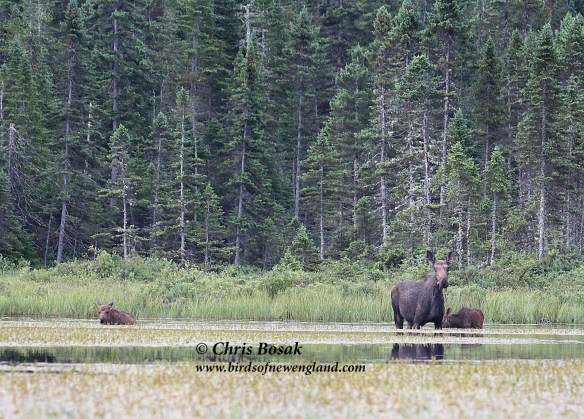
Photo by Chris Bosak A cow moose and two calves eat aquatic vegetation from a pond in northern New Hampshire, July 2020.

People come to the North Country for a lot of reasons: fishing, hunting, endless ATV and snowmobile trails, wildlife watching, etc. Those who are here wildlife watching (and I think I can speak for many people) have moose as their primary target. Unfortunately, the moose population throughout New England has declined dramatically over the last several years. Biologists blame most of the decline on winter ticks, which are thriving in the warmer winters and wreaking havoc on moose.

A fair number of moose remain, which is the good news, but the decline makes it that much harder to find them. Driving along Route 3 in Pittsburg, N.H., for instance, used to be a guarantee for moose sightings. Cars would line up in the evening around the salt licks and wait for the moose to show up. The salt licks are no longer and the remaining moose are scattered throughout the vast forest. It now takes a lot more skill, knowledge and luck to find a moose in northern New Hampshire. Mostly luck.

I was lucky and fortunate enough the other morning to find a moose — three moose, actually, as it was a cow with twin calves. I launched the canoe on a popular pond (fen, really) in Pittsburg, N.H, Monday morning, waited out a heavy rainfall under the cover of evergreens, relaunched after the rain, paddled around a corner and saw the three moose. They were the first moose I had seen in years and I stopped the canoe a good distance from them and admired the scene. I was beyond thrilled to see the moose, of course, but I was equally happy to see the twins. I hope they both grow up to be healthy adults and do not succumb to winter ticks like so many other moose. I hope they are a sign that things are turning around for New England’s moose population. That’s probably being naive, but I can always hope.

That’s been my only moose sighting on this trip north so far. I’ll keep searching.

Photo by Chris Bosak A cow moose and a calf eat aquatic vegetation from a pond in northern New Hampshire, July 2020.

Back to the North Country

Photo by Chris Bosak A common loon swims in a lake in northern New Hampshire, July 2020.
Photo by Chris Bosak A bald eagle looks over a lake in northern New Hampshire, July 2020.

With work pleading with employees to use vacation time and half (or more) of the country pretty sketchy at the moment, I did what I’ve been wanting to do for years: take another summer vacation to northern New England — specifically northern New Hampshire and the boreal forest.

The trip started in Errol on Lake Umbagog and now continues in Pittsburg, which borders Canada. Here are a few photos I’ve managed so far. More to come — of course.

The main target is moose. New England’s largest mammal, however, is having a rough go of it of late. Here’s why.

Photo by Chris Bosak A ruffed grouse stands near a field in northern New England, July 2020.
Photo by Chris Bosak Pitcher plant at pond in northern New Hampshire, July 2020.
Photo by Chris Bosak A common loon swims in a lake in northern New Hampshire, July 2020.

For the Birds: Complain and they will come

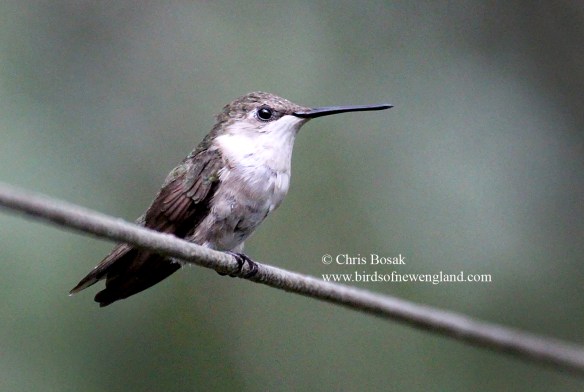
Photo by Chris Bosak A female ruby-throated hummingbird visits a flower in New England, July 2020.

Here’s the latest For the Birds column, which runs weekly in several New England newspapers …

Apparently, all I had to do to get my hummingbirds back this summer was complain to my neighbor.

I had had frequent visits from both male and female hummingbirds early in the spring. The daily visits continued for a few weeks and then stopped abruptly. Last year, and the year before that, the visits never stopped and I saw them daily until the fall.

This year, June was largely a hummingbird-free month in my backyard. 

During a walk around the neighborhood last week, I noticed a neighbor had bird feeders on her deck so I stopped to chat about what birds she had been seeing. She had a few of the usual suspects but didn’t mention hummingbirds. 

I inquired about the tiny birds and she said: “Yes. I see them every day.”

“That’s great,” I replied. “I haven’t seen mine in a while.”

I went on to bore her with the details of my previous years’ good fortune. She feigned interest, we chatted a little more and then said goodbye. 

The birding gods must have heard me griping and took pity on me because, the very next day, a female hummingbird showed up at my feeder. She has been back every day since, too. It is very territorial as I have seen her chase away other hummingbirds. Another female and a male have started showing up now and then, too, when the queen is away.

In previous years, a female has dominated my feeders throughout the summer so I wonder if she is the same bird I have been seeing for years. At any rate, it is nice to see the hummingbirds back in the yard. It is also nice to know there are several of them, even if I get only brief glimpses of the other ones before they are chased away.

I have a few feeders and several flowers to lure the hummingbirds. She prefers the feeders, but on occasion will sip from the flowers. This year, most of my flowers are red salvia, an annual with tubular shaped blooms. In the past, I’ve seen hummingbirds visit my coneflower and even sunflowers.

Complaining usually doesn’t solve problems and often makes them worse, but in this case, things worked out pretty well. I plan to take a trip to northern New England in a few weeks in the hopes of finding some of New England’s disappearing moose. Maybe I should proactively start complaining now in the hopes of getting the same results for that trip?

Ruby-throated hummingbird on salvia

Photo by Chris Bosak A female ruby-throated hummingbird visits a flower in New England, July 2020. Merganser Lake.

A Day on Merganser Lake

A random hummingbird photo never hurt anyone.

Chipping sparrow keeps watch

Photo by Chris Bosak A chipping sparrow perches on a garden stake in New England, July 2020. Merganser Lake.

A Day on Merganser Lake

This chipping sparrow likes to land on one of my garden stakes that supports my snow peas. If only it and its friends would take care of the caterpillars ravaging my Brussels sprouts.

Catbirds of summer

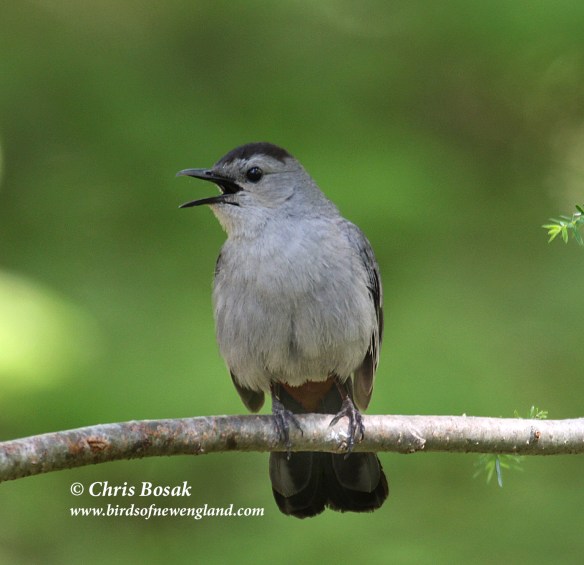
Photo by Chris Bosak A gray catbird perches on a branch in New England, July 2020. Merganser Lake.

A Day on Merganser Lake

What would summer be without catbirds? A lot less interesting, that’s for sure.

The bird above is doing its cat-like call. The bottom photo shows the rusty spot under the tail, which is not often seen.

Photo by Chris Bosak A gray catbird perches on a branch in New England, July 2020. Merganser Lake.

For the Birds: Grosbeaks delay closing

Photo by Chris Bosak A rose-breasted grosbeak perches on a branch in New England, June 2020. Merganser Lake.

So much for taking a break from feeding the birds. 

I mentioned in last week’s column that I had taken down my feeders for the summer as my visits had dwindled to a few species. I also mentioned that I continued to maintain a large platform feeder on my deck to keep those few birds happy. Well, that platform feeder is busier than ever. 

One day last week, while working from home and using the outdoor table on my deck as my office for the day, I watched as chickadees, nuthatches, titmice, catbirds, cardinals, blue jays, house finches, downy woodpeckers and red-bellied woodpeckers helped themselves to the offerings. 

The feeder, which is nothing more than a large, flat board I found in the basement, is big enough to hold a variety of foods: sunflower seeds, mealworms, suet nuggets and thistle seeds. I nailed a few small branches around the edge of the board to keep the seeds in place during windy days.

I was already pleasantly surprised by the variety of birds that were coming when a male rose-breasted grosbeak landed on the board. Thankfully, I had the foresight to bring the camera out to the table with me. I was quite sure the strikingly beautiful bird would take off as soon as I lifted my arms to grab the camera off the table as I was sitting only 9 or 10 feet away from the feeder. 

Slowly I moved my arms and watched as the black-and-white bird with a bright red triangular bib looked back at me. I was relieved when the bird looked away and started grabbing sunflower seeds. Still, I couldn’t risk double-checking my camera settings or autofocus point and I started photographing away. The settings were fine, luckily, and I got some nice, full-frame shots of the handsome songbird.

What also made the day special was that many of the birds that visited, especially the chickadees, titmice and downy woodpeckers, were first-year birds still gaining their adult plumage. The young woodpeckers usually arrived with a parent and watched and learned. It was amazing to think that some of these birds were born only a few weeks prior. I hope they visit for years to come and can avoid the many dangers birds face as they grow.

So I guess my summer feeding break isn’t going to pan out, which is fine with me. I’ll continue to enjoy the show as long as it lasts.

Photo by Chris Bosak A Rose-breasted Grosbeak visits a homemade platform feeder in Danbury, Conn., on May 6, 2016.

First hummingbird shots of the year

Photo by Chris Bosak A female ruby-throated hummingbird visits a flower in New England, July 2020. Merganser Lake.

A Day on Merganser Lake

Not sure what took so long, but here’s my first hummingbird post of the summer.

Photo by Chris Bosak A female ruby-throated hummingbird visits a flower in New England, July 2020.

Insect close-up

Photo by Chris Bosak A grasshopper stands on a leaf in New England, July 2020. Merganser Lake.

A Day on Merganser Lake

This insect and I had a fun battle of wits the other night. I was trying to get a macro photo of it, which requires getting very close to the subject. Every time I got close, it turned to the face the other direction. It didn’t fly or jump or crawl away, just turned its body to mess up my angle. The bug clearly underestimated my persistence as I stuck with it and managed a few decent shots.

I’m not sure what this insect is. I’m guessing some sort of grasshopper or cricket, but I’m certainly no expert on bugs. Anybody know for sure?

Photo by Chris Bosak A grasshopper stands on a leaf in New England, July 2020. Merganser Lake.

More rose-breasted grosbeak close-ups

Photo by Chris Bosak A rose-breasted grosbeak perches on a branch in New England, June 2020. Merganser Lake.

A Day on Merganser Lake

I posted one close-up shot of a rose-breasted grosbeak last week, but of course, I have more shots. So here’s a couple more.

Photo by Chris Bosak A rose-breasted grosbeak perches on a branch in New England, June 2020. Merganser Lake.