
A Day on Merganser Lake
I wondered to myself, would a bird land on an axe if I left it in the backyard. A gray catbird answered my question a few minutes later. Gotta love those catbirds.

A Day on Merganser Lake
I wondered to myself, would a bird land on an axe if I left it in the backyard. A gray catbird answered my question a few minutes later. Gotta love those catbirds.
A Day on Merganser Lake
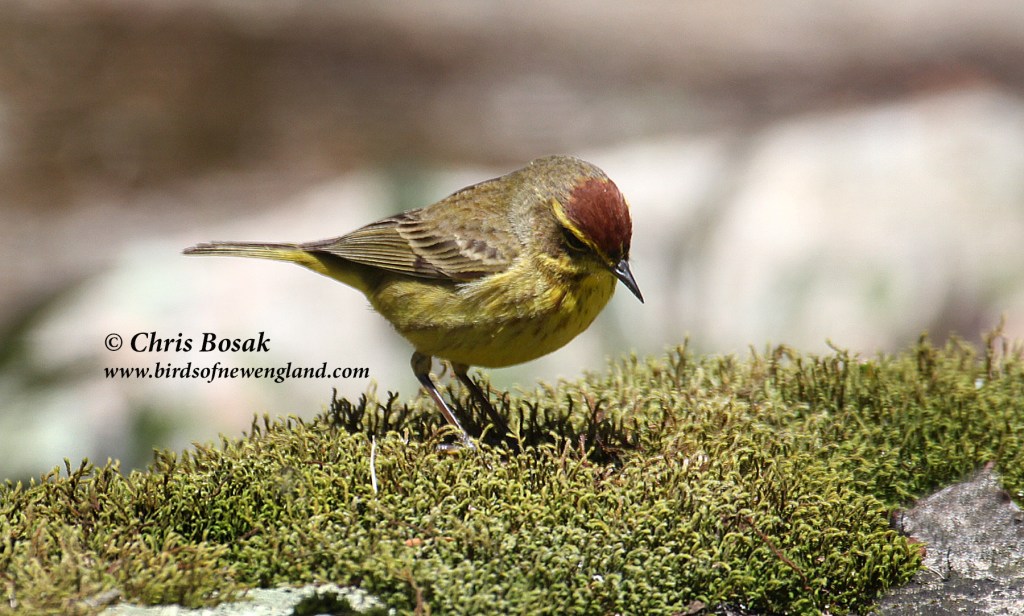
Warbler season, sadly, is done for the year. The warblers that remain are the nesters, which is exciting in its own right. Here’s a throwback photo of a palm warbler I saw back in April. Palm warblers are one of the first warblers to arrive in New England each spring.
A Day on Merganser Lake
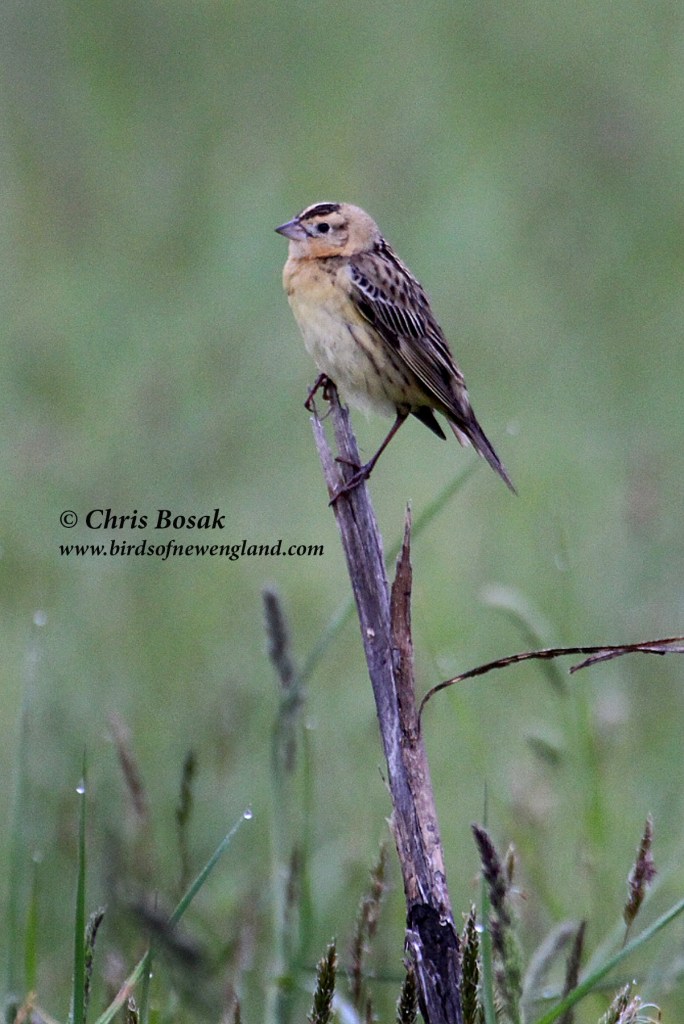
Yesterday, I showed a male and female American redstart as an example of sexual dimorphism (male and female look different.) Today, here’s the bobolink, a beloved bird of our fields. Another good example of dimorphism. Click here for yesterday’s post.
Here’s the male …


A Day on Merganser Lake
Like most warblers, American redstarts are dimorphic. (From Wikipedia: Sexual dimorphism is the condition where the two sexes of the same species exhibit different characteristics beyond the differences in their sexual organs.) In other words, males and females look different from each other. Females are usually duller in color so as to not attract the attention of predators. Cardinals are one of the most obvious examples. Chickadees and many other birds are sexually monomorphic. I got these shots of male and female redstarts yesterday and those terms came to mind.
Here’s the male …

A Day on Merganser Lake
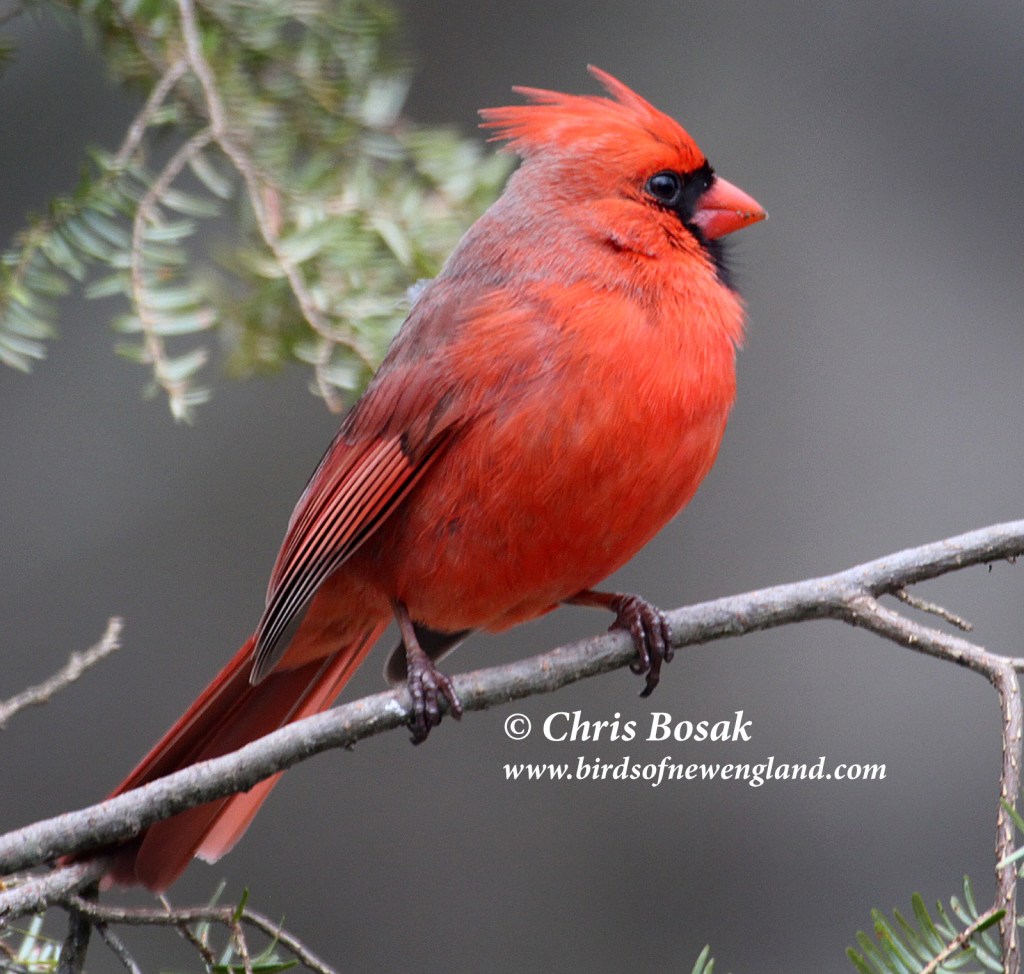
Can’t go wrong with a random cardinal photo. Happy last day of May!

A Day on Merganser Lake
They aren’t birds, but these two young white-tailed deer bucks made for a nice photo opp during a recent walk in the woods.
A Day on Merganser Lake
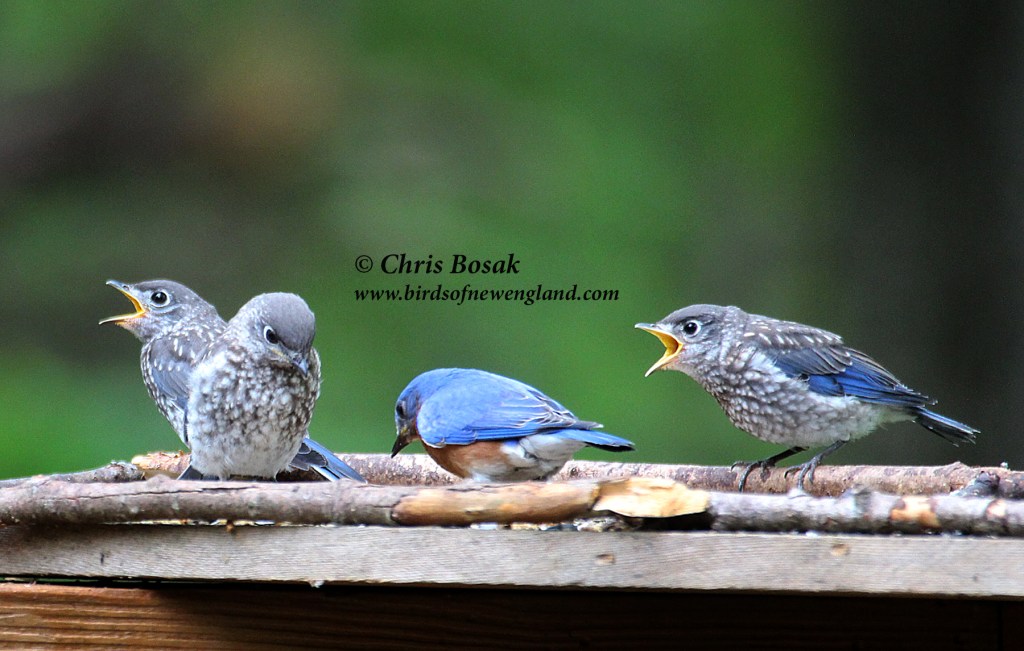
With two teenage boys I can relate to the photo above. I originally thought the bluebird pair that has been coming around since February had only one youngster. Then, all these birds showed up a few hours later. Click here for yesterday’s post, which provides more context.


A Day on Merganser Lake
I have been seeing an eastern bluebird pair at my feeders daily since February. I’m in a fairly wooded area and there are no open fields (bluebird’s preferred nesting area) in the neighborhood. I assumed it was a young pair that wasn’t breeding this year as it was well into the nesting season and they were still visiting daily.
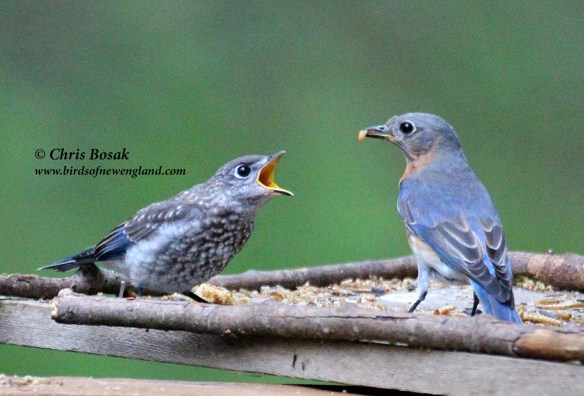
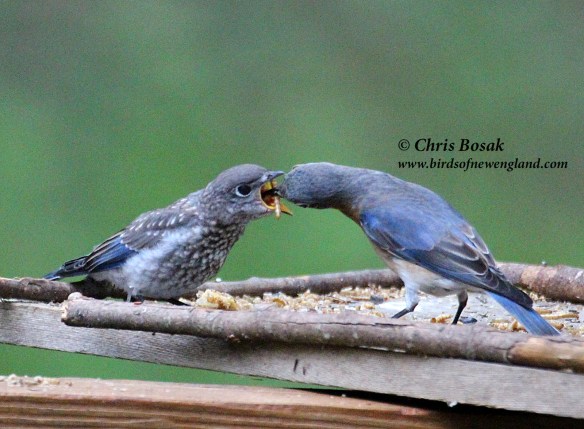
To my pleasant surprise, yesterday the pair showed up with a youngster. It is a noisy and demanding little bluebird. The parents are dutiful in feeding it. I still don’t know exactly where they nested but I’m happy to still see them every day, especially with a youngster in tow. I’ve also seen them in the woods behind my house catching natural prey so, thankfully, they are not relying solely on my mealworm handouts. It’s also nice to see that it is indeed a bluebird youngster and not a cowbird as I’ve seen plenty of those around this spring.
Here are a few more shots of the family.


A Day on Merganser Lake
The common yellowthroat is one of the more common warblers we see throughout New England. Thankfully, we get to see them for several months out of the year as they nest throughout the region. They are often heard singing their “witchety-witchety-witchety” song, but it is usually tough to find them in the thick brush in which they skulk.
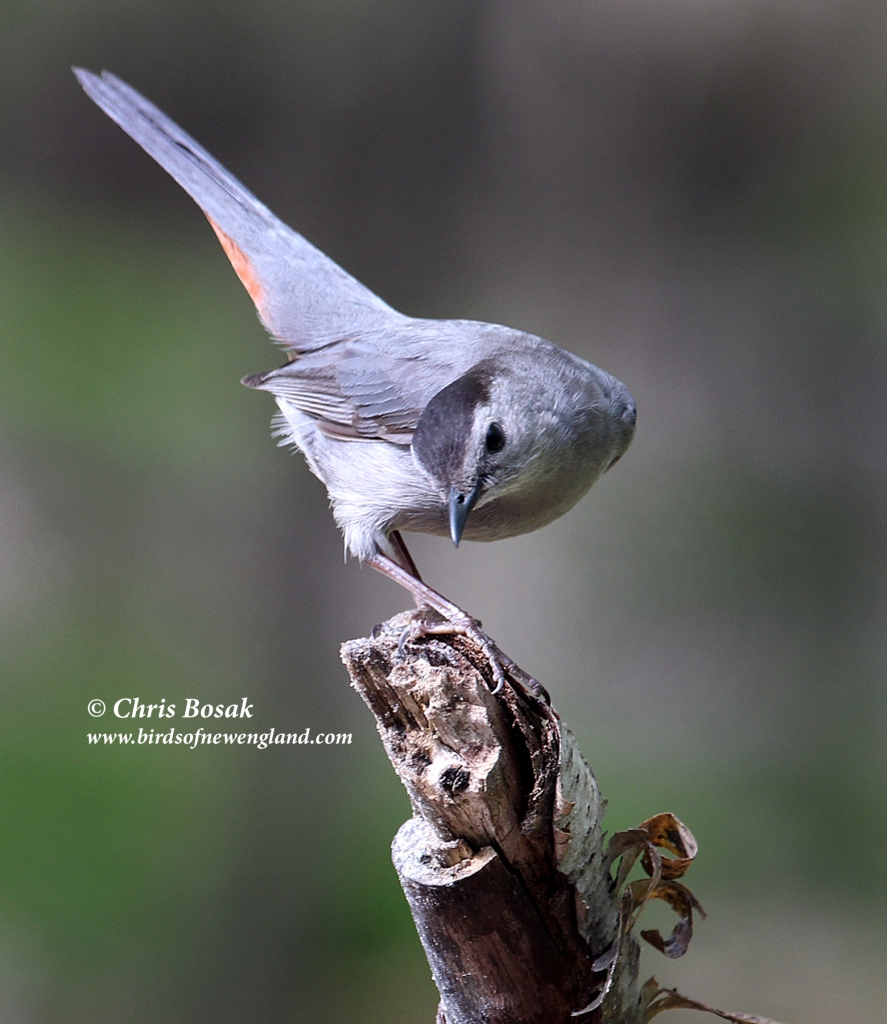
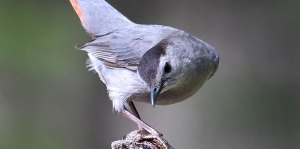
This gray catbird struck a rather interesting pose the other day. Catbirds are one of the great characters of the bird world.
 Birds of New England.com