For the Birds: Keep an eye out for kinglets

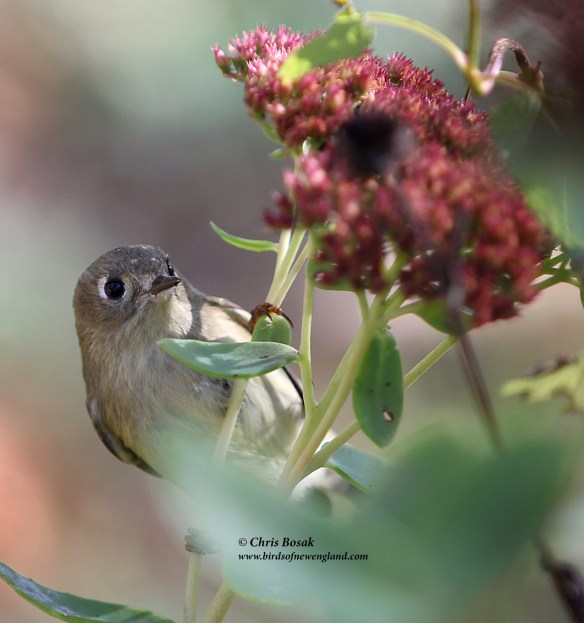
Photo by Chris Bosak A ruby-crowned kinglet inspects sedum for food in New England, fall 2019.

I’ve seen them in the deep woods, in my flower garden, in suburban parks and even at a sandy beach.

There are no excuses for missing out on kinglets during the fall migration. That is, unless you aren’t outside enough looking for them, which is unacceptable.

Last week, I wrote about the tiny kinglets being tough creatures able to withstand extremely low temperatures. This week, I’ll take a closer look at kinglets, a good reliable sighting throughout New England during migration periods.

We have two types of kinglets in New England: the ruby-crowned kinglet and the golden-crowned kinglet. Don’t let the names fool you, the color of the crown is not a good way to distinguish the two species in the field. First of all, you hardly ever see the crowns in the first place — especially that of the ruby-crowned kinglet — and secondly, the colors don’t Continue reading
Holiday cards for sale

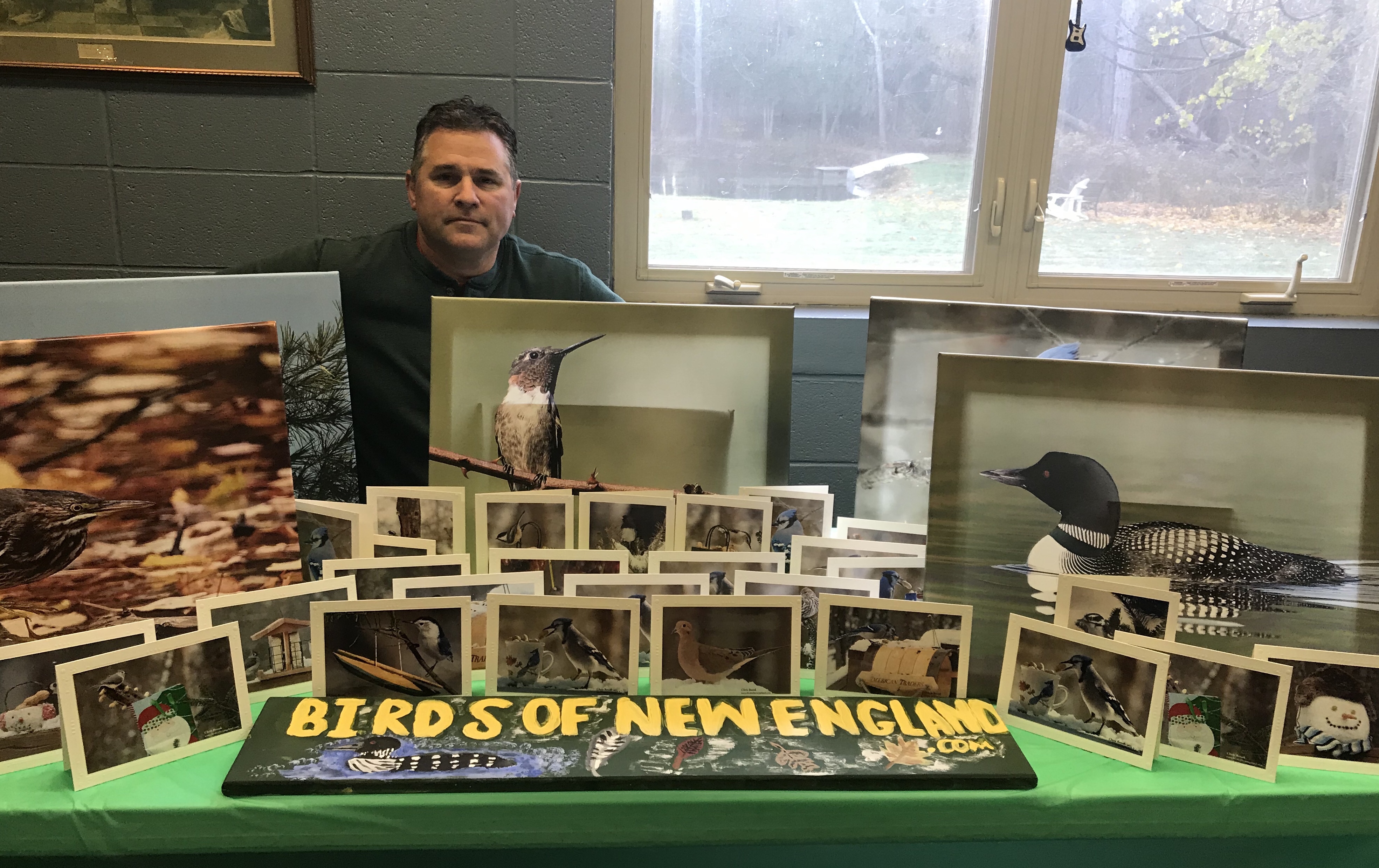
Selling some bird wares at Christ the King Lutheran Church’s Tag and Craft Fair in Newtown, Connecticut (Saturday, November 9). Stop by if you’re in the neighborhood.

I’ll offer some cards for sale on this site soon – as soon as I figure out how to do it!

For the Birds: Many sturdy birds from which to choose

Here is the latest For the Birds column, which runs in several New England newspapers …

Photo by Chris Bosak
A ruby-crowned kinglet inspects sedum for food in New England, fall 2019.

I was recently interviewed about birds and bird population trends by radio show host John McGauley of WKBK.

John had a lot of interesting questions and, following the interview, one in particular stood out in my mind. He asked: “What are the more sturdy birds? Are there any that are especially hardy and durable?”

My on-the-spot answer was hawks and other large raptors. While hawks are indeed large and strong and fierce, I wish I had would have responded differently. All birds, large and small, are hardy and durable. It would have sounded like a wishy-washy answer, but I could have explained it.

Ruby-throated hummingbirds, weighing in at about three Continue reading

A few more nuthatch shots

Photo by Chris Bosak A white-breasted nuthatch grabs a seed from a feeder in New England, fall 2019.

Here are two more shots of the nuthatch taken with the borrowed Continue reading

A nuthatch and a borrowed camera lens

Photo by Chris Bosak A white-breasted nuthatch perches on a branch in New England, fall 2019.

My friend Ellen was excited to show me her new Canan f2.8 lens with a range of 70 to 200mm. She asked if I wanted to borrow it for a week and I said yes (of course). With 200mm as the maximum zoom, its capability as a wildlife photography lens is limited, but still very useful for some circumstances. Many of the days were overcast and that made the 2.8 aperture very handy. It is also a high-quality lens so even subjects that are a bit distant will still be sharp.

I experimented with the lens mostly in the backyard where I know I have a steady supply of subjects near the birdfeeders. White-breasted nuthatches turned out to be the best subjects as they perched in a tree close to the feeders before coming to get a seed. Here are some of the results. Continue reading

How do you like them apples?

Photo by Chris Bosak A blue jay checks out a box for peanuts in New England, fall 2019.

This blue jay apparently does, especially since they are really peanuts.

A brief return to radio to talk about, what else?, birds

Photo by Chris Bosak
Common loons swim at May Pond in Pillsbury State Park in New Hampshire in June 2019.

Radio people often joke that they prefer that medium over television because they “have a face made for radio.” Well, after having my own radio show for a few years, I can say that I have a “voice made for newspapers.” (Hence, my long career in newspaper writing and editing.)

But, despite that, I recently appeared as a guest on John McGauley’s entertaining Friday radio show on WKBK in Keene, N.H. John reads my column in The Keene Sentinel and was intrigued by an article I had written about a bird population study. He asked if I’d do a quick interview to explain it further. Of course, I obliged and was happy to do so.

I hadn’t been on the radio since I pulled the plug on my Bird Calls Radio show six years ago (or thereabouts). John had some great questions and my answers were fairly intelligent (at least I think so) and delivered in my typical better-off-in-newspapers voice with lots of ums and ahs. So, if you’re a glutton for punishment, click on the link below. I’m on for about the first 20 minutes.

Click here for the audio.

Thanks to John and WKBK for the opportunity.

Photo by Chris Bosak
Common loons swim at May Pond in Pillsbury State Park in New Hampshire in June 2019.

For the Birds: Ducks faring well in midst of bad news

Photo by Chris Bosak
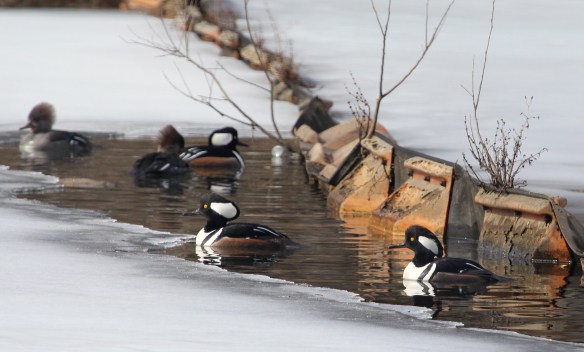
Hooded mergansers in New England.

I have written extensively about the recent study that shows bird populations in North America have dropped by 29 percent over the last 50 years. While the news overall is concerning, the study did reveal some bright spots.

One piece of good news is that ducks appear to be increasing. Waterfowl are a favorite bird type of mine so this news was heartening. Give me a cool late autumn day, a large pond, a spotting scope and ducks swimming all around, and I’m as happy as a lark.

The duck population increase, in large part, is credited to wetland conservation efforts, much of which was and continues to be paid for by hunters. While this has worked exceptionally well for ducks, it hasn’t worked out quite as well for rails and other marsh birds. There is still work to be done in that area.

But let’s stay positive for this column. Preserving wetlands has led to increased duck numbers. No one can say more ducks is a bad thing.

It also stresses the importance of land conservation as a powerful tool in preserving our birds and other animals. While hunters, through the purchase of stamps and other fees, have contributed mightily to this effort, conserving land is something easily done by anyone. Support your local land trust or other conservation organization Continue reading

Fall scenics on a dreary day

Photo by Chris Bosak
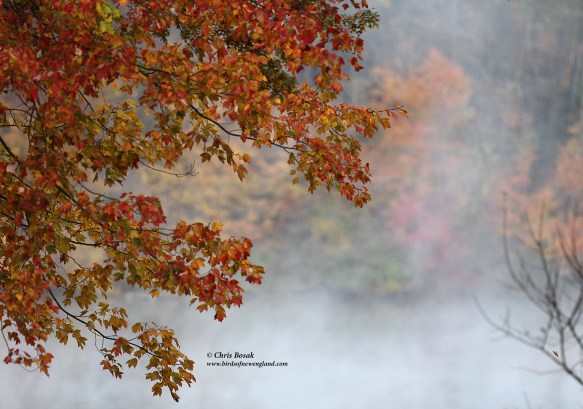
Fall colors of New England, fall 2019.

There’s nothing like fall in New England. No argument there, I’m sure. So, even though today is rainy and dreary, here are a few shots to celebrate the season.

Photo by Chris Bosak
Fall colors of New England, fall 2019.
Photo by Chris Bosak Fall colors of New England, fall 2019.

For the Birds: Vultures add to spooky scene

Photo by Chris Bosak
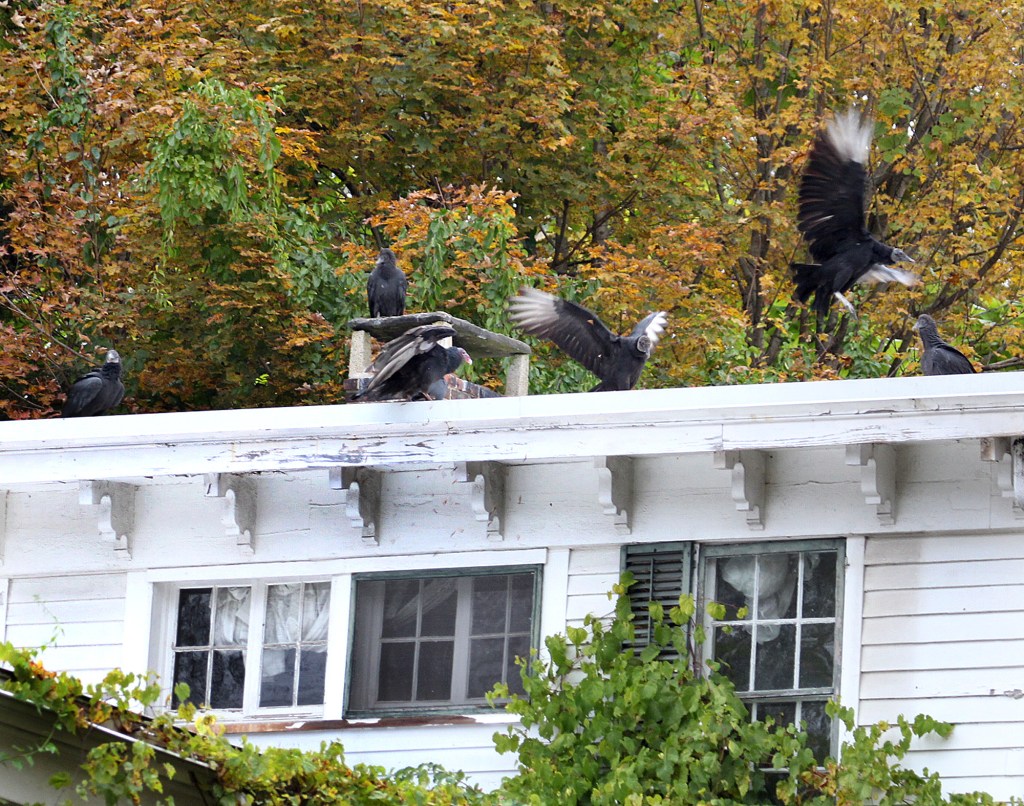
Turkey and black vultures perch on the roof of a house in New England, fall 2019.

Savanna and I reached the overlook and watched a bald eagle soaring above a sizable flock of Canada geese. The geese knew they were too big to be a target for the huge bird of prey so they went about their day as usual on the river.

After a few minutes, the bald eagle landed on a half-dead tree along the shoreline and settled in on its perch overlooking the slightly rippling water. Before we left the spot, a gang of blue jays flushed a sharp-shinned hawk out of an evergreen. We tried to follow the small hawk’s path but quickly lost sight of it among the trees growing up from the side of the cliff.

We returned to the car and pulled out of the parking lot, listening as a Carolina wren and late-staying gray catbird sang from the nearby brush.

Then the outing took a creepy turn.

We soon passed a sign for a haunted village in another park nearby. It was midday and the haunted village wasn’t going to open for another week, but we decided Continue reading