Photo by Chris Bosak An American goldfinch perches on a coneflower head, Nov. 2018.
Since I have some late-blooming coneflower thanks to a clearance sale at a nearby big-box hardware store, I may as well milk the blooms when it comes to photographing birds. Here’s a shot I took today (Tuesday, Nov. 13, 2018) of an American goldfinch eating seeds from one of the dead heads.
More shots featuring the flowers coming soon, I’m sure. Best $2 flowers I ever bought!
Two weeks ago I had a post on this site about mushrooms and last week I made a few posts during my trip to Pittsburg, N.H.
By way of revisiting both of those topics, here’s a photo of interesting looking fungi we spotted during a walk through the boreal forest. There’s so much cool stuff to see out there — whether it’s southern, central or northern New England — but you have to get out there to see it.
Photo by Chris Bosak
Tufted titmice gather near a container with coneflower during November 2018.
Scenes like this are quickly fading as winter starts to creep into New England. These coneflowers have lingered into late fall because I purchased them at a box hardware store on clearance a few weeks ago. I’m hoping the flowers return next year, but until then I’m enjoying their later-than-usual blooms. The birds are, too, of course.
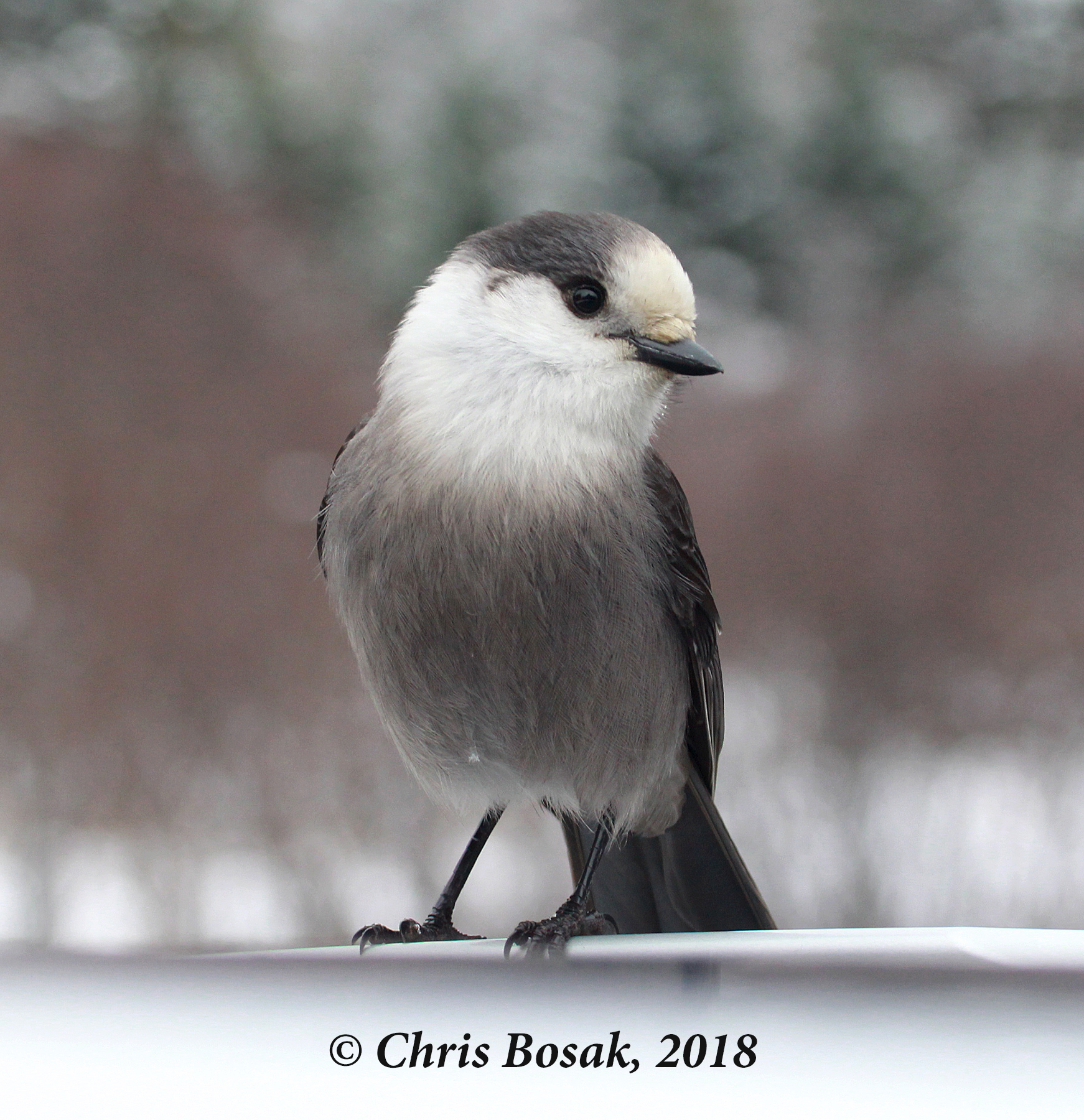
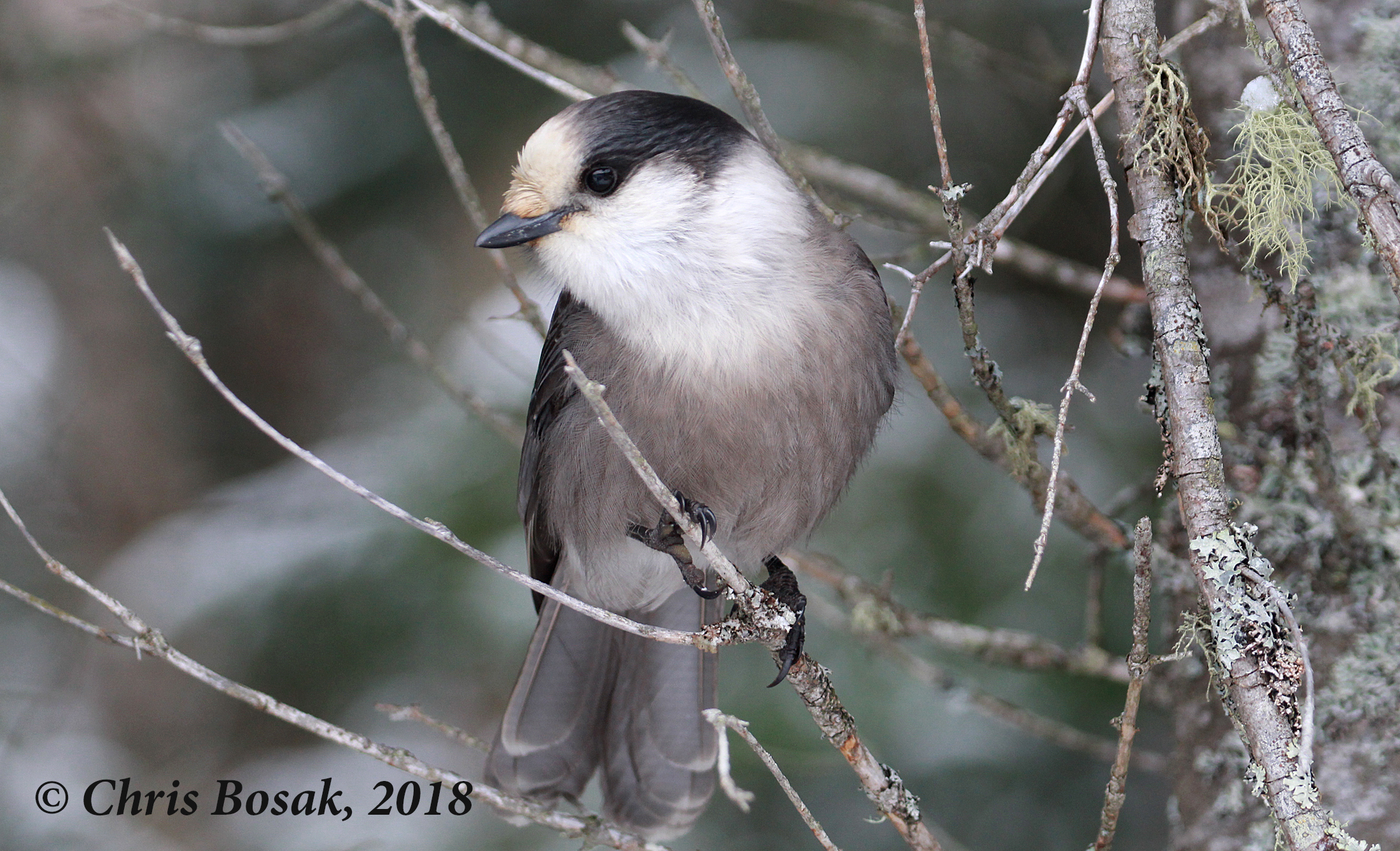
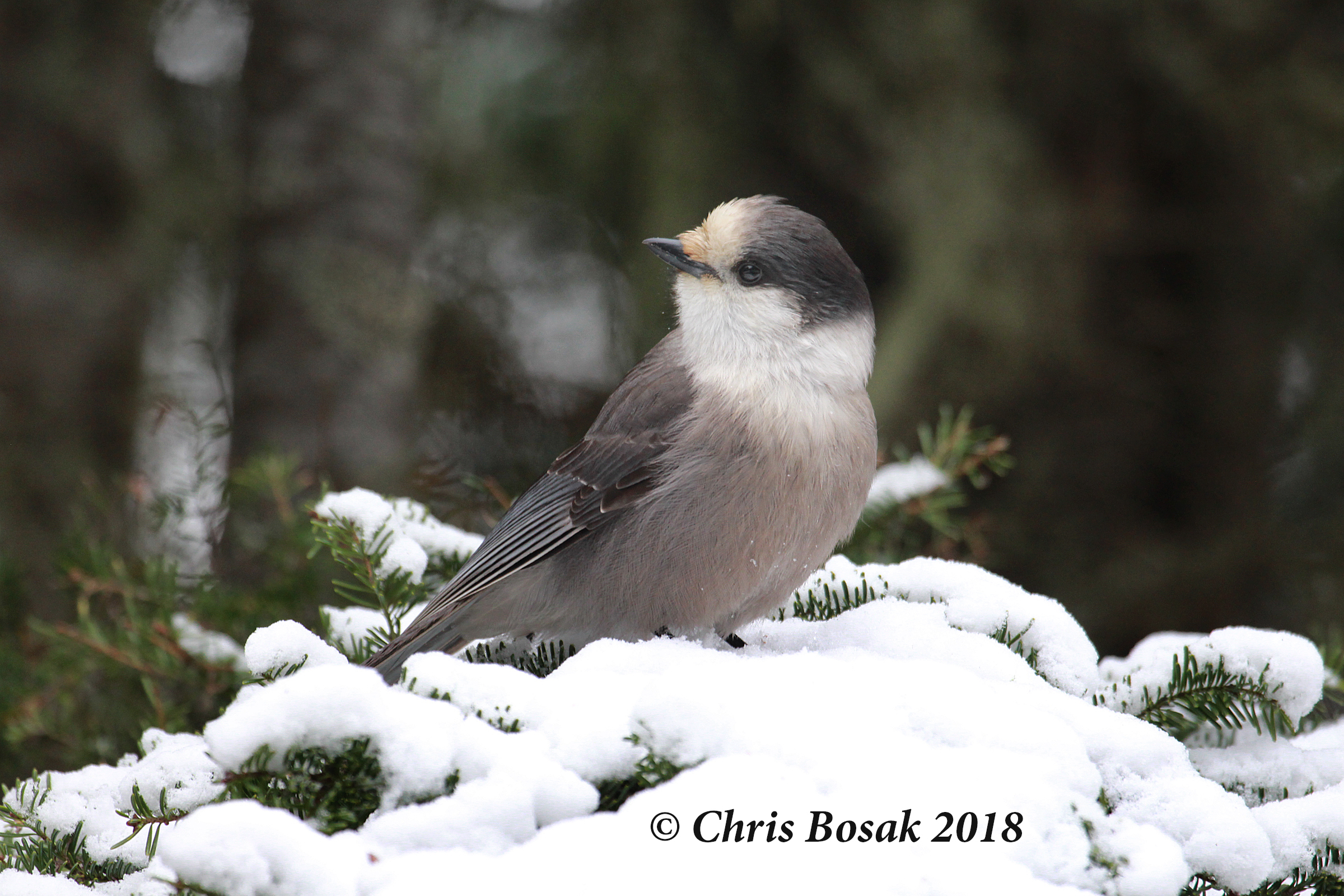
Gray jay on snowy bough in Pittsburg, N.H., Nov. 2018.
It shouldn’t be too surprising that there is snow in November in the Great North Woods, the area of extreme northern Vermont and New Hampshire. We were surprised, however, to see snow when we arrived on Sunday only because it has been so warm this fall in southern New England.
I hadn’t even given snow a thought yet, to be honest. Heck, wasn’t it in the 70s in Connecticut just last week? But, sure enough, a beautiful blanket of the white stuff covered Pittsburg, N.H. It was only an inch or two, just enough to make it beautiful and remind us that snow is coming soon enough for the rest of New England. (Update: Now it’s Tuesday and a steady rain has melted all the snow.)
With the moose population continuing to dwindle in northern New Hampshire, the wildlife highlight was a trio of gray jays we came across just south of Deer Mountain Campground, which itself is just south of the Canadian border.
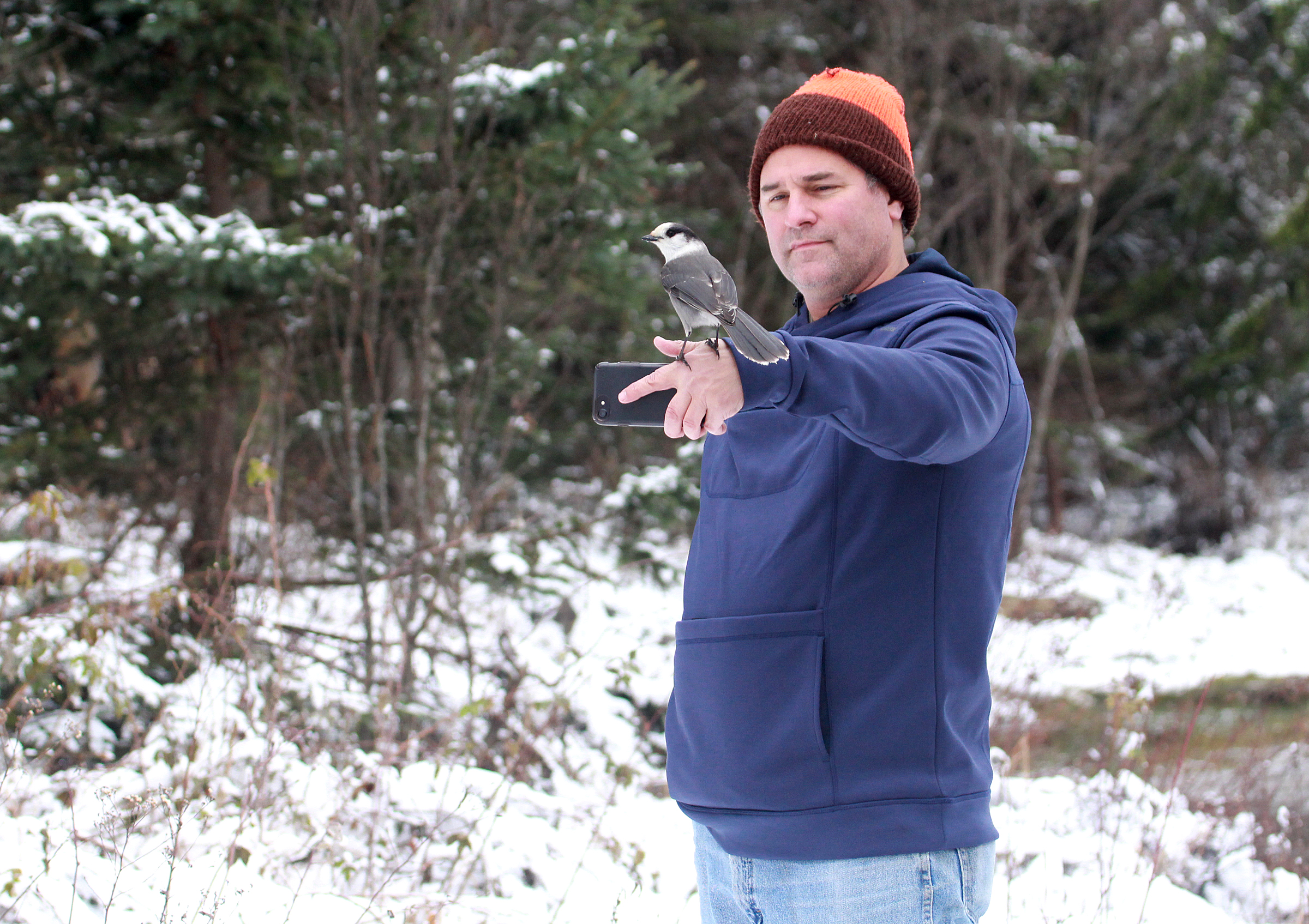
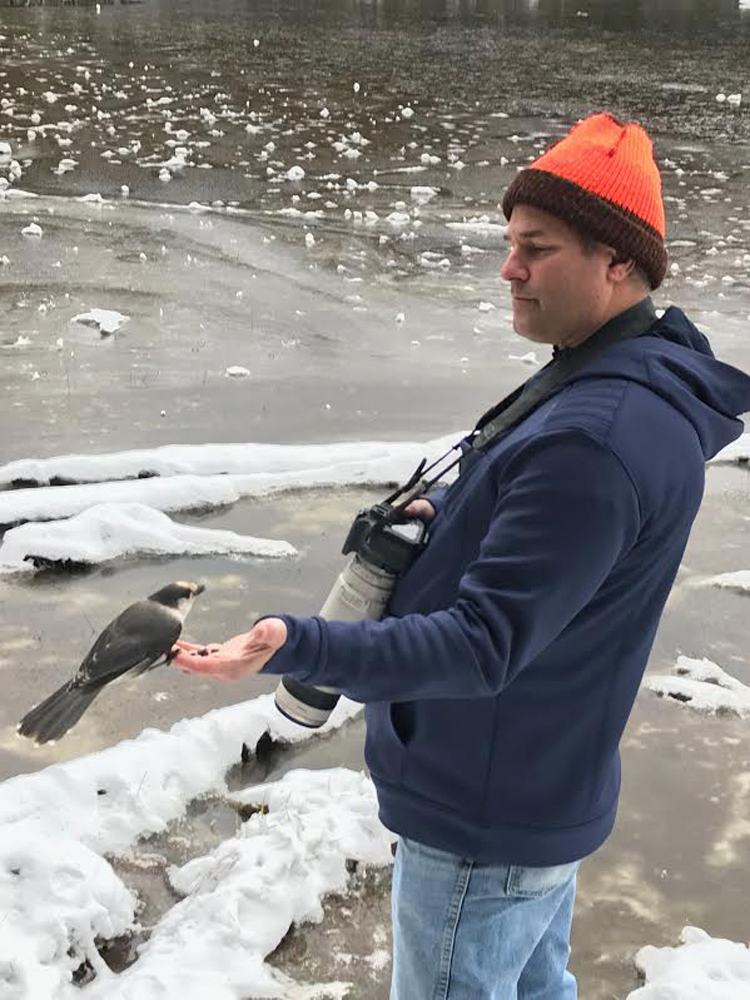
I’ve seen gray jays before in Pittsburg, N.H, but never during the “winter.” They were extra bold and landed on our hands as we offered sunflower seeds. I’ve had black-capped chickadees land on my hands for sunflower seeds before, but I could tell the tiny birds were unsure of themselves as they landed quickly and flew off. These gray jays, however, were not shy at all and landed on our finger tips and dug through the seeds to find just the right one.
About half an hour later we found a pair of gray jays, which also ate from our hands and showed little fear. At one point, an evening grosbeak flew in and landed in a nearby tree. I hadn’t seen an evening grosbeak in years and years, so the large yellow, black and white bird was a welcomed, if not fleeting, sighting.
Aside from gray jays, blue jays, ruffed grouse, chickadees, and red squirrels, the wildlife sightings have been rather scarce. But we’ll keep looking and I’ll let you know what we find.
Photo by Chris Bosak Feeding brave gray jays in Pittsburg, N.H., Nov. 5, 2018.Photo by Chris Bosak Feeding gray jays in Pittsburg, N.H., on Nov. 5, 2018.
Photo by Chris Bosak A great blue heron perches on one leg in a tree in Brookfield, Conn., during the fall of 2018.
Here’s the latest For the Birds column, which runs in several New England newspapers.
….
The fall drawdown on large New England lakes can make it a challenge to launch a canoe. The shoreline is often soupy and mucky, making it a dirty and dicey proposition to get in a quick paddle.
A little dirt and muck have never deterred me, however, especially when the possibility of good duck watching lies ahead. Such was the case last week when I braved the Lake Lillinonah shoreline in southwestern Connecticut to launch my canoe. Lillinonah is considered a lake because of its width, but it is really part of the Housatonic River.
Thankfully, it hadn’t rained in a few days so much of the shoreline was hardened mud. It got muckier the closer I got to the water, but I was able to leave the tail end of the canoe out far enough that my feet only sunk down about 2 or 3 inches before jumping in.
The bottom of the canoe’s interior was smeared with mud, but what the heck; it’s a canoe, a little dirt won’t hurt it. I lifted up my butt, dug in the paddle and pushed off hard. I was on my way and instantly felt the cares of the world disappear as I glided over the glassy water, surrounded by New England’s famous fall colors.
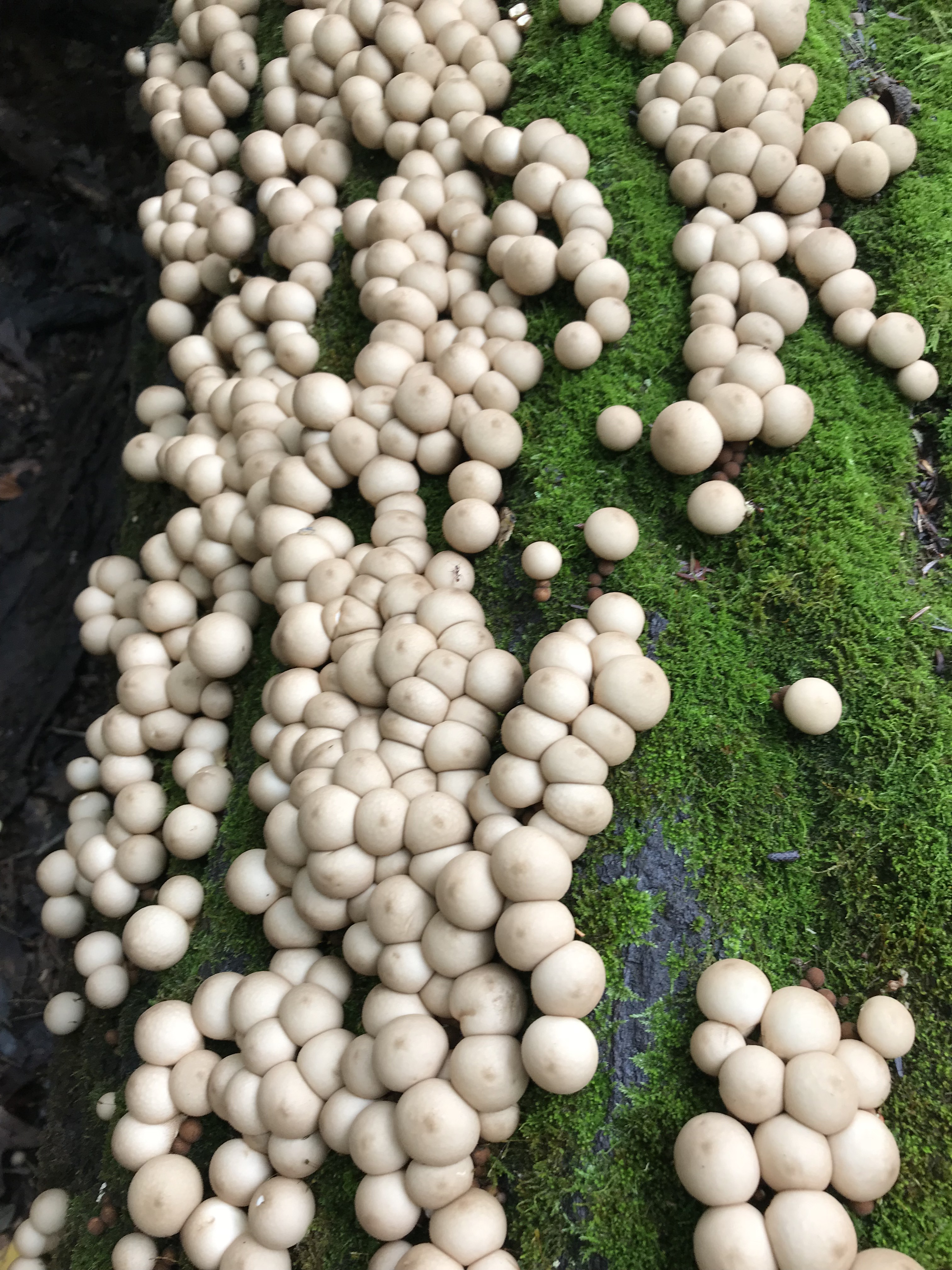
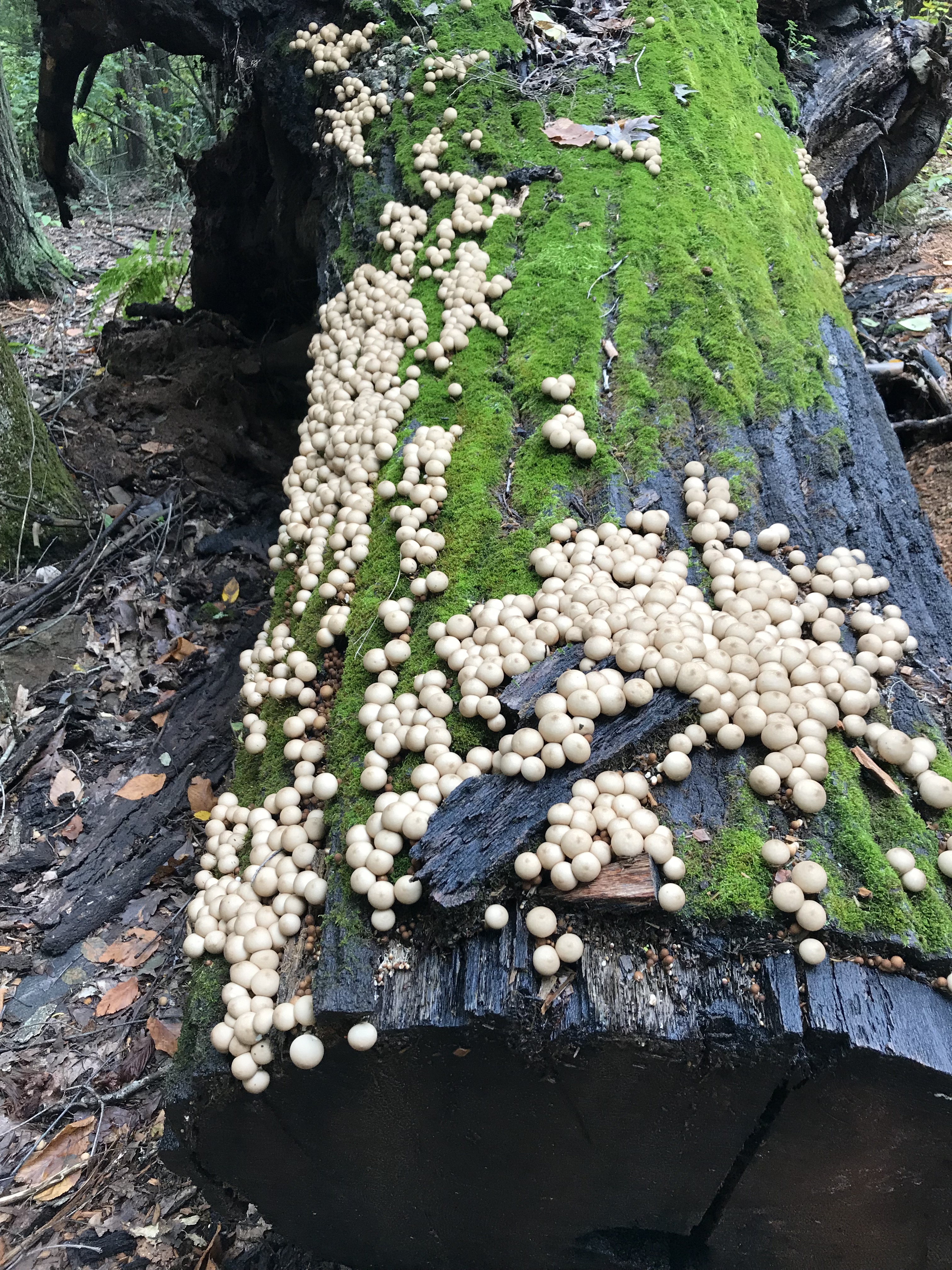
I admittedly do not know a whole lot about the mushrooms found in New England woods. I do know that some mushrooms can kill you, so I basically just avoid them all, other than admiring the ones that catch my eye. These mushrooms found in the woods behind my house stood out so I grabbed a few iPhone photos.
Speaking of mushrooms, I’d love to someday learn to forage for them. They are plentiful in our woods and would be a great addition to many recipes. The risks, however, are cause for concern and mushroom foraging should only be done by those who are certain of what they are doing. Eating the wrong mushrooms will usually cause stomach pain and perhaps vomiting, but the symptoms can be much more severe.
Here’s some information from the Northern New England Poison Center: “Every year the Northern New England Poison Center helps patients who have become sick after misidentifying mushrooms they picked to eat. Among NNEPC cases, mistakes made while foraging are the second most common cause of serious mushroom poisonings, behind only people who become sick after taking psychedelic mushrooms on purpose.”
The Center points out that many safe mushrooms have multiple poisonous lookalikes in the woods, too. Someday I’ll learn to forage wild mushrooms, but until I’m 100 percent sure of what I’m doing, I’ll stick to admiring and photographing them.
Are you a mushroom forager or have a story or tip about foraging mushrooms? Leave a comment below and share your story.
The warm start to November has made for some surprising nature sightings. I’ve seen and heard many insects that are usually silent by this time of year. A recent walk in the woods behind my house yielded several eft sightings underfoot. Efts are the terrestrial stage of a newt, a common aquatic salamander. By November, eft sightings are usually a thing of the past – or the future, depending on how you look at it.
As a birdwatcher, I sometimes struggle with how to carry my gear. Thankfully, Wunderbird makes it easier.
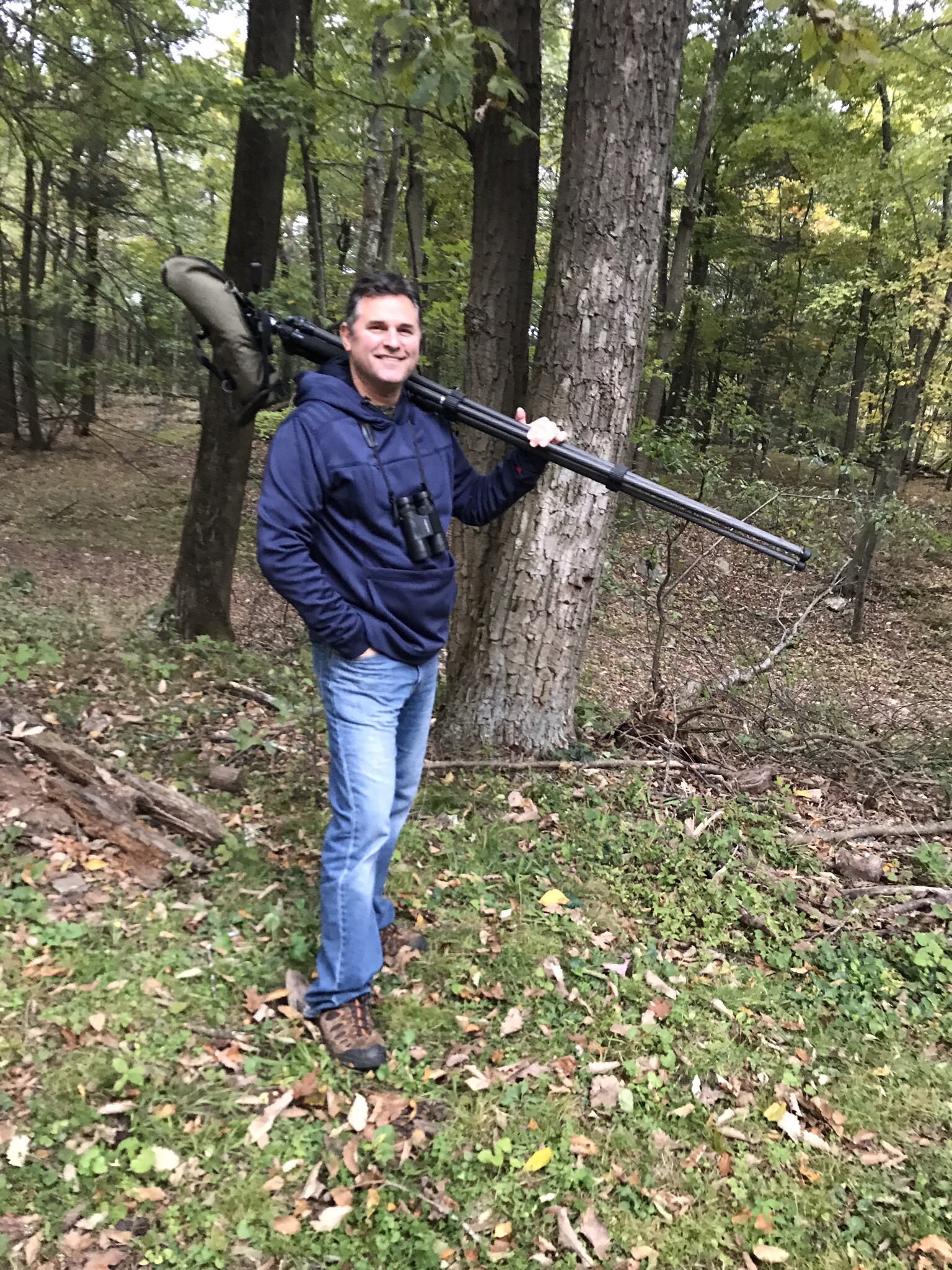
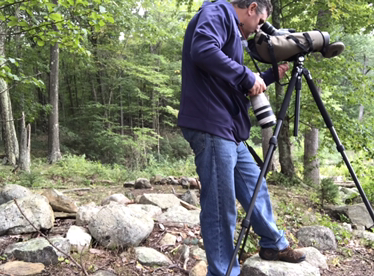
For me, it goes beyond binoculars around my neck and a field guide in my back pocket. Throw in a camera with a bulky 100-400 lens, an extra lens or two, a spotting scope with tripod, and a surprisingly awkward adapter for digiscoping, and I’ve got my hands full.
Typically, what I would have done is throw all of the equipment into a backpack and start my walk. It keeps the equipment in one place, which is nice, but it has several disadvantages. When I need something, I have to stop, take the backpack off and fish for the item to be used.
In birding, of course, that means my subject is usually long gone by the time I do all that.
But now there is a better way. It’s called Wunderbird, a line of high-tech apparel designed and engineered for the birdwatcher. The line includes a short-sleeved T-shirt (Kestrel), long-sleeved T-shirt (Peregrine) and hooded sweatshirt (Gyrfalcon).
Each version comes with several spacious pockets, pouches and padding located for comfort and easy access to your birding equipment. The products are also made of “smart fabrics” that offer ventilation, quick drying and mosquito repellent.
I got the hoodie several months ago, but the sweltering summer we had kept the Gyrfalcon tucked away in the closet. I was excited to try it out in fall-like conditions.
I instantly liked it. My walk to the nearby pond was more comfortable and efficient. I put the camera around my neck with the strap going behind the hood. The camera and lens combination make for the heaviest piece of equipment and, given the padding around the shoulders, I hardly noticed the weight.
The binoculars went into the bottom pouch. I thought the camera lens dangling down would make it clunky to fish out the binoculars, but that wasn’t the case.
At one point during the walk in the woods, a bird came into view and perched on a nearby fallen log. I quickly grabbed the binoculars and was able to focus on the hermit thrush seconds before it flew back into the deep woods. The spacious pouch allowed for the binoculars to come out effortlessly without the corners getting stuck on the edge of a pocket.
Trying to wrestle binoculars out of tight pockets has cost me valuable seconds in the field before Wunderbird.
The top pouch on the hoodie may make it even easier to access binoculars; I’ll try that next time. (Note from author: I’ve tried it. It does make it easier. Way easier.)
Most birdwatchers will have their binoculars strapped around their necks, which would make for even easier access and storage in the pouches.
The bottom pouch has two compartments. I used the outside compartment for the binoculars and inside compartment for lens caps and that awkward digiscoping adapter. Talk about corners getting stuck on pockets; the adapter has all sorts of protrusions and odd edges that make it a nightmare to carry in a pocket. Wunderbird solves that problem, too.
The inner layer of the pocket also serves as a hand-warmer.
The scope and tripod obviously do not fit into any of the pockets, but the heavy padding on the shoulders of Wunderbird make lugging the scope around more comfortable.
I don’t normally get too excited about clothes, but a shirt designed for birdwatching was something I had to try. I’ve been impressed with the hoodie and look forward to using it more. Also, the Gyrfalcon looks like a normal sweatshirt when bulky birding equipment is not stuffed into the pockets.
There is also an interesting backstory to the creation of Wunderbird and its founder, Gil Gutglick. I’ll leave that for you to check out at the Wunderbird website: www.wunderbirdworld.com.
In the meantime, get out, find some late fall migrants, and let me know what you’re seeing out there.






 Birds of New England.com