Purple Finch: A welcomed visitor to the feeder

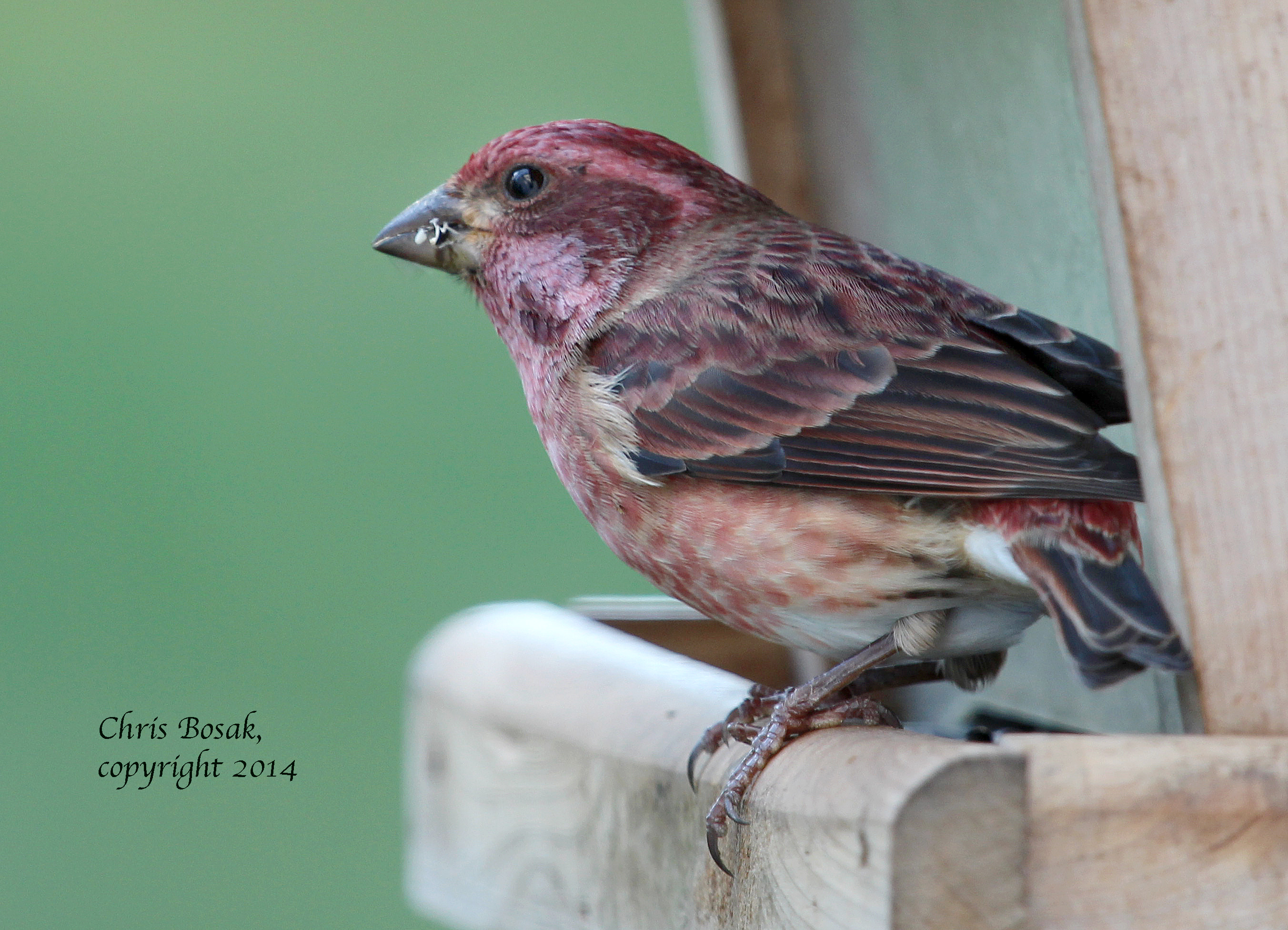
Photo by Chris Bosak A male Purple Finch eats sunflower seeds from a feeder in New England, Oct. 2014.

Photo by Chris Bosak
A male Purple Finch eats sunflower seeds from a feeder in New England, Oct. 2014.

The Purple Finch doesn’t exactly fit in with my series of “Common Backyard Birds,” but this handsome fellow visited my feeder over the weekend so I’m including it anyway.(No, that’s not your cursor on its bill, that’s a sunflower seed shell.)  It doesn’t fit in with the series because, sadly, the Purple Finch is not really a common backyard sighting in New England. The introduced House Finches certainly are, but the native Purple Finches visit less frequently.

Purple Finches and House Finches can be tricky to differentiate, but that’s mostly because we don’t see enough Purple Finches to get used to their looks. Some particularly colorful House Finches can resemble Purple Finches and throw off the ID. But, as someone once told me long ago, “When you see a Purple Finch, you’ll know it.”

I can differentiate the finches because the Purple Finch is larger and bulkier. Its “purple” (really reddish pink) is also more widespread on its plumage. The females are even more tricky, but again, are bulkier than their House Finch counterparts.

So an October sighting of a Purple Finch was most welcomed. Hopefully it’s a sign of things to come this fall and winter.

Did you know: The Purple Finch is the state bird of New Hampshire.

Gray Jay: Friendly bird of the northern woods

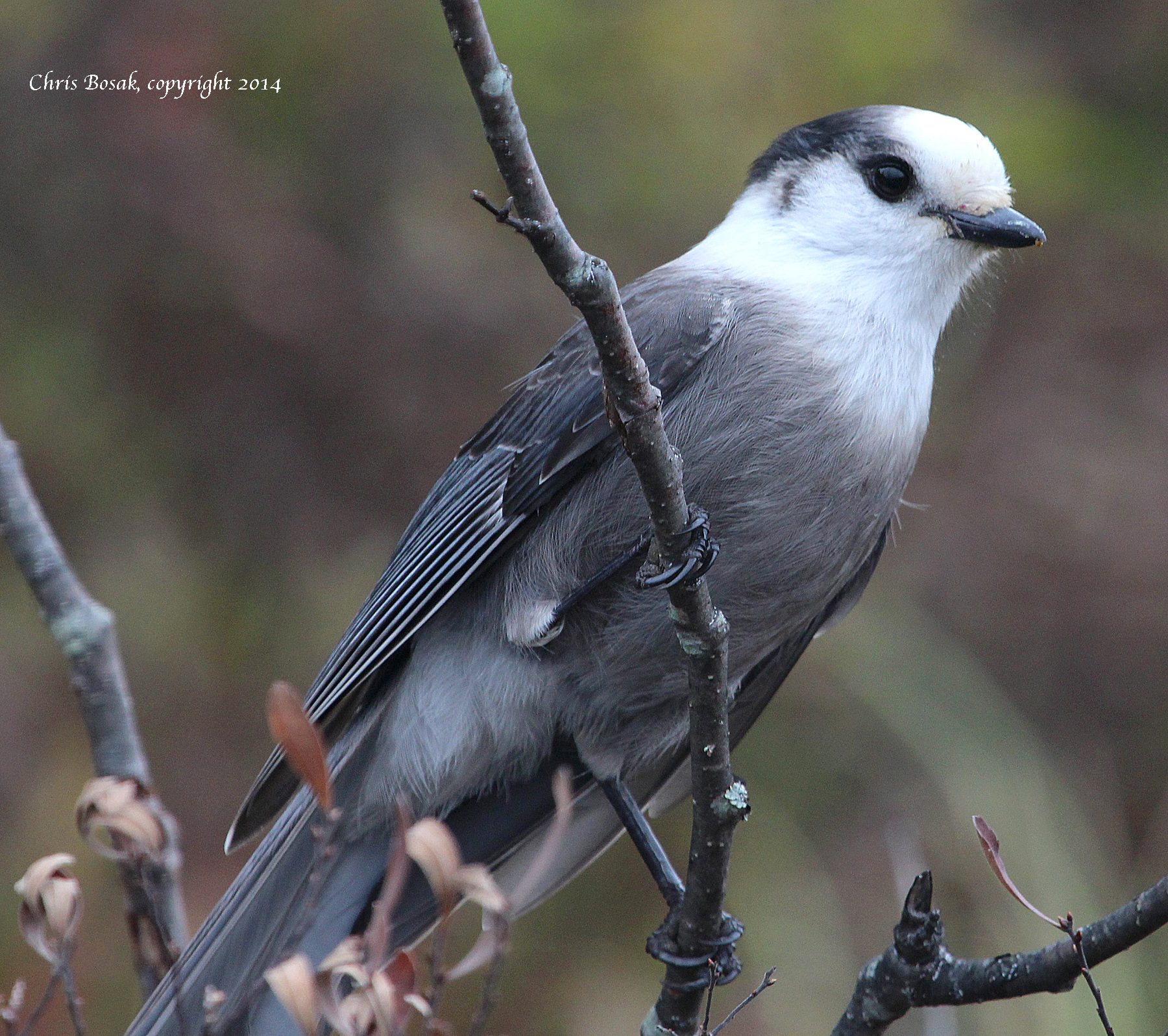
Photo by Chris Bosak A Gray Jay perches on a branch near a pond in northern New Hampshire, Oct. 2014.

Photo by Chris Bosak
A Gray Jay perches on a branch near a pond in northern New Hampshire, Oct. 2014.

Gray Jays are quickly becoming one of my favorite birds. Their range does not stretch into southern New England, but on my last several trips to northern New England, I’ve seen these handsome and friendly birds. I have been visiting the northern reaches of New Hampshire for more than 20 years now and I started seeing Gray Jays only in the last few years. They appear out of nowhere and offer close views. They seem to be as curious about you as you are about them. From what I’ve seen, they hang out in small flocks (3, 4 or 5 birds.) Gray Jays are one of those boreal species that makes the Great North Woods so special. I took the above photo while canoeing on a small pond in northern New Hampshire. This one flew right up to the pond’s edge to check me out.


5 New England ‘poster birds’ for climate change

Photo by Chris Bosak Bobolink

Photo by Chris Bosak
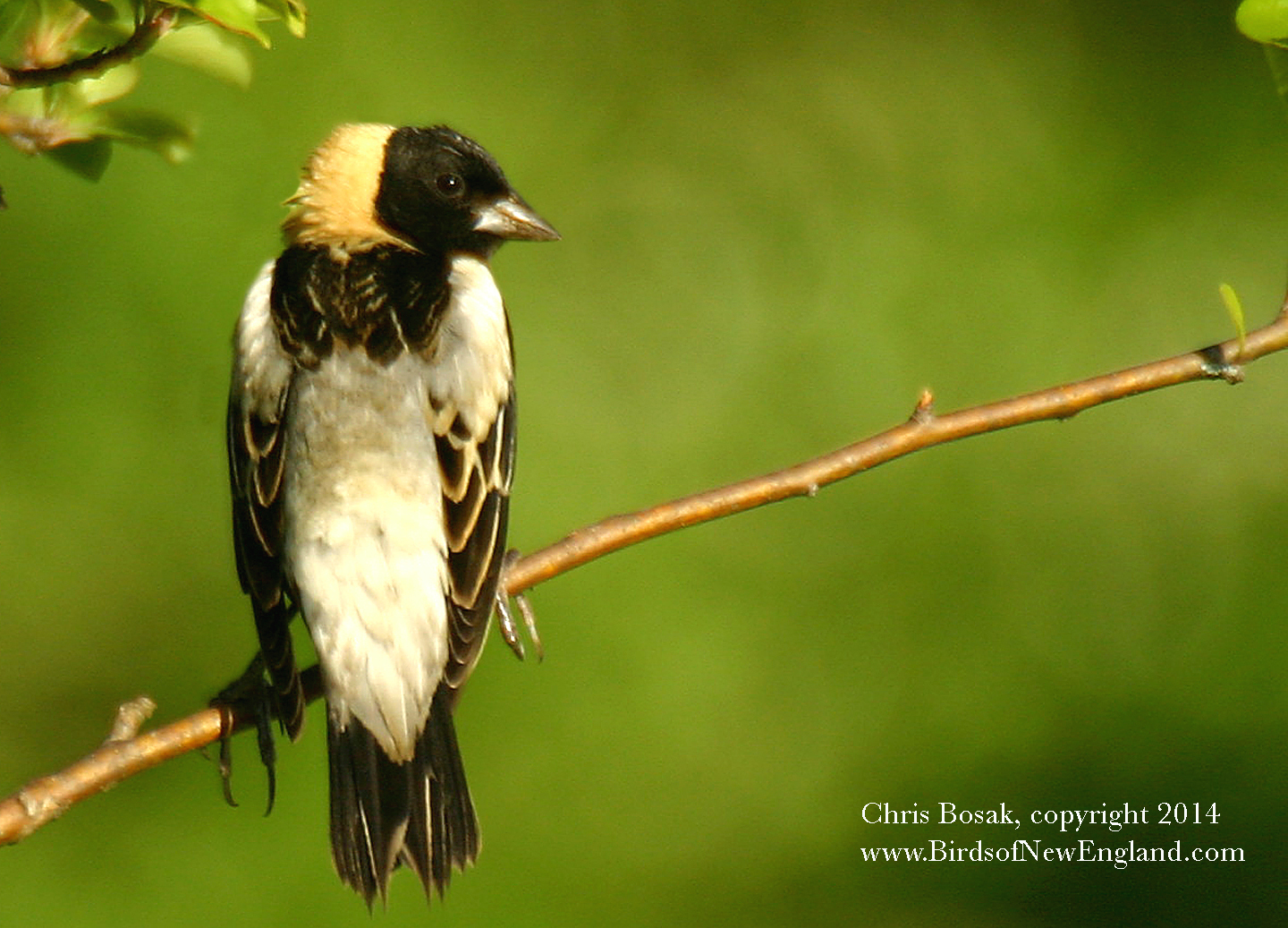
Bobolink

In response to the recently released State of the Birds 2014 report, Patrick Comins, the director of bird conservation with Audubon Connecticut, spoke about the 5 “poster birds” that will be most affected by climate change and the accompanying shifts in bird population. He was speaking specifically about Connecticut, but certainly all of New England will see this impact.

Comins spoke during a telephone conference to journalists on Wednesday.

Here are the birds he picked:

Saltmarsh Sparrow: Currently breeds in Connecticut, but has difficulty with rising sea levels and high tides. Rising tides will only become worse over the next several decades.

Bobolink: This meadow nester will likely not nest or be seen often in Connecticut over the next several decades.

Dunlin: This handsome shorebird currently nests and may be seen throughout winter along the New England coast. It’s nesting ability in Connecticut, as Comins put it, will “become zero.” It will move its range north and perhaps New England will get some winter views of this bird.

Blue-winged Warbler: This handsome bright yellow warbler will “move up and out.”

Veery: Comins almost picked the Wood Thrush for his final bird, but chose the Veery. It will become scarce in New England.

The phrase “over the next several decades” may give some people cause to relax and think “I’ll never notice it” or “maybe things will change.” But the “next several decades” will be here before we know it. There have been staggering declines in bird populations over the last 40 years. We’re talking some species dropping in number by 50, 60 even 80 percent. That’s just the last 40 years. That’s basically yesterday evolutionarily speaking. Jeez, I can remember 40 years ago. It bothers me to think this decline all happened in my lifetime.

Hopefully the State of the Birds report will get the attention it deserves and affect positive change for birds and all wildlife.

The full report may be found here.
A few extra meadow close-ups

Well, I promised a different meadow close-up photo every day from the latter part of July through the end of August. I delivered on that promise. The problem is, however, I still have a few meadow close-ups I wanted to share. So here you go, a few more photos to wrap up my meadow macro photography project. Click on “continue reading” for a few more.

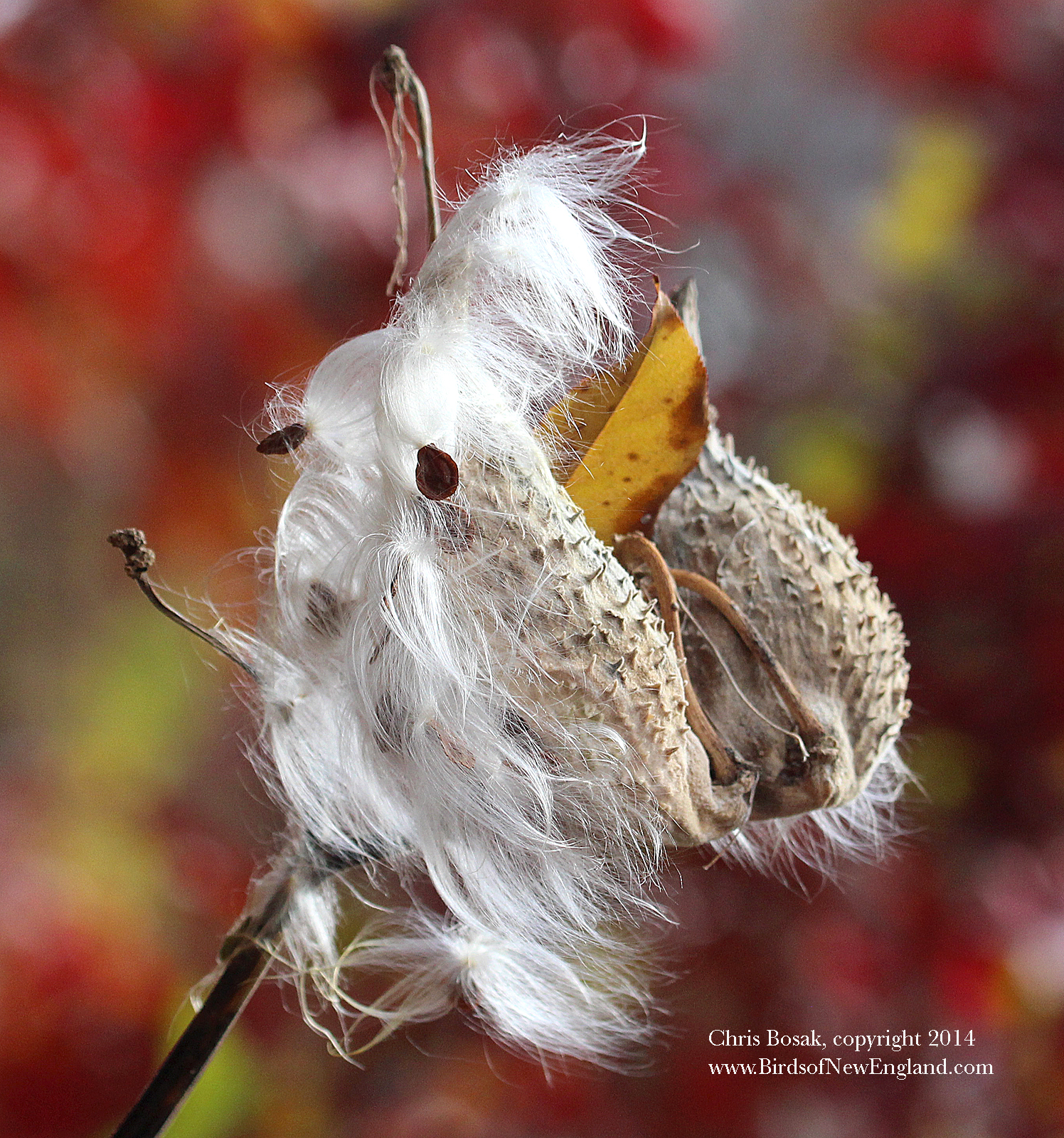
Photo by Chris Bosak A dried up milkweed pod at a meadow property of the Darien Land Trust, summer 2013.

Photo by Chris Bosak
A dried up milkweed pod at a meadow property of the Darien Land Trust, summer 2013.

Continue reading

I’m trying to work on Labor Day, but it’s tough with these guys flying around

Photo by Chris Bosak An Osprey soars over the Norwalk River on Monday, Sept. 1, 2014.

Photo by Chris Bosak
An Osprey soars over the Norwalk River on Monday, Sept. 1, 2014.

So I’m sitting here at The Hour office along the Norwalk River trying to get Tuesday’s pages out, but every five minutes one of these guys flies across my view. Love this time of year for Osprey sightings. More on that here.

Silver-spotted skipper, another meadow close-up

Photo by Chris Bosak A silver-spotted skipper at a meadow property of the Darien Land Trust, summer 2013.

Photo by Chris Bosak
A silver-spotted skipper at a meadow property of the Darien Land Trust, summer 2013.

Here is the latest in a series of close-up (macro) photographs I took last summer while tromping through the meadow properties of the Darien Land Trust. From July 24 to Aug. 31, I’ll post a different close-up meadow photograph on this site.

Here’s more background on the project.

Thistle in bloom, another meadow close-up

Piggy-backing on yesterday’s meadow close-up, here’s a thistle in bloom.

Photo By Chris Bosak Thistle plant in full bloom. Although considered a weed by many, thistle is an important source of food and nest material for many meadow birds and insects.

Photo By Chris Bosak
Thistle plant in full bloom. Although considered a weed by many, thistle is an important source of food and nest material for many meadow birds and insects.

Here is the latest in a series of close-up (macro) photographs I took last summer while tromping through the meadow properties of the Darien Land Trust. From July 24 to Aug. 31, I’ll post a different close-up meadow photograph on this site.

Here’s more background on the project.

David Allen Sibley talks about the Ivory-billed Woodpecker

In 2005, a bird sighting in Arkansas caused major waves in the birding world. It pitted experts against experts and beginners against beginners. The potential sighting was of an Ivory-billed Woodpecker, a large woodpecker long believed to be extinct. The sighting came along with a rough video, but not a clear enough one to answer any questions definitively. In fact, the video only separated the sides even more.

One of the skeptical experts was David Allen Sibley, who visited The Hour offices last month and I couldn’t resist asking his thoughts on the subject. The alleged sighting came in 2005, but the debate still rages on. Here are Sibley’s thoughts on the matter.