Birding quiz: Name the bird pictured

IMG_8845

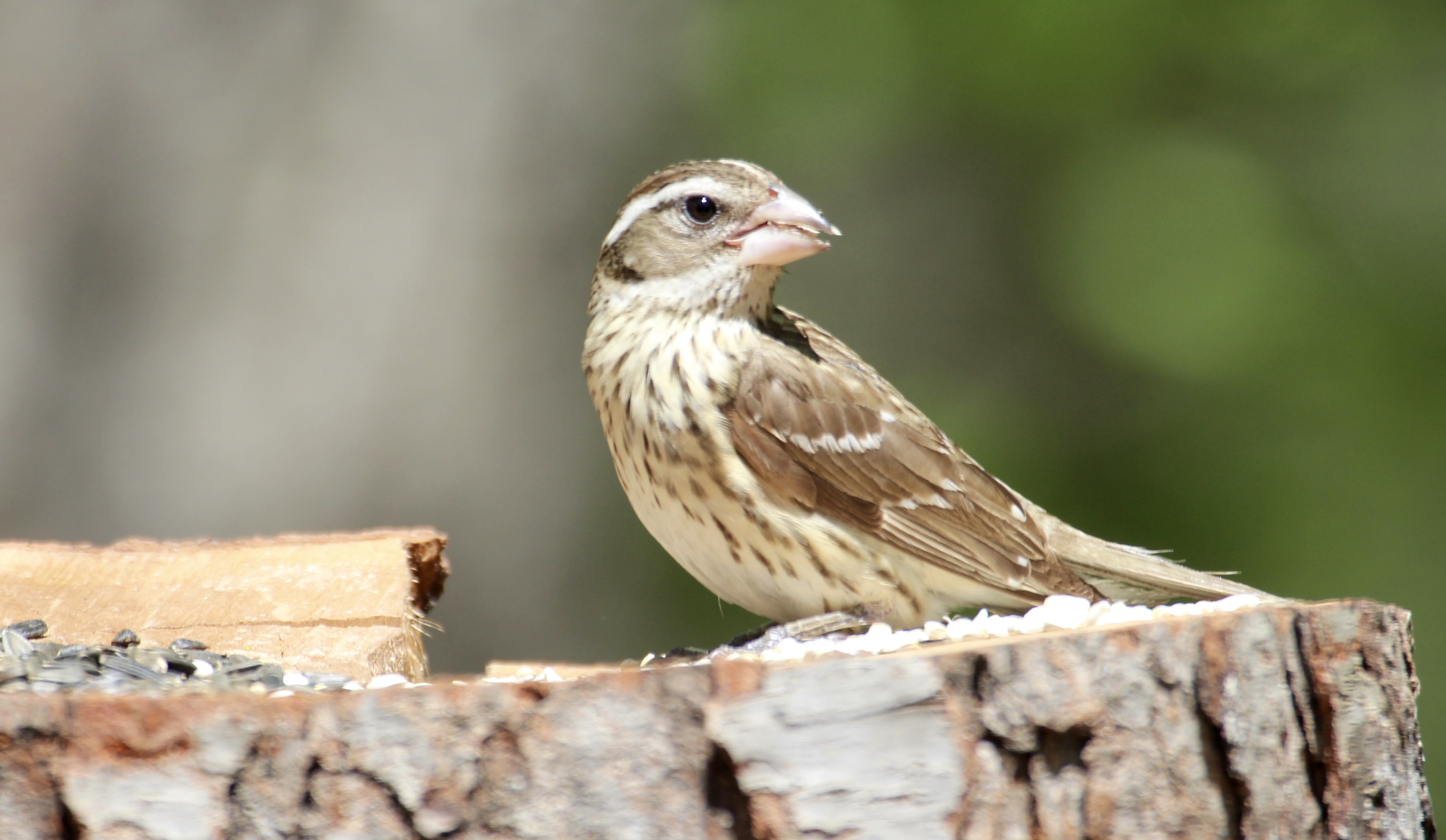
Yes, my homemade backyard feeder did it again, drawing in another interesting bird.

So here’s a quick bird identification quiz. Seasoned birders will get it immediately. Intermediate birders may take a second, but will eventually get it. Beginning birders, if they haven’t seen one before, may be surprised at the answer (which is coming up tomorrow morning.)

Do you know it already? Awesome.

Need a hint? That’s fine, too. Here are a few hints:

It’s not a big sparrow.

It looks nothing likes its male counterpart.

Look at the bulky bill.

Send your guesses (or requests for more hints) to bozclark@earthlink.net, or just lock in your guess in your head and wait for the answer tomorrow.

Thanks for playing along.


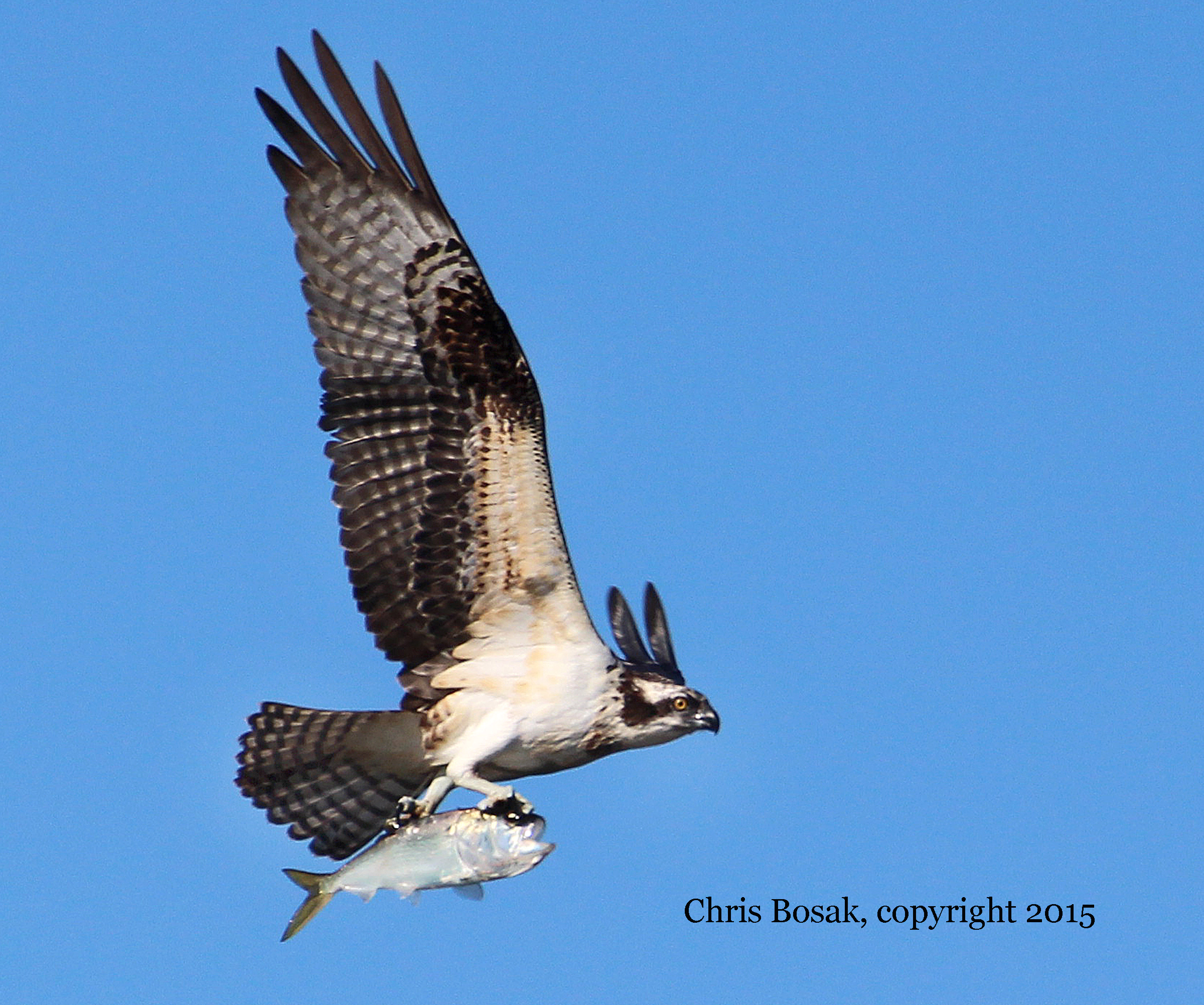
Osprey with fish. Can you name the fish?

Photo by Chris Bosak An Osprey carries a fish along the Norwalk River in Norwalk, CT, summer 2015.

Photo by Chris Bosak
An Osprey carries a fish along the Norwalk River in Norwalk, CT, summer 2015.

I’m pretty good with my birds, but only very average with my fish. I got this photo of an Osprey carrying a fish along the Norwalk River on Friday, Aug. 28, 2015. I was photographing a young Osprey on a sailboat mast when this older Osprey flew by with its prey. The younger Osprey looked up and gave a look as if to say: “I wish I could do that.” The youngster will learn soon enough.

It looks like a fairly good-sized fish, but honestly my fish ID skills are not up to par. Who knows what it is? Thanks for your input.

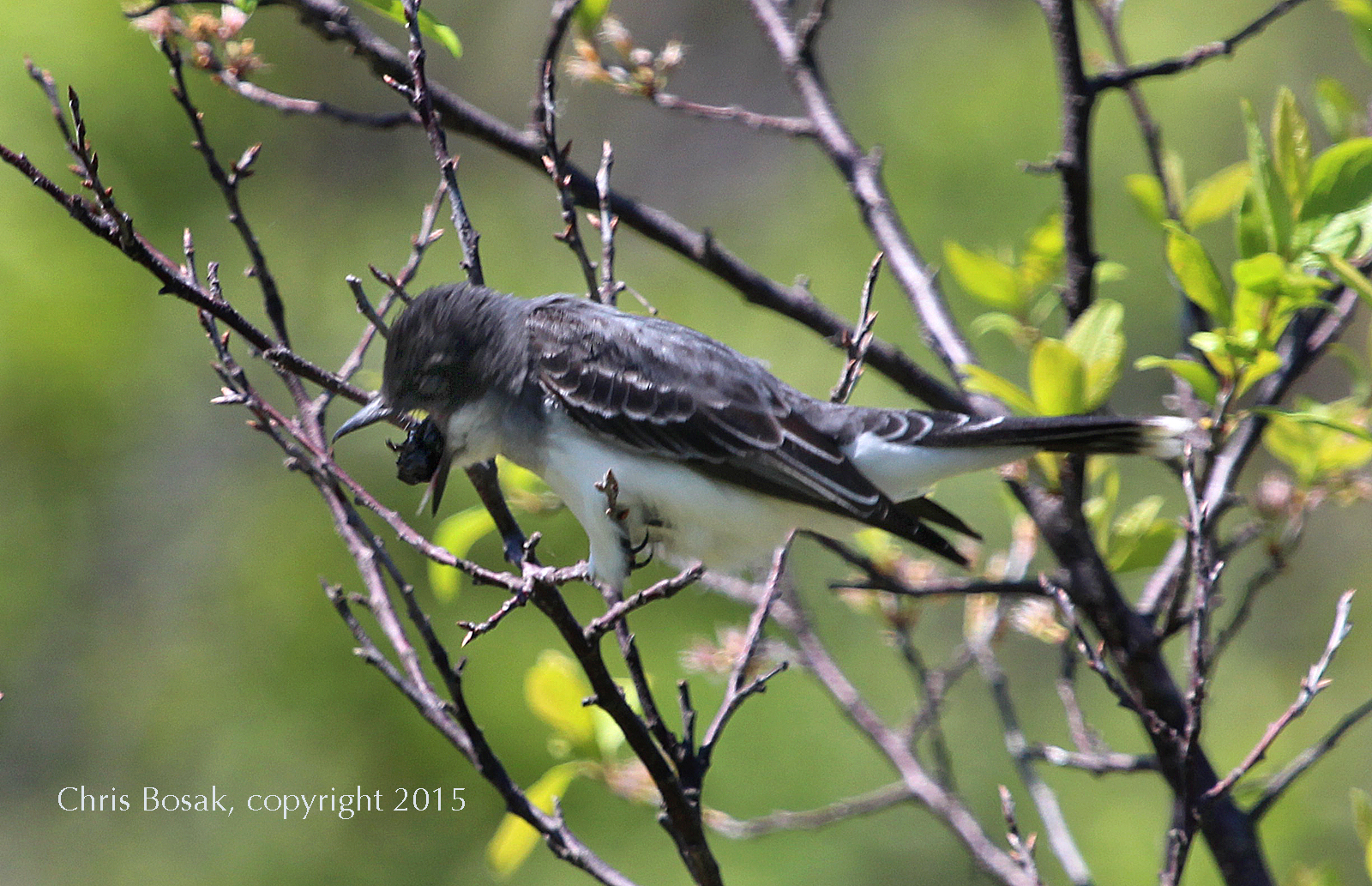
Eastern Kingbird expels a pellet (coughs up an exoskeleton ball)

Photo by Chris Bosak An Eastern Kingbird regurgitates a pellet in Stamford, Conn., May 2015.

Photo by Chris Bosak
An Eastern Kingbird regurgitates a pellet in Stamford, Conn., May 2015.

Ever eat an insect and notice how hard the outer shell, or exoskeleton, is?

I hope you answered no to that question. I certainly haven’t. But you can imagine that if you ever did bite into an insect it would be crunchy, kind of like eating a lobster without removing the meat from the shell first. You can also imagine that the exoskeleton would be difficult, if not impossible, to digest.

So how does that undigested shell come out? Everyone knows that owls regurgitate pellets of undigestible material, such as beaks, bones, feathers, claws and fur. Not as commonly known, however, is that many insectivores (things that eat insects) regurgitate pellets as well.

I was aware of this, but never witnessed it until the other day when I was watching an Eastern Kingbird. It was perched in a small tree at Continue reading

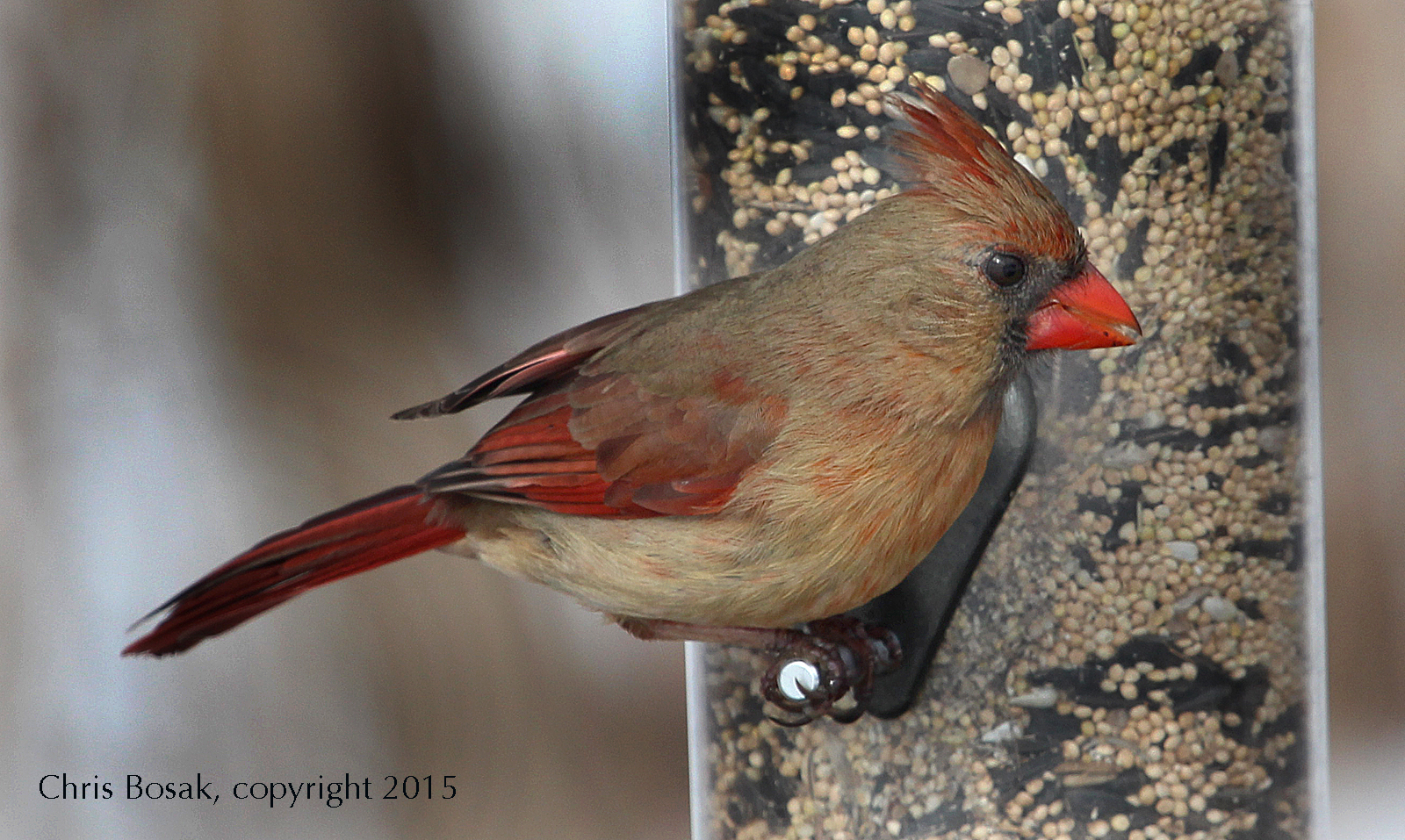
An ‘ordinary’ colorful bird

Photo by Chris Bosak A female Northern Cardinal eats from a feeder in Stamford, Conn., this spring.

Photo by Chris Bosak
A female Northern Cardinal eats from a feeder in Stamford, Conn., this spring.

With the all the color in the bird world passing through these days in the form of warblers, orioles, tanagers, grosbeaks and buntings, it can be easy to forget about our ‘ordinary’ colorful birds, such as cardinals.

Yes, even the female Northern Cardinal is beautifully colorful — just not as striking as the brilliant red male. So here’s a shot of one of these pretty ladies — really nothing ordinary about her.

More Carolina Wrens (sorry, I can’t help myself)


Photo by Chris Bosak A Carolina Wren searches on the snow-covered ground for food in New England, Feb. 2015.

Photo by Chris Bosak
A Carolina Wren searches on the snow-covered ground for food in New England, Feb. 2015.

I know I just featured Carolina Wrens in a recent post, but I couldn’t resist posting a few more photos. I’ve seen these beautiful wrens on suet feeders and platform feeders, but I hadn’t seen them looking for food under feeding stations before. Severe weather can cause Continue reading

Red-tailed hawk in the wind

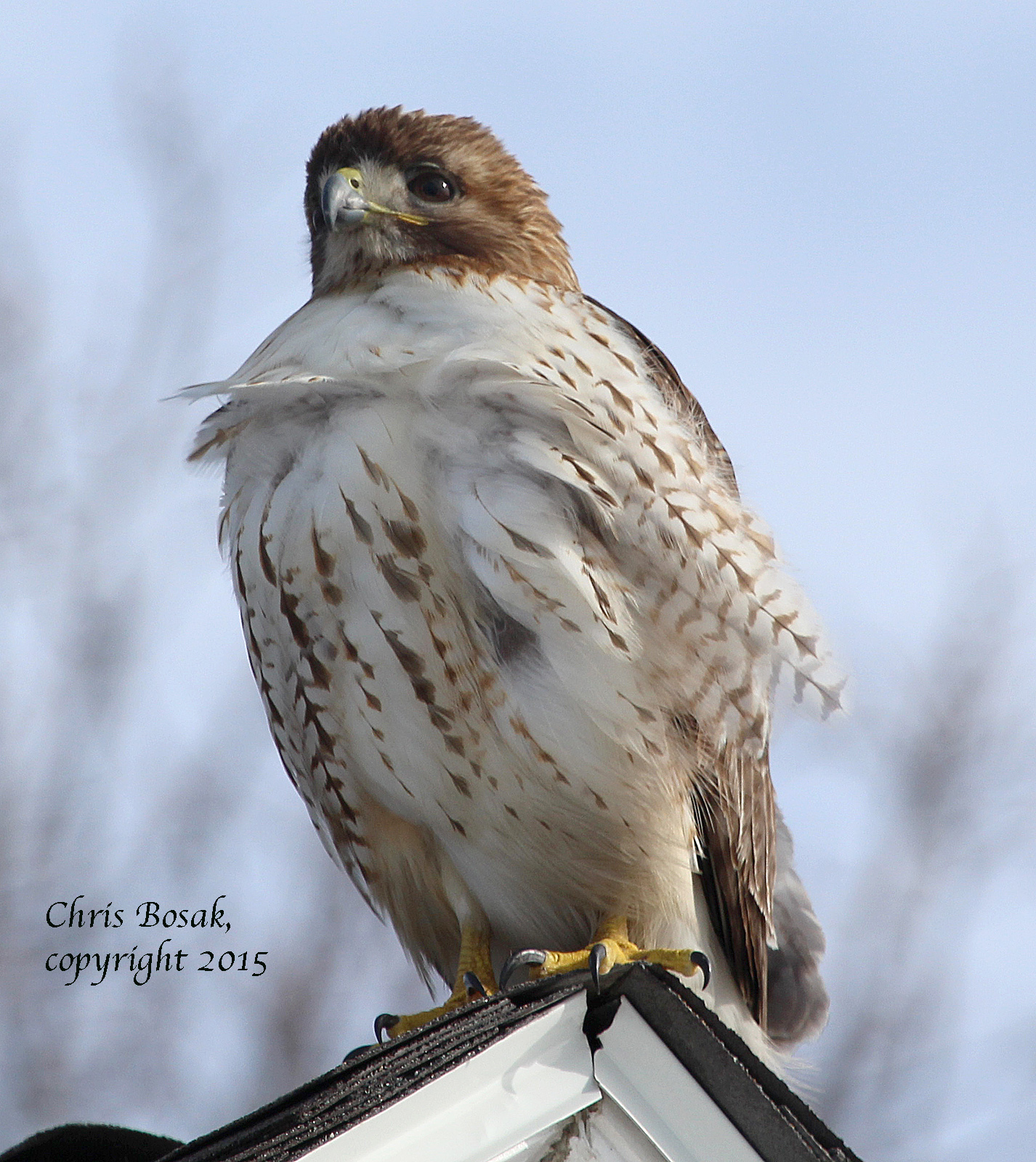
Photo by Chris Bosak A Red-tailed Hawk at Weed Beach in Darien, Conn., Jan. 2015.

Photo by Chris Bosak
A Red-tailed Hawk at Weed Beach in Darien, Conn., Jan. 2015.

Here’s the first of a two-part post about a Red-tailed Hawk I found at Weed Beach in Darien, Conn., last week.  These photos will show the hawk with gusts of wind blowing its plumage.

I was focused on a tree near the beach that had a White-breasted Nuthatch and a Downy Woodpecker in it. I thought I was getting good shots of the nuthatch, but when I checked the screen on my camera, the results were always subpar. I wasn’t sure what I was doing wrong, but I just wasn’t nailing it. Then I looked in an adjacent tree and spotted a much larger subject. Since I had been in that spot for several minutes, the hawk clearly did not mind that I was there. I gave up on the nuthatch and turned my attention toward the Red-tailed hawk.

I took several photos of the hawk in the tree and it eventually flew to a nearby structure where I was able to get a few more shots as the hawk seemingly watched a foursome play paddle tennis. The wind was whipping pretty good that day, making for some interesting shots of the hawk. The next posting (coming in the next day or two) will show the hawk under calmer conditions.

Photo by Chris Bosak A Red-tailed Hawk at Weed Beach in Darien, Conn., Jan. 2015.

Photo by Chris Bosak
A Red-tailed Hawk at Weed Beach in Darien, Conn., Jan. 2015.

Photo by Chris Bosak A Red-tailed Hawk at Weed Beach in Darien, Conn., Jan. 2015.

Photo by Chris Bosak
A Red-tailed Hawk at Weed Beach in Darien, Conn., Jan. 2015.

Project SNOWstorm seeks to unravel mysteries of the Snowy Owl

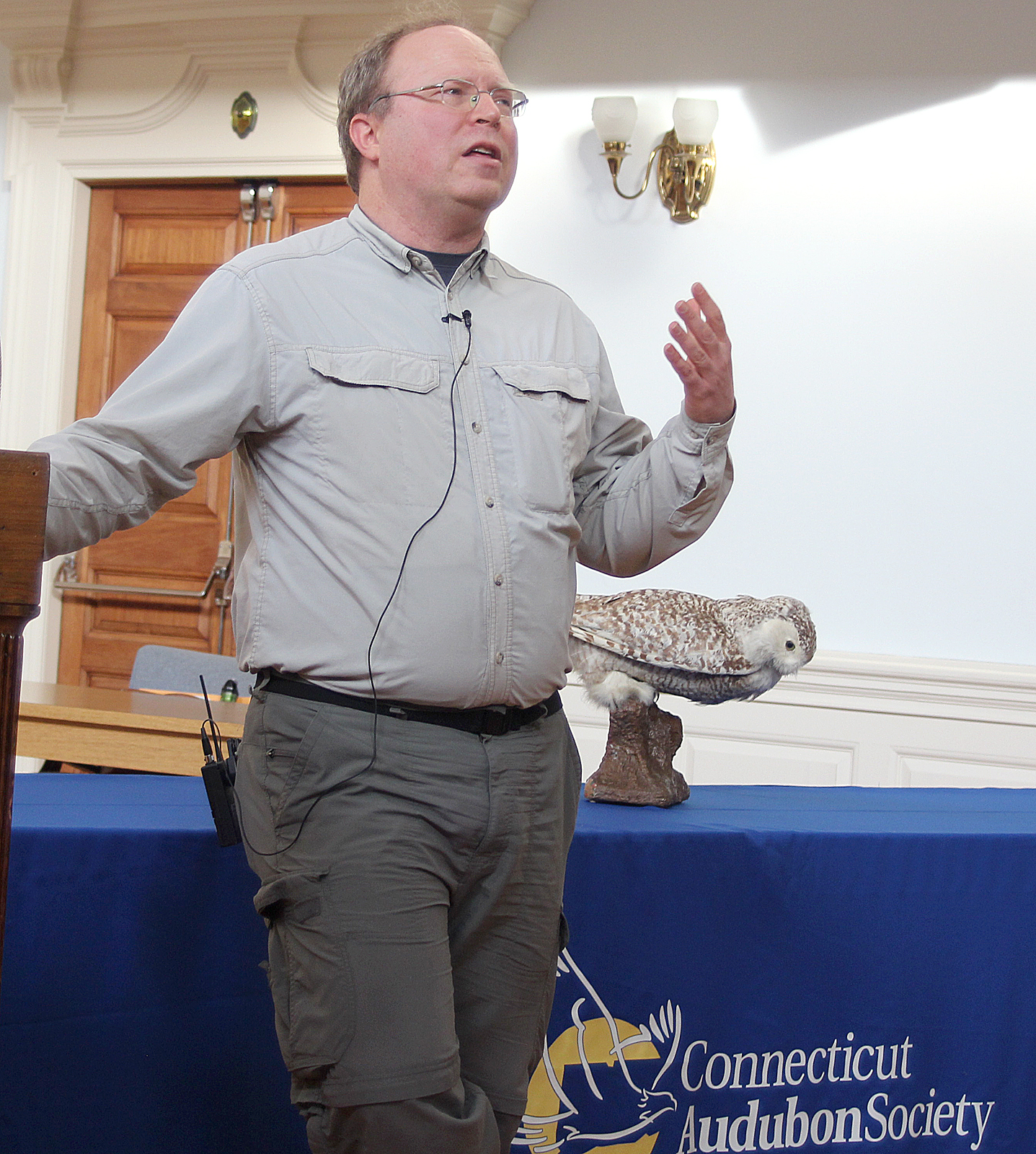
Photo by Chris Bosak Don Crockett of Project SNOWStorm talks about Snowy Owls at a presenation at Milford City Hall on Sunday, Jan. 25, 2015.

Photo by Chris Bosak
Don Crockett of Project SNOWStorm talks about Snowy Owls at a presentation at Milford City Hall on Sunday, Jan. 25, 2015.


(Here’s a little something I wrote up about a presentation on Snowy Owls I attended on Sunday. The event “The Hidden Lives of Snowy Owls” was presented by Don Crockett and sponsored by Connecticut Audubon.)

Last winter Snowy Owls enthralled the U.S. Even casual birdwatchers couldn’t help but be caught up in the historic irruption of the beautiful, yet powerful Arctic bird of prey.

The birds made their way down from their Arctic breeding grounds in record numbers during the winter of 2013-14. Birdwatchers flocked to beaches to try to find the owls. Unlike most winters, the birdwatchers were often successful in catching a glimpse of an owl.

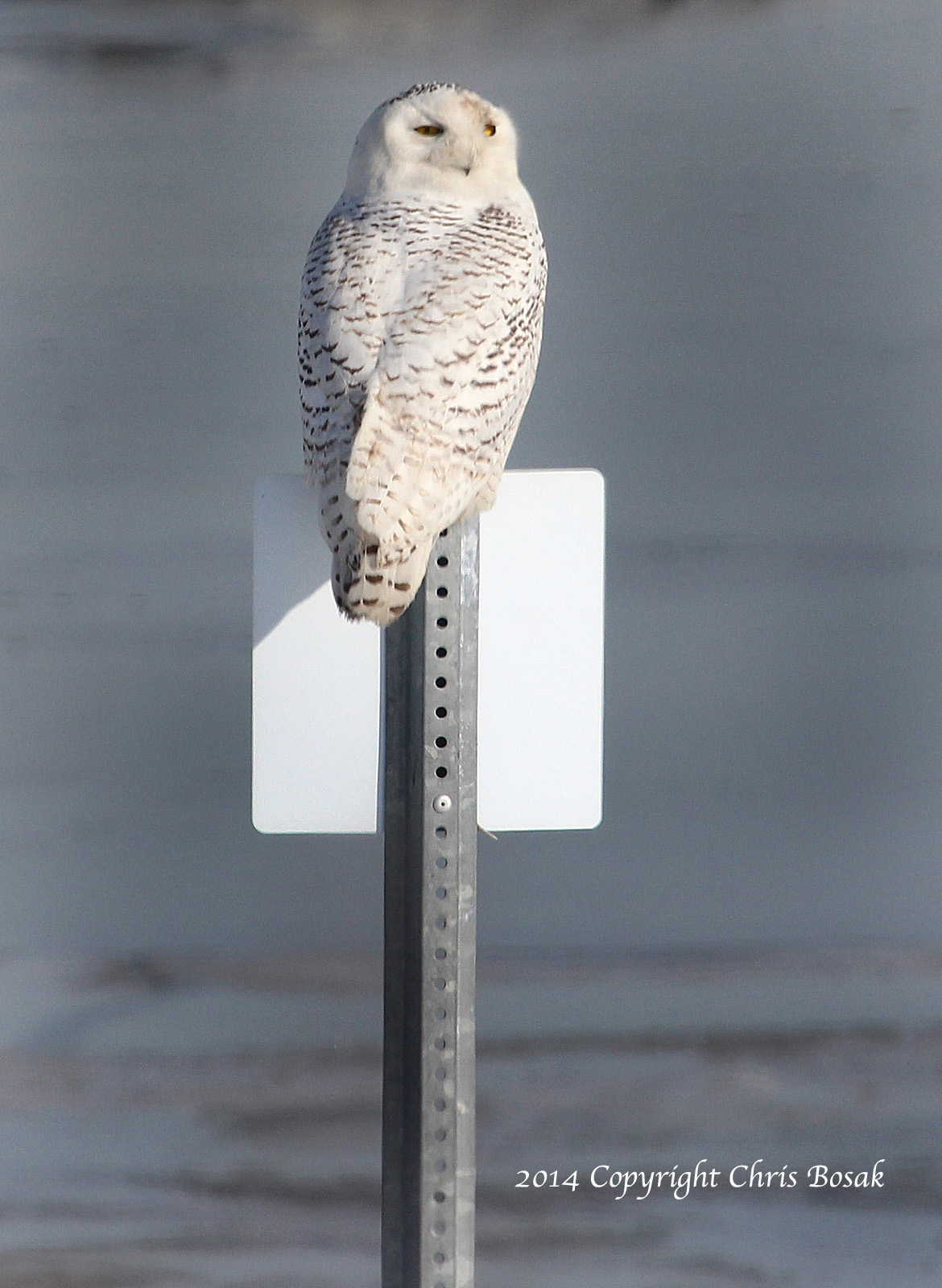
Photo by Chris Bosak A Snowy Owl sits on a sign at The Coastal Center at Milford Point in early March 2014.

Photo by Chris Bosak
A Snowy Owl sits on a sign at The Coastal Center at Milford Point in early March 2014.

While Snowy Owls can remain in one spot for hours on end, they do move around quite a bit, during the day and night. So where do the owls go when they aren’t under the watchful eye of birdwatchers? What do they do at night when even the best spotting scope can’t keep track of their whereabouts?

Information about what Snowy Owls do when they come down to the United States is valuable because it gives us a better understanding of these mysterious birds. As Arctic breeders, the more we know about them the better as we continue to grapple with the effects of climate change. They may offer clues as to the extent to which climate change is impacting our world.

To help gather more information on these owls, a group of volunteers started Project SNOWstorm last year. The project involves trapping Snowy Owls with a net and attaching a transmitter to each owl’s back using a harness. The transmitter is lightweight (about 40 grams) and the harness is designed to not effect an owl’s flight. The transmitters are solar-powered, which reduces the weight as no batteries are required, and use the cellular phone network as opposed to satellites. Using the Continue reading

A couple winter birds

Photo by Chris Bosak A female Downy Woodpecker perches next to a birdfeeder in New England, Jan. 2015.

Photo by Chris Bosak
A female Downy Woodpecker perches next to a birdfeeder in New England, Jan. 2015.

Yesterday (Saturday) coastal southern New England had its first significant snow of the year. And even so, it wasn’t that much of an event as we woke up to about four inches of snow and nothing else fell during the day (except some light rain off and on). But it was nice to see snow finally (I’m sure not everyone shares that opinion) and, for me, that always means checking out the feeding stations for photos opps.

I didn’t do so well in that department as the birds were surprisingly somewhat scarce. White-throated Sparrows were the most plentiful species, with 10 to 12 under the feeders at all times. A Downy Woodpecker showed up frequently, too. There were infrequent visits from cardinals, juncos and titmice. That’s about it. The Carolina Wren Continue reading

Carolina Wrens come a’singing — even in winter

Photo by Chris Bosak A Carolina Wren perches on a feeder in New England in January 2015.

Photo by Chris Bosak
A Carolina Wren perches on a feeder in New England in January 2015.

I was sitting in my bedroom doing some work on the computer when I heard a familiar song behind me. It wasn’t coming from the clock radio. It wasn’t even that type of song. It was a bird song, of course, and it was being belted out richly by a Carolina Wren.

“Tea-kettle, tea-kettle, tea-kettle!” Loud and strong.

It was nice to hear the song. It’s been a long time since we’ve heard a lot of birdsong in New England. I’ve heard plenty of bird calls — non-melodic chips often coming from cardinals and White-throated Sparrows — but not a lot of songs. But this Carolina Wren was in full voice. Why? I’m not exactly sure. I’ve heard Carolina Wrens sing in the winter before, plenty of times. My guess is that it’s territorial posturing. That’s part of why birds sing in the spring, mostly over breeding territories. I think this wren was protecting his feeding station.

(Story continues below, with more photos, too.)

Continue reading

Clearing out my 2014 photos, take 6: Brant

Photo by Chris Bosak A flock of Brant swims in the marshlands of Milford Point in Milford, Conn., April 2014.

Photo by Chris Bosak
A flock of Brant swims in the marshlands of Milford Point in Milford, Conn., April 2014.

Here’s my next photo in the series of 2014 photos that I never got around to looking at and posting.

Here’s a small flock of Brant I saw in the spring of 2014. At certain locations along the coast of southern New England, Brant flocks can number in the hundreds along Long Island Sound. At Calf Pasture Beach in Norwalk, Conn., the Brant flock pushes 1,000 birds or more.

Brant look somewhat similar to Canada Geese, but are smaller. A few individual Brant hang around New England through May and into June, but most of them return to their nesting grounds in the Arctic by March or April. It’s nice that they come visit us each winter.