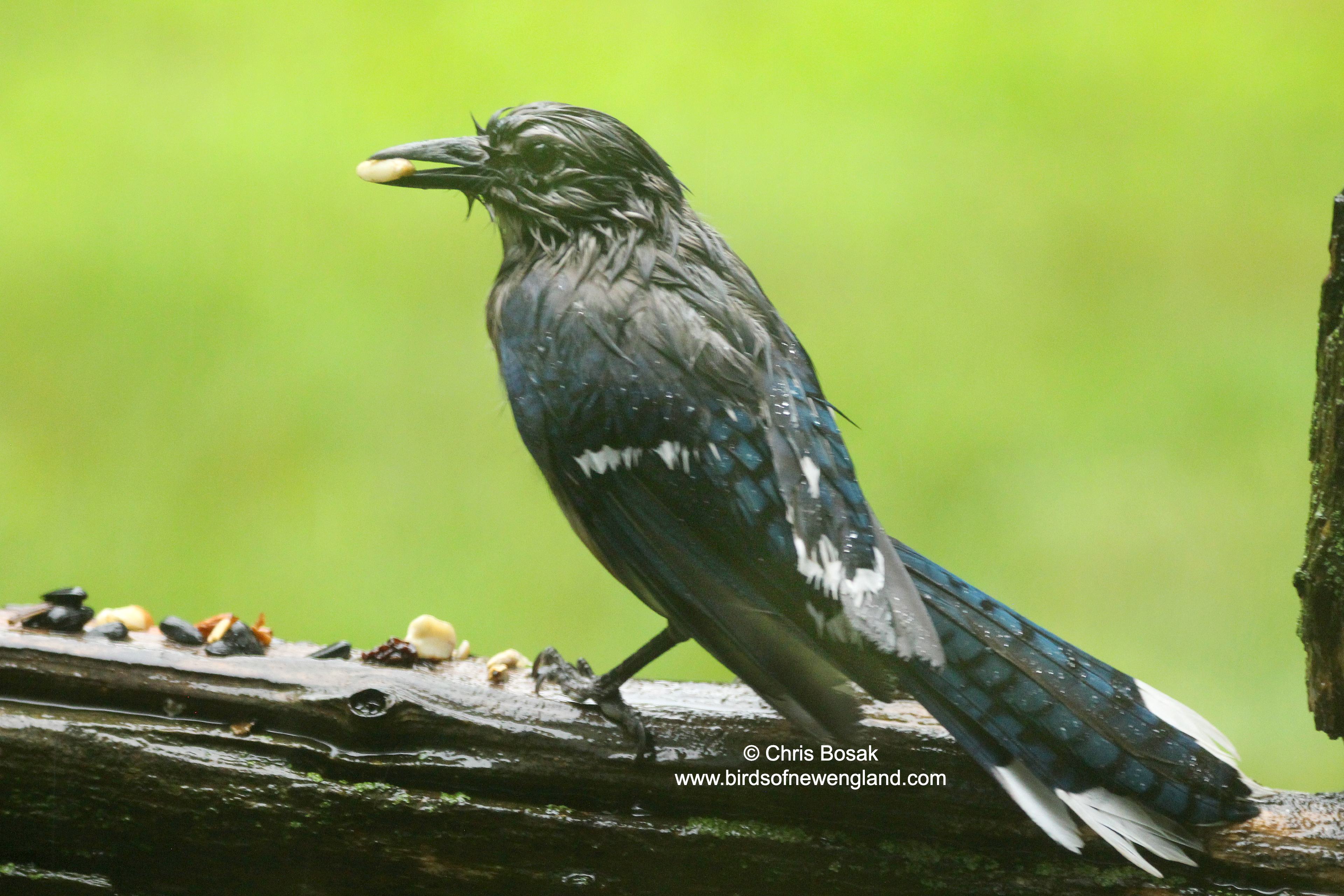
A soggy blue jay visits a feeder during a heavy rain in New England.
A major storm blew through New England the evening of the Fourth of July, but it was the weather event that happened two days later that caught my attention.
It was a work-from-home day, so I had a front-row seat to the feeders all day. I thought it was going to be a slow day as it rained heavily all day. And the action was slow, at first.
After a few hours of relentless teeming rain, the birds started coming again. Not surprisingly, the first birds to show up in the rain were cardinals. They are usually the first to show up in the morning and the last ones left as darkness settles in, so it was only fitting that they would appear first on this wet, soggy day.
The blue jays appeared not long after. Then the catbirds, then the chickadees and titmice. At this point, all of the birds appeared at the feeder looking like drowned rats. Remember, this wasn’t a gentle shower where the water would bead up nicely on the birds’ oily feathers and eventually roll away. This was a driving rain that soaked right through the layers of feathers.
So why were the birds out during this rain? Why not remain hunkered down until the rain passed?
The answer, of course, is that they were hungry. Birds have a high metabolism and need to eat a lot to get through the hours and days. It is estimated that small songbirds eat between 25 and 35 percent of their body weight each day. The rain had been steady for hours and wasn’t going to let up anytime soon.
Birds face many risk-reward dilemmas in their lifetimes. Migrate and face the inherent dangers of traveling great distances, or remain up north and risk freezing during the winter? Fight, flight, or hide when a predator is near?
In this case, the possibility of starving finally outweighed the potential pitfalls of venturing out in a heavy rain. Other than their ragged appearance, the birds did not appear stressed. It was business as usual.
Continue reading
