Birding starting to “heat” up

Photo by Chris Bosak A Black-and-white Warbler clings to a tree in Hoosick Falls, N.Y., in summer 2015.

Photo by Chris Bosak
A Black-and-white Warbler clings to a tree in Hoosick Falls, N.Y., in summer 2015.

It may be hot as ever as we head toward the second half of August, but the birding action is heating up as well. After a few months of relatively slow birdwatching as our feathered friends kept a low profile to raise families, the birds are starting to show themselves again.

I visited my brother Gregg’s house in upstate N.Y. near the Vermont border and the birds were out in full force. In one day I saw a Scarlet Tanager, Rose-breasted Grosbeak, Black-and-white Warbler, Pileated Woodpecker, Wood Thrush, and Ruby-throated Hummingbird. More common birds seen that day included chickadees, titmice, catbirds, Chipping Sparrows, American Goldfinches, robins and Blue Jays.

The summer is not over yet and the birdwatching is finally heating up, too.

Let me know what you see out there.

Latest For the Birds column: Answering some more bird questions

Last week I addressed a question that was submitted to me by a reader. This week I’ll continue to draw inspiration from my readers and quickly address some more questions and comments that came my way.

One question regarded a one-legged hummingbird. A reader delighted in the antics of a group of hummingbirds at her feeder. As many as four hummingbirds were visiting at one time. The reader noticed that one of the birds had only a stump for a leg. So, can a one-legged hummingbird survive in the wild?

Before I answer that, just a quick note to say that things are not always as they appear. Many birds appear to have only one leg, but often either the leg is tucked away into the bird’s body or the angle from which you see the bird makes it look like it is missing a leg. Waders (herons, egrets), shorebirds and waterfowl often stand on one leg.

But in this case, since the reader saw a stump instead of a leg, it’s likely the bird did indeed have only one leg. Obviously it’s not ideal, but birds that spend most of their time either flying or perched in trees, such as songbirds and hummingbirds, can indeed survive in the wild. Their wings

Click here for the rest of the column

Photos from Long Island Sound research cruise

Hour photo/Chris Bosak Maritime Aquarium at Norwalk educators and visitors look at the haul from a net brought in from Long Island Sound during a cruise aboard the Aquarium's new research vessel RV Spirit of the Sound on Saturday afternoon.

Hour photo/Chris Bosak
Maritime Aquarium at Norwalk educators and visitors look at the haul from a net brought in from Long Island Sound during a cruise aboard the Aquarium’s new research vessel RV Spirit of the Sound on Saturday afternoon.

Last weekend I was lucky enough to be able to join a research cruise of Long Island Sound aboard the Maritime Aquarium at Norwalk’s new vessel Spirit of the Sound. It was the first day the nearly $3 million vessel took members of the public onto the water. (Yes, I was one of the first guests aboard, in case that ever comes up in a trivia questions.)

Anyway, I photographed the cruise for The Hour newspaper and I’ll add a link to the photo collection below.

Norwalk is lucky to have two nonprofits that offer cruises out among the Norwalk Islands. The Maritime Aquarium at Norwalk and the Norwalk Seaport Association. To know something is to love something and these terrific organizations are dedicated to educating people about Long Island Sound, a vitally important ecosystem.

Here’s the link to more photos.

Hour photo/Chris Bosak Maritime Aquarium at Norwalk educator Nicole Rosenfeld shows off a spider crab caught in Long Island Sound aboard the Aquarium's new research vessel RV Spirit of the Sound on Saturday afternoon.

Hour photo/Chris Bosak
Maritime Aquarium at Norwalk educator Nicole Rosenfeld shows off a spider crab caught in Long Island Sound aboard the Aquarium’s new research vessel RV Spirit of the Sound on Saturday afternoon.

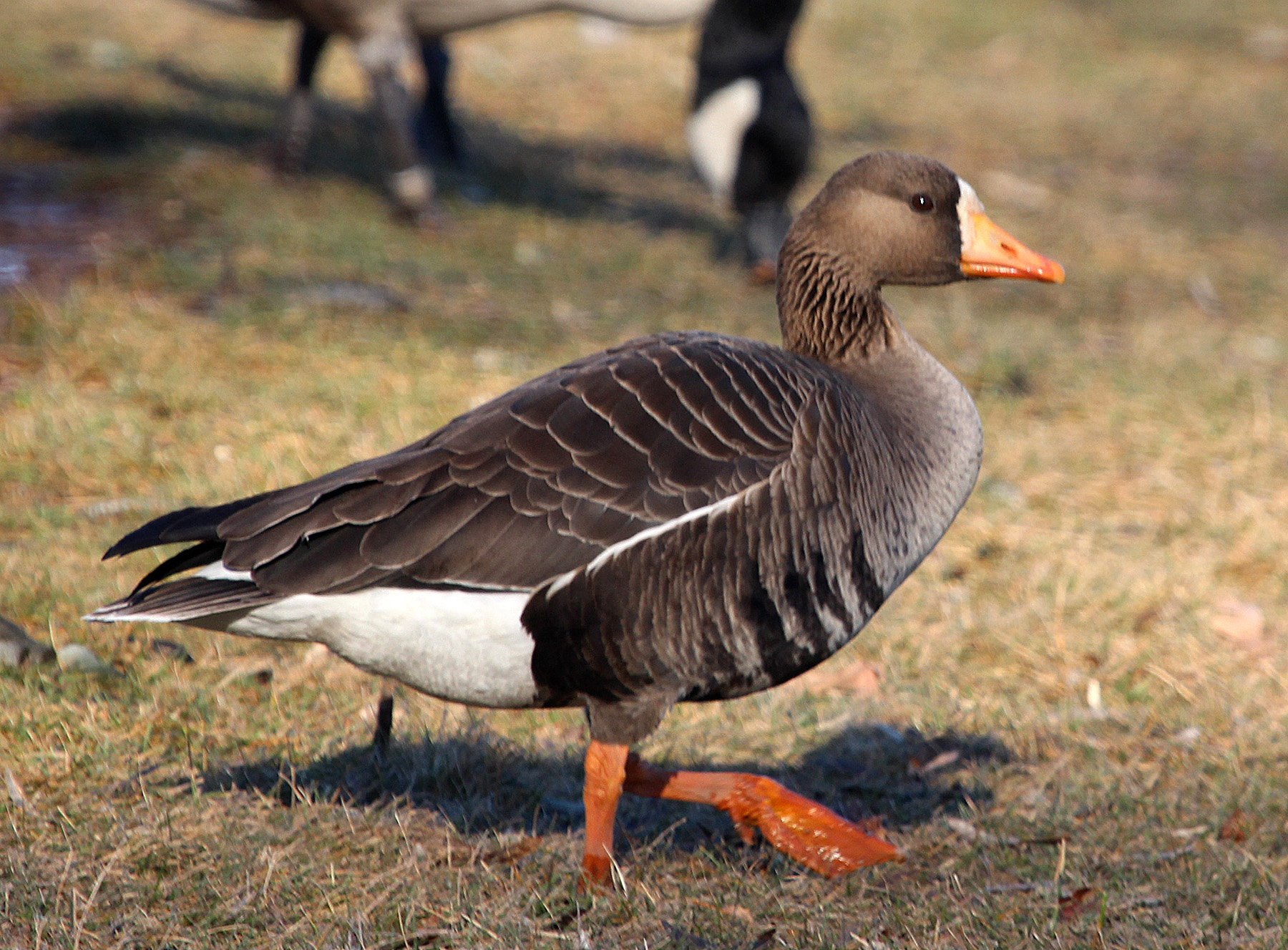
Greater White-fronted Goose chilling with Canada Geese


Photo by Chris Bosak A Greater White-fronted Goose is seen with a flock of Canada Geese at Cove Island Park in Stamford, Conn., March 2015.

Photo by Chris Bosak
A Greater White-fronted Goose is seen with a flock of Canada Geese at Cove Island Park in Stamford, Conn., March 2015.

Here’s a shot of a Greater White-fronted Goose within a flock of Canada Geese. The photo was taken Sunday, March 22, 2015, at Cove Island Park in Stamford, Conn.

It’s a reminder to look closely at flocks of Canada Geese for the stray bird. Individual Snow Geese are often found among flock of Canada Geese, too. So, when is a flock of Canada Geese not a flock of Canada Geese? When there’s something else in there, too. Look carefully.

The Greater White-fronted Goose is common in the West and Midwest, but seen only occasionally in the East.

I was alerted to this bird by the Connecticut birding list, so thanks to those who listed this bird.

Here’s a close up:

Photo by Chris Bosak A Greater White-fronted Goose is seen with a flock of Canada Geese at Cove Island Park in Stamford, Conn., March 2015.

Photo by Chris Bosak
A Greater White-fronted Goose is seen with a flock of Canada Geese at Cove Island Park in Stamford, Conn., March 2015.

Hard to watch ducks when Long Island Sound is frozen


Photo by Chris Bosak Long Island Sound is mostly frozen on Feb. 21, 2015, as shown by this scene from Weed Beach in Darien, Conn.

Photo by Chris Bosak
Long Island Sound is mostly frozen on Feb. 21, 2015, as shown by this scene from Weed Beach in Darien, Conn.

Birdwatching makes New England winters that much more bearable for me. I love the winter ducks that come down from the Arctic, Canada and northern New England and overwinter on Long Island Sound: Long-tailed Ducks, Bufflehead, Hooded Mergansers, Red-breasted Mergansers, Common Goldeneye and the like. Not to mention the other fowl like loons and grebes.

But it’s a little hard to watch ducks like this …

In my 16 years living near the coast of Connecticut I’ve never seen Long Island Sound be frozen. I’ve heard stories from oldtimers about Long Island Sound freezing over, but I’ve never seen it. Until now.

This morning (Saturday, Feb. 21, 2015) I brought my spotting scope down to Weed Beach in Darien, Conn., to check out the ducks. I didn’t even have to get the scope out of the car. Long Island Sound was frozen. Where kids swim in the summer and ducks swim in the winter, it was completely frozen. Ice as far as I could see. A small pool of water connecting Darien and Stamford and feeding Holly Pond was unfrozen and held a few Bufflehead and Red-breasted Mergansers, but that was it. The rest was ice.

Saturday was warm (relatively speaking, about 30 degrees) and Sunday is supposed to be even warmer (around 40), but Monday we are right back into single digits. We’ll see how the Sound reacts. I’d sure like to see my ducks again.


A change of heart regarding House Finches

Photo by Chris Bosak A House Finch eats buds from a bush in Norwalk, Conn., Feb. 2015.

Photo by Chris Bosak
A House Finch eats buds from a bush in Norwalk, Conn., Feb. 2015.

I almost hate to admit it on this site, but I’ve never been a big fan of House Finches. Sure they are wild birds and look pretty with their reddish-pink feathers. But their eating habits at bird-feeding stations have long been a bone of contention with me. They perch on the feeder and gorge themselves for minutes on end. I prefer the grab-a-seed-and-go method employed by backyard favorites such as chickadees, titmice, and nuthatches. Come back as often as you need, as far as I’m concerned, but grab and go. Leave space and time for others.

But not House Finches.They fly in, perch, and sit there. Seed after seed goes into their belly and there they sit. Meanwhile, the chickadees and nuthatches sit on nearby branches waiting for a spot to open. House Finches aren’t even Continue reading

Clearing out my 2014 photos, take 9: Black-capped Chickadee

Photo by Chris Bosak A Black-capped Chickadee clears out a cavity in a tree for a nesting site at Selleck's/Dunlap Woods in Darien in spring 2014.

Photo by Chris Bosak
A Black-capped Chickadee clears out a cavity in a tree for a nesting site at Selleck’s/Dunlap Woods in Darien in spring 2014.

Here’s my next photo in the series of 2014 photos that I never got around to looking at and posting.

Admittedly not a great shot technically, but interesting to see a Black-capped Chickadee exiting a potential nesting hole with a bill full of dead wood shavings. A pair of chickadees worked their tails off getting this cavity ready for the nesting season. I’m not sure if they actually saw this whole project through or not. I kind of hope not because the tree was dead and pretty flimsy. I’m not sure it was strong enough to withstand some of the storms we get here in New England. I’m sure the birds know what they are doing. At any rate, chickadees first excavate a cavity and then build a small nest of materials such as moss to soften the bottom of the home.

Latest For the Birds column — Far parking pays off again

Photo by Chris Bosak A Brown Creeper climbs up the underside of a branch on a tree in Norwalk, Dec. 2014.

Photo by Chris Bosak
A Brown Creeper climbs up the underside of a branch on a tree in Norwalk, Dec. 2014.

Here’s my latest For the Birds column that appeared in The Hour and Keene Sentinel. A few months ago I wrote about the advantages of parking in a spot far away from my work’s building, so I could walk along the river to see what birds were around. Well, the practice paid off again.

Read about it here.

Christmas Bird Count time is here

CBC-logo-stacked

The Christmas Bird Count (CBC) season is upon us. The local one that I participate in — the Westport Circle — takes place on Sunday. Many of the counts take place this weekend, but the range to do the count started on Dec. 14 and runs through Jan. 5. Participants spend all day “in the field” counting birds (individual species and total number) and send the data to the circle’s compiler, who turns it all into the National Audubon Society.

The Christmas Bird Count is the world’s largest citizen science program with data going back to 1900. The data helps scientists track bird populations and is valuable in determining what steps, if any, need to be taken to help certain species.

The data, of course, is valuable and is indeed the most important part of the CBC. But it’s also a fun day to look for birds all day. Sometimes the weather doesn’t cooperate — let me rephrase that, the weather hardly ever cooperates — but that only adds Continue reading

Hermit thrushes abound on latest bird walk

Photo by Chris Bosak A Hermit Thrush perches on a branch at Selleck's/Dunlap Woods .

Photo by Chris Bosak
A Hermit Thrush perches on a branch at Selleck’s/Dunlap Woods .

I can’t speak for how well the Hermit Thrush population is doing in general, but the last bird walk I took yielded a lot of these handsome birds. I was walking through Selleck’s/Dunlap Woods in Darien (Conn.) with my buddy Larry Flynn and the thrushes were by far the most commonly seen bird. At one point we had five or six Hermit Thrushes in one bush. I’ve seen plenty of Hermit Thrushes in my day, but never that many in the same bush.

As we walked along the trails, Hermit Thrushes popped up here and there, and pretty much everywhere. The birds, however, were silent — other than their little feet rustling among the fallen leaves. They didn’t sing their famous flute-like song because it’s the fall migration. During the breeding season (spring and summer) it’s a treat to hear their song echo throughout the woods.

I mentioned before than I can’t speak for how the population is doing overall. Well, that was a white lie because I can, at least by crediting another source. Hermit Thrushes, thankfully, are doing well as a species. In fact their numbers have been rising since 1966, according to the North American Breeding Bird Survey.

Hermit Thrushes are probably the most commonly seen thrush in New England, but there are several types of thrushes — and they can be very difficult to tell apart. The Wood Thrush and Veery look somewhat different than the Hermit Thrush and are fairly easy to differentiate. However, species such as Bicknell’s Thrush, Swainson’s Thrush and Gray-checked Thrush pose a tougher ID challenge and it takes a trained eye to pick out those species.

Larry and I are pretty certain that what we were seeing were all Hermit Thrushes. The next walk, however, may yield nary a Hermit Thrush. That’s the joy of migration — and birding in general.

Feel free to leave a comment …