I’ve participated in the Christmas Bird Count in all types of weather.
I can recall bitter cold days, unusually warm days, pouring rain, sleet, light snow and blustery snow squalls. Once a date is set far in advance, it is usually held on that day regardless of the weather.
This year, the count I did with my friend Frank in southern New England took place in a wet snow that accumulated before our eyes. It made for beautiful scenery but also frozen fingers and toes, damp clothing, steamed optics and fewer birds than usual.
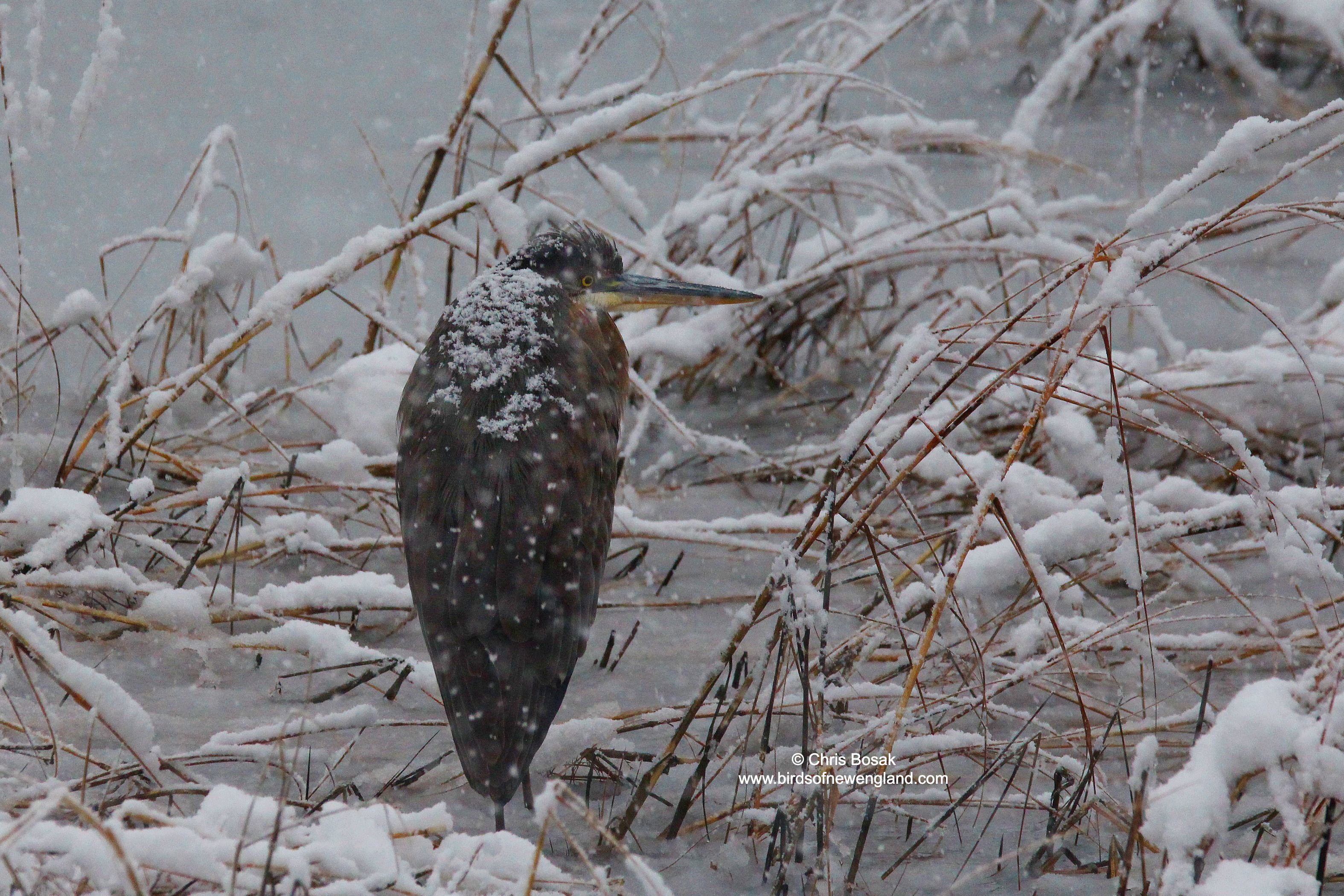
Great blue heron in snow, Christmas Bird Count 2025, Stamford, CT.
It was that type of day for the Christmas Bird Count today (Sunday, Dec. 14, 2025). Frank and I did the Cove area of Stamford (Connecticut) and nearby Darien.
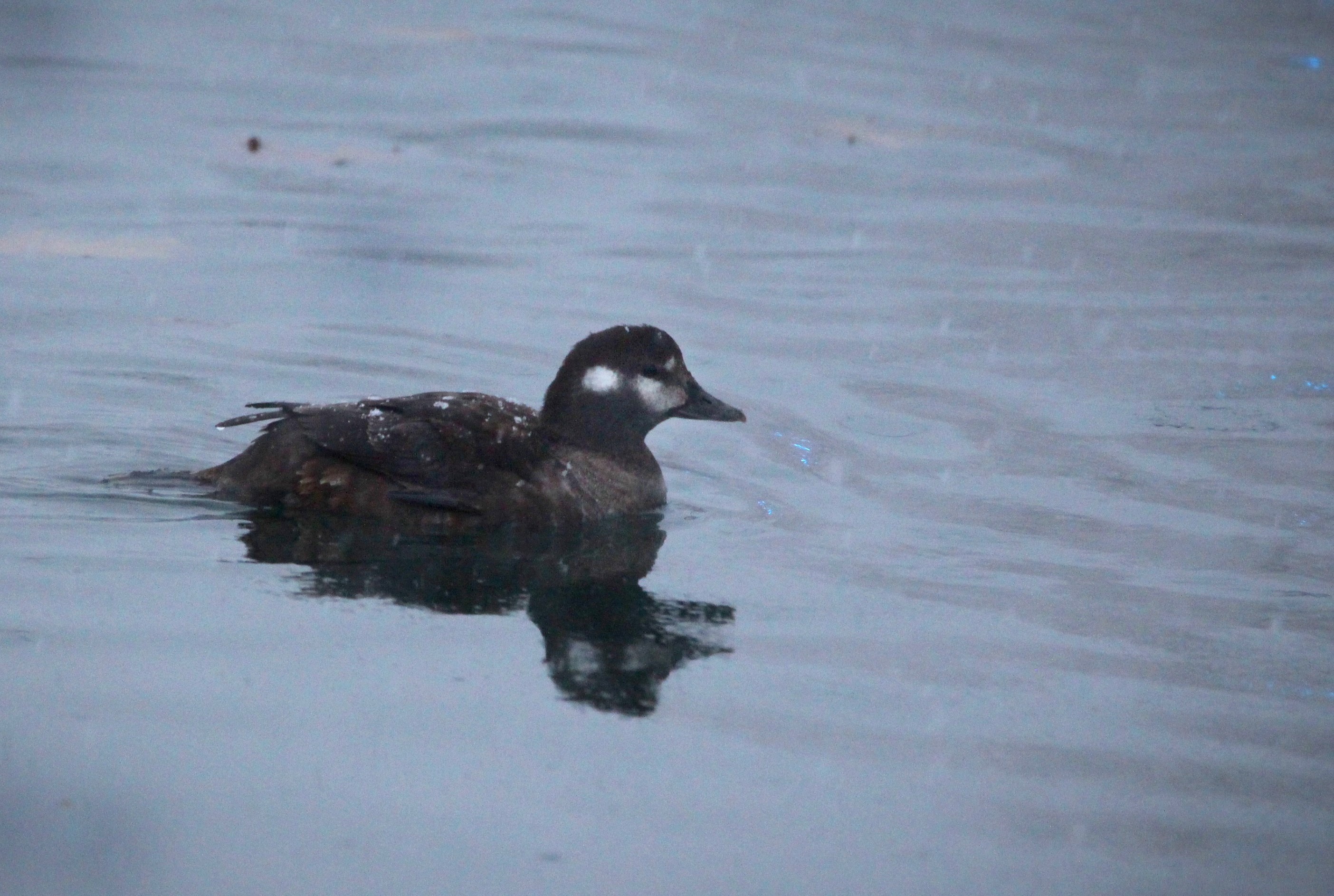
The heavy snow in the morning kept many of the land birds hidden, but many of the water birds were still around, braving the elements. A few highlight species were: harlequin duck (one female), greater white-fronted goose, killdeer, yellow-bellied sapsucker, and snow bunting.
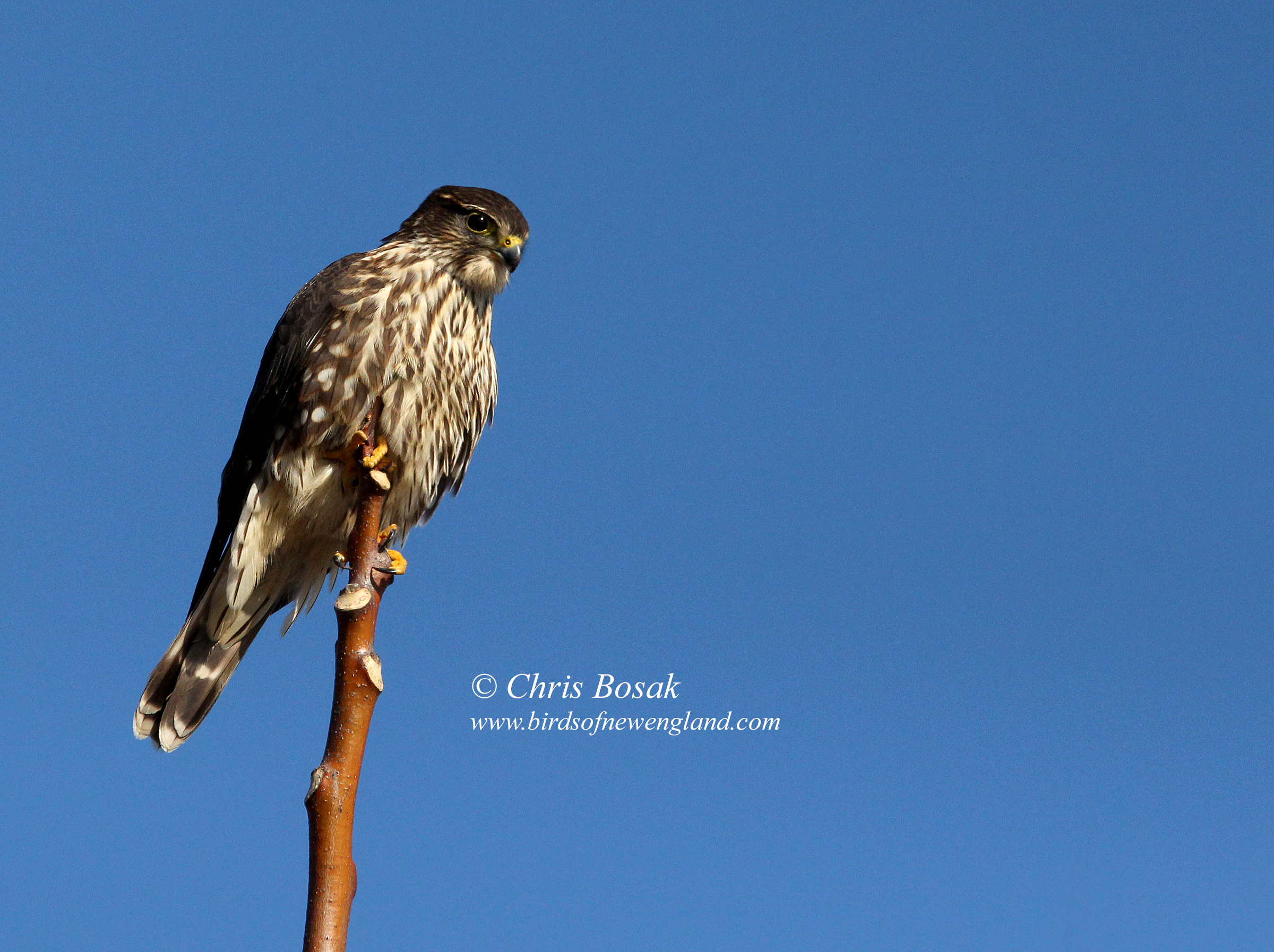
Photo by Chris Bosak – A merlin spotted in southern Connecticut during the Christmas Bird Count, Dec. 2024.
The Christmas Bird Count is typically one of my birding highlights of the year. This year was no exception.
The Christmas Bird Count is a bird census conducted by volunteers each winter to track bird populations and trends. Keene was one of the original 25 locations in 1900. Now there are well more than 2,000 counts held throughout the United States and beyond.
I did my usual area along a coastal region of southwestern Connecticut. It is a good area to cover as there is a nice variety of habitats, including Long Island Sound, marshes, freshwater ponds, wooded areas and even some patches of open field.
We started, as usual, at a park that has a river on one side and a marina on the other. Long Island Sound is a mile or so to the south, so the river and marina often get winter ducks normally associated with larger bodies of water.
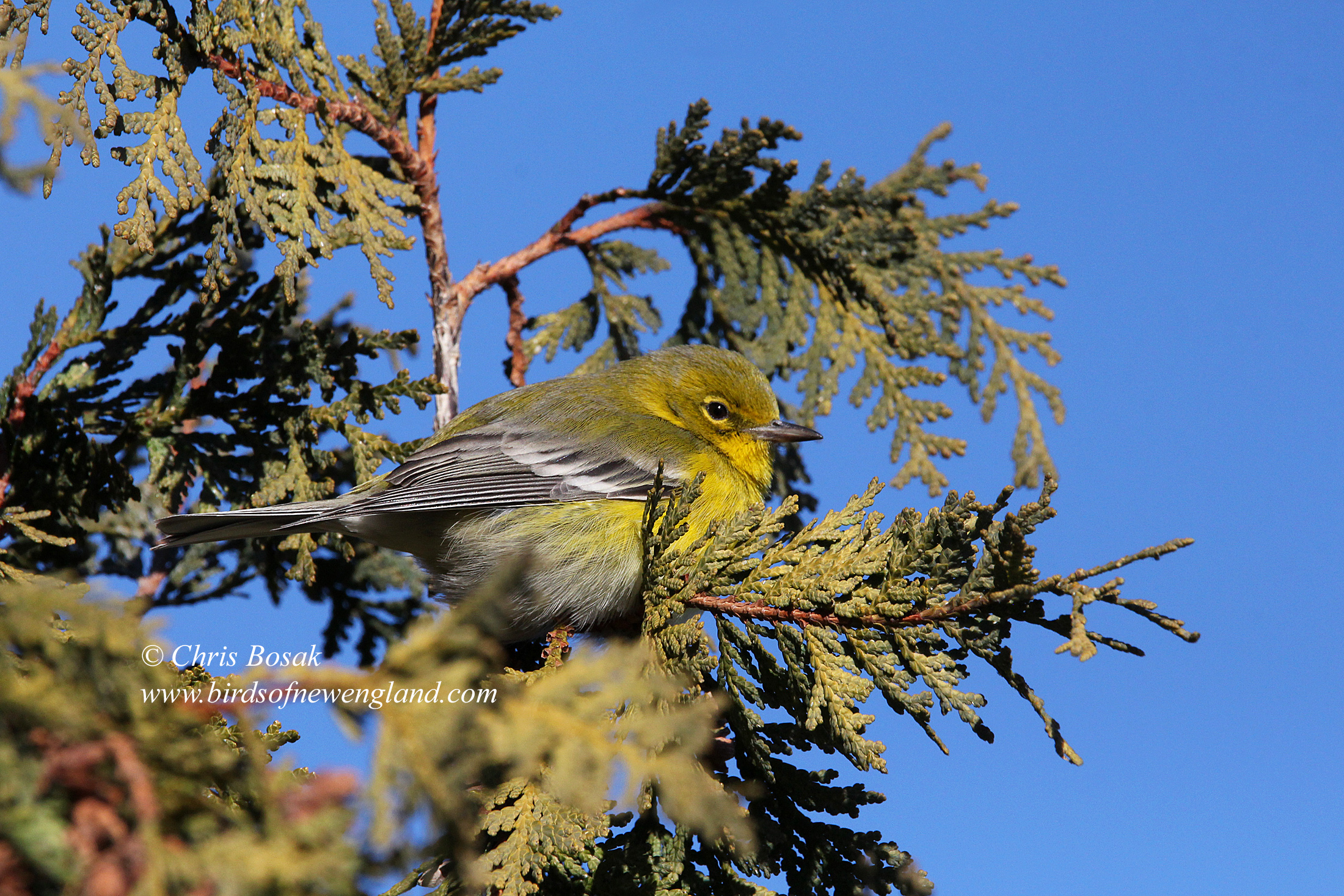
Photo by Chris Bosak – A merlin at Taylor Farm in Norwalk, CT, December 2024.Photo by Chris Bosak – A pine warbler at the esplanade in Norwalk, December 2024.
On Sunday (December 22, 2024), I participated, as usual, in the Christmas Bird Count and covered my usual area of coastal Norwalk (SW Connecticut). Instead of my usual birding partner Frank, I covered the area with Adam and Jo. It was 13 degrees when we started and didn’t seem to get much warmer as the day went on. In fact, the wind picked up and made it seem even colder. The things we do for the birds.
We had a successful day with plenty of highlights, including bald eagle, peregrine falcon, merlin, pipit, pine warbler, yellow-rumped warblerf and both types of kinglet.
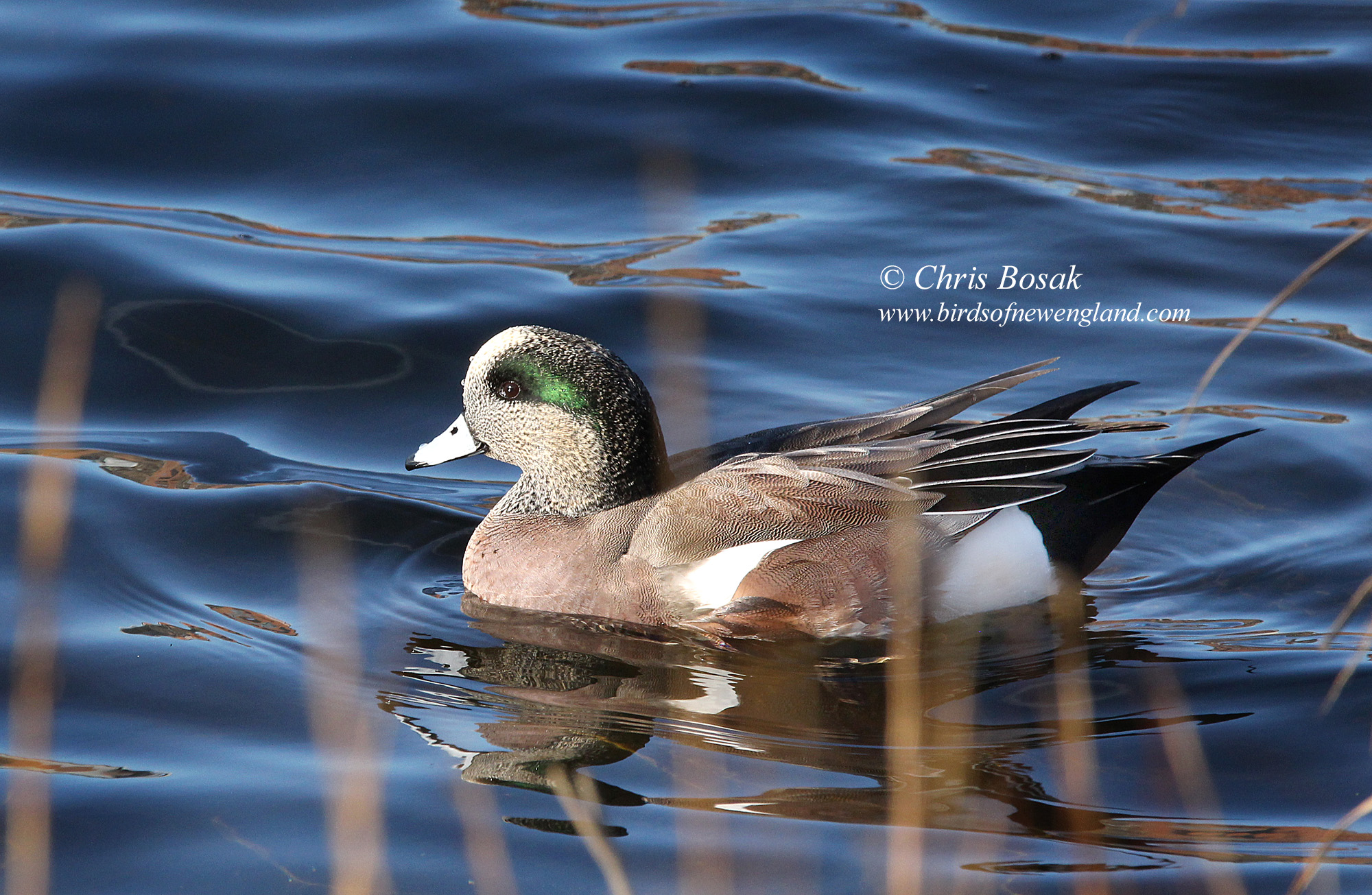
Photo by Chris Bosak — American wigeon, Christmas Bird Count, Westport (CT) Circle, 2022.
It was an abbreviated Christmas Bird Count for me this year due to nagging foot problems and family obligations. I’ll take it, though, as I missed last year completely due to the foot problems. Progress is good.
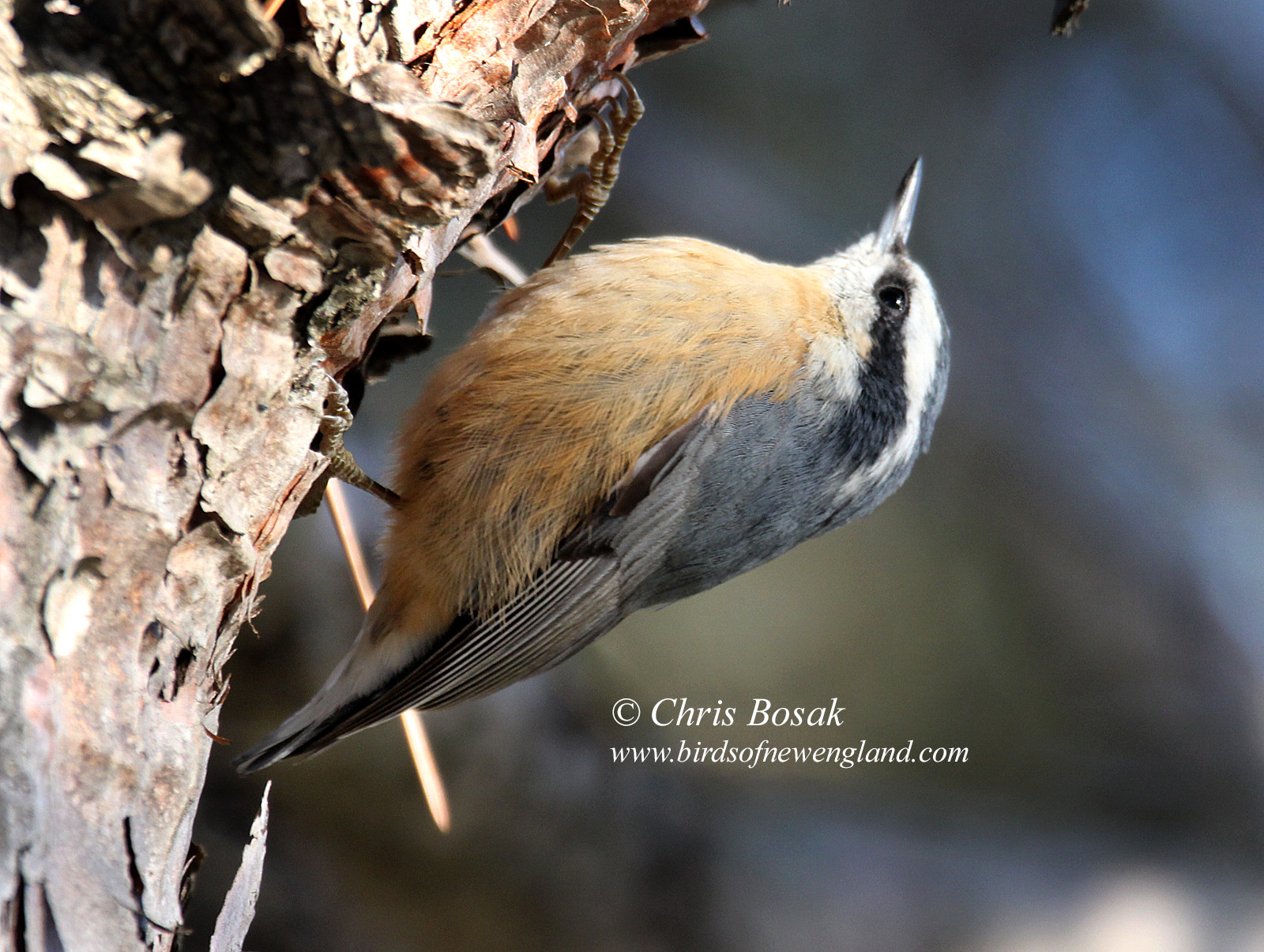
Frank, Tom and I packed a lot into the time we did have together. Tom and I ducked out early, and Frank birded until dark. I was there for a good cross-section of water and land hot spots. Some highlights included 3 warbler species (pine, yellow-rumped and Nashville), red-breasted nuthatch, American wigeon (close views), common goldeneye, common and red-throated loon, and American pipit.
Click here for more information about the Christmas Bird Count, one of the longest-running wildlife censuses in the world.
Here are a few more photos from the day. It was good to be back out there. Hopefully next year I’ll be back at full strength.
Photo by Chris Bosak — Red-breasted nuthatch, Christmas Bird Count, Westport (CT) Circle, 2022.Photo by Chris Bosak — Red-shouldered hawk, Christmas Bird Count, Westport (CT) Circle, 2022.Photo by Chris Bosak — Hooded mergansers, Christmas Bird Count, Westport (CT) Circle, 2022.
Photo by Chris Bosak
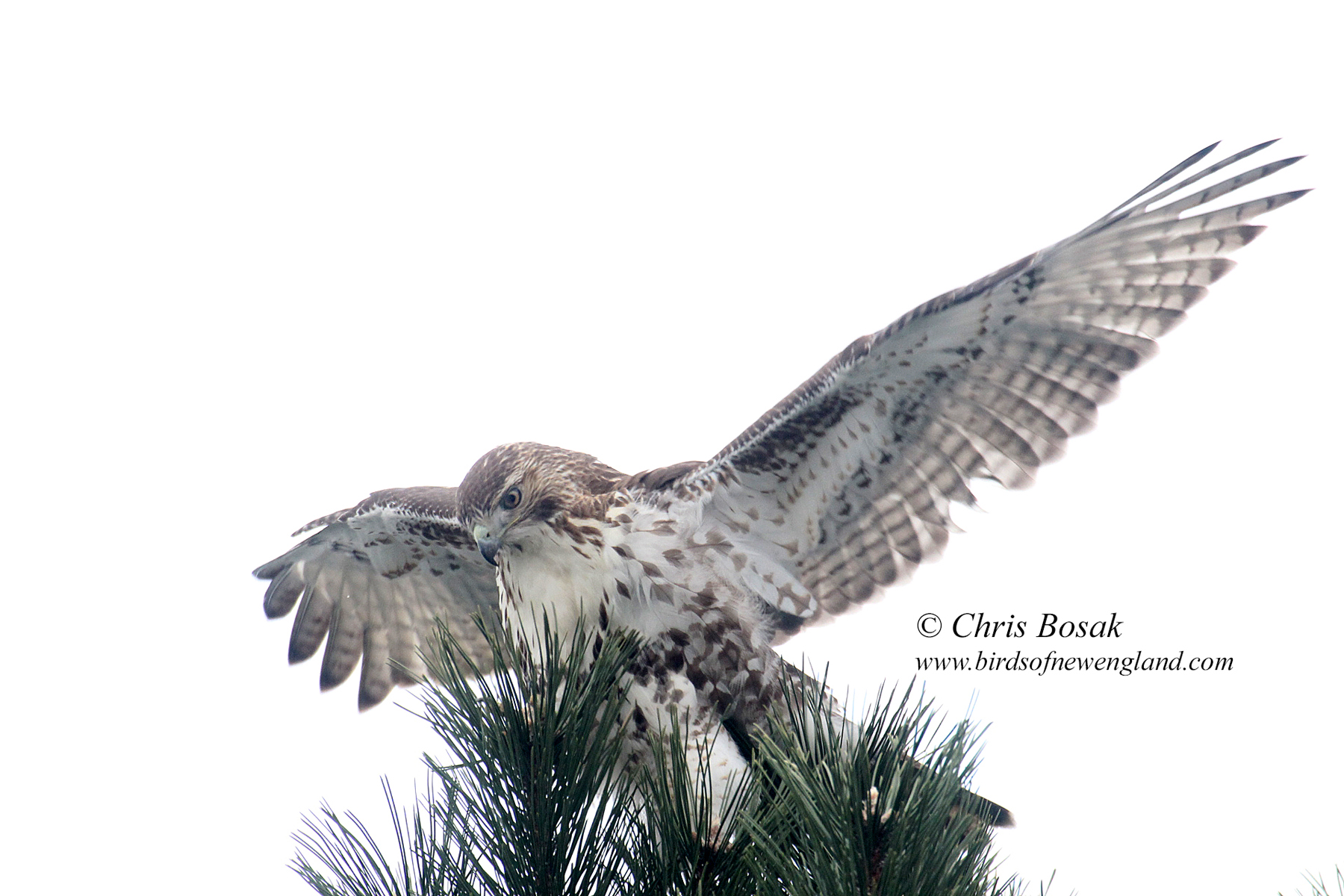
A red-tailed hawk perches on the top of a pine tree in New England, December 2020.
Here’s one more shot of the red-tailed hawk that we saw during the Christmas Bird Count on Sunday in Norwalk, Connecticut. We were looking for warblers among the pine trees and this bird flew in out of nowhere to entertain us for a bit.
Photo by Chris Bosak
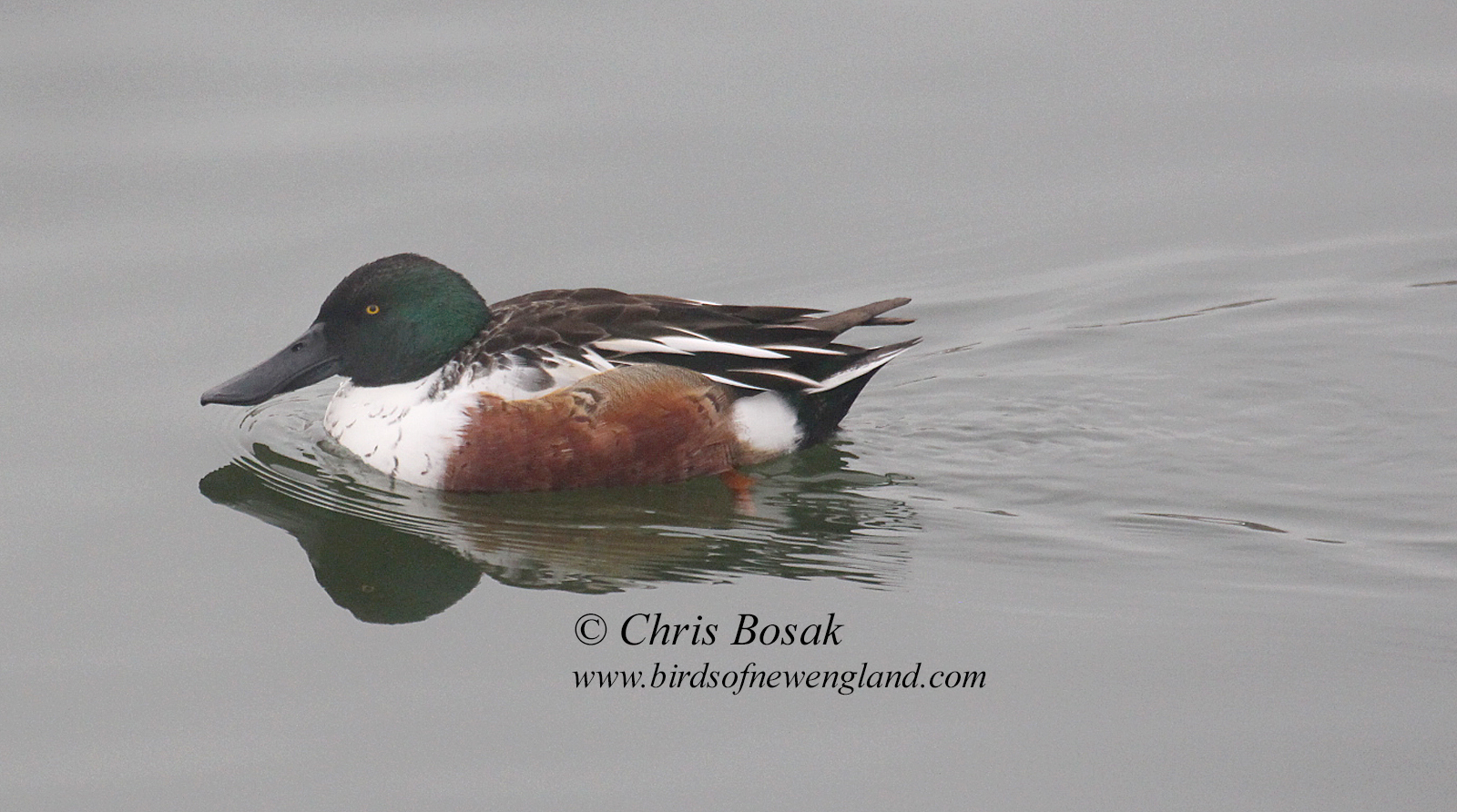
A northern shoveler swims on the Norwalk River in New England, December 2020.
It was a gray day that turned into a snowy day that turned into a misty, gray day. The weather never fails to be part of the story of a Christmas Bird Count (CBC) in New England. Yesterday (Sunday) was the annual CBC in my area and, as usual, I covered the Norwalk (Conn.) coastline and parts inland with Frank Mantlik, one of Connecticut”s top birders. We tallied 61 species, which will be combined with the other birds spotted by the Count’s other teams. Highlights included northern shoveler, northern pintail, prairie warbler, pine warbler, yellow-rumped warbler, northern harrier, merlin and horned lark. Full story coming in my For the Birds column. In the meantime, here’s what the Christmas Bird Count is all about.
Photo by Chris Bosak
A red-tailed hawk perches on the top of a pine tree in New England, December 2020.Photo by Chris Bosak
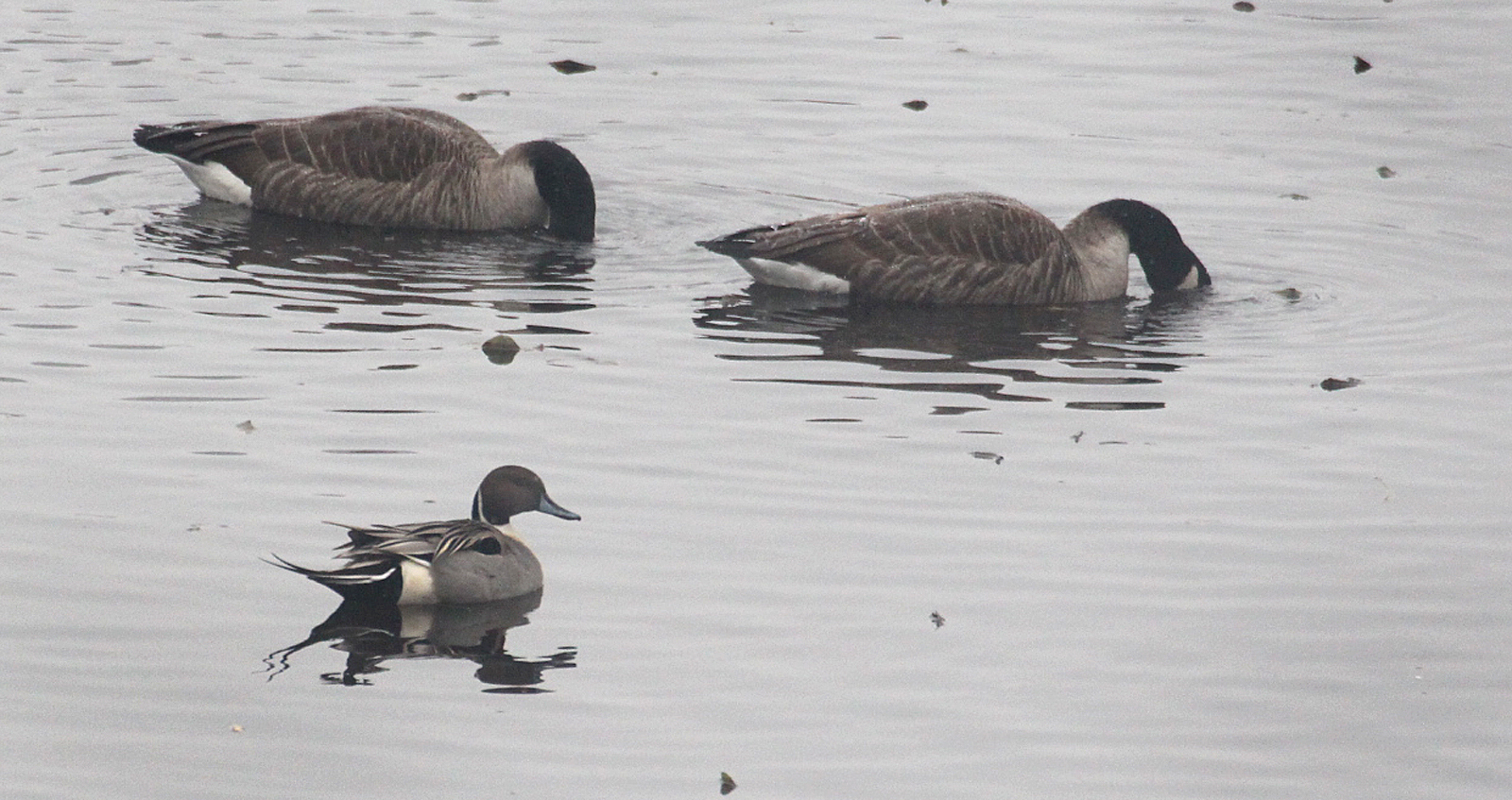
A prairie warbler perches on a cement barrier at a waste water treatment center in New England, December 2020.Photo by Chris Bosak A northern pintail drake swims in a pool of water with Canada geese in New England, December 2020.Photo by Chris Bosak
A northern shoveler swims on the Norwalk River in New England, December 2020.
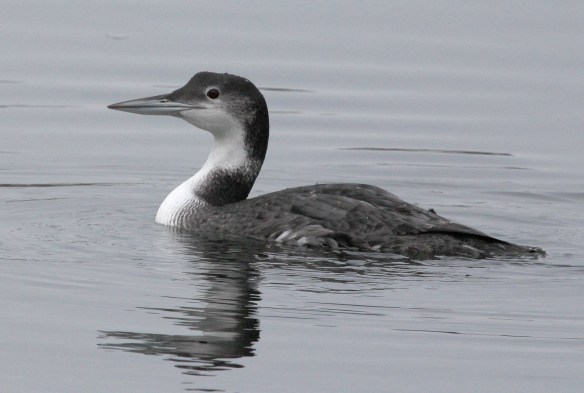
Photo by Chris Bosak Common loon in winter plumage on Long Island Sound.
The birding had been slow — not dreadfully slow, but slower than usual, for sure — when we rolled up beside some evergreens in a front yard. We noted a flurry of activity (finally) and stopped for a closer inspection.
A half-dozen juncos flitted close to the ground, flashing their white-edged tails. Suddenly, a yellow bird flew from one tree to another. Any yellow bird that is not a goldfinch is cause for “ID at all costs” during a Christmas Bird Count. Not that goldfinches aren’t welcomed species, but they are rather expected to be seen in New England in December. Other yellow birds, not so much.
It landed just long enough for us to get a decent look and for Frank to get a few good-enough photographs. It was a warbler, for sure. We immediately thought orange-crowned warbler as they are the warblers most often seen during a New England Christmas Bird Count. Frank inspected the photos on his camera — something that wouldn’t have been possible 20 or 25 years ago — and determined it was a Nashville warbler instead. In the flurry, we also noted a ruby-crowned kinglet scurry from one bush to another. All the while, a Carolina wren belted out a song from a telephone wire across the street. As a birdwatcher, you love those flurries. You really love them during a Christmas Bird Count.
Frank and I cover a coastal area of Connecticut and have done so for going on 20 years. For that area, we finished the Count with 52 species and close to 2,000 birds. Not bad, not great. We’ve had better years, to be honest.
The Christmas Bird Count is an annual citizen science project that has grown from 27 participants in the inaugural Count in 1900 to now more than 75,000 participants each year. Keene was one of the original 25 Count areas. The data is used by ornithologists and other scientists to track long-term trends of bird populations.
Yes, it’s scientific and for a great cause. But, really, most people do it because it’s great fun. It’s an excuse to take a December day and watch birds from sunrise to sunset (even longer for the owlers.) It does, however, become a responsibility for participants. You don’t want to miss a day and let down the birds or your fellow birders.
Weather plays a big role in the amount of fun you have. Here in New England, a mid-December day can be 50 degrees or zero degrees. It can be sunny, cloudy, rainy, snowy, or any combination thereof. I’ve done Counts in blizzards and I’ve done Counts when it feels like early September.
This year’s Count was cloudy, cold and breezy. I’ll take it. It could have been a lot worse. The breeziness may have kept some birds hunkered down, but I don’t think the lack of birds we saw was due to the weather, except for the freshwater ponds. We visited a few ponds that had been frozen a few days prior to the Count so most ducks flew off for open water. We did see a lot of gadwall, a few ring-necked ducks and hooded mergansers, and, of course, tons of mallards.
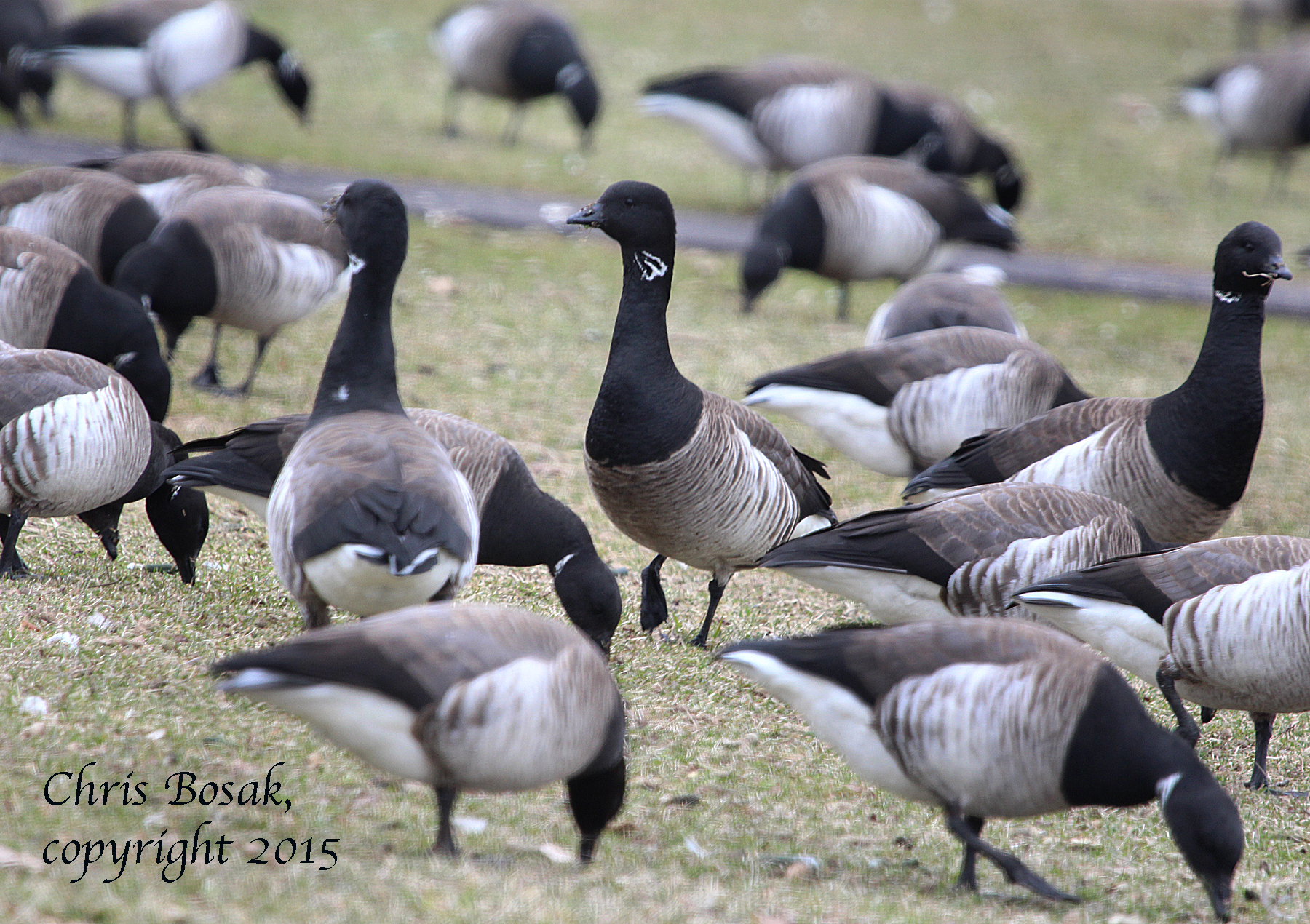
We had other successes, too, such as the Nashville warbler and kinglet. Other highlights included several hundred brant, a gray catbird, a peregrine falcon and seven common loons on Long Island Sound.
Frank and I discussed the demise of the monk parakeet. We used to count dozens of the bright green birds along the coast and this year we had only one fly over our heads. Its squawking alerted us to it. Monk parakeets, of course, are not native to New England, but an escaped shipment from JFK Airport decades ago led to an established colony along the Connecticut coastline. They used to thrive here; now, they are all but gone. They build huge, heavy nests made of sticks on utility poles, so we concluded that the utility companies must have had something to do with their disappearance. That’s just a guess, however.
Want to get involved with a Count in your area? Most local Counts have been done already this year, but start planning now for next year. Do an Internet search for “How do I join the Christmas Bird Count” and the first result will be a link to the National Audubon Society’s CBC page. You can also check out historic local results from your area.
If you do sign up, be prepared to have fun. Just be ready to bundle up.
Photo by Chris Bosak A purple finch eats seeds at a feeder in New England, Nov. 2018.
My latest For the Birds column releases my personal top 10 birding moments for 2018. Recapping the previous year is my favorite column to write each late December or early January. This year, instead of blasting out the top 10 all at once I’m going to spread it out and reveal two each day, starting today (Jan. 1, 2019.) This post will include Nos. 6 and 5.
Feel free to comment or send me an email with some of your 2018 birding or nature highlights.
6. Winter birds at feeder. They were really late fall sightings, but happened after the leaves had dropped so it felt more like winter. It started with a female purple finch, continued with several fox sparrows, and ended with a ton of pine siskins. There is still plenty of time left in winter to add to that list. Anybody want to send me their evening grosbeaks?
Photo by Chris Bosak Common loon on Long Island Sound during winter months.
5. Christmas Bird Count. It’s going on 20 years now that I’ve participated in the annual bird census. As usual, I did a count in southwestern New England that features varied habitat — from wooded areas to freshwater ponds to Long Island Sound. A few highlight species include: great egret; common loon; merlin; and red-breasted nuthatch.
Photo by Chris Bosak Brant were once again numerous at Calf Pasture Beach in Norwalk, Conn., during the 2016 Christmas Bird Count.
Here’s the latest For the Birds column, which runs weekly in The Hour (Norwalk, Conn.), The Keene (NH) Sentinel and several Connecticut weekly newspapers.
…
Buffleheads were everywhere. Not in great numbers, particularly, but they were everywhere we looked.
Norwalk Harbor, Norwalk River, Long Island Sound off Calf Pasture and Cedar Point Yacht Club, the small pond at Taylor Farm … it seemed the bufflehead was the duck of the day for the most recent Christmas Bird Count. As I have for the past 16 years or so, I participated in the Westport Circle count and covered East Norwalk with Frank Mantlik.
The Christmas Bird Count is the world’s largest citizen science program, with data going back to 1900. The data helps scientists track bird populations and is valuable in determining what steps, if any, need to be taken to help certain species.
Frank and I found a total of 53 species, which is about typical for us. The weather was wet and gray, so that may account for the slightly lower total. I can’t complain, though; Continue reading →







 Birds of New England.com