For the Birds: Surrounded by juncos

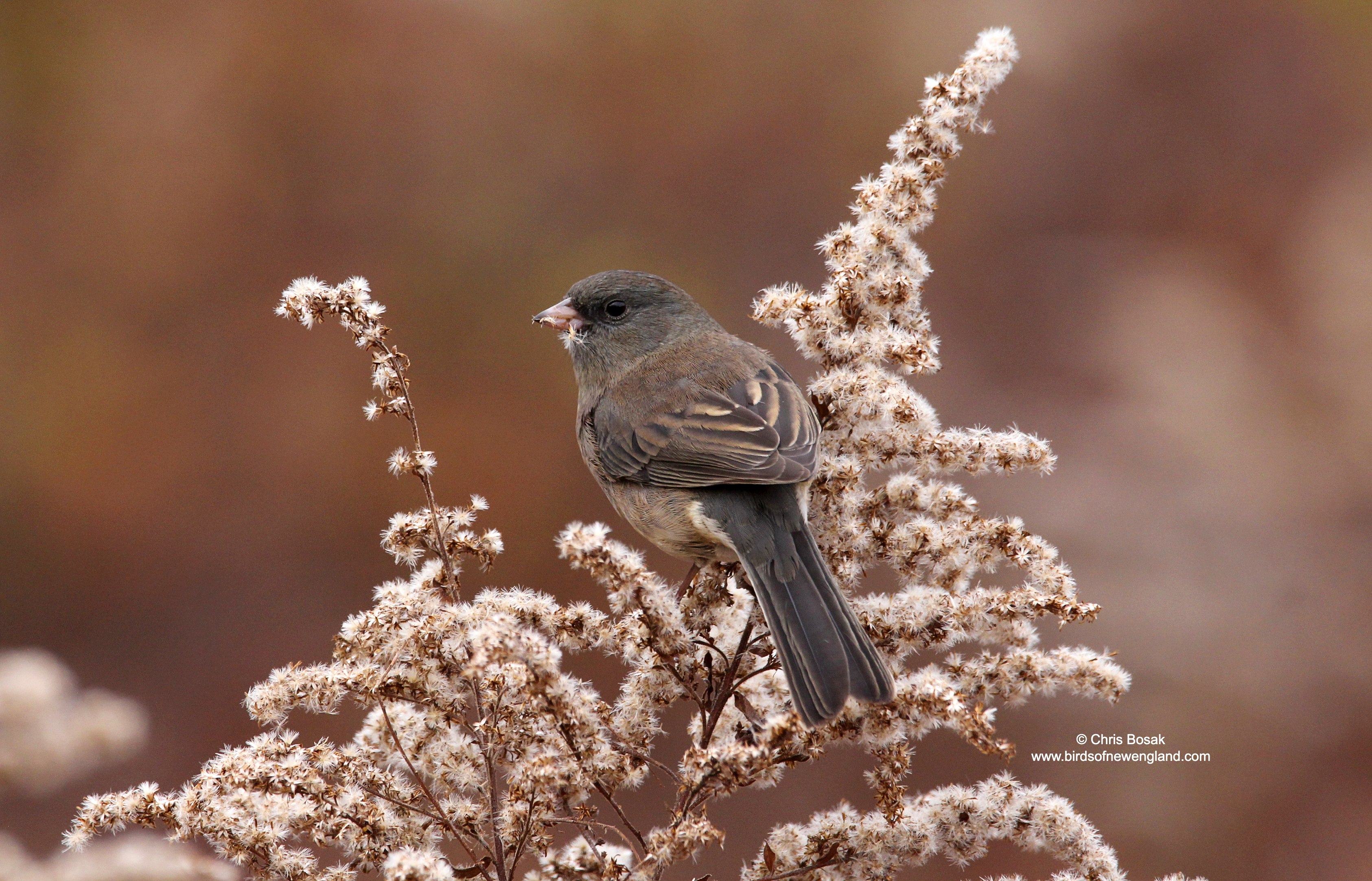
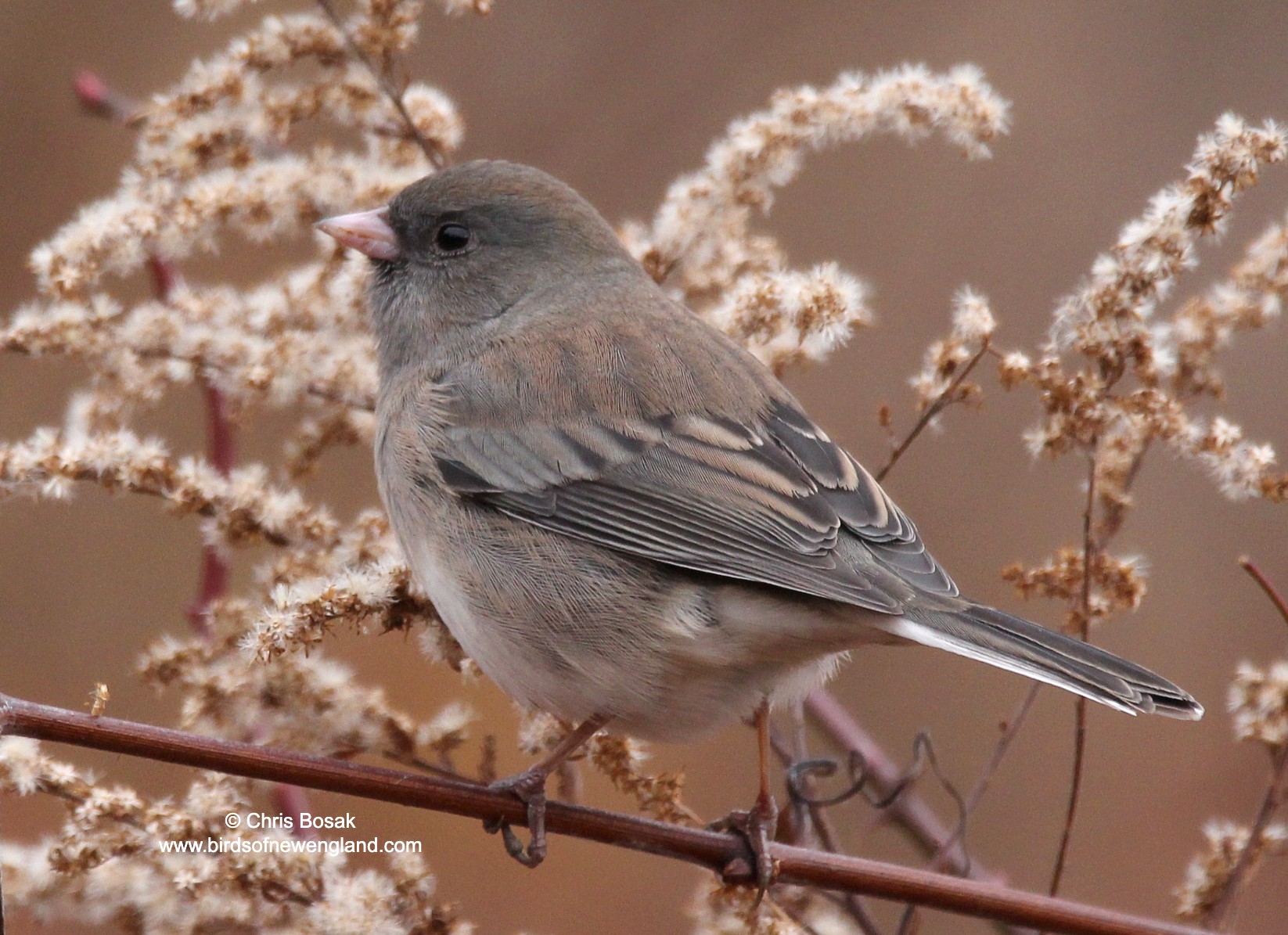
Photo by Chris Bosak – A dark-eyed junco eats goldenrod seeds at Huntington State Park in Redding, Connecticut, November 2025.

Have you seen any videos of kayakers being surrounded by whales? 

I’ve seen a few such videos. I’m not sure where they were filmed, but I’m reasonably sure they are real and not AI-generated. Of course, it’s getting harder to tell these days.

While being surrounded by whales would be a moment you’d never forget, I’m not sure I’d want to experience it. I didn’t get into bird- and wildlife-watching for extreme, brush-with-destiny experiences. 

I did, however, have a similar experience last week. Granted, this was far less risky and would never go viral on social media, but for me, it was a moment I won’t soon forget.

Continue reading

For the Birds: Fall is different, but still great for birdwatching

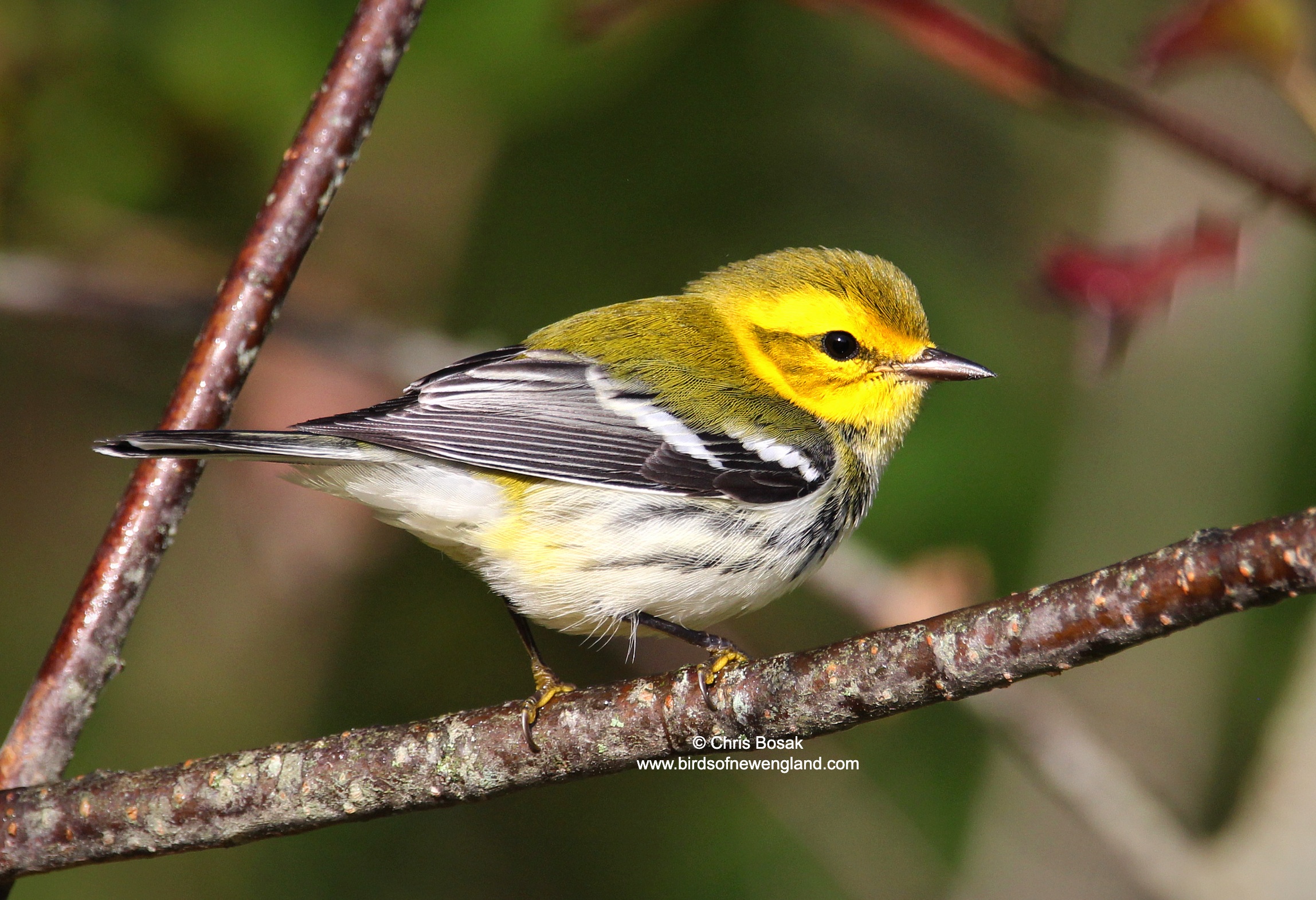
Photo by Chris Bosak – A black-throated green warbler, September in New England.

Fall is a great time to watch birds, but it’s much different than watching birds in the spring. It’s quieter, sometimes harder to find the birds and many of the birds don’t look the same.

It’s quieter because most of the birds are not singing. In the spring, birds are singing constantly as the urgency of securing a territory, finding a mate and breeding is foremost on their minds. The songs of perhaps dozens of birds overlap and it can be difficult to isolate the songs of a single species.

That urgency has long passed by the time fall comes around, and foremost on their minds is getting to their winter grounds safely. That doesn’t mean they are silent, however. Fall is when you hear more calls than songs as the birds issue warnings to other birds and try to remain in contact more quietly. 

Continue reading

For the Birds: Fall migration under way

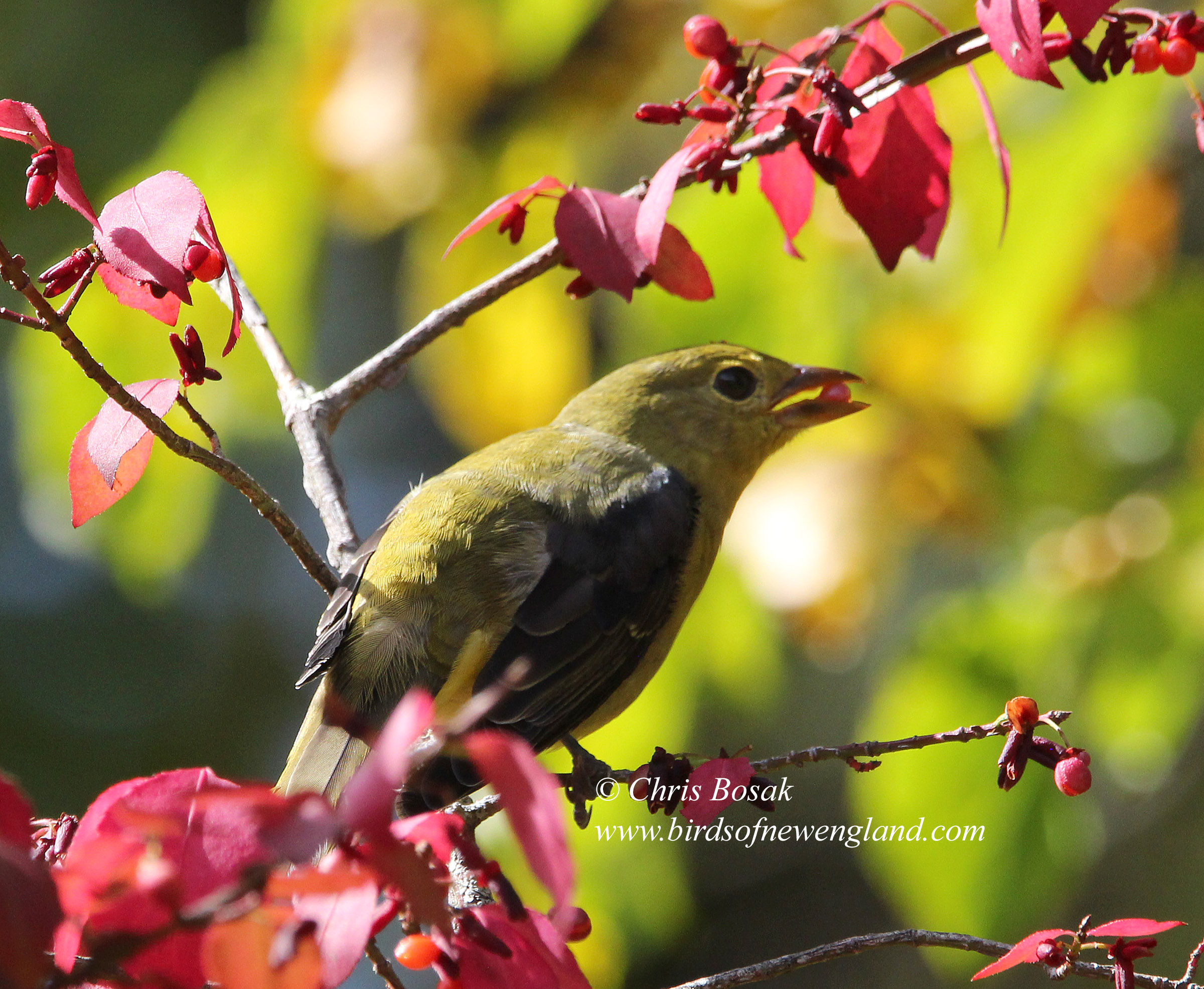
Photo by Chris Bosak A male scarlet tanager in the fall.

It seems like just yesterday we were welcoming back the warblers and other songbirds during spring migration and here we are at fall migration already.

Many of the birds we saw in the spring heading north will look the same on their southward journey. Many others, however, will look different. 

Some, like male scarlet tanagers, will bear little resemblance to what they looked like in the spring. When we saw them in May and June, they were the most brightly colored birds in the woods. A sighting always yielded a gasp of excitement as we wondered how a bird in New England could be so brilliant. After the breeding season, however, they molted and are now dull yellow with less shiny black wings. They are still awesome-looking birds but not the striking birds they were in the spring.

In addition to many adult birds molting, the fall migration includes first-year birds that haven’t attained familiar adult plumage yet. They often resemble females or a mix of male and female plumage. 

Continue reading

For the Birds: New England birding from top to bottom

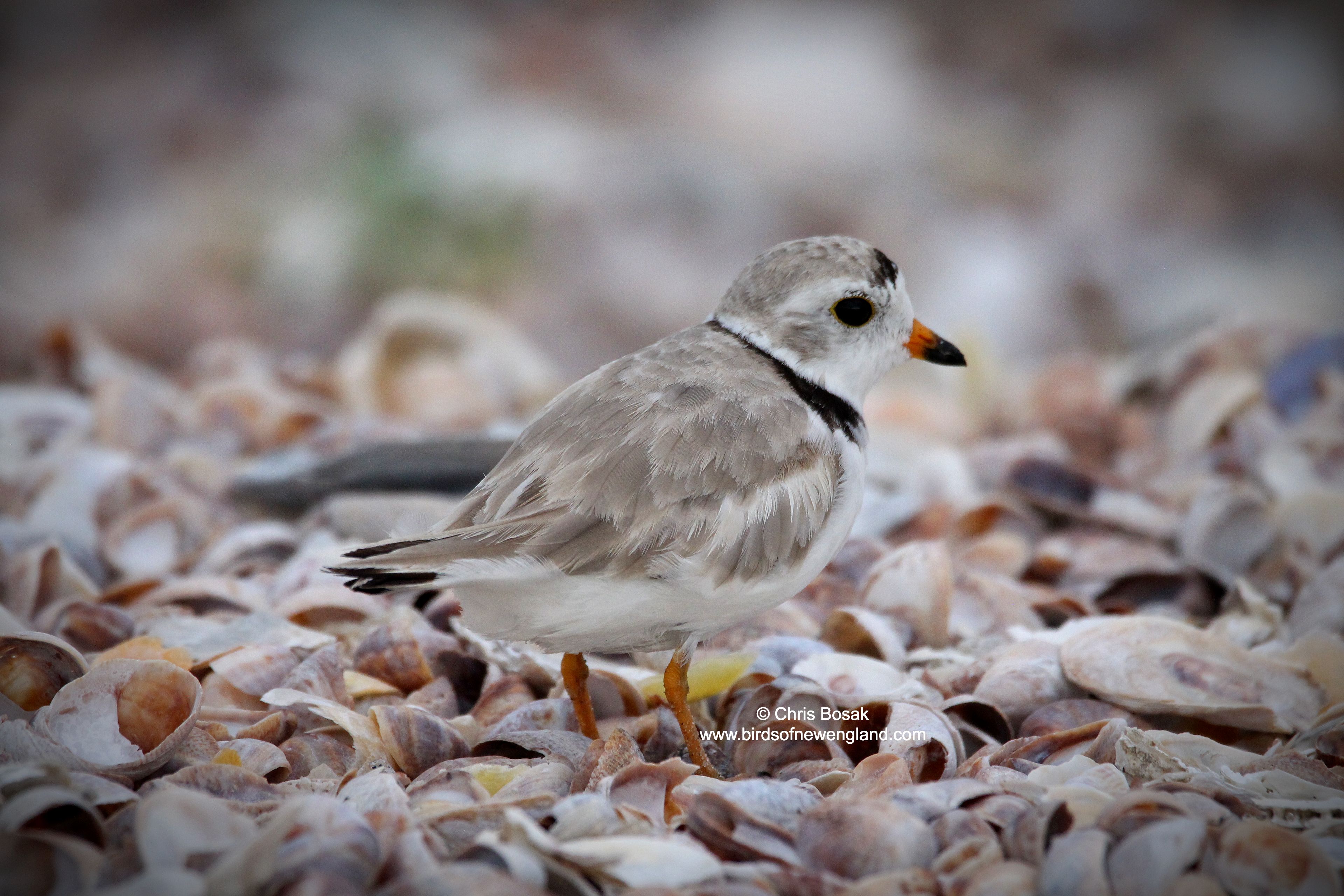
Photo by Chris Bosak Piping plover, Milford, Connecticut, summer 2025.

I’ve looked for birds in New England from top to bottom this month. At the beginning of July, I drove to Pittsburg, NH, near the Canadian border, and last week, I visited a beach/nature preserve on Long Island Sound in southern Connecticut.

Yes, technically, northern Maine would be top of New England, but let’s not split hairs here.

It was quite a contrast in habitat and birdlife between the two points, from the boreal forest up north to the marsh and shoreline down south. 

Continue reading

For the Birds: Warbling vireos everywhere

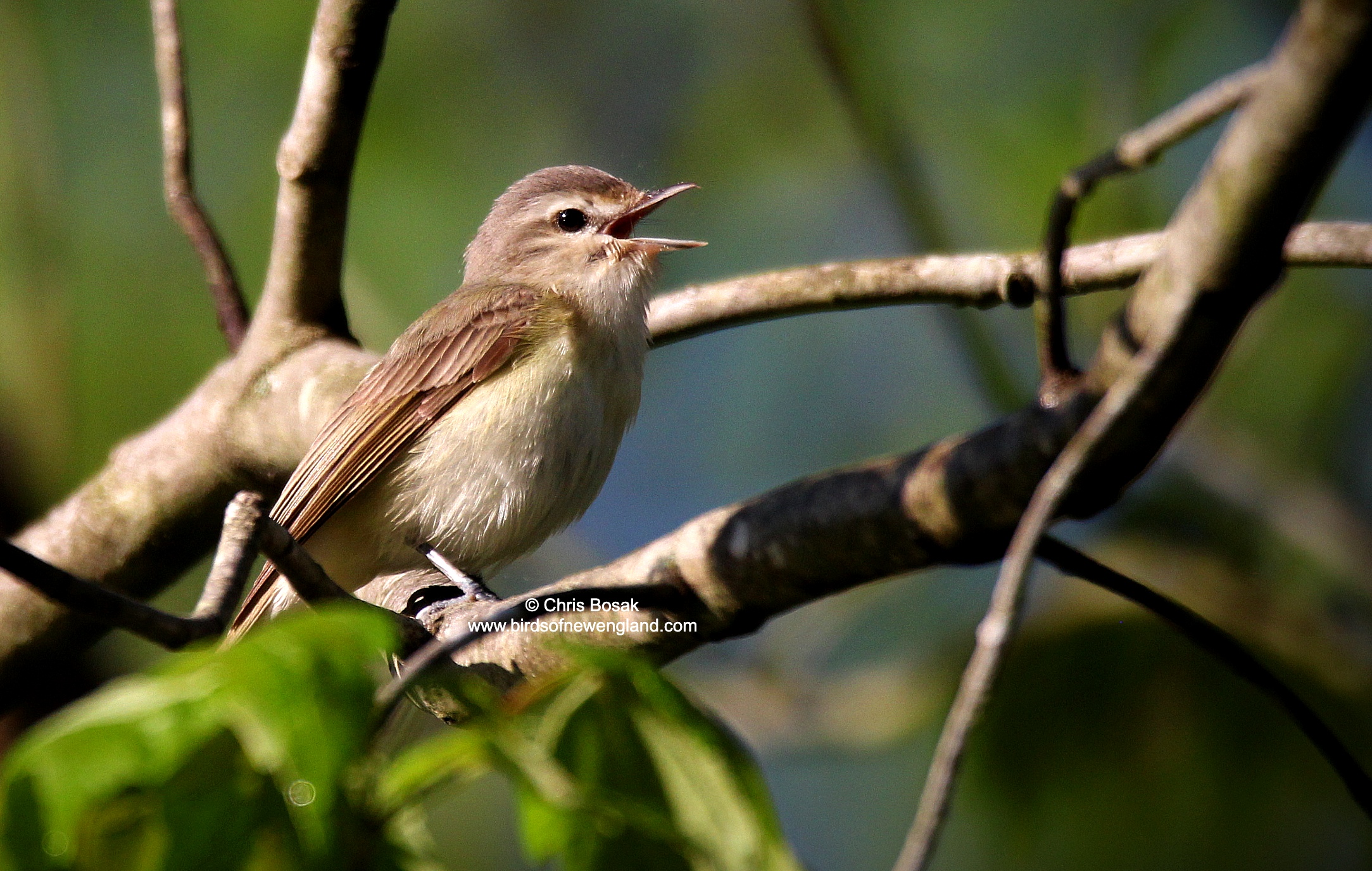
Photo by Chris Bosak A warbling vireo sings from a branch in New England, spring 2025.

It’s funny how you can still discover new things after so many years.

I’m sure that applies to most hobbies, but it certainly applies to birdwatching. I have only recently “discovered” the warbling vireo. The small, loquacious bird, of course, has been around for far longer than I have been birdwatching, but I am only recently taking notice of it.

Part of the reason I may not have paid it much mind previously is that it is a small, fairly nondescript bird that typically hangs out in the middle to upper branches among the leaves. It is not like some birds that take an obvious perch somewhat low in the trees or brush and are easily found on a birdwalk.

Over the last couple of years, however, I have come to know warbling vireos not only because the males sing constantly, but I am finding them almost everywhere I go in the spring.

Continue reading

For the Birds: Blue jays and special memories

Photo by Chris Bosak A blue jay perches on a log and grabs a peanut in New England, October 2020.

I settled on the back porch of my brother’s house in western Pennsylvania and watched the blue jays hunt for acorns in an oak tree. 

Before I get into that, I wanted to acknowledge how exceptional the fall foliage has been this year. The conditions must have been just right. Oaks can sometimes go from green to burnt orange to brown quickly. This oak, and many others I’ve seen this fall, are a much brighter orange and the color is lingering longer before turning brown.

The blue jays would fly in from the surrounding areas and alight in this spectacular oak tree. The birds disappeared into the bright orange foliage and work at dislodging acorns. I couldn’t see the jays at work but the rustling of the leaves and branches let me know where they were.

Continue reading

For the Birds: Flickers everywhere up north

My destination was the northern part of Maine. I’m talking way north. Get to Baxter State Park and keep going for several more hours.

I drove pretty much through the night to get there. I took a few half-hour breaks to sleep and then continued on my way. I have been to northern New Hampshire dozens of times, and I have been to the middle of Maine many times. I’ve always wanted to see what Aroostook County was all about so I took the opportunity to head up there and finally see for myself.

I settled at the border town of Fort Kent where only the St. John River separates the U.S. from Canada. 

Wildlife, of course, was the driving force behind the decision to drive up there. The boreal forest, to me anyway, is a magical place filled with so many interesting creatures. Moose are my favorite creatures, but things like lynx, loons, eagles, grouse, boreal chickadees, Canada jays, and other specialty species unique through the habitat are also a draw.

Continue reading

For the Birds: Sit or walk? Easy call

I pulled into the tire shop for my appointment the other day, handed over the keys and asked how long it would take. The nice gentleman said it would be at least an hour, but that I was welcome to sit in the waiting area and help myself to coffee.

It was an ideal late summer/early fall day and the fall migration was well underway, so I decided to take a walk instead.

I gave the guy my cell phone number, asked him to give me a call when the truck was ready, and set out to find the nearest place where I might find some birds.

Continue reading

For the Birds: Surprises big and small

Surprises come in all sizes in birdwatching.

Sometimes, or more accurately, rarely, a big surprise happens. You look out at your feeder and a bird you hadn’t seen in years is perched enjoying a meal. Or you are taking a winter stroll on a New England beach and notice a snowy owl resting in the distance.

The other day, I was treated to a few surprises on a much smaller magnitude. They came at a small park with a tiny pond in suburbia that typically has your normal birds. Crows and sparrows are the main birds with a few mallards in the pond.

On this particular day, however, things were a little different. 

I normally drive right past the park without stopping or even casting a glance toward the pond, but something big and white caught my eye as being out of the ordinary. It was a great egret standing near the edge of the water. It wasn’t right at the edge where you would typically see an egret but rather 10 to 15 feet into the grass away from the pond. A sizable flock of Canada geese roamed around the grass near the egret.

Continue reading

For the Birds: Hummingbird feeders feed other things as well

Photo by Brian Thoele – Brian Thoele of Norwalk, Conn., got this shot of a downy woodpecker on a hummingbird feeder.

Hummingbird feeders, as the name suggests, are meant to attract hummingbirds.

It’s right in the name “hummingbird feeder.”

But, as we all know, it attracts a lot more than hummingbirds. The most common invaders include yellowjackets, hornets, bees, and ants. However, hummingbird feeders also attract larger critters such as bats, squirrels, raccoons, and even bears.

The list doesn’t stop there as a few emails I received this week point out. Other birds enjoy a visit to a hummingbird feeder as well.

Downy woodpeckers are probably the most common other birds that visit hummingbird feeders. Michele from the Monadnock Region wrote in to share that two woodpeckers had dislodged five of the six yellow plastic inserts that go into the feeding ports. The plastic inserts are supposed to keep birds like woodpeckers away, but these woodpeckers found a way around it. Michele did her best to find the inserts and put them back, but the woodpeckers just popped them out again.

Continue reading