For the Birds: Crossbills worth the chase

Photo by Chris Bosak A red-winged crossbill eats seeds from a cone at Hammonasset State Park, February 2021.

I’m usually not one to chase birds. Over the years, I have made a few exceptions when the bird is not terribly far away.

By “chasing birds” I mean getting in your car and driving to where a rare bird has been spotted. Some people love chasing birds and will drive hours to see the rarity, which is perfectly fine if that is their thing. It just has never been my thing. It makes sense that chasing birds and listing birds go hand in hand. If you are a big lister, then you are probably a chaser. If you are not a big lister, which I am not, then you are probably not a big chaser. The only list I half-heartedly keep is a yard list, and there is no need for chasing with a yard list.

I do, however, like to photograph birds and it is always exciting to add a photo of a new bird. That has been the driving force behind the few times I have chased birds. Last weekend was one of those occurrences. I had been reading about a flock of relatively tame red crossbills that had been seen daily about an hour from my house.

I was up early one weekend morning, so I decided to take a little drive. I figured it was a better use of my time than lying in bed trying in vain to fall back asleep.

I arrived at the park’s parking lot to see a large group of birders standing on a boardwalk. Many had big, fancy cameras on sturdy tripods, others had smaller cameras slung around their necks, and some had only binoculars. It was obvious that they were all there to see the crossbills. At least I didn’t have to go looking for the birds, I thought.

On the way to the boardwalk I was distracted by a flock of horned larks in an open area. I stopped and grabbed a few photos of these birds before heading over to the boardwalk. As I took a few steps toward the boardwalk, I saw a flock of small birds flying out of the spruce tree near the birders. Oh no, there go the crossbills, I thought. Thankfully, they didn’t go far and settled into another evergreen about 30 yards away. I followed the crowd of birders to a spot near, but not too near, the tree in which the birds had settled.

I watched as several male and female crossbills of various ages and plumage variations moved around the tree to find cones. Crossbills get their name because their bills are crossed at the tips, which makes it easier for them to access the seeds inside tough spruce and pine cones. I could hear them scrape the cones with their bills to get to the morsels inside.

About 20 minutes later, the flock moved over to another tree, this time closer to the parking lot. Again, the crowd of birdwatchers followed these tiny celebrities and kept a respectable distance away from the birds.

The birds flew off again about 10 minutes later. This time, I did not follow the crowd but rather got back into my truck and headed home. The photos I got were rather disappointing, but I’m happy I made the trip anyway. I have always been fascinated by crossbills and was happy to get to see them. I did manage to get a few nice photos of the larks, however.

Red crossbills are a northern bird that sometimes irrupt into New England and farther south following available food sources. In this winter of irruptions, I guess it’s not surprising that crossbills are in the move.

For the Birds: Bluebirds and winter

Photo by Chris Bosak An eastern bluebird braves a New England winter and visit a backyard for mealworms, winter 2020.

It’s been another great winter for bluebirds. I haven’t been lucky enough to attract them to my new house yet, but I have seen them several times out in the field and while driving along side roads.

I’ve heard from several readers who have seen these cheerful birds as well, and that’s always good to see.

I remember years ago when I was new to birding and I came across a small group of bluebirds at Surry Dam while snow fell all around. I was surprised and excited to see them. I thought bluebirds were long gone by the time winter came around in New England. I took a few photos (this was back in the days of film) and anxiously awaited the results from the lab. The photos were pretty terrible as I recall, but the day still sticks out in my head as a great birding day.

I, like most birdwatchers I would imagine, like to research new findings. I think curiosity about the natural world is a prerequisite for being a birder. I found out that the sighting wasn’t particularly rare and that many bluebirds, indeed, stay around for the winter. It didn’t Continue reading

For the Birds: Those snowy days

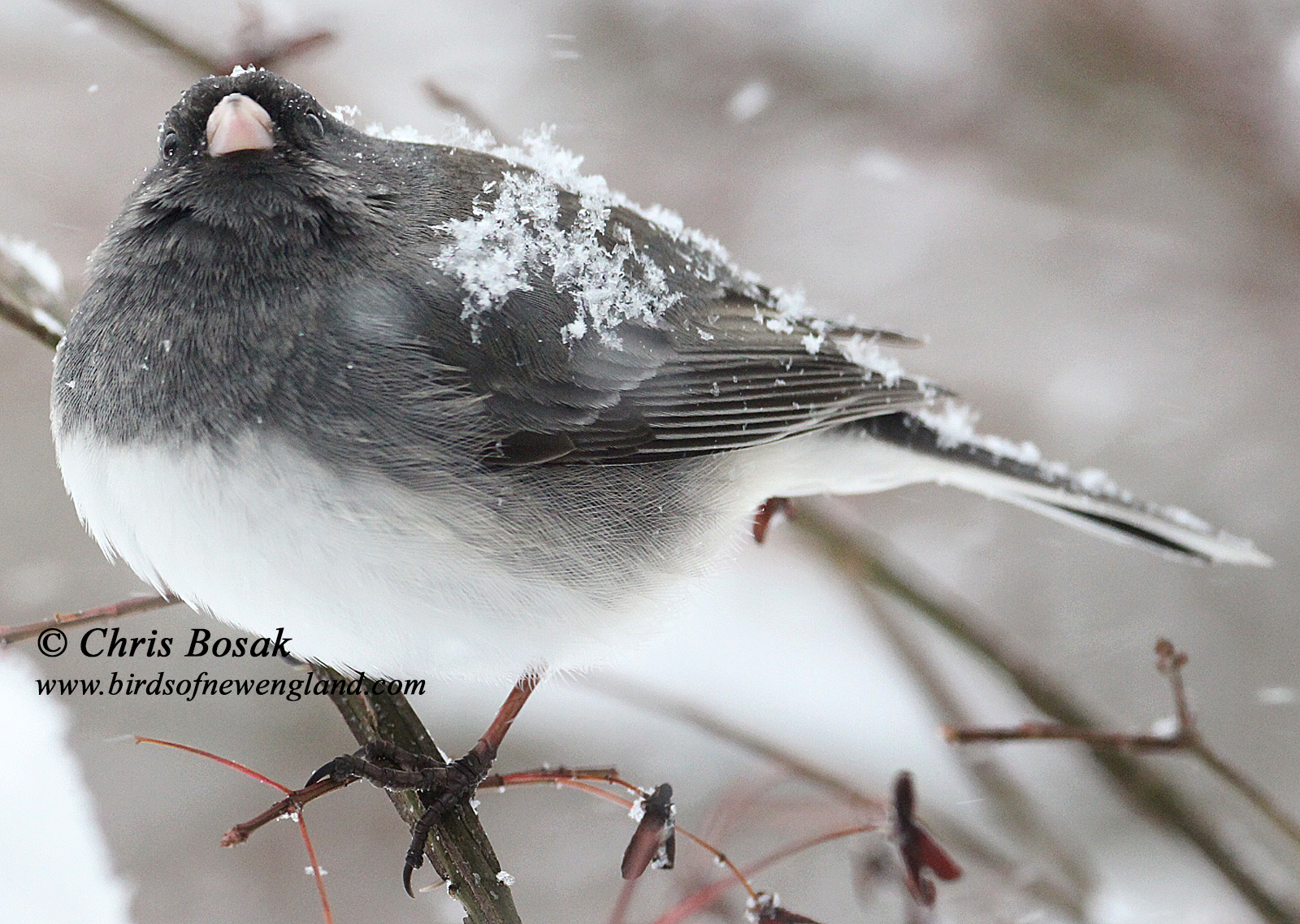
Photo by Chris Bosak A dark-eyed junco visits a backyard in New England, January 2021.

The junco sat perfectly still in the bush as snow collected on his back. The snow came down hard and the wind whipped it around.

It was the wind that kept the junco motionless in the bush. When the wind offered a rare break, the junco darted to the nearby bird feeder to grab a few sunflower seeds.

He would fly back to his spot in the bush, having shaken off the snow that had collected on him. It didn’t take long for new snow to accumulate on his dark gray feathers.

Snowy days are among the best times to watch the feeders. It is interesting to see how little the elements affect the birds. Tiny birds such as chickadees can withstand extremely cold and windy conditions. They have a variety of mechanisms to protect them from the harsh elements. I have written about those in previous columns and may revisit that topic in the future.

But for now, I’m going to focus on this past storm that hit New England and recall the many birds that visited. The junco I mentioned before was one of more than a dozen juncos that were around that day. Other sparrows included white-throated, song and house. Many people don’t think of juncos as being a sparrow because of their different coloration, but they are indeed members of the sparrow family.

Both nuthatches came and went throughout the day. It is such a thrill to see the red-breasted nuthatches daily this winter. Not that I don’t appreciate the white-breasted nuthatches, but they are much more common and year-round birds where I am. The red-breasted nuthatch shows up only in random years.

Of course, chickadees and titmice were regular visitors. A pair of Carolina wrens entertained me as well. I always like watching their antics in the yard, especially when they make their unique chatter calls outside the window.

It was a heck of a snowstorm — the worst in several years where I am anyway. Will there be more opportunities this winter to watch the birds at the feeder in the snow? That remains to be seen, but I wouldn’t be surprised in the least. In fact, I would be very surprised if we didn’t have more snowfalls. This is New England, after all, and winter is a way of life here.

For the Birds: Cedar waxwings’ timely appearance

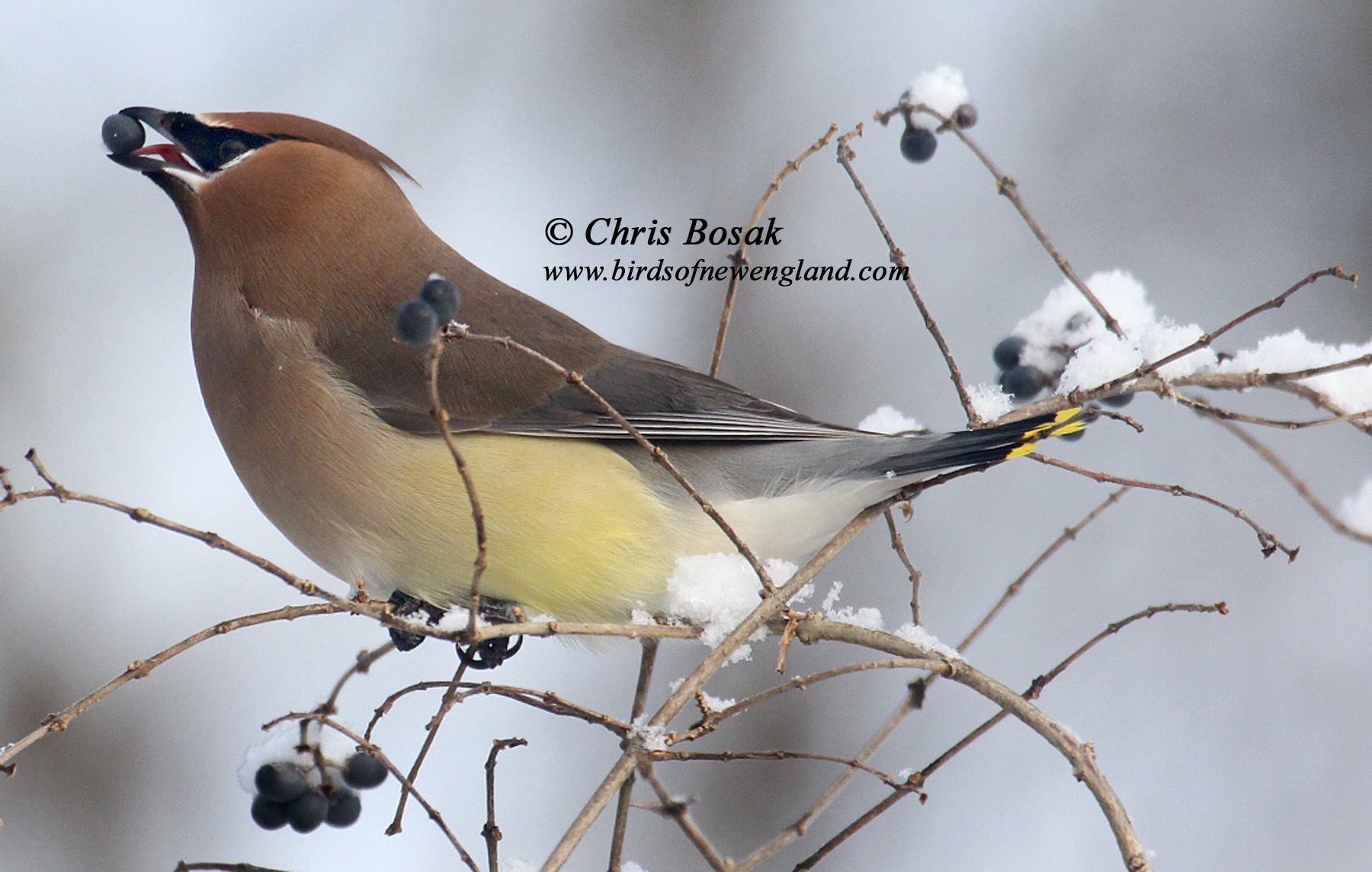
Photo by Chris Bosak A cedar waxwing looks for berries in a park in New England, January 2021.

With the tendinitis in my foot acting up again, I wasn’t sure how long of a walk I would be able to bear. I had to give it a shot, however, as a few inches of light, fluffy snow had fallen overnight and made the landscape irresistible for anyone with a camera.

As luck would have it, I didn’t have to go very far to get some nice bird photos. I started down a path bordered by thick brush on both sides when I saw a swarm of birds land in a nearby leafless tree. My initial thought was that they were starlings as this flock rivaled in number the large groups of starlings you often see. Something didn’t look quite right, however. They weren’t acting like starlings and they weren’t the right shape.

How cool would it be if they were cedar waxwings? I asked myself. About 10 seconds later Continue reading

For the Birds: 2020’s Top 10 birding highlights

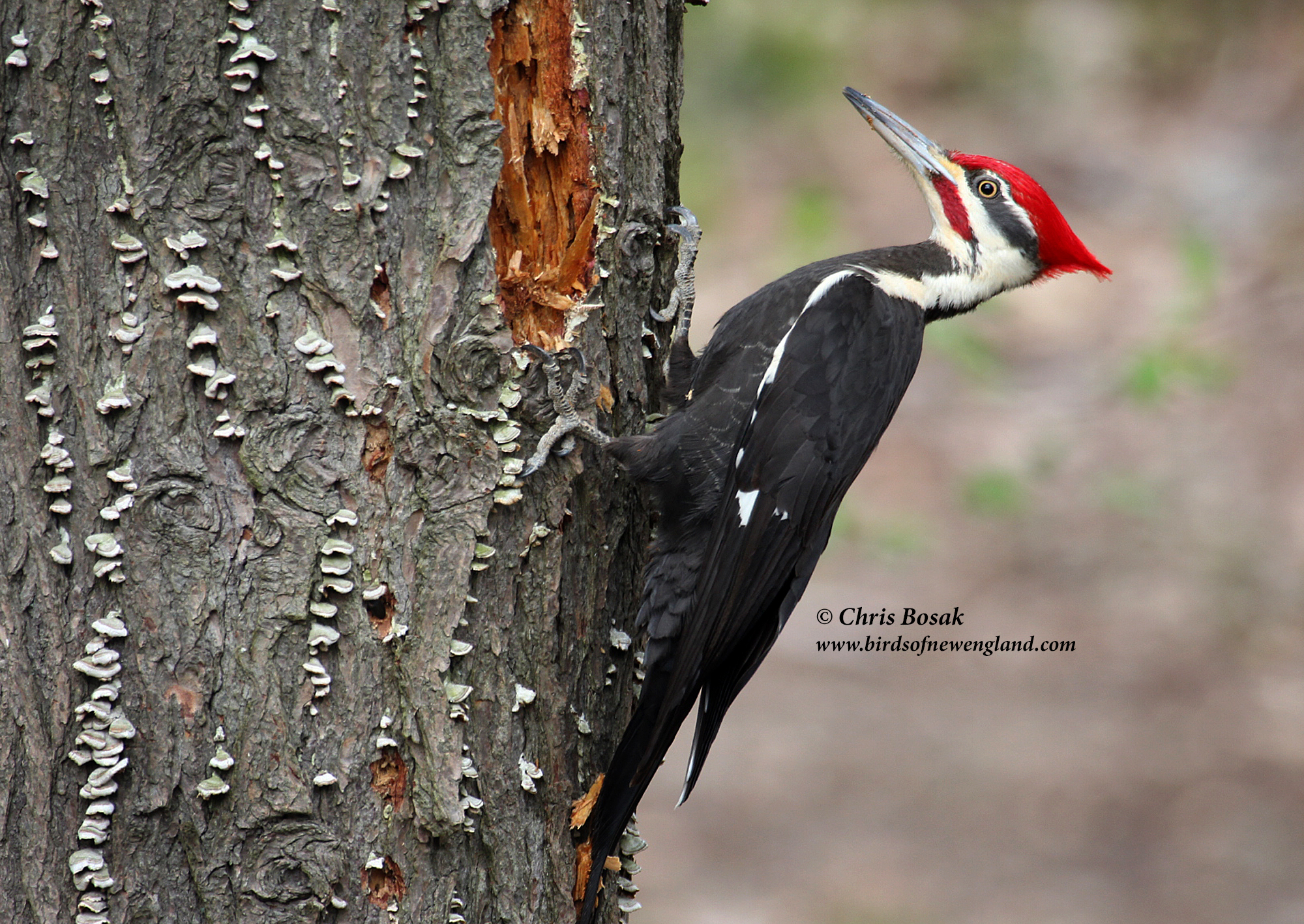
Photo by Chris Bosak A pileated woodpecker works over a tree in New England, May 2020. Merganser Lake.

It may have been a disastrous year in most regards, but one bright spot is the connection with nature many people made while dealing with the pandemic and associated quarantines, isolation and soul-searching.

Bird-feeding stores reported increased sales as people stuck at home turned to the hobby as a much-needed escape. Nature preserves closed their visitor centers, but most of the trails remained open and people flocked to them to ward off cabin fever.

I worked from home for most of the year and, while I missed seeing my co-workers, I did enjoy watching my backyard bird-feeding station daily as the seasons changed. I never realized how much you miss when you go about your regular routine.

With that in mind, here are my top 10 bird/nature watching highlights of 2020. Feel free to send me an email with some of your highlights.

10. Warblers in the snow

A rare overnight snowfall in early May dropped a coating of snow that lasted until about noon. It provided a short window to see warblers and other migratory songbirds in snow. I managed a few photos of an ovenbird and blue-winged warbler.

9. Love birds

I watched several birds at my Continue reading

For the Birds: Did Ben Franklin really want the turkey as the national symbol?

photo by Chris Bosak

With Thanksgiving upon us, I am going to revisit my turkey fun facts column. I used to do this annually, but the content got staler than week-old stuffing. To add a little spice to this year’s column, I will start out by debunking a widely held belief about America’s favorite game bird.

If you do a web search for “turkey fun facts,” invariably the “fact” that Ben Franklin wanted the wild turkey to be our national bird instead of the bald eagle will come up. In full disclosure, an old column of mine may come up in that search as I’ve used it as fact before in my own writing. But is that really a fact? Evidently, no. I’m not a historian and I certainly wasn’t around in the 1700s to verify it myself, but I’ve come across several accounts that challenge the notion that Ben Franklin wanted the turkey to be our national symbol.

According to the articles, he actually wanted a Biblical scene to be our national symbol, not a bird at all. He did reference the bald eagle and wild turkey in some of his correspondences, but the references had nothing to do with our national symbol and some of the references were believed to be Continue reading

For the Birds: More from the readers

Photo by Chris Bosak A purple finch perches on a log in New England, November 2020.

The regular flow of feeder birds continued this past week, but they were joined by a few newcomers.

Two weeks ago, it was a lone red-breasted nuthatch that showed up and stayed for a day. This past week, a lone purple finch and a lone pine siskin joined the usual gang of backyard birds. The purple finch stayed for only one day — a few hours, to be more precise. The pine siskin, however, has visited daily ever since it first arrived on the scene.

Pine siskins are notorious for showing up in large numbers and cleaning out thistle feeders. I am surprised this siskin has not been joined by others of its kind, but so far it has been just the one. It mixes with a large group of American goldfinches and can be quite feisty when another bird tries to steal its perch. Pine siskins often flock with American Continue reading

For the Birds: Micro-level horror show in the garden

Photo by Chris Bosak A tomato hornworm is covered in braconid wasp larvae on a tomato plant in New England, August 2020.

(Note: This post has been updated from its original content to correct information about the hummingbird moth caterpillar.)

I was all set to follow my last column about fall migration with a closer look at some of the songbirds, including warblers, that are heading south now and will be for the next several weeks.

That column has been put on hold as I saw something in the garden last week that just can’t wait. Experienced vegetable gardeners have likely seen this before, but it was a first for me and I was amazed at the gruesome details when I researched it online.

First, a little background. It is a first-year garden plot. I dug it during April at the height of the COVID-19 outbreak in the Northeast. More than anything else, it was a diversion from the nuttiness going on in the world; something to keep my mind and body occupied during quarantine. I’ve never had a green thumb and I had little hope in the garden ever yielding impressive crops.

As it turns out, my pessimism was warranted. Once the leaves popped on the giant oaks that surround my property, the garden didn’t stand a chance. Tomato plants require how much sunlight? Continue reading

For the Birds: Hummingbirds and cuckoos

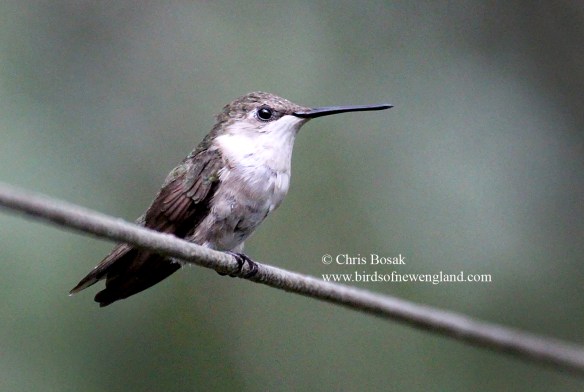
Photo by Chris Bosak A female ruby-throated hummingbird sits on a rope in a backyard in New England, August 2020.

I wasn’t the only one who enjoyed watching the hummingbirds ignore the stormy weather of Aug. 4 and visit the feeders. As you’ll recall, last week I wrote about the tiny birds going about their day as usual as rain fell and wind whipped all around.

I heard from Deb from Royalston, Mass., who said her hummingbirds “had no problem with the fierce winds and rain. All this year’s babies are there now, so we had more than a dozen.” She said it was hard to count them there were so many. I, of course, had only one visit my feeder that day as it was a dominant female who “owns” the feeder.

Jill from Keene wrote: “I too was amazed during the storm the hummingbirds seemed unfazed.” Jill also had a peaceful gathering of hummingbirds and sent me a few photos showing six of them on the feeder at once.

“They did not fight much at all and it was eerily quiet as I usually have several swooping and ‘chirping’ noisily,” Jill added.

A few days later, Jill wrote to say: “The peaceful dinner party was really an anomaly, as they are back to fighting and chasing each other!”

John and Joanne of Dover noted: “We also Continue reading

For the Birds: Patience is key, even though it’s hard

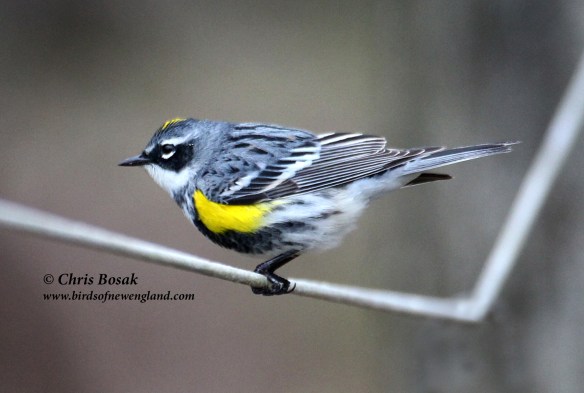
Photo by Chris Bosak A yellow-rumped warbler perches on a clothesline in Danbury, CT, April 2020. (Merganser Lake)

I doubt Tom Petty had birdwatching in mind when he wrote the lyrics “the waiting is the hardest part,” but it sure is appropriate for birders in the spring.


Signs of spring start as early as January or February when a few hardy flowers poke out of the ground. Owls also start their breeding season about this time but that is done in secret and largely unbeknownst to humans. March brings the first spring peeper calls, more flowers, red-winged blackbirds, American woodcock and, finally, eastern phoebes, at the end of the month. March also brings the official start to spring, of course.


April starts off fairly slowly until the first pine warblers arrive. Then it’s warbler season! The problem is, pine warblers are three weeks to a month ahead of most of the other warblers and other colorful migratory songbirds. Palm warblers and yellow-rumped warblers are the exceptions as they closely follow the pines.

Those three weeks to a month can seem like an eternity. We’ve endured winter and have slowly gotten small teases of spring. Bring it on already! We jump Continue reading