For the Birds: One of those May walks

Sometimes you just have to be patient. I tell myself that every year but rarely, if ever, do I heed my own advice.

I am so eager for the spring migration to hit full swing that I start tromping through the woods starting in mid-April expecting to see all the explosive colors of the northward songbird migration through New England.

Walk after walk in late April and early May yields some great birds but not the full-on spring spectacle. Finally, one day in mid-May, I get that walk I have been waiting for with colorful birds all around. Patience is key, sure, but that’s easier said than done. 

That walk happened for me the other day when I got up early and hit the nearest park. The action started right away with an eastern towhee. It was one of the few towhees I saw on the walk compared to the dozens of towhees I had seen during my late April walks. Most of the towhees have either moved north or settled into their nesting season and are remaining quiet and out of sight.

Then I heard a familiar song from the tree above me. The distinctive “chick-bree” call could only be a scarlet tanager. Despite their awesome coloration, male scarlet tanagers can still be difficult to find among the leafed-out canopy. I had little trouble finding this guy, however, as he flew from one tree to the next revealing its impossibly red plumage in the golden morning light of the rising sun.  

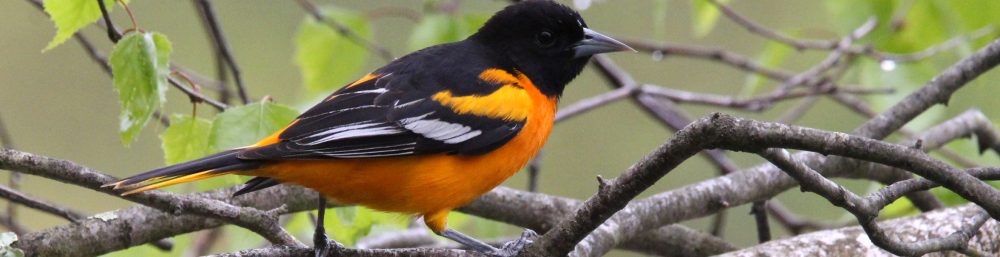
As I continued down the trail, the colors continued: the beautiful red upside-down triangle of the rose-breasted grosbeak, the electric orange of the Baltimore oriole, the dazzling blue of the indigo bunting, the bright yellow of the blue-winged warbler and the slightly darker yellow of the yellow warbler. Bobolinks and red-winged blackbirds brought life to the meadow. 

The great sightings didn’t stop with the colorful birds as there were plenty of “dull” birds to see as well. Among the highlights were yellow-billed cuckoo, field sparrow and ovenbird. And lots of catbirds. Lots and lots of catbirds. 

The sounds of the birds add to the magic. The insect-like buzzy song of the blue-winged warbler and tropical-like odd song of the cuckoo stood out among the rest.

It was the walk I had been anticipating for nearly a year. I enjoy New England year-round and each month has its special gifts for birdwatchers, but that mid-May walk when everything comes together never gets old.

If only the magic lasted longer. It’s called the peak of migration for a reason. Just as it has to build to its high point, so too will it now taper off as birds continue to push north or settle into nesting and go quiet.

Enjoy these days while they last. The color and variety are spectacular and unmatched by any other time of year. 

For the Birds: The ‘forgotten’ birds

Photo by Chris Bosak A common yellowthroat perches on a branch in New England, July 2021.

Sometimes the residual birds get unduly forgotten when a bird walk features a highlight species. In other words, the other solid bird sightings get pushed to the back of the memory bank. Then, sometime after the excitement of the highlight species fades, be it hours, days or weeks, the other birds come back to you.

This happened to me the other week when a pair of male indigo buntings highlighted an evening walk. It had been a while since I had seen buntings, and I became singularly focused on them when recounting the walk.

As I looked through the photos of that walk, I was reminded of some of the other birds I had seen. Before I took untold numbers of photos of the bright blue indigo buntings, I had snapped a few photos of a common yellowthroat pair. I had completely forgotten about those birds until I started looking through the photos.

Continue reading

For the Birds: Indigo bunting brightens a summer evening

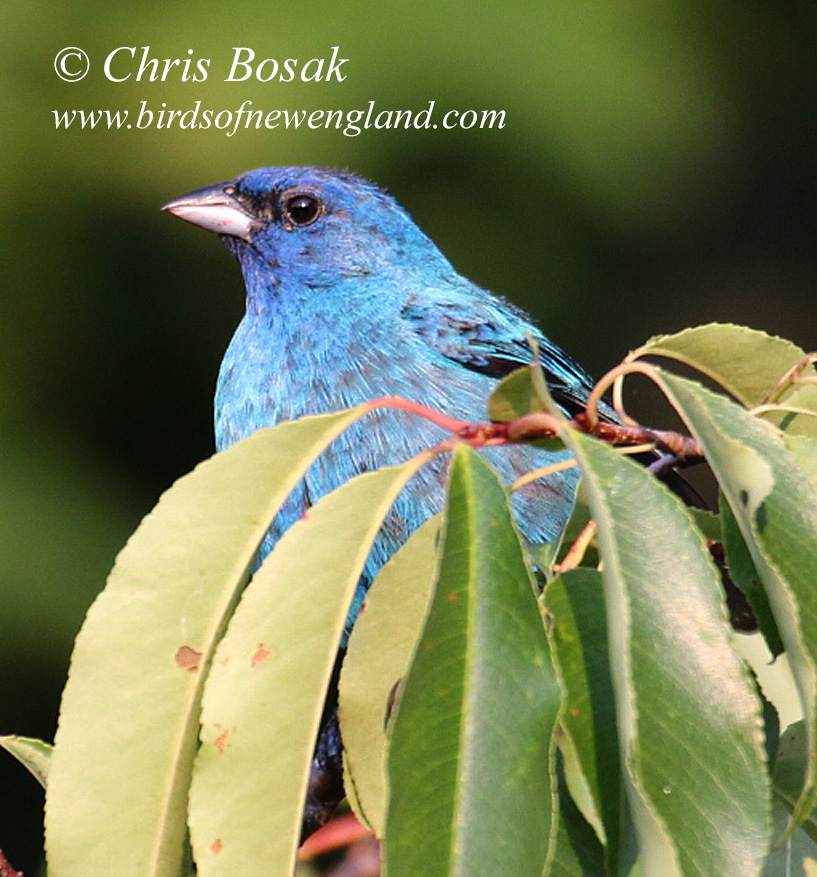
Photo by Chris Bosak An indigo bunting perches in a tree in New England, July 2021.

The song sounded familiar, but it had been months since I last heard it.

There is an indigo bunting around here somewhere I said to myself and instantly abandoned my plans for a long, strenuous walk. I knew I’d be at that spot for a while.

I couldn’t tell if the song was coming from the left or the right. It sounded like it was coming from both directions. I thought it was just because I’m getting old and my hearing was playing tricks on me.

But sure enough, there were two male indigo singing: one to the left of me and one to the right.

The bunting to the right was in the shade as the evening sun was dipping below the tree line. The bird to the left was illuminated in that magical evening light. I turned my focus to that bird.

Thankfully, the bird was fairly cooperative and even posed for a few photos in a berry tree. It didn’t eat the berries, but rather just used the tree’s branches for a vantage point.

It had been a few years since I was able to get photographs of an indigo bunting. Photographing any bird is enough to get my blood pumping, but a bird like an indigo bunting really gets the heart racing — especially when they are being cooperative.

Male indigo buntings are one of the more striking birds we see in New England, right up there with scarlet tanagers, Baltimore orioles and rose-breasted grosbeaks. Indigo buntings, like many songbirds, are sexually dimorphic, meaning the males and females look different. Also, like most birds that are dimorphic, the female is much duller than the male. The difference between the electric blue male and brown female is stark.

Continue reading

A few more bunting shots

Photo by Chris Bosak An indigo bunting perches in a tree in New England, July 2021.

The upcoming For the Birds column will provide more detail, but until then here are a few more shots of this beauty.

Photo by Chris Bosak An indigo bunting perches in a tree in New England, July 2021.

For the Birds: Birding still hot in June

Photo by Chris Bosak An eastern towhee seen in Ridgefield, CT, summer 2019.

June may not have the buildup and excitement of May, but it is still an interesting time in the birding and natural world.

By the time June comes around, the swarms of migrating birds have dissipated, having either gone farther north or settled into their breeding territories. June also follows May, which I would argue is the most exciting month for birding in New England. I wouldn’t say June is a letdown, but it lacks the anticipation that May has going for it. May, after all, follows months and months of cold, gray weather. May’s songbird migration is like a reward for enduring winter and early spring.

Early June does have the odd migrant still working its way north, which is nice to see. For the most part, however, the migration is over.

June is a time to recognize, appreciate and take pride in the birds that are breeding in the area. There’s something special in knowing that birds are raising young nearby. The other day, I took a walk and saw or heard eastern towhees (pictured above), yellow warblers, blue-winged warblers, common yellowthroats, indigo buntings, rose-breasted grosbeaks, bobolinks, catbirds, veeries and hermit thrushes. Those are nice sightings regardless of the circumstances, but it was particularly rewarding knowing they are breeding locally. I hope they all have a successful breeding season.

The birds, for the most part, were still fairly vocal. I heard all of the aforementioned birds singing. Finding them proved to be a touch more difficult than in May. In May, birds are still searching for or defending territory and are easy to spot. In June, more birds are hunkered down for fear of giving away their nesting site. The colorful males often jump out to grab attention while the more subtly plumaged females remain on the nest camouflaged from predators.

June also means more insects, which is good and bad. It was nice to see a few butterflies flitting among the early-blooming flowers in the meadow, but the deer flies attacking the back of my neck were not something I was quite ready for. Oh well, it’s all part of living in New England.

As the insects gain steam, the birding action will slow down over the next couple of weeks as they hang low raising young. Morning and evening are always the best times to look for birds, but this will become even truer in July and August as the heat and humidity will keep the birds in the shade during the day. Steamy August afternoons are my favorite times to wander through New England meadows looking for butterflies, dragonflies and whatever other creatures lurk in the tall grasses and flowers.

In the meantime, enjoy June and what it offers birdwatchers. There’s still plenty of action out there.

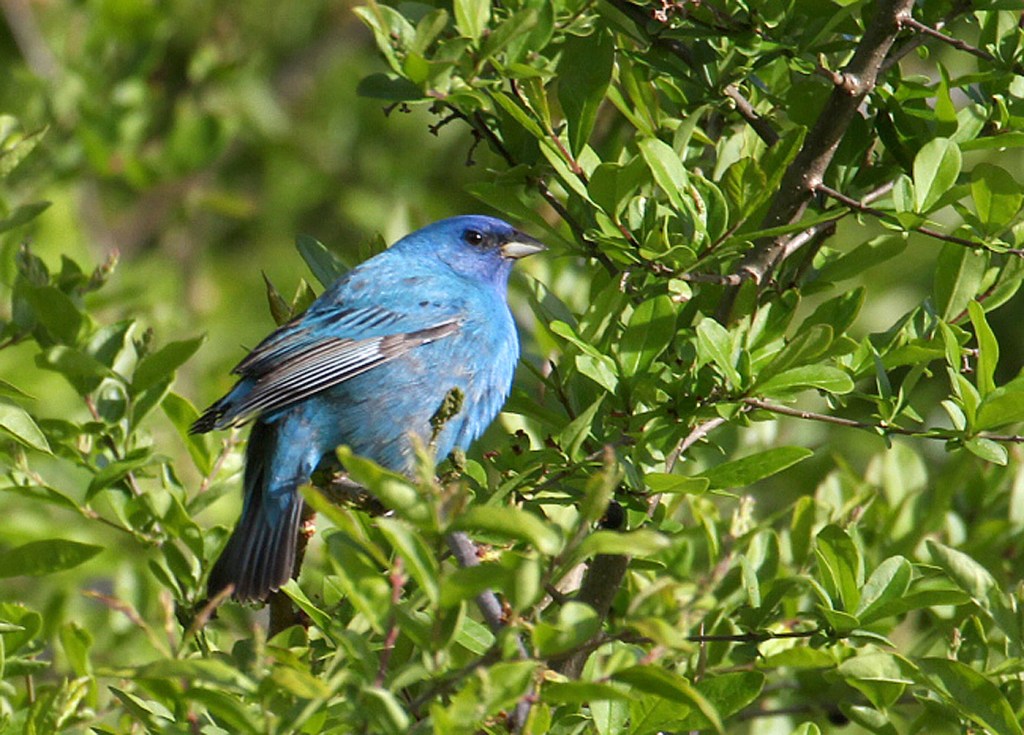
Indigo bunting: A New England summer gem

Photo by Chris Bosak An indigo bunting perches in a bush in New England, June 2020. Merganser Lake.

A Day on Merganser Lake

No words are necessary when an indigo bunting is the subject.

Birds to brighten your day: May 21

Photo by Chris Bosak
An indigo bunting perches on a branch in New England, May 2020. Merganser Lake.

A Day on Merganser Lake

I was a little late to the indigo bunting party this spring, but I finally got one yesterday. I visited a nearby park and took a trail I usually don’t take. I can get stuck in a routine of walking the same route every time I go to a place I visit frequently. This time I took the path less traveled and it made all the difference. (Corny, I know.)

(Repeat text for context:  I’m running out of COVID-19 lockdown themes so from now until things get back to some semblance of normalcy, I will simply post my best photo from the previous day. You could say it fits because of its uncertainty and challenge. I’ll call the series “A Day on Merganser Lake,” even though that’s not the real name of the lake I live near in southwestern Connecticut, it’s just a nod to my favorite duck family.)

The 2018 birding year in review: Part V

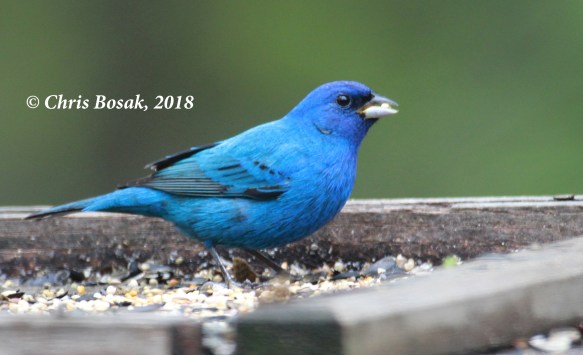
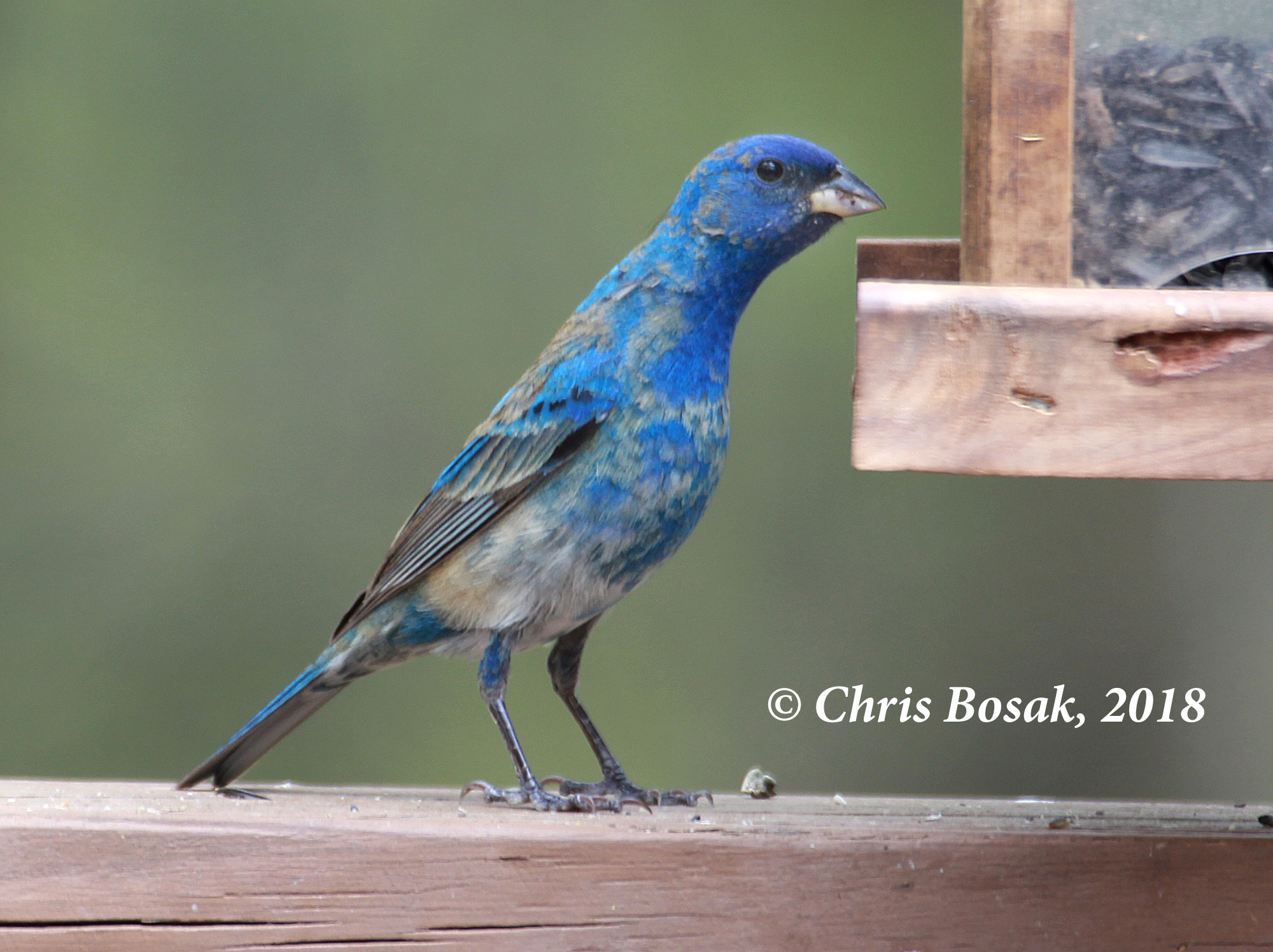
Photo by Chris Bosak A male indigo bunting eats seeds from a platform feeder in Danbury, Conn., in May 2018.

My latest For the Birds column releases my personal top 10 birding moments for 2018. Recapping the previous year is my favorite column to write each late December or early January. This year, instead of blasting out the top 10 all at once I’m going to spread it out and reveal two each day, starting today (Jan. 1, 2019.) This post will include Nos. 2 and 1. This is the finale!

Feel free to comment or send me an email with some of your 2018 birding or nature highlights.

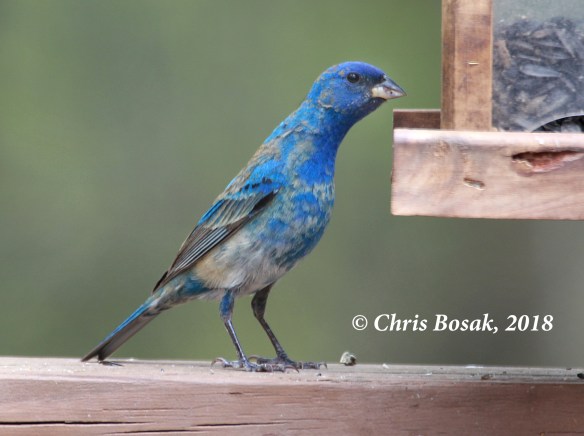
Photo by Chris Bosak An indigo bunting visits a feeder in New England, spring 2018.

2. Indigo bunting at feeder. I had two visit, actually. One was a male in a blotchy transition plumage and one was an adult male in its splendid bright blue coat. I knew these sought-after birds  visited feeders, but this was a first for me.

Gray jay on snowy bough in Pittsburg, N.H., Nov. 2018.

1. Gray jays. An early November trip to Pittsburg, N.H., yielded some interesting bird sightings, such as bald eagles, ruffed grouse, and an evening grosbeak. The highlight for sure, however, were several small groups of gray jays that ate seeds right from our hands.

Of course, the big highlight of the year was continuing to be able to share my outdoor adventures through this column and my website. Thanks for your support in 2018 and I can’t wait to see what 2019 has in store. Also, feel free to share your nature highlights of 2018. 

Another indigo bunting shot

Photo by Chris Bosak  A male indigo bunting eats seeds from a platform feeder in Danbury, Conn., in May 2018.

Photo by Chris Bosak
A male indigo bunting eats seeds from a platform feeder in Danbury, Conn., in May 2018.in

Here’s another shot of that male indigo bunting, just because …

Latest For the Birds column: Another backyard first

Here is the latest For the Birds column, which runs in several New England newspapers.

Photo by Chris Bosak An indigo bunting visits a feeder in New England, spring 2018.

Photo by Chris Bosak
An indigo bunting visits a feeder in New England, spring 2018.

No matter how long you’ve been at it, birdwatching always presents firsts.

Wait, I used that sentence to start my column a few weeks ago. Oh well, another birding first happened this week, so I’m going with it again.

This time, it was a new bird to my feeding station. I’ve been feeding birds for a long time, and I’ve seen some great birds eating seeds or suet in my backyard.

Every year I’m thrilled when the rose-breasted grosbeaks show up. This year, a male and female have paid periodic visits for the last couple days.

It took years for me to attract hummingbirds, but now — knock on wood — it seems they are annual visitors.

A few Octobers ago, a small group of pine warblers discovered my suet feeder and stuck around the yard for about three days.

The other day, a new arrival. Settling into my lounge chair on the deck, I noticed a bright blue blotch among the leaves on the branch used by “my” Continue reading