For the Birds: Titmice always there for birders

Photo by Chris Bosak — Tufted titmouse in New England, January 2024.

The tufted titmouse is one of the most reliable birds to find in New England, regardless of season. The slowest of bird walks are often graced by a tufted titmouse or two.

Even if the bird is not seen, it can usually be heard. Titmice have a big voice that belies their small stature. They are not as surprisingly boisterous as Carolina wrens, but gram-per-gram, titmice are still one of the most vociferous birds.

The bird’s common “peter peter peter” song is one of the first bird songs I learned as a beginning birder way back when. I heard the loud, clear whistles and refused to continue my walk until I found the source. The bird sang over and over as I scanned the area until, finally, I found the titmouse in a nearby tall evergreen. I remember being surprised at how dainty the bird appeared compared to the bravado of the song.

Cardinals also have songs with loud, clear whistles and the titmouse’s song is reminiscent of those. The cardinal’s songs, however, are more melodic and complicated than the simple “peter peter peter” of the titmouse. There are also variations in the titmouse’s song as it can be different in tone or number of syllables.

But that is hardly the only sound a titmouse makes. I have been stumped several times hearing a bird in the woods only to eventually find it was a titmouse. One of their calls sounds a lot like a chickadee and often causes confusion. It’s best to try to spot the bird to ensure which one is calling. To add to the confusion, titmice and chickadees are often found in the same area.

Titmice also have an extremely wide variety of harsh scolding calls, some of which are common and familiar and some that sound completely unfamiliar as they are not heard as often.

Which brings me to the next question about the titmouse. If there is more than one titmouse, are you looking at titmice or titmouses? The short answer is both are acceptable, but titmice is by far the more common usage, even if may not be technically correct. The titmouse (bird) and mouse (rodent) are obviously not related – in taxonomy or etymology — so why is it titmice? I guess it just sounds better and that’s what people have always called it. I’m sure there’s a better explanation, but I don’t know the true history of it.

Every birding organization and every well-known bird author I checked use titmice as the plural, and that includes the Cornell Lab of Ornithology, which I use as my go-to source for birding information. Even the dictionaries I checked use titmice. In fact, you’d be hard-pressed to find a source that uses titmouses. Some language purists may bristle at the term titmice, but it’s here to stay.

Regardless of how you choose to pluralize the word, the titmouse is a New England favorite that entertains us at our feeders and in the woods. Hardly a day goes by, regardless of the time of year, when I don’t see a titmouse, whether I’m actively looking for birds or not. That wasn’t always the case in New England as they were once regarded as a southern bird, but they have slowly and steadily expanded their range throughout New England and into Canada.

It is an energetic bird with a big personality and even bigger voice. Titmice, or titmouses if you prefer, are a welcome addition to the New England biosphere.
Birds to brighten your day: April 18

Photo by Chris Bosak
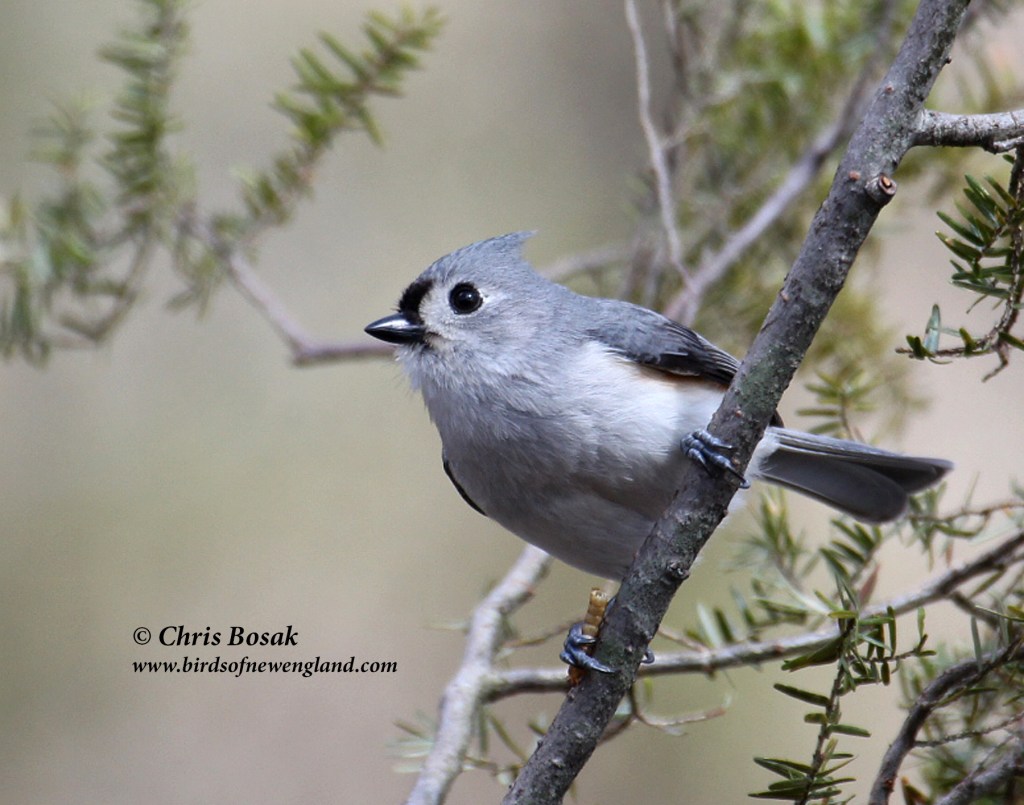
A tufted titmouse visits in a yard in Danbury, CT, April 2020. (Merganser Lake)

A Day on Lake Merganser X

Tufted titmice are a common occurrence in my backyard; perhaps the most common. I still appreciate the small birds, no matter how many of them I’ve seen. Titmice are not known for their vocal prowess, but I’ve heard a lot of different songs and calls come from them. They have quite a range of sounds. Yet another reason to like these little birds.

(Repeat text for context:  I’m running out of COVID-19 lockdown themes so from now until things get back to some semblance of normalcy, I will simply post my best photo from the previous day. You could say it fits because of its uncertainty and challenge. I’ll call the series “A Day on Merganser Lake,” even though that’s not the real name of the lake I live near in southwestern Connecticut, it’s just a nod to my favorite duck family.)

Lingering garden scene

Scenes like this are quickly fading as winter starts to creep into New England. These coneflowers have lingered into late fall because I purchased them at a box hardware store on clearance a few weeks ago. I’m hoping the flowers return next year, but until then I’m enjoying their later-than-usual blooms. The birds are, too, of course.

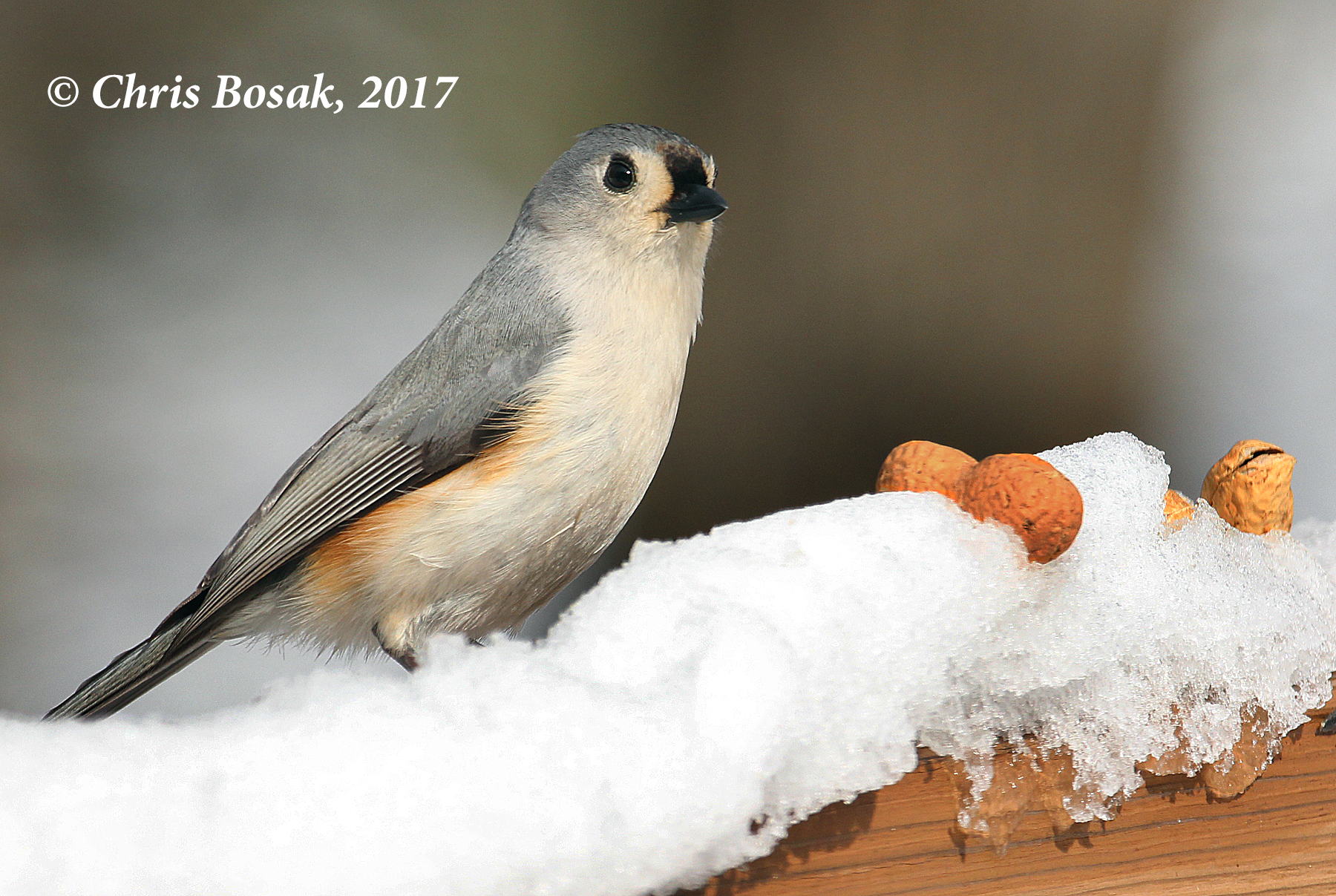
Another winter photo: Tufted titmouse in the snow

Photo by Chris Bosak A tufted titmouse perches on a carabiner that holds up a homemade platform birdfeeder in Danbury, Conn., during the winter of 2016-17.

Photo by Chris Bosak
A tufted titmouse perches on a carabiner that holds up a homemade platform birdfeeder in Danbury, Conn., during the winter of 2016-17.

Just another leftover winter photo.

Leftover snow photo 2: Titmouse eyes a peanut

Photo by Chris Bosak  A tufted titmouse contemplates grabbing a peanut from a deck railing following a snowstorm in Danbury, Conn., Feb. 2017.

Photo by Chris Bosak
A tufted titmouse contemplates grabbing a peanut from a deck railing following a snowstorm in Danbury, Conn., Feb. 2017.

Here’s another leftover snow shot from last week’s storm. Titmice were the second-most reliable sighting in the backyard during and after the storm(s). Junco was the best most reliable with dozens in the backyard at any given time.

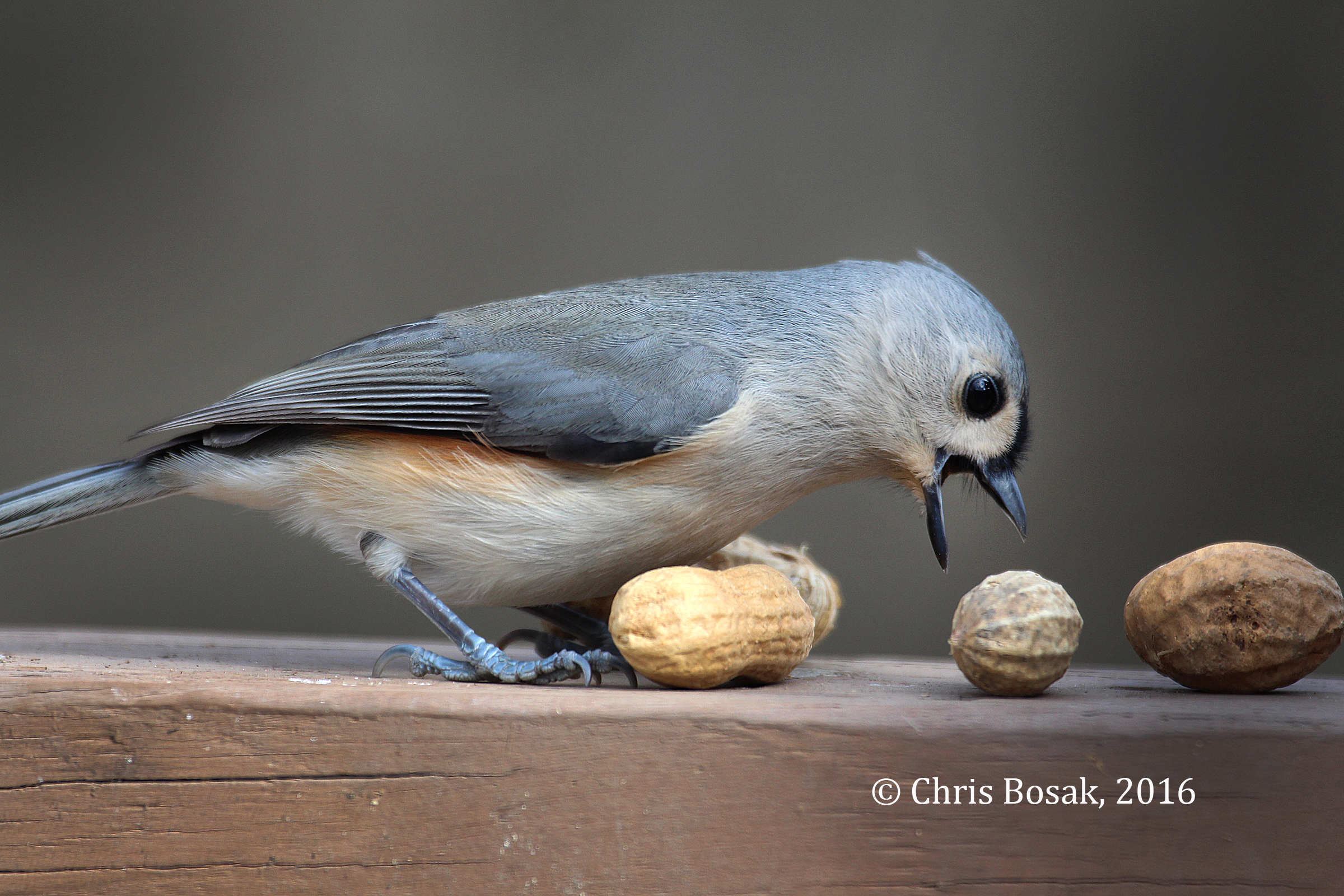
Titmouse grabs a peanut

Photo by Chris Bosak A Tufted Titmouse tries to figure out how to pick up a peanut off a deck railing in Danbury, Conn., in the fall of 2016.

Photo by Chris Bosak
A Tufted Titmouse tries to figure out how to pick up a peanut off a deck railing in Danbury, Conn., in the fall of 2016.

I am entertained by birds doing just about anything, but one of my favorite sights in the backyard is watching birds grab peanuts and fly off to store or eat them. I put a handful or two of peanuts on a platform feeder or on the deck railing itself and wait for the birds to discover them.

If the Blue Jays arrive first, forget it, the peanuts will be gone in a matter of minutes. Same goes for the Red-bellied Woodpecker. One or two of them empty the feeder in minutes, too.

I like when smaller birds, such as the Tufted Titmouse above, go after the peanuts. Their bills aren’t large enough to simply fly in, grab the nut and take off. They need to pick the right peanut and position it just right to grab it.

If you’ve never tried offering peanuts in the shell to birds, give it a shot. It has great entertainment value.

This guy’s not happy about the hummingbird series ending

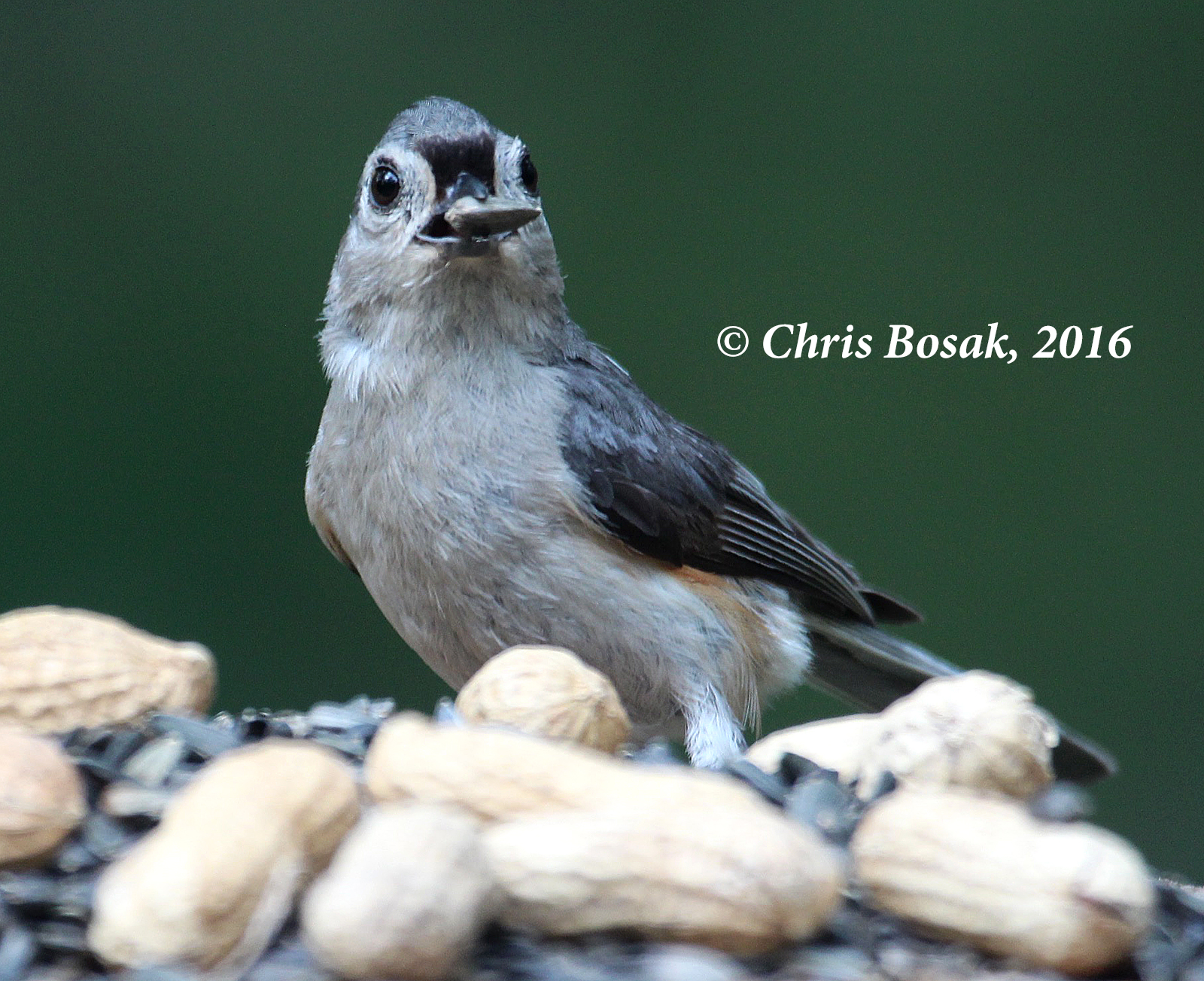
Photo by Chris Bosak A Tufted Titmouse grabs a sunflower seed from a feeder in Danbury, Conn., summer 2016.

Photo by Chris Bosak
A Tufted Titmouse grabs a sunflower seed from a feeder in Danbury, Conn., summer 2016.

Yes, yesterday was the last hummingbird photo in the series. This was the reaction of this Tufted Titmouse when it found out the news.

But in all seriousness, I don’t typically feed birds in summer, mostly because by June all I’m getting are squirrels, chipmunks and House Finches. Every so often, though, I put some sunflowers seeds on a platform and see what will show up. It didn’t take long for the titmice, chickadees and nuthatches to show up.

More photos of birds using the homemade feeder

Photo by Chris Bosak A White-breasted Nuthatch checks out a new bird feeder in Danbury, Conn., March 2016.

Photo by Chris Bosak
A White-breasted Nuthatch checks out a new bird feeder in Danbury, Conn., March 2016.

As promised, here are a few more photos of birds using the feeder that my 12-year-old Andrew and I made last week. Here’s the original story in case you missed it.

More photos by clicking below.

Continue reading

Today at the feeder

Photo by Chris Bosak

Photo by Chris Bosak
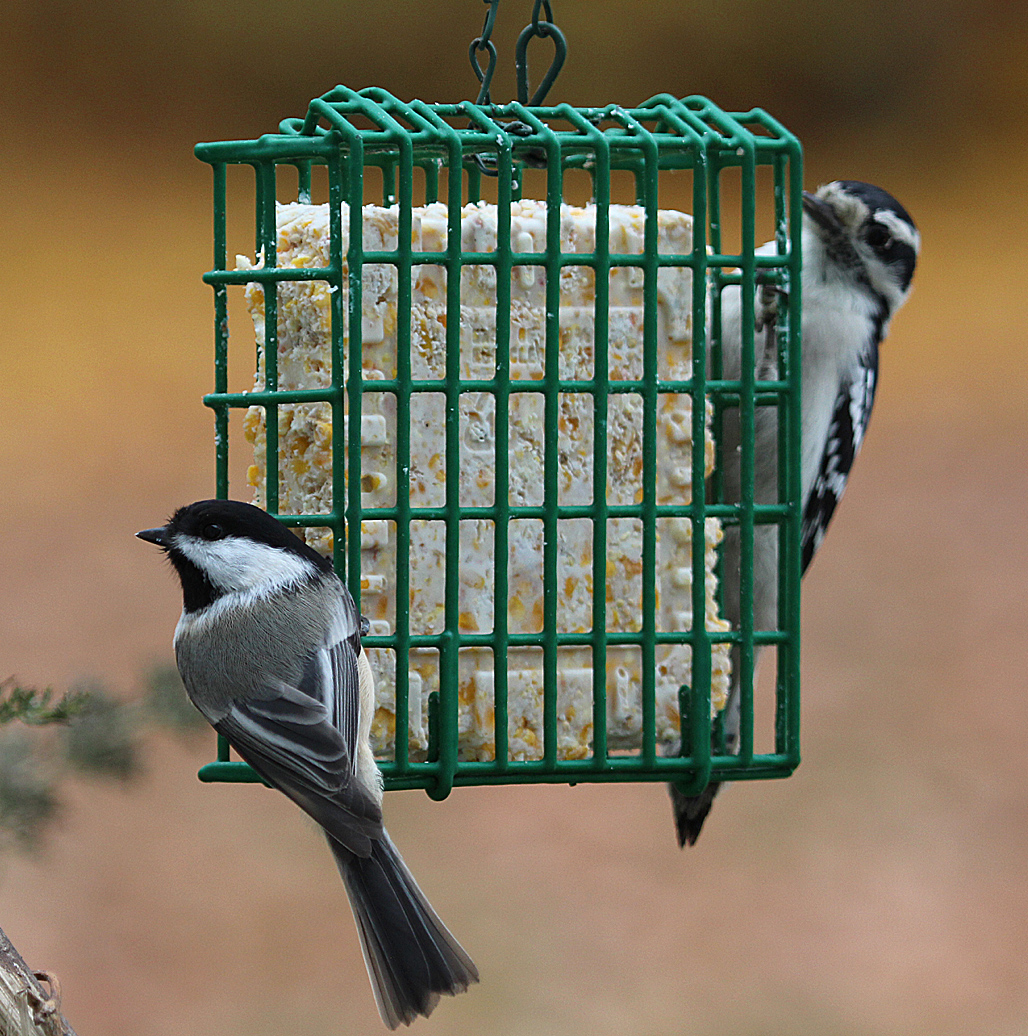
A Black-capped Chickadee and Downy Woodpecker share the suet feeder, Nov. 16, 2014.

It’s been a particularly busy day at the feeder today. There haven’t been any out of the ordinary species, just lots of backyard favorites. Here are a few photos from the action. Not pictured, but seen visiting today are: American Goldfinch; Northern Cardinal; Hairy Woodpecker, Red-bellied Woodpecker; Dark-eyed Junco; White-throated Sparrow; Blue Jay and American Crow. No nuthatches today yet … odd.

(Author’s note: OK, got my nuthatch. All is good.)

More photos are below. Click on “continue reading.”

Thanks for visiting http://www.birdsofnewengland.com

Continue reading

We need more Titmice

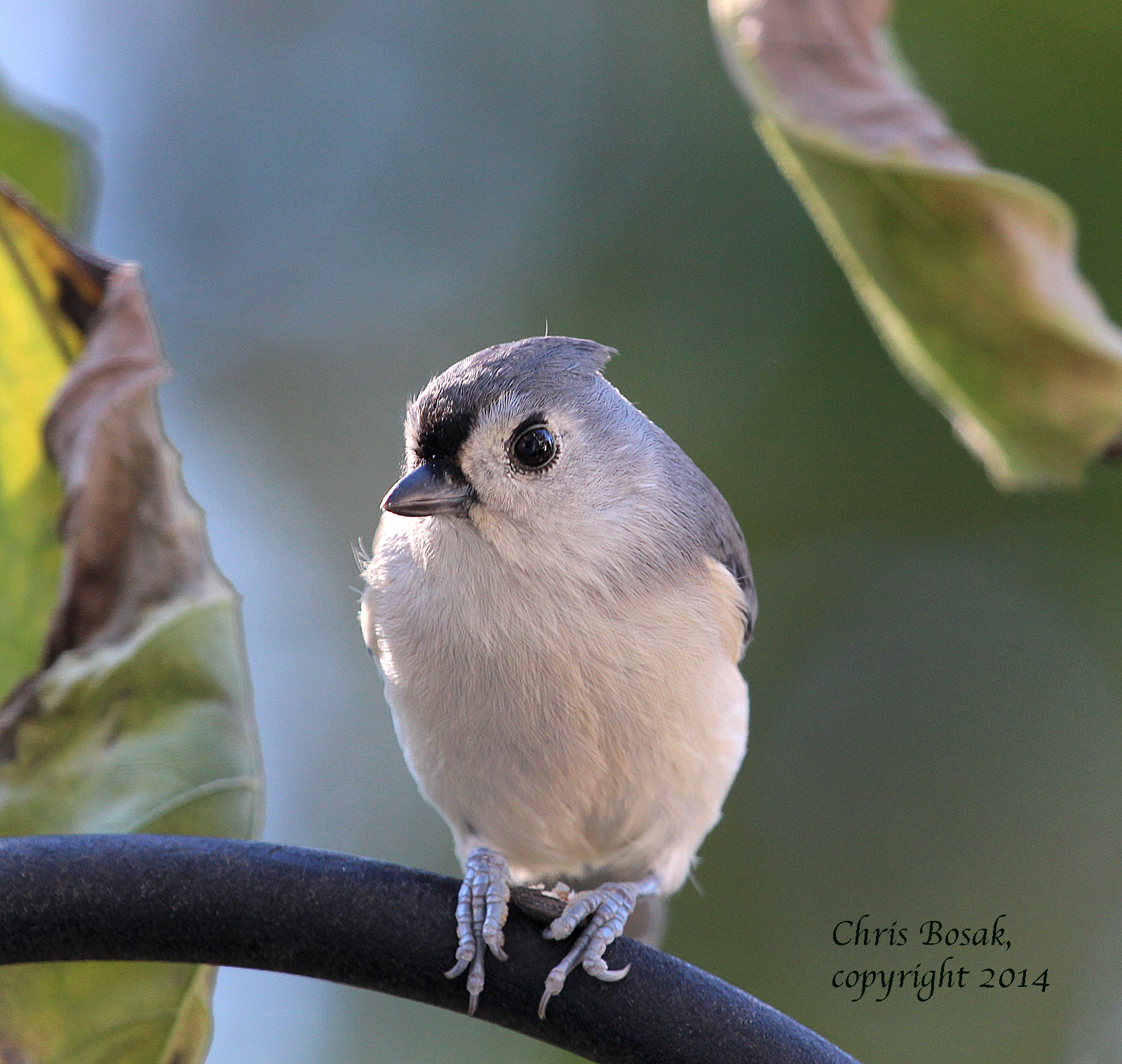
Photo by Chris Bosak A Tufted Titmouse perches on a pole near a birdfeeding station, Oct. 2014.

Photo by Chris Bosak
A Tufted Titmouse perches on a pole near a birdfeeding station, Oct. 2014.

Last week I posted a photo of Tufted Titmouse that I saw outside my window at my birdfeeding station. It kicked off a short series of photos I posted of common backyard feeder birds.

But, of course, I had more than just one photo of Tufted Titmice. So here are a few more photos of this small and lovable blue-gray bird. So far this fall Tufted Titmice have been the most numerous and reliable birds at my feeder. I can’t complain about that.

More photos below:

Continue reading