For the Birds: Long live the butterbutt

Photo by Chris Bosak
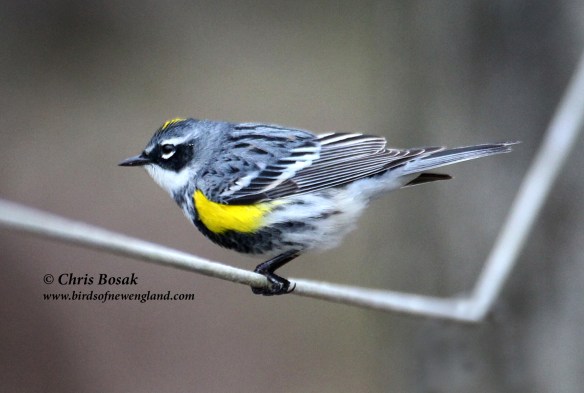
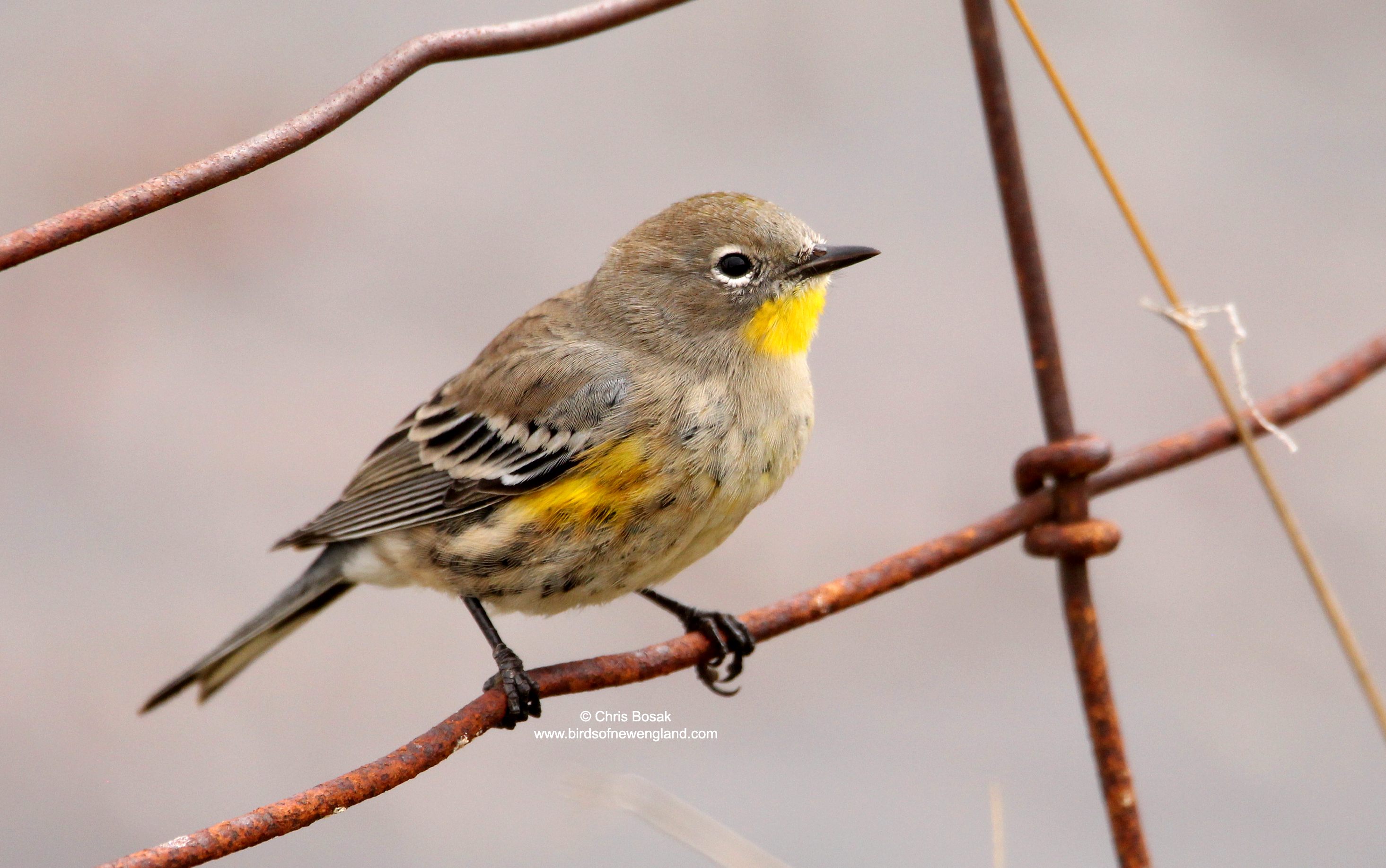
Yellow-rumped (Audubon’s) warbler just south of Grand Teton National Park, fall 2026.

It has one of the better nicknames in the birding world: butterbutt.

It makes perfect sense too because the yellow butt is a key field mark. Of course, it’s the yellow-rumped warbler, one of New England’s most commonly seen warblers. There are fall days when I’ll see dozens of butterbutts and hardly anything else, except for maybe a few palm warblers.

Yellow-rumped warblers can be tricky in the fall, however, as the flocks are a mixed bag of adult males and females and first-year males and females. All four varieties look fairly similar this time of year.

In the spring, we have adult males and adult females coming up from the south, and they look completely different from each other with males sporting an attractive mix of bluish gray, white, black and yellow. In the fall, they are all much duller than they are in the spring.

Their trademark and namesake is the yellow patch on their rump, which is visible at rest and in flight in all seasons. They also have small yellow patches on their sides. The western subspecies also has a yellow throat while the eastern subspecies sports a white throat.

The yellow-rumped warbler is an interesting study in bird names and splits. It used to be considered two separate species: Audubon’s warbler and myrtle warbler, which are now each considered subspecies of the yellow-rumped warbler. That change took place in 1973. There has been talk for years about splitting them again, but that hasn’t happened yet.

To add to the confusion, there are two more forms of the yellow-rumped warbler: black-fronted from Mexico and Goldman’s of Guatemala. I’ve never seen one in person, but from photos, the Goldman’s form looks like a really cool bird that is mostly black with yellow and white markings.

To add even more confusion, the Audubon’s and myrtle subspecies interbreed where their ranges cross somewhere around the Rocky Mountains. It was there where I saw dozens of yellow-rumps during a recent trip to Grand Teton National Park. It being fall, it was difficult to tell males from females and adults from immatures, but they were definitely yellow-rumped warblers. Whether they were the Audubon’s or myrtle subspecies is another question. I believe they were Audubon’s based on the yellow throats.

Who knows when or if the split will take place again. In the last few years, the American Ornithologists’ Union seems to be on a splitting kick. I wrote recently about the splitting of the warbling vireo, house wren and yellow warbler ─ all common New England birds.

In a way, I’d prefer the bird to remain a single species. Yellow-rumped warbler is much more fun to say than Audubon’s warbler or myrtle warbler. Either way, butterbutt remains a fitting nickname, so there’s that.

For the Birds: Just a little more patience

Photo by Chris Bosak – A yellow-rumped warbler perches on a branch in New England, spring 2022.

It was a classic early spring walk.

Expectations were high to see a lot of migrants, but those expectations did not match the calendar. Mid-April can be a tough time for birdwatchers. We know the migrants are coming any day, and we have waited so long that the anticipation gets the better of our waning patience. It’s like the feeling children get on December 22 and 23. The decorations and tree have been up for weeks already, but it’s still not time to celebrate.

This is not to say it wasn’t a fruitful walk. I saw a handful of migrants including my first warblers of the season. But instead of dozens of species and 100s of individual birds, as we will get in a few weeks, it was more like a few species and about a dozen individuals.

It was a good warm-up to the upcoming peak of spring migration. Let’s put it that way.

Continue reading →

Birds to brighten your day: April 30

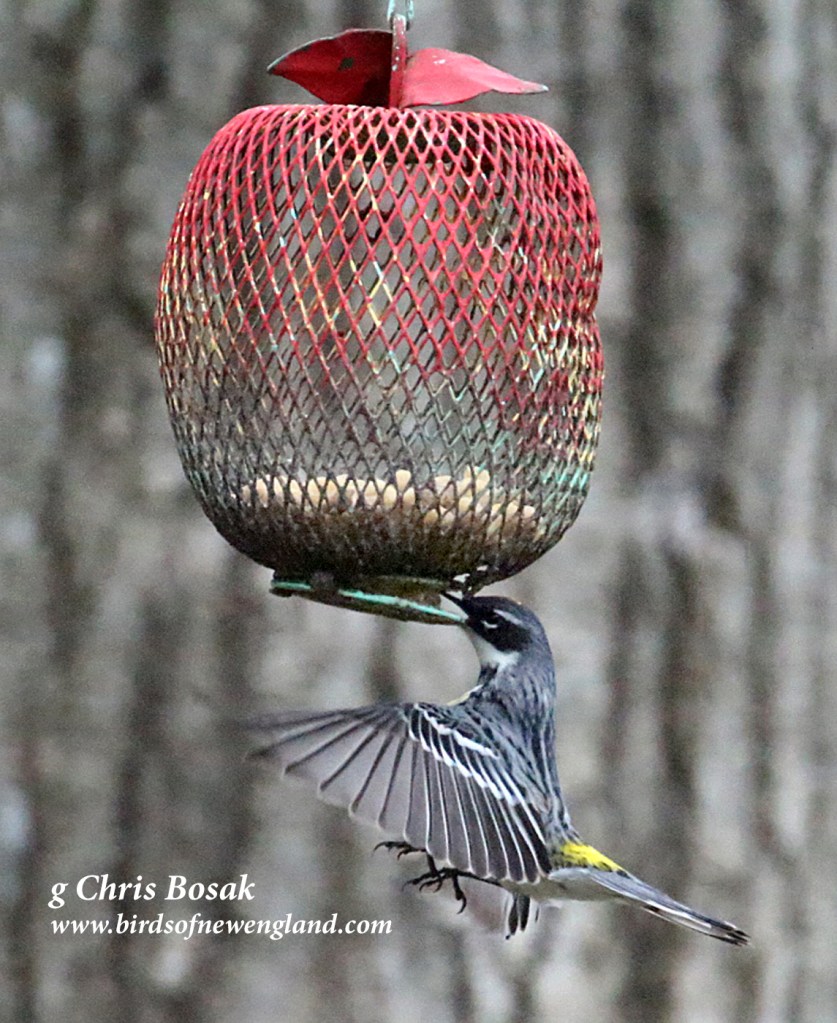
Photo by Chris Bosak A yellow-rumped warbler hovers to get a treat from a feeder in Danbury, CT, April 2020. (Merganser Lake)

A Day on Merganser Lake XXI

The pine warblers swoop in and land on this apple-shaped feeder like it’s no problem. The yellow-rumped warblers, however, have difficulty and sometimes hover underneath it instead of landing on it. So I jacked up my ISO to freeze the action (at the cost of image quality) and got this shot of the yellow-rumped grabbing a suet nugget. The image at the bottom shows why it’s called a yellow-rumped warbler.

(Repeat text for context:  I’m running out of COVID-19 lockdown themes so from now until things get back to some semblance of normalcy, I will simply post my best photo from the previous day. You could say it fits because of its uncertainty and challenge. I’ll call the series “A Day on Merganser Lake,” even though that’s not the real name of the lake I live near in southwestern Connecticut, it’s just a nod to my favorite duck family.)

Photo by Chris Bosak A yellow-rumped warbler hovers to get a treat from a feeder in Danbury, CT, April 2020. (Merganser Lake)

Birds to brighten your day: April 27

Photo by Chris Bosak
A yellow-rumped warbler perches on a clothesline in Danbury, CT, April 2020. (Merganser Lake)

A Day on Merganser Lake XVIII

Here’s a solo shot of the yellow-rumped warbler. Warblers aren’t known as feeder birds, but I’ve had three yellow-rumpeds and at least two pine warblers all over my suet feeders the last few days. Warblers are small, often colorful birds that winter in parts south and migrate north each spring. Some nest in New England and some pass through New England on their way farther north.

(Repeat text for context:  I’m running out of COVID-19 lockdown themes so from now until things get back to some semblance of normalcy, I will simply post my best photo from the previous day. You could say it fits because of its uncertainty and challenge. I’ll call the series “A Day on Merganser Lake,” even though that’s not the real name of the lake I live near in southwestern Connecticut, it’s just a nod to my favorite duck family.)

Yellow-rumped Warblers abound so far

Photo by Chris Bosak A Yellow-rumped Warbler perches on a branch in Selleck's Woods, Darien, Conn., April 2016.

Photo by Chris Bosak
A Yellow-rumped Warbler perches on a branch in Selleck’s Woods, Darien, Conn., April 2016.

So far, early in this warbler season, Yellow-rumped Warblers are by far the most abundant species. That is true pretty much any year, but this year that really seems to be the case. I’ve seen only a handful of the other typical early arrivers — Pine Warblers and Palm Warblers — but dozens of Yellow-rumpeds nearly everywhere I go.

I visited my old favorite spot Selleck’s Woods the other day and Yellow-rumped were everywhere I looked. I also saw a Palm Warbler, two Brown Thrashers and an Eastern Towhee — but Yellow-rumpeds were the dominant species. Not that I’m complaining. How can you complain about such a beautiful bird?

Stay tuned for more warbler photos (I hope so anyway).

Photo by Chris Bosak A Yellow-rumped Warbler perches on a branch in Selleck's Woods, Darien, Conn., April 2016.

Photo by Chris Bosak
A Yellow-rumped Warbler perches on a branch in Selleck’s Woods, Darien, Conn., April 2016.

Warbler season has arrived in New England

Photo by Chris Bosak Palm Warbler

Photo by Chris Bosak
Palm Warbler

The title of this post is a bit misleading because warbler season actually arrived a few weeks ago. But there early warblers are still around and the next wave hasn’t arrived in force yet, so the topic is still timely.

Anyway, warblers (small and usually colorful Neotropical migrants) move through New England starting in late March/early April. The migration continues through early June. Many warbler species nest in New England, particularly Continue reading →

First warblers of the season

Photo by Chris Bosak Yellow-rumped Warbler in Selleck's Woods, Darien, Conn., April 2014.

Photo by Chris Bosak
Yellow-rumped Warbler in Selleck’s Woods, Darien, Conn., April 2014.

Typically a Pine Warbler is my first warbler of the spring, followed closely by a Palm Warbler. This year, with my time in the woods being limited by work and volunteer efforts monitoring shorebirds, I didn’t see my first warblers until April 24 in Selleck’s Woods in Darien, Conn.

Those warblers were Yellow-rumped Warblers, in their nice shiny, spring plumage. I see yellow-rumpeds a lot in the fall in their duller autumn plumage. It was nice to get the warbler season started, especially with a colorful one like the yellow-rumped. Hopefully the first of many.

What are you seeing out there? Comment or email me to let me know.

Photo by Chris Bosak Yellow-rumped Warbler in Selleck's Woods, Darien, Conn., April 2014.

Photo by Chris Bosak
Yellow-rumped Warbler in Selleck’s Woods, Darien, Conn., April 2014.

yellow rumped2