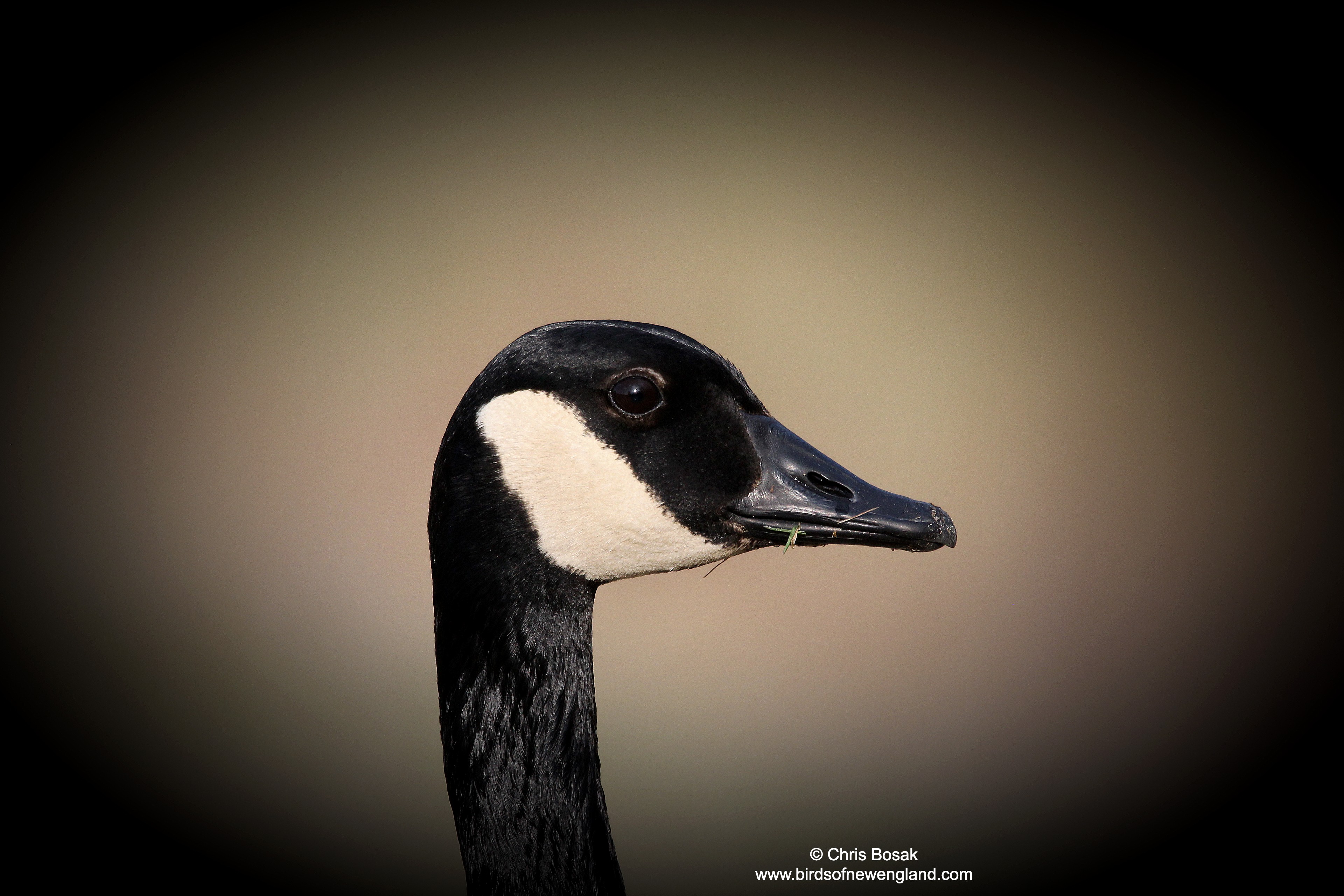
Here’s an interesting shot I took of a Canada goose the other day. I used the vignette feature to make the goose stand out more.

Here’s an interesting shot I took of a Canada goose the other day. I used the vignette feature to make the goose stand out more.

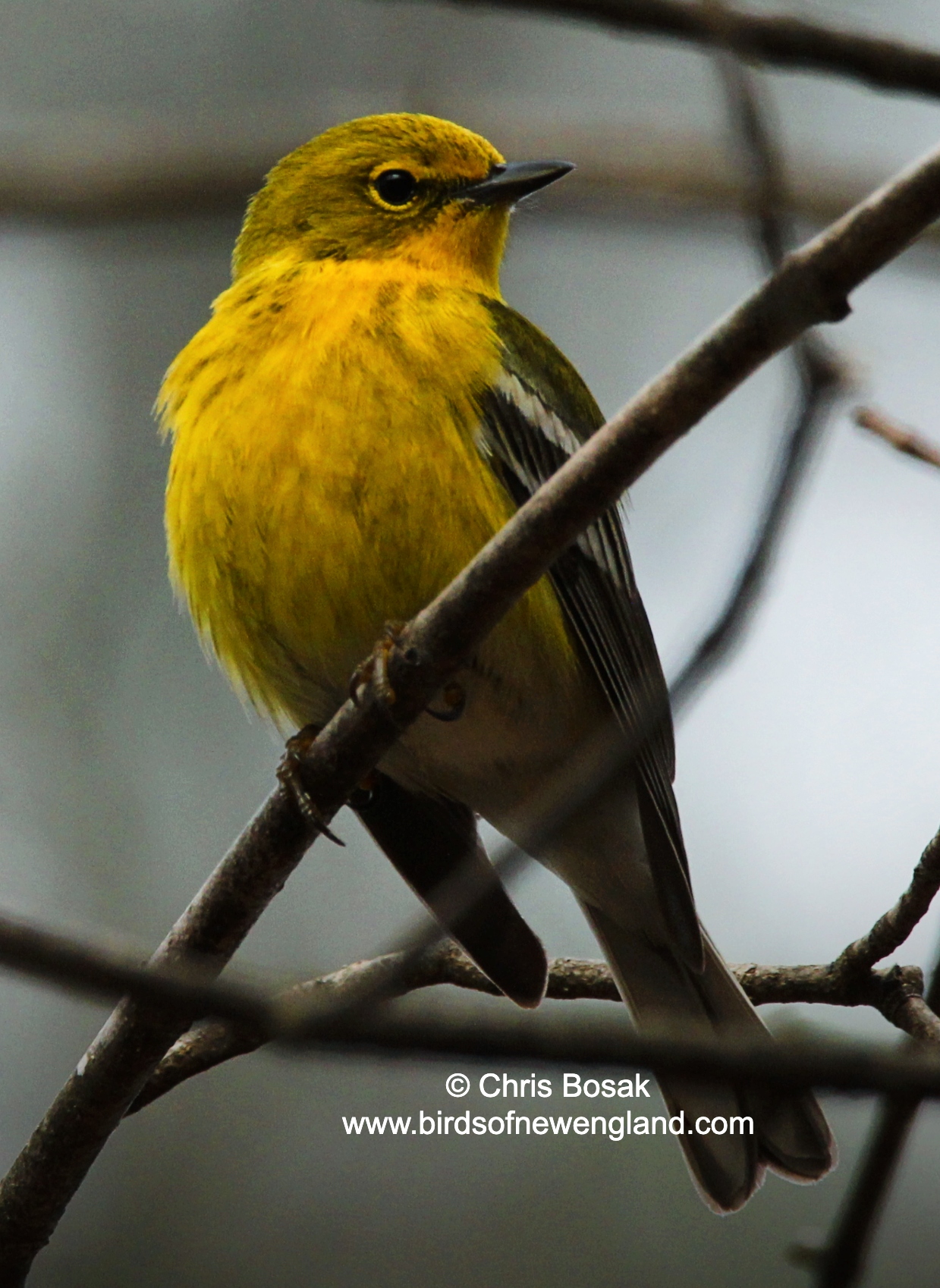
Pine warblers and palm warblers are typically the earliest warblers to arrive in New England in the spring. This year, the pines showed earlier than usual (at least in my estimation.) I found at least two pine warblers yesterday (March 31, 2025) at Huntington State Park in southern Connecticut. Here’s hoping the rest of the spring migration is as good.
Drop me a line and let me know what you’re seeing out there.


I pulled into the small dirt parking lot at the reservoir to see what ducks were hanging around the dam. The water by the dam does not freeze, and there is always a good variety of waterfowl there all winter.
As I stepped out of the car, I noticed two large birds perched in a tree along the shoreline. I knew immediately they were much too large to be hawks. They must be eagles. Sure enough, it was one adult and one immature bald eagle. It takes eagles four or five years to get their signature white heads and tails. Immature eagles are, however, just as large and impressive as adults.
Of course, I was thrilled to see the bald eagle. However, I was not surprised. Bald eagle sightings have become increasingly common over the last several years as the population continues to rise.
The bald eagle’s recovery is one of the best conservation stories of the last several decades. The osprey recovery is equally exciting.
Continue reading
I know, same as yesterday, geese are not ducks. They are close enough for this very unofficial birdsofnewengland.com Duck Week celebration. Snow geese gather in massive numbers in some parts of the Atlantic flyway. In many cases, they are uncountable because there are so many. In other parts, however, snow geese are a fairly rare sighting. I live in a part of New England where snow geese are not seen often. In fact, this one I saw at a beach was the first one I had seen in years. Usually, when they are seen where I live, it is a single snow goose within a flock of Canada geese. This one, however, was alone near the beach. I hope it finds more of its kind during migration.
Click here for more information about the snow goose.
Thanks for checking out Duck Week at http://www.birdsofnewengland.com

I know, geese aren’t ducks. But they’re close enough for Duck Week. Brant may be found in huge numbers along the coast of Long Island Sound during the winter. From a distance, or to the untrained eye, they may be mistaken for Canada geese. Closer inspection reveals that brant are much smaller and lack the pronounced chin strap of the Canada goose. Brant are a treat to observe each winter in New England.
For more information on brant, click here.


Scaup congregate in large numbers off the coast of Long Island Sound and its tributary rivers during the winter months. The flocks can be several hundred individuals strong, including drakes and hens. On occasion, a redhead may be found within the flock. Greater and lesser scaup are commonly seen in large numbers throughout New England in the winter.
Click here for more information about the greater scaup.

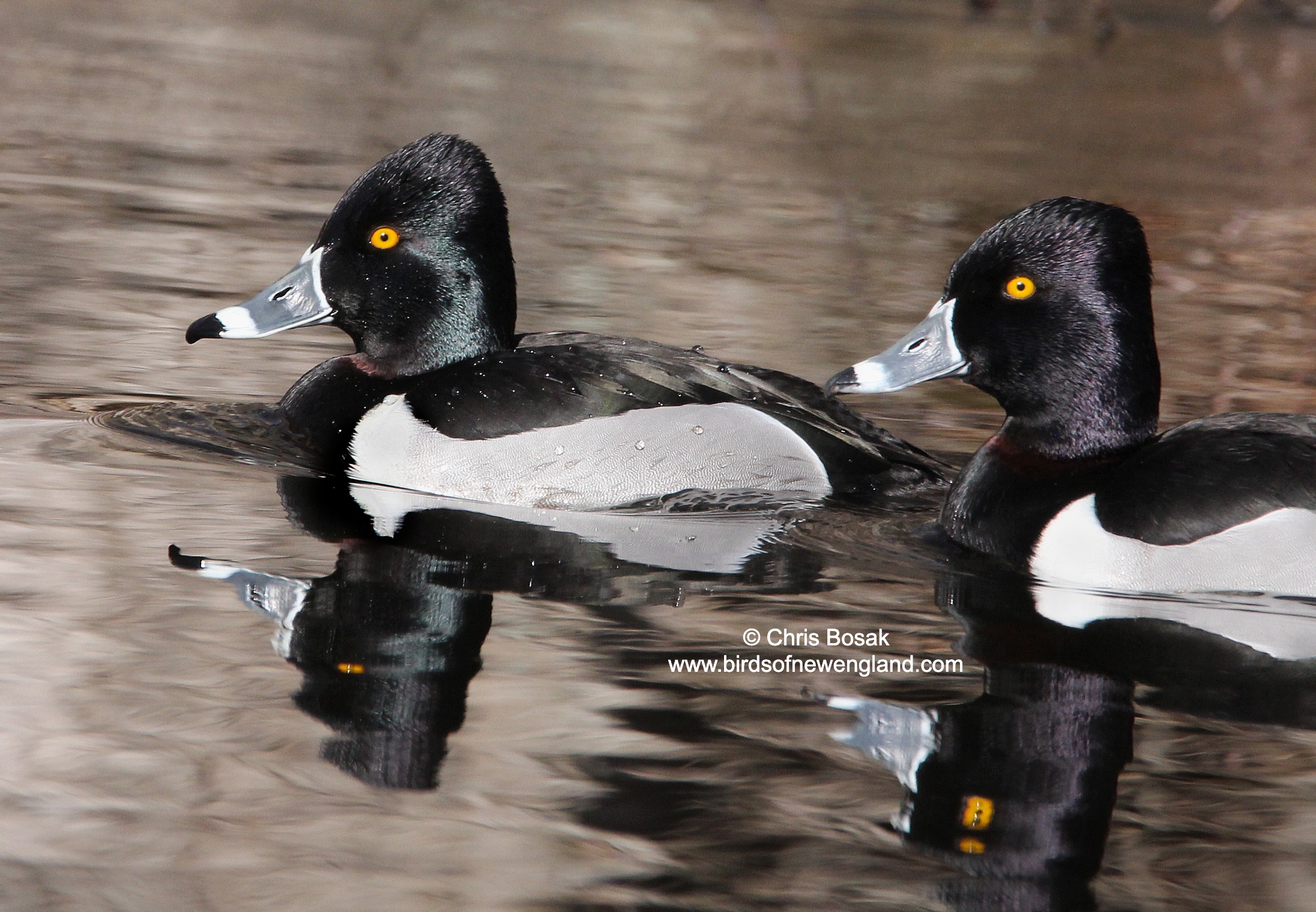
The ring-necked duck is next up for birdsofnewengland.com’s Duck Week. This duck may have been better suited to being called ring-billed duck because the ring on its bill is a much easier field mark to see than the one on its neck. But it isn’t, so we’re stuck with ring-necked duck. Just like the hooded merganser, which kicked off Duck Week on Monday, I’ve seen a ton of ring-necked ducks this winter. They were seemingly on every unfrozen fresh-water body a few weeks ago.
For more information on the ring-necked duck, click here.

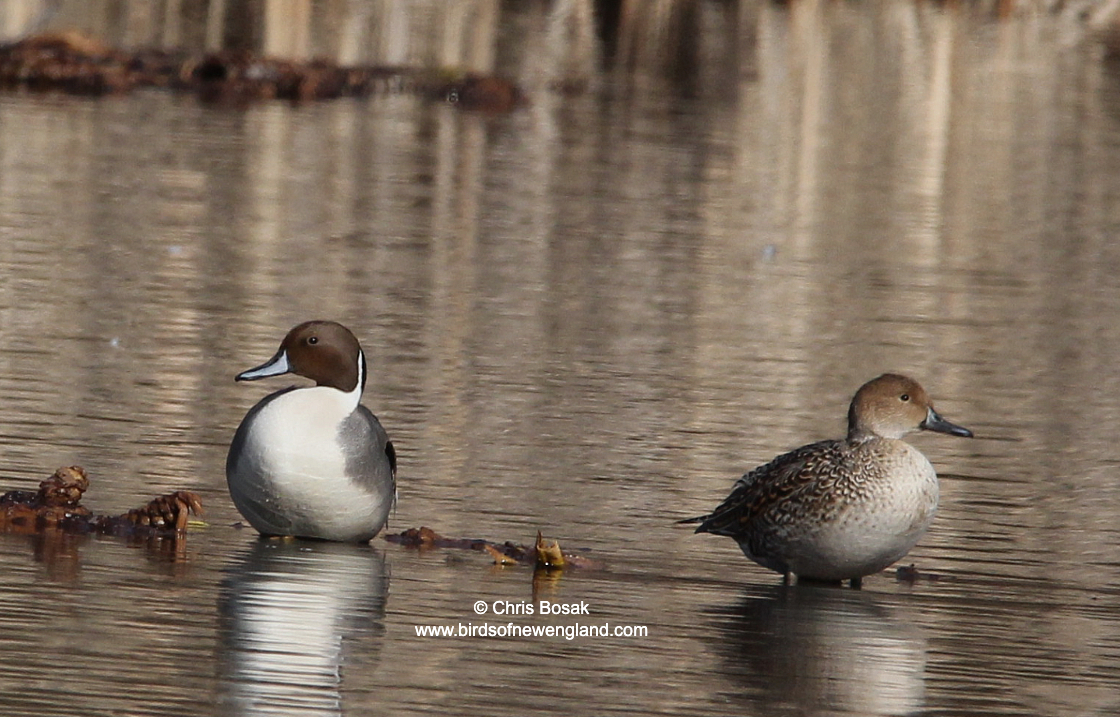
The northern pintail is the next fowl up for birdsofnewengland’s Duck Week, a very unofficial declaration made by me because I have a lot of recent duck photos that need to be shared. Pintail drakes are one of the most handsome ducks we have in New England. If you missed the first Duck Week post, click here to meet the hooded merganser.
For more information about the northern pintail, click here.
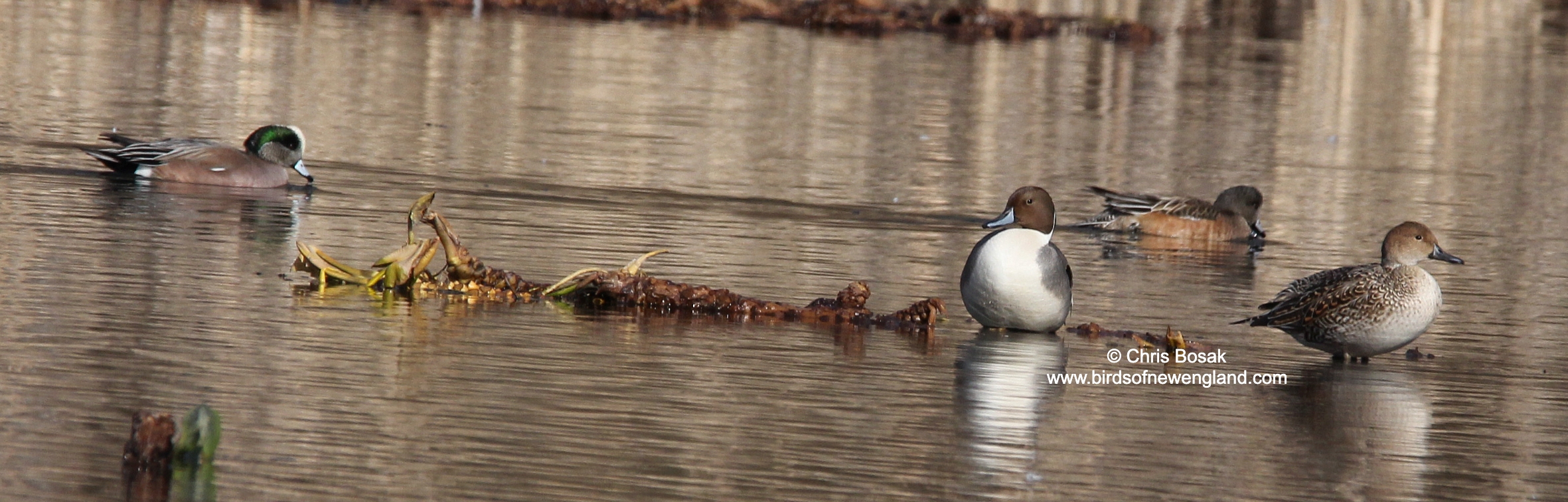
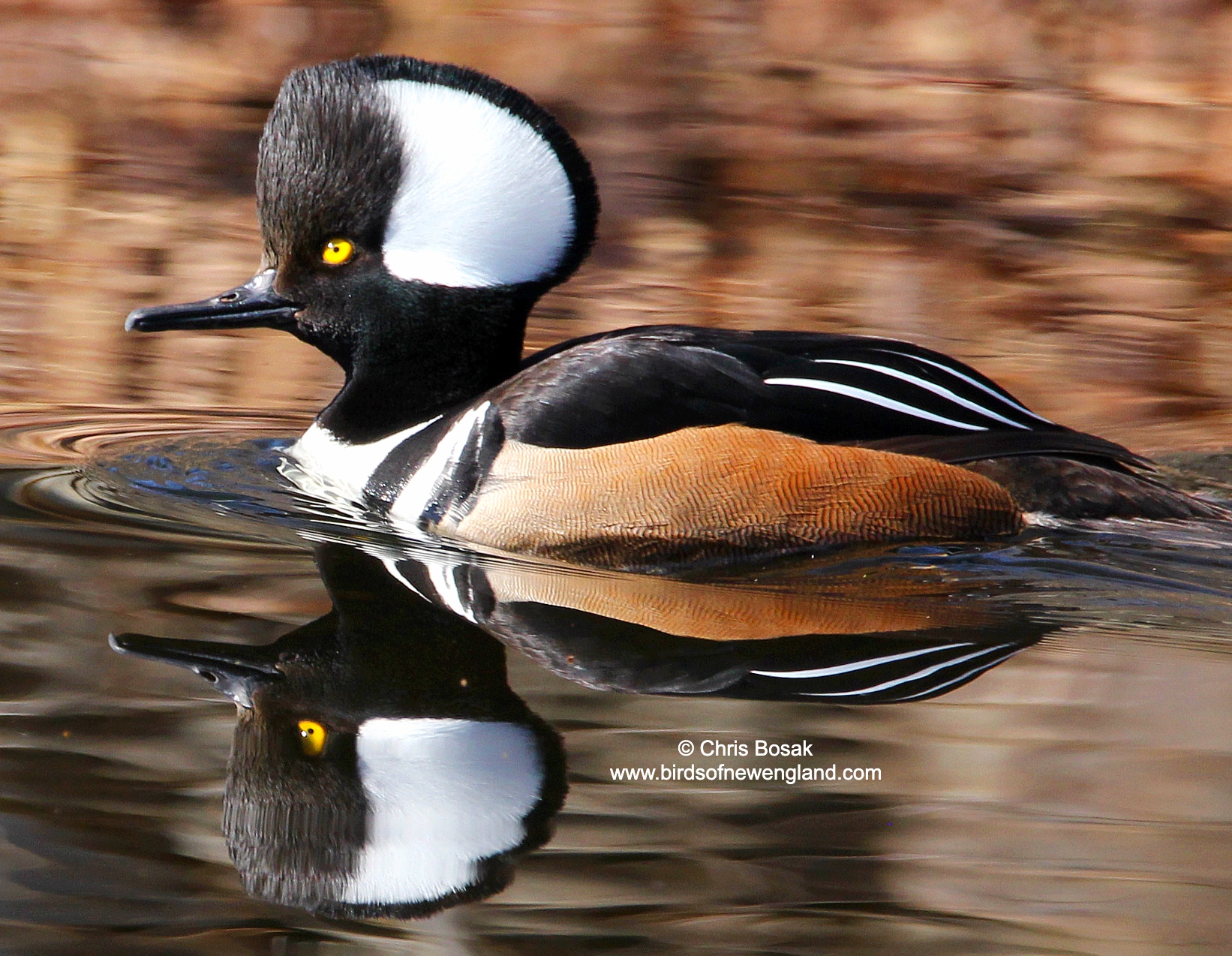
Welcome to Duck Week, birdsofnewengland.com’s very unofficial declaration to celebrate the spring duck migration. Duck Week will be a collection of duck photos I have snapped over the last few weeks. Now seems like a good time, as I’m starting to see fewer ducks as they make their way north to their breeding grounds.
I’ll start with the hooded merganser, one of my favorite birds of all time. I saw a ton of hooded mergansers this late winter/early spring. Look for them in fresh or brackish water, including relatively small bodies of water.
Click here for more information on the hooded merganser.

One more bonus photo …


The Cornell Lab of Ornithology and other bird conservation organizations released the 2025 U.S. State of the Birds Report last week. Not surprisingly, the news was rather somber and highlighted alarming decreases in bird populations over the last 50 years.
It largely echoes the 2019 study that showed the loss of three billion birds in North America since 1970. Unfortunately, the news has gotten worse for many birds in the five years since that landmark study.
Rather than recapping the press release here, I wanted to point out some of the figures that jumped out at me personally. The full news release may be found online by searching for “2025 U.S. State of the Birds Report” or by visiting birdsofnewengland.com.
Like many studies, there is good news and bad news to be found. This study, sadly, is mostly bad news, but we’ll take a look at both sides.
It’s good news that 489 (68 percent) of the assessed bird species are listed as low concern. That doesn’t necessarily mean that these species are increasing or thriving; in fact, many are declining in number, but they haven’t reached the threshold for priority conservation planning.
Continue reading Birds of New England.com