Unknown's avatar

About Chris Bosak

Bird columnist and nature photographer based in New England.

Great Backyard Bird Count set for Feb. 13-16 (press release)

Photo by Chris Bosak

Photo by Chris Bosak
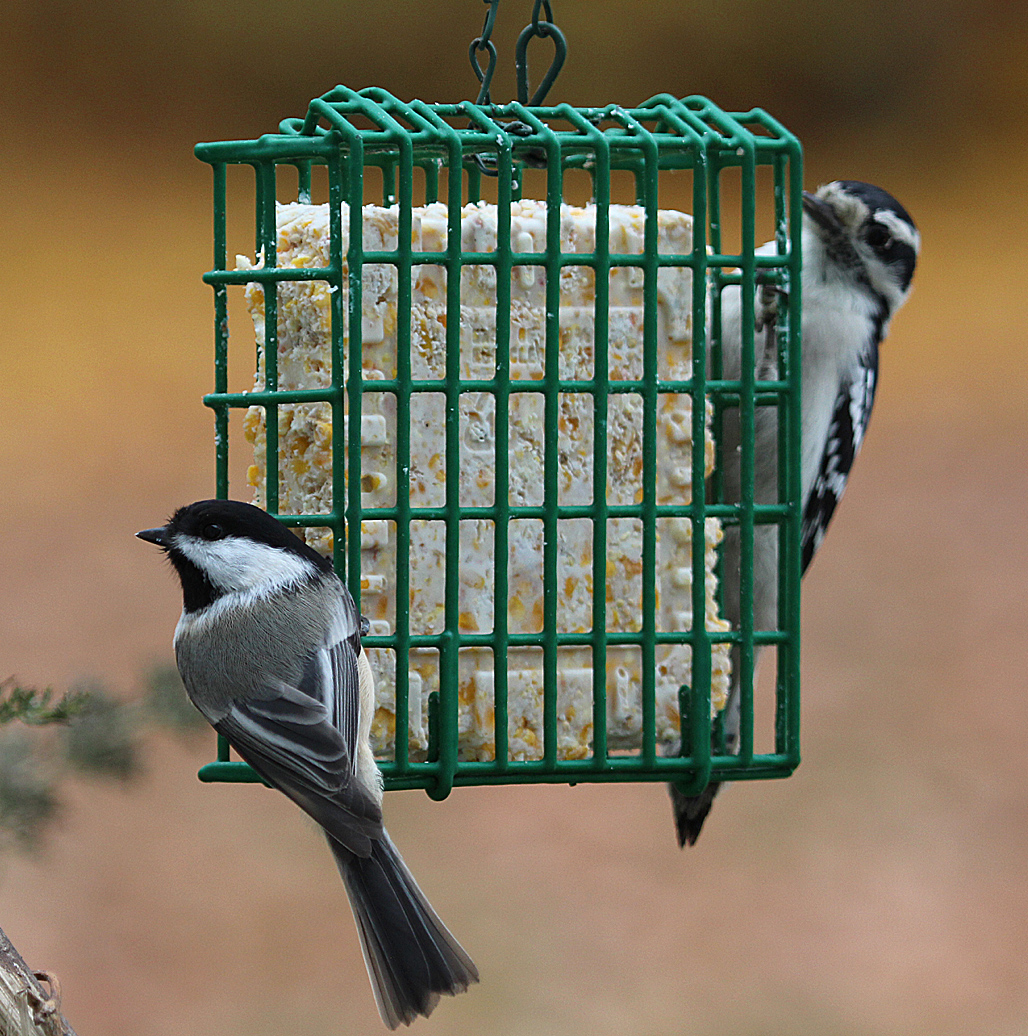
A Black-capped Chickadee and Downy Woodpecker share the suet feeder, Nov. 16, 2014.

Here’s a press release about the upcoming Great Backyard Bird Count, a citizen science project for birders of all ages and levels. My next For the Birds column will focus on the Count.

NEW YORK (Jan. 21, 2015) —Give Mother Nature a valentine this year and show how much you care about birds by counting them for the Great Backyard Bird Count (GBBC). The 18th annual count is taking place February 13 through 16.

Anyone anywhere in the world can count birds for at least 15 minutes on one or more days of the count and enter their sightings at www.BirdCount.org. The information gathered by tens of thousands of Continue reading

Clearing out my 2014 photos: Meadowhawk dragonflies mating

Photo by Chris Bosak Meadowhawk dragonflies mate in Selleck's/Dunlap Wood in summer 2014.

Photo by Chris Bosak
Meadowhawk dragonflies mate in Selleck’s/Dunlap Wood in summer 2014.

Here’s my next photo in the series of 2014 photos that I never got around to looking at and posting. This will be the final one. It’s time to move forward and let go.

I got this shot in the summer 2014 when trying to add to my meadow close-up collection. I liked the shots based on the quick look I took on the camera’s tiny screen at day’s end, but never took them further than that. In fact, I had forgotten about them until I found the photo folder buried inside another folder the other day.

This shot shows a pair of meadowhawk dragonflies mating in a “wheel” position. The male is the red one.

For a fascinating article on how dragonflies mate, click here.

I like photographing dragonflies in the summer. The birding gets slow in July/August and bird photography even slower. So my attention often turns to the smaller creatures of the meadows, which are around and active on even the hottest days. For many more of my meadow close up photos, click here.


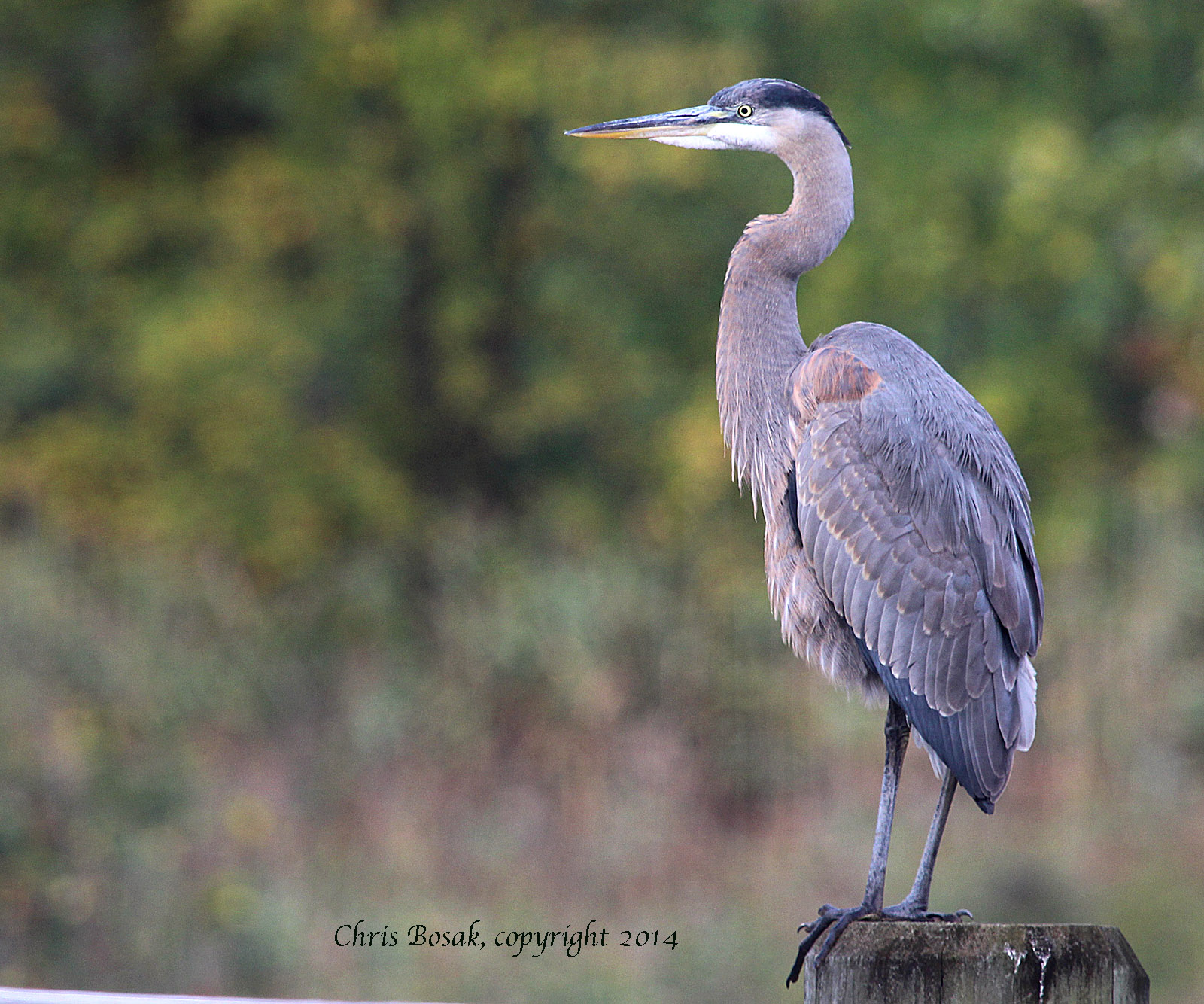
Clearing out my 2014 photos, take 10: Great Blue Heron

Photo by Chris Bosak A Great Blue Heron stands on a piling along the Norwalk River, fall 2014.

Photo by Chris Bosak
A Great Blue Heron stands on a piling along the Norwalk River, fall 2014.

Here’s my next photo in the series of 2014 photos that I never got around to looking at and posting. (Don’t worry, I’m almost done. Then I can focus on 2015 and finally put 2014 behind me.)

I ran a similar photo to this in the fall, but this one never made it out of the “look at” folder. I was walking into work one fall day when I noticed this Great Blue Heron standing on a piling within the small marina by my work’s building. It looked so stately and the fall colors in the background prompted me to stop and get the camera out of the bag. Usually in moments like this, the bird takes off as soon as I stop, get the camera out, take the lens cap off and start the focusing process. But this guy (or girl) stayed put for me.

The photos published earlier may be found here.

Repurposing Christmas trees


Christmas trees for repurposing at Cove Island Park in Stamford, Ct.

Christmas trees for repurposing at Cove Island Park in Stamford, Ct.

Most discarded Christmas trees end up in a landfill somewhere, or if they are lucky, as mulch in a local dump. For the last couple of years, many of the old Christmas trees in Stamford, Connecticut, have been placed by the city in big piles at Cove Island Park. From there, volunteers, led by David Winston (shown below), have moved the trees to places in the park where they can continue to be of value.
Last year they were placed to protect the dunes by the beach. This year, despite the icy rain falling, volunteers placed the trees, hundreds of them, in two spots around the park. One spot was in the wildlife sanctuary to more clearly delineate trails. The other spot was in a wooded area that had become cleared and was likely going to be used for purposes not intended in the park. So the volunteers, including myself, filled in that clearing with old Christmas trees. Now that area can be used for birds and other wildlife as shelter and protection.
Not a bad way to reuse all those Christmas trees that are enjoyed so much around the holidays, and then placed curbside.
Also not a bad way to spend a rainy Sunday morning.

Clearing out my 2014 photos, take 9: Black-capped Chickadee

Photo by Chris Bosak A Black-capped Chickadee clears out a cavity in a tree for a nesting site at Selleck's/Dunlap Woods in Darien in spring 2014.

Photo by Chris Bosak
A Black-capped Chickadee clears out a cavity in a tree for a nesting site at Selleck’s/Dunlap Woods in Darien in spring 2014.

Here’s my next photo in the series of 2014 photos that I never got around to looking at and posting.

Admittedly not a great shot technically, but interesting to see a Black-capped Chickadee exiting a potential nesting hole with a bill full of dead wood shavings. A pair of chickadees worked their tails off getting this cavity ready for the nesting season. I’m not sure if they actually saw this whole project through or not. I kind of hope not because the tree was dead and pretty flimsy. I’m not sure it was strong enough to withstand some of the storms we get here in New England. I’m sure the birds know what they are doing. At any rate, chickadees first excavate a cavity and then build a small nest of materials such as moss to soften the bottom of the home.

Clearing out my 2014 photos, take 8: Least Tern

Photo by Chris Bosak A Least Tern sits among the rocks at the beach at Connecticut Audubon's Coastal Center at Milford Point in spring 2014.

Photo by Chris Bosak
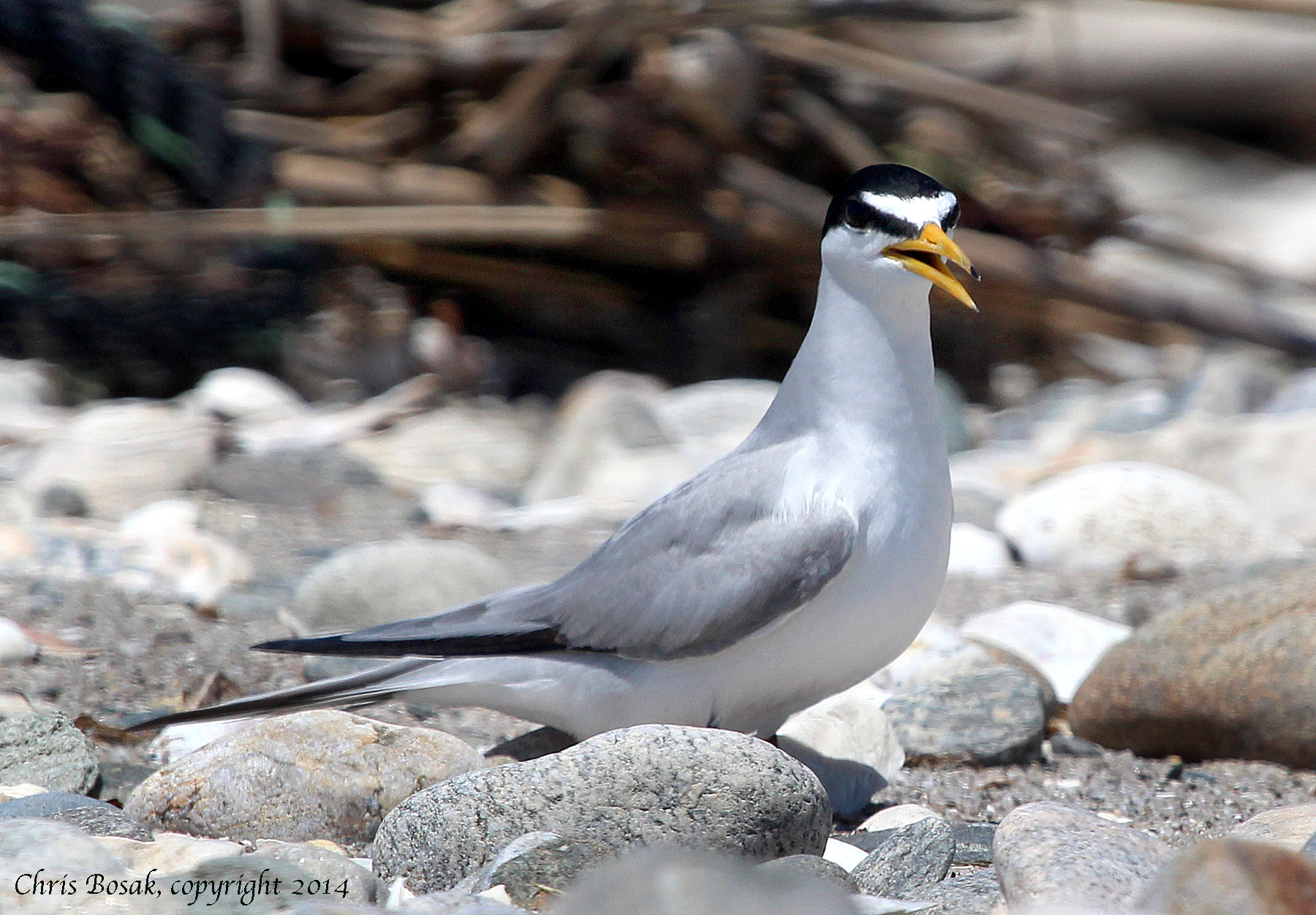
A Least Tern sits among the rocks at the beach at Connecticut Audubon’s Coastal Center at Milford Point in spring 2014.

Here’s my next photo in the series of 2014 photos that I never got around to looking at and posting.

As we are now stuck in this deep freeze here in New England, here’s a warm-weather shot for you. It’s a Least Tern on the beach at Connecticut Audubon Coastal Center at Milford Point. Last week I posted a Piping Plover that I saw during my volunteering to monitor plovers and terns on the Connecticut shoreline. Well, here’s the other half: the terns. The plovers come in much earlier in the spring than the terns. Least Terns are handsome birds with yellow bills, compared the red or orange bills of most terns. Least Terns, as their name suggests, are also smaller than most terns. They can also be quite aggressive on their nesting areas (who can blame them?) and they will continually dive-bomb intruders. Yes, that includes innocent shorebird monitors just trying to help them out.

Piping Plovers and Least Terns are threatened species in Connecticut.

Clearing out my 2014 photos, take 7: Northern Cardinal

Photo by Chris Bosak A Northern Cardinal perches on a branch in New England in spring 2014.

Photo by Chris Bosak
A Northern Cardinal perches on a branch in New England in spring 2014.

Here’s my next photo in the series of 2014 photos that I never got around to looking at and posting.

Everybody loves Northern Cardinals. I took this shot in 2014, but to be perfectly honest, I don’t really remember the details. I found it in a random folder and only sort of remembered even taking the photo. Some days of shooting are like that: The action is so fast it’s hard to keep track of what you’re shooting. Other days, of course, not so much.

I believe I took this shot at Cove Island Wildlife Sanctuary, but it was definitely in 2014. Trust me on that one.

Latest For the Birds column — Far parking pays off again

Photo by Chris Bosak A Brown Creeper climbs up the underside of a branch on a tree in Norwalk, Dec. 2014.

Photo by Chris Bosak
A Brown Creeper climbs up the underside of a branch on a tree in Norwalk, Dec. 2014.

Here’s my latest For the Birds column that appeared in The Hour and Keene Sentinel. A few months ago I wrote about the advantages of parking in a spot far away from my work’s building, so I could walk along the river to see what birds were around. Well, the practice paid off again.

Read about it here.

Clearing out my 2014 photos, take 6: Brant

Photo by Chris Bosak A flock of Brant swims in the marshlands of Milford Point in Milford, Conn., April 2014.

Photo by Chris Bosak
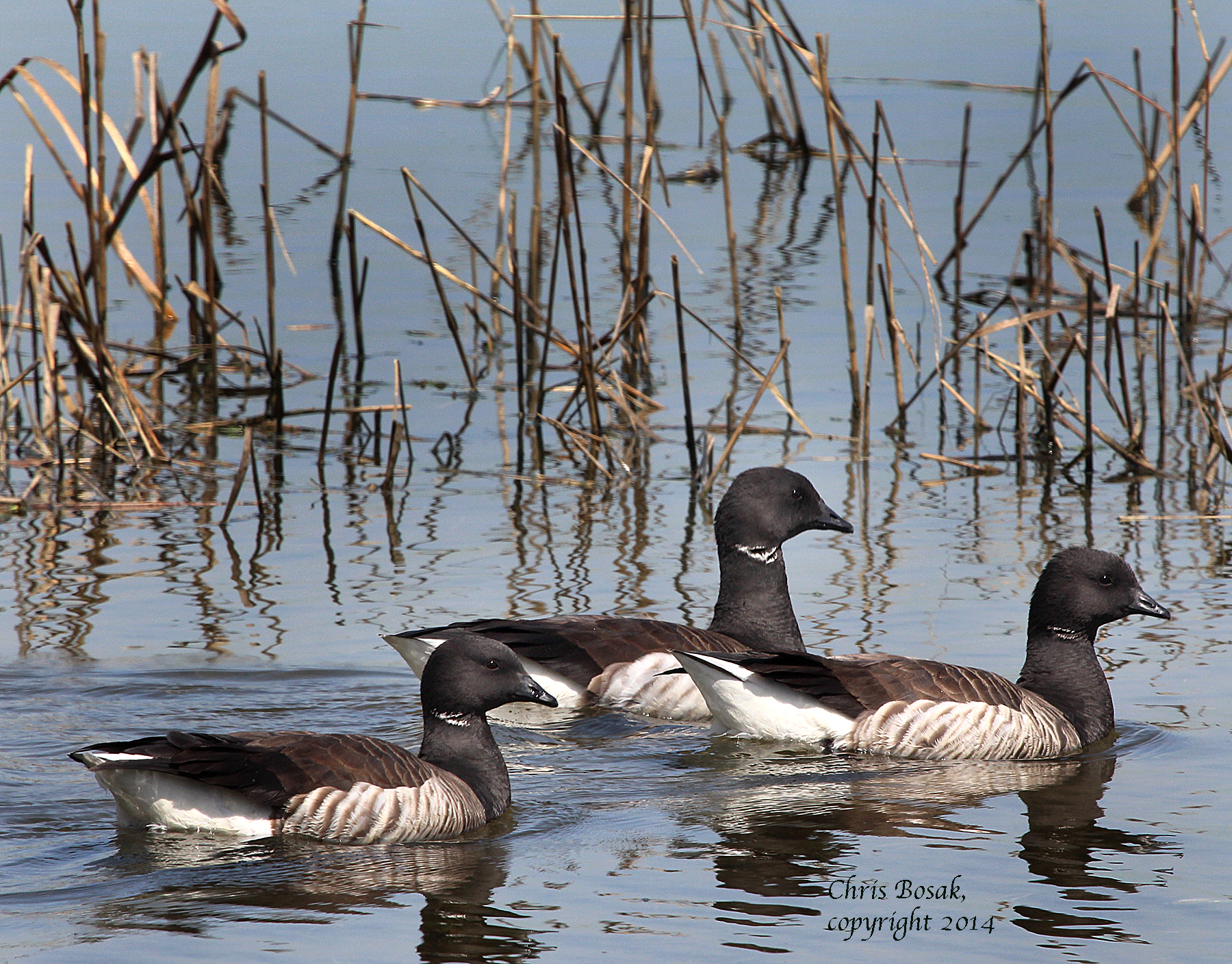
A flock of Brant swims in the marshlands of Milford Point in Milford, Conn., April 2014.

Here’s my next photo in the series of 2014 photos that I never got around to looking at and posting.

Here’s a small flock of Brant I saw in the spring of 2014. At certain locations along the coast of southern New England, Brant flocks can number in the hundreds along Long Island Sound. At Calf Pasture Beach in Norwalk, Conn., the Brant flock pushes 1,000 birds or more.

Brant look somewhat similar to Canada Geese, but are smaller. A few individual Brant hang around New England through May and into June, but most of them return to their nesting grounds in the Arctic by March or April. It’s nice that they come visit us each winter.

Clearing out my 2014 photos, Take 5: Gray Catbird

Photo by Chris Bosak A Gray Catbird perches on a thorny branch in Selleck's/Dunlap Woods in summer 2014.

Photo by Chris Bosak
A Gray Catbird perches on a thorny branch in Selleck’s/Dunlap Woods in summer 2014.

Here’s my next photo in the series of 2014 photos that I never got around to looking at and posting.

I probably overlooked this photo because I have so many Gray Catbird photos. In the summer in southern New England, birds can sometimes be scarce as they are busy raising families and hiding from potential predators. Catbirds, however, always seem to be around. They aren’t always in the open, but they are more so than the other birds. Birders and nature photographers with itchy “clicking fingers” are thankful for the photo ops Gray Catbirds give us in the summer.