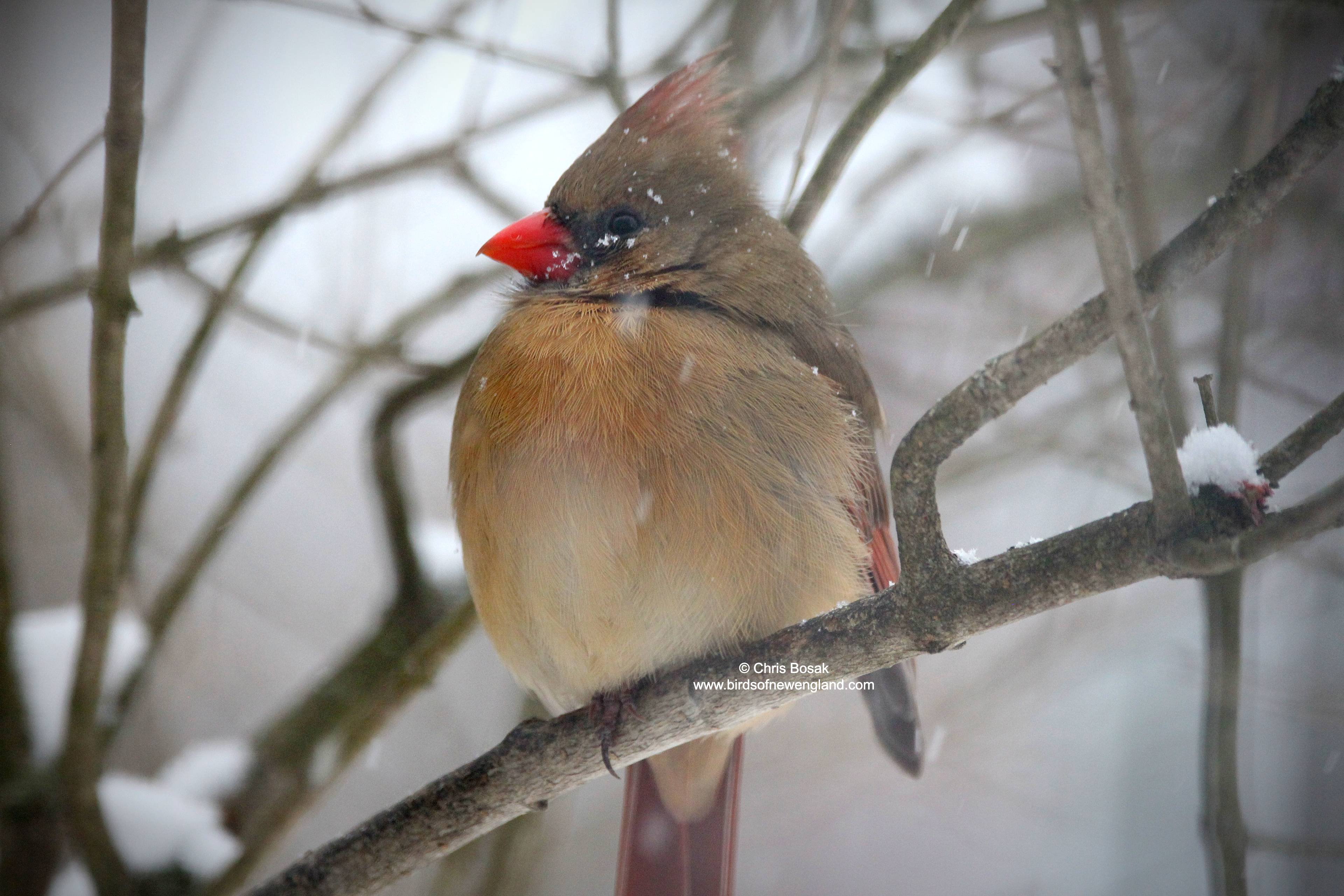
Photo by Chris Bosak A female cardinal perches on a branch during a snowstorm, January 2026, New England.
Here are a few bird photos from the January 25, 2026, snowstorm currently hammering New England. I’ll post some throughout the day, so keep an eye out for more photos. What else would you be doing today anyway?
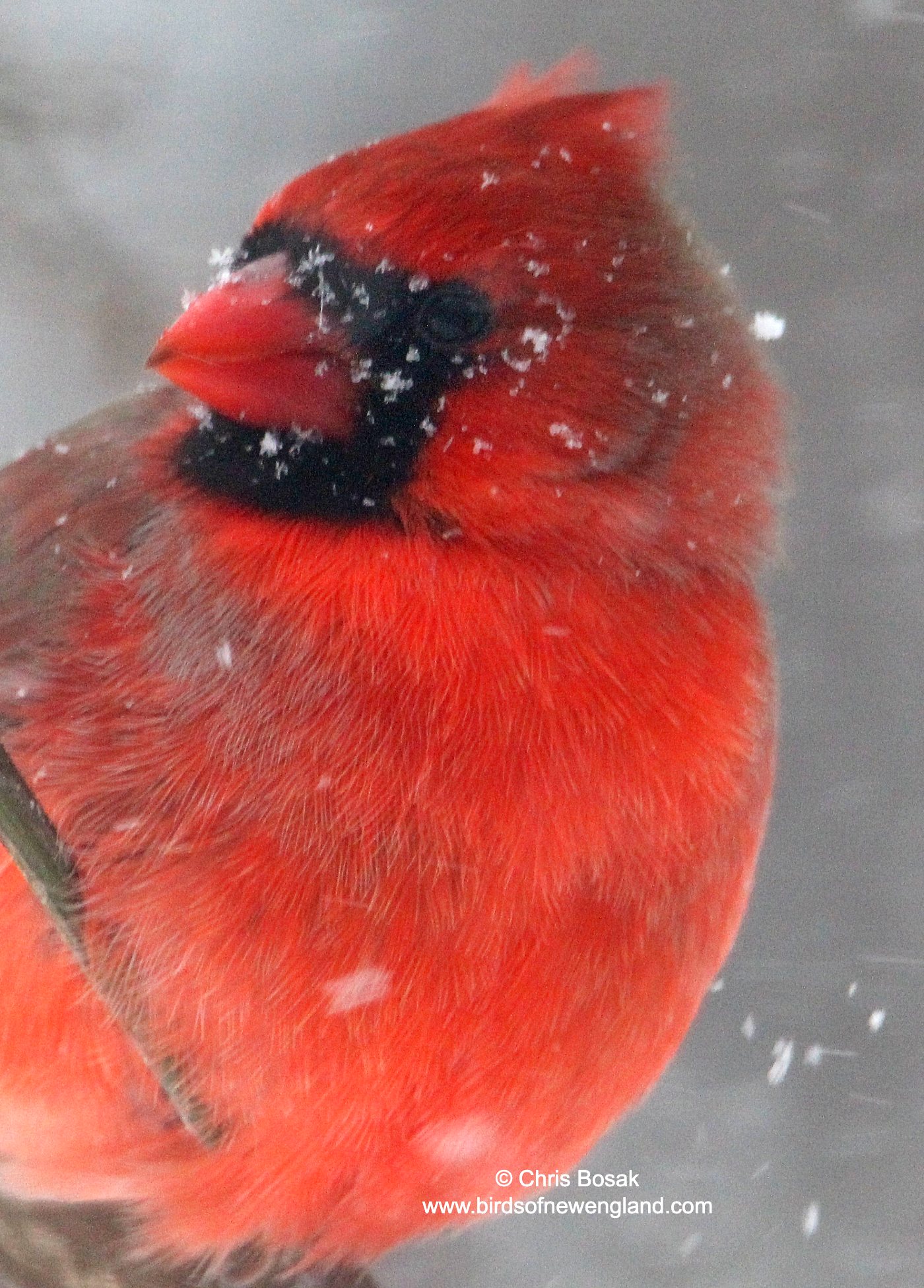
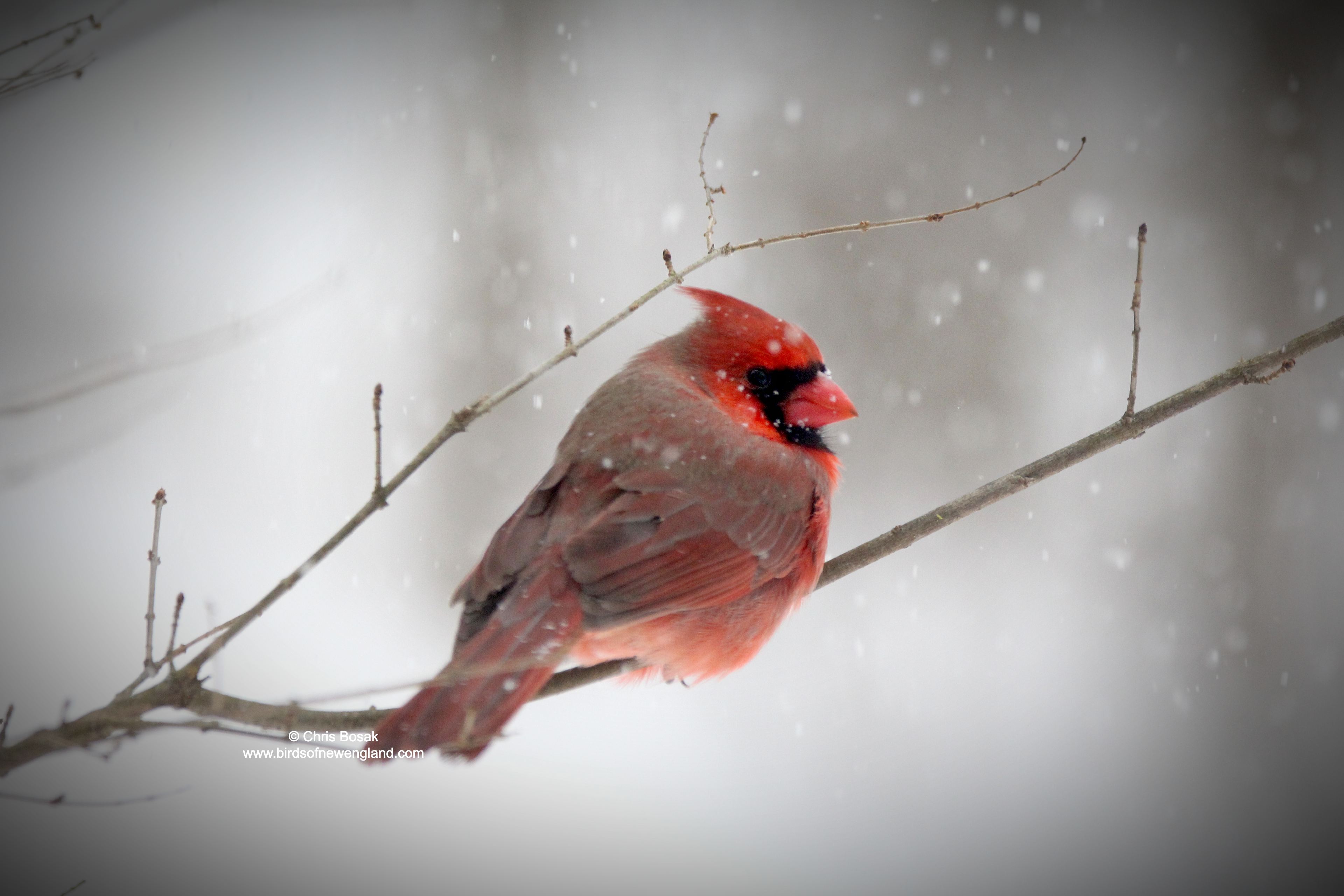
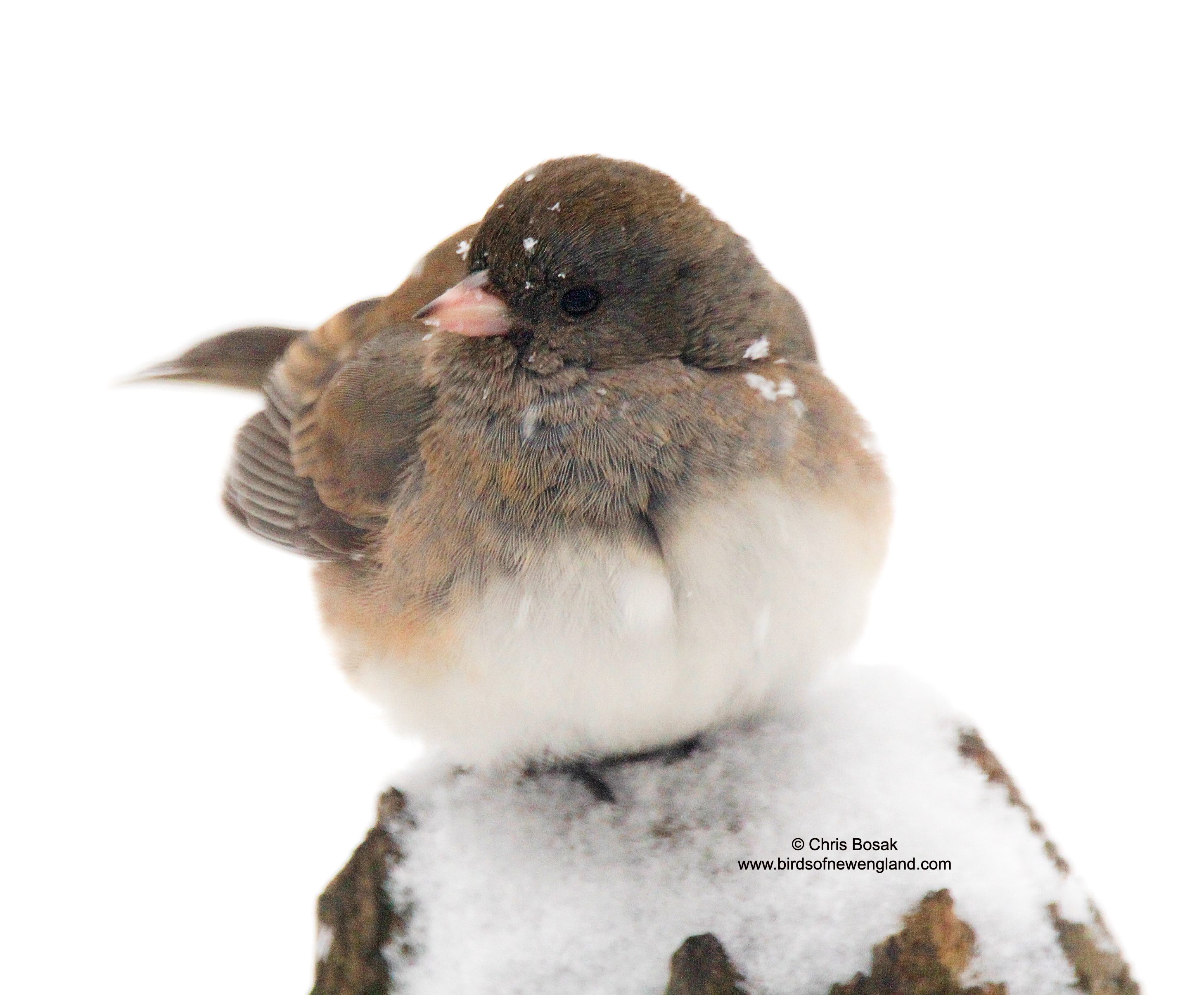
Photo by Chris Bosak A male cardinal gathers snow on its face during a snowstorm, January 2026, New England.Photo by Chris Bosak A male cardinal perches on a branch during a snowstorm, January 2026, New England.Photo by Chris Bosak A dark-eyed junco perches on a fence post during a snowstorm, January 2026, New England.
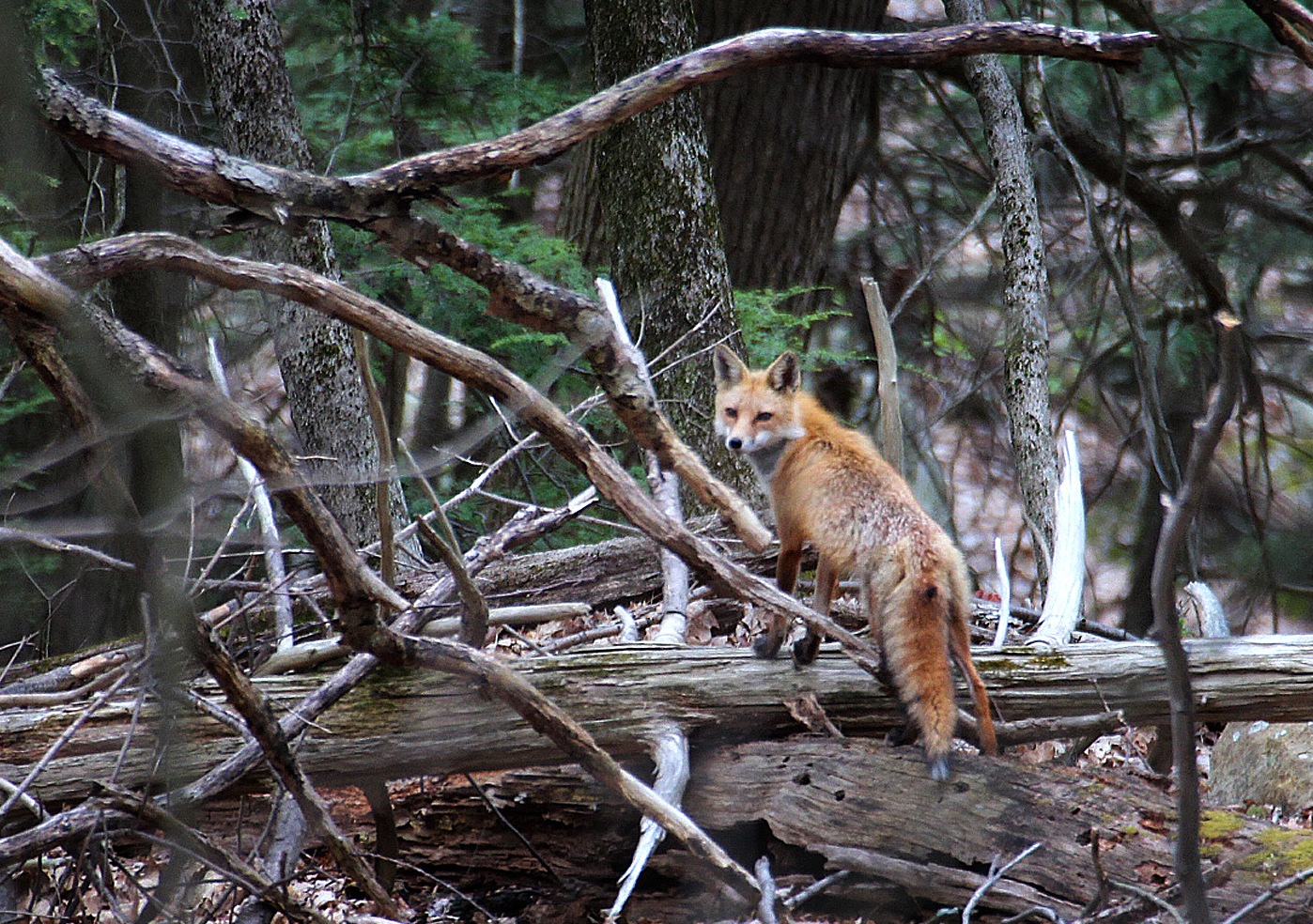
Photo by Chris Bosak – A red fox works its way through the New England woods.
This fox had no consideration for my sleep schedule.
I was sound asleep when the fox decided it was a good time to sit on the shared driveway that separates my house from my neighbor’s house and start barking over and over. I rolled over, tapped the screen on my phone and saw 3:01 displayed.
The fox was about 15 yards away from where I had been enjoying a good night’s sleep. I pulled back the curtain and there it was, plain as day (even though it was the middle of the night), sitting in the middle of the driveway barking away.
If you’ve ever heard a fox barking, you know it’s not like a dog barking. We’ve all been jarred awake by dogs barking before, but that sound is familiar, and usually the owner is quick to respond and stop the barking.
A fox’s bark, however, is otherworldly. They are canines, but they do not sound like domesticated dogs. They sound like something you’d hear at a haunted house around Halloween.
Under other circumstances, I would have enjoyed the visit and, believe it or not, taken pleasure in the sound. But 3:01 in the morning? A fox barking is one of the more unnerving night sounds in New England, especially from 15 yards away when you are in the middle of a deep sleep.
If you have never heard a fox barking, do an internet search and see what you’ve been missing.
I’ve never personally heard a fisher vocalize at night (or day for that matter), but I understand it makes a fox’s bark sound like child’s play.
Coyotes calling back and forth at night can also be alarming at first, especially if there are several yipping back and forth to each other. I’ve heard that plenty of times, day and night.
The ultimate “spooky” night sound, of course, is an owl hooting. Great horned owls are not so alarming, as their “who’s awake, me too” call is rather quiet and soothing.
The barred owl, however, is anything but soothing. Their “who cooks for you, who cooks for you all” call is given at a high volume and sounds nothing like the owls you hear in the movies. I love hearing it, don’t get me wrong, but I can definitely see how some people, especially those hearing it for the first time, would wonder what the heck is making that noise. When there are two barred owls going back and forth, well, that’s double the fun.
I heard a pair of barred owls on a recent walk. Barred owls are primarily active at night, but they can also hunt and vocalize during the day. I never did find the owls, although I didn’t look very hard either. Owls nest early in the year, and I didn’t want to go tromping through the woods and potentially disturb them. Even so, hearing the owls was the birding highlight of the walk.
The sounds that may be heard at night in New England are fascinating, if not somewhat unnerving at times. Foxes, fishers, coyotes, owls, whippoorwills (if you’re lucky enough), tree frogs, and even a deer snorting can make your ears perk up and wonder what’s going on out there.
Good luck going back to sleep right away after hearing those sounds.
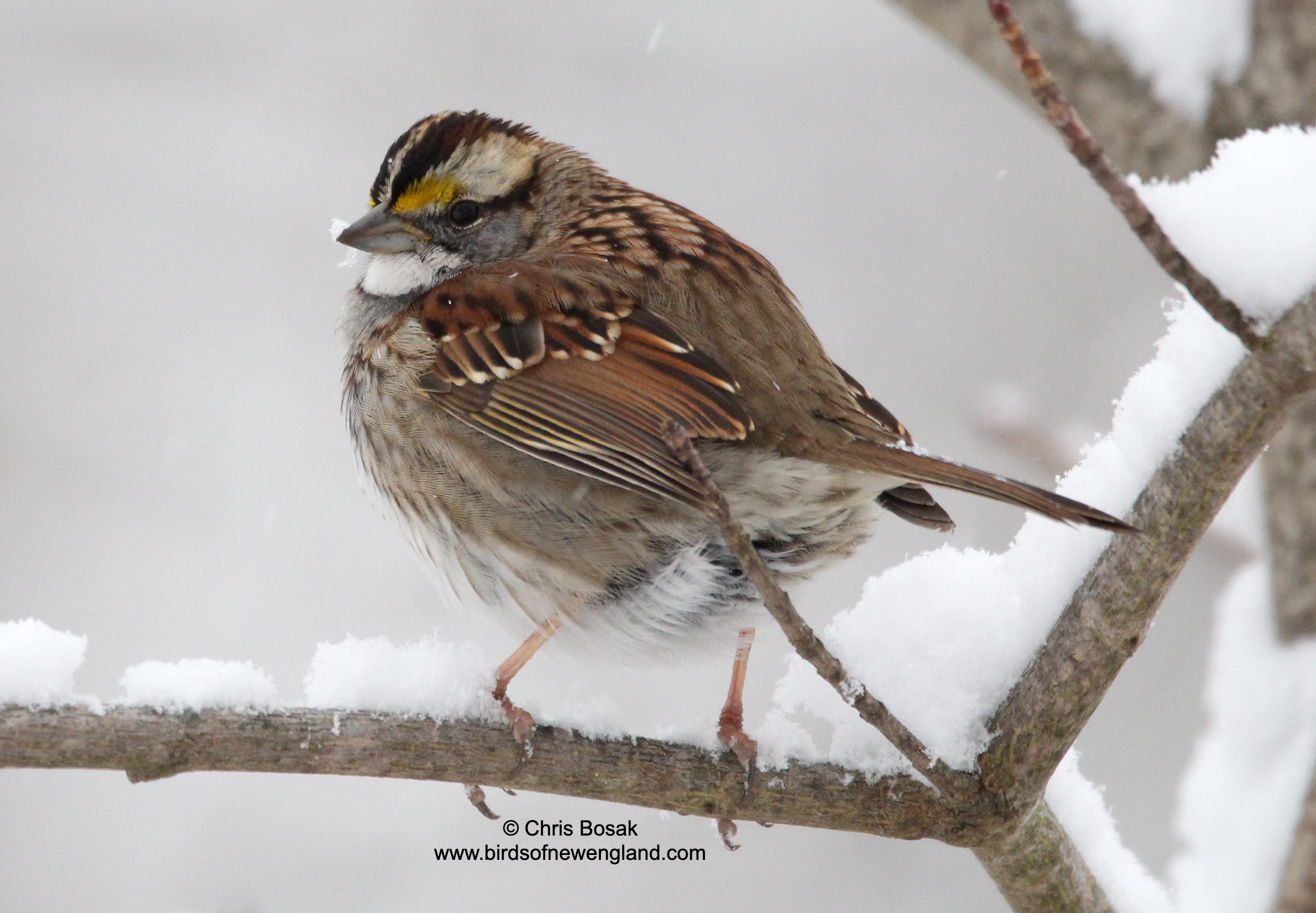
Photo by Chris Bosak White-throated sparrow in snow, New England, January 2026.
You didn’t think I’d let a snowy weekend go by without posting a few snowy bird photos, did you?
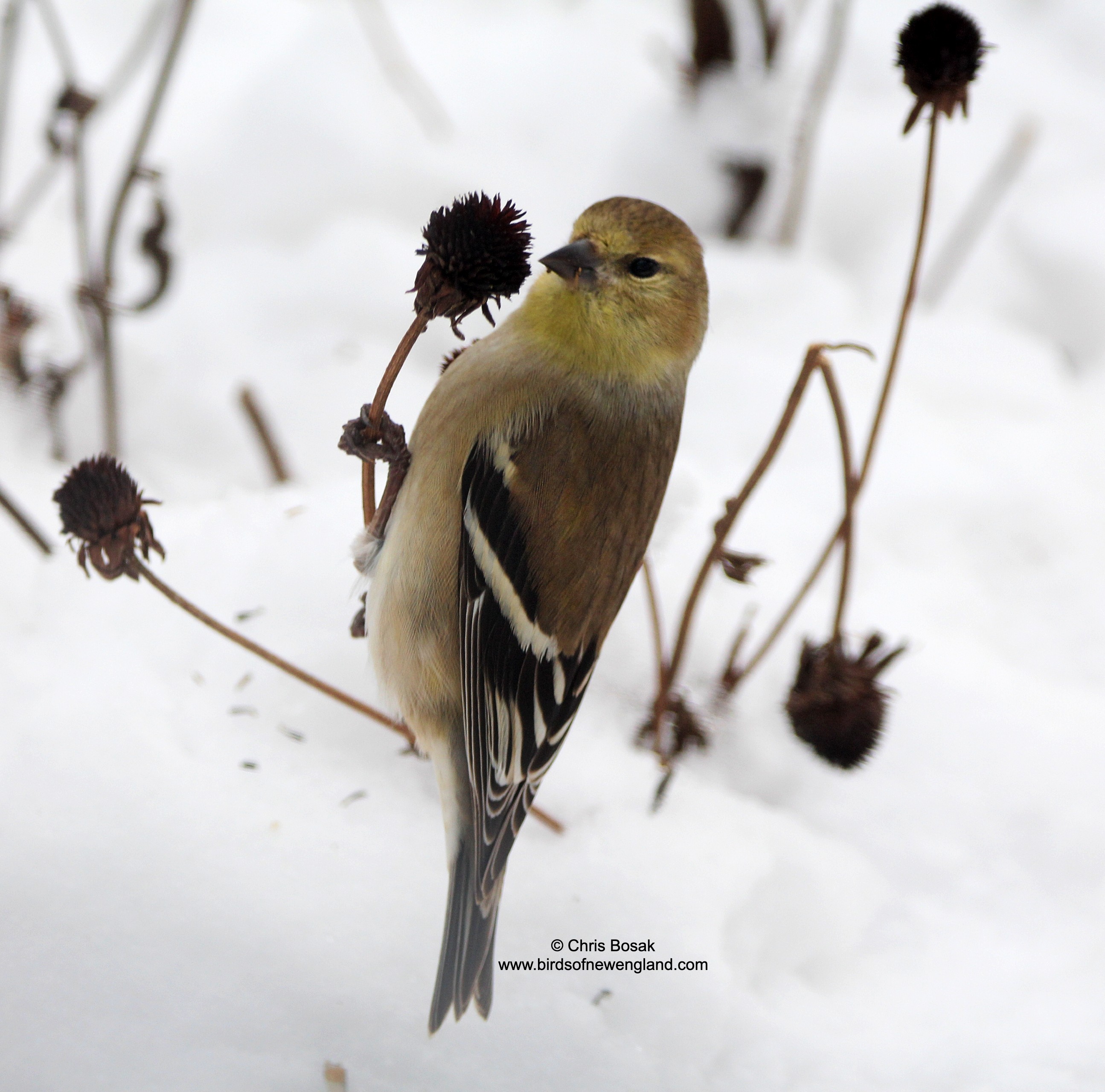
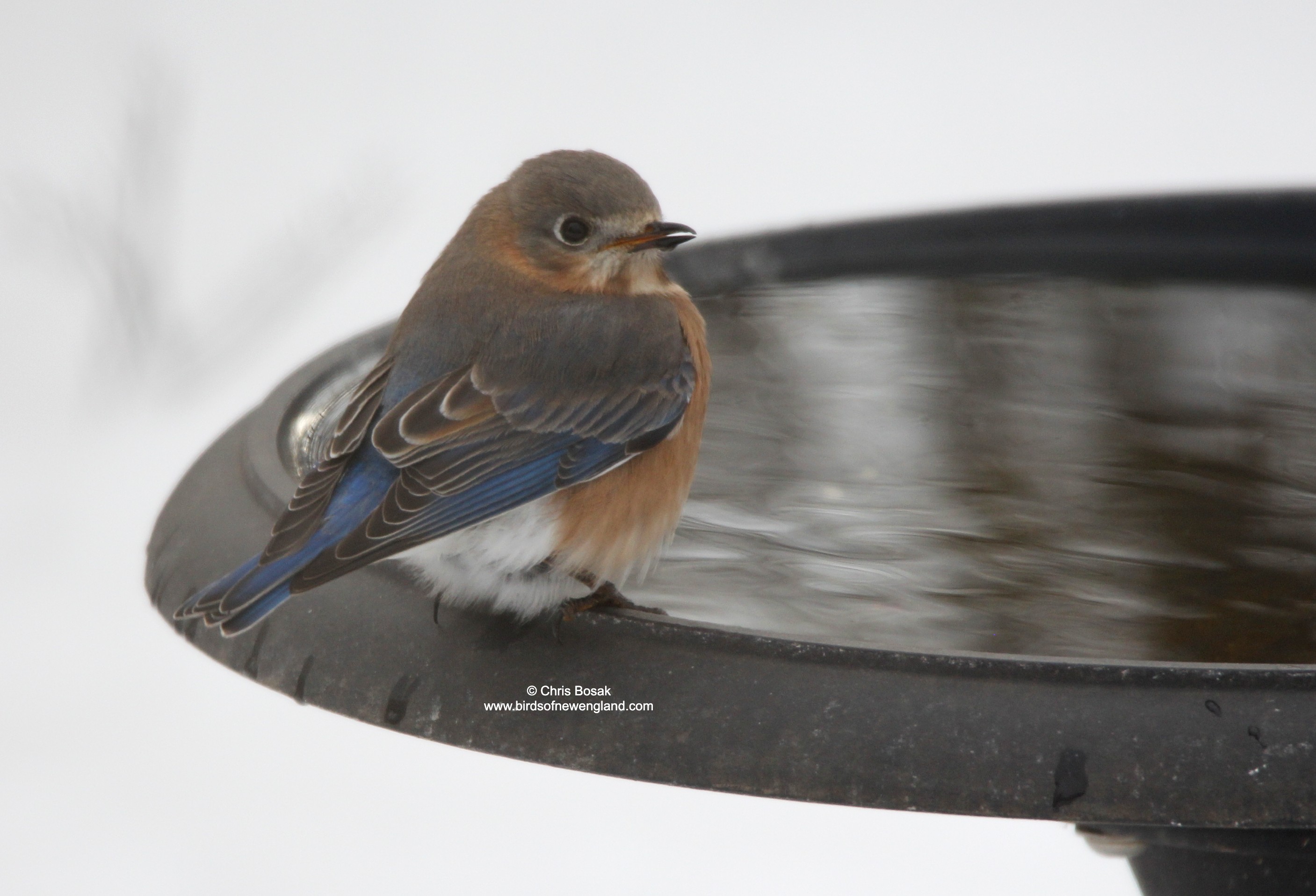
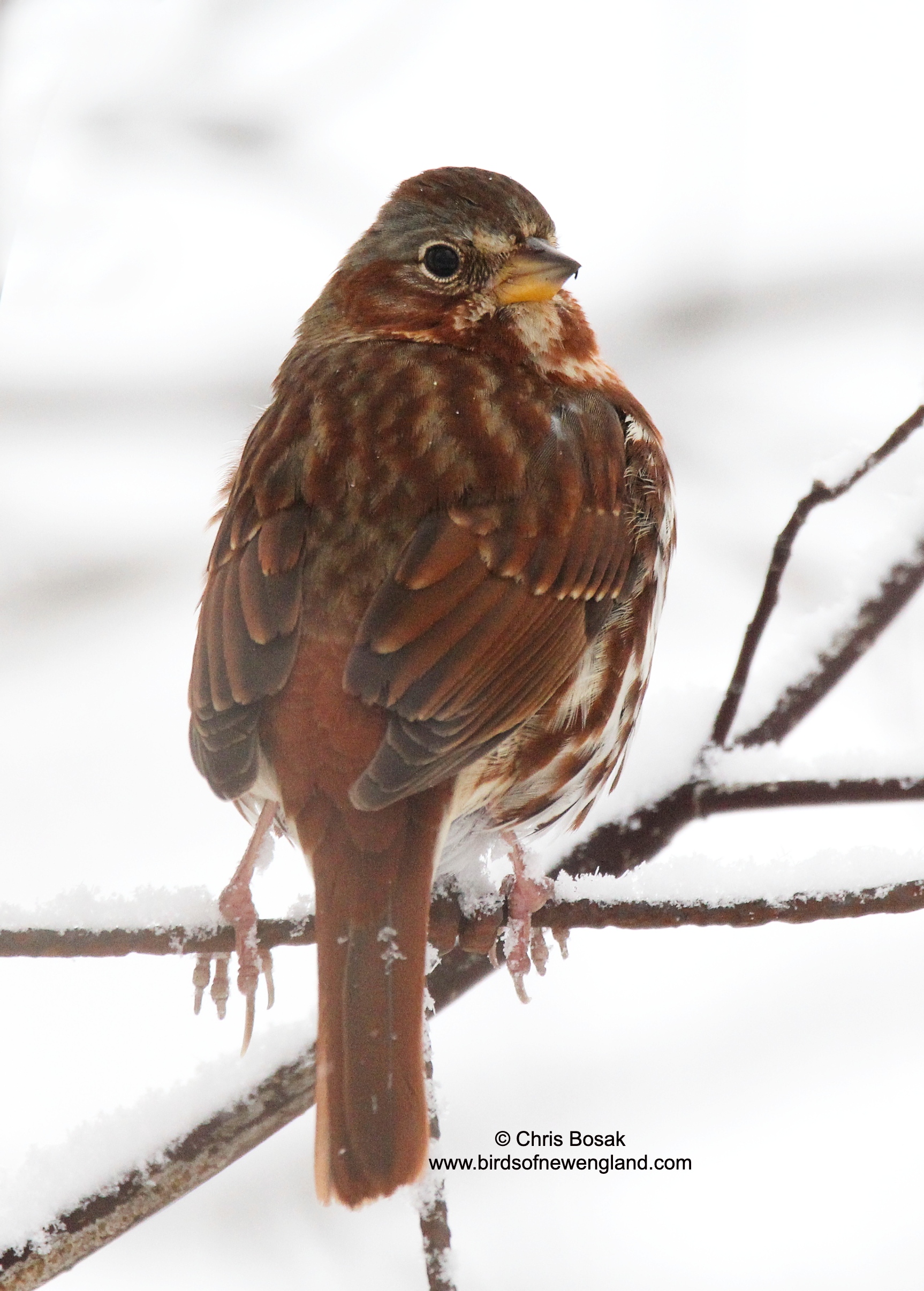
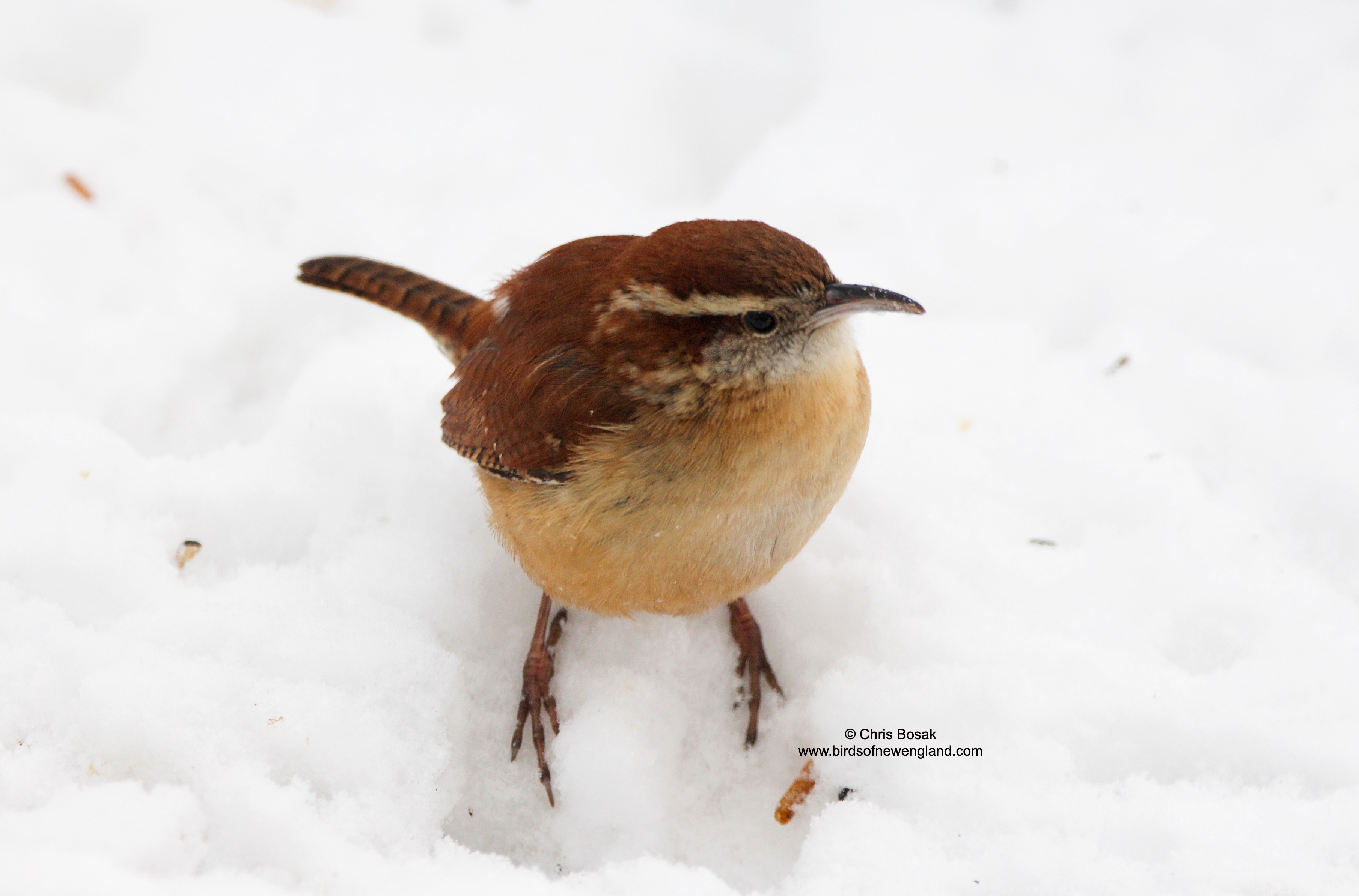
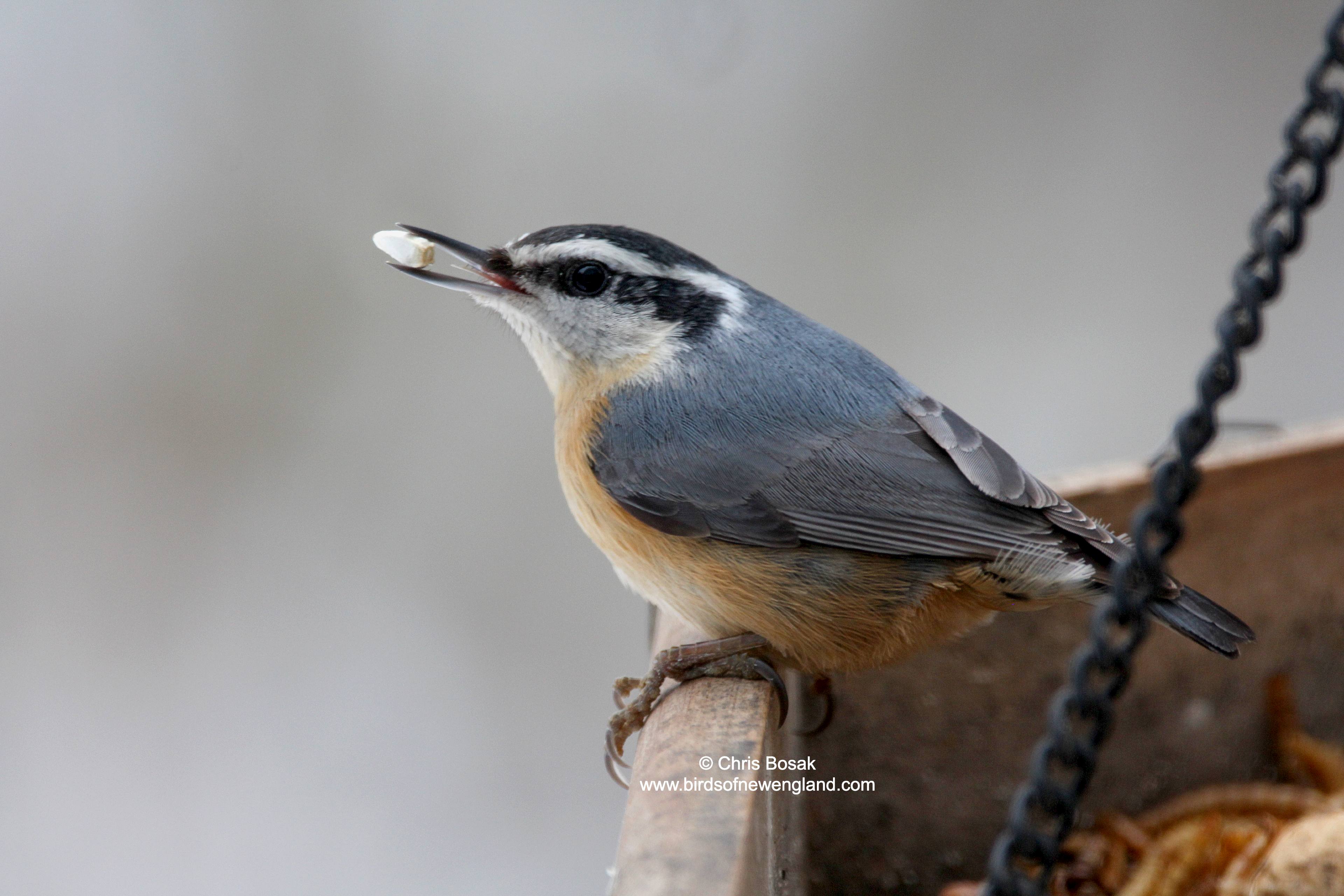
Photo by Chris Bosak American goldfinch eats seeds from a spent flower in New England, January 2026.Photo by Chris Bosak Eastern bluebird in a birdbath in New England, January 2026.Photo by Chris Bosak A fox sparrow perches on a snowy branch in New England, January 2026.Photo by Chris Bosak A Carolina wren searches for food under a feeder in New England, January 2026.Photo by Chris Bosak A red-breasted nuthatch takes a safflower seed from a feeder in New England, January 2026.
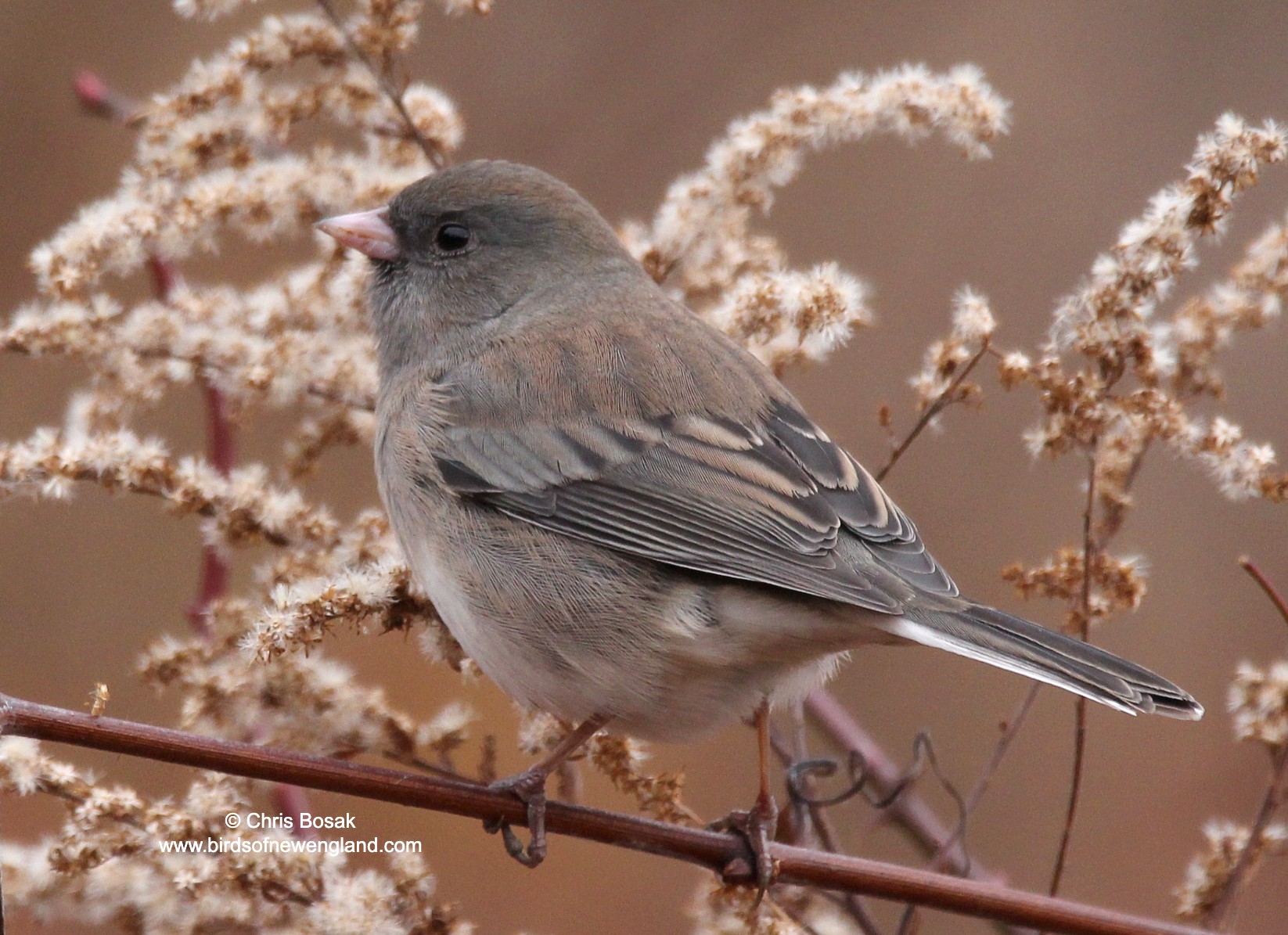
Photo by Chris Bosak – A dark-eyed junco eats goldenrod seeds at Huntington State Park in Redding, Connecticut, November 2025.
It’s time for one of my favorite annual columns, as I take a look at my top 10 birding/wildlife moments from the past year. It’s always fun to look back at a year’s worth of For the Birds columns and pick the moments that continue to resonate with me the most.
Here are my top 10 birding moments of 2025:
10. Early in 2025, when ice still dominated most ponds and rivers, I found a small unfrozen pond with a hooded merganser pair and a small flock of ring-necked ducks. The pond was small enough to afford good photo ops of the birds but large enough that they felt safe on the opposite shore.
9. My eBird totals for 2025 were the highest they have ever been, with 171 species seen during the year, including 134 in New England. They are still modest numbers compared to many serious birders, but I’ve never been a lister and do not put a strong emphasis on finding rarities. For me, the total number is not as important as the combined experience.
8. A few of the species I saw exclusively outside of New England this year came during what has become an annual May birding trip to my old hometown of Erie, Pennsylvania. My brother Paul and I visit Presque Isle State Park and hit our favorite warbler spots for three days straight. We spotted 63 species on our best day.
7. Watching a female Baltimore oriole build a nest was one of the best sightings from that trip to Pennsylvania. It was interesting to see the progress she made on her woven hanging nest over a three-day span.
6. I took a mid-September camping trip to Pillsbury State Park in Washington, N.H., and caught several warbler species on their southward migration. Other highlights included three otters, an immature bald eagle, a solitary sandpiper and a green snake.
5. It had been several years since I visited the shore of Long Island Sound in the summer to see the nesting grounds of piping plovers, American oystercatchers and least terns. I found all three of those species during a late July visit to the Coastal Center at Milford Point in southwest Connecticut.
4. Although it was a very short camping trip, I did manage to get to Pittsburg, N.H., this summer. Loons, bald eagles and warblers were the highlights. I saw the common loon pair on a large lake in the morning with a heavy fog making visibility almost nonexistent.
3. Going back to my Pennsylvania trip in May, I saw and was able to photograph a sandhill crane pair that nested at the park for the first time. I heard the birds first and immediately recognized that it wasn’t a typical bird found in the Northeast. Merlin confirmed it was a sandhill crane, and the search began, which eventually ended in success.
2. I continue to have a fascination with photographing birds eating berries. This was a good year in that regard with robins, cardinals and white-throated sparrows eating border privet berries in January. In October, I came across a huge flock of cedar waxwings eating yellow crabapples.
1. My top birding highlight of 2025 features a rather common bird, the dark-eyed junco. On a rather dreary early November morning, I stepped into a small field where the goldenrod had faded to varying shades of brown. Dozens of juncos eating seeds from the tops of goldenrod plants literally surrounded me as I stood there taking in the scene. It was proof that bright colors or rare birds are not necessary ingredients for lasting memories or treasured photos.
Thanks for indulging me on that walk down memory lane. Feel free to send me some of your top birding moments from the year that was.
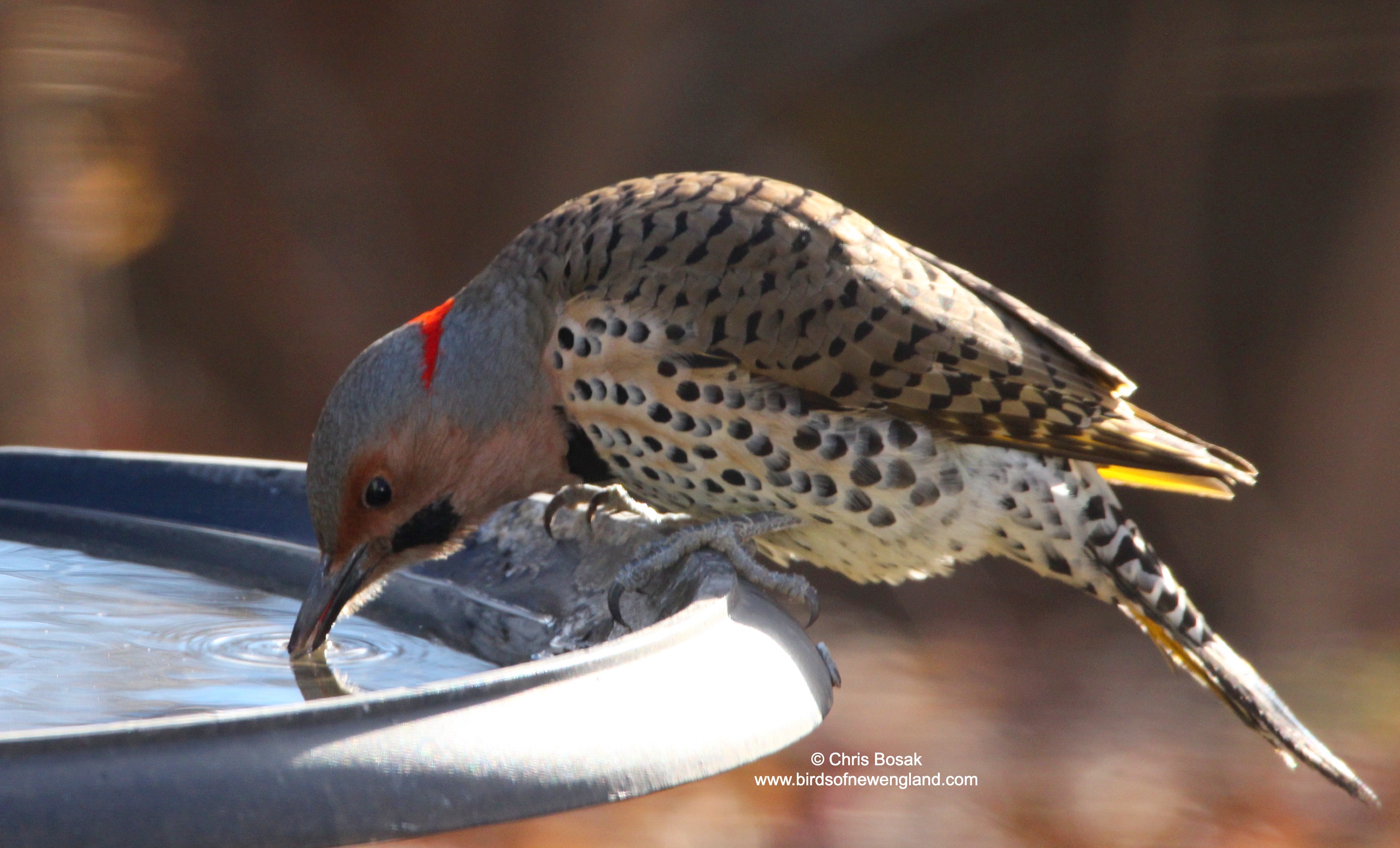
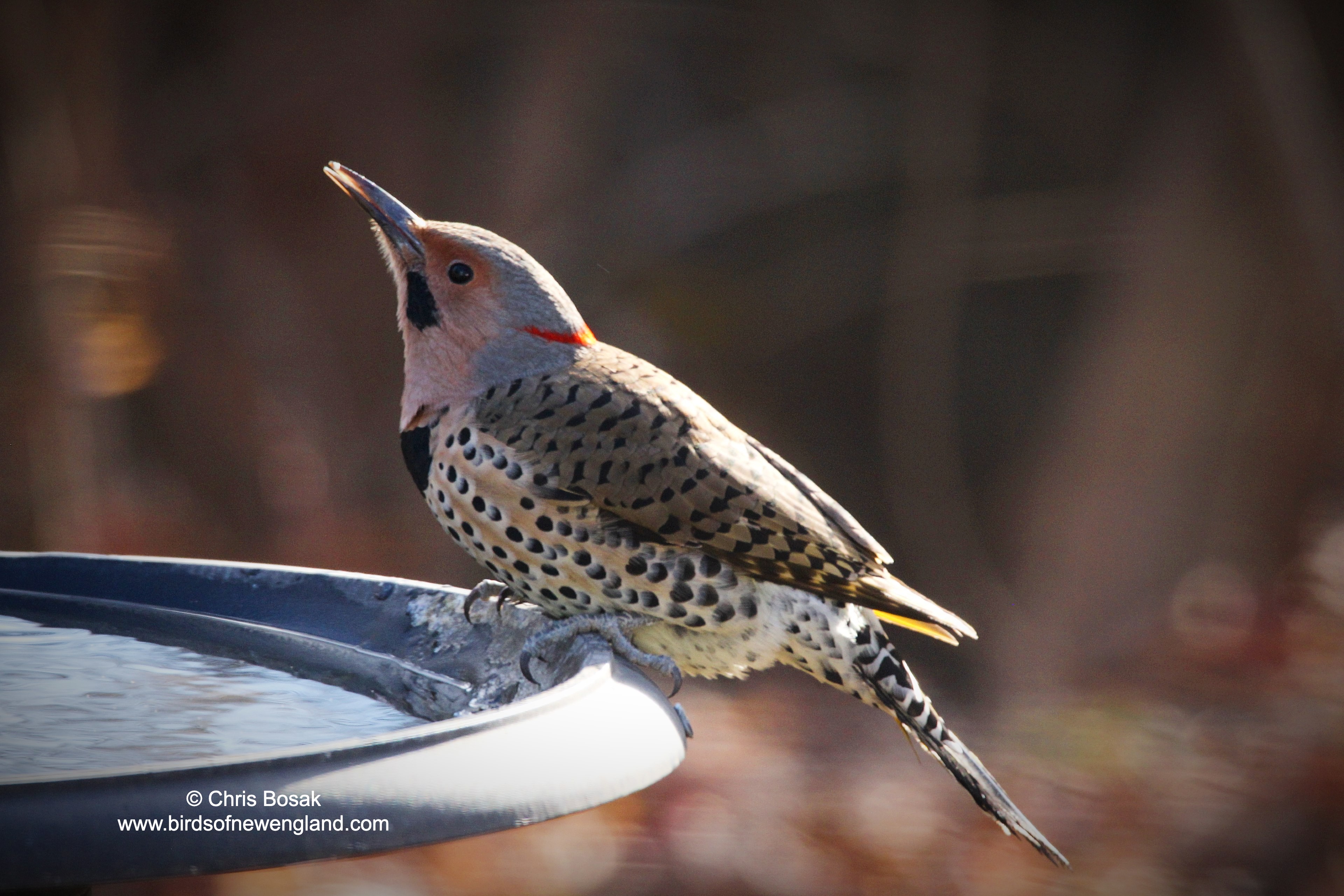
Photo by Chris Bosak A northern flicker drinks from a birdbath in New England, December 2025.
Last week, I wrote about the evening grosbeak and the various sightings that have occurred throughout New England.
This week, I want to turn the attention to some of the other sightings and questions that have reached my inbox recently. I appreciate hearing from others and what they are seeing at their feeders and in the wild.
Mike Quinn of Ticonderoga, N.Y. had these evening grosbeaks visit recently (December 2025.)
There is a thing in birding called a “spark bird.”
It is not a species of bird like a bluebird, mockingbird or blackbird, but rather the type of bird that piqued (or sparked) someone’s interest in birding and got them hooked. For many people, it is something big or colorful, like a loon or eagle or Baltimore oriole or great blue heron.
Because I have to be different, my spark bird is actually a moose. Yes, I know a moose is not a bird, but my quest to see a moose in the Vermont woods led me to my love of birdwatching.
I’ve participated in the Christmas Bird Count in all types of weather.
I can recall bitter cold days, unusually warm days, pouring rain, sleet, light snow and blustery snow squalls. Once a date is set far in advance, it is usually held on that day regardless of the weather.
This year, the count I did with my friend Frank in southern New England took place in a wet snow that accumulated before our eyes. It made for beautiful scenery but also frozen fingers and toes, damp clothing, steamed optics and fewer birds than usual.
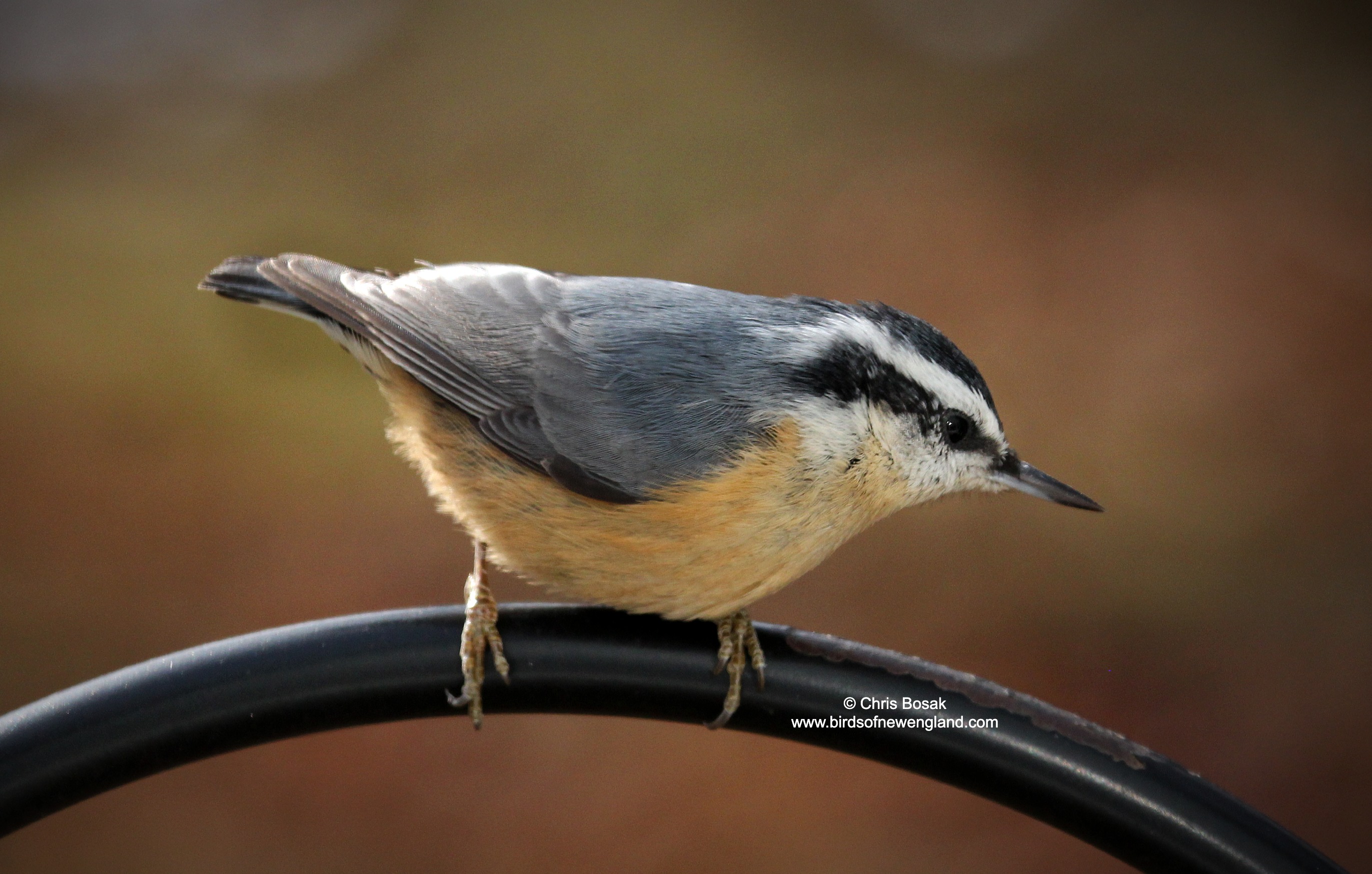
Photo by Chris Bosak – Red-breasted nuthatch in New England, December 2025.
I wrote about the winter finch forecast a few weeks ago. The annual forecast predicts which and how many finches will irrupt into New England from the north each winter. An irruption occurs when birds that are not typically seen in an area appear, sometimes in great numbers, during the winter.
Food, of course, is the main driver of these irruptions. If the seeds of a bird species’ diet are scarce up north, the birds will come south to find a food source.
Photo by Chris Bosak A northern flicker sips from a birdbath in New England, fall 2025.
I looked out and saw that the water in the birdbath was a solid block of ice. I poured in enough warm water that the ice broke free, so I tossed the frozen block onto the ground and filled the bath with warm water. Within 10 minutes, a northern flicker arrived and took a few sips. What a design on this bird.
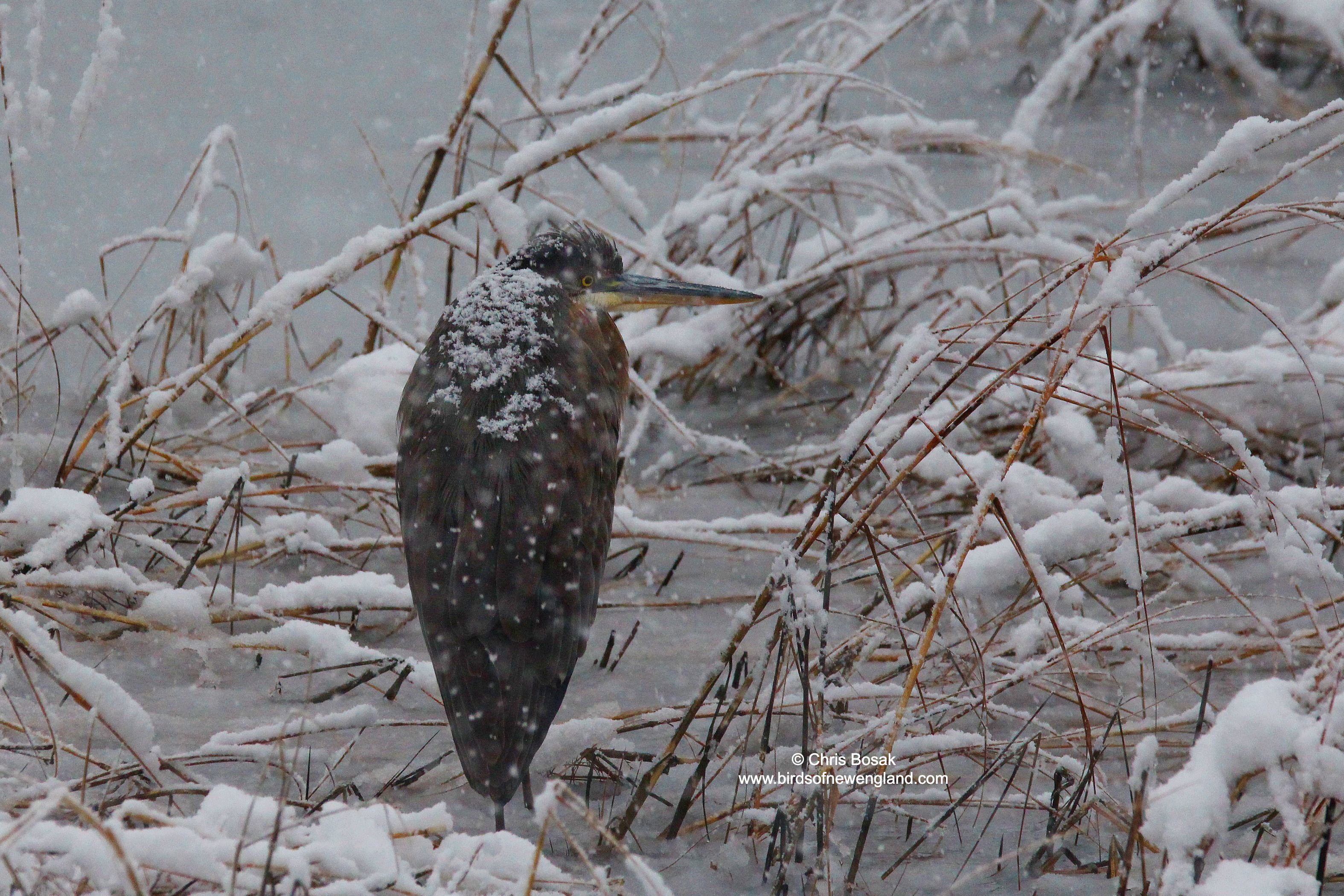
Great blue heron in snow, Christmas Bird Count 2025, Stamford, CT.
It was that type of day for the Christmas Bird Count today (Sunday, Dec. 14, 2025). Frank and I did the Cove area of Stamford (Connecticut) and nearby Darien.
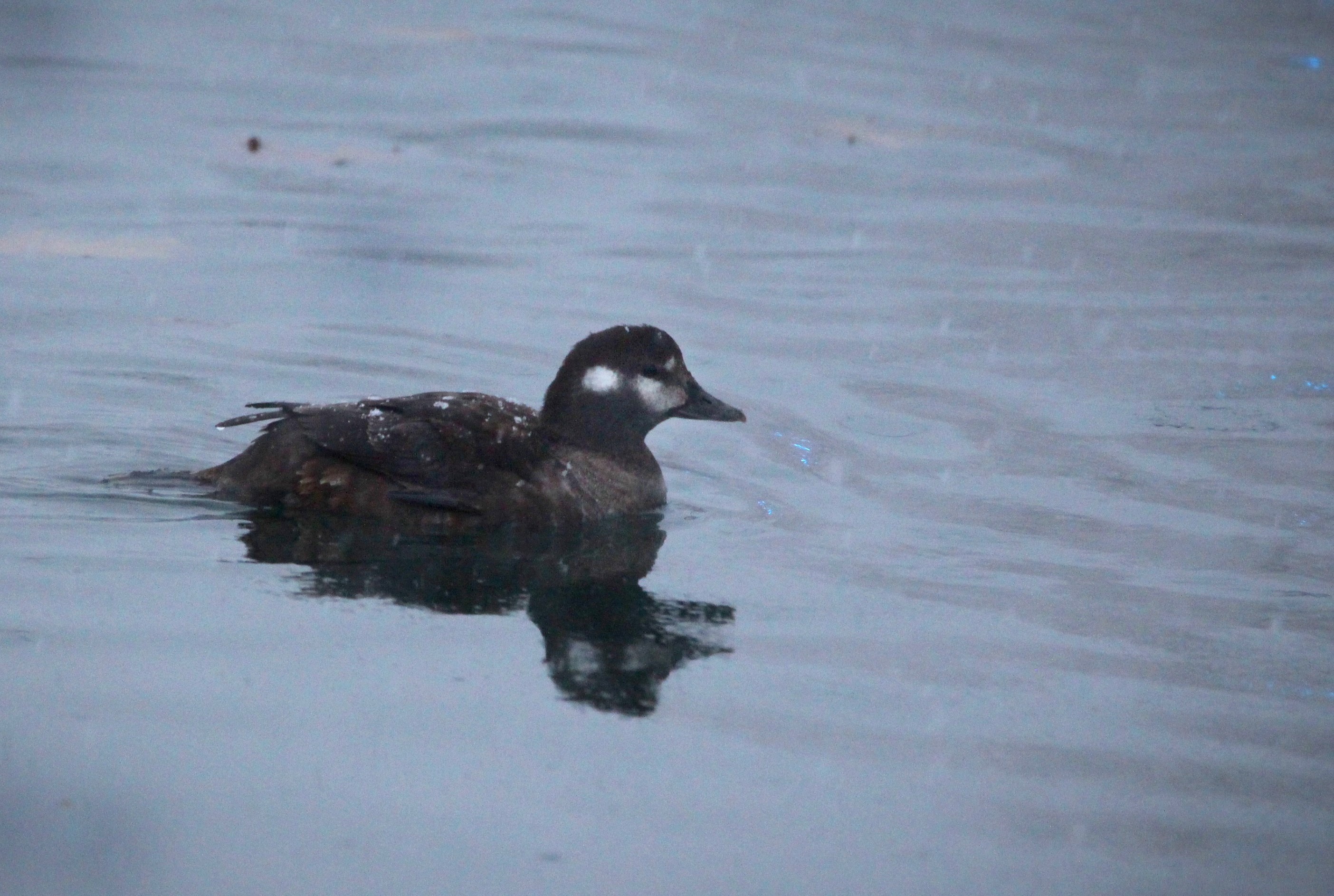
The heavy snow in the morning kept many of the land birds hidden, but many of the water birds were still around, braving the elements. A few highlight species were: harlequin duck (one female), greater white-fronted goose, killdeer, yellow-bellied sapsucker, and snow bunting.



 Birds of New England.com