Photo by Chris Bosak
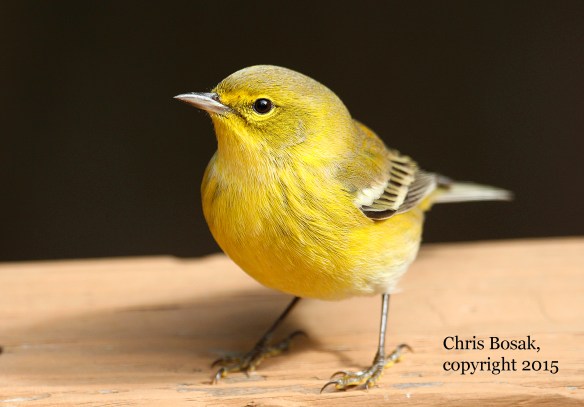
A Pine Warbler sits on a deck railing in New England this fall.
The early warblers started arriving in New England a week or two ago. Pine warblers and palm warblers are typically the first two species to make their way back this far north and, sure enough, both are back now. This post includes photos of both species so you know what you’re looking for. (Above is the pine warbler; below is the palm warbler.)
The spring warbler season is the highlight of the year for many birdwatchers. It will pick up gradually over the next week or so and then erupt from late April through the middle of May. At the height of the warbler migration, a New England birdwatcher can see between 20 and 30 warbler species in a single day. (It would take some effort, of course, but it’s very possible.)
Photo by Chris Bosak
A herring gull sits on the sand at Calf Pasture Beach in Norwalk, Conn., April 2019.
Gulls often don’t get second looks, but this one caught my eye the other day as I was closing in on a flock of brant near Long Island Sound. A closer look at this herring gull revealed some beautiful and overlooked features.
Photo by Chris Bosak
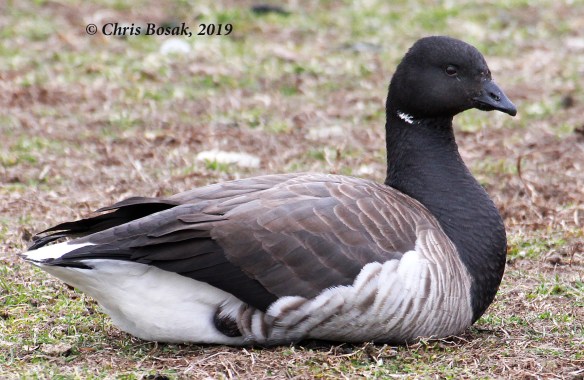
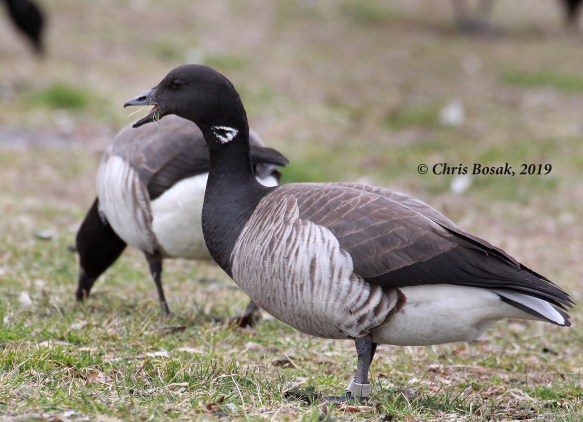
A brant seen at Calf Pasture Beach in Norwalk, Conn., April 2019.
You didn’t think I’d see thousands of brant and limit the experience to just one post, did you? Here is the first follow-up to Saturday’s post. The original post is here in case you missed it.
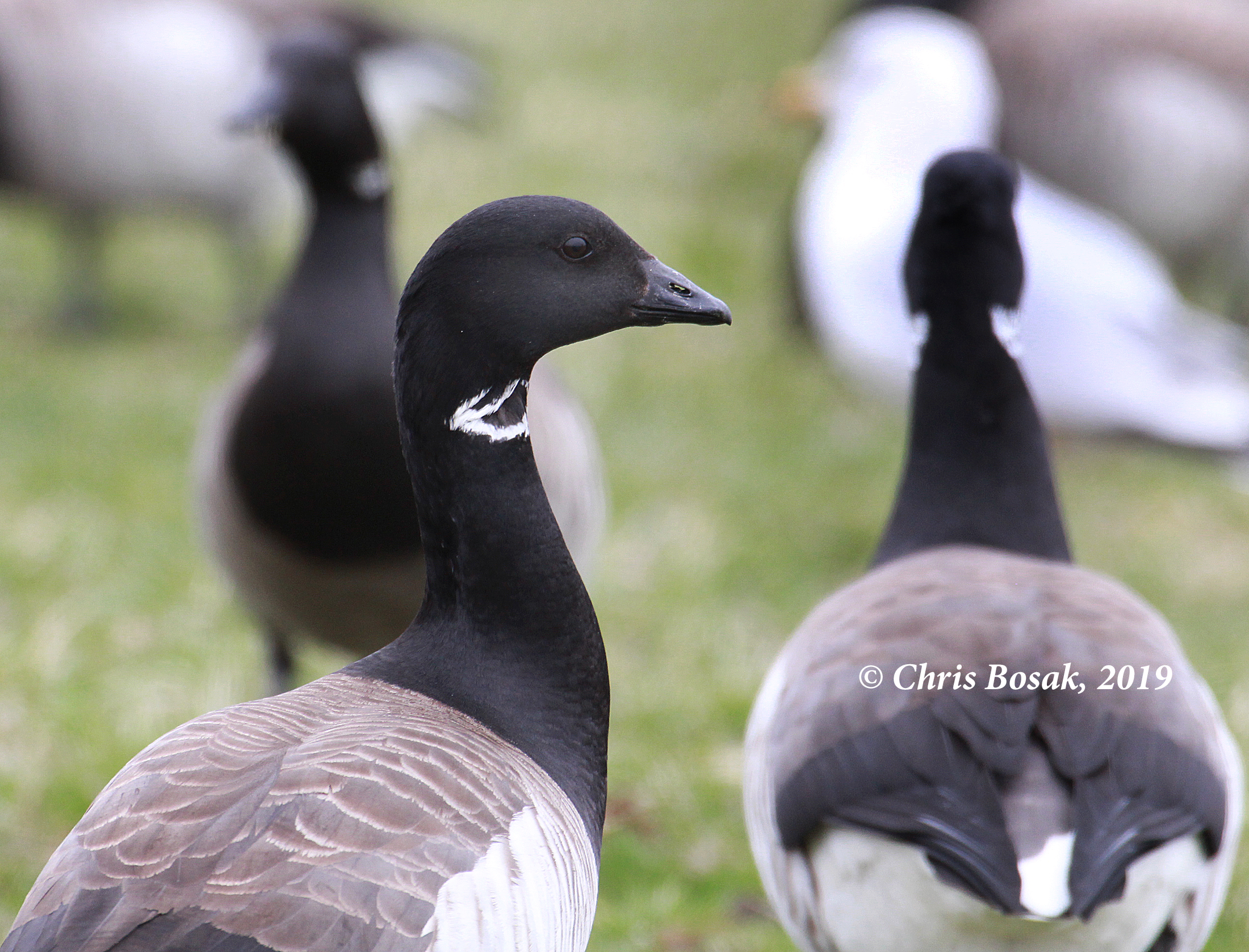
Photo by Chris Bosak Brant at Calf Pasture Beach in Norwalk, Connecticut, 2019.
This brant is banded with silver bands on each leg. I can’t make out the numbers and letters, however.
Photo by Chris Bosak Brant at Calf Pasture Beach in Norwalk, Connecticut, 2019.
Photo by Chris Bosak
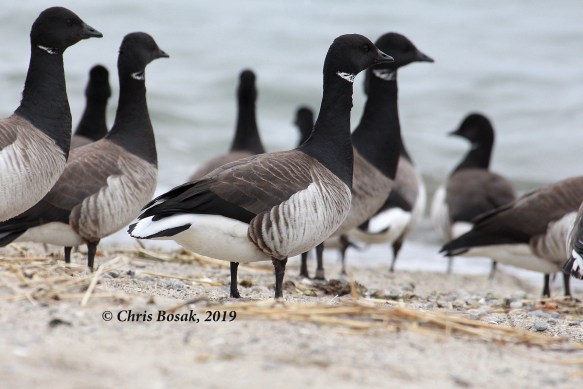
Brant at Calf Pasture Beach in Norwalk, Connecticut, 2019.
Brant are geese that breed in the Arctic. Many of them spend the winter in New England and massive flocks may be found at various coastal sites in the region. One of those sites is Calf Pasture Beach in Norwalk, Connecticut, where flocks numbering in the thousands hug the coast.
A quick visit to the park yesterday yielded a staggering number of brant. The birds were eating grass in the lawn areas of the park and were surprisingly tolerant of humans walking and jogging close by. Typically, the brant are seen on the beach near the water or on the water of Long Island Sound. Perhaps the birds were more tolerant because they are filling up for the pending migration. Just a thought.
Not all brant will depart at the same time. I’ve seen brant along the Connecticut coast as late as June. Those stragglers are likely young brant that aren’t ready to mate. At any rate, it’s nice to see the brant every year and they add a reliable bit of wildness to our coasts in the winter and spring.
Brant are often confused with Canada geese, but there are obvious differences. Brant are smaller and darker overall and do not have trademark white “chin strap” of the Canada goose. They do have a white marking under their chins, but it is not as large and pronounced as that of the Canada goose. The brants’ call is also croakier and quieter than the loud honk of the Canada goose.
For now, brant are still around in large numbers, which is good for New England birdwatchers. Many of them will depart shortly for points well north. Then we’ll be left to keep an eye out for the stragglers — or wait until late fall.
Here is a photograph showing a small portion of the flock.
Photo by Chris Bosak Brant at Calf Pasture Beach in Norwalk, Connecticut, 2019.
Here is a shot of Canada geese, for the sake of comparison.
Photo by Chris Bosak
Family of Canada Geese in Pittsburg, N.H., summer 2017.
Photo by Chris Bosak
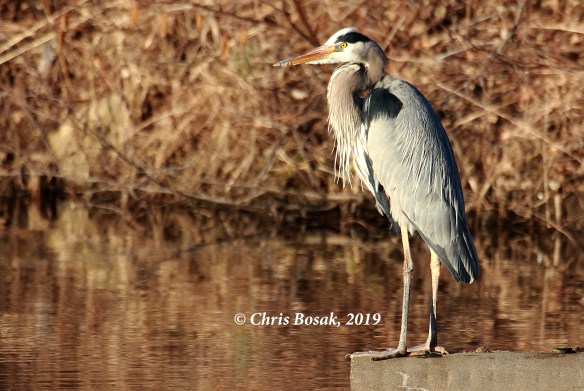
Great blue heron Danbury, CT, March 2019.
While we wait patiently for migrating warblers and other colorful songbirds to arrive in New England, some birds have already started the nesting process. Owls, of course, started a while ago and other birds of prey also get an early jump.
I’ve been watching great blue herons build and repair nests at a small rookery near the Danbury Fair mall. It’s funny to see these large, wild birds fly over a busy shopping mall with sticks in their bills. It is good to see, however, that they are adapting to human encroachment.
The other day I saw two mute swans and one Canada goose on nests at a small pond.
It’s an exciting time of year in the birdwatching world with nesting starting and the spring migration beginning to heat up.
Here’s an old shot I took of an osprey building its nest.
Photo by Chris Bosak
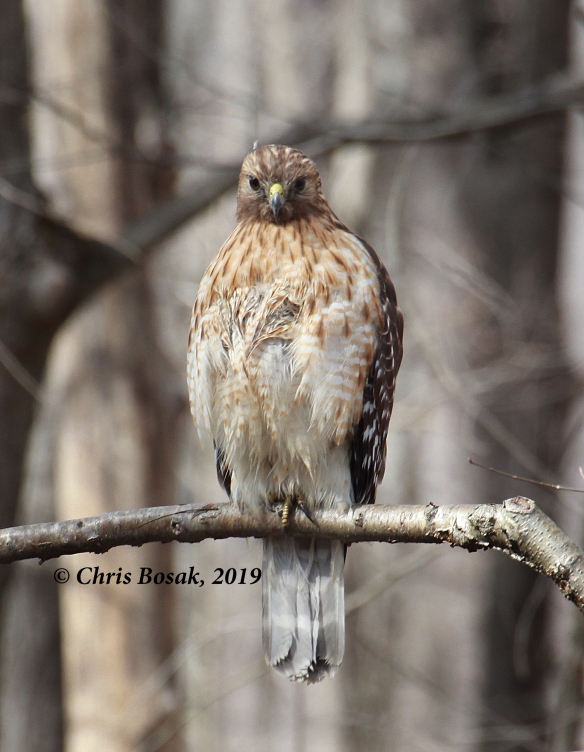
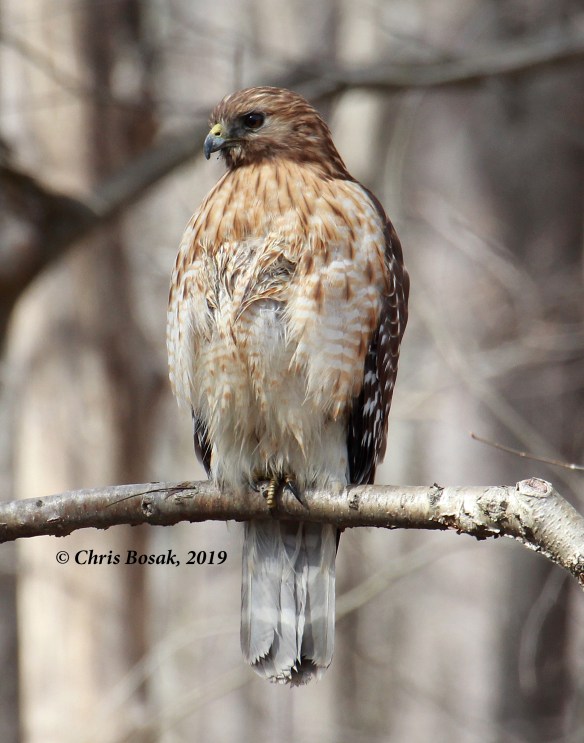
A red-shouldered hawk perches in the wood in Brookfield, CT, March 2019.
As long as this red-shouldered hawk is going to take obvious perches when I drive by a certain spot, I’m going to take photos of it. Red-shouldered hawk, take 20.
Photo by Chris Bosak
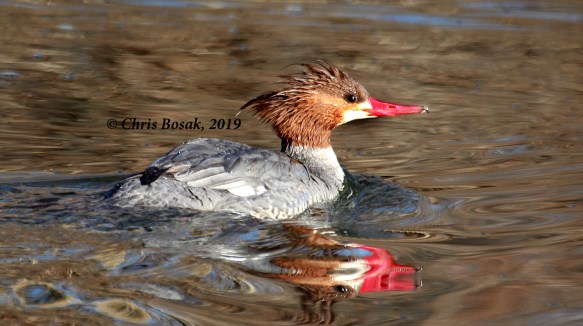
A female common merganser swims in a pond in Danbury, Conn., March 2019.
When I posted last week about “Merganser mania,” I had photos of all three mergansers that occur in New England. I had males and females represented, with the lone exception of female common merganser. Well, I happened upon this lady the other day and figured I’d complete the circle. I’ve added her to the original post, which may be found here.
Photo by Chris Bosak A bald eagle perches in a tree overhanging Lake Lillinonah in Brookfield, CT, March 2019.
It’s not quite on par with the great osprey rebound, but the recovery of the bald eagle has been fascinating and fun to watch.
Ospreys, once nearly extirpated from New England, have greatly increased their population over the last few decades. They are now common sightings along New England coastlines. Inland bodies of water are also seeing more ospreys but the increase is not as dramatic as along the coast.
Bald eagles are also becoming a more common sighting. I took a canoe ride on an inland lake in Connecticut yesterday and saw two bald eagles — one immature and one adult. (It takes four or five years for an eagle to get its trademark white head and tail.) Later in the day I drove past Danbury Fair, the state’s second-largest shopping mall, and saw an immature bald eagle perched in a snag in a nearby marsh.
I can’t remember the last time I saw three bald eagles in one day. Now that the weather is getting warmer (kind of) and days longer, eagles will be heading north soon. Many eagles, however, will remain in New England to return to nest sites or start new ones. In recent memory, there were no bald eagle nests where I am in southern Connecticut. Now there are several.
Here’s what All About Birds, a website of the Cornell Lab of Ornithology, says about the bald eagle population: “The Bald Eagle’s recovery is a spectacular conservation success story, and numbers have increased between 1966 and 2015, according to the North American Breeding Bird Survey. Partners in Flight estimates the global breeding population at 250,000, with 88 percent spending some part of the year in the U.S., 31 percent in Canada, and 8 percent in Mexico. The species rates a 9 out of 20 on the Continental Concern Score and are not on the 2016 State of North America’s Birds’ Watch List, but are a U.S.-Canada Stewardship Species. Once abundant in North America, the species became rare in the mid-to-late 1900s—the victim of trapping, shooting, and poisoning as well as pesticide-caused reproductive failures. In 1978 the bird was listed for protection under the Endangered Species Act. Since 1980, gentler treatment by humans along with the banning of DDT (the bird’s main pesticide threat) have led to a dramatic resurgence. By the late 1990s, breeding populations of Bald Eagles could be found throughout most of North America. In June 2007, the bird’s recovery prompted its removal from the Endangered Species list.”
It’s always good to hear those types of stories.
Photo by Chris Bosak A young bald eagle perches on a dead tree near Danbury Fair mall in Danbury, CT, March 2019.








 Birds of New England.com