Unknown's avatar

About Chris Bosak

Bird columnist and nature photographer based in New England.

A little towhee time before warbler season

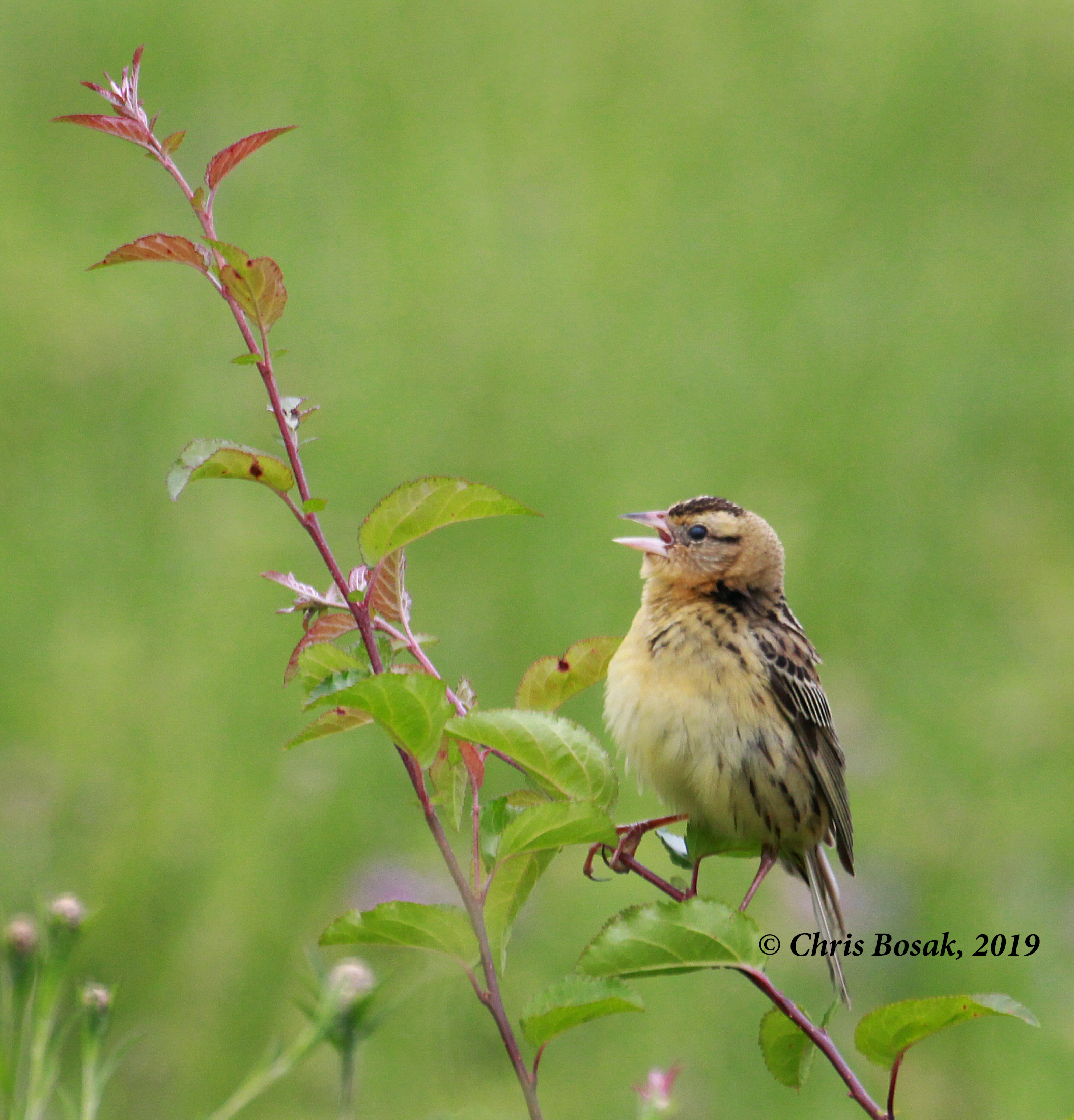
Photo by Chris Bosak An eastern towhee perches on a branch in New England, April 25, 2019.

My foot was feeling up for a short, relatively non-taxing walk yesterday (Thursday) so I grabbed a walking stick and hit a trail. The aching foot enhanced the walk in one fashion as it made me slow down and take in all the sights and sounds of the spring New England woods. Too often when I walk I’m rushing to a destination or point of interest (pond or open field) and don’t take the time to fully absorb all that is around me. Not that I’m hoping the foot keeps hurting, but that was the silver lining in this latest bout of tendonitis.

It was still a bit early for a big warbler count — blue-winged and black-and-white were the only warbler species I found — but eastern towhees were numerous. I’ll expand on the eastern towhee in an upcoming post, but this large sparrow is one of my favorites. The calls and songs of the towhee filled the edge of the woods and I noticed several pairs, which bodes well for a strong breeding season (hopefully.) Above is the male eastern towhee and below is the female. The female is duller in color, but still a striking bird.

Photo by Chris Bosak A female eastern towhee perches on a branch in New England, April 25, 2019.

A brief departure from New England

Photo by Chris Bosak
A tri-colored heron in Naples, Florida, April 2019.

I’m still hobbled with tendinitis in my foot so I don’t have any exciting spring migration tales to share or fresh warbler photos to post. I do, however, have a ton of photos to share from a recent trip to Florida. Sure, they are not genuine New England birds but they’re still awesome.
Savanna, Andrew and I spent last week in Florida for Andrew’s spring break. My brother recently retired to Naples and we visited Ed & Deb, as well as my niece Jessy (Ed’s daughter) & Kyle and their beautiful new daughter Raelynn. Yes, that makes me a great uncle for those scoring at home. Yikes!

There wasn’t a ton of time for bird walks, but Ed, Savanna and I did sneak in a few expeditions to the Everglades and local Naples parks. Here are some shots from the trip, jammed into one big blog post.

Back to New England later this week.

Photo by Chris Bosak
A limpkin in Naples, Florida, 2019.

Photo by Chris Bosak A white ibis in Naples, Florida, April 2019.
Photo by Chris Bosak A brown pelican in Naples, Florida, April 2019.
Photo by Chris Bosak An osprey in Naples, Florida, 2019.
Photo by Chris Bosak A little blue heron in Naples, Florida, April 2019.
Photo by Chris Bosak A limpkin in Naples, Florida, 2019.
Photo by Chris Bosak A green heron in Naples, Florida, April 2019.
Photo by Chris Bosak A great blue heron in Naples, Florida, April 2019.
Photo by Chris Bosak Glossy ibis in Naples, Florida, April 2019.
Photo by Chris Bosak A young bald eagle perches in a tree in Naples, Florida, April 2019.
Photo by Chris Bosak A common gallinule in Naples, Florida, April 2019.
Photo by Chris Bosak An anhinga in Naples, Florida, April 2019.

And, of course …

Photo by Chris Bosak An alligator in Naples, Florida, April 2019.

Finchy Tuesday

Photo by Chris Bosak Goldfinches at a feeder in Danbury, CT, April 2019.

I’m laid up with a bum foot on this gorgeous New England spring day (grrrrrr) so tromping through the woods looking for warblers is out of the question. Some colorful visitors, however, have come to the feeders to keep me company. It’s been a finchy day with goldfinches (in bright summer garb) and house finches stopping by. I’m on the lookout for some purple finches.

Since I’m temporarily out of commission, let me know what spring birds you are seeing out there.

Photo by Chris Bosak House finches at feeder in Danbury, CT, April 2019.

Happy Easter from BirdsofNewEngland.com

Wishing you a great Easter from http://www.birdsofnewengland.com

Coming soon to Birds of New England: photos from a recent visit to Florida and updates and photos of the ongoing spring migration in New England. Warblers and other songbirds are here. Feel free to let me know what you’re seeing out there.

For the Birds: Check those blotches carefully

Photo by Chris Bosak A Black-crowned Night Heron perches on a railing at a marina along the Norwalk River, Norwalk, Conn., spring 2016.
Photo by Chris Bosak
A Black-crowned Night Heron perches on a railing at a marina along the Norwalk River, Norwalk, Conn., spring 2016.

Birders have to follow through on the blotches in the distance.

Usually they end up being plastic bags or Mylar balloons stuck in trees, odd-looking knots on tree trunks or some other strange objects that look out of place. Sometimes, though, they end up being birds, which is why we birders have to do our diligence.

One summer morning while canoeing at Pillsbury State Park, I was excited to see a great horned owl sitting at the edge of the pond. Strange place for a great horned owl, I thought as I continued to slowly paddle in for a closer look.

I closed the distance substantially, and the owl remained at the pond’s edge, looking right at me. I slowly got my camera ready and continued drifting toward the large bird. I lifted the camera to my face and zoomed in, ready to capture my best owl images to date.

As I zoomed in I realized something rather embarrassing. My great horned owl was actually the top of a dead tree at the edge of the pond. This tree was a dead ringer for an owl, complete with ear tufts, eyes and rounded body.

I laughed out loud and was thankful no one else was around to witness my buffoonery.

My stories of mistaking plastic grocery bags for hawks along highway roads are practically endless. Mylar balloons are another oft-seen “bird” in the trees.

Last week, though, I was rewarded by following through on a blotch in the distance. It didn’t turn out to be a rarity or a new bird for me, but it was nice just the same to have a blotch actually turn out to be a bird — a black-crowned night heron, to be exact.

I was driving along one side of a pond in southern Connecticut when I stopped at a stop sign to turn right, away from the pond. As I glanced left to check for oncoming cars, I noticed something gray and upright at the far edge of the pond. I figured it was a stick or large piece of trash. I turned right and started driving away from the pond, but the possibility of the object actually being a bird kept nagging at me.

I hit the brakes, found the next safe place to turn around and returned to the pond. A stone wall prevented me from seeing the edge of the pond where I had previously seen the object. I parked, walked to the pond and found the black-crowned night heron standing in the same exact spot where I had seen it before.

I watched it for a couple of minutes as it stood deadly still, as all waders are so adept at doing. Finally it took two slow, careful steps and plunged its bill into the water. It pulled out a painted turtle and immediately returned the prey to the water.

I grabbed a few photographs — they all turned out lousy as the bird was in a heavily shaded area — and started to return to the car when something else caught my eye. It was a big white object on the far side of the pond. I knew immediately that this object was a great egret, not just a blotch.

As I walked toward the egret, I wondered how I missed it the first time I had driven by the pond. I stood behind a tree watching the impressive white bird stalk the pond’s edge as it lunged its head into the water. The egret caught a small sunfish — much easier prey for a bird to handle than a turtle — and adjusted the fish in its bill before finishing the meal.

I’ve seen plenty of black-crowned night herons and great egrets in my life, but I was happy to see the birds that day. I was glad my instincts paid off and convinced me to turn the car around.

Actually seeing real birds made up for a few of those plastic bag “bird” sightings that I’ve had over the years.

Warbler watch is on

Photo by Chris Bosak A Pine Warbler sits on a deck railing in New England this fall.

The early warblers started arriving in New England a week or two ago. Pine warblers and palm warblers are typically the first two species to make their way back this far north and, sure enough, both are back now. This post includes photos of both species so you know what you’re looking for. (Above is the pine warbler; below is the palm warbler.)

The spring warbler season is the highlight of the year for many birdwatchers. It will pick up gradually over the next week or so and then erupt from late April through the middle of May. At the height of the warbler migration, a New England birdwatcher can see between 20 and 30 warbler species in a single day. (It would take some effort, of course, but it’s very possible.)

I’ll post frequently about warblers over the next few weeks and, hopefully, have plenty of fresh warbler photos to share. In the meantime, practice up with this link from AllAboutBirds.org — it includes various warblers and their songs.

Photo by Chris Bosak Palm Warbler

Gulls: Beauty in the ordinary

Photo by Chris Bosak A herring gull sits on the sand at Calf Pasture Beach in Norwalk, Conn., April 2019.

Gulls often don’t get second looks, but this one caught my eye the other day as I was closing in on a flock of brant near Long Island Sound. A closer look at this herring gull revealed some beautiful and overlooked features.

One more brant post

Photo by Chris Bosak Brant at Calf Pasture Beach in Norwalk, Connecticut, 2019.

One more brant photo post. The bird above demanded it. Again, here’s the original post.

Photo by Chris Bosak Brant at Calf Pasture Beach in Norwalk, Connecticut, 2019.

More brant photos

Photo by Chris Bosak A brant seen at Calf Pasture Beach in Norwalk, Conn., April 2019.

You didn’t think I’d see thousands of brant and limit the experience to just one post, did you? Here is the first follow-up to Saturday’s post. The original post is here in case you missed it.

Photo by Chris Bosak
Brant at Calf Pasture Beach in Norwalk, Connecticut, 2019.

This brant is banded with silver bands on each leg. I can’t make out the numbers and letters, however.

Photo by Chris Bosak
Brant at Calf Pasture Beach in Norwalk, Connecticut, 2019.

Brant haven’t migrated yet and that’s a good thing for New England

Photo by Chris Bosak Brant at Calf Pasture Beach in Norwalk, Connecticut, 2019.

Brant are geese that breed in the Arctic. Many of them spend the winter in New England and massive flocks may be found at various coastal sites in the region. One of those sites is Calf Pasture Beach in Norwalk, Connecticut, where flocks numbering in the thousands hug the coast.

A quick visit to the park yesterday yielded a staggering number of brant. The birds were eating grass in the lawn areas of the park and were surprisingly tolerant of humans walking and jogging close by. Typically, the brant are seen on the beach near the water or on the water of Long Island Sound. Perhaps the birds were more tolerant because they are filling up for the pending migration. Just a thought.

Not all brant will depart at the same time. I’ve seen brant along the Connecticut coast as late as June. Those stragglers are likely young brant that aren’t ready to mate. At any rate, it’s nice to see the brant every year and they add a reliable bit of wildness to our coasts in the winter and spring.

Brant are often confused with Canada geese, but there are obvious differences. Brant are smaller and darker overall and do not have trademark white “chin strap” of the Canada goose. They do have a white marking under their chins, but it is not as large and pronounced as that of the Canada goose. The brants’ call is also croakier and quieter than the loud honk of the Canada goose.

For now, brant are still around in large numbers, which is good for New England birdwatchers. Many of them will depart shortly for points well north. Then we’ll be left to keep an eye out for the stragglers — or wait until late fall.

Here is a photograph showing a small portion of the flock.

Photo by Chris Bosak
Brant at Calf Pasture Beach in Norwalk, Connecticut, 2019.

Here is a shot of Canada geese, for the sake of comparison.

Photo by Chris Bosak Family of Canada Geese in Pittsburg, N.H., summer 2017.