Latest For the Birds column: Gray Catbirds’ time to shine

Photo by Chris Bosak A Gray Catbird perches on a thorny branch in Selleck's/Dunlap Woods in summer 2014.

Photo by Chris Bosak
A Gray Catbird perches on a thorny branch in Selleck’s/Dunlap Woods in summer 2014.

Here’s the latest For the Birds column. Thanks for supporting http://www.BirdsofNewEngland.com

It’s a rare summer that goes by without me writing a column about catbirds.

Aside from robins, they are perhaps the dominant songbird of a New England summer. At my new home, chipping sparrows may give them a run for their money, but gray catbirds are certainly a reliable daily sighting.

Throughout much of the year, I feel, the catbird is overlooked. Of course, they are migratory so we don’t even see them during the colder months. Therefore, it’s understandable that we don’t think too much about them in the winter. I have seen a few over the years on Christmas Bird Counts, but that’s pretty rare.

That leaves spring, summer and fall for us to enjoy the gray catbird. In the spring we are overwhelmed with the number of songbirds passing through. Also, the birds that nest in our area start that process in spring, so that’s another demand on our attention. The catbirds arrive in spring to little fanfare.
Continue reading

New hummingbird video, better close-ups

Here’s another iPhone video of a Ruby-throated Hummingbird. I posted one last fall, too, but this one is much closer. Wait until the end to see the close-up, slo-mo.

Birdbath photo III: Northern Cardinal with bald head

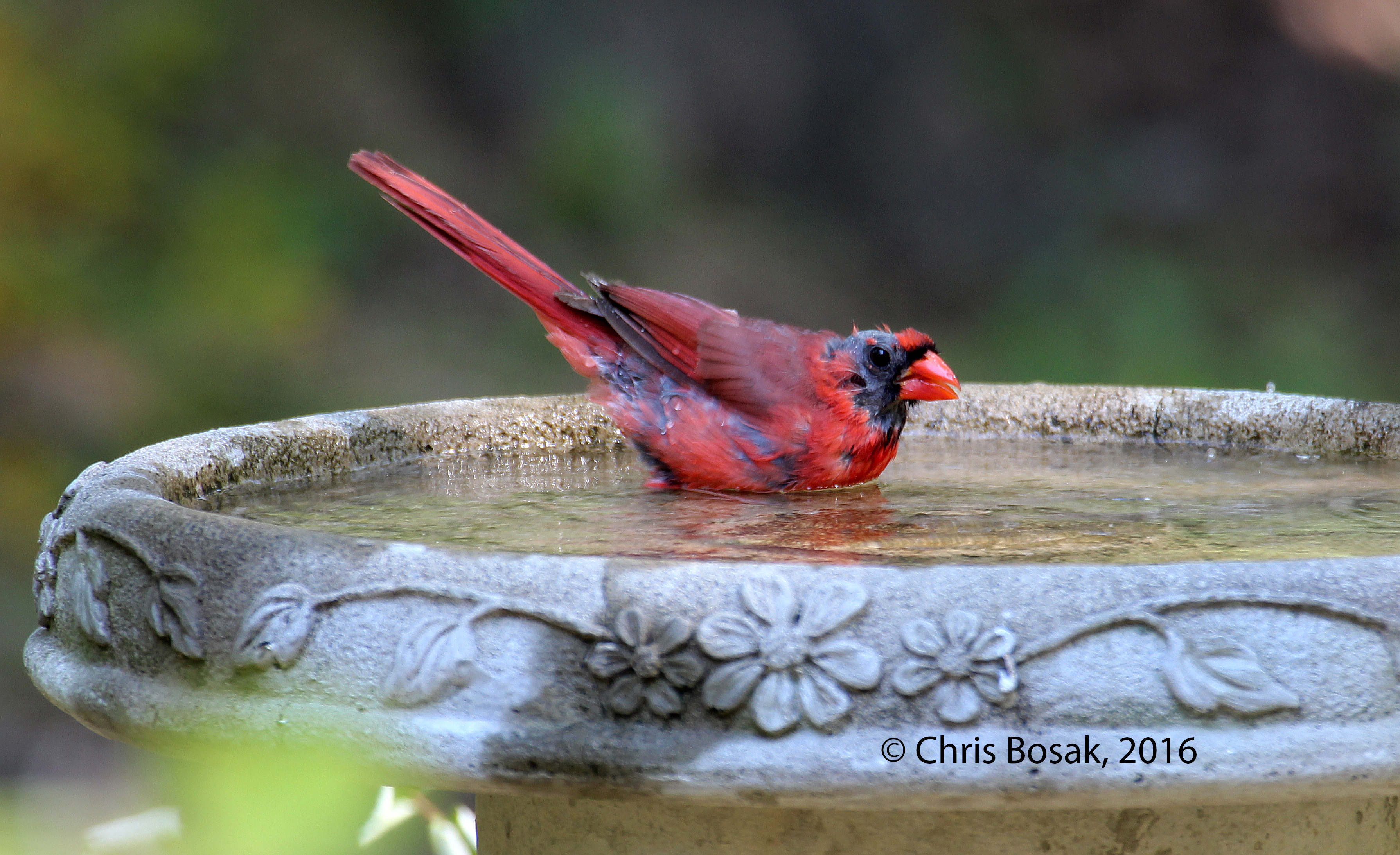
Photo by Chris Bosak A Northern Cardinal drinks from a bird bath in New England, fall 2015.

Photo by Chris Bosak
A Northern Cardinal drinks from a bird bath in New England, fall 2015.

This guy hung around the feeders and birdbath for much of the fall of 2015. To answer the burning question, I’m not sure what happened to the feathers on his head. Mites? Molt? Either way, the feathers likely grew back by the winter and the bird was fine.

Eastern Phoebe at birdbath

Photo by Chris Bosak An Eastern Phoebe visits a bird bath in Danbury, Conn., March 2016.

Photo by Chris Bosak
An Eastern Phoebe visits a bird bath in Danbury, Conn., March 2016.

Photo No. 2 of the birdbath series.

Eastern Phoebes are early migrant arrivals, showing up in early March to New England. This one visited the bath in mid-March.

Start of a new photo series: Birds at the Bath

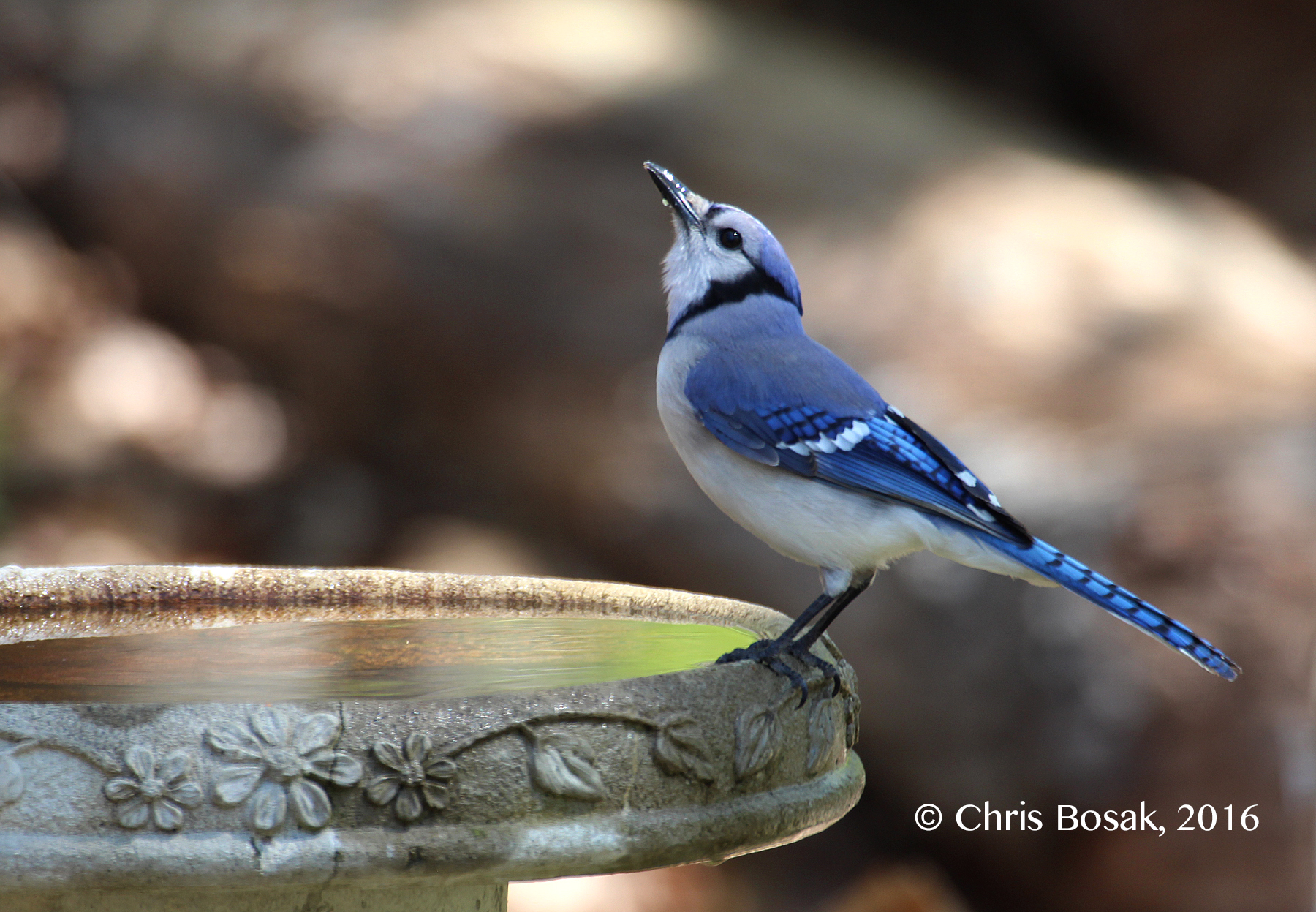
Photo by Chris Bosak A Blue Jay drinks from a birdbath in New England, spring 2016.

Photo by Chris Bosak
A Blue Jay drinks from a birdbath in New England, spring 2016.

Here’s the first of a few photos showing birds at the bath this spring. I took these photos and never really looked at them until now. Some are pretty cool.

Remember, if you have birdbaths in your yard, keep them clean and filled with fresh water every day in the summer. Otherwise it’s a breeding ground for mosquitoes, bacteria and other yucky stuff. Or just bring the bath in until fall.

A couple rodents I met along the way

Photo by Chris Bosak A beaver swims in a pond in Ridgefield, Conn., spring 2016.

Photo by Chris Bosak
A beaver swims in a pond in Ridgefield, Conn., spring 2016.

I’m always on the lookout for birds, of course, but nature of all sorts thrill me. The moose, for instance, is my favorite sighting — hands down. So I’m looking for “other things” too when I’m out there birdwatching.

Here are a couple rodents I saw during some recent birdwatching outings. The word “rodent” has such a bad connotation, but these two rodents are pretty Continue reading

Apparently Red-bellied Woodpeckers like peanuts, too

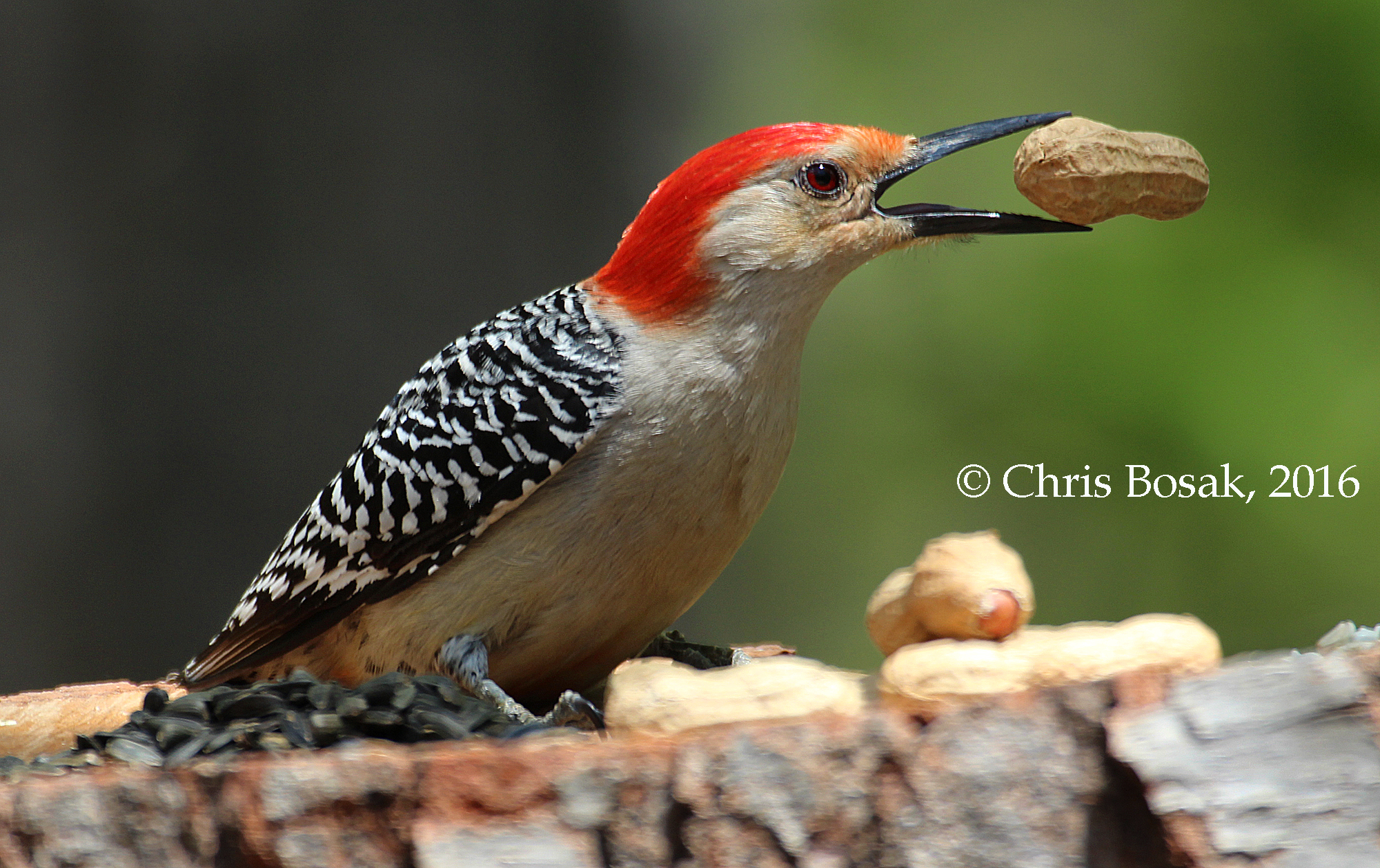
Photo by Chris Bosak A Red-bellied Woodpecker takes a peanut from a homemade birdfeeder in Danbury, Conn., spring 2016.

Photo by Chris Bosak
A Red-bellied Woodpecker takes a peanut from a homemade birdfeeder in Danbury, Conn., spring 2016.

I wrote a few weeks ago about Blue Jays and how they love whole peanuts. They literally wait on nearby branches waiting for me to put some down on the platform feeder.

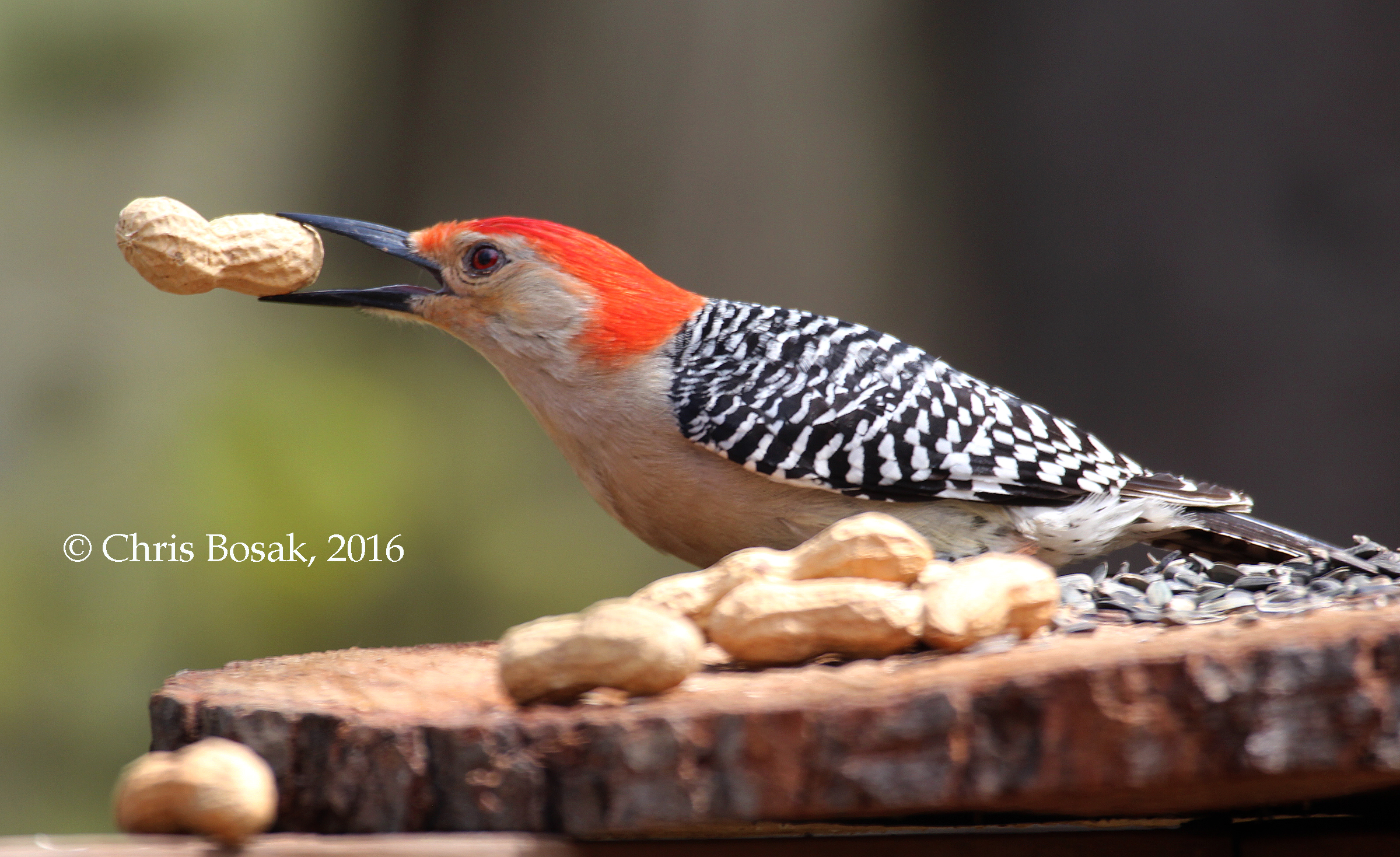
Now the Blue Jays have competition. A male Red-bellied Woodpecker discovered the peanut station and visits daily to take as many peanuts as I’ll put out there.

Here’s a few more photos of the Red-bellied Woodpecker.

Photo by Chris Bosak A Red-bellied Woodpecker perches near a homemade birdfeeder in Danbury, Conn., spring 2016.

Photo by Chris Bosak
A Red-bellied Woodpecker perches near a homemade birdfeeder in Danbury, Conn., spring 2016.

Photo by Chris Bosak A Red-bellied Woodpecker takes a peanut from a homemade birdfeeder in Danbury, Conn., spring 2016.

Photo by Chris Bosak
A Red-bellied Woodpecker takes a peanut from a homemade birdfeeder in Danbury, Conn., spring 2016.


Click here to see the post on Blue Jays.

And click here for the follow up post with more photos

House Wren picks out his territory

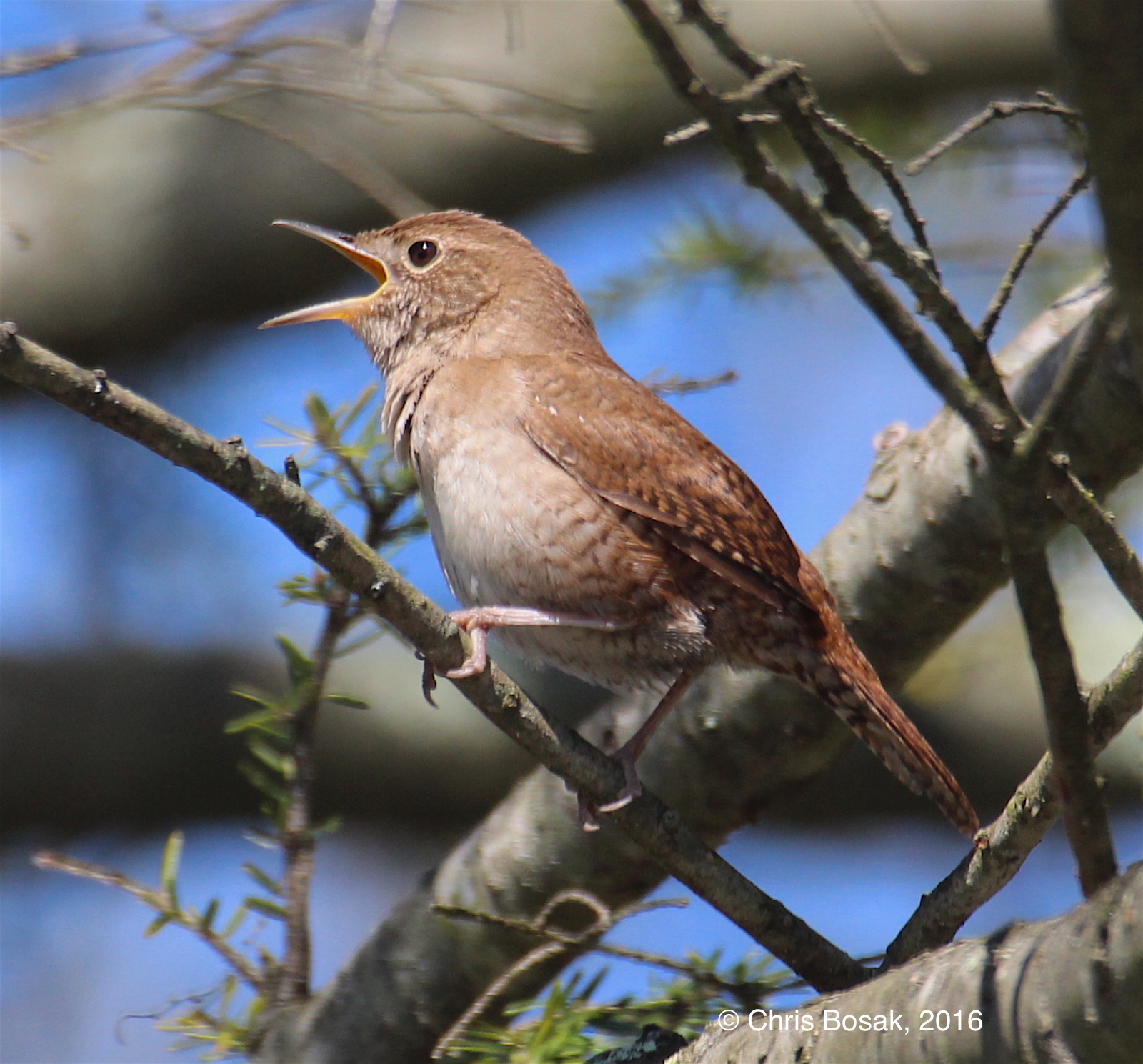
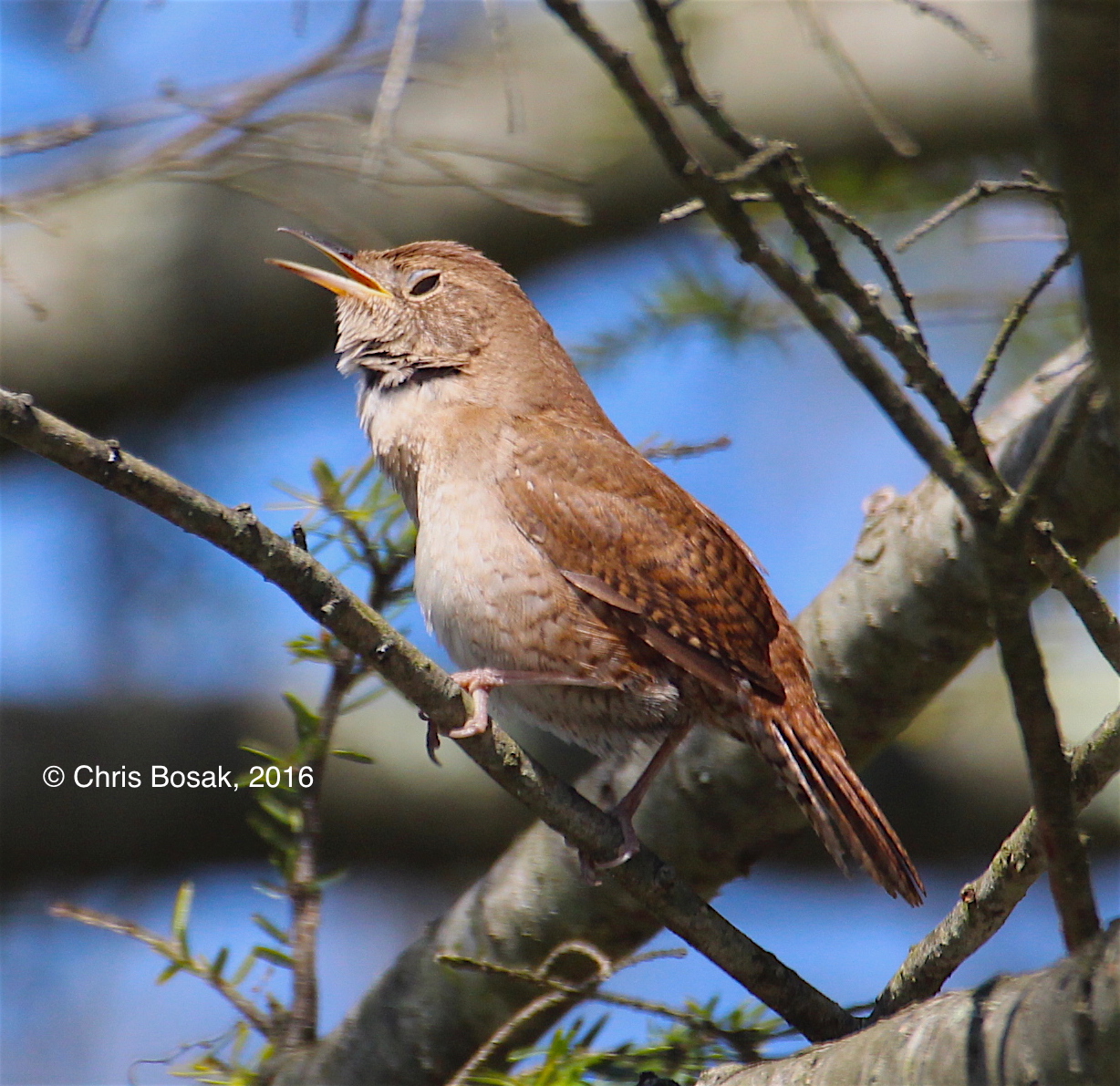
A House Wren sings in a tree during the nesting season 2016.

A House Wren sings in a tree during the nesting season 2016.

The other day I heard the familiar sound of a House Wren returning from the south and claiming his territory. He check out a few of the bird houses on my property and then perched in nearby trees to sings its song. They are loud and charismatic birds.

I watched one check out at least two houses on my property. To my knowledge, he didn’t pick either one. He didn’t even pick one to start a “dummy nest,” whereby to fool predators that may be watching the put a few sticks in house.

Oh well, there’s still time. Not every House Wren has picked its spot yet.

A House Wren sings in a tree during the nesting season 2016.

A House Wren sings in a tree during the nesting season 2016.

A House Wren sings in a tree during the nesting season 2016.

A House Wren sings in a tree during the nesting season 2016.

And the answer is …

Thanks for playing along with my latest birding quiz posted yesterday.

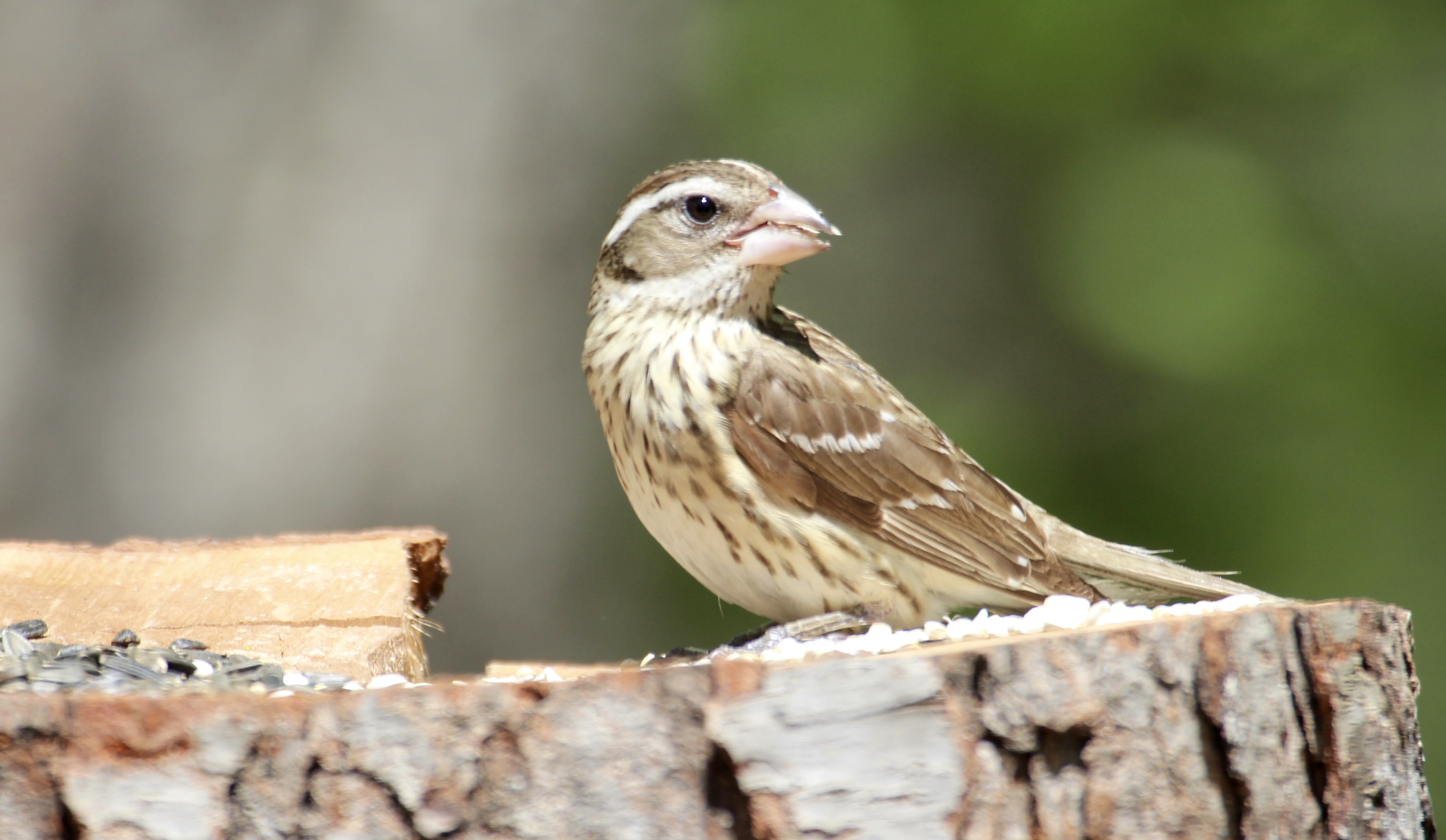
Here’s the answer … it’s a

IMG_8845

female Rose-breasted Grosbeak.

I told you it looked nothing like its male counterpart (in color anyway).

I also suggested you look at the “bulky bill,” or in this case its “grosbeak.”

Many field guides show only the male in breeding plumage, therefore making the identification of females or nonbreeding birds nearly impossible. Get a good field guide that shows all the various plumages of birds.

Below is the male Rose-breasted Grosbeak striking a similar pose. Quite a difference, huh. Good example of sexual dimorphism (when males and female have different physical characteristics.)

Photo by Chris Bosak A Rose-breasted Grosbeak visits a homemade platform feeder in Danbury, Conn., on May 6, 2016.

Photo by Chris Bosak A Rose-breasted Grosbeak visits a homemade platform feeder in Danbury, Conn., on May 6, 2016.


Birding quiz: Name the bird pictured

IMG_8845

Yes, my homemade backyard feeder did it again, drawing in another interesting bird.

So here’s a quick bird identification quiz. Seasoned birders will get it immediately. Intermediate birders may take a second, but will eventually get it. Beginning birders, if they haven’t seen one before, may be surprised at the answer (which is coming up tomorrow morning.)

Do you know it already? Awesome.

Need a hint? That’s fine, too. Here are a few hints:

It’s not a big sparrow.

It looks nothing likes its male counterpart.

Look at the bulky bill.

Send your guesses (or requests for more hints) to bozclark@earthlink.net, or just lock in your guess in your head and wait for the answer tomorrow.

Thanks for playing along.