Long-tailed Ducks in transition

Photo by Chris Bosak A pair of Long-tailed Ducks in transition plumage swims in Long Island Sound, April 2015.

Photo by Chris Bosak
A pair of Long-tailed Ducks in transition plumage swims in Long Island Sound, April 2015.

Here’s a shot of a pair of Long-tailed Ducks transitioning from their mostly white winter plumage to their mostly dark summer plumage. Some birds looks the same year-round and some birds look different in the summer and winter. Most ducks (but not all) go through a few different plumages as the year goes on.

These Long-tailed Ducks (formerly Oldsquaw) will be heading to their Arctic breeding grounds soon. When they are along coastal New England in the winter, we see their white plumage. It’s one of the few birds, in my opinion anyway, that look more decorated in the winter than in the summer. Take the Common Loon for instance. It sports its famous black-and-white spotted plumage in the summer, but changes to a much more drab grayish plumage in the winter.

We are lucky to have many Arctic nesters spend their winters in New England. It’s interesting to see their plumage transitions, giving us a glimpse of what they look like when they are “up north.”
Brant, Brant and more Brant

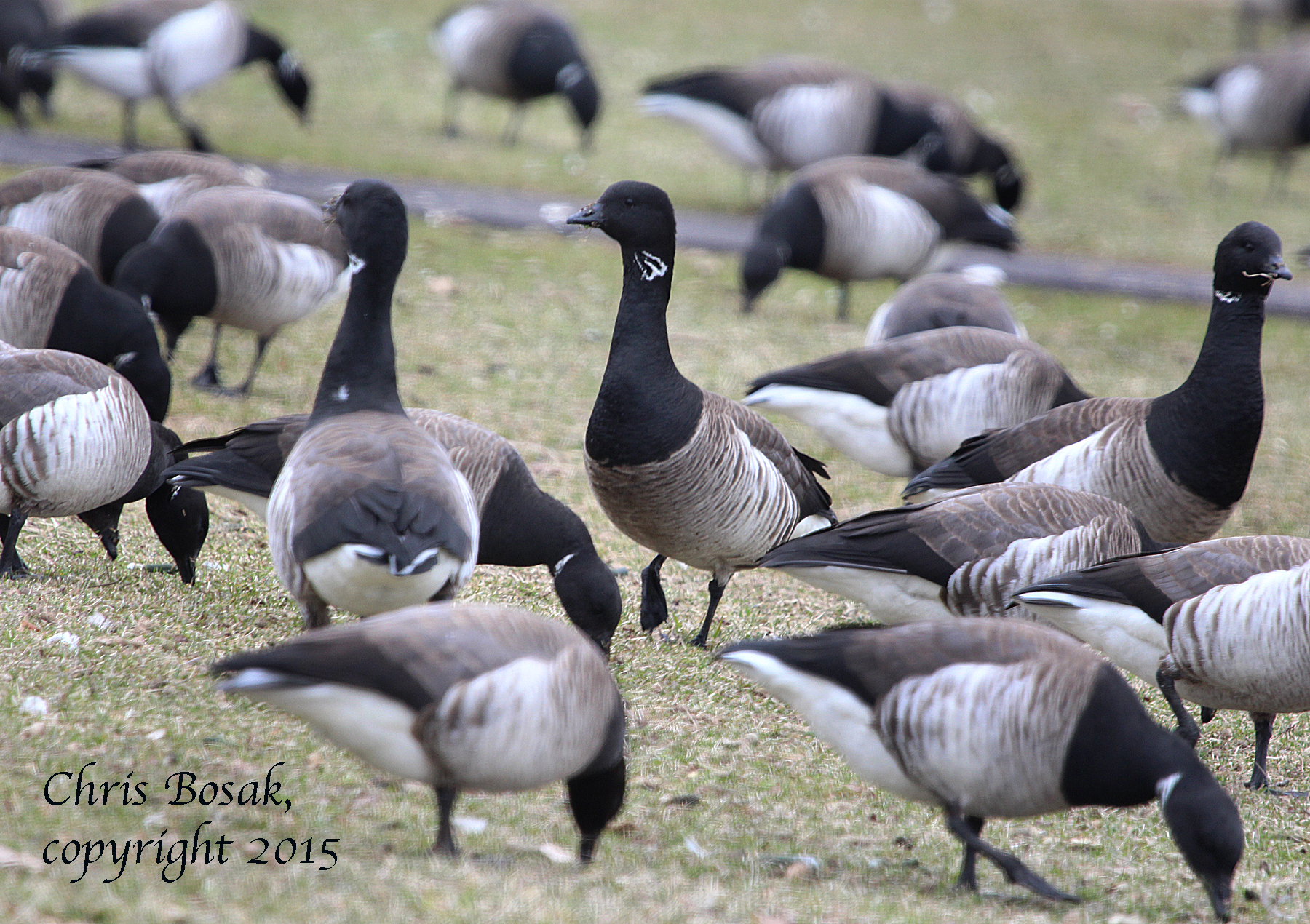
Photo by Chris Bosak A large flock of Brant at Calf Pasture Beach, April 2015.

Photo by Chris Bosak
A large flock of Brant at Calf Pasture Beach, April 2015.

I love seeing Brant along Long Island Sound. It’s fascinating knowing a bird that is so close in the winter will be spending its summer in the Arctic. Of course, lots of birds we see in New England during the winter _ especially waterfowl _ nest far north of here, but few are as easily seen as Brant.

Brant, which look similar to Canada Geese but are smaller and have different markings, gather in massive flocks along parts of Long Island Sound from late fall to early spring. Many Brant are Continue reading

Ospreys at Calf Pasture are back

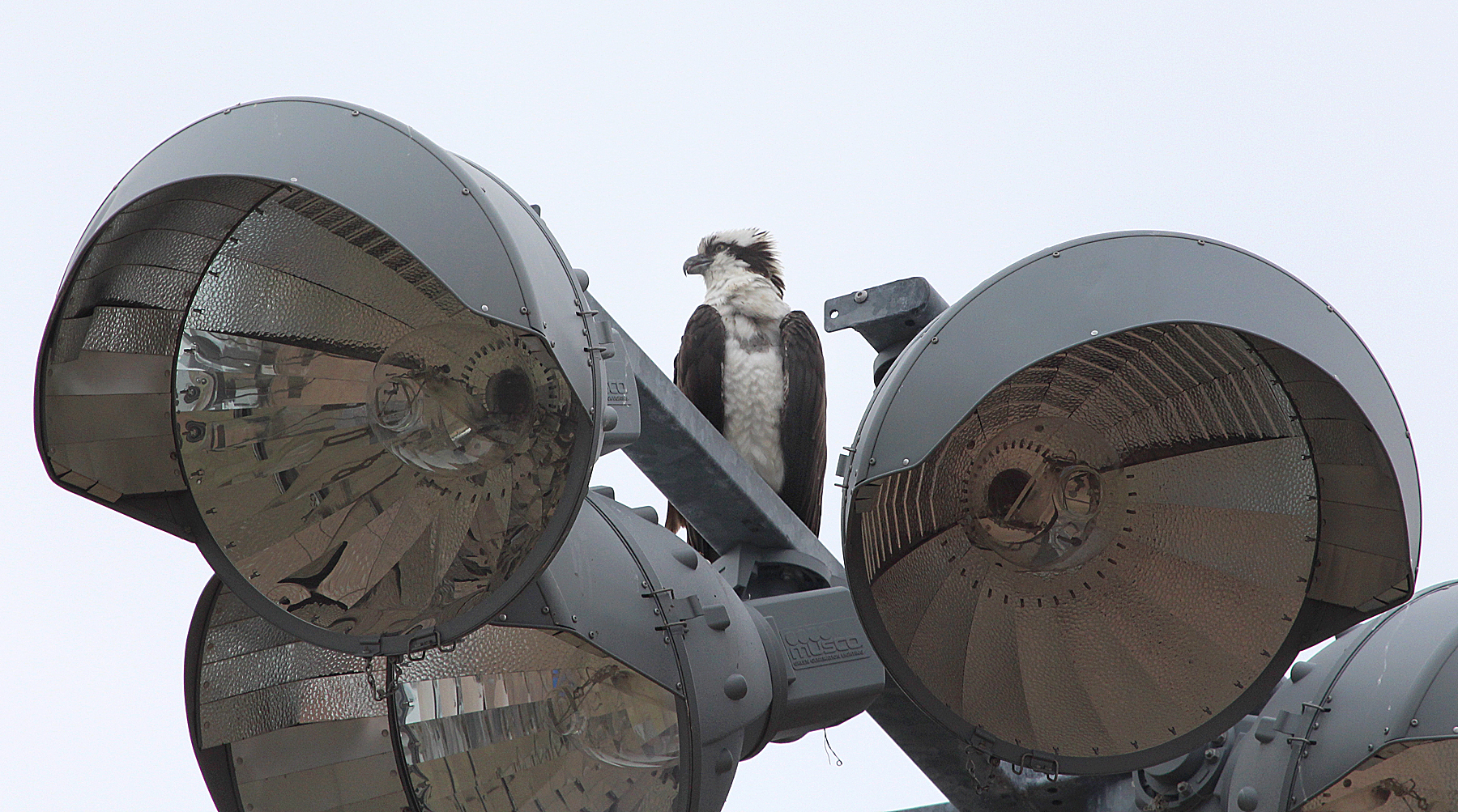
Photo by Chris Bosak An Osprey perches atop a light pole and is dwarfed by the huge lights at Calf Pasture Beach in Norwalk, Conn., in this April 20015 photo.

Photo by Chris Bosak
An Osprey perches atop a light pole and is dwarfed by the huge lights at Calf Pasture Beach in Norwalk, Conn., in this April 20015 photo.

The Osprey(s) at Calf Pasture Beach (Norwalk, Conn.) have returned. I saw one yesterday (Thursday) on top of a light pole next to the pole with the nest. The Ospreys have nested there for several years now and they are comfortable making their home above the bustling activity of the public beach.

I like how the bird _ a large bird of prey _ is dwarfed by the lights.

Connecticut Osprey and how you can help

Photo by Chris Bosak An Osprey soars over the Norwalk River on Monday, Sept. 1, 2014.

Photo by Chris Bosak
An Osprey soars over the Norwalk River on Monday, Sept. 1, 2014.

Here’s a recent column I wrote for The Hour newspaper in Norwalk, Conn. Most of the Osprey have returned to New England by now and Connecticut Audubon is once again holding its Osprey Nation program whereby citizens monitor the nests of “fish hawks.” There are now dozens of Osprey nests along Continue reading

Yes, there are eagles out there

Photo by Chris Bosak A Bald Eagle preches in a tree on Chimon Island off the coast of Norwalk, Conn., March 2015.

Photo by Chris Bosak
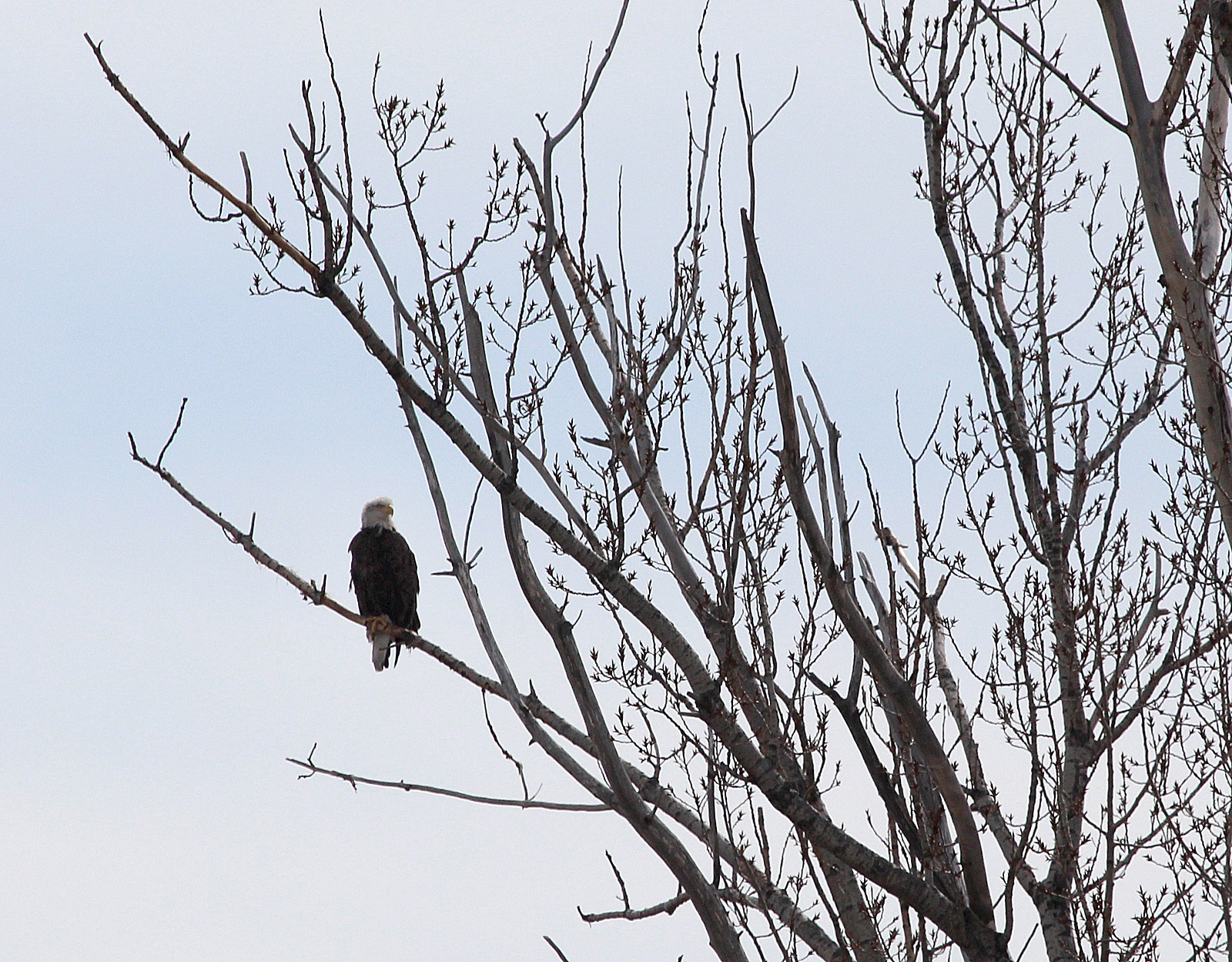
A Bald Eagle preches in a tree on Chimon Island off the coast of Norwalk, Conn., March 2015.

I tagged along with U.S. Fish & Wildlife Service officials and staff this week to confirm an active Bald Eagles’ nest on Chimon Island off the coast of Norwalk, Conn. The nest is visible from the coast with binoculars or a spotting scope, so we were all fairly certain of

Hour photo/Chris Bosak Rick Potvin, manager of the Stewart B. McKinney NWR, holds a sign before it was posted on Chimon Island on Wednesday. The U.S. Fish & Wildlife officials were on the island to mark off areas to protect a bald eagle nest.

Hour photo/Chris Bosak
Rick Potvin, manager of the Stewart B. McKinney NWR, holds a sign before it was posted on Chimon Island on Wednesday. The U.S. Fish & Wildlife officials were on the island to mark off areas to protect a bald eagle nest.

what we’d see anyway, but the confirmation has officially been made. The U.S. Fish & Wildlife staff posted more signage on the island and placed additional barriers to protect the eagles, which are safeguarded by state and federal laws.

Chimon Island is part of the Stewart B. McKinney National Wildlife Refuge.

The laws, of course, do not protect the eagles against annoyed

Ospreys, so a battle may be pending. The eagles have taken over a nest that has been used by an Osprey pair for the last four years. The osprey haven’t returned from South America yet, so it could get interested when they do.

The photos aren’t great, I know, but they are indeed the eagles off the coast of Norwalk.

Here are links to some stories I wrote for The Hour newspaper regarding the eagles.

Bald Eagles may be nesting on Norwalk Island

For the Birds: Have the eagles landed?

U.S. Fish and Wildlife Service confirms eagle nest on Chimon Island

Greater White-fronted Goose chilling with Canada Geese


Photo by Chris Bosak A Greater White-fronted Goose is seen with a flock of Canada Geese at Cove Island Park in Stamford, Conn., March 2015.

Photo by Chris Bosak
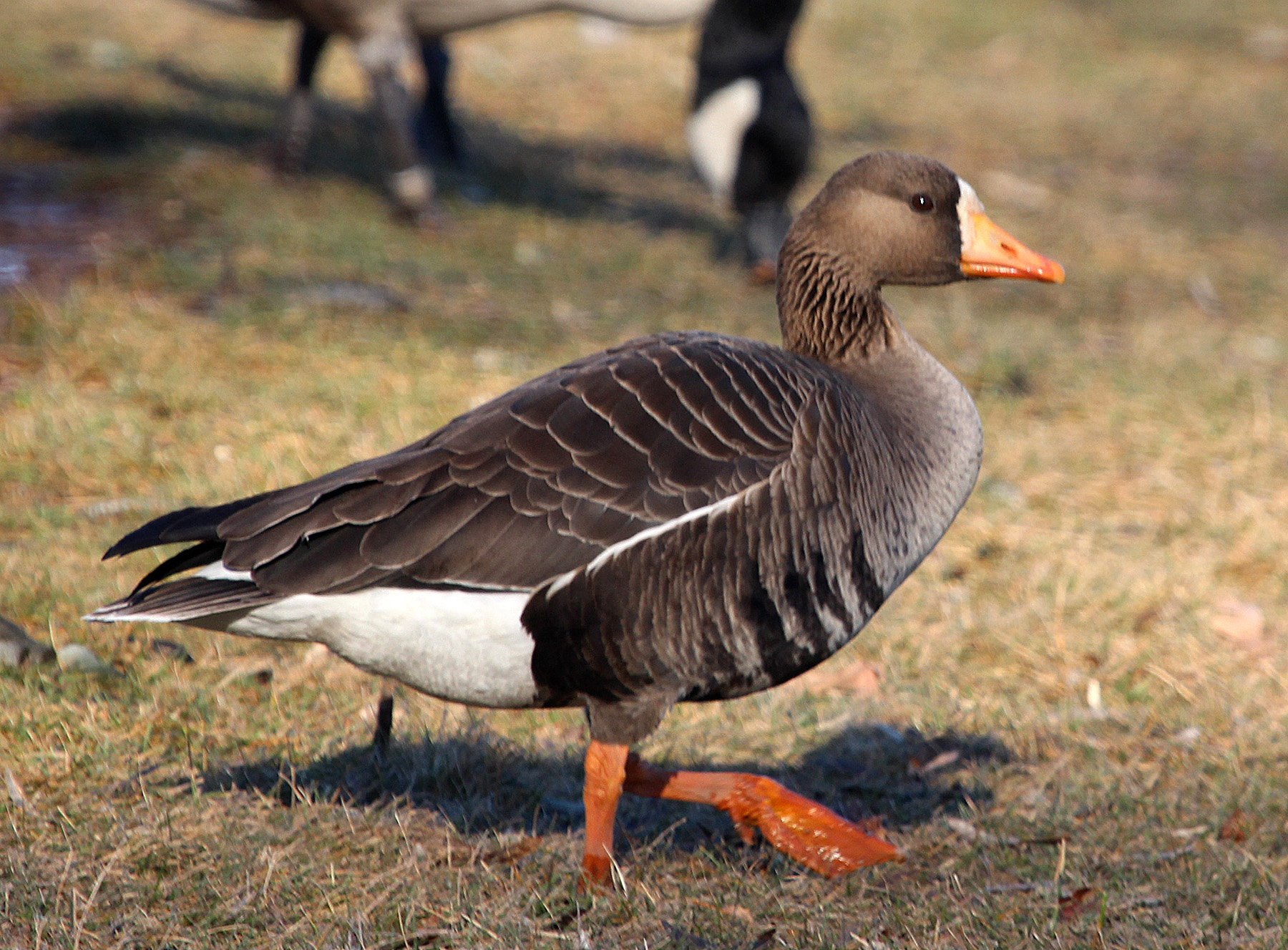
A Greater White-fronted Goose is seen with a flock of Canada Geese at Cove Island Park in Stamford, Conn., March 2015.

Here’s a shot of a Greater White-fronted Goose within a flock of Canada Geese. The photo was taken Sunday, March 22, 2015, at Cove Island Park in Stamford, Conn.

It’s a reminder to look closely at flocks of Canada Geese for the stray bird. Individual Snow Geese are often found among flock of Canada Geese, too. So, when is a flock of Canada Geese not a flock of Canada Geese? When there’s something else in there, too. Look carefully.

The Greater White-fronted Goose is common in the West and Midwest, but seen only occasionally in the East.

I was alerted to this bird by the Connecticut birding list, so thanks to those who listed this bird.

Here’s a close up:

Photo by Chris Bosak A Greater White-fronted Goose is seen with a flock of Canada Geese at Cove Island Park in Stamford, Conn., March 2015.

Photo by Chris Bosak
A Greater White-fronted Goose is seen with a flock of Canada Geese at Cove Island Park in Stamford, Conn., March 2015.

Hard to watch ducks when Long Island Sound is frozen


Photo by Chris Bosak Long Island Sound is mostly frozen on Feb. 21, 2015, as shown by this scene from Weed Beach in Darien, Conn.

Photo by Chris Bosak
Long Island Sound is mostly frozen on Feb. 21, 2015, as shown by this scene from Weed Beach in Darien, Conn.

Birdwatching makes New England winters that much more bearable for me. I love the winter ducks that come down from the Arctic, Canada and northern New England and overwinter on Long Island Sound: Long-tailed Ducks, Bufflehead, Hooded Mergansers, Red-breasted Mergansers, Common Goldeneye and the like. Not to mention the other fowl like loons and grebes.

But it’s a little hard to watch ducks like this …

In my 16 years living near the coast of Connecticut I’ve never seen Long Island Sound be frozen. I’ve heard stories from oldtimers about Long Island Sound freezing over, but I’ve never seen it. Until now.

This morning (Saturday, Feb. 21, 2015) I brought my spotting scope down to Weed Beach in Darien, Conn., to check out the ducks. I didn’t even have to get the scope out of the car. Long Island Sound was frozen. Where kids swim in the summer and ducks swim in the winter, it was completely frozen. Ice as far as I could see. A small pool of water connecting Darien and Stamford and feeding Holly Pond was unfrozen and held a few Bufflehead and Red-breasted Mergansers, but that was it. The rest was ice.

Saturday was warm (relatively speaking, about 30 degrees) and Sunday is supposed to be even warmer (around 40), but Monday we are right back into single digits. We’ll see how the Sound reacts. I’d sure like to see my ducks again.


Here’s the grebe

Photo by Chris Bosak A Horned Grebe swims in Long Island Sound off the coast of Darien, Conn., Jan. 2015.

Photo by Chris Bosak
A Horned Grebe swims in Long Island Sound off the coast of Darien, Conn., Jan. 2015.

I mentioned in my last post about seeing a Horned Grebe on my quick trip to the beach the other day. Here’s a photo of the grebe I saw the other day in Long Island Sound from Weed Beach in Darien, Conn. Zoom in and check out its really cool red eye.

There are seven types of grebes in the U.S. and four are regularly seen in New England, although mostly only in the winter in their nonbreeding plumage _ so don’t expect to see a red neck on the Red-necked Grebe. The Pied-billed Grebe is the one most commonly seen in New England, while the Red-necked, Horned and Eared Grebes make occasional visits. The others _ Least, Western and Clark’s _ are not likely to be found in New England, but that doesn’t mean they never show up here.

The grebes we see here in the winter are in their much duller nonbreeding plumage, which can make identification tricky. Loons are another water bird that look much more dull in the winter. Loons are larger and stockier than grebes _ at least the grebes we see in New England.

I like talking about grebes because I get to say the word “grebe” over and over. It’s just one of those words that’s fun say out loud. Anyway, happy birding out there.

Project SNOWstorm seeks to unravel mysteries of the Snowy Owl

Photo by Chris Bosak Don Crockett of Project SNOWStorm talks about Snowy Owls at a presenation at Milford City Hall on Sunday, Jan. 25, 2015.

Photo by Chris Bosak
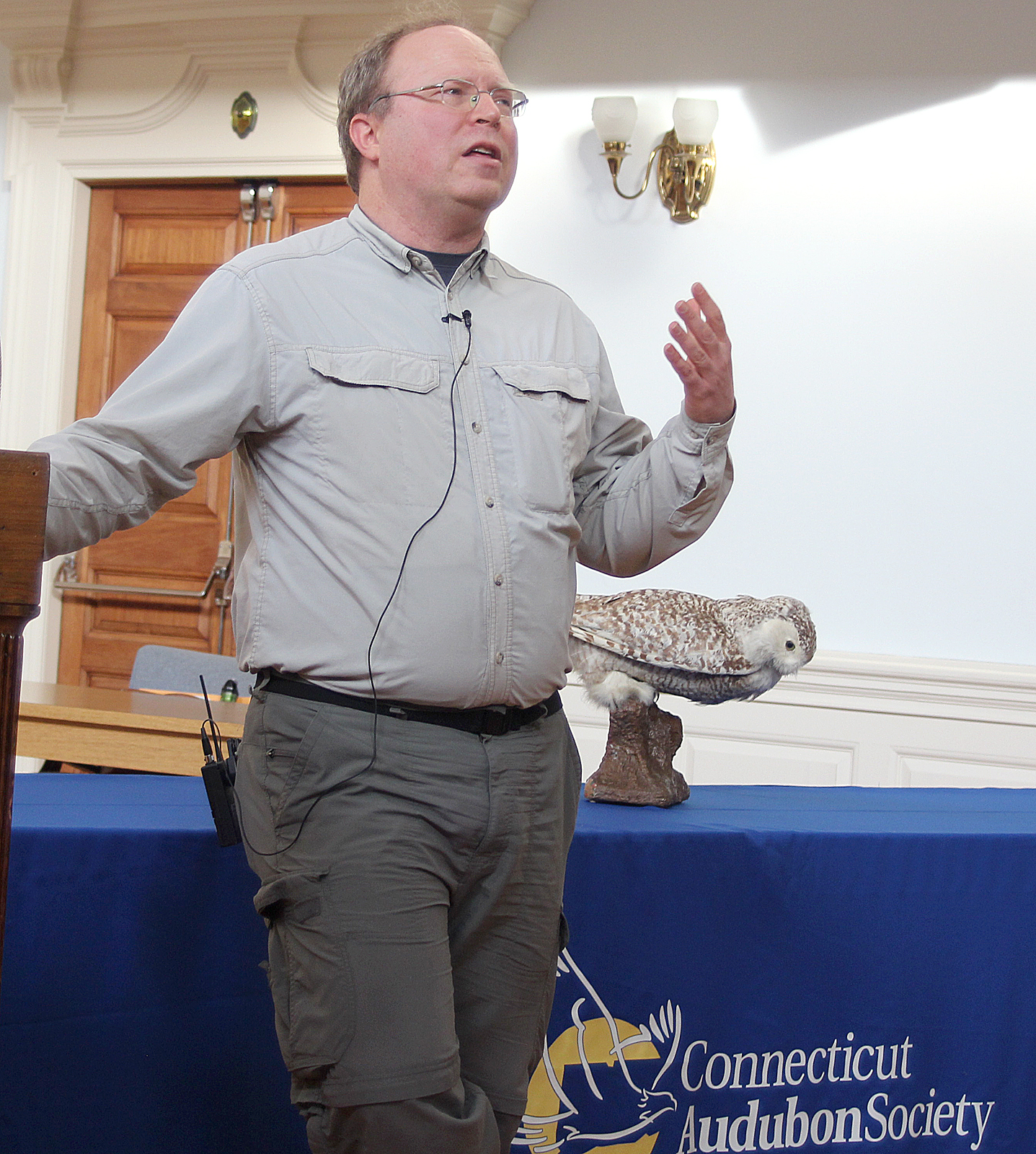
Don Crockett of Project SNOWStorm talks about Snowy Owls at a presentation at Milford City Hall on Sunday, Jan. 25, 2015.


(Here’s a little something I wrote up about a presentation on Snowy Owls I attended on Sunday. The event “The Hidden Lives of Snowy Owls” was presented by Don Crockett and sponsored by Connecticut Audubon.)

Last winter Snowy Owls enthralled the U.S. Even casual birdwatchers couldn’t help but be caught up in the historic irruption of the beautiful, yet powerful Arctic bird of prey.

The birds made their way down from their Arctic breeding grounds in record numbers during the winter of 2013-14. Birdwatchers flocked to beaches to try to find the owls. Unlike most winters, the birdwatchers were often successful in catching a glimpse of an owl.

Photo by Chris Bosak A Snowy Owl sits on a sign at The Coastal Center at Milford Point in early March 2014.

Photo by Chris Bosak
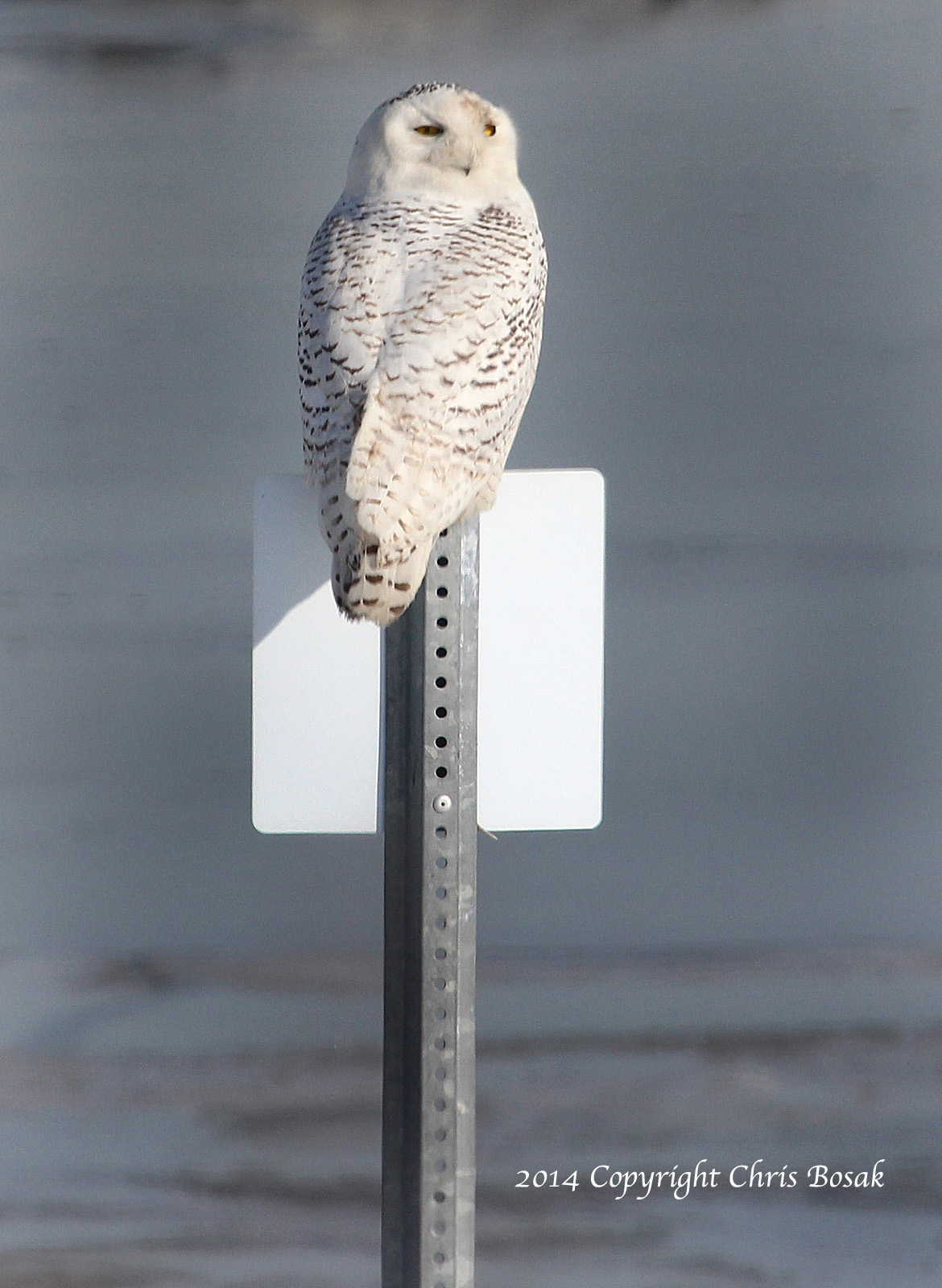
A Snowy Owl sits on a sign at The Coastal Center at Milford Point in early March 2014.

While Snowy Owls can remain in one spot for hours on end, they do move around quite a bit, during the day and night. So where do the owls go when they aren’t under the watchful eye of birdwatchers? What do they do at night when even the best spotting scope can’t keep track of their whereabouts?

Information about what Snowy Owls do when they come down to the United States is valuable because it gives us a better understanding of these mysterious birds. As Arctic breeders, the more we know about them the better as we continue to grapple with the effects of climate change. They may offer clues as to the extent to which climate change is impacting our world.

To help gather more information on these owls, a group of volunteers started Project SNOWstorm last year. The project involves trapping Snowy Owls with a net and attaching a transmitter to each owl’s back using a harness. The transmitter is lightweight (about 40 grams) and the harness is designed to not effect an owl’s flight. The transmitters are solar-powered, which reduces the weight as no batteries are required, and use the cellular phone network as opposed to satellites. Using the Continue reading

Clearing out my 2014 photos, take 8: Least Tern

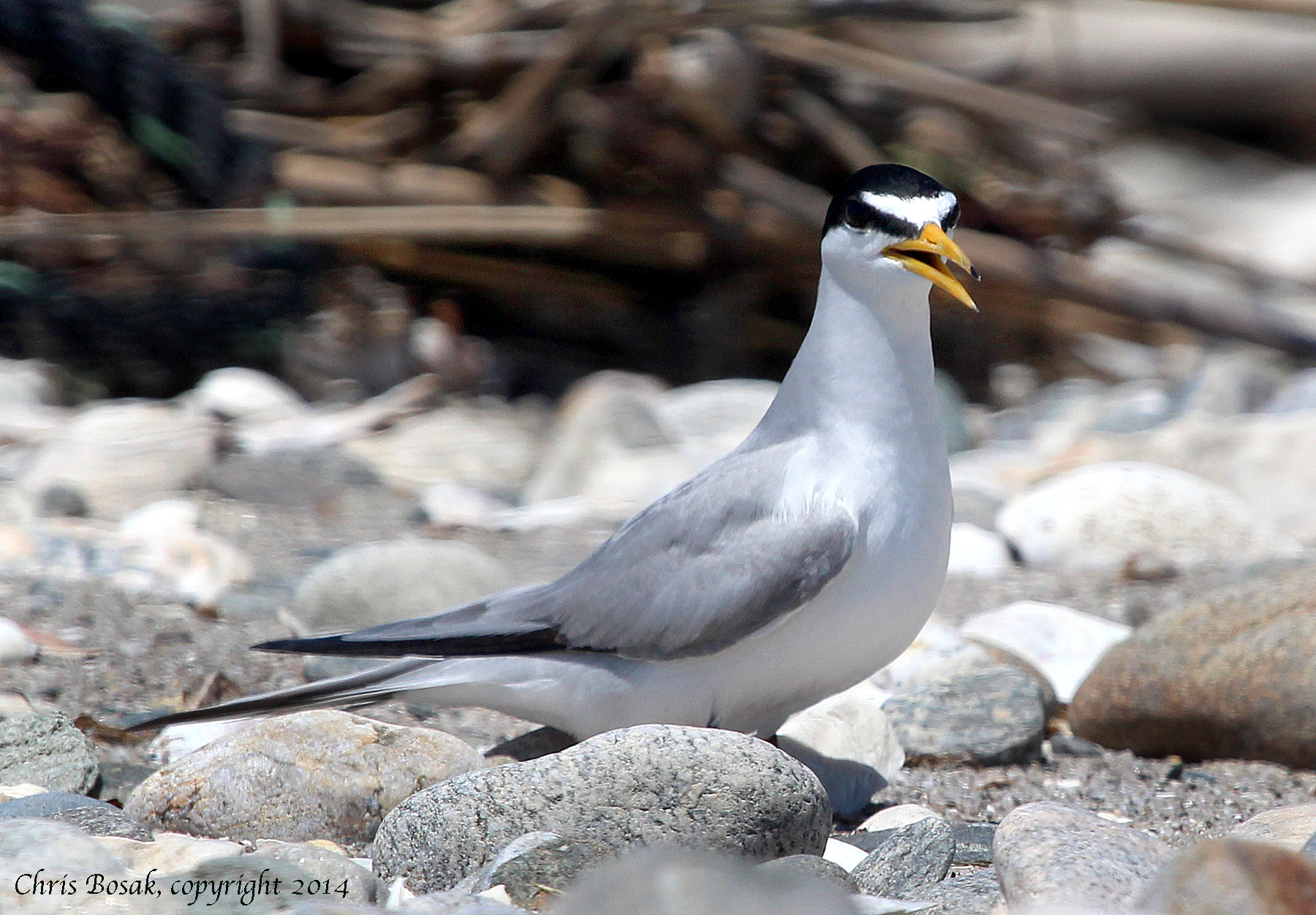
Photo by Chris Bosak A Least Tern sits among the rocks at the beach at Connecticut Audubon's Coastal Center at Milford Point in spring 2014.

Photo by Chris Bosak
A Least Tern sits among the rocks at the beach at Connecticut Audubon’s Coastal Center at Milford Point in spring 2014.

Here’s my next photo in the series of 2014 photos that I never got around to looking at and posting.

As we are now stuck in this deep freeze here in New England, here’s a warm-weather shot for you. It’s a Least Tern on the beach at Connecticut Audubon Coastal Center at Milford Point. Last week I posted a Piping Plover that I saw during my volunteering to monitor plovers and terns on the Connecticut shoreline. Well, here’s the other half: the terns. The plovers come in much earlier in the spring than the terns. Least Terns are handsome birds with yellow bills, compared the red or orange bills of most terns. Least Terns, as their name suggests, are also smaller than most terns. They can also be quite aggressive on their nesting areas (who can blame them?) and they will continually dive-bomb intruders. Yes, that includes innocent shorebird monitors just trying to help them out.

Piping Plovers and Least Terns are threatened species in Connecticut.