Photo by Chris Bosak
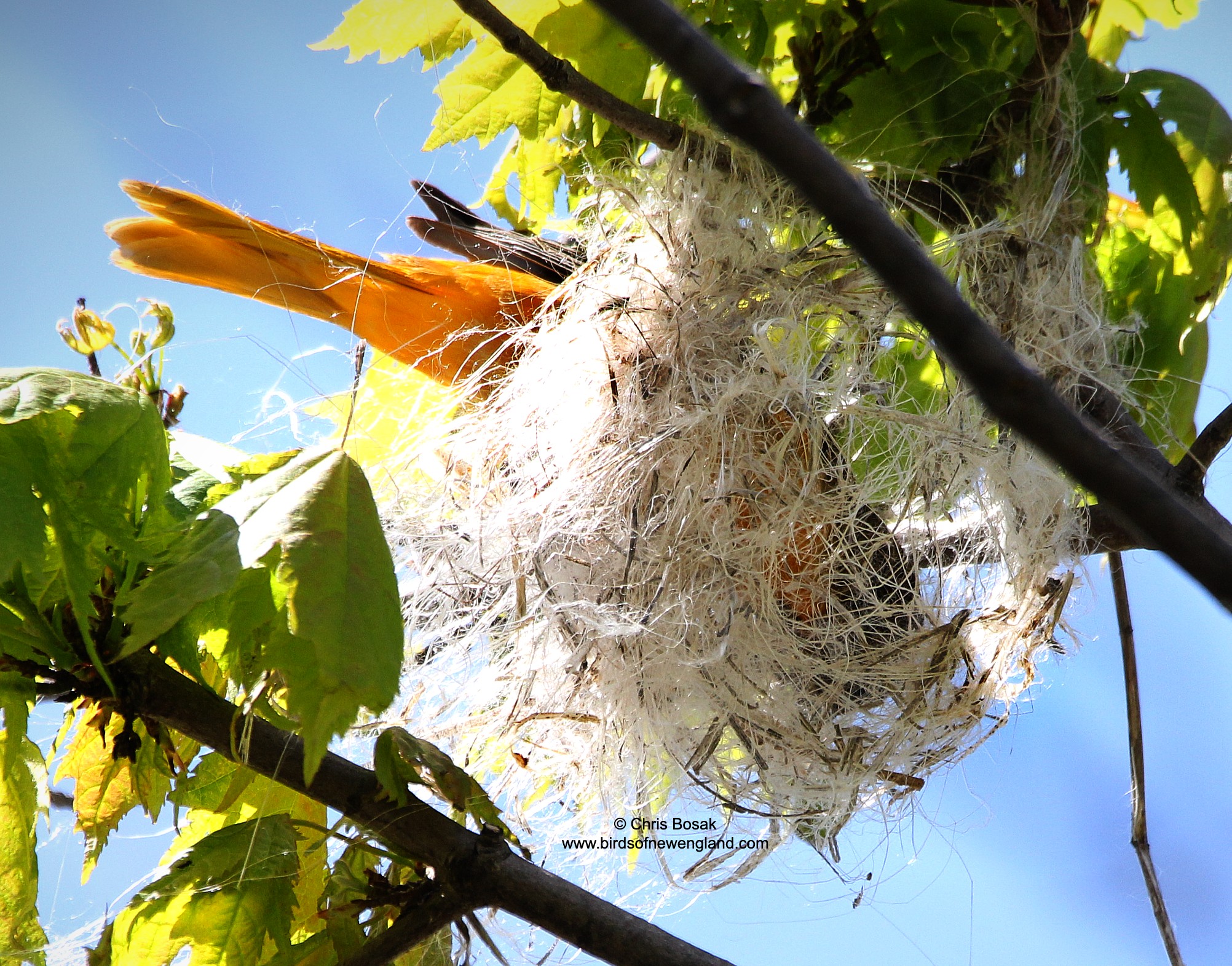
A Baltimore oriole builds a nest at Presque Isle State Park, Erie, Pa., May 2025.
Everything about a Baltimore oriole nest is ingenious. From the design and materials to the location selection, the nest is a perfect haven to raise young birds safely from predators (for the most part).
Fall is the best time to find oriole nests, after the leaves have fallen. Of course, by that time, the orioles are long gone, and the nest is a mere relic of the past breeding season, but it’s still interesting to see one of the pouch-like nests dangling from the end of a branch.
The other week, I was lucky enough to watch a female oriole build one of those remarkable nests. I was walking along a trail that was teeming with yellow warblers, catbirds, and Baltimore orioles when I glanced up and saw an oriole perched at the end of a branch overhead.
Photo by Chris Bosak
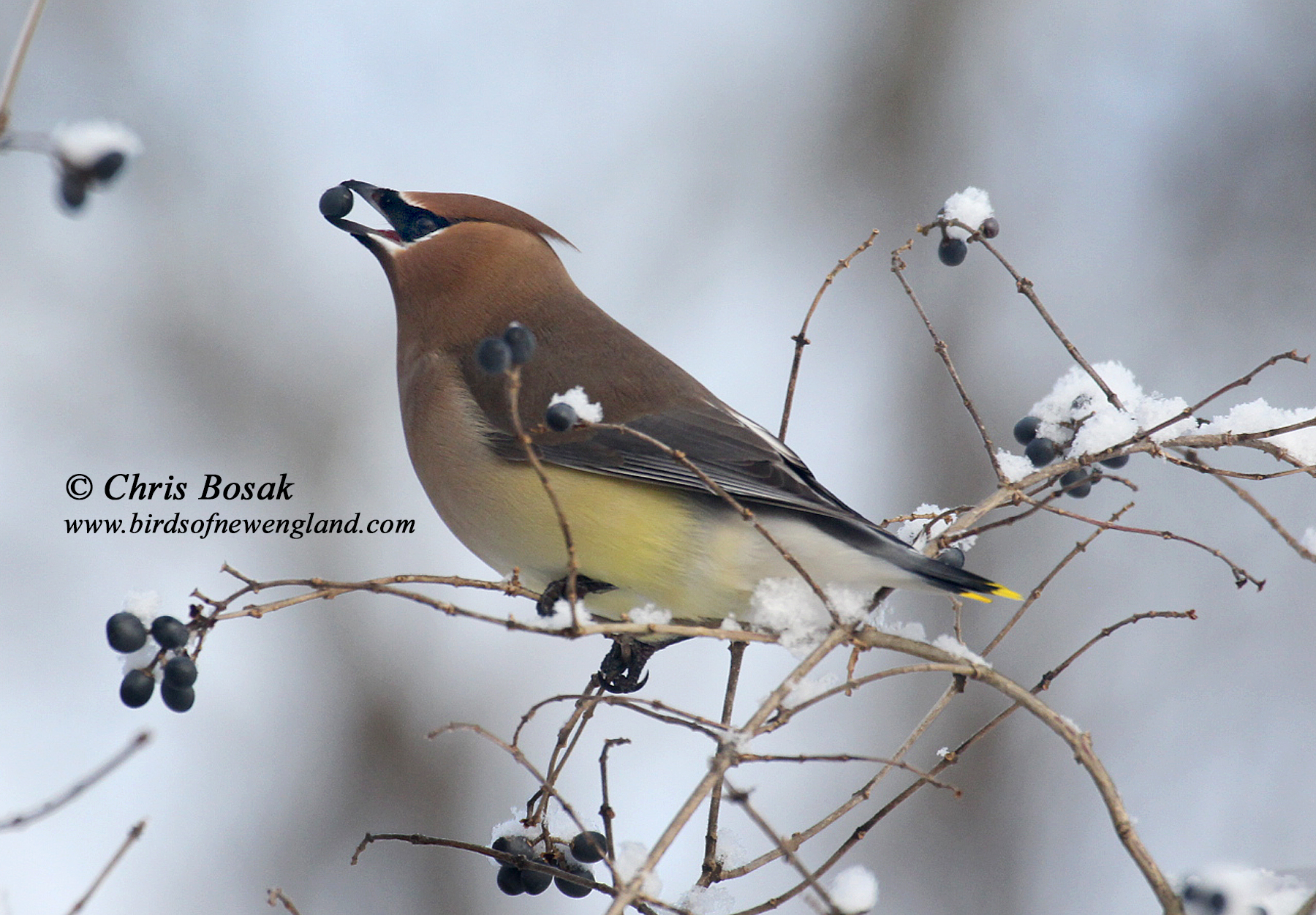
A cedar waxwing eats border privet berries in New England, February 2025.
Blue jays give and blue jays take away.
During a walk in the woods the other day, I heard a bunch of blue jays squawking up a storm. It was too loud and frantic to be simple alarm calls for a potential threat. This threat had to be real. The calls and squawks reached a fever pitch as more and more blue jays appeared onto the scene from all directions.
I knew it had to be a hawk or owl that had the jays all riled up. I just had to find it.
After a minute or two of peering into the thick hemlock branches, I noticed a large bird being harassed. The blue jays may have been smaller, but it was at least 15 to 1 in their favor. From my angle, the larger bird was still well hidden. I took a few steps to change my perspective, and my suspicions were confirmed that it was a barred owl.
Photo by Chris Bosak
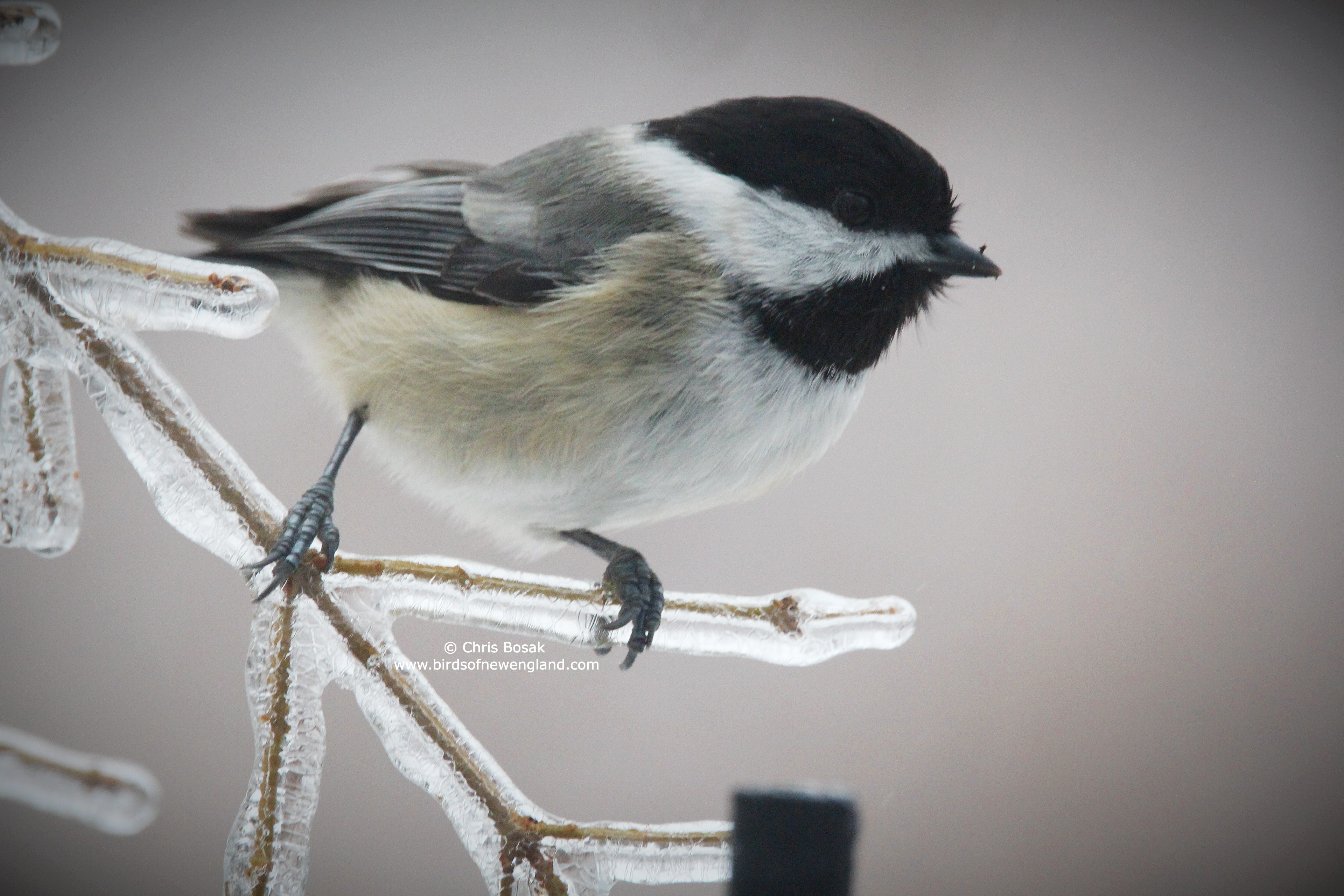
Black-capped chickadee perches on an icy branch, February 2025.
Every so often in New England, everything is covered in ice. I’m not talking about lakes and rivers freezing or icicles dangling from the edge of roofs. I’m talking about when literally everything outside is covered in ice. Every branch, every leaf, every pine needle, every blade of grass is sheathed in its own covering of ice.
It doesn’t happen often. Sometimes it’s once or twice a winter. Sometimes it’s once every couple of years. The conditions have to be just right.
The other week, the conditions were just right. A near-freezing rain fell hard in the evening, and, when the temperature dropped just a bit after the sun went down, it turned into freezing rain. By morning, everything was ice, including a slick covering on the remaining snow.
Photo by Chris Bosak
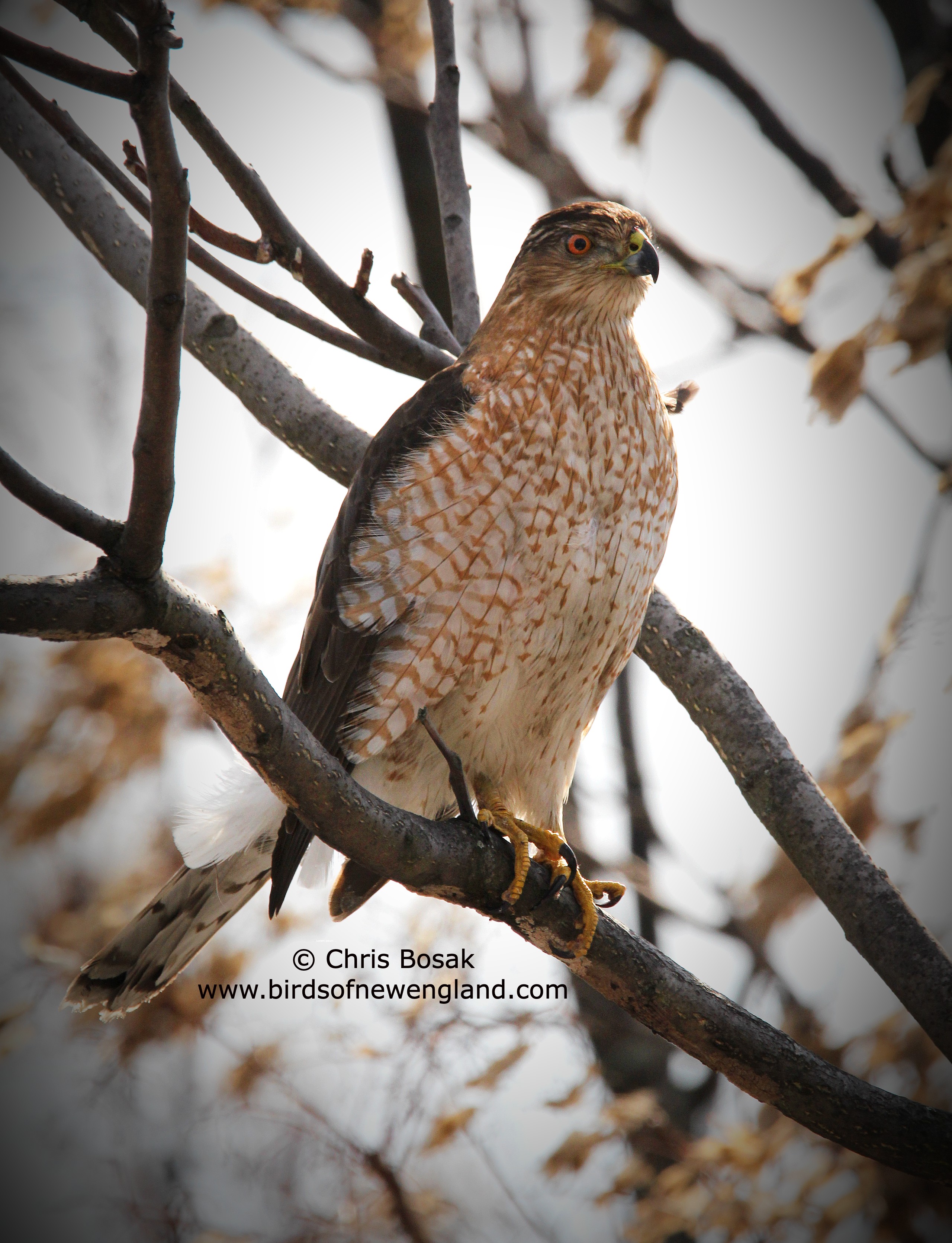
Adult Cooper’s hawk seen in Norwalk, Connecticut, January 2025.
I was walking along a short but windy trail in southern New England the other day in search of overwintering warblers. This short path is known for harboring these tiny songbirds during the winter, as it is adjacent to a water treatment center that features open water on even the coldest days.
I came around one of the many bends and jumped back as I flushed a large bird that was on the ground next to the trail. With my heart racing from the surprise, my immediate reaction was that it was a ruffed grouse. It flushed with the familiar exuberance and noise of a grouse, so my mind immediately went there. Ruffed grouse, however, do not live in that area of New England any longer, and the habitat wasn’t right for the popular game bird.
Photo by Chris Bosak
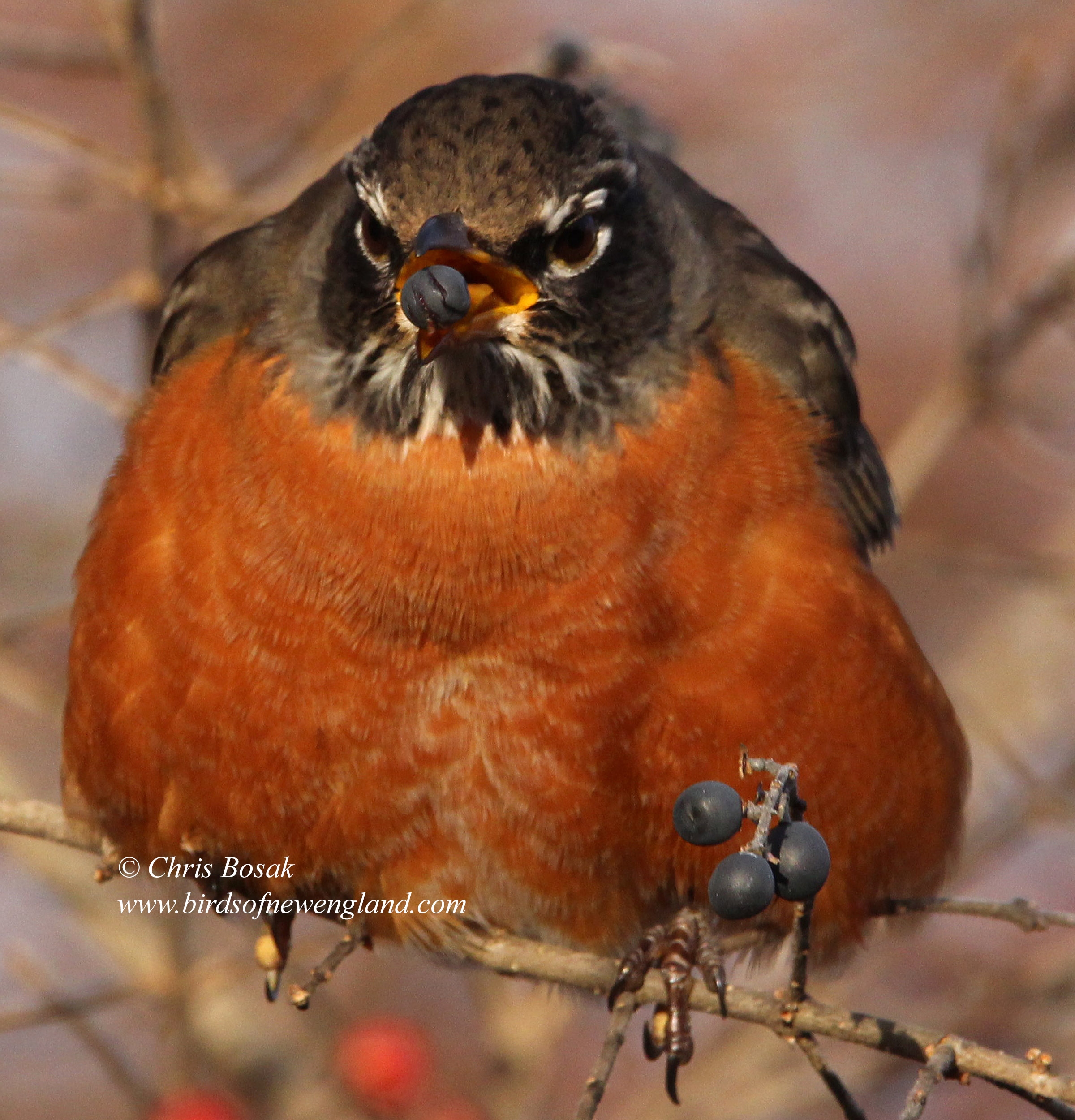
An American robin eats border privet berries in New England, January 2025.
I wrote a few weeks ago about robins being the frontrunner for the Bird of Winter. Click here to find out what that even means. The photo I ran with it showed a robin eating border privet berries. Separately, I also wrote recently about my fascination with photographing birds eating berries. Click here for that one.
Well, here are more photos of those robins eating berries.
Photo by Chris Bosak
An American robin eats border privet berries in New England, January 2025.Continue reading →
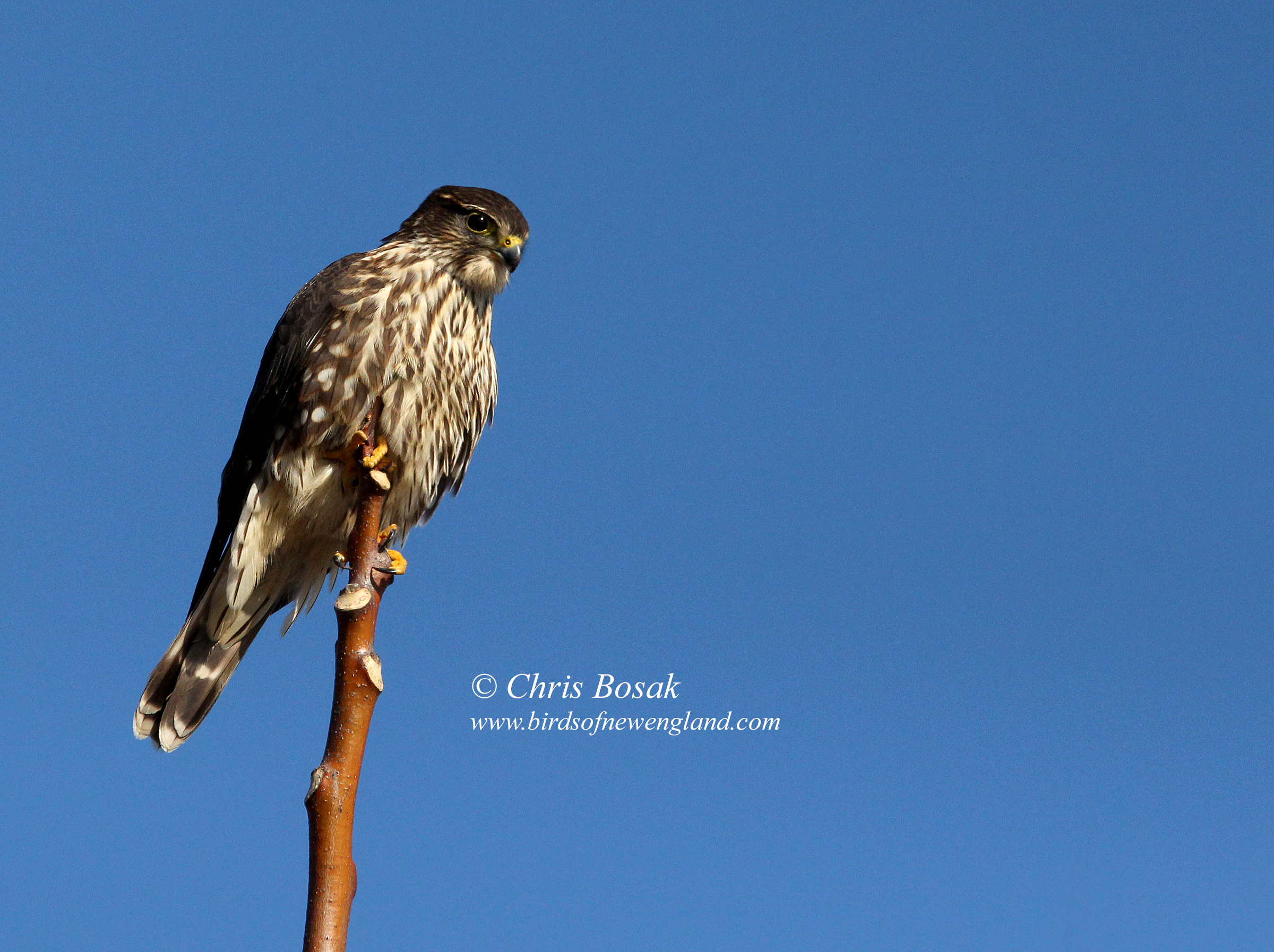
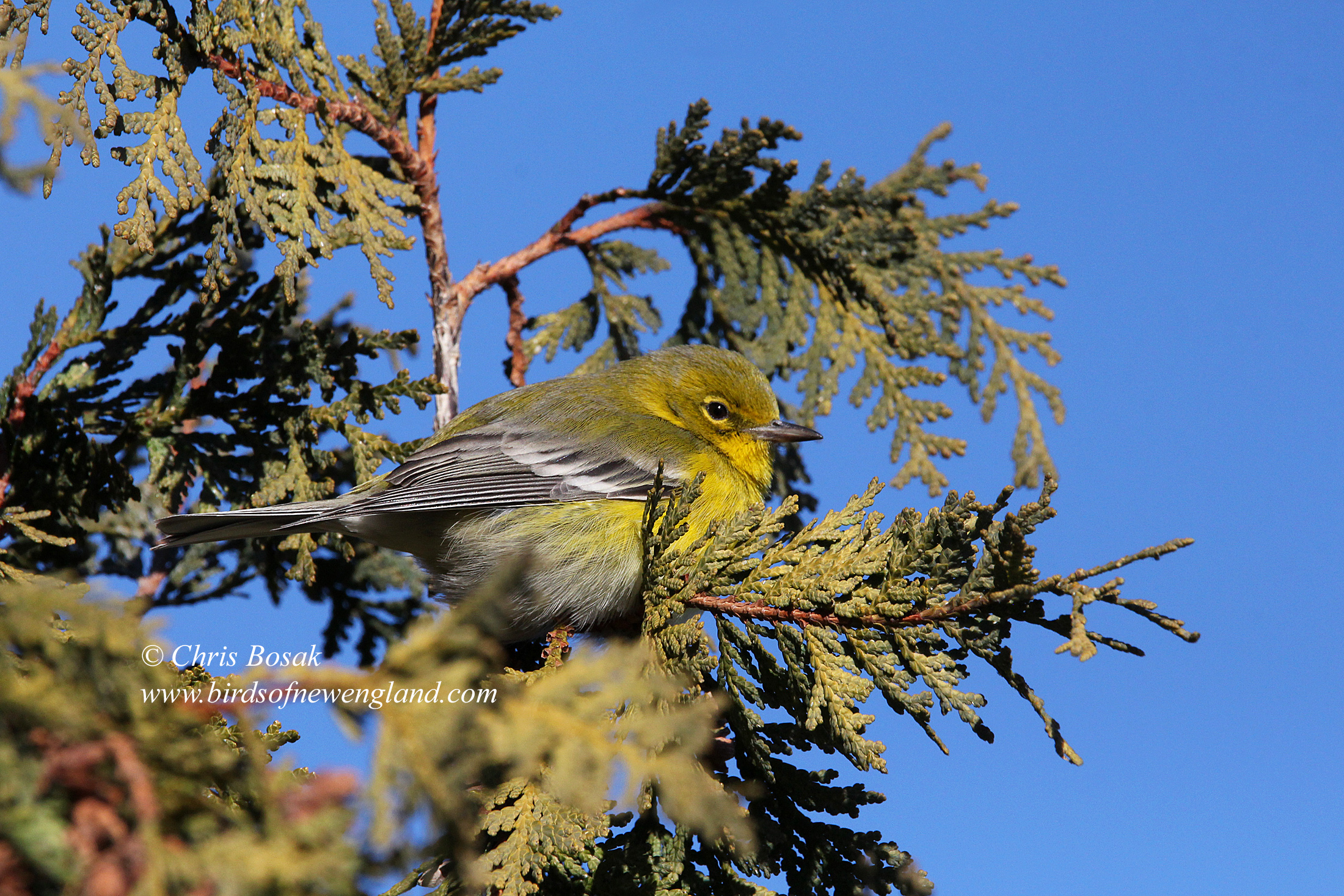
Photo by Chris Bosak – A merlin at Taylor Farm in Norwalk, CT, December 2024.Photo by Chris Bosak – A pine warbler at the esplanade in Norwalk, December 2024.
On Sunday (December 22, 2024), I participated, as usual, in the Christmas Bird Count and covered my usual area of coastal Norwalk (SW Connecticut). Instead of my usual birding partner Frank, I covered the area with Adam and Jo. It was 13 degrees when we started and didn’t seem to get much warmer as the day went on. In fact, the wind picked up and made it seem even colder. The things we do for the birds.
We had a successful day with plenty of highlights, including bald eagle, peregrine falcon, merlin, pipit, pine warbler, yellow-rumped warblerf and both types of kinglet.
My first bird walk of the new year proved to be a good one. A fresh but thin blanket of snow covered southern New England on Monday morning making for a quintessential winter scene. I got up with the sun and headed to the nearest park. As I walked along a trail, a large flock of small birds settled into the tall, leafless trees around me. Before I could lift my binoculars to see what they were, they descended upon the berry-covered brush on either side of the trail. Cedar waxwings, lots of them — at least 100. Usually when something like this happens, I don’t have my camera with me for whatever reason. I was prepared this time. A good start to 2021.
Photo by Chris Bosak A cedar waxwing looks for berries in a park in New England, January 2021.
Photo by Chris Bosak A Common Loon seen during a recent winter in Long Island Sound off the coast of Norwalk, Conn. Loons feature a more drab plumage in the winter.
Long Island Sound is a special body of water. The estuary that forms the southern border of Connecticut, the northern border of Long Island (N.Y.), ends up at the East River in NYC to the west and the Atlantic Ocean to the east, is a vital habitat for birds and other wildlife.
I have lived in three cities that border Long Island Sound and have spent countless hours birding the coast and open waters. Each December, I participate in a Christmas Bird Count whose territory includes Long Island Sound. The birdlife is varied and thrilling at all times of the year. The fascinating summer birds are replaced by amazing winter birds.
According to the 2019 State of the Birds report released last week, the Sound is as clean and vibrant as it has been in years. However, it also faces an uncertain future as climate change and rising sea levels threaten to drastically alter its landscape. According to the report, the Sound and its wildlife have already been impacted by changes in climate.
The thoroughly researched and well-written State of the Birds report is issued each year by the Connecticut Audubon Society (@CTAudubon). It includes articles by experts from many other state conservation organizations. When I was a newspaperman, I made it a point to attend the annual release event, at which many of the Report’s authors were present. I still look forward to its release each year.
To honor the Sound and, hopefully, draw a little more awareness to the Report and its findings, I will post each day this week a photo I have taken at the Sound over the years.
Here are the last two For the Birds columns, mostly focused on what readers have been seeing this spring.
Photo by Chris Bosak A male indigo bunting eats seeds from a platform feeder in Danbury, Conn., in May 2018.
If the past season was the Winter of the barred owl, this is the spring of the indigo bunting.
I’ve heard from numerous readers and friends throughout New England and even Canada about this bright blue bird visiting their backyards. The cause for excitement is obvious as it is one of our more colorful birds, flashing a brilliant blue plumage. The brilliance of the blue plumage is dependent upon the light.
It is also nice to hear that so many of these birds are around and delighting backyard birders in large numbers. Rose-breasted grosbeaks are another popular bird this spring. I’ve had limited luck with indigo buntings this spring, but for me, it’s been a banner year for rose-breasted grosbeaks. I’ve seen as many as three males in a tree overhanging my feeders. A female visits the feeders often as well.
It’s also been a good spring for warblers and nearly every walk last week yielded yellow warblers, common yellowthroats, black-and-white warblers, chestnut-sided warblers, American redstarts and yellow-rumped warblers.
I’m not the only birdwatcher enjoying a productive spring. Here’s what Continue reading →
Photo by Chris Bosak
An eastern towhee perches on a branch in New England, April 25, 2019.
My foot was feeling up for a short, relatively non-taxing walk yesterday (Thursday) so I grabbed a walking stick and hit a trail. The aching foot enhanced the walk in one fashion as it made me slow down and take in all the sights and sounds of the spring New England woods. Too often when I walk I’m rushing to a destination or point of interest (pond or open field) and don’t take the time to fully absorb all that is around me. Not that I’m hoping the foot keeps hurting, but that was the silver lining in this latest bout of tendonitis.
It was still a bit early for a big warbler count — blue-winged and black-and-white were the only warbler species I found — but eastern towhees were numerous. I’ll expand on the eastern towhee in an upcoming post, but this large sparrow is one of my favorites. The calls and songs of the towhee filled the edge of the woods and I noticed several pairs, which bodes well for a strong breeding season (hopefully.) Above is the male eastern towhee and below is the female. The female is duller in color, but still a striking bird.
Photo by Chris Bosak
A female eastern towhee perches on a branch in New England, April 25, 2019.