I’m not a chaser, but a Great Gray Owl? Come on

Photo by Chris Bosak A Great Gray Owl perches in a tree overlooking a field in Newport, N.H., in March 2017.

Photo by Chris Bosak
A Great Gray Owl perches in a tree overlooking a field in Newport, N.H., in March 2017.

As the headline says, I don’t typically chase rare birds around the region. It’s not that I don’t want to see the birds, but either family or work obligations usually prohibit me from taking long drives to see a bird.

But a Great Gray Owl within 3 1/2 hours? I gotta make that effort. I still had work but couldn’t risk waiting until the weekend should the bird decide to take off and not be found again. So I pulled a maneuver I used to do fairly often before I had kids: I basically pulled an all-nighter. I slept restlessly from midnight to 2:15 a.m. and drove three hours to Keene, N.H., to pick up my old friend Steve Hooper. Then we drove another 40 minutes to Newport, N.H., where this awesome bird had been seen in the same field each day for about a week straight. (I knew that thanks to the ABA rare bird alert.)

Hoop and I followed the directions and arrived at the scene at about 6:20 a.m. A rare bird alert message posted at 6:15 a.m. confirmed that the bird was indeed there. I was minutes away from seeing my first Great Gray Owl.

We walked a short distance down a trail, saw a handful of people and joined the small crowd. Sure enough, there was the owl, sitting in a bare deciduous tree surveying the field and ignoring his fans.

At one point it flew to another nearby deciduous tree and then eventually flew another short distance to a pine tree. The wind was strong and snow squalls came and went, but otherwise it was a rather pleasant day for the owl and his human visitors — especially for New Hampshire in early March.

I was hoping to see one more flight, but time was short. I had to drop off Hoop and drive the 3 1/2 hours back to Connecticut to get to work in the a.m. So by 10:30 a.m. I had driven to New Hampshire and back, and saw my first-ever Great Gray Owl. Just the old days.

Here are a few photos with more to come in the days ahead. Also coming soon is more information on the Great Gray Owl as a species.

No promises on how long it will stick around, of course, but here’s a link to a news story about the owl with directions on where to find it. 

And here’s the link to the ABA’s Rare Bird Alert with updates on the owl (and other sightings).


Photo by Chris Bosak A Great Gray Owl perches in a pine tree in Newport, N.H., in March 2017.
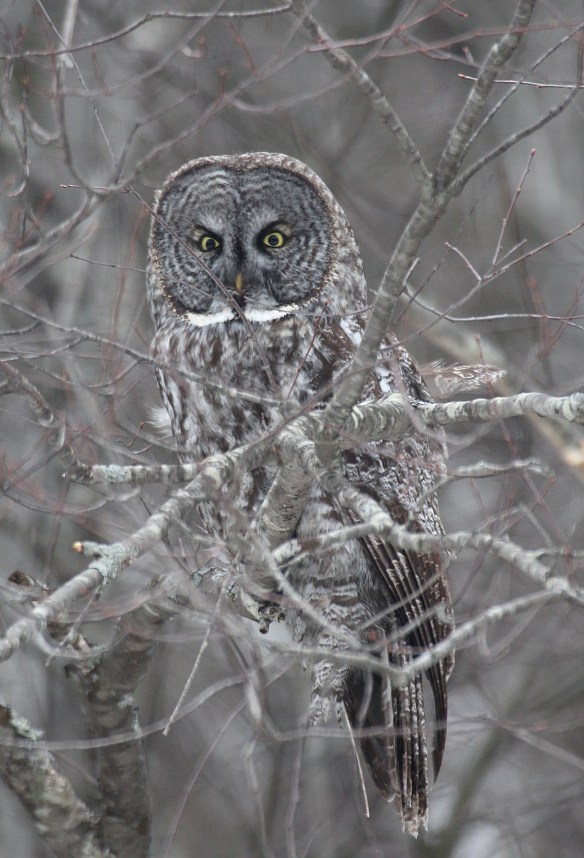
Photo by Chris Bosak
A Great Gray Owl perches in a pine tree in Newport, N.H., in March 2017.


Photo by Chris Bosak
A Great Gray Owl perches in a tree overlooking a field in Newport, N.H., in March 2017.
A frosty morning at the feeding station

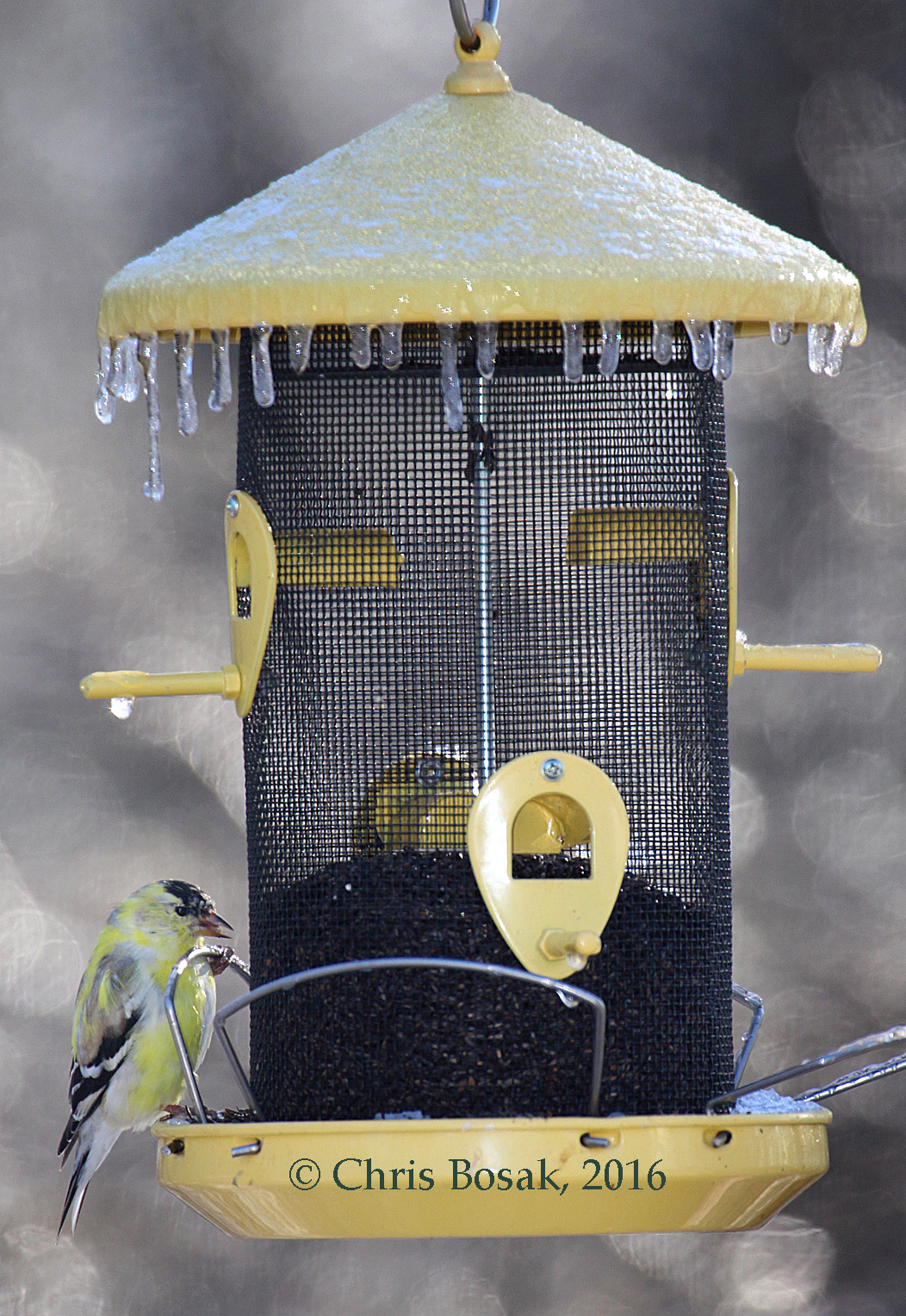
Photo by Chris Bosak An American Goldfinch eats Nyjer seeds from a frozen feeder during a frosty April 2016 morning in Danbury, Conn.

Photo by Chris Bosak
An American Goldfinch eats Nyjer seeds from a frozen feeder during a frosty April 2016 morning in Danbury, Conn.

For the second day in a row the unpredictable New England weather provided an opportunity to get an interesting photo at the bird feeding station. Monday it was snow. Tuesday it was ice. Here, an American Goldfinch visits the Nyjer feeder, undaunted by the ice and freezing temperatures. Notice that this male is transitioning into its breeding plumage. Below are a few more icy photos from Merganser Lake.

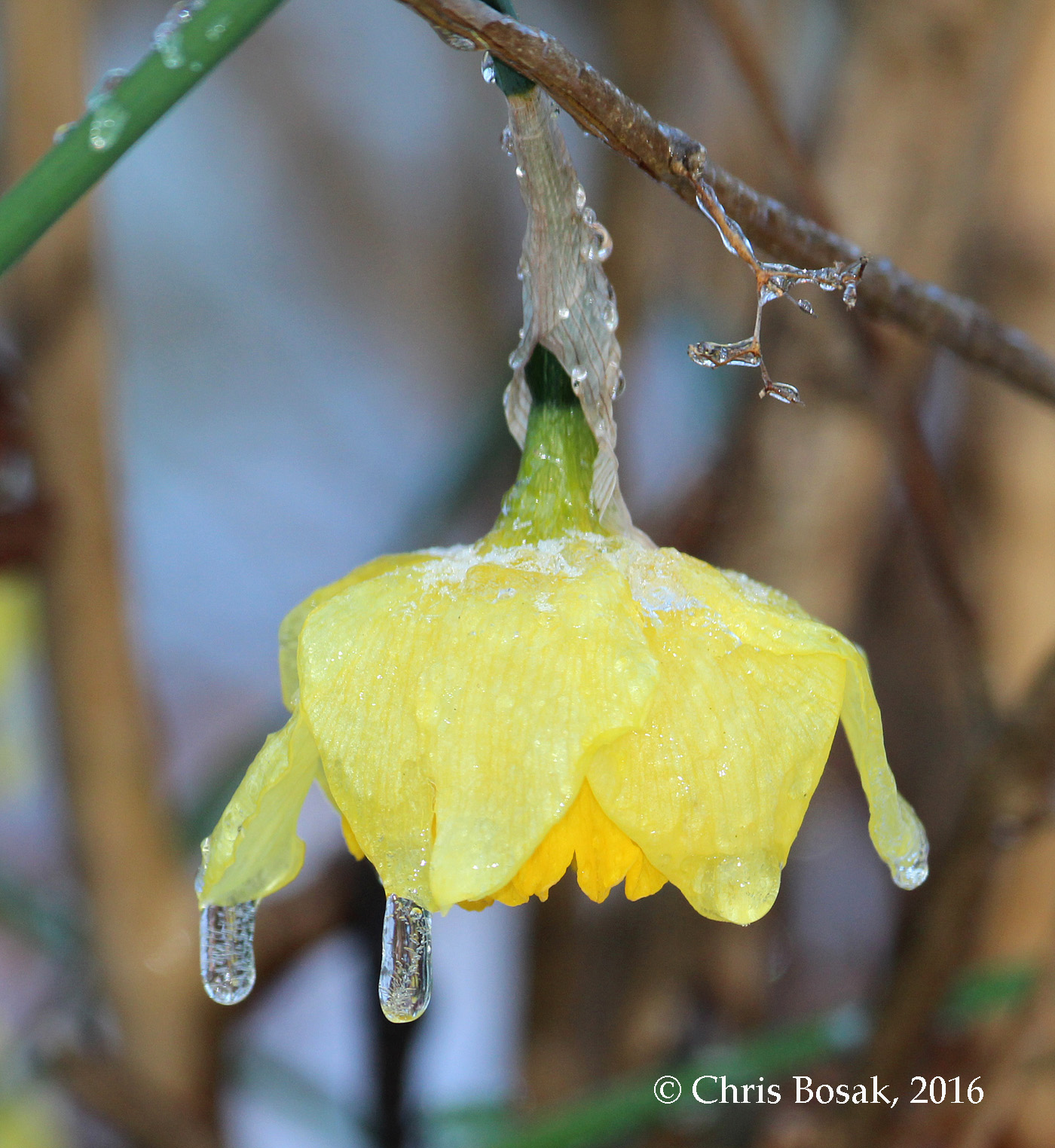
Photo by Chris Bosak Ice covers a daffodil bloom in Fairfield County on a chilly Tuesday morning.

Photo by Chris Bosak
Ice covers a daffodil bloom in Fairfield County on a chilly Tuesday morning.

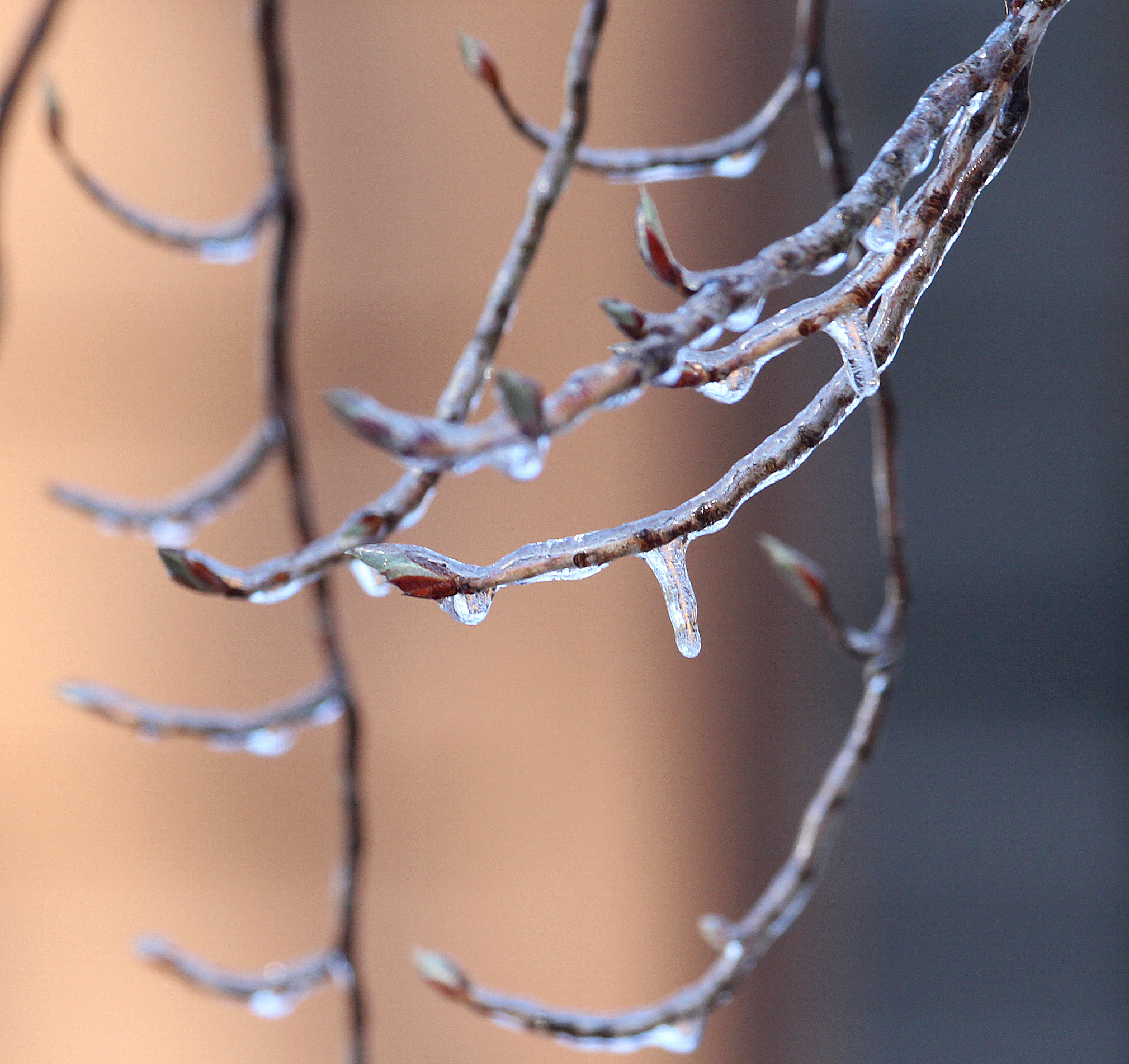
Photo by Chris Bosak Ice covers the branches of a tree in Danbury, Conn., April 2016.

Photo by Chris Bosak
Ice covers the branches of a tree in Danbury, Conn., April 2016.

Project FeederWatch starts Saturday

Here’s an email I received recently from The Cornell Lab or Ornithology. With my new home buzzing with bird activity, I’m going to join this important citizen science project this year. Here are the details should you be thinking about it, too, or learning of the project for the first time here:


Dear Friend of the Cornell Lab,

The FeederWatch season begins on Saturday, November 14, so now is the time to sign up! This is the last reminder that we will send to you before the season starts, and we hope you decide to join the fun this year.

What is Project FeederWatch?

Project FeederWatch is a winter-long survey of birds that visit feeders. Participants periodically identify and count the birds at their feeders from November-April. Using our easy online data entry, you can immediately see all of your own counts and view colorful tables, graphs, and summaries.

With Project FeederWatch, you become the biologist of your own backyard.

Anyone interested in birds can participate; you don’t have to be an expert. All you need is a bird feeder, a comfortable chair, a window, and an interest in the birds in your neighborhood.

New participants will receive:

  • FeederWatch Handbook & Instructions
  • Full-color poster of common feeder birds
  • Bird-Watching Days Calendar
  • Our annual report, Winter Bird Highlights
  • Subscription to the Cornell Lab newsletter

Why should I participate?

FeederWatch data help scientists track broad movements and long term trends in abundance of winter feeder-bird populations. Explore the millions of FeederWatch sightings on our website. You can help contribute to a nearly 30-year dataset that helps us understand bird biology while learning about the feathered friends in your own backyard. Join online today.

Sign up for $18 ($15 for Lab members) today so that we can get your research kit in the mail.  Although it takes several weeks for kits to arrive, you can begin counting birds Saturday following our online instructions. Your participation fee helps keep the project running; without it, Project FeederWatch wouldn’t be possible.

We hope you will tell us about the birds at your feeders!

Sincerely,


Emma Greig
Project Leader
Project FeederWatch

It’s nesting season all right

Photo by Chris Bosak A Baltimore Oriole nest in Stamford, Conn., May 2015.

Photo by Chris Bosak
A Baltimore Oriole nest in Stamford, Conn., May 2015.

I took a walk around a local park in Stamford, Conn., yesterday. I knew the warbler migration was winding down, but I figured I’d see a few late migrants and perhaps something else interesting. Something always happens when you make the effort to take a walk in the woods.

I was walking happily along looking up in the trees for movement. With the leaves out now, movement is the only way to spot most birds. I glanced down and suddenly found myself tip-toeing frantically to avoid bird droppings all over the trail. Not that it would have been a big deal if I stepped on one, but my brain recognize Continue reading

It’s that time of year again. Warblers abound.

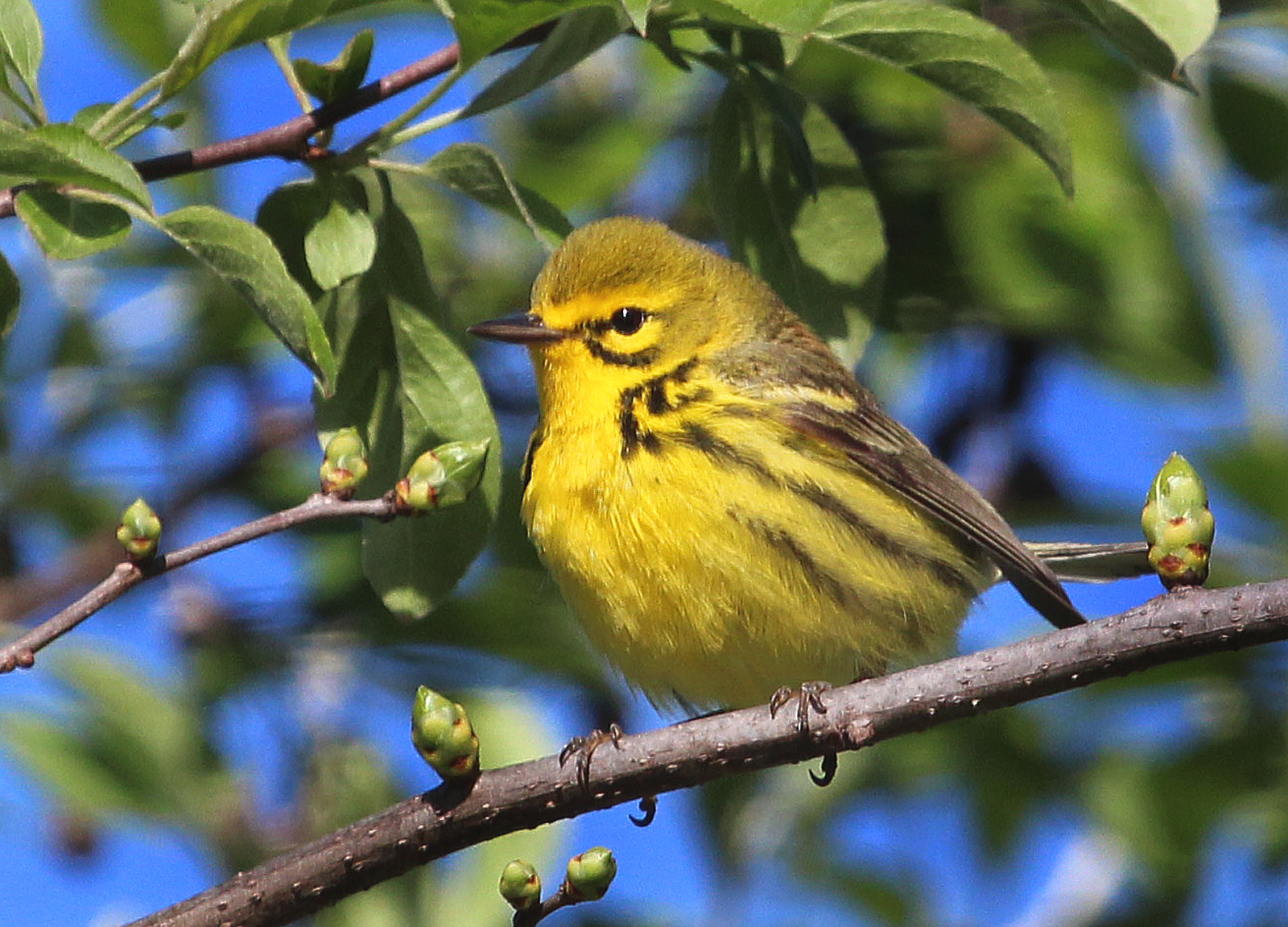
Photo by Chris Bosak A Prairie Warbler perches in a tree at Selleck's/Dunlap Woods on May 5, 2014.

Photo by Chris Bosak
A Prairie Warbler perches in a tree at Selleck’s/Dunlap Woods on May 5, 2014.

I took a quick walk before work this morning. As usual, I was running behind getting my third-grader to school, so I had only about 15 minutes for this walk. But it was enough to know that we are in what many birders consider the most exciting two weeks of the year. The warbler migration started with a trickle a few weeks ago in New England. Based on what I saw on my quick walk this morning, the warbler season is picking up fast. A Prairie Warbler was the first bird I saw — not a bad start to a walk. A few Yellow Warblers darted here and there, too. Yellow Warblers nest at Selleck’s Woods, so hopefully they are looking to set up shop for the summer.

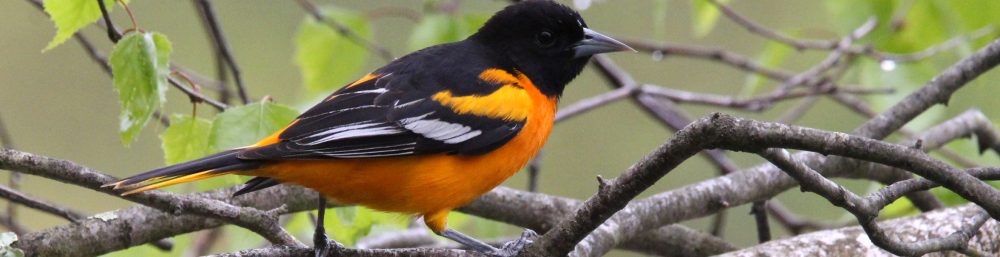
The walk included a few other warbler species as well as the sounds of other colorful songbirds, such as Baltimore Orioles and Blue-gray Gnatcatchers. It’s a great time to be out there. Let me know what you are seeing.

Here’s a post from last year featuring some of the warblers you may see out there this time of year. Click here.

A sunny, cold winter’s day for a birdwatcher

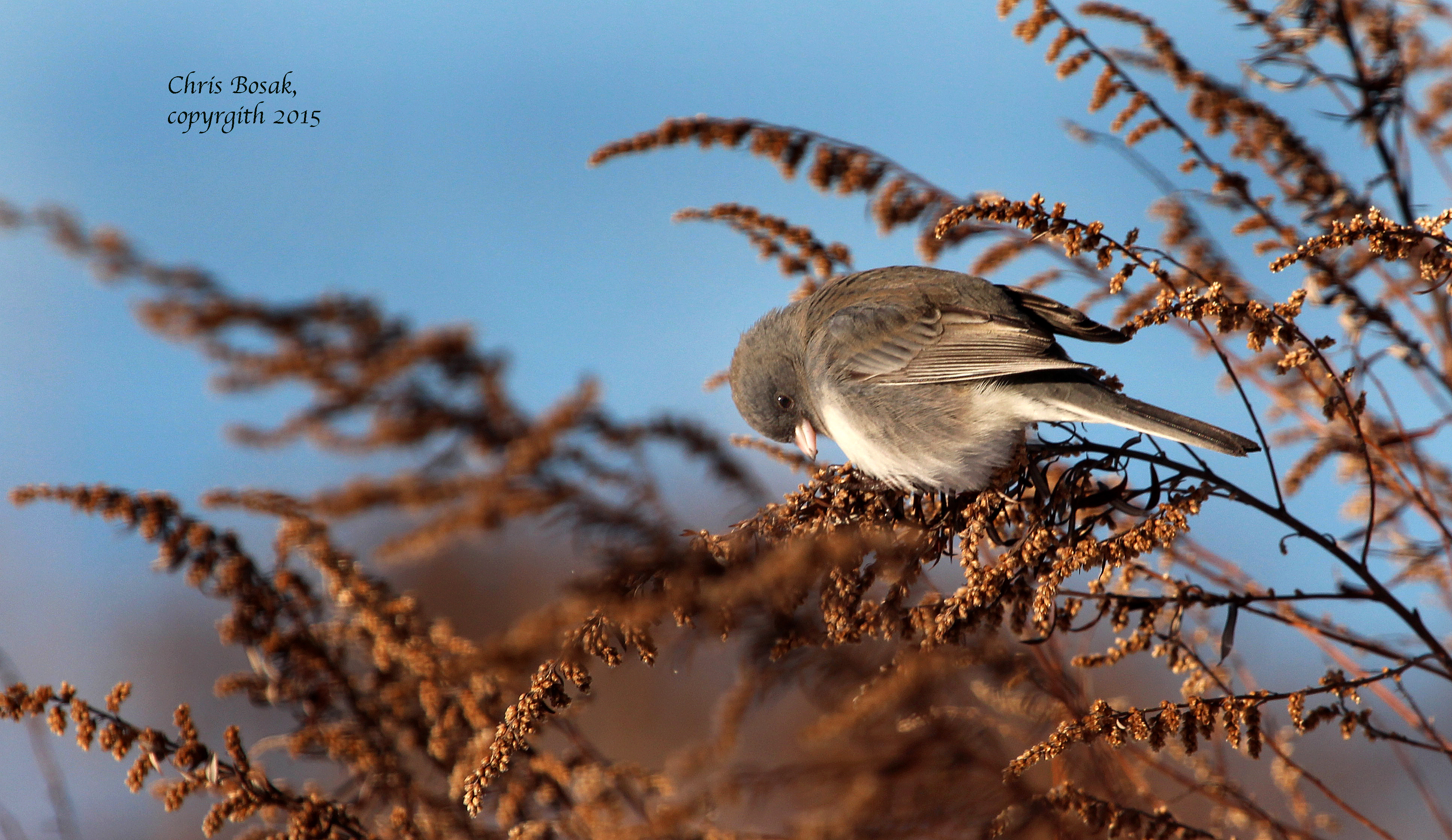
Photo by Chris Bosak A junco looks for seeds on a dried up plant at Weed Beach in Darien, Conn., in Jan. 2015.

Photo by Chris Bosak
A junco looks for seeds on a dried up plant at Weed Beach in Darien, Conn., in Jan. 2015.

Photo by Chris Bosak An American Robin perches on a rock at Weed Beach in Darien, Conn., in Jan. 2015.

Photo by Chris Bosak
An American Robin perches on a rock at Weed Beach in Darien, Conn., in Jan. 2015.

I dropped off my third-grader at school and faced a decision heading out of the parking lot: Take a left to the beach and see what birds might be there; or take a right and basically start my work day earlier than I have to.

Of course I took the left. It’s a good thing, too, because there were some pretty cool birds down at the beach. Nothing too out of the ordinary, but some good photo opps of birds such as Continue reading

Clearing out my 2014 photos, take 9: Black-capped Chickadee

Photo by Chris Bosak A Black-capped Chickadee clears out a cavity in a tree for a nesting site at Selleck's/Dunlap Woods in Darien in spring 2014.

Photo by Chris Bosak
A Black-capped Chickadee clears out a cavity in a tree for a nesting site at Selleck’s/Dunlap Woods in Darien in spring 2014.

Here’s my next photo in the series of 2014 photos that I never got around to looking at and posting.

Admittedly not a great shot technically, but interesting to see a Black-capped Chickadee exiting a potential nesting hole with a bill full of dead wood shavings. A pair of chickadees worked their tails off getting this cavity ready for the nesting season. I’m not sure if they actually saw this whole project through or not. I kind of hope not because the tree was dead and pretty flimsy. I’m not sure it was strong enough to withstand some of the storms we get here in New England. I’m sure the birds know what they are doing. At any rate, chickadees first excavate a cavity and then build a small nest of materials such as moss to soften the bottom of the home.

Clearing out my 2014 photos, take 8: Least Tern

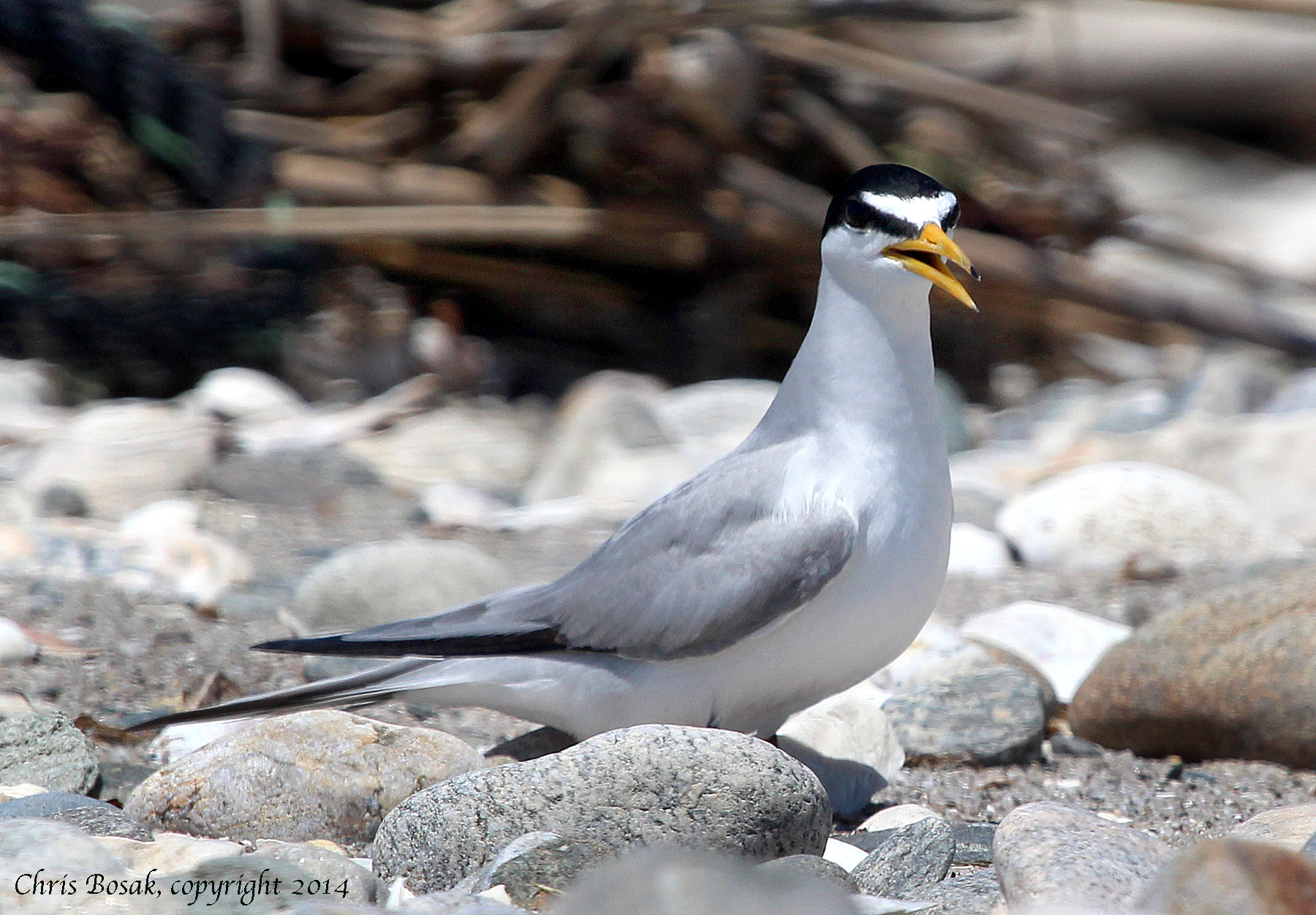
Photo by Chris Bosak A Least Tern sits among the rocks at the beach at Connecticut Audubon's Coastal Center at Milford Point in spring 2014.

Photo by Chris Bosak
A Least Tern sits among the rocks at the beach at Connecticut Audubon’s Coastal Center at Milford Point in spring 2014.

Here’s my next photo in the series of 2014 photos that I never got around to looking at and posting.

As we are now stuck in this deep freeze here in New England, here’s a warm-weather shot for you. It’s a Least Tern on the beach at Connecticut Audubon Coastal Center at Milford Point. Last week I posted a Piping Plover that I saw during my volunteering to monitor plovers and terns on the Connecticut shoreline. Well, here’s the other half: the terns. The plovers come in much earlier in the spring than the terns. Least Terns are handsome birds with yellow bills, compared the red or orange bills of most terns. Least Terns, as their name suggests, are also smaller than most terns. They can also be quite aggressive on their nesting areas (who can blame them?) and they will continually dive-bomb intruders. Yes, that includes innocent shorebird monitors just trying to help them out.

Piping Plovers and Least Terns are threatened species in Connecticut.

Hooded Mergansers handle the snow

Photo by Chris Bosak Four male Hooded Mergansers swim in Norwalk Harbor near Veterans Park in Norwalk, Conn., Jan. 2015.

Photo by Chris Bosak
Four male Hooded Mergansers swim in Norwalk Harbor near Veterans Park in Norwalk, Conn., Jan. 2015.

Much of Norwalk Harbor was frozen on Tuesday afternoon, but the spots that weren’t frozen made for ideal hunting grounds for Hooded Mergansers. It was the first measurable snow of the year for coastal southwestern Connecticut so I figured I’d take a quick drive to see what photographic opportunities presented themselves. Hooded Mergansers are often the only birds around on such days. Ducks, with their down feathers close to their bodies, are supremely adapted to handle such conditions.

Clearing out my 2014 photos, Take 3: Mourning Dove close up

Photo by Chris Bosak A Mourning Dove looks for seeds under a feeder during a snowy day in Jan. 2014.

Photo by Chris Bosak
A Mourning Dove looks for seeds under a feeder during a snowy day in Jan. 2014.

Here’s my next photo in the series of 2014 photos that I never got around to looking at and posting. Here’s a Mourning Dove looking for food under my birdfeeder during a snowy day last winter. The photo was taken in January 2014. Check out the subtle colors in this beautiful bird.