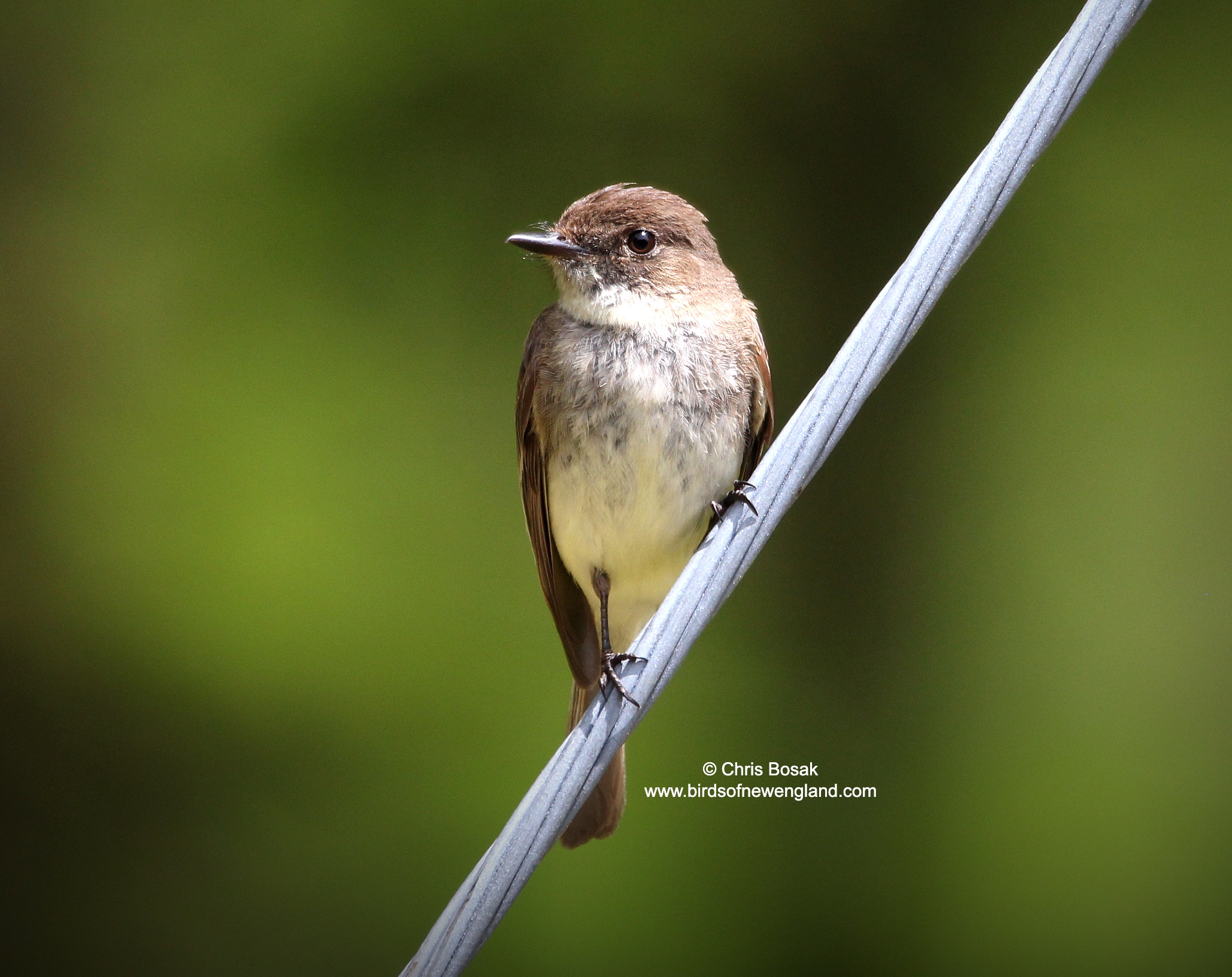
Eastern phoebes are one of the first migrants to return to New England in the spring.
The bird world is amazing. If you’re reading this column, you likely already know that, but every once in a while something reminds me of just how incredible birds really are.
The other day, March 11 to be exact, I heard the song I’ve been waiting to hear for months: the unmistakable two-syllable song of the eastern phoebe. Like many birds, phoebes say their name, a raspy “fee-bee.”
I turned my head toward the song and instantly saw the smallish songbird perched on a telephone wire. Of course, the bird was bobbing its tail as phoebes almost always do.
It was the first phoebe I saw this year, or my FOY (first of year) phoebe in birding lingo. It came on one of the unseasonably warm days we had, and I wasn’t overly surprised to see the bird. Still, it seemed a bit early for the phoebe to be back in New England, so I checked my eBird account to see when I saw my FOY last year.
Sure enough, it was March 11. The first phoebe I saw occurred on the same exact calendar day as last year. In October of last year, this bird left New England for southern U.S. or Mexico. Sometime in February it began its journey back north and arrived at my place of work on the same day as last year. Of course, I can’t tell with all certainty it’s the same bird, but I’d like to think so.
I always appreciate my first phoebe sighting a little more than my FOY of other birds. To me, the phoebe is the true harbinger of spring. American robins are usually credited with being the first sign of spring, but there are many robins to be seen in New England throughout winter, so I never know what robins are returning from the south and which ones have been here all along.
Red-winged blackbirds return in February, but I don’t get too excited about them because, as a New Englander, I know there is still plenty of winter left. I saw my first red-winged blackbirds in mid-February, a few days before 18 inches of snow fell. March and April can still be pretty nasty in New England, but at least spring is that much closer.
American woodcock, with their early March return, is another good harbinger of spring, but they tend to be more secretive and are not as easily spotted. What good is an uplifting sign of spring if you can’t see it? You can, of course, venture into the woods or a field at dusk to look and listen for their aerial courtship display, or you can wait for a phoebe to appear on a telephone wire above your head.
Now that phoebes are returning, many more migrants will follow. Some will be close behind, and some are several weeks behind, but the spring migration is on. In March, look for the return of ospreys and some shorebirds. I also saw my FOY pine warbler on the last day or two of March last year, but they are more likely to be seen in early April. Pine warblers and palm warblers kick off the highly anticipated warbler migration, which will peak in early to mid-May.
March may not be the most exciting month for birding as migration starts with a trickle and the weather is unpredictable (but usually still cold), but it’s the start of something amazing.
 Birds of New England.com