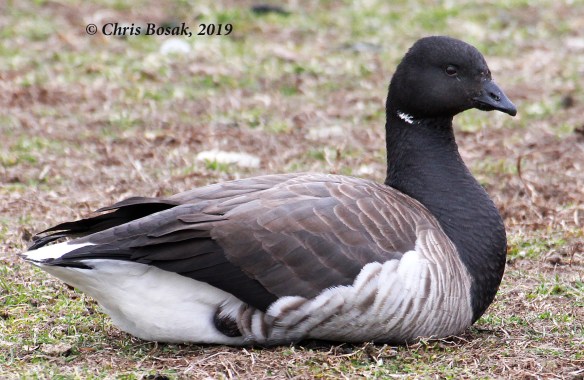
Photo by Chris Bosak
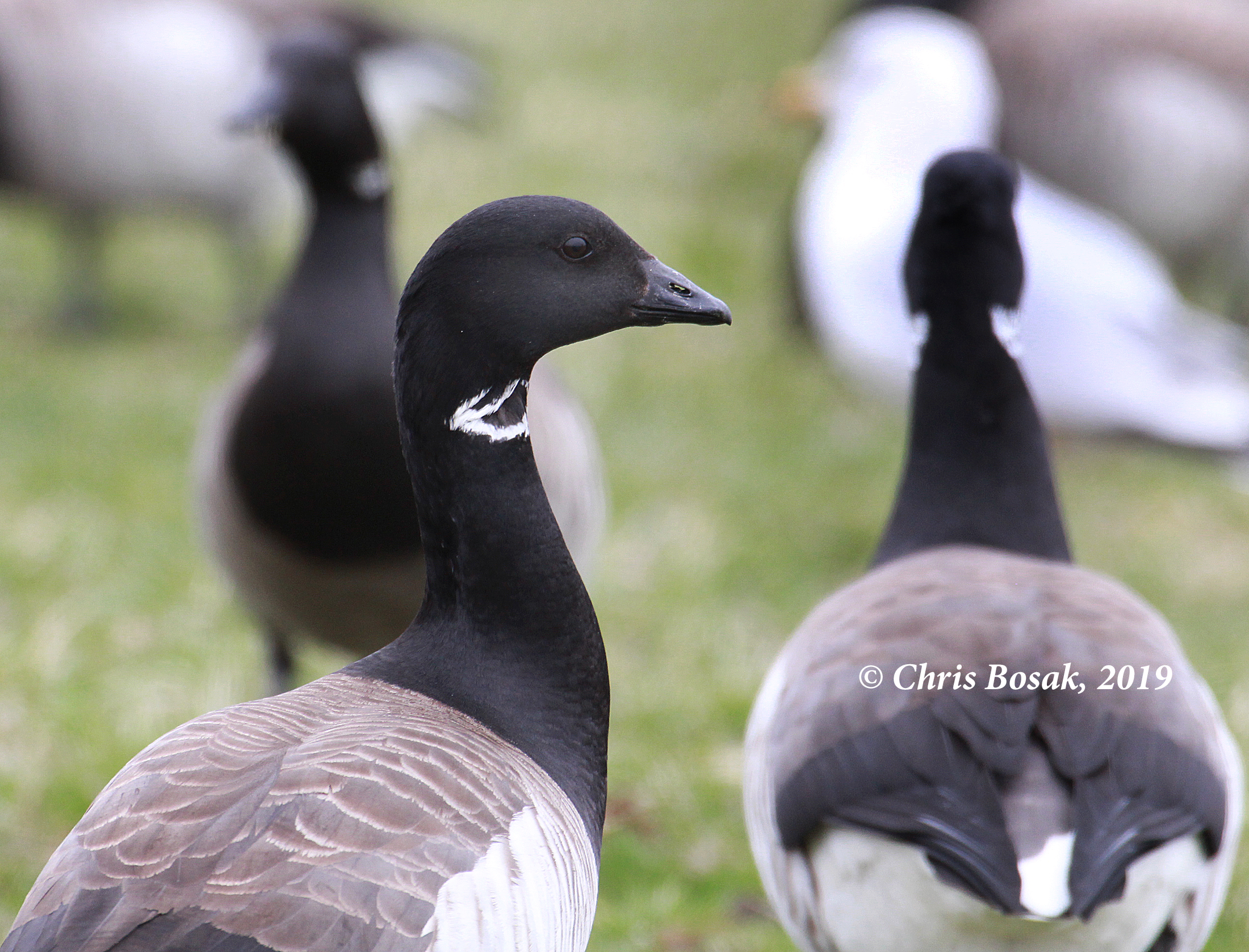
A brant seen at Calf Pasture Beach in Norwalk, Conn., April 2019.
You didn’t think I’d see thousands of brant and limit the experience to just one post, did you? Here is the first follow-up to Saturday’s post. The original post is here in case you missed it.
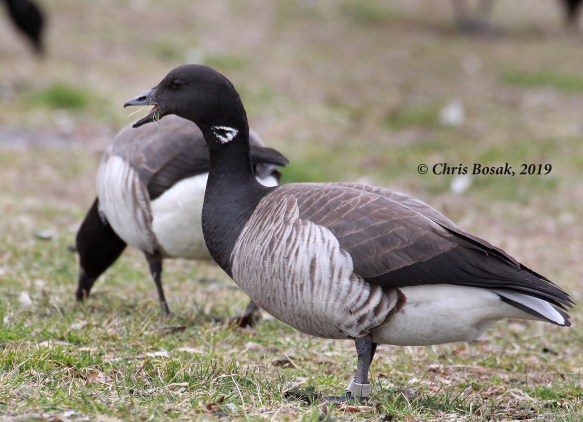
Photo by Chris Bosak Brant at Calf Pasture Beach in Norwalk, Connecticut, 2019.
This brant is banded with silver bands on each leg. I can’t make out the numbers and letters, however.
Photo by Chris Bosak Brant at Calf Pasture Beach in Norwalk, Connecticut, 2019.
Photo by Chris Bosak
Brant at Calf Pasture Beach in Norwalk, Connecticut, 2019.
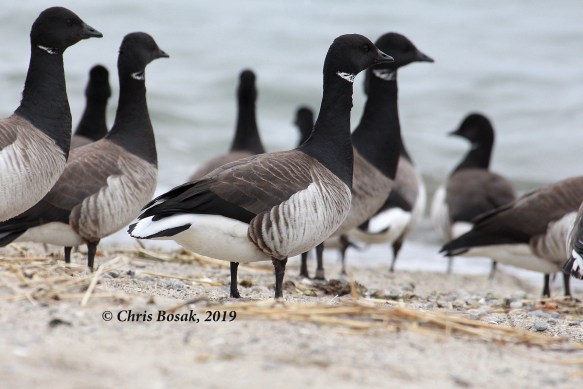
Brant are geese that breed in the Arctic. Many of them spend the winter in New England and massive flocks may be found at various coastal sites in the region. One of those sites is Calf Pasture Beach in Norwalk, Connecticut, where flocks numbering in the thousands hug the coast.
A quick visit to the park yesterday yielded a staggering number of brant. The birds were eating grass in the lawn areas of the park and were surprisingly tolerant of humans walking and jogging close by. Typically, the brant are seen on the beach near the water or on the water of Long Island Sound. Perhaps the birds were more tolerant because they are filling up for the pending migration. Just a thought.
Not all brant will depart at the same time. I’ve seen brant along the Connecticut coast as late as June. Those stragglers are likely young brant that aren’t ready to mate. At any rate, it’s nice to see the brant every year and they add a reliable bit of wildness to our coasts in the winter and spring.
Brant are often confused with Canada geese, but there are obvious differences. Brant are smaller and darker overall and do not have trademark white “chin strap” of the Canada goose. They do have a white marking under their chins, but it is not as large and pronounced as that of the Canada goose. The brants’ call is also croakier and quieter than the loud honk of the Canada goose.
For now, brant are still around in large numbers, which is good for New England birdwatchers. Many of them will depart shortly for points well north. Then we’ll be left to keep an eye out for the stragglers — or wait until late fall.
Here is a photograph showing a small portion of the flock.
Photo by Chris Bosak Brant at Calf Pasture Beach in Norwalk, Connecticut, 2019.
Here is a shot of Canada geese, for the sake of comparison.
Photo by Chris Bosak
Family of Canada Geese in Pittsburg, N.H., summer 2017.
Photo by Chris Bosak
A black-capped chickadee lands on a birdfeeder offering peanuts, Danbury, CT, March 2019.
One last shot of that homemade peanut feeder I wrote about last week. Here are the other two links, in case you missed it. White-breasted nuthatch.Downy woodpecker.
Photo by Chris Bosak
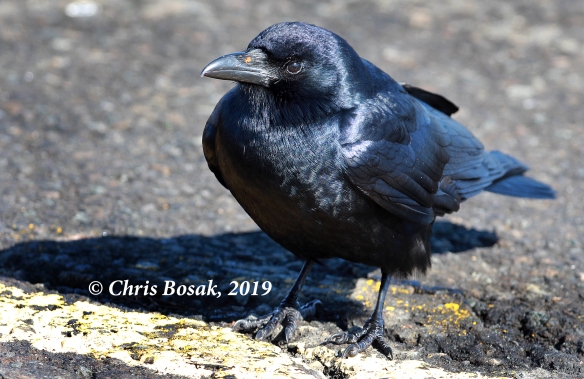
An American crow in Danbury, CT, winter 2019.
Crows are surprisingly difficult to photograph, especially considering how common they are. During the winter in many New England cities, we see massive flocks of crows headed to their nighttime roosts. Obviously their numbers are not hurting so why are they so tough to capture on film? (I know that nobody uses film anymore; it’s just an expression.)
First of all, they are fairly wary. Smart, in other words. They typically do not allow for a very close approach. Even crows in a very public place will take off as soon as you point a camera at it. I’ve heard that crows are difficult to hunt as well. They may be all over a certain area, but as soon as a gun comes out, the birds are gone. They must sense that something is amiss.
If you do get a cooperative crow, it is still difficult to get a nice photograph because of the bird’s plumage. Very black and very white birds are tough because of the lighting and contrast challenges. If you do get it right, however, the results can be very satisfying. Crows, similar to other dark birds, display a captivating iridescence in their plumage when the light catches the feathers just right.
For whatever reason, crows are a much-maligned bird. I think it’s time to change that perception and appreciate them for what they are: smart, personable and stylish.
The first time I heard “You should create an Instragram page” was about seven years ago. I ignored it just like I ignored the several other times I’ve heard it since. It’s a younger generation thing, I thought. Who wants to see bird photos on Instagram, I thought. People only look at Instagram to see what the Kardashians are having for dinner, I thought. Well …
Yes, you guessed it, I’ve created an Instagram page — @birdsofnewengland (thankfully that name was still available after all these years.) It couldn’t hurt, I now think. Continue reading →
Photo by Chris Bosak
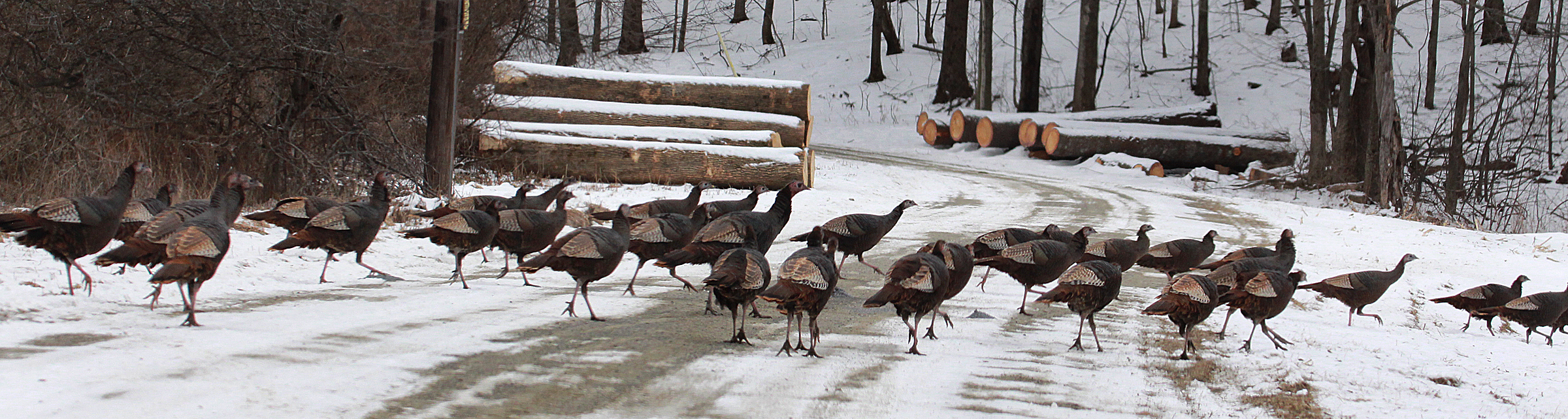
A flock of wild turkeys run into a field in Berlin, N.Y., February 2019.
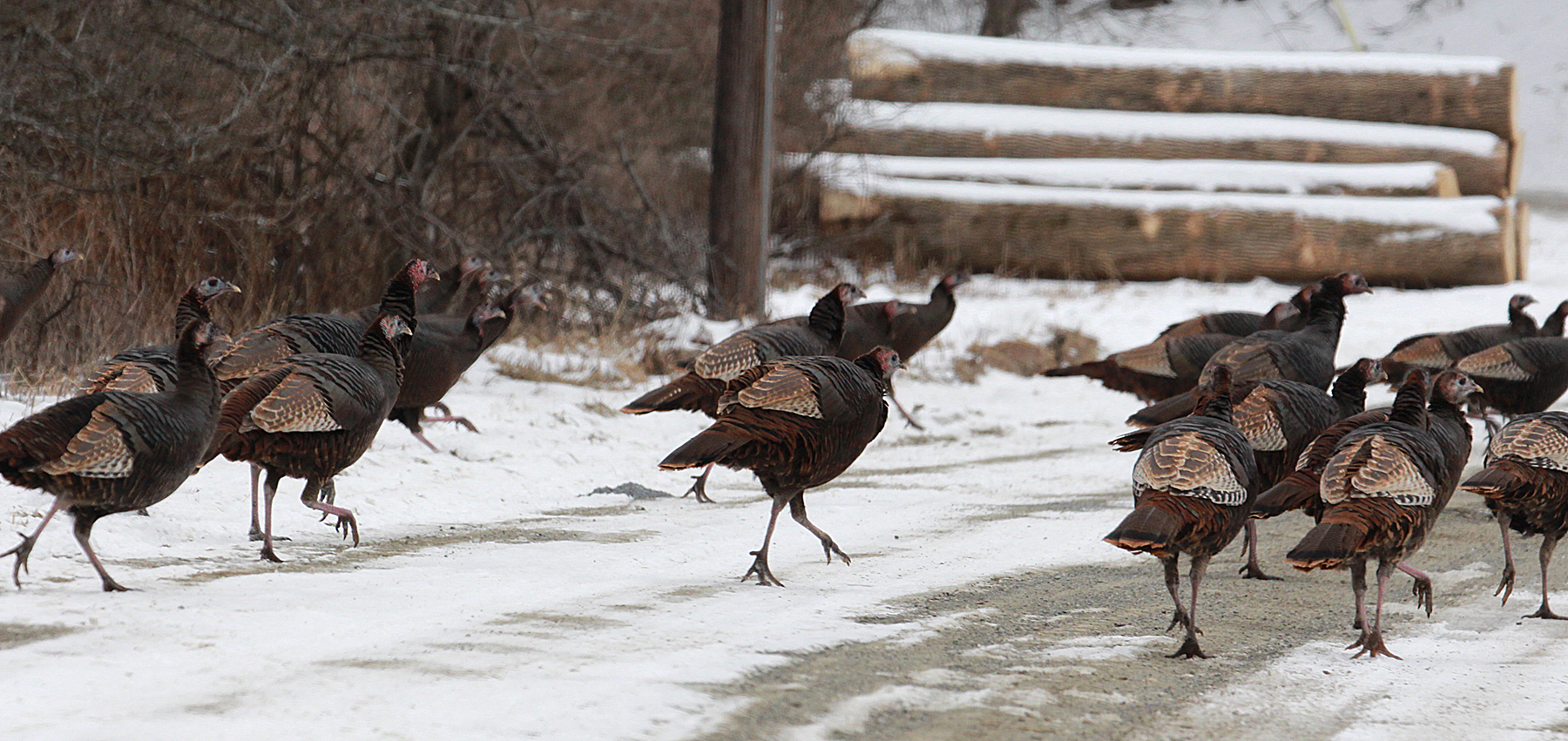
I alluded to these guys and gals during my barred owl posting a few days ago. Here they are in photos.
For context, here’s what a wrote a few days ago”
“I turned the car around to get another look, but the owl was no longer there, even though I had seen it about one minute before. I drove past the spot and turned onto the next side road to get turned around again. It looked as if the road would lead to a few farms. The largest flock of turkeys I’ve ever seen was gathered in a field alongside the road. The turkeys, about 40-50 of them, seemed fairly wary so I didn’t linger long.”
Photo by Chris Bosak
A flock of wild turkeys run into a field in Berlin, N.Y., February 2019.
Photo by Chris Bosak A barred owl perches on a Welcome to New York sign on the border of Hoosick Falls, N.Y., and Bennignton, Vermont, in February 2019.
As promised, here’s Part II of my “joining the barred owl party” story.
Last week I wrote a column about the Winter of the Barred Owl and followed up with a post showing a few photos sent in by readers of barred owls perched on feeder poles. But, at the time of those postings, I hadn’t yet seen a barred owl myself this winter.
I woke up my teenage son Andrew early (relatively) for a day of skiing at Mt. Snow. My brother lives in a New York town that borders Vermont. As we cruised along the “Bennington Bypass” on this gray, misty morning I pointed out the “Welcome to Vermont” sign to my son. I glanced back quickly at the “Welcome to New York” sign that was now in my rearview mirror. I noticed the huge sign had a lump on the top of it.
Could it be another owl, I thought. Probably just a hawk (not that hawks are uninteresting, but they are rather common along highways) I figured, but I wheeled the car around anyway. Sure enough, it became apparent as we closed the distance that the lump in question was another barred owl. Winter of the Barred Owl, indeed.
I parked in a pull-off spot conveniently located in front of the sign and grabbed a few photos before heading to the mountain.
The first owl on Wednesday was photographed in a New York town that borders New England. The second owl was even closer to the New England border and it may be argued it was half in Vermont. Either way, it was nice to join the barred owl party.
Photo by Chris Bosak A barred owl perches on a Welcome to New York sign on the border of Hoosick Falls, N.Y., and Bennignton, Vermont, in February 2019.
Photo by Chris Bosak
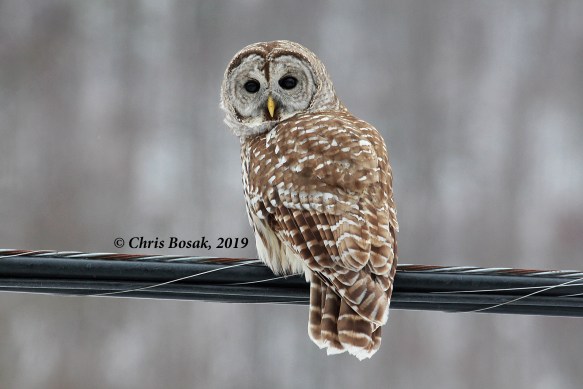
A barred owl perches on a wire in Berlin, N.Y., February 2019.
Last week I wrote a column about the Winter of the Barred Owl and followed up with a post showing a few photos sent in by readers of barred owls perched on feeder poles. But, at the time of those postings, I hadn’t yet seen a barred owl myself this winter.
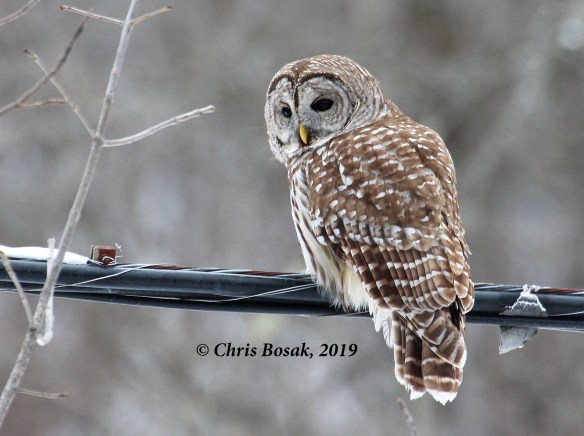
Then I took a trip on Wednesday to visit my brother in upstate New York near the Vermont border and joined the barred owl party. I was driving up Route 22 through Berlin, N.Y., when I noticed an owl perched on a wire going over the road.
I turned the car around to get another look, but the owl was no longer there, even though I had seen it about one minute before. I drove past the spot and turned onto the next side road to get turned around again. It looked as if the road would lead to a few farms. The largest flock of turkeys I’ve ever seen was gathered in a field alongside the road. The turkeys, about 40-50 of them, seemed fairly wary so I didn’t linger long.
I got back onto Route 22 and headed back toward my brother’s. The owl hadn’t returned to its spot on the wire over the road, but I did spot it on a wire that ran along the road. I pulled over onto the shoulder and grabbed a few shots. This wire was an even better spot as it was lower and made for a better photographic angle. The owl mostly focused on a field under the wire, but did take the occasional look over its shoulder. Again, I didn’t linger long but did get some good close-ups of this handsome bird.
I’ll post Part II of the story tomorrow. Berlin is border town with New England, near the point at which northwest Massachusetts meets southwest Vermont. Part II will bring us even closer to the New England border.
Photo by Chris Bosak
A barred owl perches on a wire in Berlin, N.Y., February 2019.
A Red-breasted Nuthatch perches near a bird feeding station in Danbury, Conn., Oct. 2016.
There is still time to participate in the Great Backyard Bird Count. In fact, in recent years the Count has been extended through Monday — so no excuses. It’s a beautiful day in New England (at least where I am) and I’m eager to head out right after making this post. I’ll let you know what I find later today or tomorrow. As always, feel free to send me your highlights.
Remember, if you see a ton of birds or only a few (or none), it’s all good data. Don’t fail to submit results just because you think it was an “unsuccessful” bird walk. Click here for my recent column on that matter.
Many people are concerned that they are not seeing chickadees at their feeder this winter. This is your chance to contribute to data that may help scientists determine if, indeed, there is a problem.
All the information about the GBBC and how to submit your results may be found by clicking here.







 Birds of New England.com