Two weeks ago I had a post on this site about mushrooms and last week I made a few posts during my trip to Pittsburg, N.H.
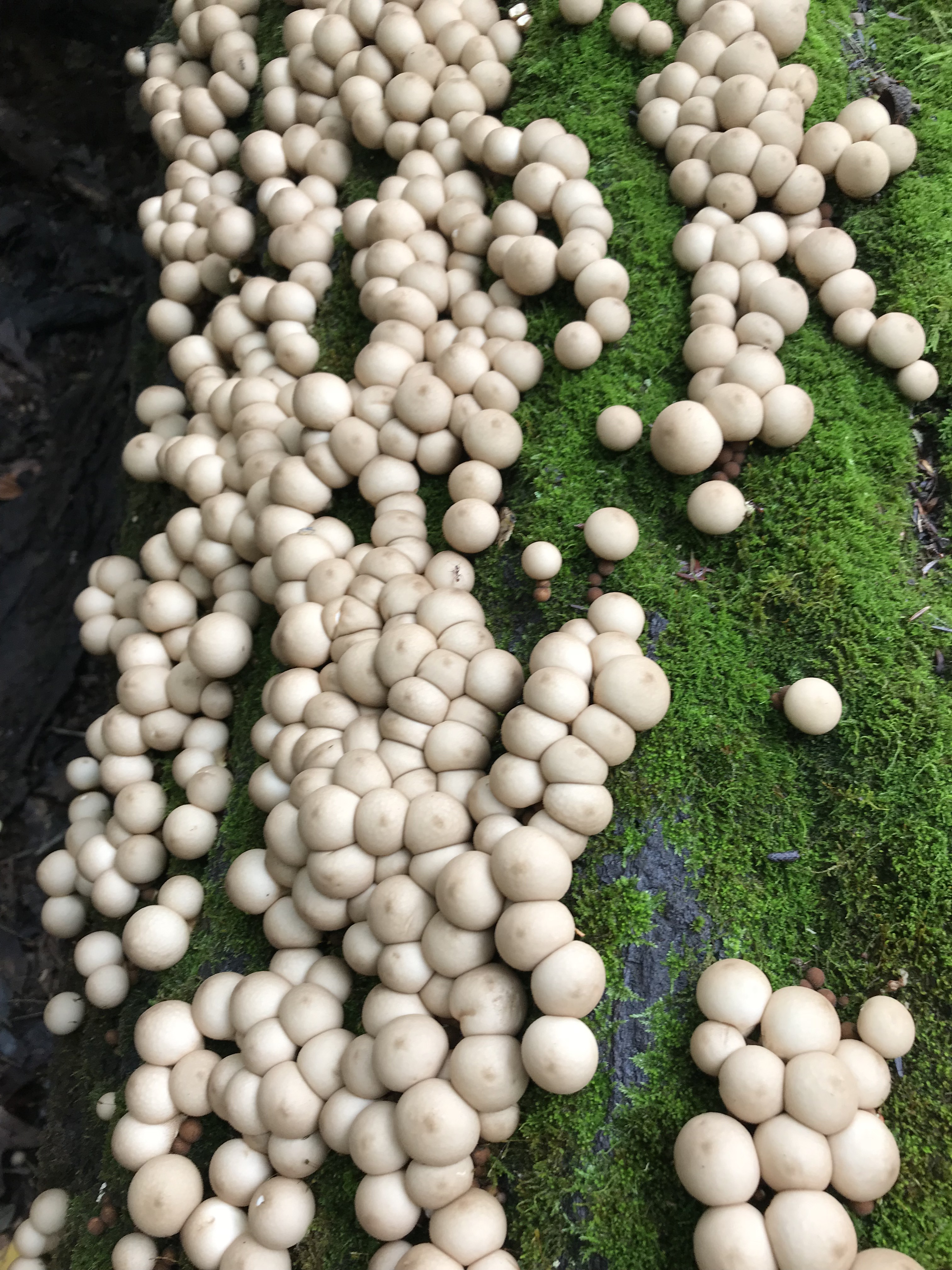
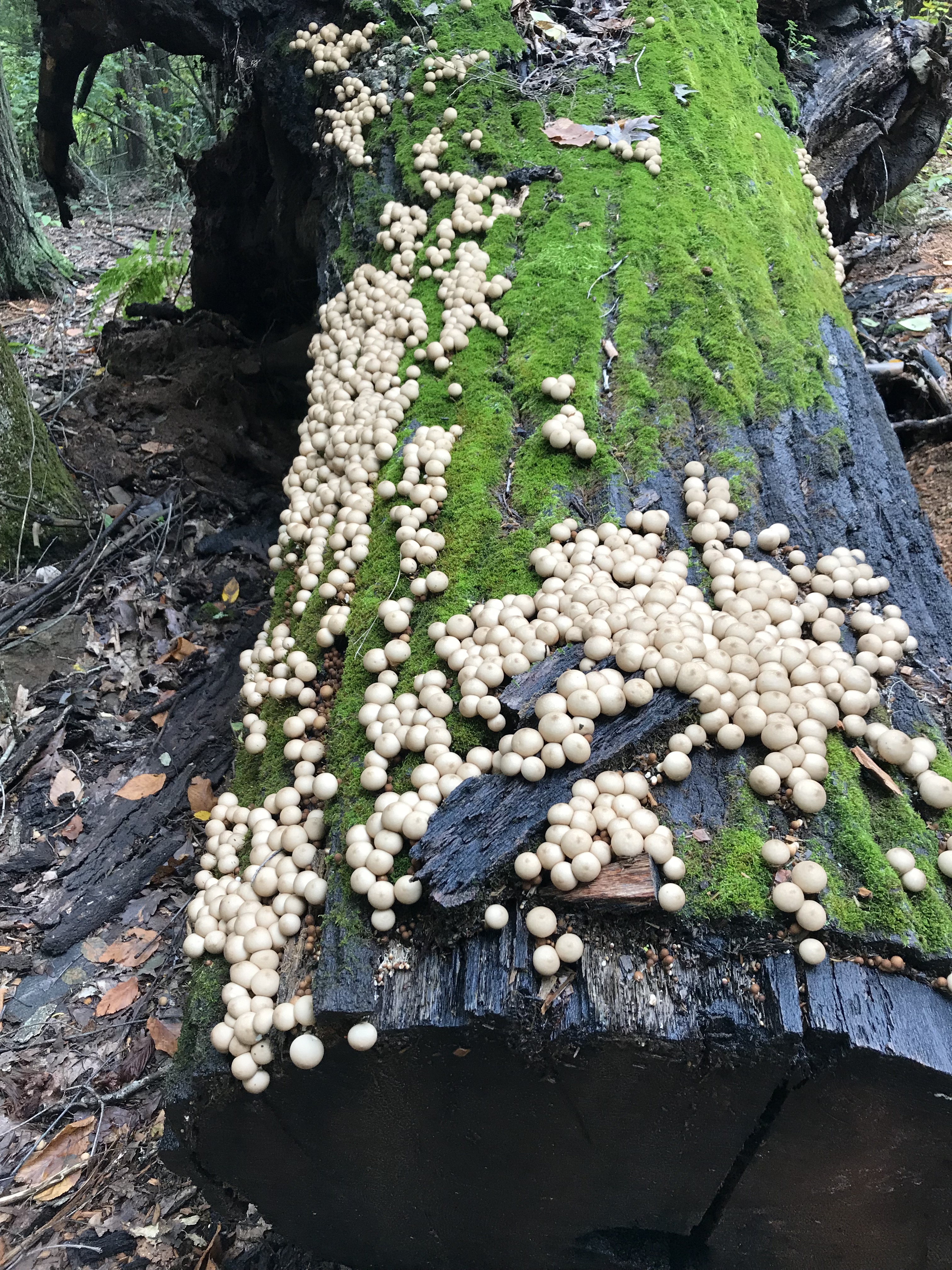
By way of revisiting both of those topics, here’s a photo of interesting looking fungi we spotted during a walk through the boreal forest. There’s so much cool stuff to see out there — whether it’s southern, central or northern New England — but you have to get out there to see it.
I admittedly do not know a whole lot about the mushrooms found in New England woods. I do know that some mushrooms can kill you, so I basically just avoid them all, other than admiring the ones that catch my eye. These mushrooms found in the woods behind my house stood out so I grabbed a few iPhone photos.
Speaking of mushrooms, I’d love to someday learn to forage for them. They are plentiful in our woods and would be a great addition to many recipes. The risks, however, are cause for concern and mushroom foraging should only be done by those who are certain of what they are doing. Eating the wrong mushrooms will usually cause stomach pain and perhaps vomiting, but the symptoms can be much more severe.
Here’s some information from the Northern New England Poison Center: “Every year the Northern New England Poison Center helps patients who have become sick after misidentifying mushrooms they picked to eat. Among NNEPC cases, mistakes made while foraging are the second most common cause of serious mushroom poisonings, behind only people who become sick after taking psychedelic mushrooms on purpose.”
The Center points out that many safe mushrooms have multiple poisonous lookalikes in the woods, too. Someday I’ll learn to forage wild mushrooms, but until I’m 100 percent sure of what I’m doing, I’ll stick to admiring and photographing them.
Are you a mushroom forager or have a story or tip about foraging mushrooms? Leave a comment below and share your story.
The warm start to November has made for some surprising nature sightings. I’ve seen and heard many insects that are usually silent by this time of year. A recent walk in the woods behind my house yielded several eft sightings underfoot. Efts are the terrestrial stage of a newt, a common aquatic salamander. By November, eft sightings are usually a thing of the past – or the future, depending on how you look at it.
As a birdwatcher, I sometimes struggle with how to carry my gear. Thankfully, Wunderbird makes it easier.
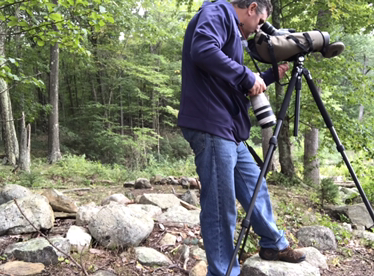
For me, it goes beyond binoculars around my neck and a field guide in my back pocket. Throw in a camera with a bulky 100-400 lens, an extra lens or two, a spotting scope with tripod, and a surprisingly awkward adapter for digiscoping, and I’ve got my hands full.
Typically, what I would have done is throw all of the equipment into a backpack and start my walk. It keeps the equipment in one place, which is nice, but it has several disadvantages. When I need something, I have to stop, take the backpack off and fish for the item to be used.
In birding, of course, that means my subject is usually long gone by the time I do all that.
But now there is a better way. It’s called Wunderbird, a line of high-tech apparel designed and engineered for the birdwatcher. The line includes a short-sleeved T-shirt (Kestrel), long-sleeved T-shirt (Peregrine) and hooded sweatshirt (Gyrfalcon).
Each version comes with several spacious pockets, pouches and padding located for comfort and easy access to your birding equipment. The products are also made of “smart fabrics” that offer ventilation, quick drying and mosquito repellent.
I got the hoodie several months ago, but the sweltering summer we had kept the Gyrfalcon tucked away in the closet. I was excited to try it out in fall-like conditions.
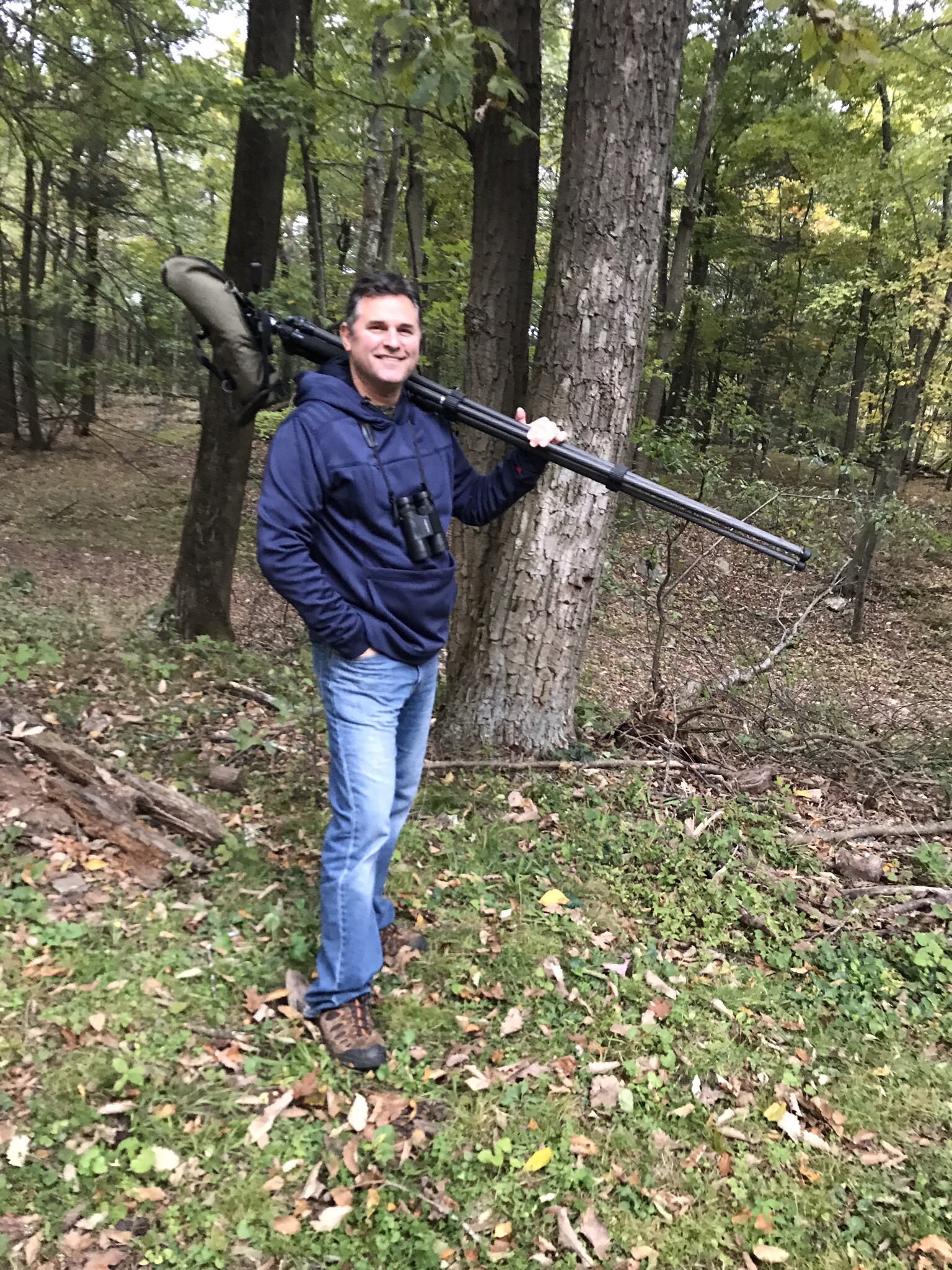
I instantly liked it. My walk to the nearby pond was more comfortable and efficient. I put the camera around my neck with the strap going behind the hood. The camera and lens combination make for the heaviest piece of equipment and, given the padding around the shoulders, I hardly noticed the weight.
The binoculars went into the bottom pouch. I thought the camera lens dangling down would make it clunky to fish out the binoculars, but that wasn’t the case.
At one point during the walk in the woods, a bird came into view and perched on a nearby fallen log. I quickly grabbed the binoculars and was able to focus on the hermit thrush seconds before it flew back into the deep woods. The spacious pouch allowed for the binoculars to come out effortlessly without the corners getting stuck on the edge of a pocket.
Trying to wrestle binoculars out of tight pockets has cost me valuable seconds in the field before Wunderbird.
The top pouch on the hoodie may make it even easier to access binoculars; I’ll try that next time. (Note from author: I’ve tried it. It does make it easier. Way easier.)
Most birdwatchers will have their binoculars strapped around their necks, which would make for even easier access and storage in the pouches.
The bottom pouch has two compartments. I used the outside compartment for the binoculars and inside compartment for lens caps and that awkward digiscoping adapter. Talk about corners getting stuck on pockets; the adapter has all sorts of protrusions and odd edges that make it a nightmare to carry in a pocket. Wunderbird solves that problem, too.
The inner layer of the pocket also serves as a hand-warmer.
The scope and tripod obviously do not fit into any of the pockets, but the heavy padding on the shoulders of Wunderbird make lugging the scope around more comfortable.
I don’t normally get too excited about clothes, but a shirt designed for birdwatching was something I had to try. I’ve been impressed with the hoodie and look forward to using it more. Also, the Gyrfalcon looks like a normal sweatshirt when bulky birding equipment is not stuffed into the pockets.
There is also an interesting backstory to the creation of Wunderbird and its founder, Gil Gutglick. I’ll leave that for you to check out at the Wunderbird website: www.wunderbirdworld.com.
In the meantime, get out, find some late fall migrants, and let me know what you’re seeing out there.
Here is the latest For the Birds column, which runs in several New England newspapers.
..
black-throated blue female
A lot of birdwatcherslook forward to the spring warbler migration. Not only do our woods fill with colorful, vocal birds, but the timing is such that it follows winter and several months of gloomy weather.
From late April through early June, the birding world is abuzz and excited with what warblers are being seen and where.
Their fall migration, conversely, creates almost no buzz. Even the warblers themselves are mostly quiet. Instead of heralding their arrival from the tree tops like they do in spring, they lay low silent.
For many species, the blazing colors they sport in May are replaced by drab browns and grays – again, drawing as little attention to themselves as possible. Because they are Continue reading →
Here is the latest For the Birds column, which runs in several New England newspapers.
Photo by Chris Bosak A turkey vulture eats a squirrel on the side of a road in Brookfield, Conn, fall 2018.
I turned the corner at the four-way stop and noticed a big, dark clump on the left-hand side of the road.
It’s either a bag or a turkey I thought, as I approached the object in question. Of those two choices, obviously I was hoping for a turkey.
It turned out I was wrong on both counts, but I was close with the turkey guess. It was a turkey vulture and it was standing on and picking apart a dead squirrel. Not knowing exactly what it was when I turned the corner, I drove past the vulture on the way to my destination. As I passed the bird, however, it didn’t even look up from its meal, so I figured it was comfortable enough that I could circle around and grab a photo or two.
I didn’t want to back up because, first of all, it’s dangerous; and second, from my experience, wildlife usually flee from cars backing up. I think the animal in question feels threatened about the object coming back toward it. Also, cars tend to make more noise in reverse.
The road I was on continues in a circular route that winds up back at the four-corner intersection. So I kept on going and hoped the bird would still be there when I got back. In my rearview mirror, I noticed another big, dark bird in a branch perched above the vulture. I assumed, of course, it was another vulture and told myself I would check it out when I circled back.
I got back to the intersection in a few minutes and, sure enough, the vulture was still on the side of the road picking at the squirrel. I pulled off to the right-hand side of the road, put down the driver’s-side window, and snapped a few photos of the impressive, opportunistic bird.
I started to pull away when I remembered the bird perched above the action. I pulled forward a few more feet so I could get a look at it from the back window and noticed that the bird was still there. It was not, however, a vulture, but rather a very anxious-looking red-tailed hawk.
Clearly the hawk wished it were the one perched on the squirrel enjoying the meal, but the size of the vulture prevented it from taking measures in that direction.
I didn’t see how the scene unfolded prior to my arrival. I don’t know if the hawk had caught and killed the squirrel and the vulture somehow wrestled it away, or if the squirrel had been sitting there for a while and the two birds happened upon it at approximately the same time.
My guess is that the squirrel was already dead and the hawk found it first and started eating it. Then the vulture came around and its menacing 6-foot wingspan chased the hawk off the squirrel and onto a perch safely above the mammoth bird.
Not wanting to interfere with whatever was going to happen next, I pulled ahead and continued to my original destination. I’m inclined to think that, given the size of the vulture, the hawk eventually gave up and flew off to fine food elsewhere.
Looking back, I was surprised that there was only one vulture. I typically see vultures in groups — sometimes small, sometimes big. It’s not often that I see them alone.
The other thing that surprised me is that I actually had my camera with me. I have been lax about keeping it with me lately. There have been many times over the years that I have stumbled upon interesting wildlife scenes and did not have my camera with me. You’d think I would have learned my lesson and always had the camera with me, but that is often not the case. This time, thankfully, it was a lesson learned in a positive way.
Photo by Chris Bosak
A red-shouldered hawk perches on a wire in Brookfield, Connecticut, Jan. 2018.
September is an exciting time in the bird world.
The fall migration is well under way and that means south-bound ducks will be passing through any week now. The duck migration is the highlight of my birding year, and September is when anticipation builds before they start arriving on our ponds and lakes sometime in October. Resident wood ducks, however, are back in their gaudy breeding plumage and quite visible this month.
Songbirds and shorebirds are now pouring through New England on their way south even as we wait for the ducks to arrive. It is exciting to think that many of the birds visiting our yards are first-year birds. They didn’t even exist during the spring migration. Let’s hope they make it back next spring.
Of course, the most popular September birding activity is going to a hawk watch, which take place at various points throughout New England and the country. Mid- to late-September is the time to see great numbers of hawks flying south. The hawk watches continue all the way into November, but don’t miss out on the September rush. Visit any hawk watch site, such as the one at Pack Monadnock in Peterborough, and experts will be there to let you know what is flying overhead. In fact, the experts will pick out and identify the bird when it is a mere speck in the distant sky.
For those who prefer their birdwatching closer to home and, indeed right at home, September is also a fun time to watch the feeders. The regular birds will be there, but some surprise visitors may show up as well.
It was autumn a few years ago when a small flock of pine warblers visited my feeders daily for about a week. Warblers are not typically seen at feeders, so it was a memorable week for me.
Then there are the hummingbirds. I have written about them for the past two weeks, but they deserve at least a sentence or two in this column as well.
I have heard from many readers that their hummingbirds are still around, but I wonder if that will be the case by the time this column goes to print. I had hummingbirds on Sept. 18, but none on Sept. 19, even though I watched off and on throughout the day. I am hoping a late migrant or two will show up in the next few days.
Fall and even into winter is when some “rare” hummingbirds show up in New England. The rufous hummingbird is the most common western hummer to veer into New England.
Two weeks ago I wrote about how it is OK to keep feeding hummingbirds into the fall as their natural instinct will guide them south when it is time to do so. That seems to be the case with “my” hummingbirds and I’m sure all the other hummingbirds passing through New England.
While you are looking at your feeders, take a look at the nearby trees from top to bottom. The aforementioned warblers just may be looking for food in your oaks, maples or other trees. Also, keep an eye out for other small birds, such as brown creepers. They start to show up about this time of year as well.
If you live near a lake or anywhere there are bright lights, such as a stadium or high school field, now is the time to look for nighthawks. You will recognize them because their silhouette and flying pattern is different from most birds we see. They also have white bars under their wings, which are visible when they are flying.
With so much going on in September you never know what you are going to see. Drop me a line and let me know what’s going on in your birding world.