The difference between Hairy Woodpecker and Downy Woodpecker, snow style

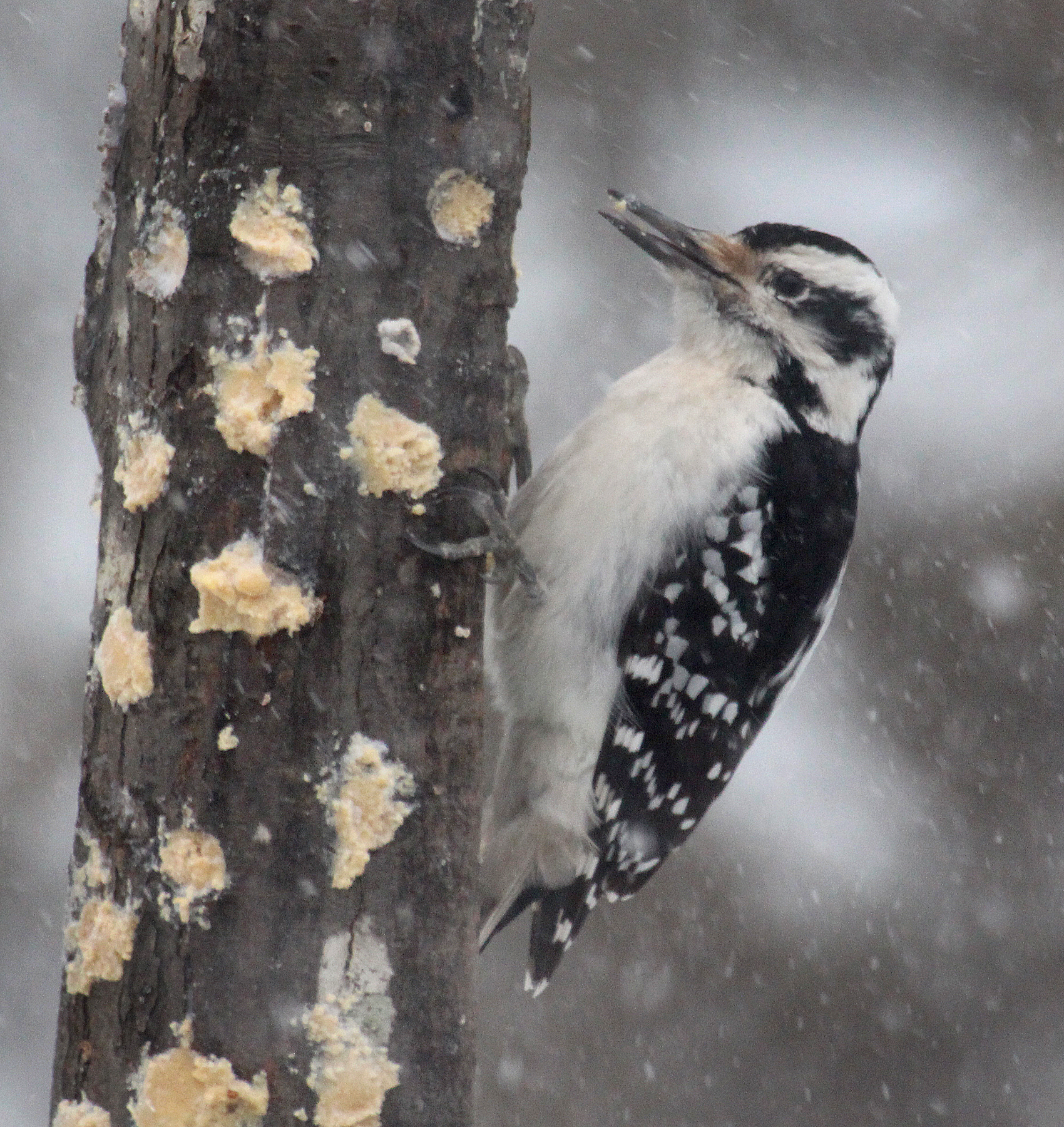
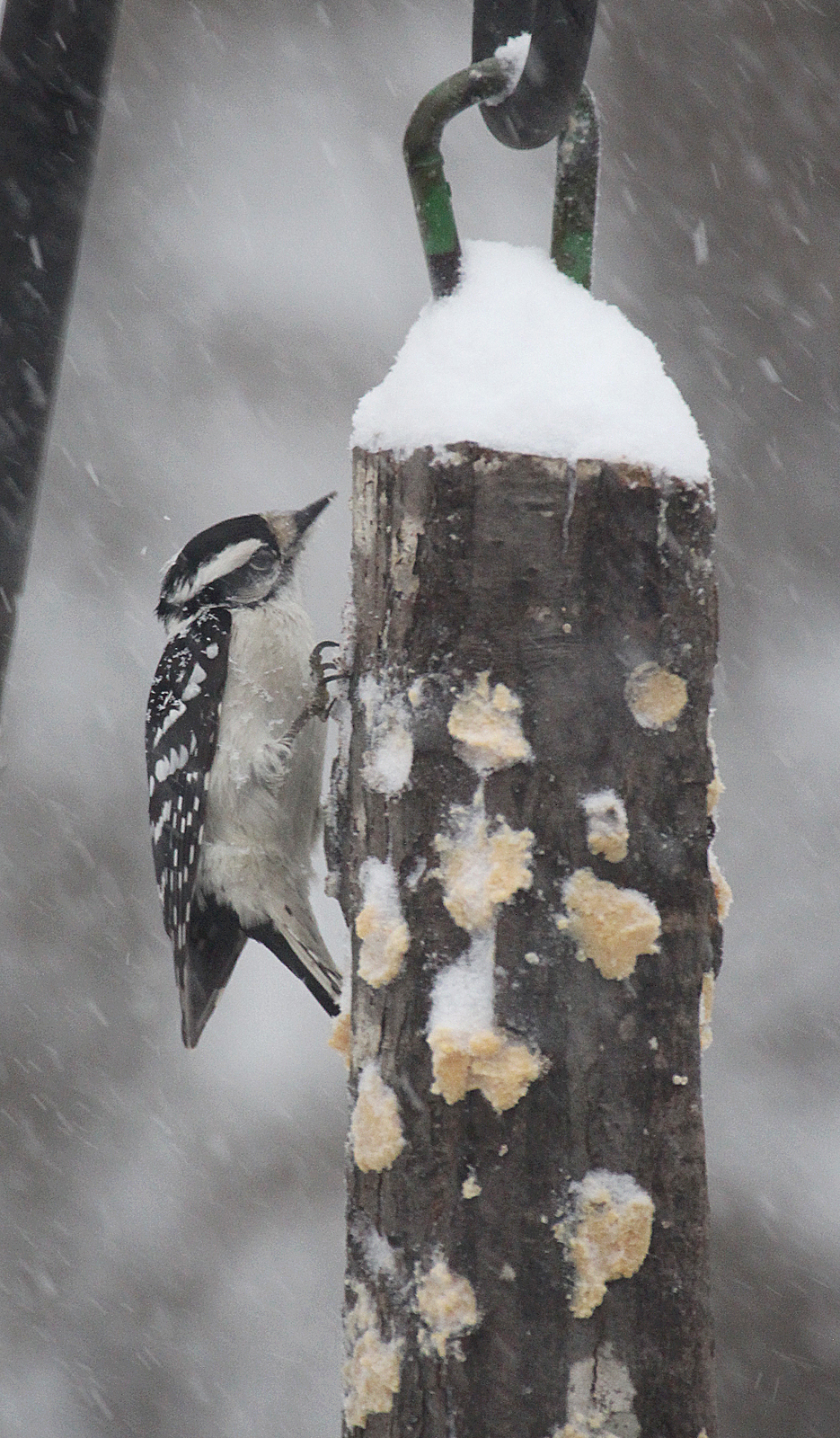
I’ve done similar posts before comparing the larger Hairy Woodpecker with the smaller Downy Woodpecker. But I’ll repeat the lesson as I captured them both on a homemade birdfeeder during Thursday’s snowstorm.

The hairy is larger overall, but without a reference it’s tough to tell strictly by size. To really determine the species, check out the bill. The hairy has a much more substantial bill. Females of each species are shown.

Photo by Chris Bosak A hairy woodpecker eats bark butter out of a homemade feeder in Danbury, Conn., Feb. 9, 2017.

Photo by Chris Bosak
A hairy woodpecker eats bark butter out of a homemade feeder in Danbury, Conn., Feb. 9, 2017.


Photo by Chris Bosak A downy woodpecker eats bark butter out of a homemade feeder in Danbury, Conn., Feb. 9, 2017.

Photo by Chris Bosak
A downy woodpecker eats bark butter out of a homemade feeder in Danbury, Conn., Feb. 9, 2017.

More photos leftover from 2016: Male and female downies

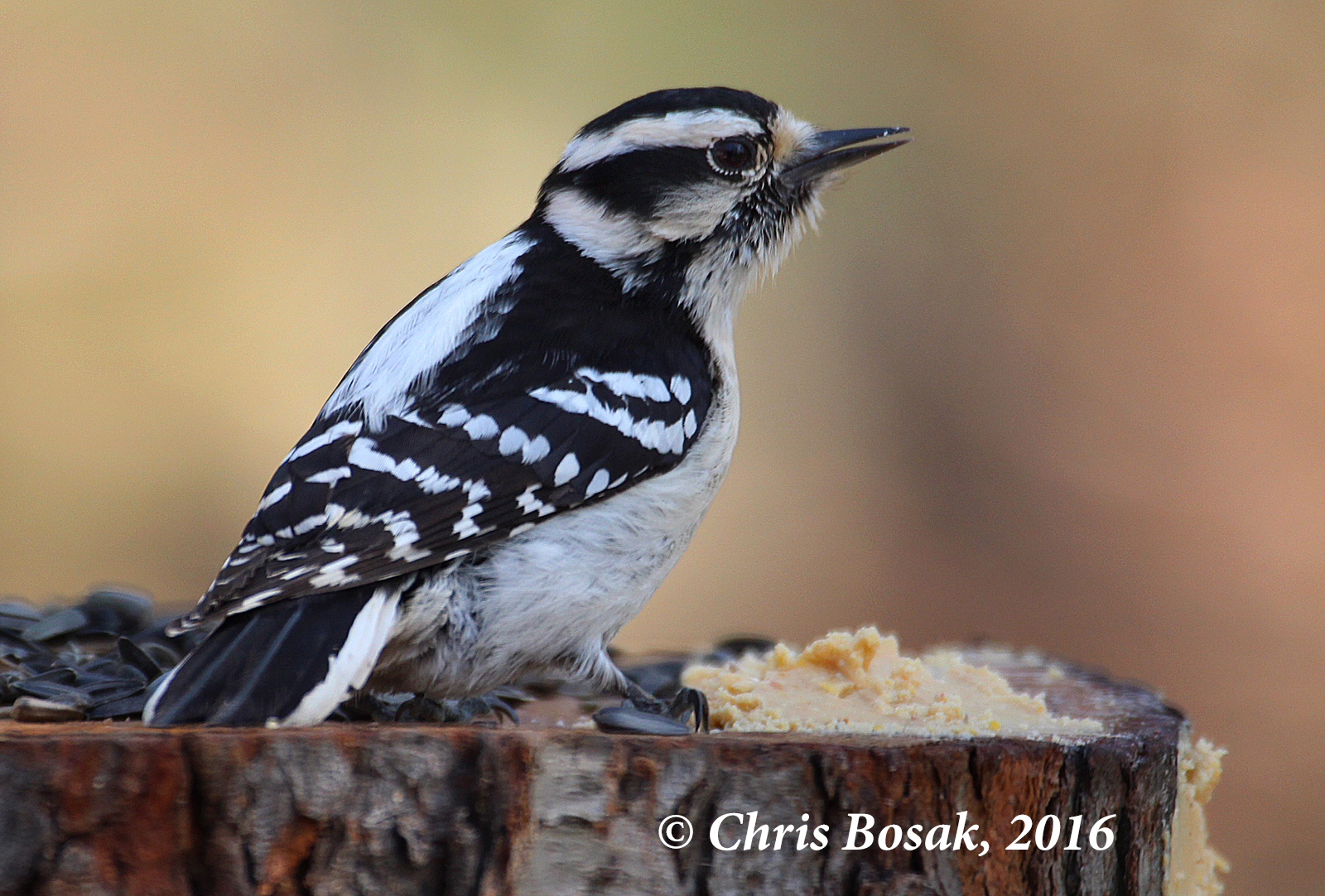
Photo by Chris Bosak A male Downy Woodpecker eats from a homemade platform feeder in Danbury, Conn., fall 2016.

Photo by Chris Bosak
A male Downy Woodpecker eats from a homemade platform feeder in Danbury, Conn., fall 2016.

Here are a few more photos that I took in 2016 that never saw the light of day. These photos are good for showing the difference between male and female Downy Woodpeckers. With many woodpeckers, the male shows more red than the female. In the case of the downy (and hairy), the female lack red altogether.

Photo by Chris Bosak A female Downy Woodpecker eats from a homemade platform feeder in Danbury, Conn., fall 2016.

Photo by Chris Bosak
A female Downy Woodpecker eats from a homemade platform feeder in Danbury, Conn., fall 2016.

Apparently Red-bellied Woodpeckers like peanuts, too

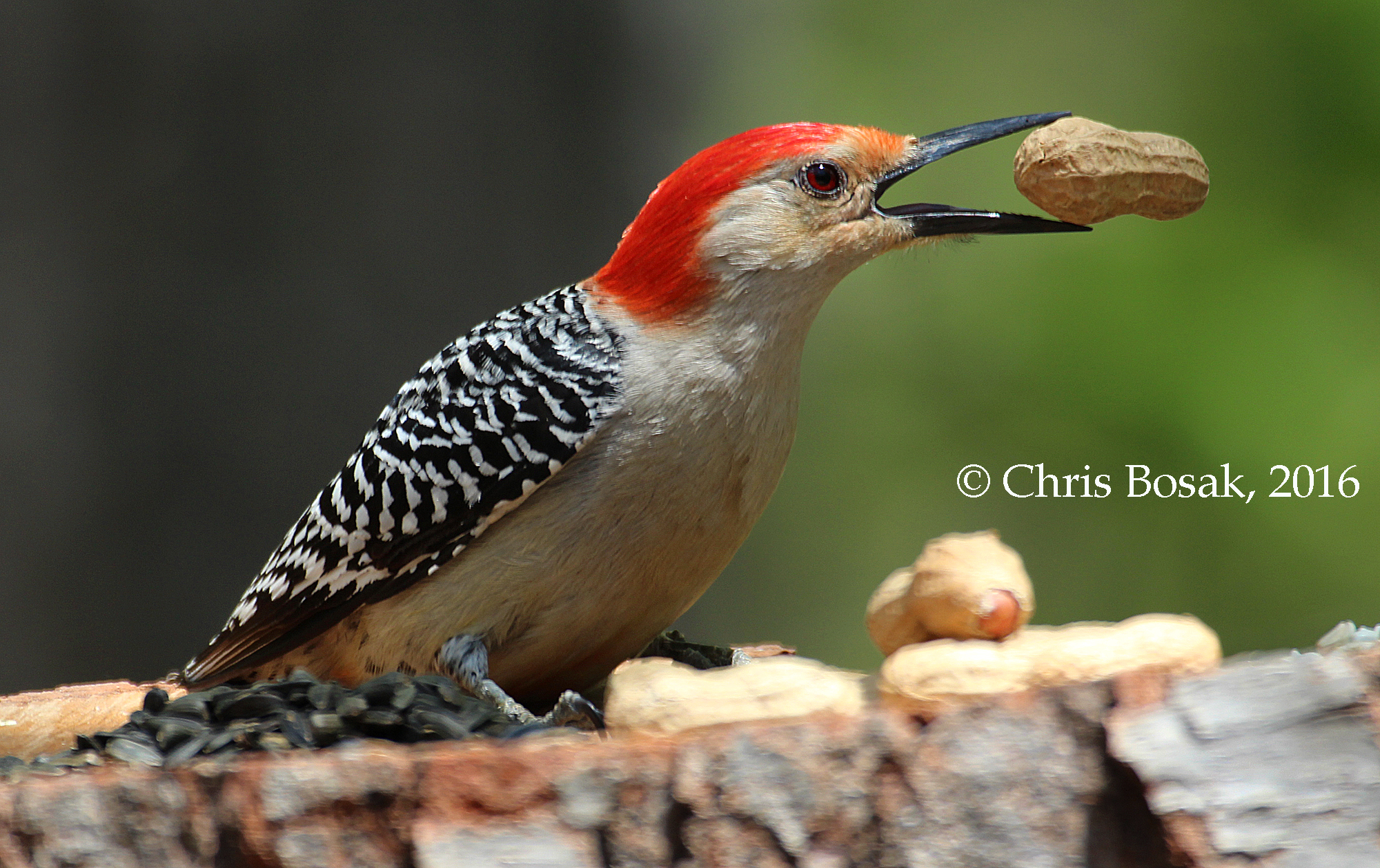
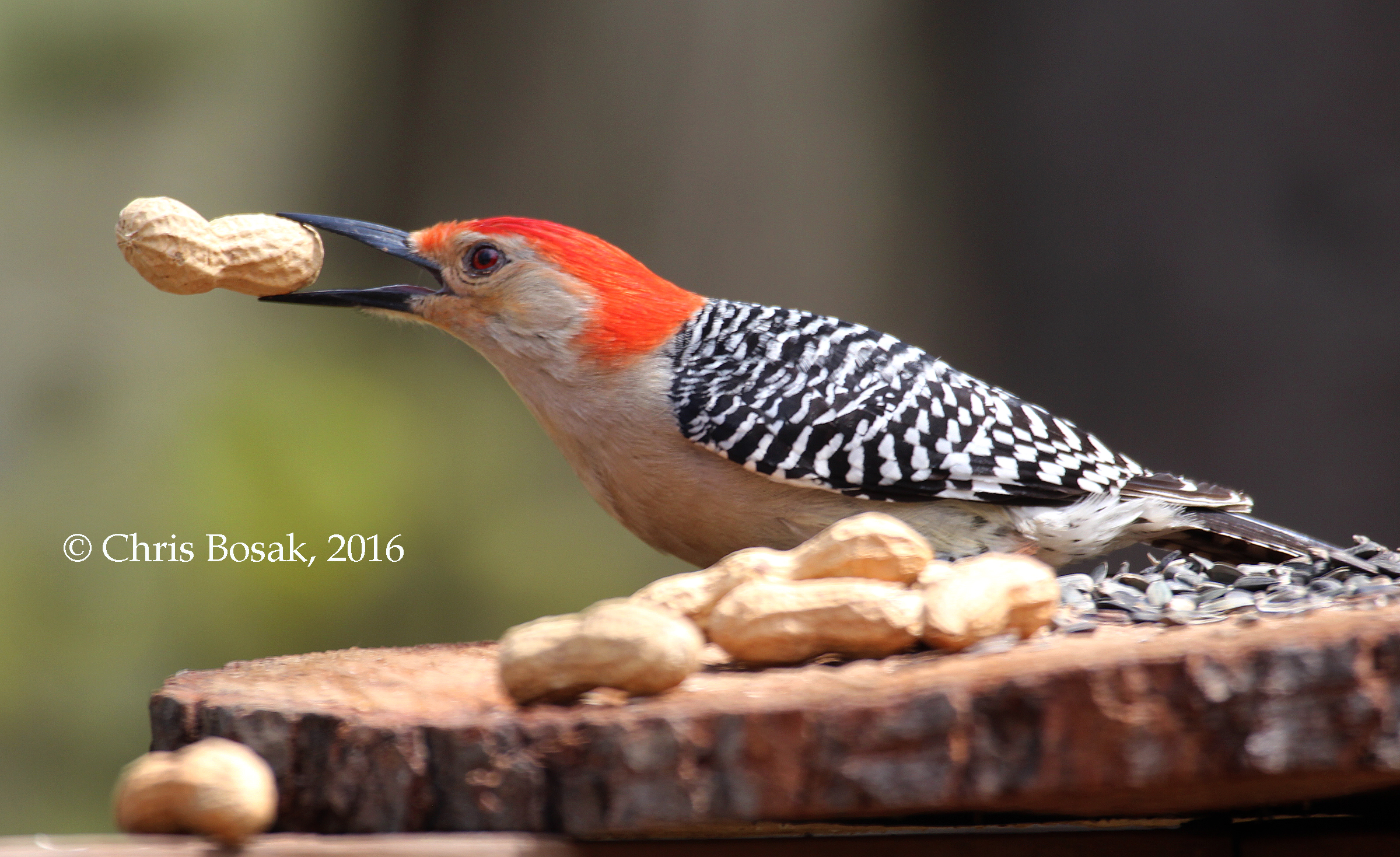
Photo by Chris Bosak A Red-bellied Woodpecker takes a peanut from a homemade birdfeeder in Danbury, Conn., spring 2016.

Photo by Chris Bosak
A Red-bellied Woodpecker takes a peanut from a homemade birdfeeder in Danbury, Conn., spring 2016.

I wrote a few weeks ago about Blue Jays and how they love whole peanuts. They literally wait on nearby branches waiting for me to put some down on the platform feeder.

Now the Blue Jays have competition. A male Red-bellied Woodpecker discovered the peanut station and visits daily to take as many peanuts as I’ll put out there.

Here’s a few more photos of the Red-bellied Woodpecker.

Photo by Chris Bosak A Red-bellied Woodpecker perches near a homemade birdfeeder in Danbury, Conn., spring 2016.

Photo by Chris Bosak
A Red-bellied Woodpecker perches near a homemade birdfeeder in Danbury, Conn., spring 2016.

Photo by Chris Bosak A Red-bellied Woodpecker takes a peanut from a homemade birdfeeder in Danbury, Conn., spring 2016.

Photo by Chris Bosak
A Red-bellied Woodpecker takes a peanut from a homemade birdfeeder in Danbury, Conn., spring 2016.


Click here to see the post on Blue Jays.

And click here for the follow up post with more photos

Downy Woodpecker eating “Bark Butter”

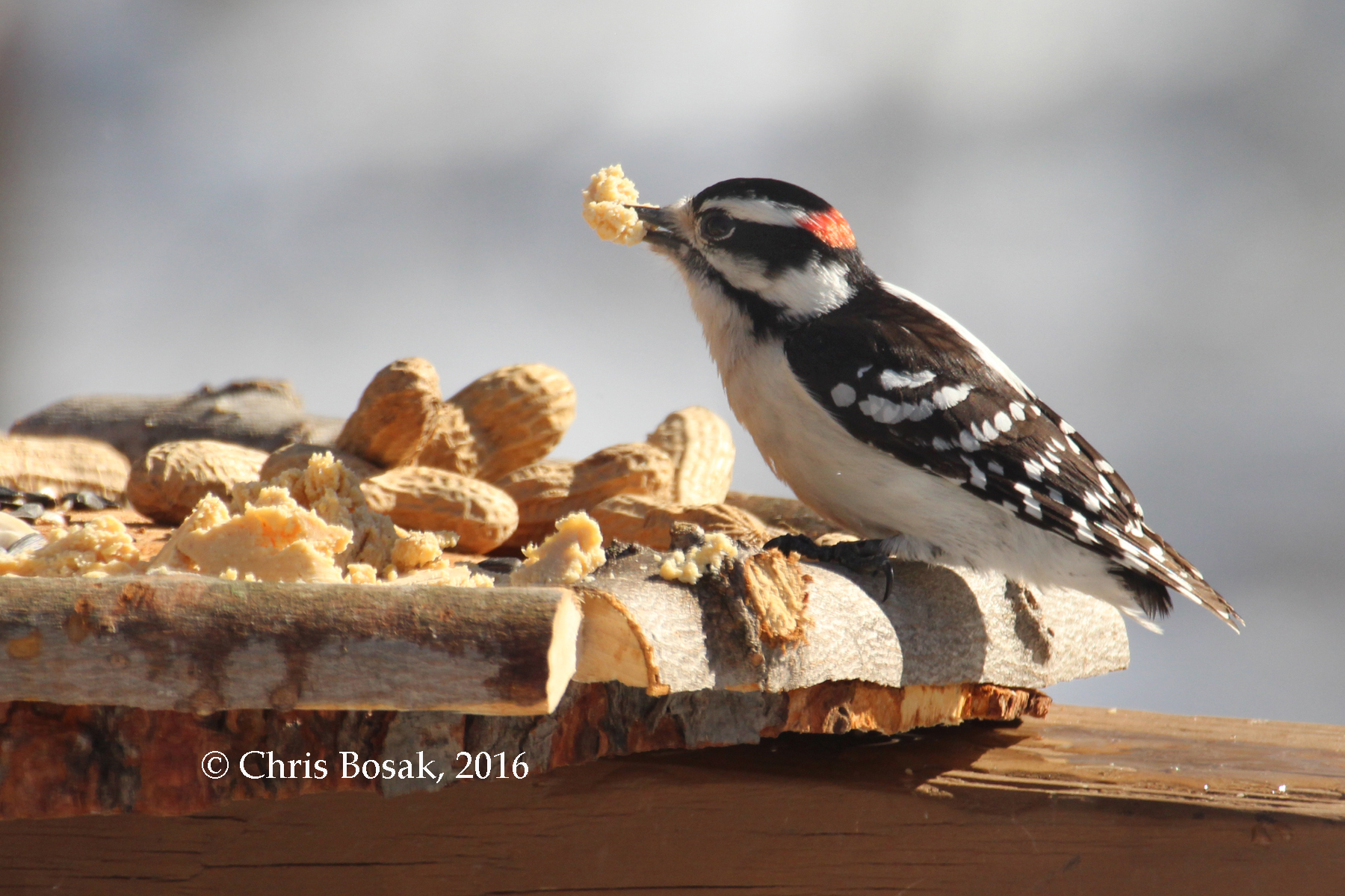
Photo by Chris Bosak A Downy Woodpecker eats some Bark Butter from a new bird feeder in Danbury, Conn., March 2016.

Photo by Chris Bosak
A Downy Woodpecker eats some Bark Butter from a new bird feeder in Danbury, Conn., March 2016.

Here’s one more shot of a bird on that homemade bird feeder. This time it’s a Downy Woodpecker eating Bark Butter. You can tell the Downy likes it from the large portion he is taking with him.

What is Bark Butter? It came recommended by Pat Warren at the Wild Birds Unlimited store in Darien. Jim’s Birdacious Bark Butter is a new product somewhat similar to suet, only you spread it on trees (or other surfaces.) Or you can get a feeder designed for Bark Butter.

Click here for more information about the product.

I spread it on the sides of the feeder and obviously it works. I’ve also seen Carolina Wrens eating it from the feeder. So far I’m impressed with the product.

To try it out, visit Joe or Pat at the Wild Birds Unlimited store at 365 Heights Road in Darien (across from the Noroton Heights train station.)

A bunch of Downy Woodpeckers

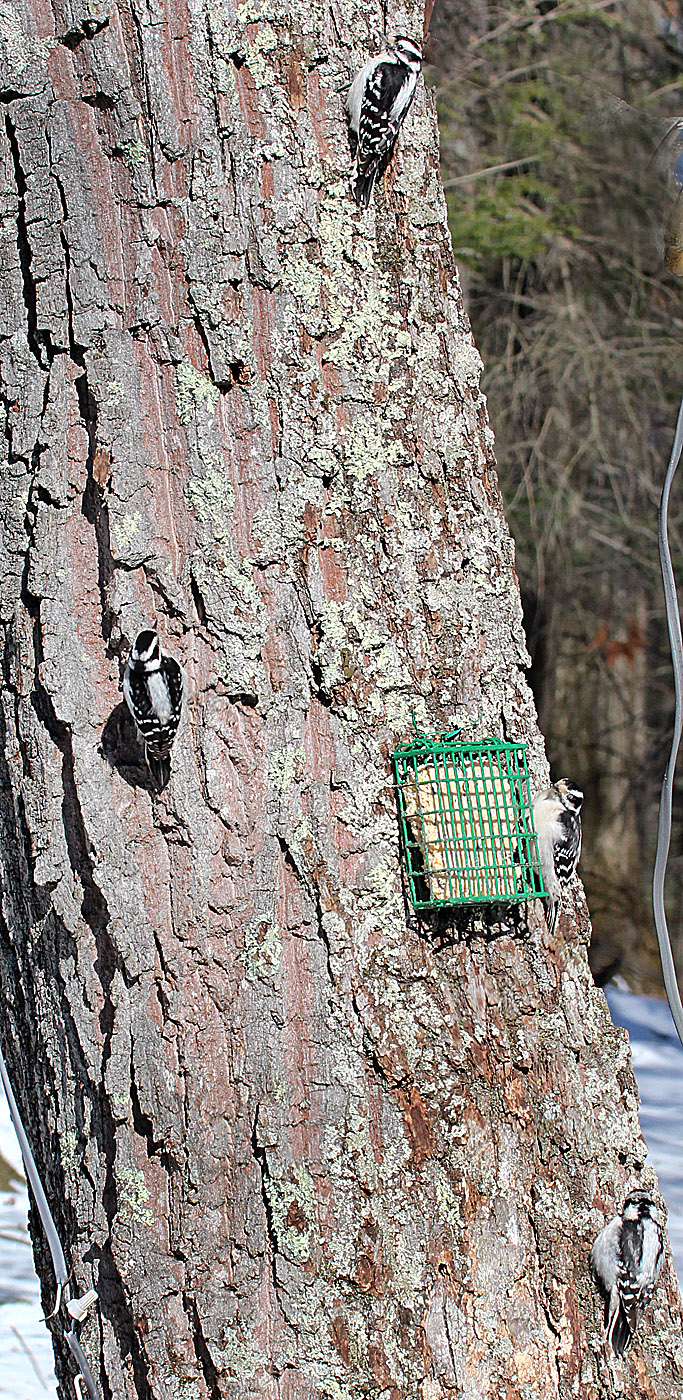
Photo by Chris Bosak Four Downy Woodpeckers gather around a suet feeder attached to an oak tree in Danbury, Conn, Feb. 2016.

Photo by Chris Bosak
Four Downy Woodpeckers gather around a suet feeder attached to an oak tree in Danbury, Conn, Feb. 2016.

OK, a group of Downy Woodpeckers is probably not called a “bunch,” but at any rate, here’s a photo I took a few days ago of four of them around a single suet feeder. This is the same feeder/tree that attracted two Brown Creepers a few weeks ago. Interestingly enough, the Downys all seem to be female. (Where was that bar when I was in my 20s? Ha.)

I’ve seen Downys come and go at a suet cake and perch nearby, but never 4 in one tree.

Not the best quality photo, but a pretty neat sighting.

Thanks, as always, for checking out http://www.birdsofnewengland.com


Brown Creeper and Yellow-bellied Sapsucker pay a visit

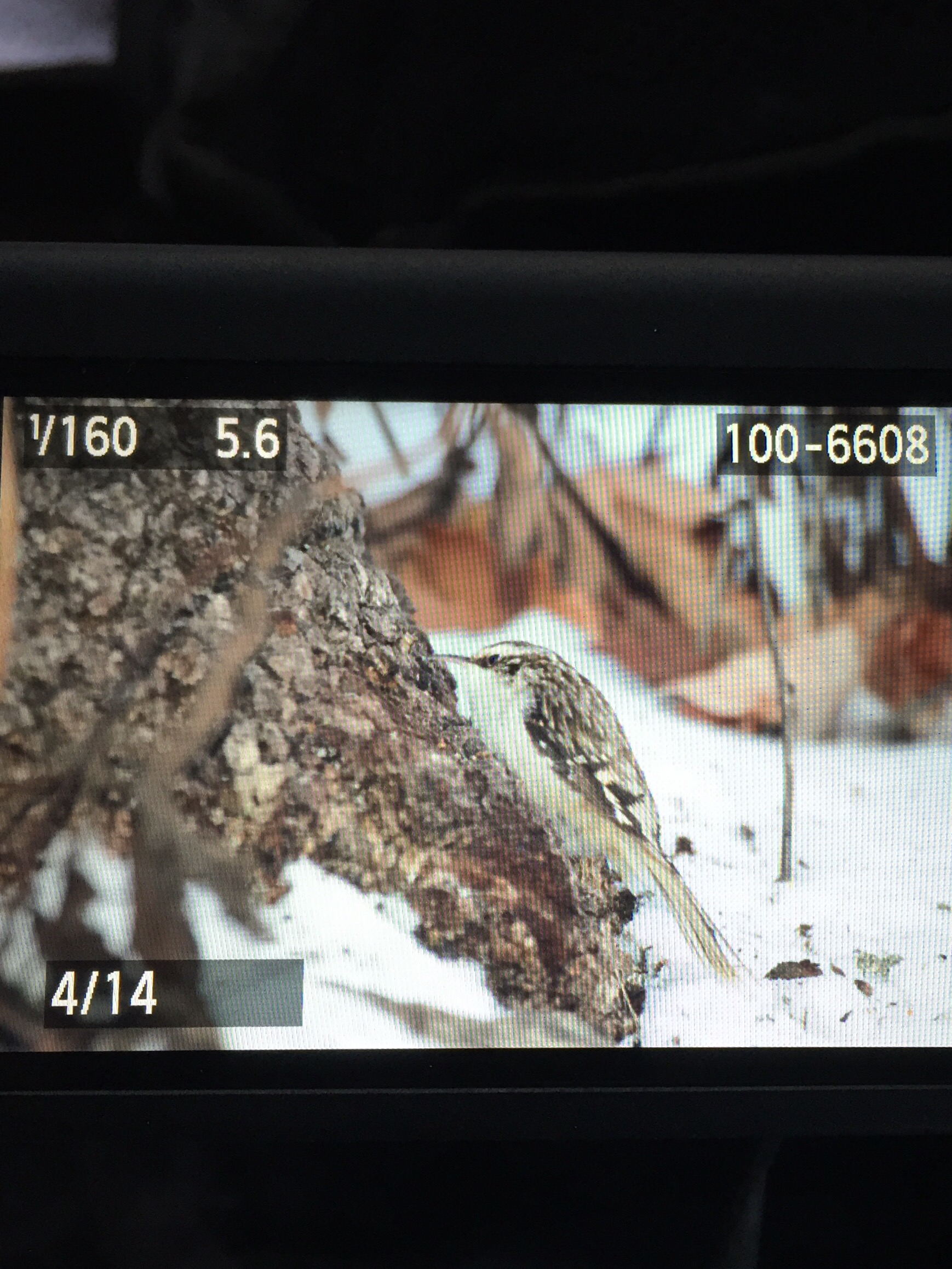
Photo by Chris Bosak Brown Creeper at base of tree.

Photo by Chris Bosak
Brown Creeper at base of tree.

At one point today a Yellow-bellied Sapsucker was on the suet feeder and a Brown Creeper crept along the base of an adjacent tree. Neither are earth-shattering sightings, but both are rather unusual in my part of New England at Merganser Lake. In fact, it was the first time I had ever seen a sapsucker at one of my feeders. I even managed to get a decent photograph of the Brown Creeper, a species that can be tricky to shoot.

The photos accompanying this post, admittedly, don’t look that great. They are merely photos I took with my iPhone of the display screen of my camera. When I have more time I’ll get to a computer and download the photos, but for now the mediocre iPhone will have to do. Thanks for your patience. I wanted to post this as soon as possible as this is Great Backyard Bird Count weekend. It runs through Monday, so maybe this posting will inspire others to participate. For more information, click here.

Photo by Chris Bosak Yellow-bellied Sapsucker on suet feeder.

Photo by Chris Bosak
Yellow-bellied Sapsucker on suet feeder.

Something to do on a snowy day: Learn the difference between hairy and downy woodpeckers

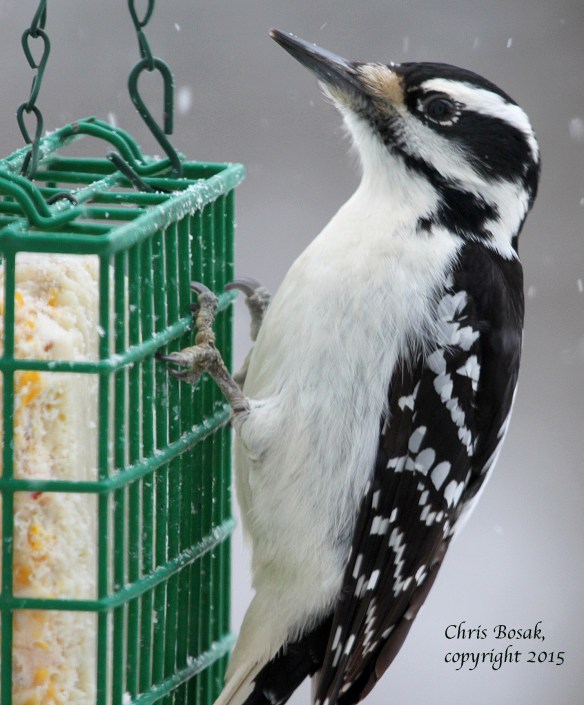
Photo by Chris Bosak A female Hairy Woodpecker clings to a suet feeder as snow falls in Jan. 2015.

Photo by Chris Bosak
A female Hairy Woodpecker clings to a suet feeder as snow falls in Jan. 2015.

If you live in New England you’re about to buried in snow so why not studies these photos and learn the differences between the hairy and downy woodpeckers. Beginning birders often confuse the two species. I know it took me a long time to be able to tell the two woodpecker species apart with confidence. Hopefully this posting will help some of you distinguish between the two.

The two species are hard to tell apart because they basically look exactly the same, hence the confusion. The major difference is the size. The downy is a dainty six inches, while the hairy is a beefy nine inches. That’s enough of a difference that you’d think it would be easy to tell one from the other. But if you’re new to this birding thing and don’t have a point of reference to judge size, it’s tough. I know, I’ve been there. Plus, like any birds, there can be size variations within a particular species. There can be smallish Hairy Woodpeckers and largish Downy Woodpeckers. So size can or can’t be a good way to tell them apart.

For me, the biggest difference is the size of the bill. In the most simple terms, downys have small bills and hairys have big bills. Beyond that, the bill of the downy just looks small and rather fragile. It isn’t fragile, of course, it’s quite strong. It just looks small and fragile. The bill of the Hairy Woodpecker, on the other hand, looks more sturdy and substantial. If one or the other lands on your feeder, check out the bill — dainty downy or hardy hairy.

Below is a side-by-side comparison. (Males of both species have a red patch on their heads. Females do not have have the red patch. Both birds below are females.)

Photos by Chris Bosak Side-by-side comparison of Hairy and Downy Woodpeckers' bills. Female Hairy on the left, female downy on the right.

Photos by Chris Bosak
Side-by-side comparison of Hairy and Downy Woodpeckers’ bills. Female Hairy on the left, female downy on the right.

Northward expansion of the Red-bellied Woodpecker

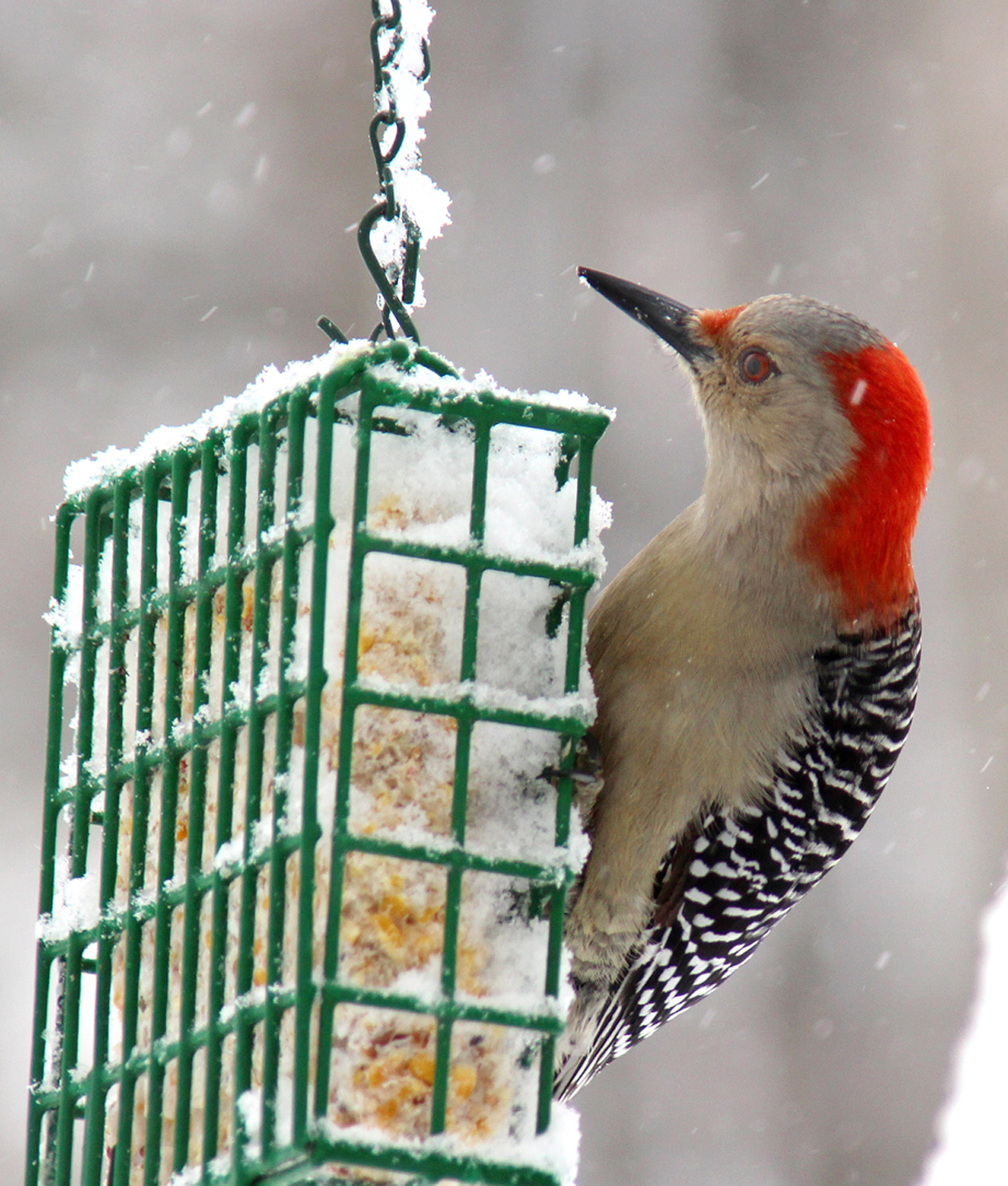
Photo by Chris Bosak A Red-bellied Woodpecker visits a suet feeder during a snow storm.

Photo by Chris Bosak
A Red-bellied Woodpecker visits a suet feeder during a snow storm.

Here’s my latest For the Birds column that appeared in last week’s The Hour (Norwalk, Ct) and this week’s The Keene (N.H.) Sentinel. It is about the northward movement of the territory of the Red-bellied Woodpecker, a large and handsome woodpecker that has been common in southern New England but scarce in middle New England. That seems to be changing.

Here’s the link to the story.