A continuation of my previous post about Blue Jays eating peanuts.

Photo by Chris Bosak
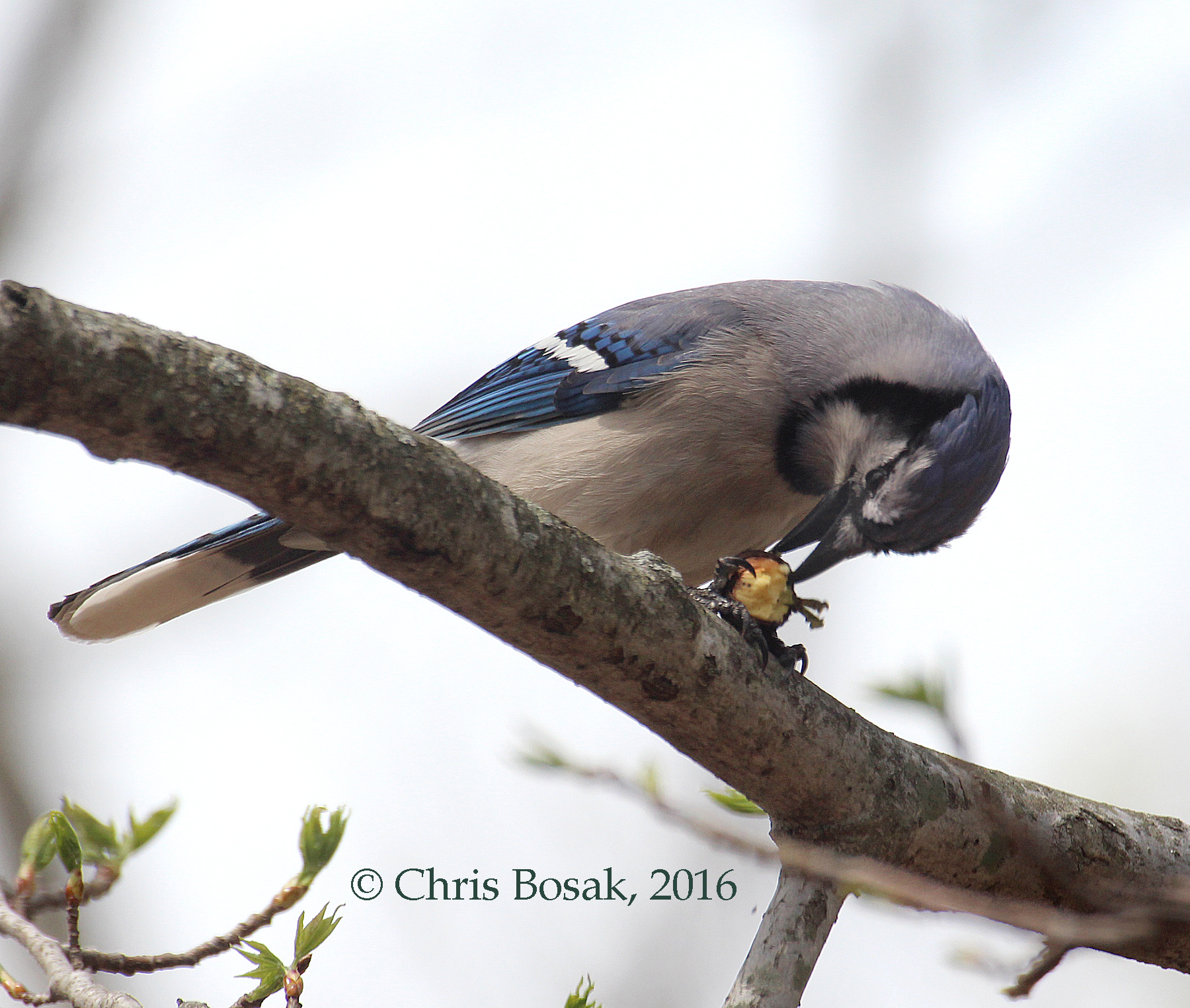
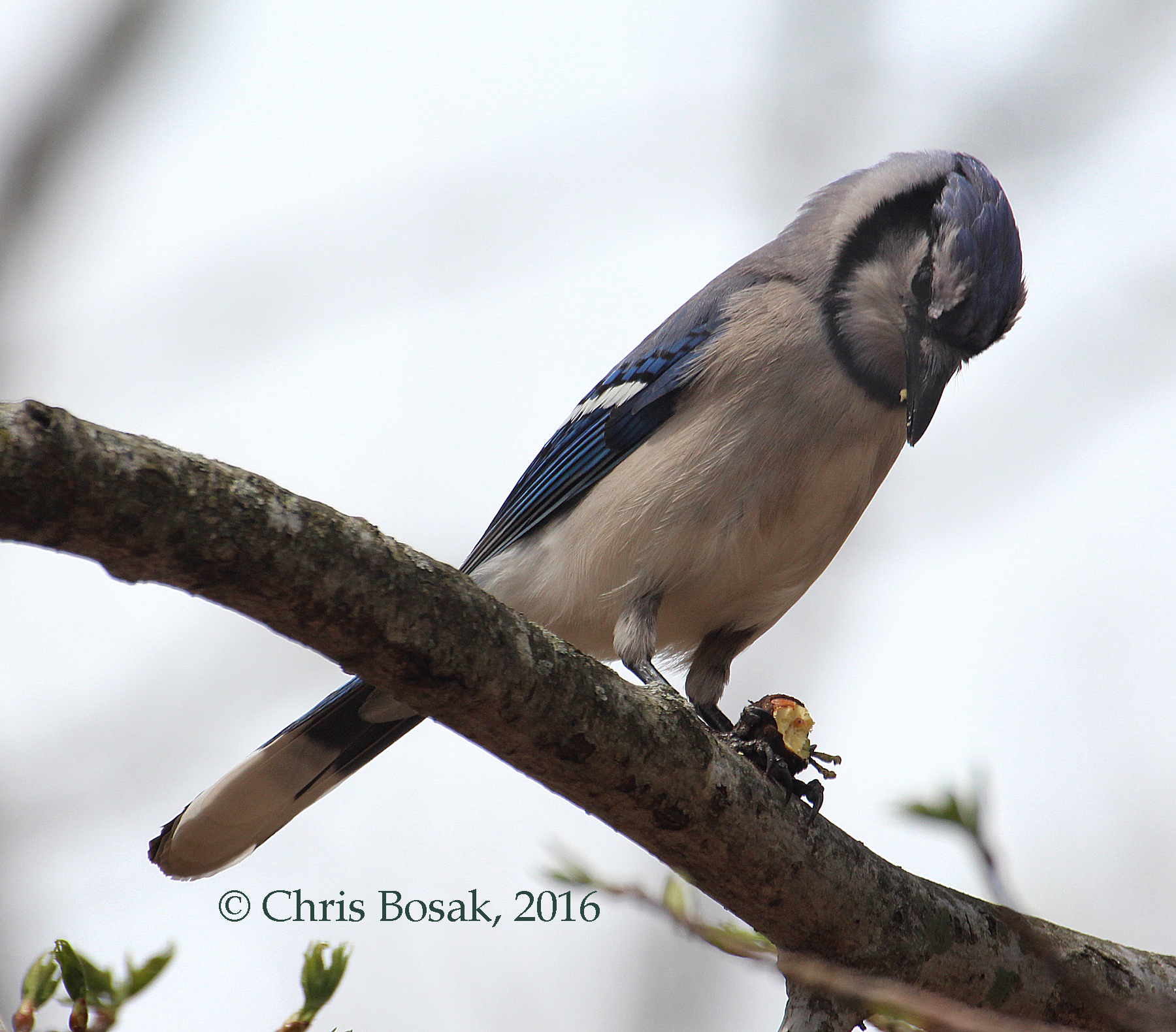
A Blue Jay considers whether to grab a peanut from a feeder in Danbury, Conn., May 2016.
Hmm, should I?
Heck, yeah I should!
I’ve always heard that Blue Jays like peanuts. “Put them out whole,” they would say.
So I did and nothing would happen. In fact, not only would the Blue Jays not eat the peanuts, I wouldn’t even see any Blue Jays. (Therein was the real problem.)
But at my new place Blue Jays abound. Do they like peanuts? I asked again. Well, I gave it another shot and, yes, Blue Jays do like peanuts. So much, in fact, that I can hardly keep up with demand.
The Blue Jay were very wary at first. I had to watch them take the bait from inside the house looking out a window. Now I can put a handful of peanuts on the feeder, take three steps to the lounge chair and plop myself down. Within minutes, or even seconds, the Blue Jays surround the area. One brave one dives in for a peanut and the others follow. There goes that handful. On and on it goes for as long as I’m willing to grab more handfuls. It’s been great fun.

Photo by Chris Bosak
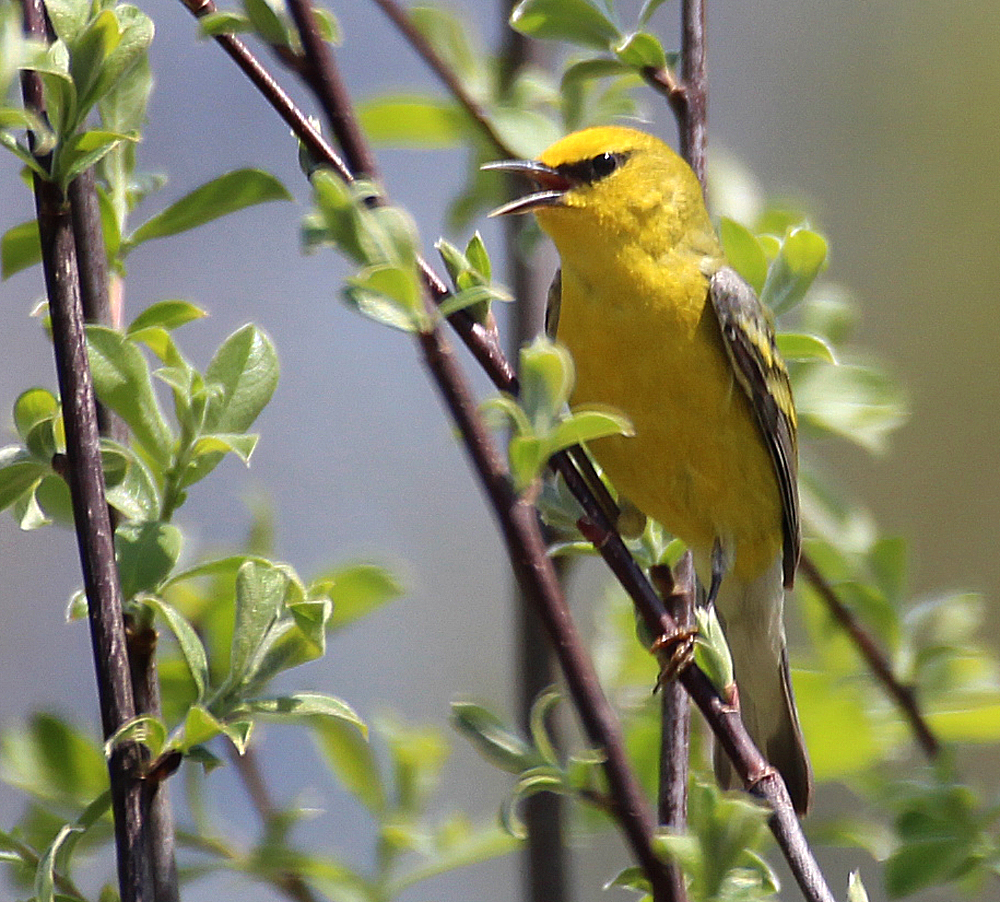
A Blue-winged Warbler seen at Fairchild Wildflower Sanctuary in Greenwich, Conn., May 2016.
Here’s a few more of the Blue-winged Warbler. See the post below for more information about the photos.

Photo by Chris Bosak
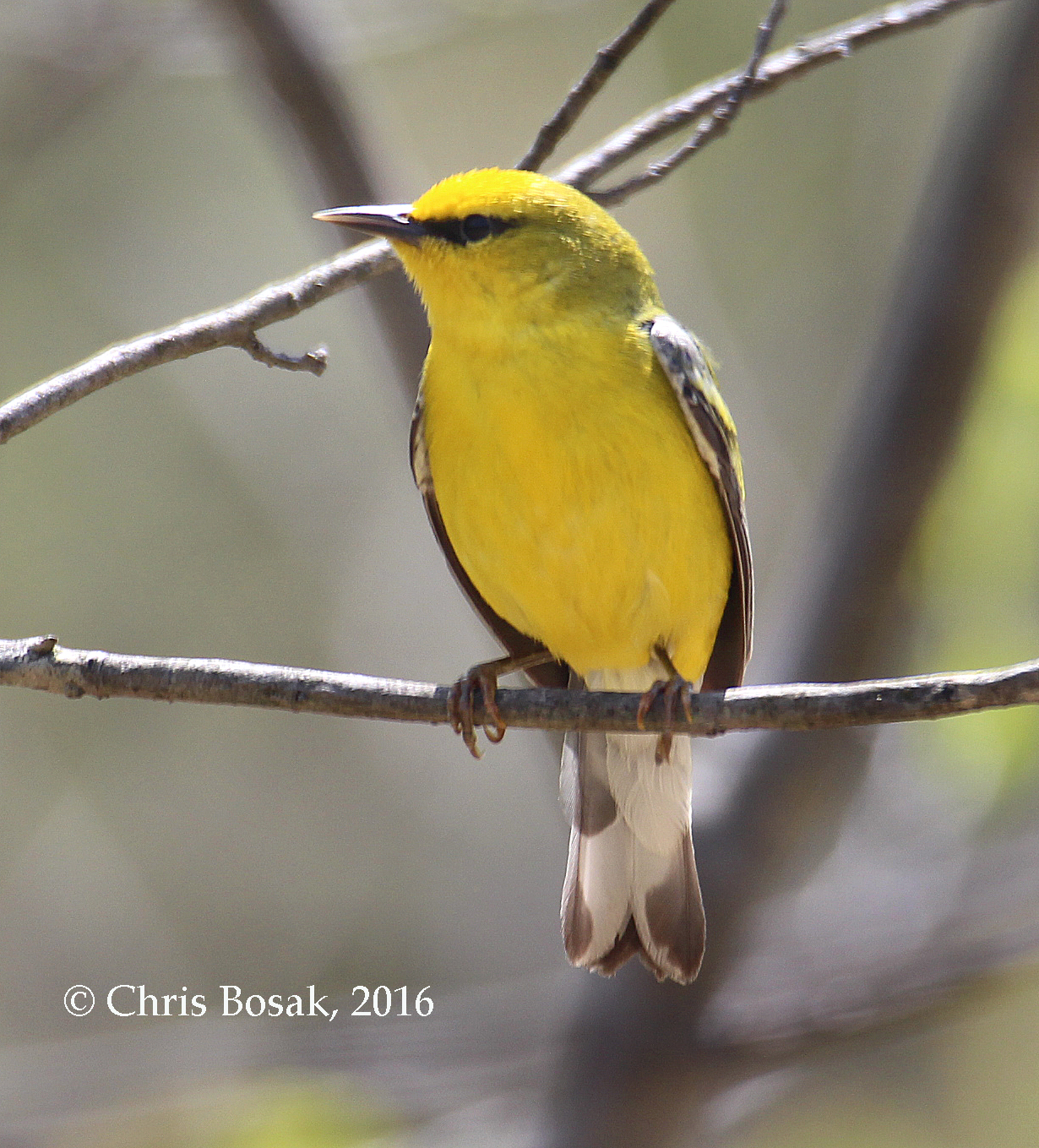
A Blue-winged Warbler seen at Fairchild Wildflower Sanctuary in Greenwich, Conn., May 2016.
I hadn’t seen one in years. I just haven’t been visiting the right spots as Blue-winged Warblers stick to a pretty specific habitat: low, brushy, shruby. You’re not likely to find one deep in the woods.
But I found myself with an hour to kill and driving in the vicinity of Fairchild Wildflower Sanctuary in Greenwich, Conn. This was an old haunt of mine when I lived in nearby New York and had to drive past the exit daily. Now I found myself trekking the trails there again.
I had seen a few warblers — including a few Yellow Warblers, a specialty there — when I heard the song of the Blue-winged Warbler. It’s a buzzy song, almost insect-like. They look as cool as they sound with bright yellow plumage and a long, thin black eye stripe. It was nice to see them again (there were two) and even nicer that they were somewhat cooperative as I tried to photograph them.
Here are some shots of the Blue-winged Warbler. (I know the wings don’t exactly look blue. I don’t name the birds.)

Photo by Chris Bosak
A Blue-winged Warbler seen at Fairchild Wildflower Sanctuary in Greenwich, Conn., May 2016.
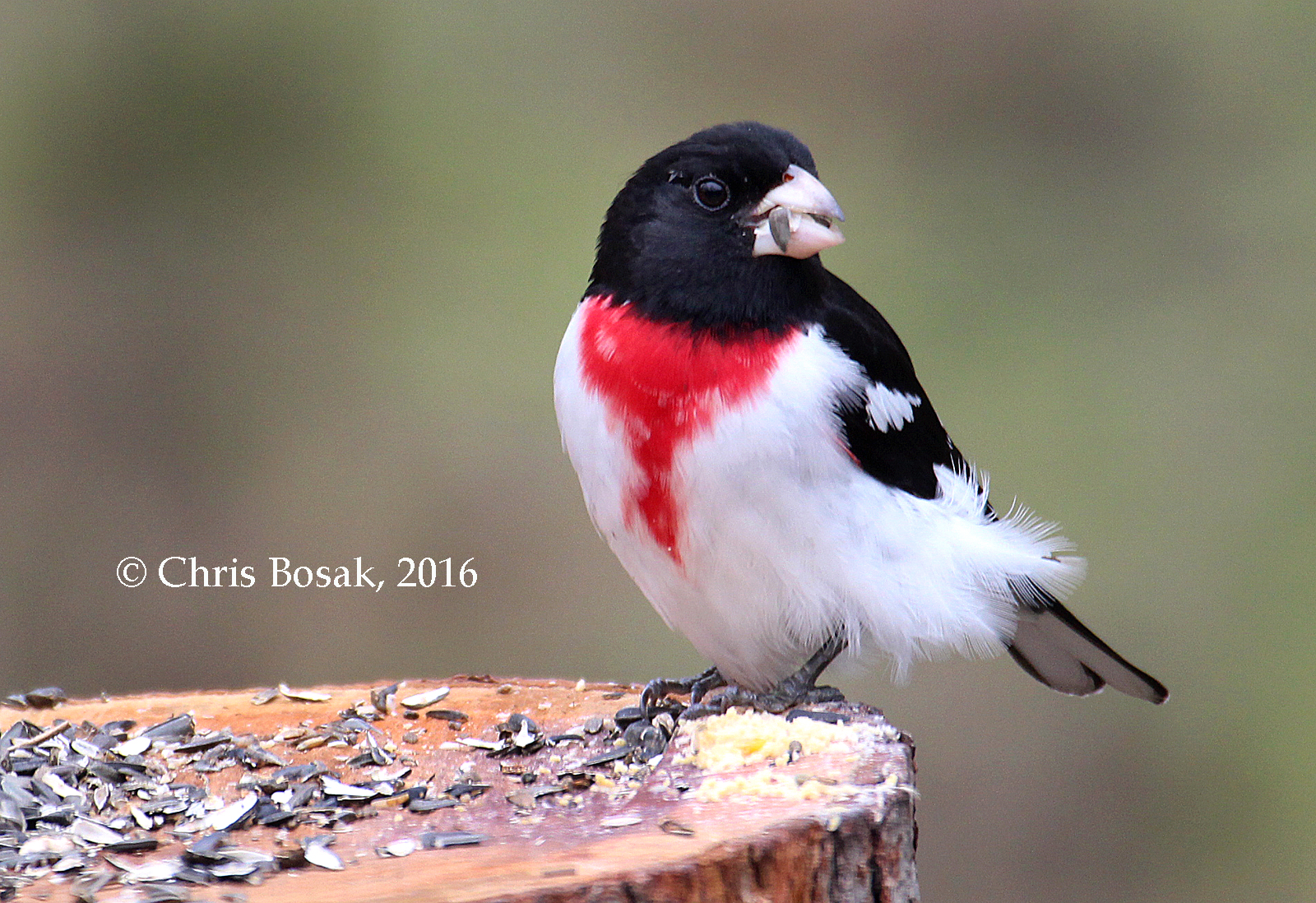
You didn’t think a Rose-breasted Grosbeak would visit my yard and I’d post only a measly two photos, did you? Of course not. So here are several more photos. This guy hung around for about three days and then presumably headed north. Enjoy and good luck for the rest of this spring migration.
Let me know what you’re seeing out.
I’ve been having so much fun watching my homemade birdfeers attract so many birds I decided to video a few of the visitors. I have a longer video planned and in the works, but here’s a quickee I threw together (partially just to reacquaint myself with iMovie.)

Photo by Chris Bosak
An American Goldfinch with Avian Conjunctivitis visits a birdfeeder in Danbury, Conn., April 2016.
Here’s the latest For the Birds column, which runs weekly in The Hour (Norwalk, CT) and Keene (NH) Sentinel. I don’t always post my columns to this site, but this is an important topic so I figured I would. Thanks for supporting http://www.BirdsofNewEngland.com
…
I was stretched out on the lounge chair on the deck, binoculars and camera on one side, a fresh cup of coffee on the other. The sun was warm on this particular late morning. (The sun is that bright, hot thing in the daytime sky, just in case anybody forgot with all this gray, wet weather we’ve been having.)
Suddenly an American Goldfinch appeared out of nowhere. It didn’t attack the feeders from the flanks like the goldfinches and most other birds usually do. He flew right over my head and approached the feeders directly. His flight was awkward; not at all Continue reading

Photo by Chris Bosak
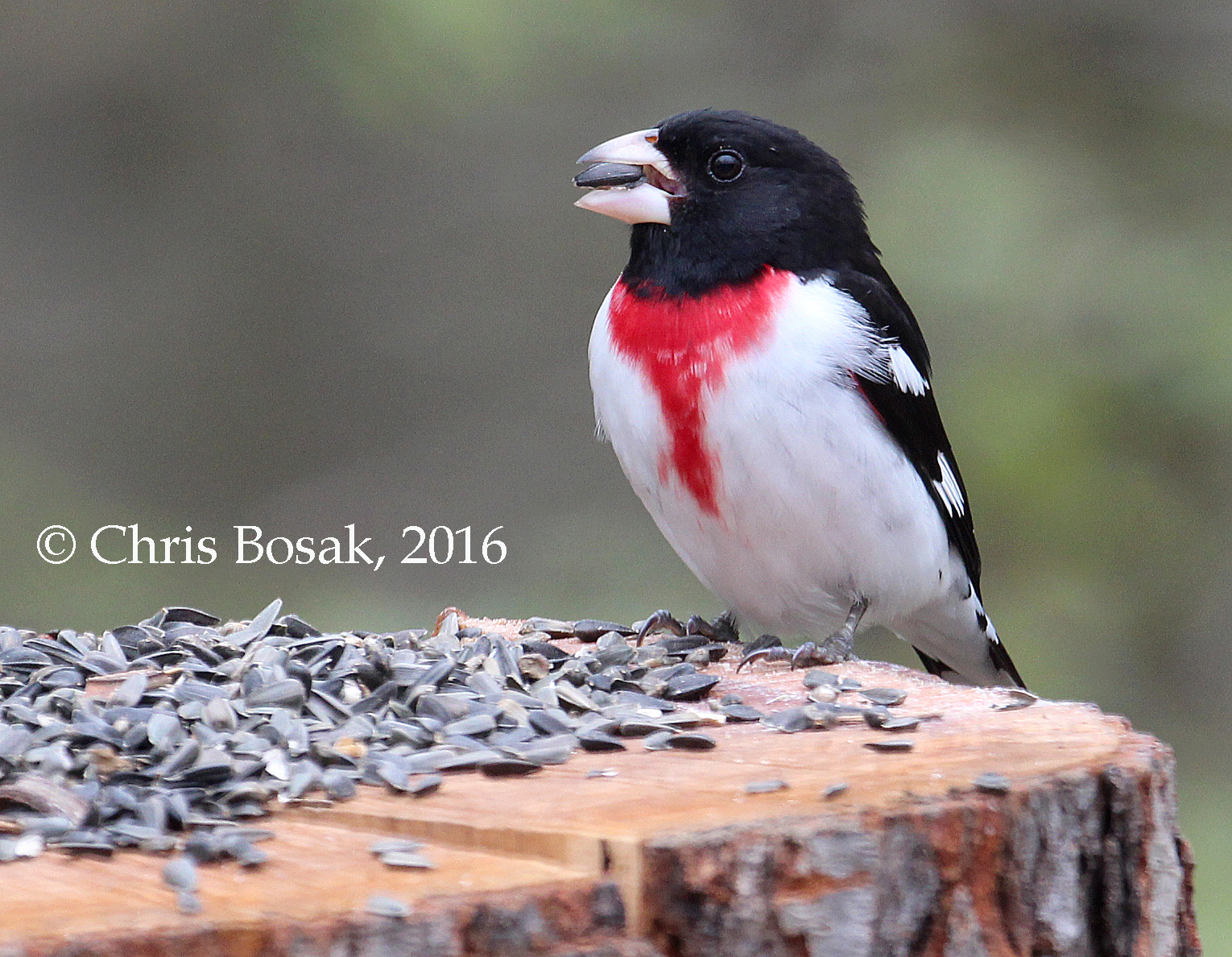
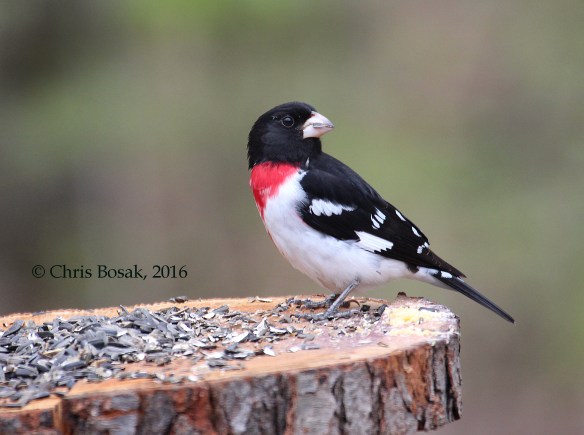
A Rose-breasted Grosbeak visits a homemade platform feeder in Danbury, Conn., on May 5, 2016.
Sure enough, this morning (May 5) I was awakened by a small commotion at my window feeder. It was a male Rose-breasted Grosbeak trying to land on the narrow perch. Even without my glasses on I could tell what it was. How do you mistake a bird like that? It eventually figured out how to land on the small window feeder. I hoped he would get tired of the narrow perch and eventually find his way into the backyard where the real feeding station is. I made sure the homemade platform feeder had plenty of seeds.
Sure enough (again), about 11 o’clock there he was. Standing on the platform feeder eating seeds. Grosbeaks are like finches or cardinals in their eating habits in that they will perch and stay there to eat seed after seed. That is unlike birds such as chickadees, nuthatches and titmice, which grabs seeds and go. So with the grosbeak sitting there chowing down, it presented a nice, long photo opportunity.
I’ll write more about it in a later post, but for now, I wanted to get these photos out there.
Thanks for supporting http://www.BirdsofNewEngland.com
Here’s one more shot, for now:
As shown in the photo above and the photos below, they break the shell and eat the nut in pieces. I’m sure most of you knew that anyway. Just wanted to provide photographic evidence.
Here’s a quick quiz on Blue Jays for you. The answer will be revealed in photos tomorrow, so time is limited to give this question some thought. The question is: How do Blue Jays eat acorns?
Do they swallow them hole? Break the shell and then eat the nut hole? Break the shell and eat the nut in pieces?
No need to officially cast a vote. Just give it some thought. Answer coming tomorrow morning.