Yes, a ‘green’ heron

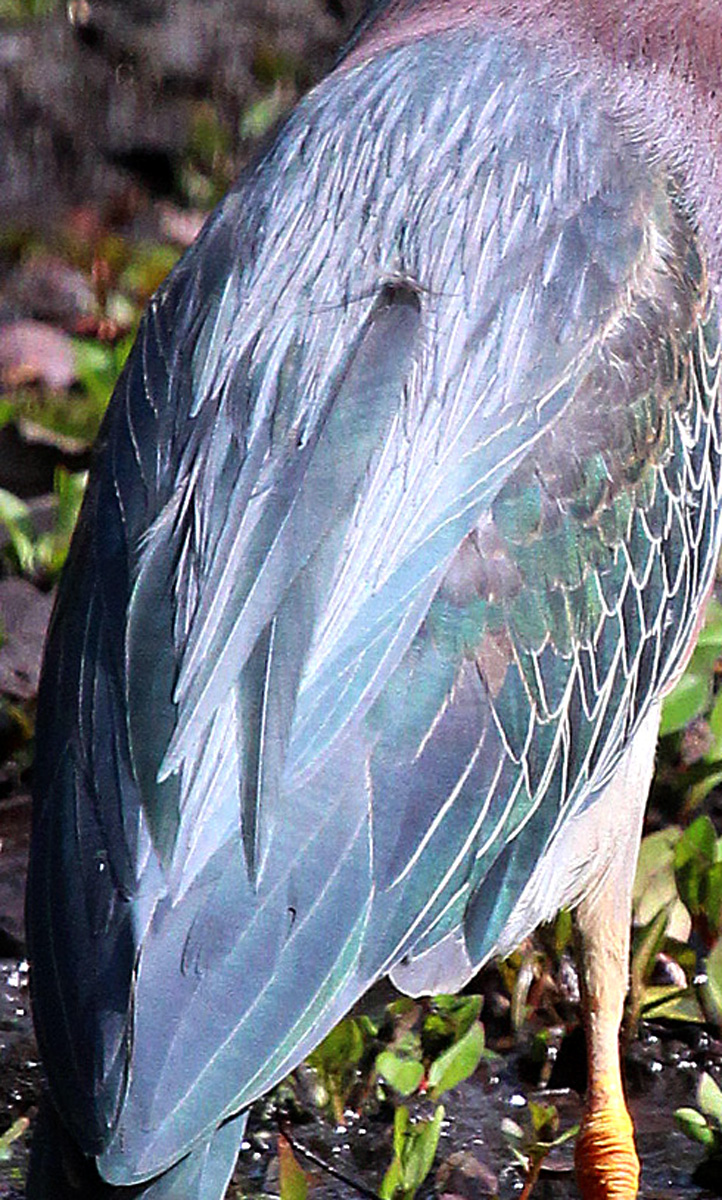
Photo by Chris Bosak The back plumage of a green heron.

Photo by Chris Bosak
The back plumage of a green heron.

Green Heron’s often do not look green because the green is not a bright, neon green, but rather a dark muted green. Also, from a distance, which is where the bird is usually viewed, the bird looks more brownish or greenish-brown. I was lucky enough to photograph from a fairly close range one of these birds last week. Zooming in on the feathers on its back, here’s why it’s called a Green Heron. Of course, much of it depends on how the light is hitting the plumage.)

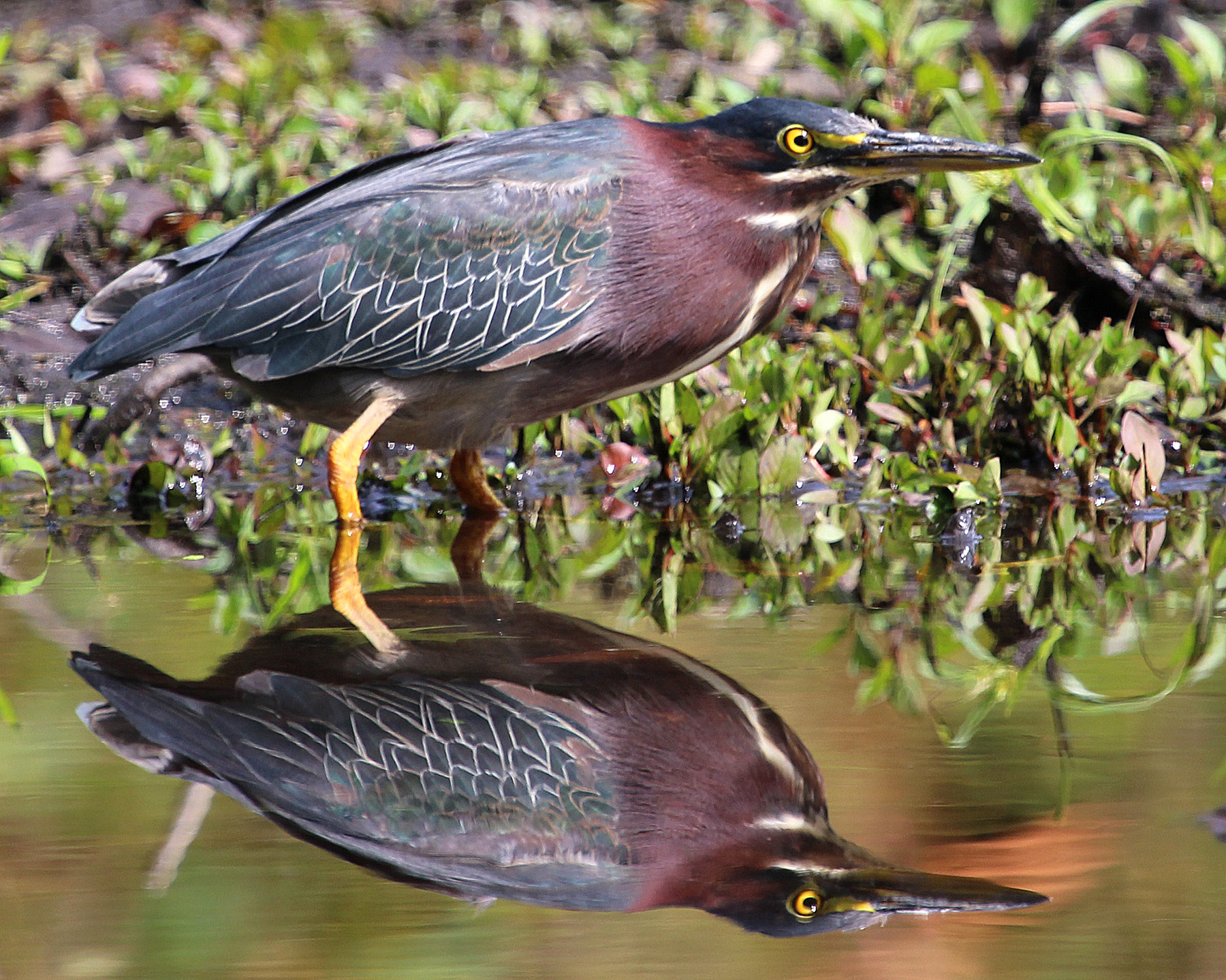
Here’s a full view of the bird.

Photo by Chris Bosak A Green Heron stalks a pond in Darien in this fall, 2014 photo.

Photo by Chris Bosak
A Green Heron stalks a pond in Darien in this fall, 2014 photo.

No seagulls, just gulls

Here’s my latest For the Birds column, which runs weekly in The Hour newspaper (Norwalk, Ct.) and The Keene Sentinel (Keene, N.H.) This one deals with the various gulls (not “seagulls”) that we see in New England.

Want to see For the Birds in your local paper? Contact the editor and make the suggestion.

……
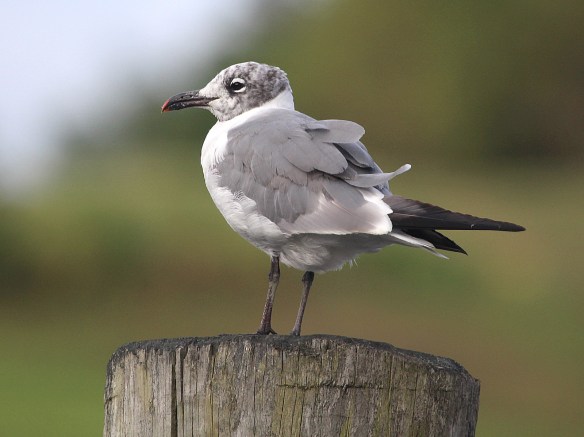
Photo by Chris Bosak A Laughing Gull stands on a piling at a boat dock along the Norwalk River, Sept. 2014.

Photo by Chris Bosak
A Laughing Gull stands on a piling at a boat dock along the Norwalk River, Sept. 2014.

Watching gulls is either one of the easiest things to do or most difficult things to do when it comes to birdwatching.

On one hand, you can go to the beach (or parking lot or dump) and see all the gulls you want. You are 100 percent guaranteed to see them any time of day and any time of year.

On the other hand, gulls can be endlessly challenging for birders, to the point that expert birdwatchers are the only ones who can be certain what they are looking at — and even then maybe not so much.

Like many aspects of birding, it’s as easy or as difficult as you want to make it. You can roll into a parking spot at the beach, pull out a stale loaf of bread and be surrounded by gulls in seconds. (Not that I’m condoning feeding birds bread.) That is certainly birdwatching, whether you care to identify the species of hungry gulls or not.

Or you can find a group of gulls and inspect them to see if any rare species are mixed in among the common species. That sounds easy, but can be extremely difficult, if not next to impossible. It’s not as if the common species are blue and the rare species are yellow. In many cases they look identical with only very subtle differences. It’s like trying to find Waldo but only every other person in the picture wears glasses, blue jeans, and has a red-and-white sweater and hat on.

So is that simply a flock of Herring Gulls and Ring-billed Gulls, or is there a first-year Iceland Gull mixed in there somewhere? Or perhaps is there a hybrid of some sort among the flock.

(Since I used the word “flock” in that previous paragraph twice, now seems to be a good time to address the obvious question. “Flock of Seagulls” is technically not correct since there are no birds that are actually called “seagulls.” They are simply gulls. With that said, good luck getting the song “I Ran” out of your head for the rest of the day. Sorry about that. Whatever you do, don’t go to YouTube and search for that song. The outfits and haircuts are too much. Some things should just stay in the 80s.)

Anyway, New England features several common gulls that may be easily found. The most common gull on a beach depends on exactly where you are in New England. Ring-billed Gulls and Herring Gulls are the predominant gulls in the Norwalk area. Herring Gulls are the large ones while Ring-billed Gulls are smaller and have a black ring around their bills. Greater Black-backed Gulls are also common around here. They are the very large gulls with dark backs. Laughing Gulls, which feature black heads, are also common throughout much of New England, but not seen as often in the Norwalk area as the others I mentioned. Laughing Gulls show up more around here in late summer and early fall.

The less common gulls that show up on occasion — and discernable only by experienced birders in many cases — include Lesser Black-backed Gull, Glaucous Gull, Iceland Gull, and Bonaparte’s Gull. Picking out these species is difficult because they look pretty much the same as the other gulls with white heads, chests and bellies, and darker backs.

Adding to the confusion is that gulls of the same species can look very much different depending on age and time of year. Young gulls are often brown and/or heavily speckled. So even if you’re looking at 100 Herring Gulls many of the birds may look very different.

Yes, digging deep into gull watching is not for the faint of heart or those short on patience. If all gets too much, keep trying and don’t run away from the challenge. After all, when it comes to breaking down a flock of gulls, do you really want to say “I Ran. (So Far Away.)”

There I go again — back to the 80s.
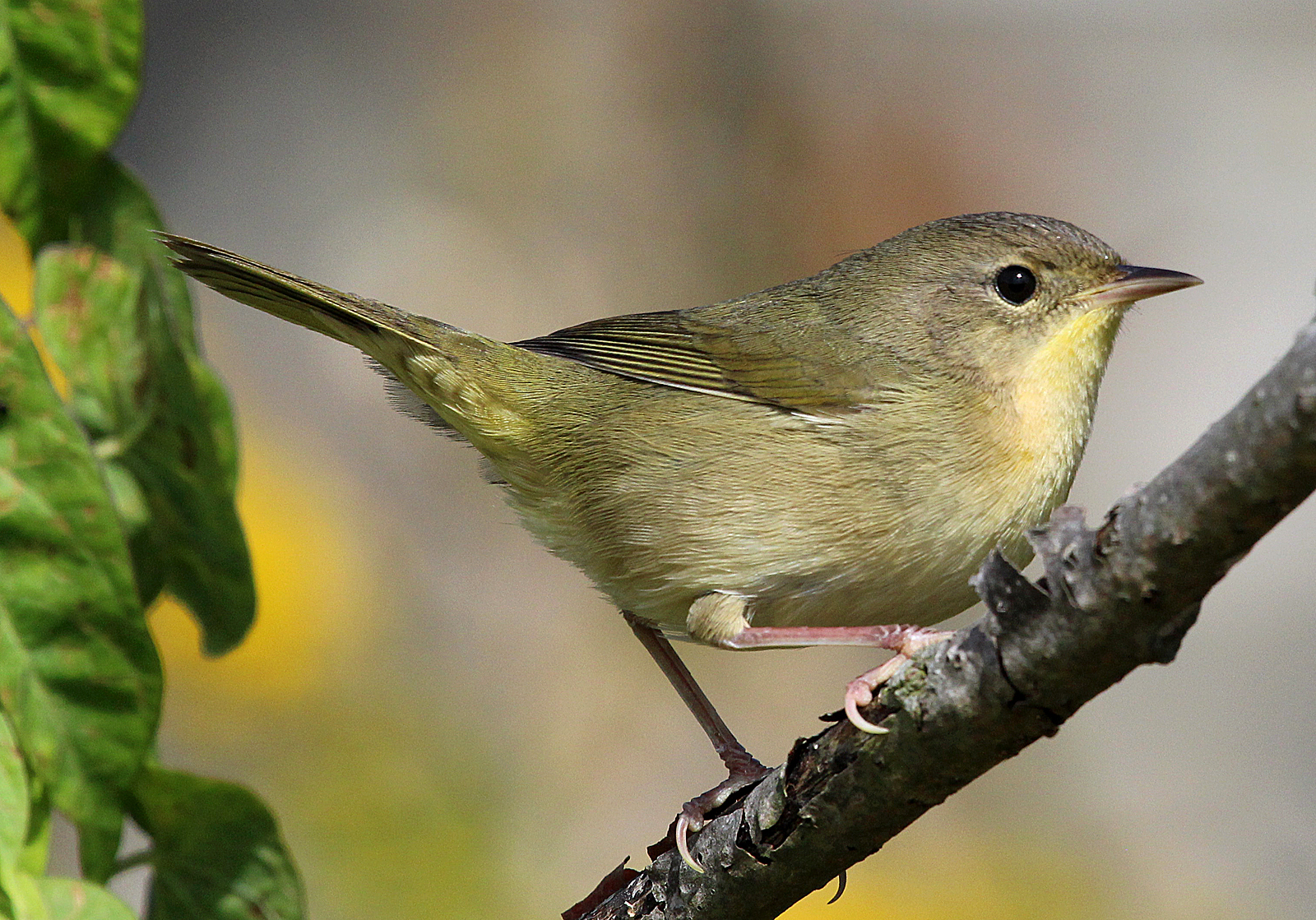
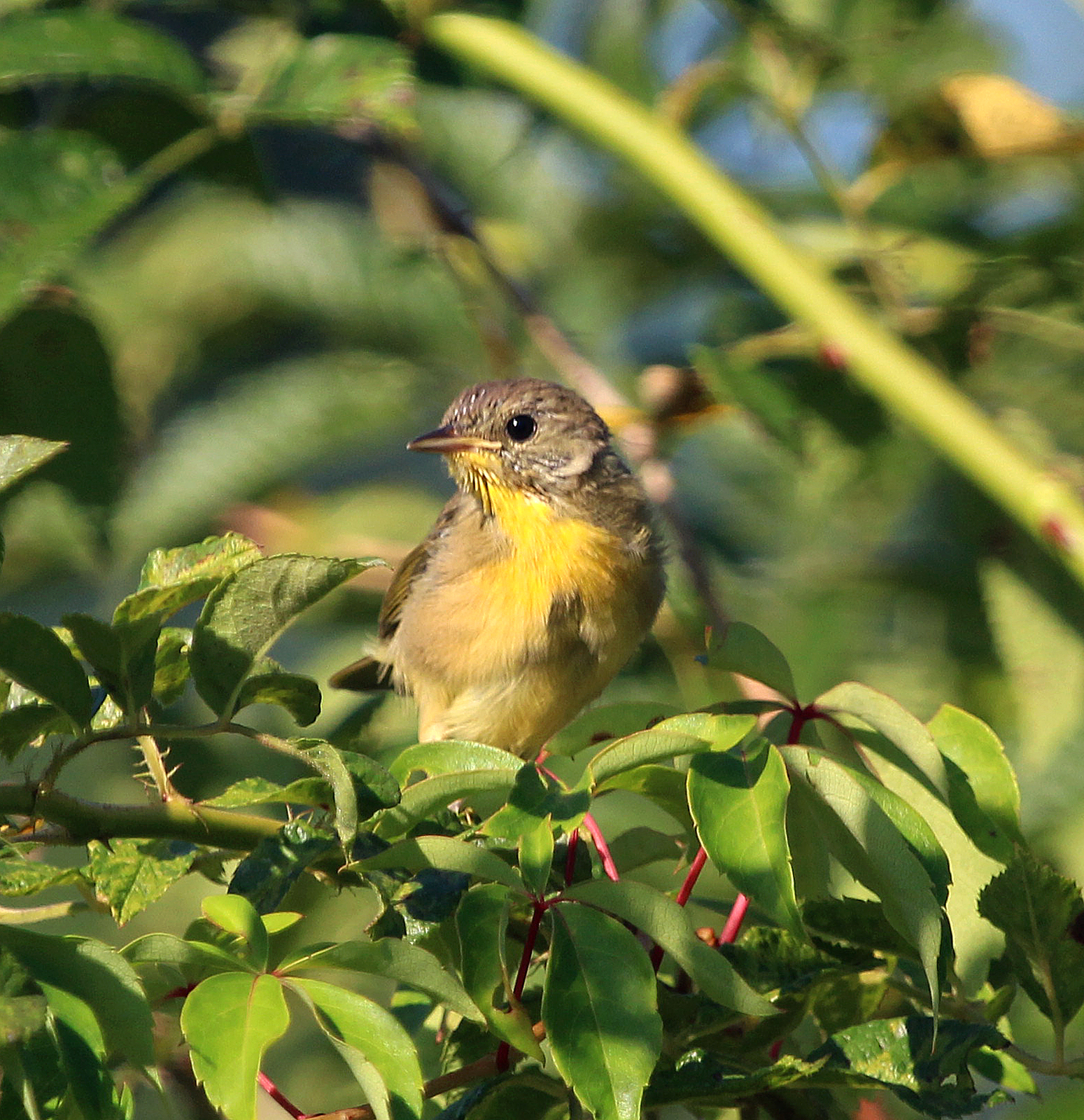
Female Common Yellowthroat

Here’s a female Common Yellowthroat, one of the many confusing fall warblers to watch out for as you hit your favorite birdwatching spots this fall.

Photo by Chris Bosak Common Yellowthroat, first year, southern New England, Sept. 2013

Photo by Chris Bosak
Common Yellowthroat, first year, southern New England, Sept. 2013

5 New England ‘poster birds’ for climate change

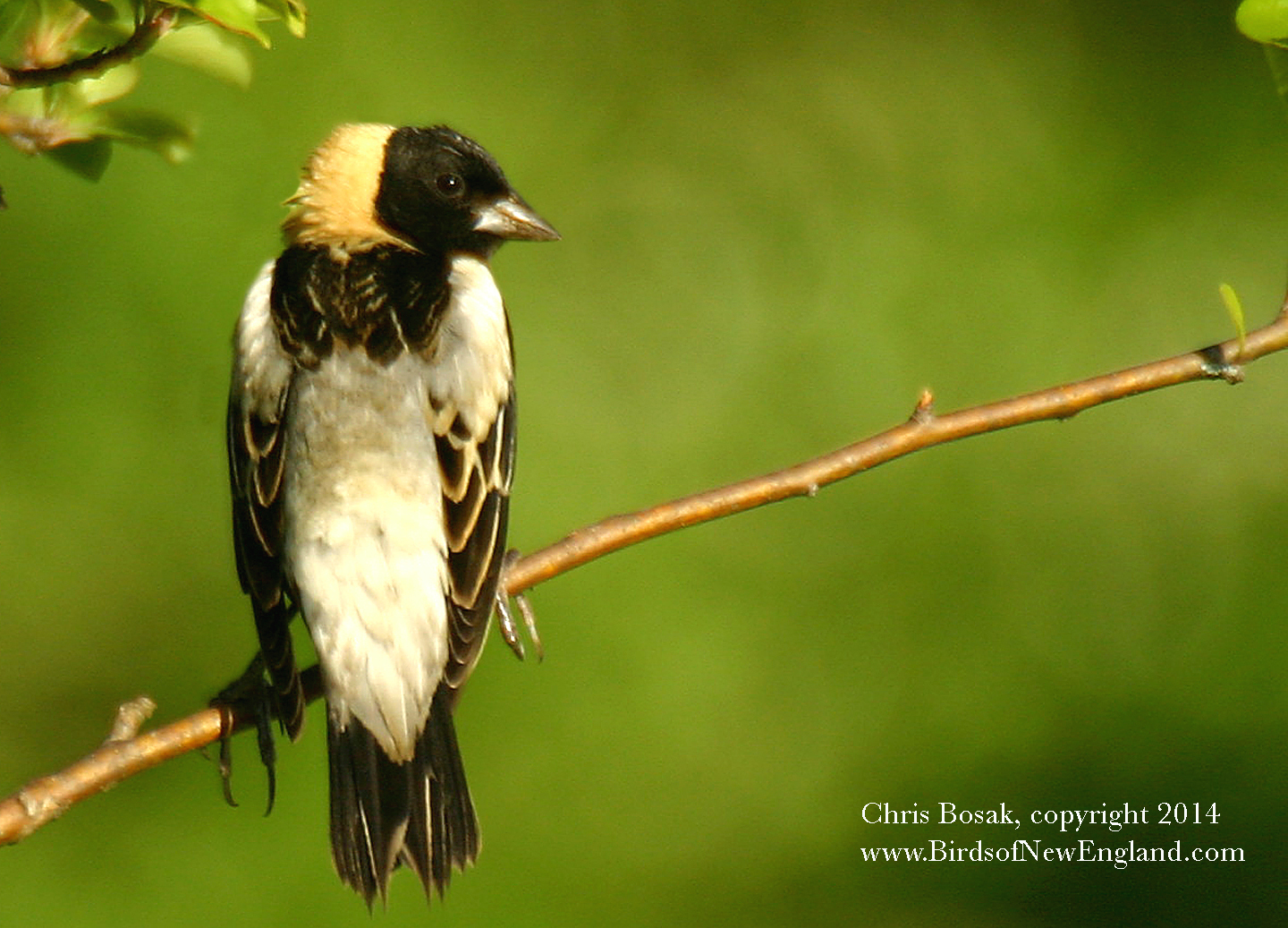
Photo by Chris Bosak Bobolink

Photo by Chris Bosak
Bobolink

In response to the recently released State of the Birds 2014 report, Patrick Comins, the director of bird conservation with Audubon Connecticut, spoke about the 5 “poster birds” that will be most affected by climate change and the accompanying shifts in bird population. He was speaking specifically about Connecticut, but certainly all of New England will see this impact.

Comins spoke during a telephone conference to journalists on Wednesday.

Here are the birds he picked:

Saltmarsh Sparrow: Currently breeds in Connecticut, but has difficulty with rising sea levels and high tides. Rising tides will only become worse over the next several decades.

Bobolink: This meadow nester will likely not nest or be seen often in Connecticut over the next several decades.

Dunlin: This handsome shorebird currently nests and may be seen throughout winter along the New England coast. It’s nesting ability in Connecticut, as Comins put it, will “become zero.” It will move its range north and perhaps New England will get some winter views of this bird.

Blue-winged Warbler: This handsome bright yellow warbler will “move up and out.”

Veery: Comins almost picked the Wood Thrush for his final bird, but chose the Veery. It will become scarce in New England.

The phrase “over the next several decades” may give some people cause to relax and think “I’ll never notice it” or “maybe things will change.” But the “next several decades” will be here before we know it. There have been staggering declines in bird populations over the last 40 years. We’re talking some species dropping in number by 50, 60 even 80 percent. That’s just the last 40 years. That’s basically yesterday evolutionarily speaking. Jeez, I can remember 40 years ago. It bothers me to think this decline all happened in my lifetime.

Hopefully the State of the Birds report will get the attention it deserves and affect positive change for birds and all wildlife.

The full report may be found here.

Are birds in our future? State of the Birds 2014 Report

Photo by Chris Bosak A Piping Plover preens at Milford Point in spring of 2014.

Photo by Chris Bosak
A Piping Plover preens at Milford Point in spring of 2014.

The State of the Birds 2014 report was released this week. It is a comprehensive look at how our bird populations are faring and how they might fare in the future. It’s fascinating stuff and a must read for anyone interested in birds and conservation.

Here’s my column on it, with input from Connecticut Audubon officials. 

Visit www.stateofthebirds.org for the full report.

Tricky fall migration

Photo by Chris Bosak A female Common Yellowthroat perches in a tree in West Norwalk late this summer.

Photo by Chris Bosak
A female Common Yellowthroat perches in a tree in West Norwalk late this summer.

Here’s the latest For the Birds column, which runs weekly in The Hour (Norwalk, CT) and The Keene Sentinel (Keene, N.H.)

I’ve mentioned before that the fall migration, for the most part, is less ballyhooed by the birding community.

There are many reasons for this. The spring migration is so eagerly anticipated because it follows winter (usually a harsh one in New England) and birders are itching to see signs of rejuvenation in the natural world. The early flowers do a good job of heightening our spirits, but there’s nothing like the birds’ returning to really get us out of the winter doldrums.

The spring migration is also marked with a wide variety of colorful birds, most notably the warblers and other songbirds that pass through in April and May. The males are in their bright breeding plumage and singing their hearts out. The females are not as brightly colored and not as vocal, but are still a sight for sore eyes in the spring. The birds have a real sense of urgency in the spring migration, too. They need to get to their breeding grounds to get a good nesting spot and get down to th Continue reading

A few extra meadow close-ups

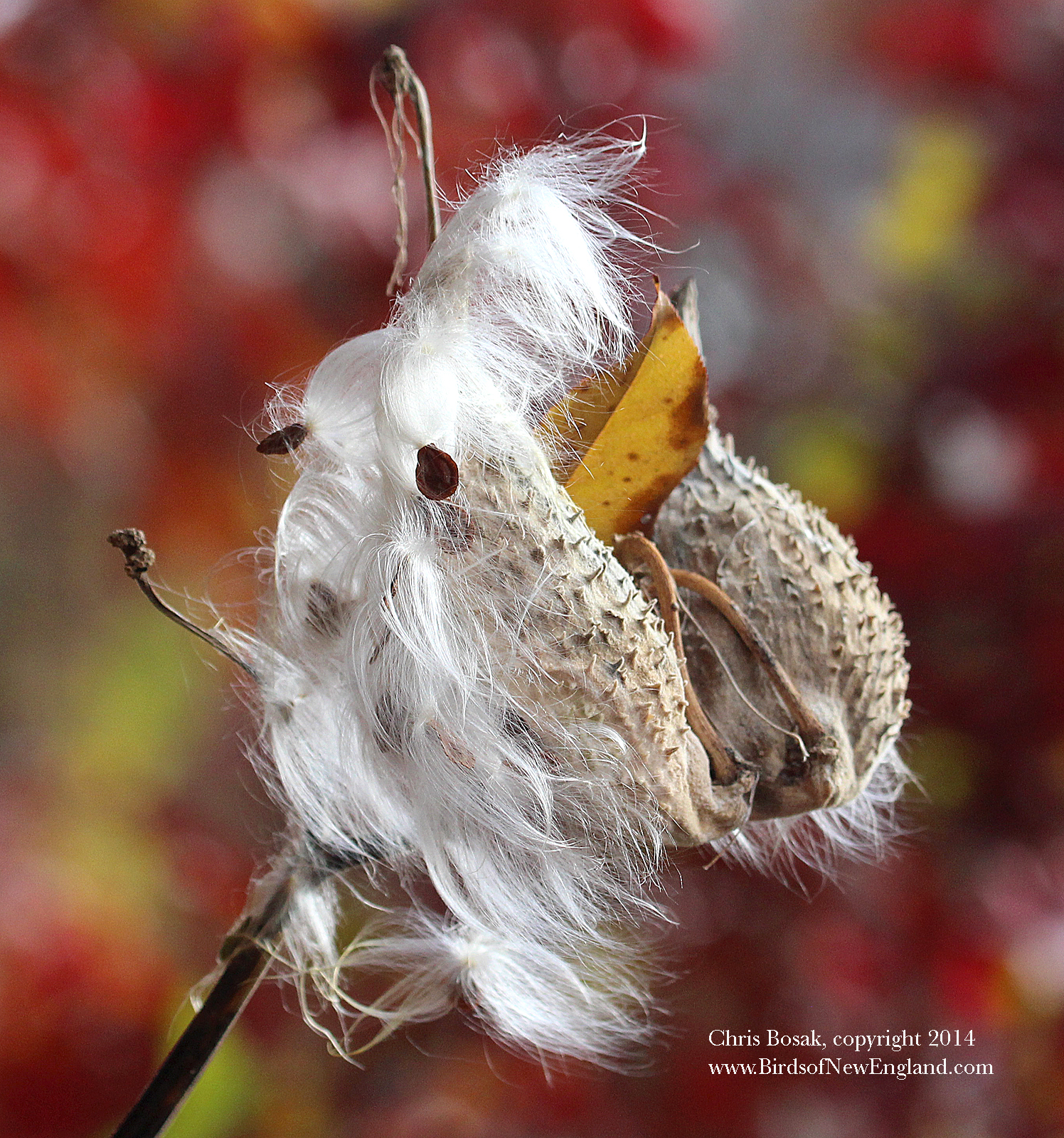
Well, I promised a different meadow close-up photo every day from the latter part of July through the end of August. I delivered on that promise. The problem is, however, I still have a few meadow close-ups I wanted to share. So here you go, a few more photos to wrap up my meadow macro photography project. Click on “continue reading” for a few more.

Photo by Chris Bosak A dried up milkweed pod at a meadow property of the Darien Land Trust, summer 2013.

Photo by Chris Bosak
A dried up milkweed pod at a meadow property of the Darien Land Trust, summer 2013.

Continue reading

I’m trying to work on Labor Day, but it’s tough with these guys flying around

Photo by Chris Bosak An Osprey soars over the Norwalk River on Monday, Sept. 1, 2014.

Photo by Chris Bosak
An Osprey soars over the Norwalk River on Monday, Sept. 1, 2014.

So I’m sitting here at The Hour office along the Norwalk River trying to get Tuesday’s pages out, but every five minutes one of these guys flies across my view. Love this time of year for Osprey sightings. More on that here.

Drying up flower, the last meadow close-up

With summer coming to an end (sort of), here’s a fitting end to this collection of close-up photographs taken at a meadow property of the Darien Land Trust. The purpose of the photos was to draw attention to the beauty and importance of meadow habitat, which unfortunately continues to be destroyed for development. This leaves the plants and animals that depend on the meadow to seek other homes, or worse, perish. Ultimately some of these species will disappear if the destruction rate continues. Support your local Land Trust or other conservation group.

Photo by Chris Bosak Dried-up flower from a meadow property of the Darien Land Trust, summer 2013.

Photo by Chris Bosak
Dried-up flower from a meadow property of the Darien Land Trust, summer 2013.

Here is the latest in a series of close-up (macro) photographs I took last summer while tromping through the meadow properties of the Darien Land Trust. From July 24 to Aug. 31, I’ll post a different close-up meadow photograph on this site.

Here’s more background on the project.

Pink flower in bloom, another meadow close-up

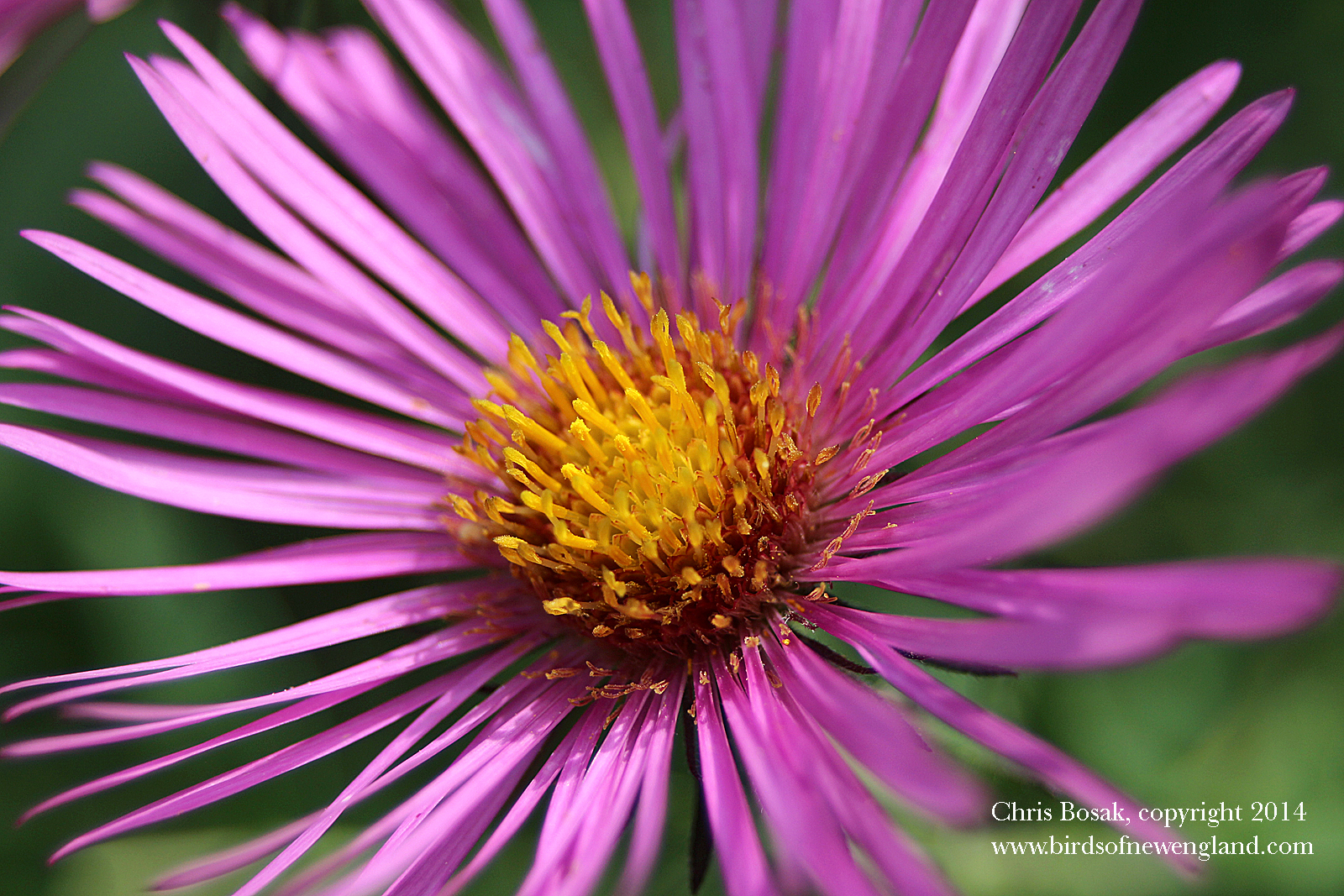
Photo by Chris Bosak Flower in bloom at a meadow property of the Darien Land Trust, summer 2013.

Photo by Chris Bosak
Flower in bloom at a meadow property of the Darien Land Trust, summer 2013.

Here is the latest in a series of close-up (macro) photographs I took last summer while tromping through the meadow properties of the Darien Land Trust. From July 24 to Aug. 31, I’ll post a different close-up meadow photograph on this site.

Here’s more background on the project.