Help to track hummingbirds _ from Audubon

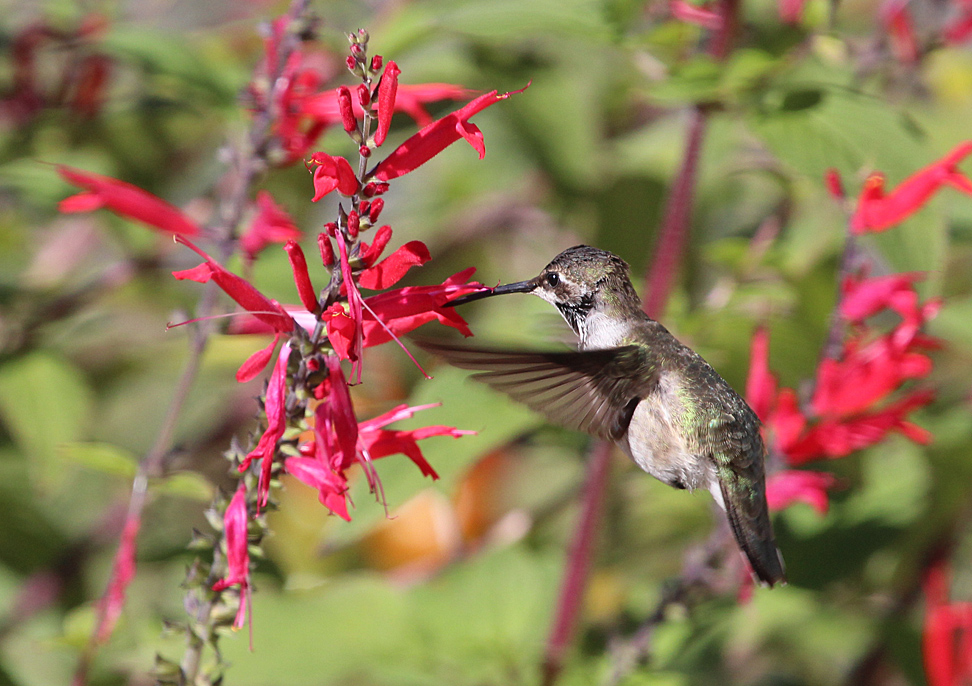
Photo by Chris Bosak A Black-chinned Hummingbird visits flowers this fall in Fairfield. Black-chinned Hummingbirds are native to western U.S. This was the first one recorded in Connecticut.

Photo by Chris Bosak
A Black-chinned Hummingbird visits flowers this fall in Fairfield. Black-chinned Hummingbirds are native to western U.S. This was the first one recorded in Connecticut.

Shamelessly copied straight from an Audubon Society press release (The photo is mine at least):

Audubon Invites Volunteers to Help Track Hummingbirds This Spring

NEW YORK, NY (April 1, 2014) – With spring officially upon us, the National Audubon Society invites birders and nature enthusiasts across the country to help track the health of hummingbird populations with Audubon’s Hummingbirds at Home app. This citizen science project utilizes the power of volunteers to compile data at a scale that scientists could never accomplish alone.

Every spring, numerous hummingbirds migrate long distances and must eat several times their weight in nectar daily to stay alive. Hummingbirds visit our yards every year, looking for nectar from our gardens and feeders. As flowers bloom earlier because of warming temperatures, the impact on hummingbirds which rely on nectar could be significant. The degree Continue reading
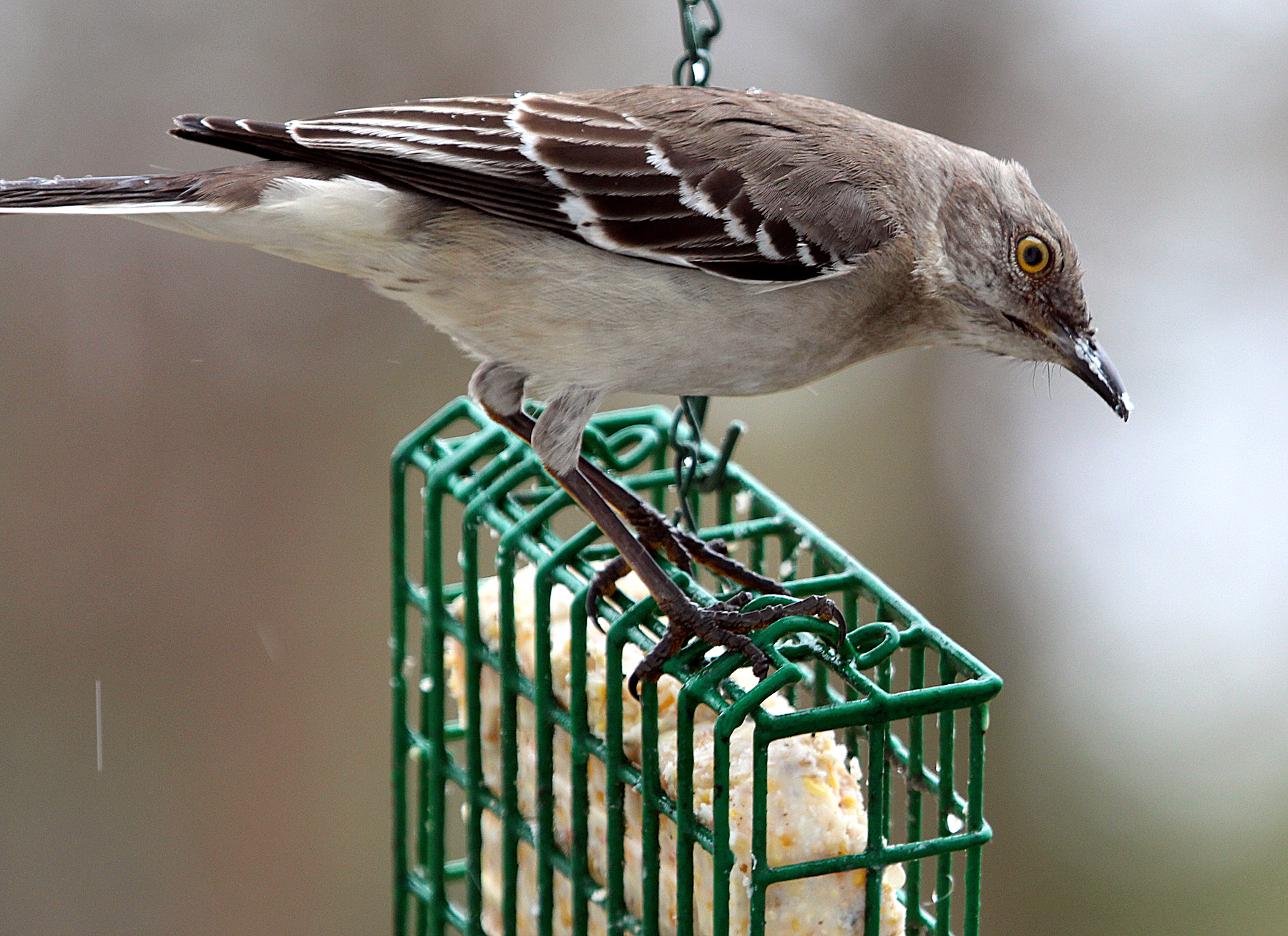
Mockingbirds are liking the suet

Photo by Chris Bosak A Northern Mockingbird visits a suet feeder as snow falls in March 2014 in Stamford, CT.

Photo by Chris Bosak
A Northern Mockingbird visits a suet feeder as snow falls in March 2014 in Stamford, CT.

It’s not often that I see Northern Mockingbirds at my feeders. I see them often enough, just not at the feeders. But for the past week or so, a pair of mockers have been regular visitors to the suet cake feeder. They split time with a pair of Downy Woodpeckers that has been visiting all winter.

Mockingbirds will begin their incredible singing performances soon. They will perch somewhere (often a very conspicuous spot) and sing their hearts out, going over their repertoire over and over. As its name suggests, the song is a long string of other birds’ calls. Personally, I always hear mockers include the Carolina Wren’s “tea kettle” song in their mix.

Have a mockingbird story? Feel free to comment. Thanks for visiting http://www.birdsofnewengland.com

David Allen Sibley talks about the Snowy Owl irruption

Photo by Chris Bosak A Snowy Owl flies across the beach at The Coastal Center at Milford Point in early March 2014.

Photo by Chris Bosak
A Snowy Owl flies across the beach at The Coastal Center at Milford Point in early March 2014.

I’ll post parts of my David Allen Sibley interview throughout the next few weeks. Here he talks about the great Snowy Owl irruption of winter 2013-14.

Why it’s called a Ring-necked Duck (even though ring-billed would make more sense)

Photo by Chris Bosak Ring-necked Duck in Darien, March 2014.

Photo by Chris Bosak
Ring-necked Duck in Darien, March 2014.

It took years for me to start calling this duck by it’s proper name: Ring-necked Duck. I would invariably blurt out “Look, Ring-billed Duck.” But, unlike the Ring-billed Gull, this bird is not named for an obvious ring around its bill.

Instead it is named after a hardly-noticeable ring around its neck. Conditions, including the posture of the duck, need to be right to even see the neck ring. The ring around the bill, however, is obvious in most conditions, unless the duck is sleeping with its bill tucked into its back feathers. Even the female, which is mostly brown in color, has a ring around her bill. (She also has a faint ring around her neck.)

So why Ring-necked Duck? Ornithologists in the 1800s named many birds by studying dead specimens. Apparently with the bird so close the chestnut colored neck band is more obvious, so it was named as such. It doesn’t make a lot of sense to the average birder (like me) in the field, but it is what it is. The above photo shows both the ringed neck and ringed bill of the beautiful duck.

Ring-necked Ducks are seen throughout New England, mostly in fresh-water ponds and lakes, from late fall through early spring.

Photo by Chris Bosak A pair of Ring-necked Ducks rest at a pond in Darien, March 2014.

Photo by Chris Bosak
A pair of Ring-necked Ducks rest at a pond in Darien, March 2014.

An interview with David Allen Sibley

Example of Sibley guide's second edition.

Example of Sibley guide’s second edition.

David Allen Sibley, the renowned birdwatcher and field guide author/artist, was kind enough to grant me and The Hour an interview about his recently released second edition of The Sibley Guide to Birds. I picked him up at the train station, drove to The Hour offices in Norwalk, and did the interview. I was hoping for some time to do some birdwatching, but alas, time was tight and it just didn’t happen. Not really anyway (read the column ((link attached)) for more details.)He sat down with The Hour photographer Erik Trautmann and me and I fired a bunch of random birding questions at him. We started, of course, with the field guides but then, as my interviews normally do, we headed off in all kinds of directions.It was a great time and I’m glad David took the time to do the interview in our office. Click here for the column and accompanying video of a portion of the interview. I will add to this website more audio of the interview in the coming days.

Thanks for visiting http://www.BirdsofNewEngland.com


Wood Ducks not happy with Redhead

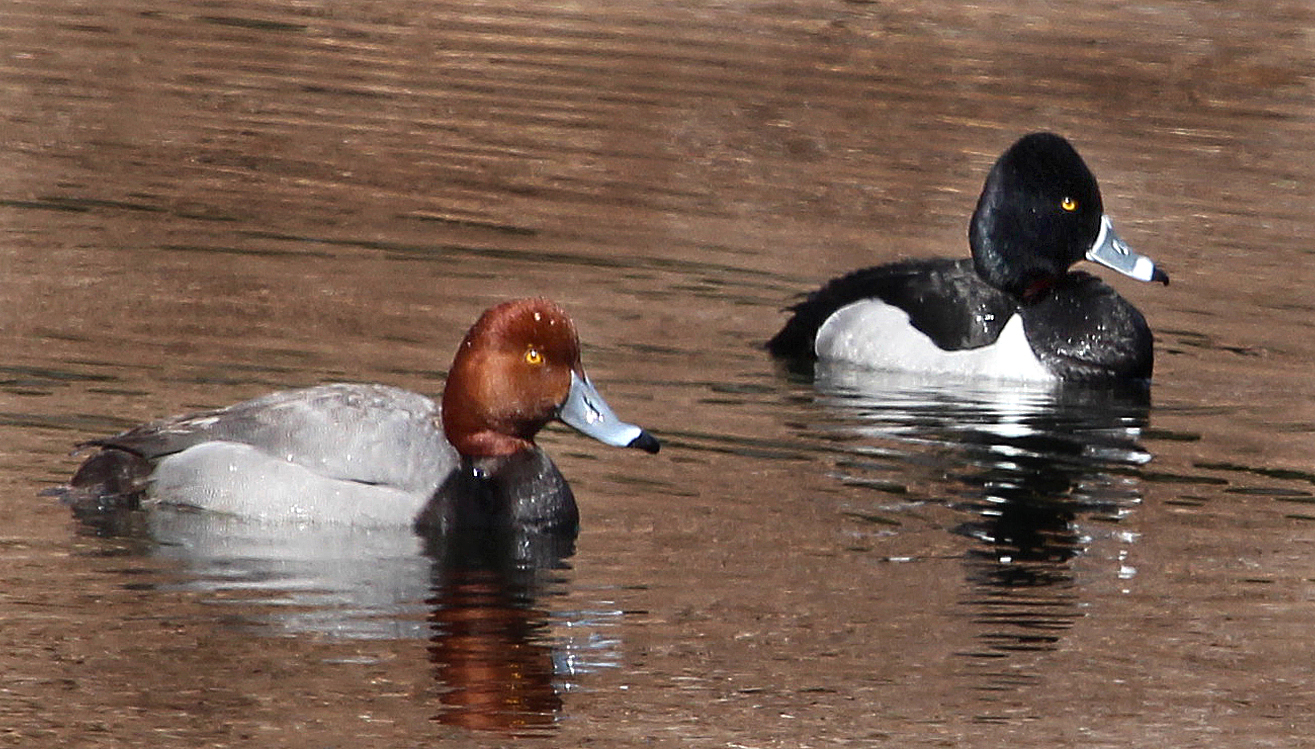
Photo by Chris Bosak A Redhead swims alongside a Ring-necked Duck in Darien in March 2014.

Photo by Chris Bosak
A Redhead swims alongside a Ring-necked Duck in Darien in March 2014.

In a previous post I mentioned I had seen a Redhead at Spring Grove Cemetery in Darien, Conn. It was the first time I had seen a Redhead at this small pond and it shared the water with Ring-necked Ducks, Hooded Mergansers, Wood Ducks, Canada Geese and Mallards.

At one point or another, I saw the Redhead “cross paths” with each of the other kinds of ducks. With one exception, the other ducks and geese basically paid no attention to the Redhead. In fact, at one point it was diving among a small flock of Canada Geese. It resurfaced next to a different goose every time and none of the geese seemed to mind.

It hung around the Ring-necked Ducks quite a bit and my suspicion is that it arrived with those ducks and will likely depart with them as well. Just a guess.

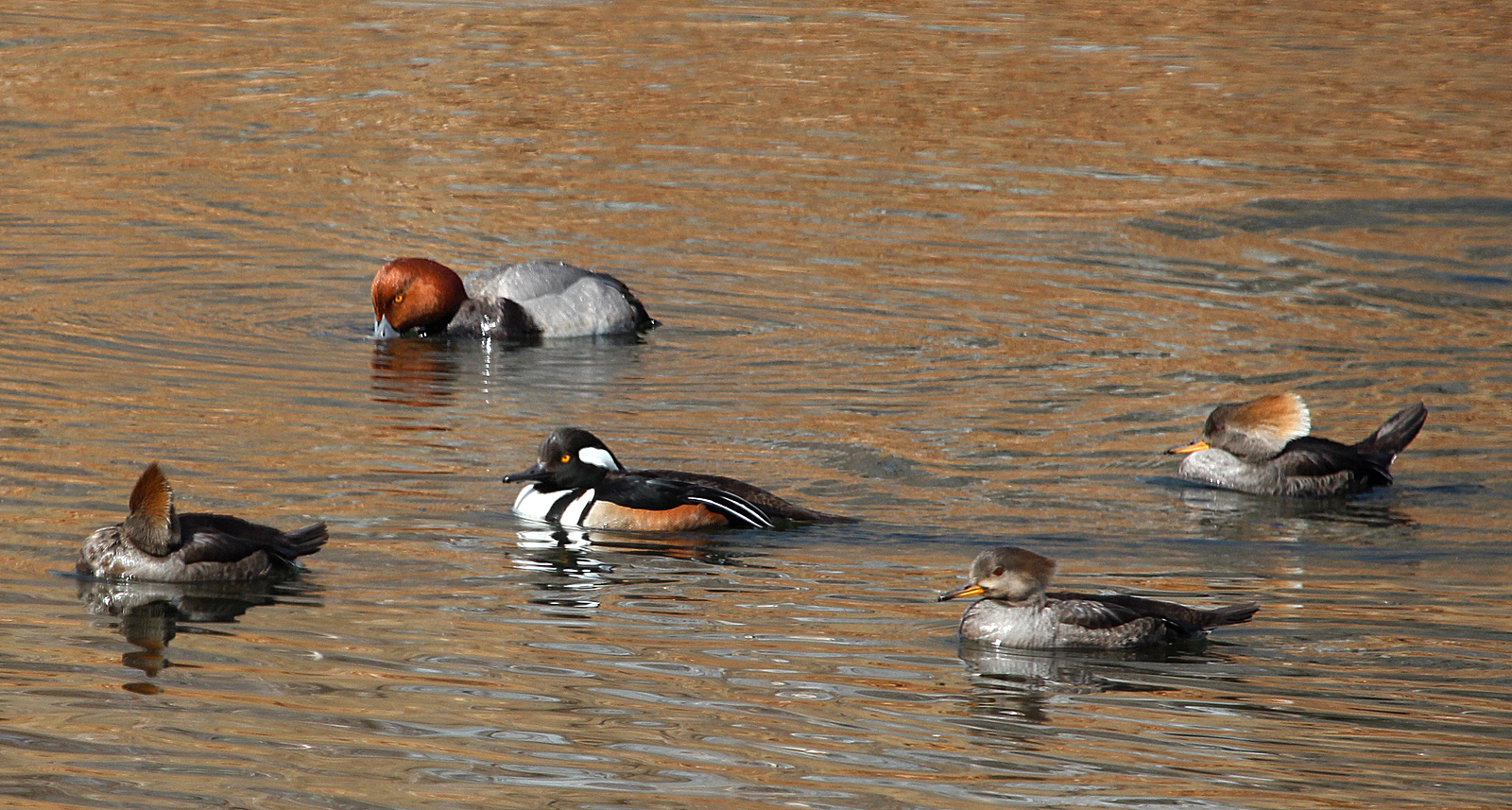
Five Hooded Mergansers passed the Redhead at one point with no drama.

Photo by Chris Bosak A flock of Hooded Mergansers swims past a Redhead at a Darien pond in March 2014.

Photo by Chris Bosak
A flock of Hooded Mergansers swims past a Redhead at a Darien pond in March 2014.

But the Wood Ducks did not like the Redhead getting too close. The Redhead drifted over from one side and the Wood Ducks from the other. When they got close enough, the male Wood Duck lowered its head and snapped repeatedly at the Redhead. Then the female Wood Duck did the same thing. The Redhead casually drifted away from the Woodies, but apparently not fast enough as the male Wood Duck reacted even more strongly to shoo away the somewhat rare New England visitor.

Fun stuff, this birdwatching hobby.

Photo by Chris Bosak A pair of Wood Ducks show their displeasure with a nearby Redhead in Darien in March 2014.

Photo by Chris Bosak
A pair of Wood Ducks show their displeasure with a nearby Redhead in Darien in March 2014.

Redhead makes surprise visit

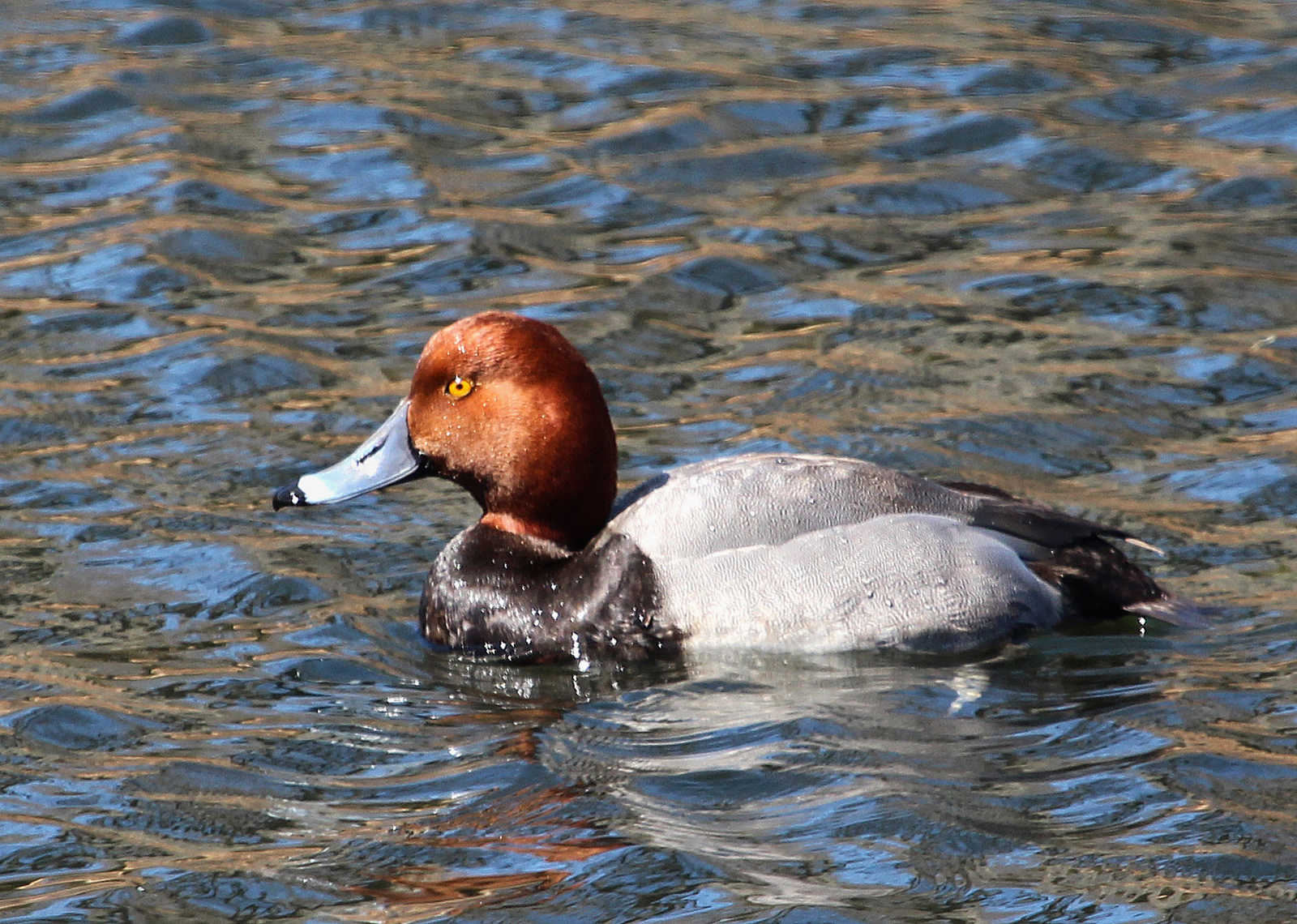
Photo by Chris Bosak Redhead seen in Darien pond in March 2014.

Photo by Chris Bosak
Redhead seen in Darien pond in March 2014.

I drove past the pond at first, assuming nothing of note would be there. But that nagging voice in the back of my head said: “Go back and check. It’ll take five minutes and you’re right here anyway.” I listened to that voice, as I usually do, and it paid off, as it often does.

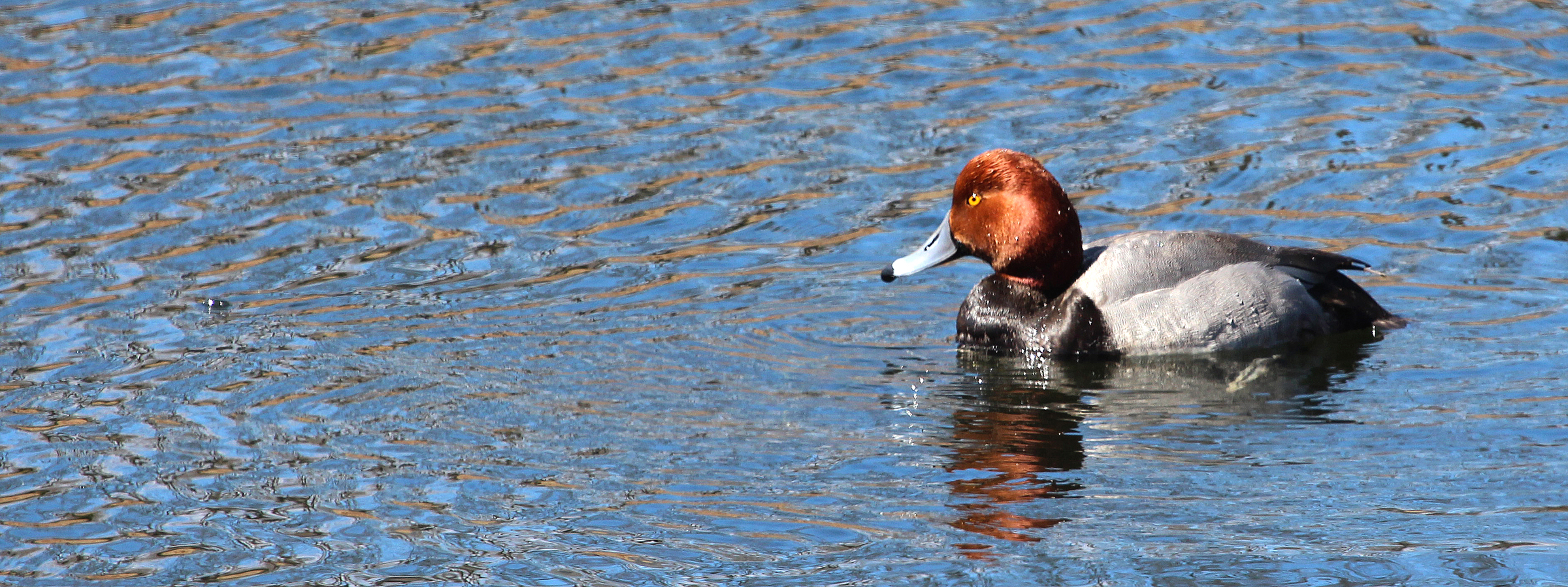
Photo by Chris Bosak A Redhead swims at a pond in Darien in March 2014.

Photo by Chris Bosak
A Redhead swims at a pond in Darien in March 2014.

The pond at Spring Grove Cemetery in Darien is small but often fairly productive. It’s a good place to see Wood Ducks in the fall and spring. Hooded Mergansers are frequent visitors in winter when the water isn’t frozen over. Ring-necked Ducks are occasional visitors. And, of course, Canada Geese and Mallards are usually there.

But one day this week, not only were Hooded Mergansers, Wood Ducks and Ring-necked Ducks all there, but a surprise visitor was there as well. Redheads are a beautiful medium-sized duck that are seen occasionally in New England. I’ve seen massive flocks of them in the Midwest, but only a handful of times have I seen them in New England. They are seen sometimes within huge flocks of scaup. But I’ve never seen one in New England at a pond as small as this one. It was interesting to see it among the mergansers and ring-neckeds.

This is a male Redhead. The female is much duller in color, mostly tannish brown.

In a post later this week I’ll let you know how the Redhead seemed to get along with the other ducks in the small pond.

Photo by Chris Bosak A Redhead seen in Darien in March 2014.

Photo by Chris Bosak
A Redhead seen in Darien in March 2014.

Plant native trees, shrubs, flowers for the birds

Photo by Chris Bosak An Eastern Towhee eats a crab apple during a cold winter day at Weed Beach in Darien, CT., Jan. 2014.

Photo by Chris Bosak
An Eastern Towhee eats a crab apple during a cold winter day at Weed Beach in Darien, CT., Jan. 2014.

I’m far from a landscaping expert. Anyone who has seen my jungle of a garden in the summer can attest to that. But I do know that using native trees, shrubs, bushes and flowers are the way to go.

Whether they are planted with the intent to attract birds or not, using plantings that are native to your area reduces the risk of potentially using an invasive exotic species that will eventually overtake native species. It also is better for the native insect population because in many cases the insects can not feed off the non-native plants, thereby reducing the number of insects that serve as valuable food for birds. Reducing the number of insects may sound like a good thing at first, but we’re not talking about pest insects such as mosquitoes, we’re talking about insects that you probably never see, but have high value to birds.

There are a million other reasons to use native plantings and a million great options for doing so. Again, I’m not a landscaping expect, but a simple internet search of “planting native species [enter your state here]” will lead you in the right direction.

Quickly though, here are a few suggestions of native plants that have worked well for me – coneflower [great for goldfinches and other small birds], black-eyed susan, crab apple, sunflowers, and bee balm.

Feel free to comment below to say which native plants work well for you in regards to attracting birds.

Thanks for visiting http://www.Birdsofnewengland.com

Interview with David Sibley coming soon

Sibley second edition cover

Sibley second edition cover

I spent a good part of the afternoon with David Sibley, who has a talk at Audubon Greenwich tonight (March 22). With the help of The Hour photographer Erik Trautmann, we did a nice interview with David about the second edition of his field guide and a bunch of other birding topics. We’ll have that interview at http://www.thehour.com and also here at http://www.birdsofnewengland.com in the near future. A big honor for BirdsofNewEngland.com.

Thanks to David.

Oh, and there’s a loon


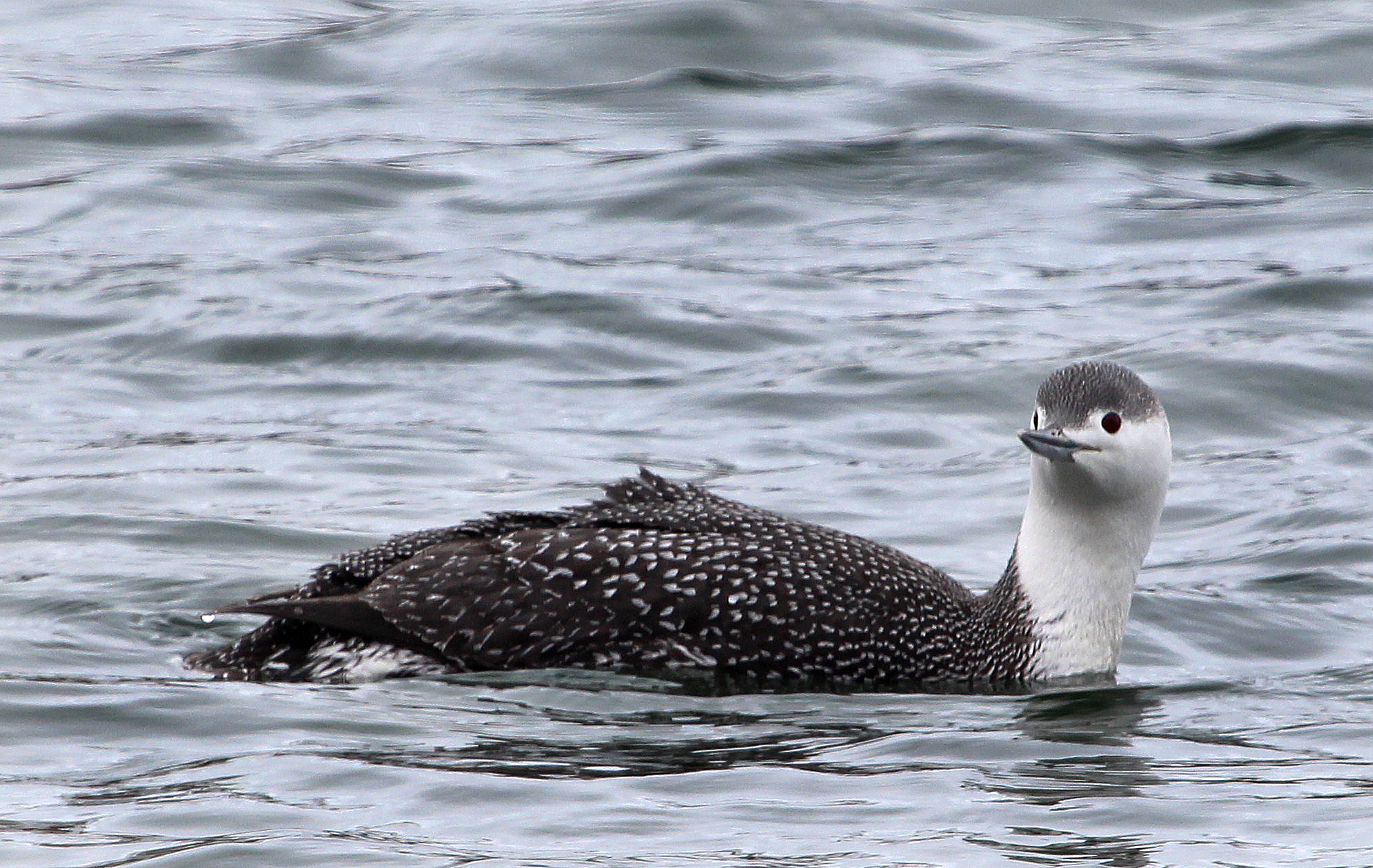
Photo by Chris Bosak A Red-throated Loon swims in Norwalk Harbor in this March 2014 photo.

Photo by Chris Bosak
A Red-throated Loon swims in Norwalk Harbor in this March 2014 photo.

I drove past Veterans Park the other day and, as is usually the case in winter, I pulled in to see what winter ducks might be around. I immediately spotted a female Red-breasted Merganser swimming somewhat near the shore. It was cloudy and the light was no at all ideal, but I managed to get a few very average photos of the bird.

It kept moving south slowly until it came up on a male Bufflehead. The two birds ignored each other, but for a brief moment they were mere feet away from each other. I snapped a few (again average) photos.  I always like to see birds together that you don’t always see “hanging out” near each other.

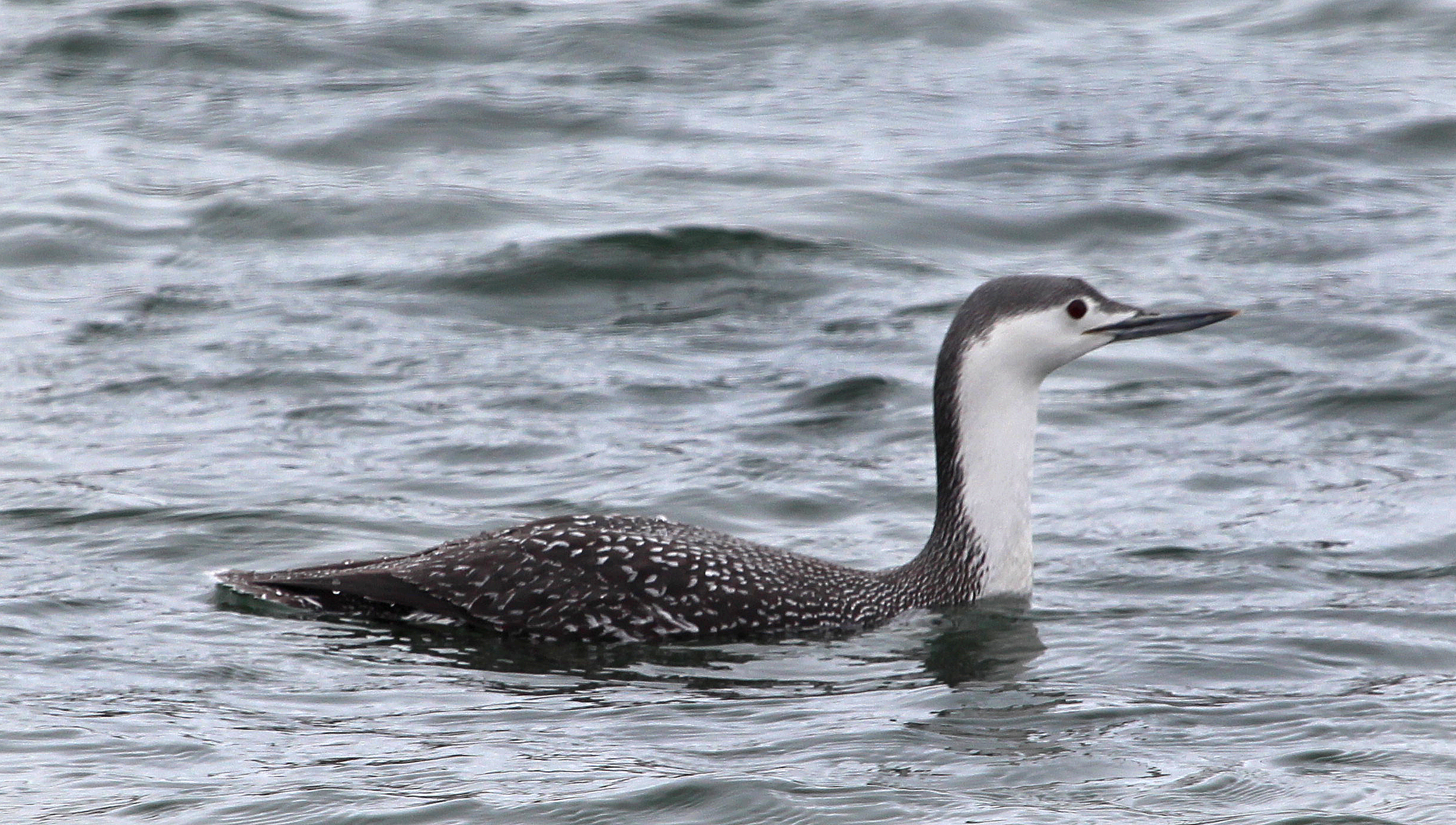
As I was photographing the merganser and Bufflehead I noticed out of the corner of my other eye a loon close to the shore. When did that pop up? I wondered. Loons are diving birds (as are mergansers and Buffleheads) and often “pop up” far from where they dove. I refocused and took some shots of the loon. It was a Red-throated Loon, a somewhat common occurrence in the Norwalk Harbor and Long Island Sound. They breed in the Arctic and some spend their winters here in New England. Common Loons, which breed in northern New England and farther north, are also fairly common birds in the winter around here. The loons will be heading north soon so I was happy to get this late sighting.

Soon enough the loon I was photographing dove again. I never did see where it popped up next.

Photo by Chris Bosak A Red-throated Loon swims in Norwalk Harbor in this March 2014 photo.

Photo by Chris Bosak
A Red-throated Loon swims in Norwalk Harbor in this March 2014 photo.

Photo by Chris Bosak A female Red-breasted Merganser swims in Norwalk Harbor in this March 2014 photo.

Photo by Chris Bosak
A female Red-breasted Merganser swims in Norwalk Harbor in this March 2014 photo.


Photo by Chris Bosak A female Red-breasted Merganser and a male Bufflehead swim in Norwalk Harbor in this March 2014 photo.

Photo by Chris Bosak
A female Red-breasted Merganser and a male Bufflehead swim in Norwalk Harbor in this March 2014 photo.