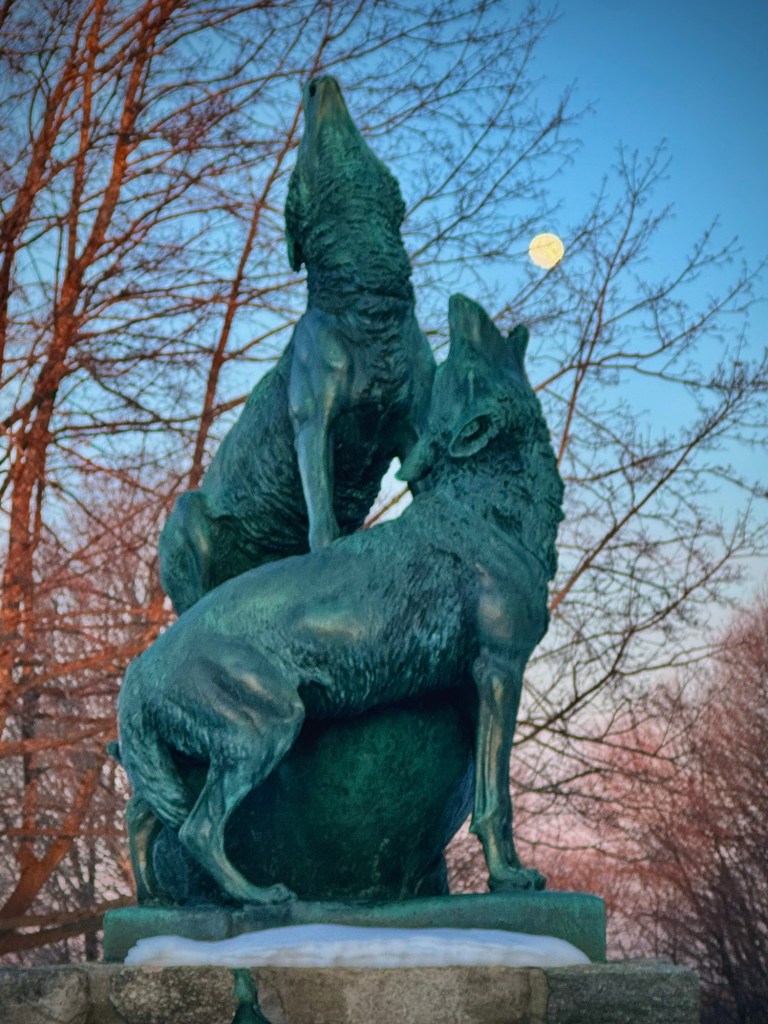
That’s not a spotlight, that’s the moon rising over the opposite tree line. It’s otherwise pitch dark. Pillsbury State Park, NH.

That’s not a spotlight, that’s the moon rising over the opposite tree line. It’s otherwise pitch dark. Pillsbury State Park, NH.

Thank you to the readers from Langdon, N.H., who sent in this photo of an albino or leucistic hummingbird. I’m guessing albino because of the pink eyes and feet, but declaring anything albino invariably brings about debate. Either way, a very cool and rare sighting.

I saw this skipper on an orchid at an event this morning. Thought it looked cool, so figured I’d share it.


It seems like just yesterday we were welcoming back the warblers and other songbirds during spring migration and here we are at fall migration already.
Many of the birds we saw in the spring heading north will look the same on their southward journey. Many others, however, will look different.
Some, like male scarlet tanagers, will bear little resemblance to what they looked like in the spring. When we saw them in May and June, they were the most brightly colored birds in the woods. A sighting always yielded a gasp of excitement as we wondered how a bird in New England could be so brilliant. After the breeding season, however, they molted and are now dull yellow with less shiny black wings. They are still awesome-looking birds but not the striking birds they were in the spring.
In addition to many adult birds molting, the fall migration includes first-year birds that haven’t attained familiar adult plumage yet. They often resemble females or a mix of male and female plumage.
Continue reading
I’ve written about a lot of different types of birds over the last 30 years. There are some birds I’ve likely written about hundreds of times, and some only a handful of times.
If I searched my “For the Birds” folder for chickadee, robin or woodpecker, I’d get hundreds of hits. If I searched for vireo or flycatcher, I’d get far fewer hits, but still a decent amount.
There’s one bird family found in New England I’m not sure I’ve ever written about or even mentioned within a column. It’s the rail family. Rails are small to medium-sized chicken-like birds of the marshes. The reasons I haven’t written about them before are fairly obvious: rails are not very common, live in a habitat that is difficult for humans to traverse and are extremely secretive.
New England has a few members of the rail family. Virginia rail is the most common and the one most likely to be seen in New Hampshire. Sora is the other most likely candidate in New Hampshire. Clapper rails may be found along the coastal regions of New England.
There are also yellow rails, black rails and king rails found in New England, but they are rarely seen. Virginia rail is the best bet, but even that is a chore.
Continue reading
Answering a few questions from readers:
John from Swanzey asked a few weeks ago when it is safe to prune bushes and hedges so as not to disturb any birds that might be nesting there. It’s a great question and one that is not as easily answered as one may think.
Spring and early summer are obviously not good times, as many of our songbirds use this type of habitat for nesting. Robins, doves, blue jays and catbirds immediately come to mind as they are common backyard birds in New England. Many other birds, such as yellow warblers and American redstarts, use shrubby areas for nesting as well, although they tend to use more wild areas rather than backyard bushes.
But what about mid and late summer? It should be safe then, right? Not necessarily.
Continue reading
The Cooper’s hawk I wrote about last week was a bit of an anomaly for me.
It’s not that I don’t see Cooper’s hawks often, but I typically see immature Cooper’s hawks. The one featured last week was an adult. Looking back through my photo collection, the vast majority of Cooper’s hawks I have photographed were immature birds.
With many birds, differentiating young birds from adults can be tricky as the time period between immature plumage and adult plumage is relatively short. With Cooper’s hawks, it’s easier as they retain their immature plumage into their second year. Bald eagles, similarly, do not obtain their classic white heads and tails until they are four or five years old.
As immature birds, Cooper’s hawks (as well as closely related sharp-shinned hawks) are brown with tan-streaked white chests and bellies. As adults, they are blue-gray with reddish-streaked white chests and bellies. Immature Cooper’s hawks have yellow eyes, and adults have red eyes. Interestingly, ospreys are the opposite with adults having yellow eyes and immatures having orange-red eyes.
Continue reading
“One of the nice things about birdwatching is …”
I’ve started many sentences with that phrase over the years. The backend of that line may be finished in almost innumerable ways:
… everyone, regardless of age or skill level, can enjoy it.
… it can be done during any time of the day or year.
… no two days are alike.
… there is always something new to learn or discover, regardless of how advanced you are.
… each time of year brings its own delights.
For the purposes of this column, the sentence will read: “One of the nice things about birdwatching is that it can be done anywhere.” Not many hobbies can be enjoyed in the woods, in a canoe or kayak, at a local park, or sitting in the kitchen looking out the window with your morning cup of coffee.
Continue reading
Here are a few shots of piping plover chicks with an attentive parent nearby. I got these shots on the same day as my recent visit to a beach in southern Connecticut. Cute hardly begins to describe these little birds. Here are some shots of oystercatchers (including a chick) I got on the same day.


I’ve looked for birds in New England from top to bottom this month. At the beginning of July, I drove to Pittsburg, NH, near the Canadian border, and last week, I visited a beach/nature preserve on Long Island Sound in southern Connecticut.
Yes, technically, northern Maine would be top of New England, but let’s not split hairs here.
It was quite a contrast in habitat and birdlife between the two points, from the boreal forest up north to the marsh and shoreline down south.
Continue reading